

You're holding a traffic citation, looking at an insurance renewal notice, or reading a court order that mentions a driving course. The natural question is simple: Can I take defensive driving, and will it solve my problem?
In Georgia, the answer depends on what you need the course to accomplish. Point reduction, an insurance discount, a court referral, and license reinstatement follow different rules. A course that helps with one pathway may not satisfy another, especially when the driver has a commercial license, completed a course recently, or needs DUI Risk Reduction rather than Driver Improvement education.
Why Georgia Drivers Ask About Defensive Driving Eligibility
A driver usually starts searching for defensive driving eligibility after something changes. A moving violation may add points, an insurer may ask for proof of safe-driving education, or a judge may direct the driver to complete a course. Someone whose license has been suspended may also hear that driver education is part of the reinstatement process.
Those situations look similar from the outside, but they aren't interchangeable. The Georgia Department of Driver Services, an insurance company, and a court can each recognize a certificate for a different purpose. The first step is identifying which doorway applies to you.
The four reasons people enroll
- Point reduction: A qualifying Georgia driver may use a certified Driver Improvement course to reduce points on the driving record, subject to the state's timing and documentation rules.
- Insurance discount: An insurer may accept defensive-driving completion as part of its own premium-discount process. The insurer decides whether the discount applies and what paperwork it needs.
- Court referral: A judge or court may direct a driver to complete a course after a citation or as part of a case disposition. The court's order controls the required program.
- License reinstatement: Driver education can be one requirement in restoring driving privileges, but suspension or revocation history may require additional steps, especially in DUI or habitual-violator matters.
Practical rule: Don't register based only on the phrase “defensive driving.” Read the citation, court order, insurance request, or DDS notice and identify the exact benefit being requested.
This distinction matters because defensive driving doesn't erase the underlying violation. Georgia's point-reduction process addresses points on the motor-vehicle record, while a DUI conviction, suspension, court condition, or treatment requirement can remain governed by separate rules. A nervous driver can avoid the most common mistake by asking one question first: “Who needs this certificate, and for what purpose?”
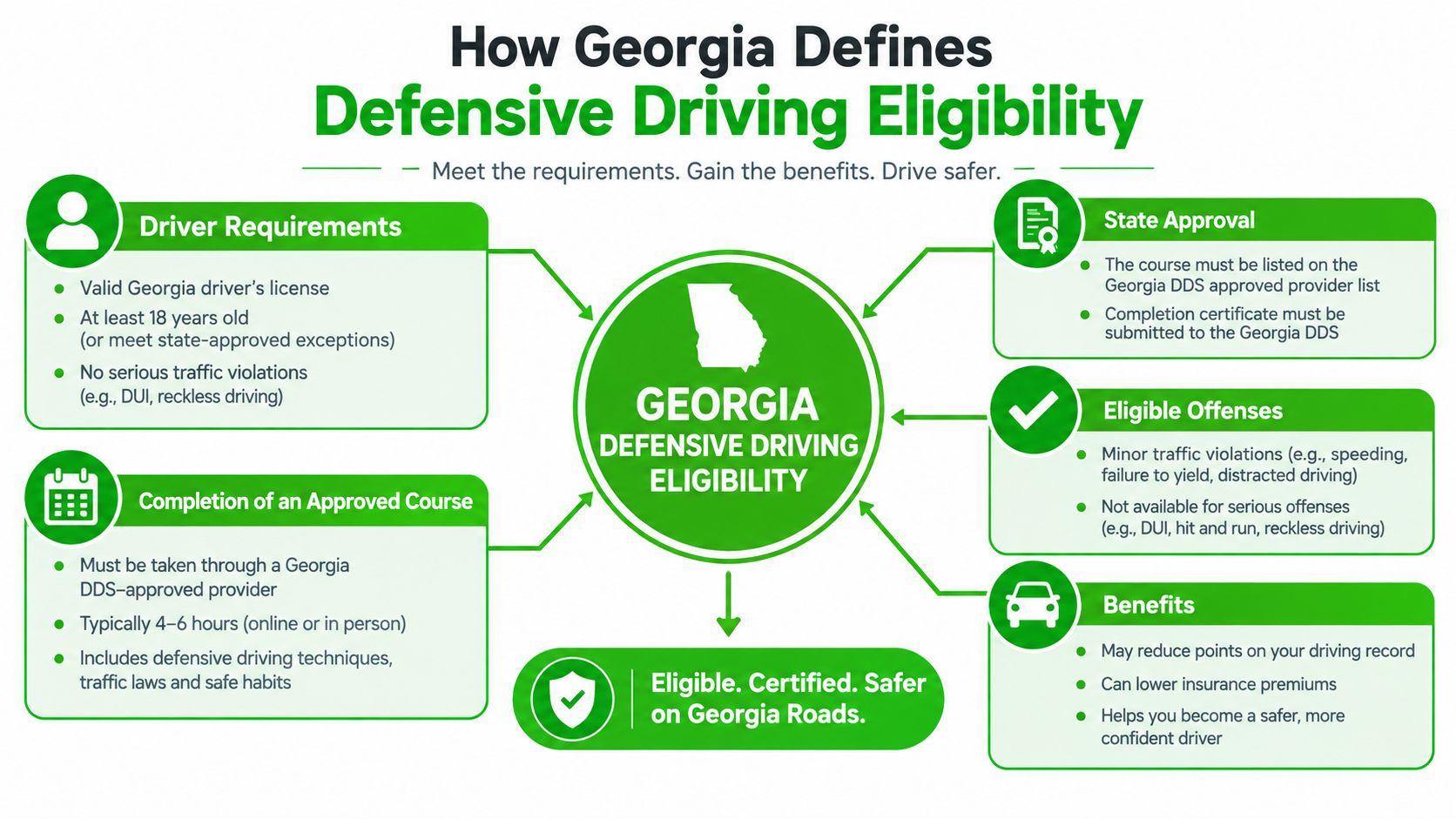
How Georgia Defines Defensive Driving Eligibility
A driver receives a citation, checks the license record, and sees points that may affect future choices. The next question is not just whether a defensive-driving class is available. Eligibility depends on the course's legal purpose, the driver's history, and the organization requesting proof.
Georgia's point-reduction rule is specific. Under DDS guidance associated with O.C.G.A. § 40-5-86, a driver may have up to 7 points reduced after completing a certified Driver Improvement course, also called defensive driving, but only once every 5 years. The Georgia DDS points and points-reduction guidance explains the process and the documentation requirement, including presenting or mailing the original completion certificate.
A course is therefore not a general reset button. The driver needs a qualifying provider, must meet the five-year timing rule, and must submit the original certificate through an accepted DDS channel. For point reduction, presenting the certificate in person or mailing it is different from sending it by email or fax.
Two courses that drivers often confuse
Georgia separates traffic-violation education from impaired-driving requirements.
A Driver Improvement course supports traffic education and point reduction. Georgia DUI Schools describes its defensive-driving offering as a six-hour course for licensed drivers, with online, live virtual, and classroom formats. Confirm the provider's current DDS approval and the reason you need the certificate before enrolling. The Georgia defensive driving course requirements explain the distinction and enrollment conditions.
A DUI Alcohol or Drug Use Risk Reduction Program serves a different legal purpose. DDS identifies it as a reinstatement requirement in multiple DUI situations. Georgia law may also connect reinstatement with program completion, payment of a required fee, and the driver's prior DUI history. A defensive-driving certificate cannot replace a DUI Risk Reduction certificate when a court or the law requires that specific program.
The practical test is simple: course approval and course purpose both matter. A driver may qualify to attend a class yet not qualify for the benefit expected.
The Four Pathways That Open the Door to a Course
A driver may be allowed to attend a class but still be unable to use the certificate for the intended benefit. Eligibility depends on the result you need, the authority requesting the course, and your driving history. Georgia drivers usually reach a defensive-driving course through four separate pathways: point reduction, an insurance discount, a court referral, or license reinstatement.
Point reduction
A driver seeking point reduction must check the license record, course history, and certificate-submission process before enrolling. The DDS process allows up to 7 points reduced once every 5 years. It does not erase the conviction or violation. See the DDS points and point-reduction guidance for the current state procedure.
The five-year lookback matters. If a previous Driver Improvement course already prevents another reduction, taking a second class will not create a new point-reduction benefit. Gather the driving record, citation details, license information, and prior course history first.
Insurance discount
An insurance discount follows the insurer's policy, not automatically the DDS point-reduction rules. An insurer may accept a defensive-driving certificate, limit the offer to certain drivers or policies, or require proof at a specific point in the renewal cycle. Ask for written instructions before paying for a course.
The insurer may request the original certificate, direct submission from the provider, or a particular form. A driver can qualify for an insurance discount even when point reduction is unavailable. The reverse can also occur, so confirm both the course name and the proof the insurer will accept.
Court referral
A court may order defensive driving after a moving violation or as a condition connected to probation. The court's order controls the deadline, course type, certificate recipient, and case information. Confirm those details with the clerk or attorney before selecting a provider.
DDS approval alone may not satisfy a judge's instruction. A court can require a particular provider category or a separate DUI Risk Reduction program. If the matter involves alcohol or drugs, information about outpatient rehab level of care can help families distinguish treatment services from driver education. It does not replace the court's direction or the program named in the order.
License reinstatement
Reinstatement is broader than course attendance. The course may be one condition among several, depending on why the license was suspended or revoked. Georgia DDS states that a first DUI conviction for a driver age 21 or older can lead to suspension or revocation ranging from 120 days to five years, based on driving history. The Georgia license-reinstatement guidance explains how the underlying offense history affects the process.
Habitual-violator cases may involve a waiting period, an approved clinic or Risk Reduction Program, clinical evaluation, recommended treatment, ignition-interlock compliance, testing, and fees. Follow the exact reinstatement notice. Enrolling in a general defensive-driving class does not, by itself, restore driving privileges.
Georgia defensive driving eligibility pathways compared
| Pathway | Authorizing rule | Who qualifies | Required documentation |
|---|---|---|---|
| Point reduction | Georgia DDS point-reduction process | Driver meeting the certified-course and lookback requirements | Original completion certificate and driving-record information |
| Insurance discount | Insurer's policy and enrollment rules | Driver accepted by the specific insurer | Certificate plus any insurer form or request |
| Court referral | Judge's order or court instruction | Driver whose case requires approved education | Court order, deadline, case number, and certificate |
| License reinstatement | DDS reinstatement rules tied to the offense | Driver meeting every condition for the suspension or revocation | DDS notice, course certificate, and any required evaluation, treatment, testing, or payment records |
Steps to Confirm Eligibility and Enroll With Georgia DUI Schools
Confirming the paperwork before enrollment can prevent a wasted class. Start with the record, not the course catalog.
Begin with your driving history
Request your Georgia driving record through DDS or obtain the certified record required for your situation. Check the active points, citation information, license status, and date of any prior Driver Improvement course. You're looking for conflicts with the seven-point maximum and the five-year course interval, not merely a reason to attend a class.
Next, identify the recipient of the certificate. DDS, an insurer, and a court may each require a different submission method. If point reduction is the goal, plan to present or mail the original certificate under the DDS process.
Choose a course format that matches the requirement
Georgia DUI Schools offers a DDS-approved defensive-driving option in self-paced online, live virtual Zoom, and traditional classroom formats, subject to the provider's current availability and approval. Select the format you can complete without missing a court or insurance deadline. Before paying, compare the course name on your notice with the course name being offered.
The enrollment process generally follows this order:
- Verify the purpose: Confirm point reduction, insurance documentation, court referral, or reinstatement.
- Check approval: Make sure the provider and course are approved for the benefit you need.
- Register carefully: Enter your legal name and identifying information exactly as required.
- Complete the lessons and assessment: Finish every required component and retain completion records.
- Submit the certificate: Send it to DDS, the court, or the insurer according to that organization's instructions.
The Georgia online defensive driving course information can help you compare delivery formats and understand why online availability doesn't eliminate Georgia's certificate-submission rules. Keep a copy of everything, including the certificate, mailing receipt, court paperwork, and insurer correspondence.
Who Does Not Qualify and Common Eligibility Mistakes
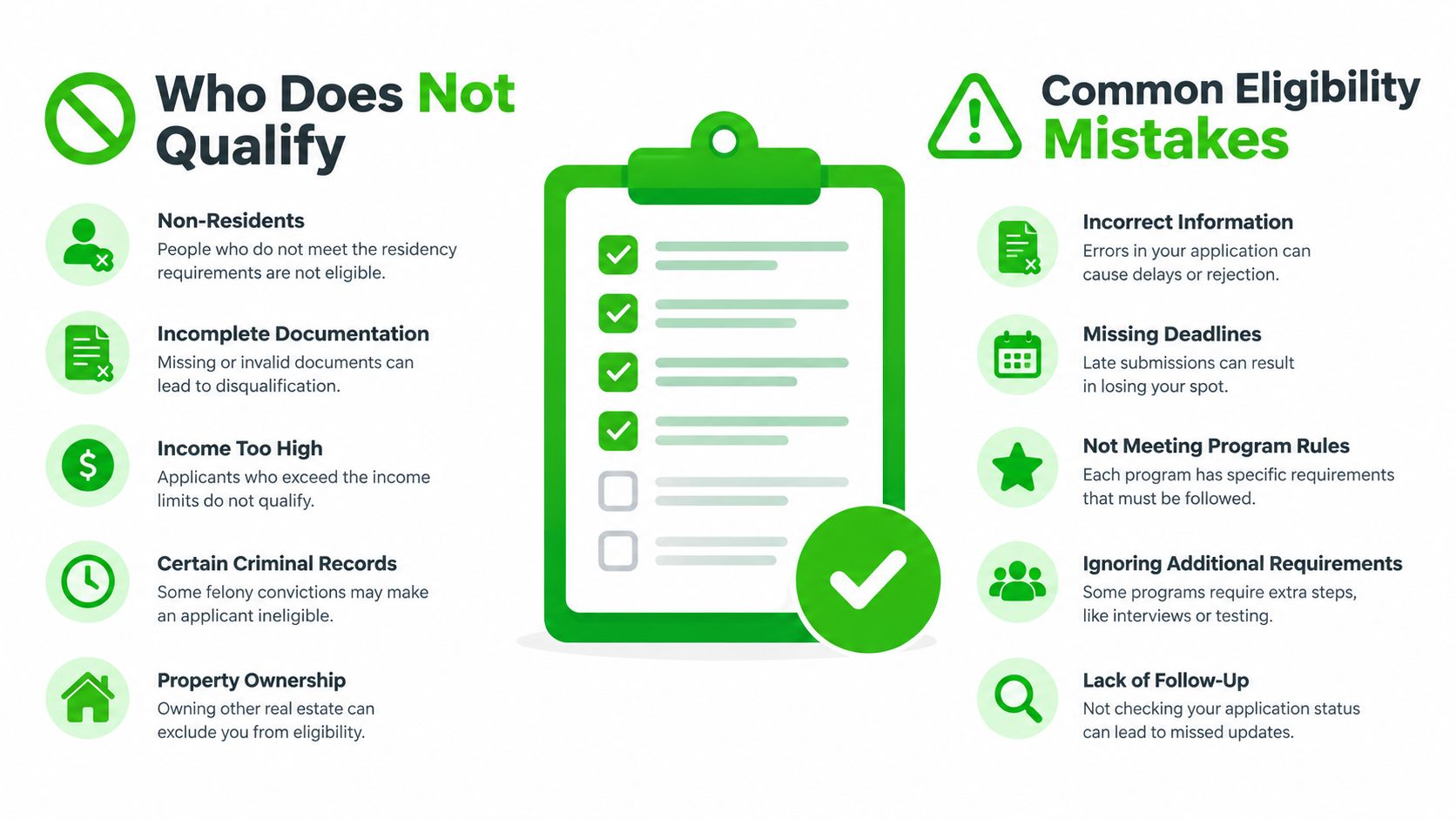
The most expensive mistake is often choosing the wrong program. A driver can complete a course successfully and still receive no point reduction, no court credit, or no reinstatement approval because the driver or the course didn't meet the relevant rule.
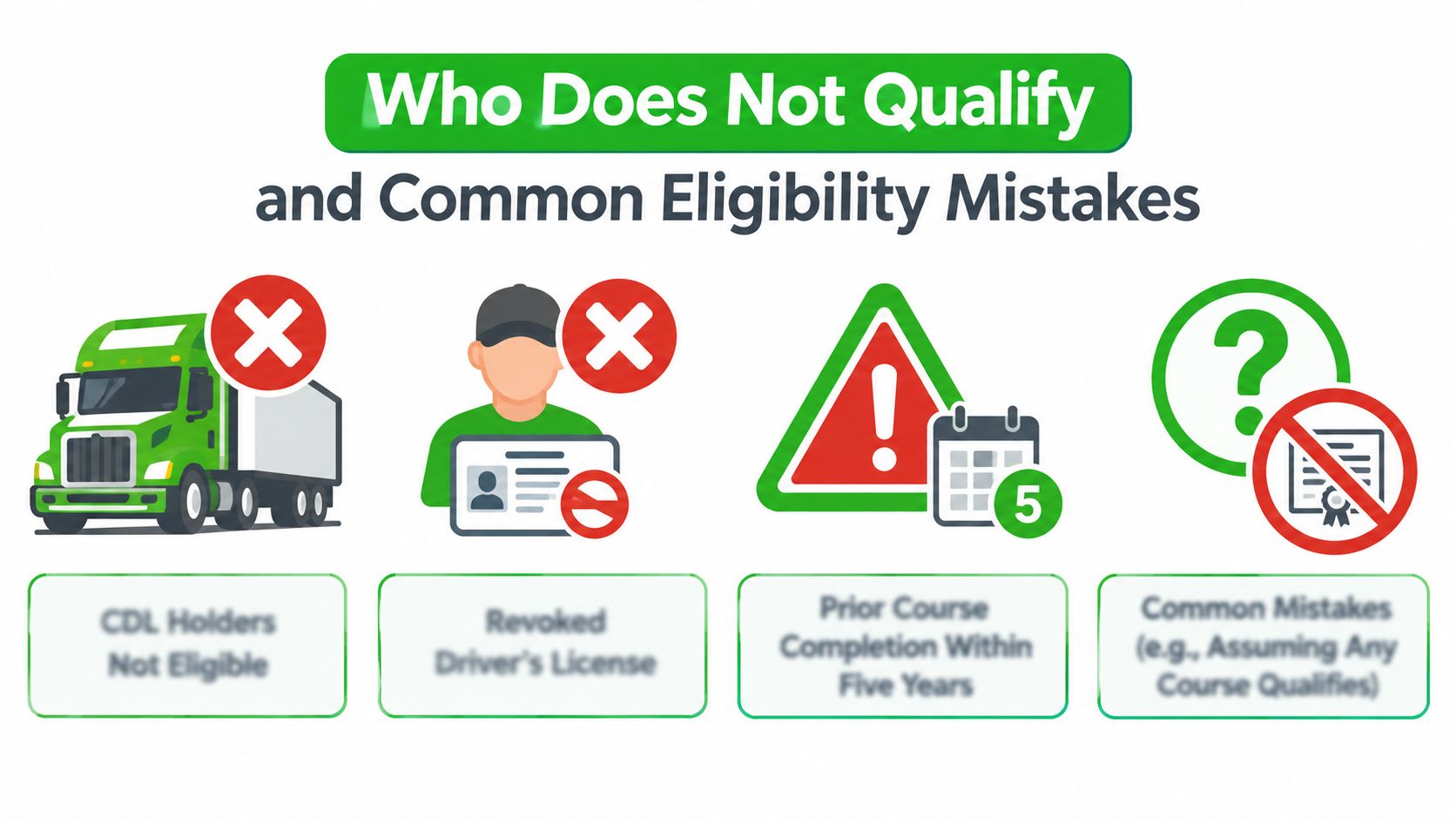
CDL holders need special attention
Commercial-driver eligibility is an edge case that deserves a direct check. Government guidance shows that some states bar CDL holders from diversion entirely, while others allow narrow exceptions when the cited vehicle was noncommercial and the offense met specific criteria. The cited vehicle, license type, violation, and court rule can all matter.
Don't assume a personal vehicle makes the answer obvious. If your work depends on a commercial license, ask the court, DDS, employer, or attorney before registering.
A recent course can block a new benefit
Georgia's point-reduction rule limits use to once every five years. A driver who completed a certified Driver Improvement course during that lookback period may be unable to claim another point reduction, even if the current record contains points that would otherwise fit the rule.
That restriction doesn't necessarily answer an insurer's question. Insurance discounts are separate, so contact the carrier before treating the five-year rule as a universal answer.
Permits and DUI cases follow different routes
Learner's permits, conditional licenses, and Class CP instructional permits shouldn't be treated like an ordinary unrestricted Class C license for every court or DDS purpose. A defensive-driving class may not substitute for a court-ordered program.
DUI matters create another major fork. Georgia's DUI Risk Reduction Program is a separate requirement from ordinary Driver Improvement education. Georgia law states that, in a second DUI conviction within five years, reinstatement can require one year, proof of Risk Reduction completion, and a $310 fee, or $300 by mail. The Georgia statutory reinstatement rule should be reviewed alongside the actual DDS notice.
Habitual-violator reinstatement can add still more conditions. Georgia's DDS habitual-violator rule describes a five-year period, an approved driver-improvement clinic for non-DUI predicate offenses, and additional DUI-related requirements such as clinical evaluation, recommended treatment, ignition-interlock compliance, testing, and applicable fees.
For a traffic citation that requires Driver Improvement, a Georgia defensive driving course for a speeding ticket may be relevant. For a DUI, revocation, or court-treatment matter, verify the required program first.
How Georgia Defensive Driving Eligibility Compares to Other States
Georgia's rule can look generous because it allows up to 7 points reduced, but the benefit is limited to once every 5 years. Drivers relocating from another state often expect a prior certificate to carry forward automatically. Georgia's DDS process is documentation-based, so an out-of-state completion shouldn't be assumed to satisfy Georgia's point-reduction requirements.
The comparison below shows why a driver's prior experience may not predict Georgia eligibility. New York uses a separate Point and Insurance Reduction Program, South Carolina has its own interval, and North Dakota applies a different point-reduction framework.
| State | Max point reduction | Resubmission window | Key restriction |
|---|---|---|---|
| Georgia | Up to 7 points | Once every 5 years | Certified course and original certificate submission required |
| New York | 4 points | Once every 18 months | Point and Insurance Reduction Program rules apply |
| South Carolina | 4 points | Once every 3 years | State-specific reduction interval applies |
| North Dakota | 3 points | Once every 12 months | State-specific eligibility and repeat-use rules apply |
These figures and intervals come from the state comparison summarized by New York's Point and Insurance Reduction Program guidance and the cited state-by-state eligibility reference. The contrast is useful, but it doesn't create a Georgia exception.
A certificate that worked in New York, South Carolina, or North Dakota may educate you, but it doesn't automatically become a Georgia DDS point-reduction certificate.
Out-of-state drivers should check their Georgia record, license status, and prior course history before paying for a new class. The safe approach is to treat Georgia eligibility as a fresh state-specific question.
Your Pre-Enrollment Eligibility Checklist
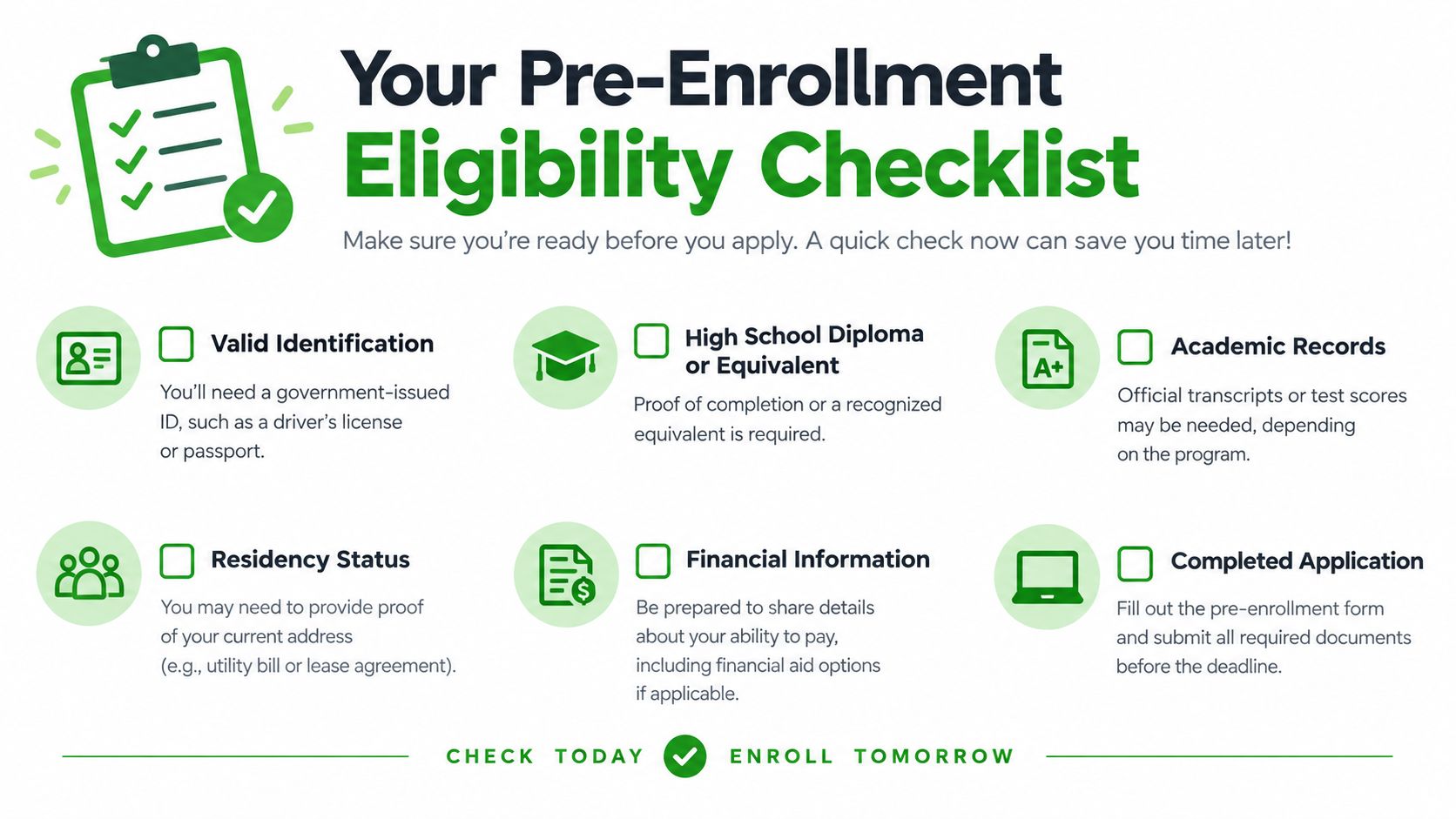
Before registering, work through these checks in order:
- Confirm license status: Make sure you hold a valid, unexpired Class C license that isn't suspended or revoked.
- Review prior courses: Verify that you haven't completed a certified Driver Improvement course during the past five years if you're seeking point reduction.
- Name the purpose: Write down whether you need point reduction, an insurance discount, a court referral, or reinstatement.
- Pull the driving record: Check the citation date, current points, and license information. Don't rely on memory.
- Collect proof: Keep the citation, court paperwork, insurance request letter, DDS notice, or other document showing why you're enrolling.
- Confirm approval and delivery: Ask whether the course is DDS-certified and how the certificate will be issued and submitted.
Keep a copy of the completion certificate even after sending the original. If point reduction is your goal, plan for in-person or mailed delivery to DDS. CDL holders and conditional-permit holders should pause before enrolling and contact the school or the relevant authority, because their case may require a different route.
Next Steps for Eligible Georgia Drivers
Most eligible Georgia drivers fit one of four purposes: point reduction, insurance documentation, a court referral, or license reinstatement. A standard Driver Improvement course may help with the first three in the right circumstances, but CDL holders, recent course-takers, conditional-permit holders, and drivers with DUI-specific requirements need individual confirmation.
If your record and paperwork point to ordinary defensive driving, choose the approved format that fits your schedule, complete the required course, and send the certificate to the correct recipient. Don't confuse completion with final processing. DDS, the court, or your insurer must receive and accept the documentation.
Georgia DUI Schools offers DDS-approved defensive-driving education through self-paced online, live virtual, and classroom formats for drivers checking point, insurance, court, or reinstatement requirements. Review your documents first, then visit Georgia DUI Schools to identify the appropriate course and begin enrollment.