You're probably here because the state form, the court order, or a probation checklist used the word class, and now it all looks the same. It doesn't. In Georgia, license classes and education classes are two different systems, and mixing them up is how drivers waste time on the wrong course, miss a reinstatement deadline, or show up with a certificate DDS won't accept.
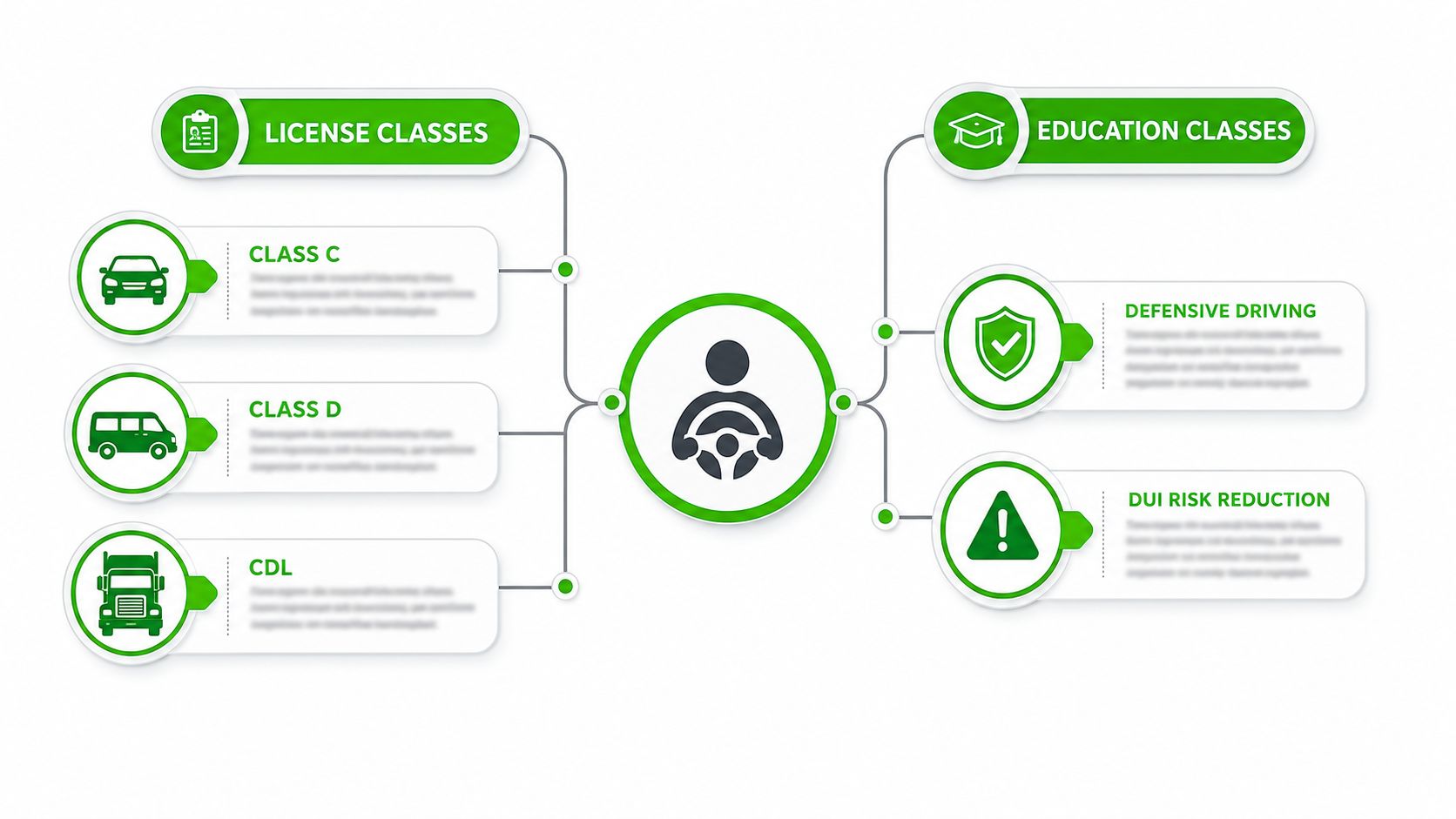
The clean way to think about georgia drivers license classes is this. One set tells the state what you're allowed to drive, and the other tells Georgia what training or treatment you must complete to keep or get back that driving privilege. A teen moving from Class D to Class C is dealing with one track. An adult with a DUI suspension is dealing with another, usually involving DUI Risk Reduction or defensive driving rather than a new license class.
Georgia's own reporting shows how large the teen pipeline is. In FY2023, 137,698 drivers under 18 completed the required driver-training course to qualify for a Class D provisional license, and 47,982 of them used the 40-hour parent-taught driving experience instead of six hours of behind-the-wheel instruction, according to the state's annual report (Georgia DDS annual report). That matters because the Class D path is a major entry point into Georgia licensing, not a side issue. If you're dealing with a suspension, a DUI, or a court-ordered class, don't let teen licensing language distract you from the requirement.
Practical rule: read the court order and the DDS notice first, then match the course to the requirement. If the wrong certificate is issued, the clock doesn't stop just because you paid for the class.
Understanding License Classes Versus Education Classes
A driver who searches for Georgia drivers license classes often lands on a page about training and assumes the course name matches the license name. It does not. Georgia DDS separates license type from training requirement, and that difference controls whether you need a new credential, a reinstatement course, or both (Georgia DDS driver manual).
What the license class means
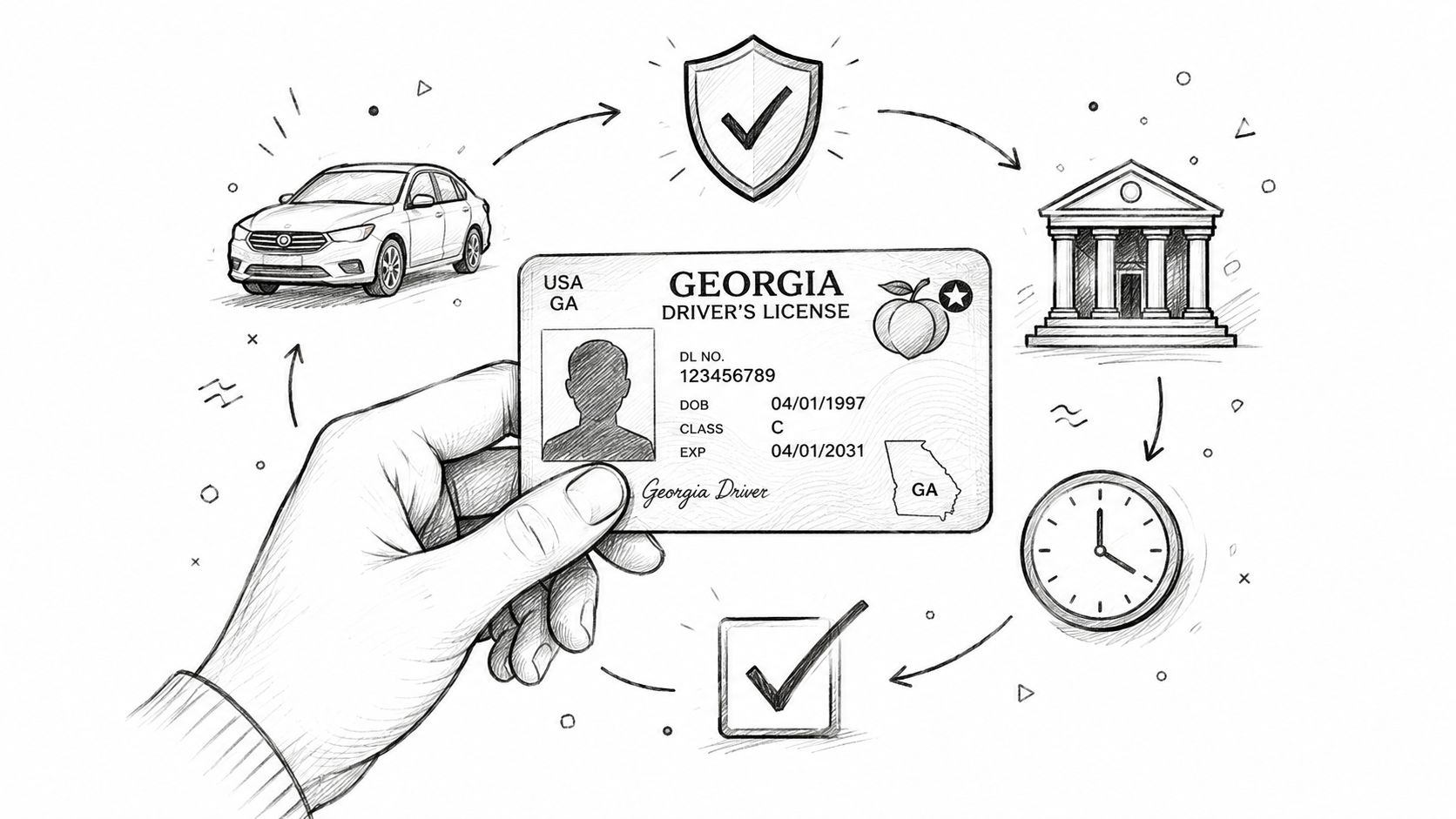
A Class C license is the standard noncommercial adult license, Class D is the provisional teen license, Class M is for motorcycles, and E/F can apply to certain exempt commercial drivers, according to DDS license-type guidance (Georgia DDS license and permit types). Commercial licensing is its own category. Class A CDL and Class B CDL are determined by vehicle weight, not by how much driving experience someone has.
That distinction matters in practice. A teen moving out of Class D does not need a new education class because the license class changed. An adult with a DUI suspension may need a Risk Reduction Program or defensive driving course, but that course does not change the underlying license class by itself. It satisfies a legal requirement so the driver can address the suspension or reinstatement issue.
What the education class means
Georgia's driver education language causes confusion because people use “class” when they mean a course. For teens, Joshua's Law makes driver education part of the path to a Class D provisional license. For adults, education can mean DUI Risk Reduction, Defensive Driving, or another state-approved program tied to reinstatement or points reduction. Georgia DDS also warns that classes from uncertified schools will not be accepted for licensing, reinstatement, or court requirements (DDS regulated programs).
The wrong course wastes time. If you take a general traffic class when the court wants a DUI program, the certificate will not fix your suspension. If you take a DUI course when you only needed point reduction, you have overpaid and still need the right paperwork. Use the order, the DDS notice, or the 30-day license appeal deadline as the guide, not the marketing copy. For a clear breakdown of what a DUI risk reduction course covers, review the risk management course content.
Georgia License Class Types and Their Requirements
Georgia's license structure is built around age, vehicle type, and operating authority. That's why a Class D teen driver, a Class C adult driver, and a CDL holder are not interchangeable categories. They're different legal permissions with different compliance consequences, especially after a DUI, suspension, or reinstatement issue.
Standard, provisional, motorcycle, and commercial classes
Here's the practical breakdown.
| Georgia License Class | Eligibility | Common Education Requirement |
|---|---|---|
| Class C | Adult noncommercial drivers, typically 18+ | Defensive driving, DUI Risk Reduction, or court-ordered programs depending on the case |
| Class D | Provisional teen drivers under Joshua's Law | Driver education, supervised driving, and the required teen training path |
| Class M | Motorcycle riders | Motorcycle-specific licensing and any court-ordered education if a violation applies |
| Class A CDL | Combination vehicles meeting the weight threshold | CDL training and compliance with commercial rules |
| Class B CDL | Single vehicles meeting the weight threshold | CDL training and commercial compliance requirements |
For CDL holders, Georgia DDS ties the class to gross vehicle weight rating, not empty weight. Class A CDL covers combination vehicles with a GVWR of 26,001 lb or more when the towed unit exceeds 10,000 lb, while Class B CDL covers single vehicles with a GVWR of 26,001 lb or more, or such a vehicle towing up to 10,000 lb (Georgia DDS license classes). Fleet managers should verify the plate or manufacturer rating before dispatch. Guessing is a compliance mistake, not a shortcut.
Why DUI changes the problem
A DUI conviction doesn't create a new license class. It can suspend the privilege to drive, and then the driver has to satisfy the reinstatement path tied to DDS and the court. That is why adults with a Class C license often need defensive driving or DUI Risk Reduction, while teens with a Class D privilege face separate restrictions and the state's youth-safety rules.
Bottom line: don't ask, “What class am I?” Ask, “What does DDS or the court require for my exact license and violation?”
If you're using a course to satisfy a court order or protect a commercial credential, Georgia DUI Schools offers DDS-approved DUI/Risk Reduction and defensive driving options, including in-person and online formats, which is useful only if the certificate matches the requirement exactly. The provider matters, but the license class still decides the legal lane.
DUI Risk Reduction Course Components and Requirements
Georgia's DUI Risk Reduction program is not a generic traffic class with a new label slapped on it. It's a structured compliance process that starts with an evaluation and ends with a completion certificate that DDS and the courts recognize. If you skip a required piece, the file is incomplete, no matter how much class time you sat through.
The three pieces that matter
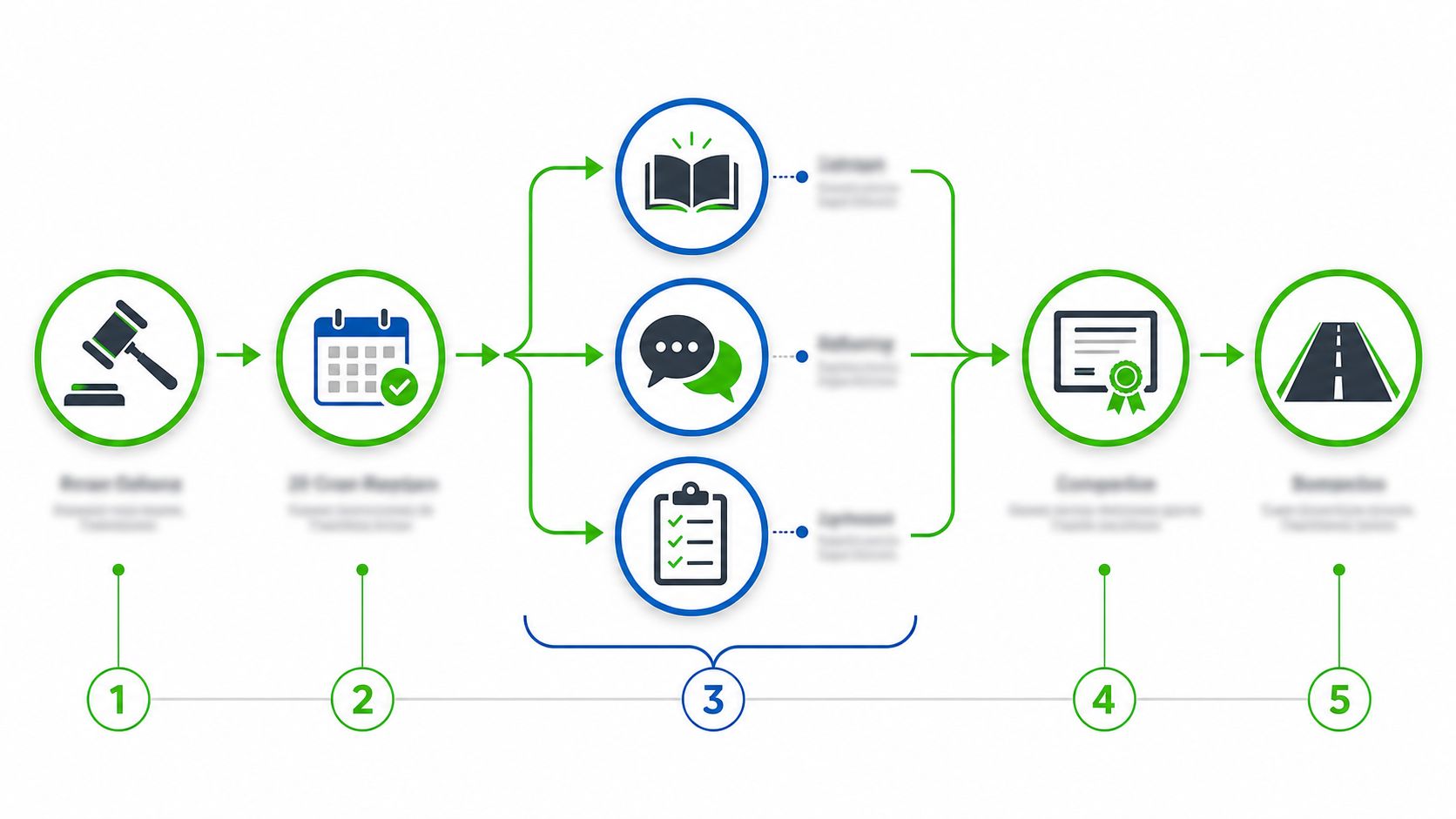
First comes the clinical evaluation. That evaluation helps determine whether the driver needs only the program or whether additional treatment may be required, including ASAM Level 1 treatment when clinically appropriate, as described in Georgia provider materials and DDS program structure. Then comes the 20-hour education and intervention course, which is the core classroom requirement for most DUI cases. The final piece is the Victim Impact Panel, which is separate from the classroom portion and has to be completed as its own requirement.
That separation matters. Drivers sometimes assume the classroom hours and the panel are interchangeable because both are part of the same case. They aren't. DDS and the courts look for the whole chain, not just a single attendance record. For a useful breakdown of course content, Georgia DUI Schools publishes its risk reduction course content, and that's the right kind of material to review before you enroll.
Deadlines, appeals, and what people miss
The clock starts early in a DUI case. If you need to challenge a suspension or make a procedural move, the 30-day license appeal deadline is the kind of date people miss because they focus only on the class requirement. Miles Hansford Law Firm's 30-day license appeal deadline is worth reading if your stop, arrest, or suspension notice is fresh. You don't want the education requirement to distract you from the legal deadline that comes first.
Underage drivers need even more care. Georgia's Zero Tolerance framework can affect young drivers regardless of BAC level, so a teen case is never handled like an adult case. Repeat offenders also face a more demanding compliance picture, which is why the first step should always be reading the order line by line instead of assuming the same class solves every problem.
If your paperwork mentions evaluation, education, and panel, treat them as three separate checkpoints. One certificate won't stand in for the others.
Online Versus In-Person Course Formats
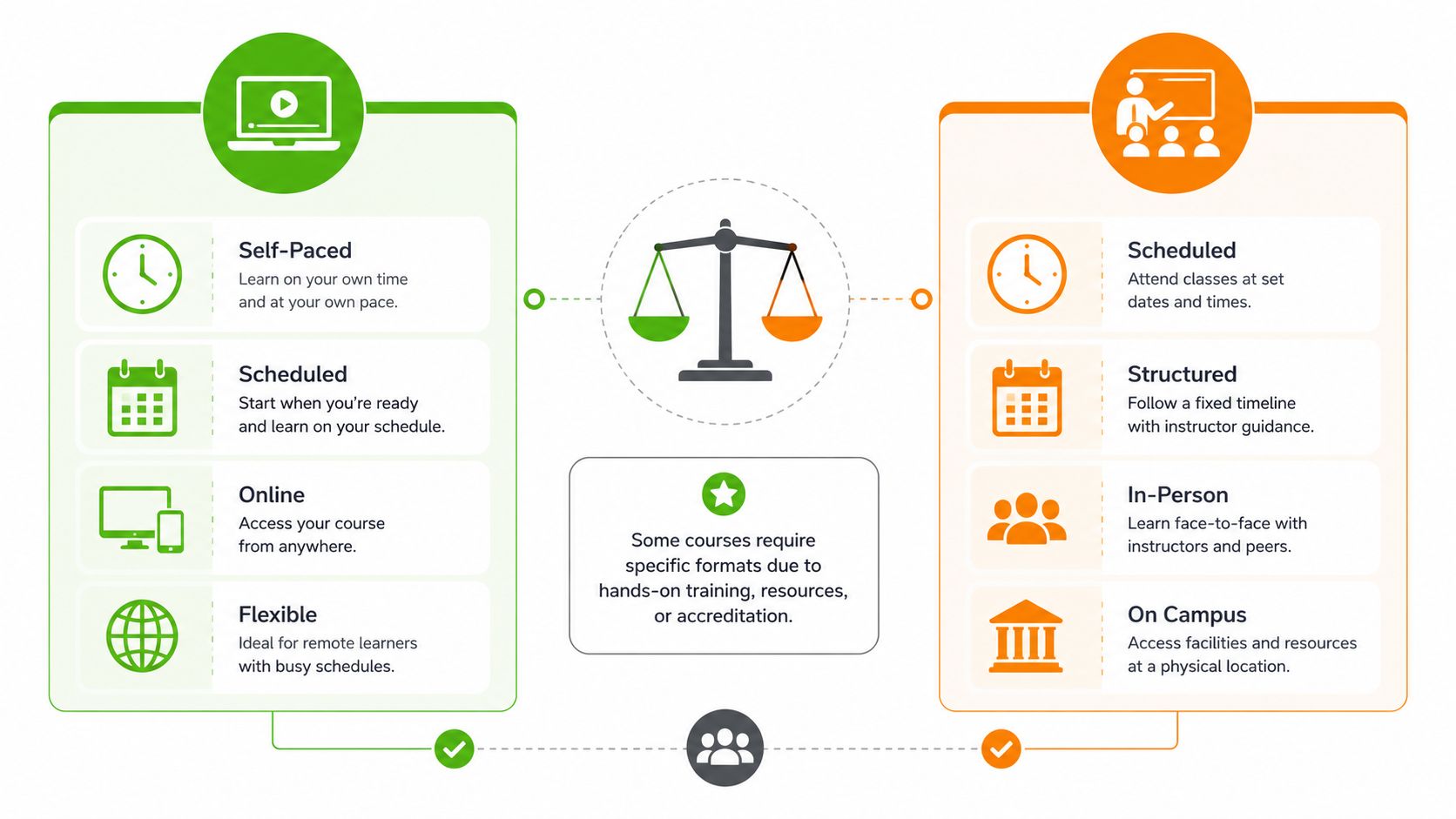
Format matters more than most drivers think. Some people need speed and flexibility, others need a structured room, and some court orders narrow the choice before the class even starts. The wrong format can be just as useless as the wrong course.
Georgia DDS-approved programs can be delivered in different ways, but the acceptance depends on the requirement. A defensive driving course may fit neatly into a live virtual schedule, while a DUI-related requirement may call for a more specific instructional setup. That's why you shouldn't ask only, “Can I do it online?” Ask, “Does this format satisfy my order and my provider's certification?”
Online works when the requirement allows flexibility
Online courses help drivers who are balancing work, court dates, family obligations, or a long commute. Self-paced learning is especially practical for a defensive driving requirement, because the driver can move through the material without taking a full day off. A live virtual classroom gives more structure than a self-paced module and can still be easier to manage than a drive across town.
The catch is certification and fit. A virtual class is only useful if DDS accepts that provider and that format for your exact situation. If a judge or probation officer wants a specific type of proof, the convenience factor comes second to compliance.
In-person still makes sense for higher-friction cases
In-person classes are the safer choice when the order is strict, the driver is trying to satisfy a DUI requirement, or the paperwork is already complicated. A live classroom also removes the guesswork about attendance verification and helps if the driver has a history of missing online obligations. Some people do better when the instructor is in the room and the schedule is fixed.
For drivers who want an approved online defensive-driving option, Georgia DUI Schools' Georgia online driving course is a relevant example of how a compliant provider can deliver training without forcing you into a full classroom day. The point isn't that online is always better. The point is that the format has to match the requirement.
Choosing a DDS-Certified Provider
A bad provider choice wastes time fast. If the school is not DDS-certified for the exact program you need, the certificate can be rejected for licensing, reinstatement, or court use. That means you pay, you sit through the class, and you still do not have valid proof.
DDS requires certification for the provider and the program, not just a general promise that the class is “approved.” A school can market traffic safety or driver improvement all day and still fail the standard that matters. The only question that counts is whether the course matches the DDS-recognized requirement your case calls for.
What to verify before you pay
Start with the DDS regulated programs list, then verify the exact course title. Do not stop at the school name. If your case calls for DUI Risk Reduction, a general defensive driving class will not satisfy it. If you need defensive driving for points or insurance, a DUI package is the wrong buy even if the website makes it sound broader.
Some warning signs should end the search immediately:
- Unclear course names: If the provider will not say whether the class is DUI, defensive driving, or another DDS-recognized format, walk away.
- No DDS certification proof: If you cannot confirm the school on the state list, do not assume it counts.
- Out-of-state certificates: Generic traffic schools outside Georgia often miss state-specific requirements.
- Promises without paperwork language: If the provider talks about getting you back on the road but avoids saying what the certificate is for, that is a problem.
Read the provider's description carefully before you register. The wording should match the order, the court requirement, or the DDS need in your file. If the class name and the legal requirement do not line up, the certificate is a gamble.
For drivers who want a local option, Georgia DUI Schools offers driving class online as a DDS-approved format for Georgia drivers. The standard stays the same. Certification comes first, convenience comes second.
Enrollment Timeline and Documentation Checklist
Get the course right, then get the paperwork right. That order saves people from rescheduling, missed starts, and unnecessary trips back to DDS or court. The fastest path is usually the one with the cleanest file.
The timeline from enrollment to completion
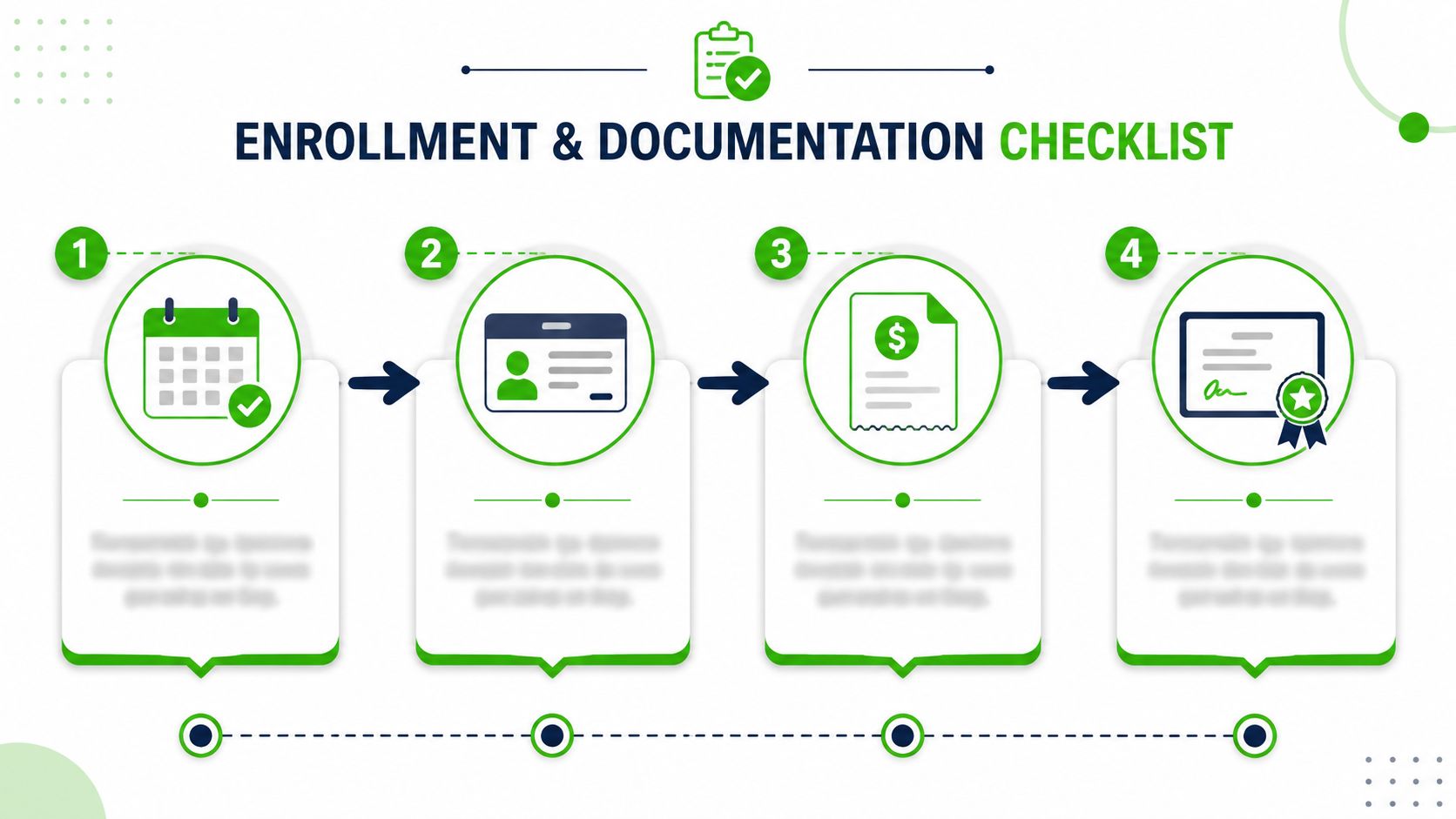
Start by confirming the exact course name and whether your order requires a clinical evaluation before class. After that, register with a DDS-certified provider, attend the scheduled session or online module, complete any required assessments, and collect the completion certificate. If the case involves reinstatement, the certificate is only one piece of the file, not the whole file.
Missed sessions create avoidable delay. If you have to reschedule, do it before the class starts, not after you've already missed the attendance window. In DUI cases, that kind of delay can interfere with the broader reinstatement timeline.
Bring the right documents the first time
Bring what the provider or DDS has asked for, not what seems reasonable. In most cases, that means identity documents, the court order or referral paperwork, and a payment method that won't fail at check-in. If the course is tied to reinstatement, keep a copy of every completion record you receive.
Use this checklist before you leave home:
- Proof of identity: Match the name on the order and the enrollment record.
- Court or DDS paperwork: Bring the exact document that shows why you're taking the class.
- Payment method: Make sure it works before arrival or online checkout.
- Contact information: Use a phone number and email you check daily so rescheduling doesn't stall.
If a clinical evaluation is required, complete it on the schedule the provider gives you. Don't treat it like an optional add-on. In a DUI file, the evaluation can affect what comes next, and skipping it can stall the entire process.
Getting Back on the Road Confidently
The biggest mistake Georgia drivers make is treating every class like the same thing. It isn't. License classes tell you what you can drive, and education classes tell DDS or the court what you've completed to satisfy a legal requirement. Once you separate those two ideas, the path gets much clearer.
The next move is straightforward. Match the requirement to the order, choose a DDS-certified provider, and complete the exact course the case calls for, whether that's DUI Risk Reduction, defensive driving, or a clinical step tied to reinstatement. If you do that, you stop wasting time on the wrong paperwork and start moving toward legal driving again.
Georgia DUI Schools provides DDS-approved DUI/Risk Reduction and defensive driving options, plus clinical evaluation services that fit Georgia's reinstatement process. If you need to satisfy a court order or get a certificate that DDS will accept, visit Georgia DUI Schools and enroll in the course that matches your case.