

If a court has ordered you to take a “Risk Management Program,” you might be wondering what that actually means. In Georgia, that’s simply the official name for the state’s DUI, Alcohol, or Drug Use Risk Reduction Course. It's a required educational program designed to help you get your driving privileges back and make safer choices behind the wheel.
What Is a Georgia Risk Management Course
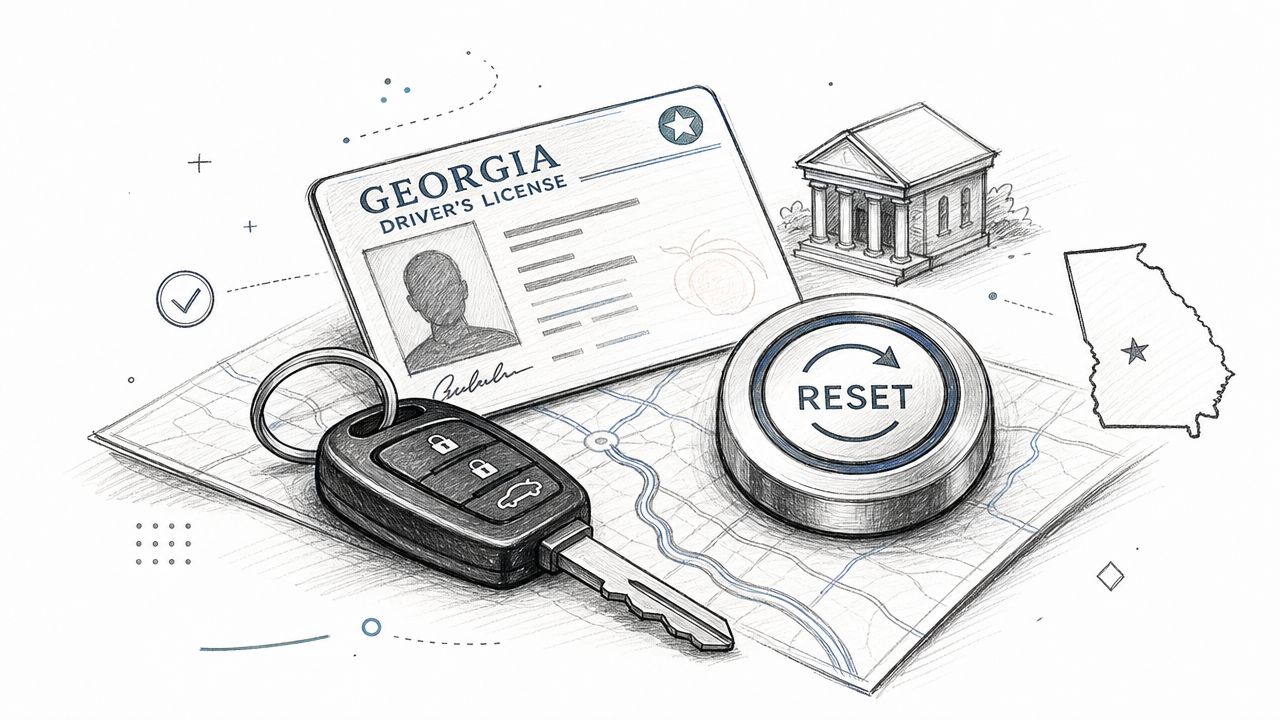
Think of a Georgia Risk Management course as a mandatory "reset button" for your driving record and habits. It's a state-certified program specifically created for people with certain driving offenses, especially DUIs. The entire point is to address the behaviors that led to the offense in the first place.
The course is a critical first step toward getting your license reinstated. It combines a personal assessment with an intensive classroom component to give you a clear picture of the risks involved with driving under the influence. The Risk Management course content is the same across the state, ensuring everyone gets the same core knowledge, no matter which school they attend.
Who Is Required to Take This Course?
It’s not just for DUI convictions. A Georgia court or the Department of Driver Services (DDS) can order you to complete a Risk Reduction program for several reasons. You'll almost certainly have to enroll if you're dealing with:
- A DUI conviction for alcohol or drugs.
- A drug possession charge (even if you weren't driving).
- Too many points on your driving record, resulting in a license suspension.
- A judge's order as part of sentencing or a plea deal.
For example, a driver in Atlanta convicted of a first-time DUI and a college student in Athens charged with drug possession would both be required to complete the exact same 20-hour course. The mandate focuses on addressing the underlying risks tied to these offenses. For more details, check out our guide that explains what risk reduction is and who needs it.
The Main Purpose of the Program
The course isn't meant to be a punishment. It serves a dual purpose: education and compliance, acting as a preventative tool to reduce future impaired driving incidents across Georgia.
The core objective is to shift a driver's perspective from simply following rules to understanding the real-world impact of their decisions. It connects the legal consequences, like fines and license suspension, to the human cost of impaired driving.
By finishing the course, you’re showing the state you’ve taken a tangible step toward becoming a more responsible driver. This is why your Certificate of Completion is so important—it's your proof of compliance for the court and the DDS, and it’s the key to getting back on the road.
A Breakdown of the Risk Management Course Content
If you're facing a required Georgia Risk Management course, you might be wondering what's actually involved. It’s much more than a simple lecture; it’s a structured, 20-hour program built to satisfy state requirements and, more importantly, to help you make lasting changes.
The entire curriculum is split into two key parts, and understanding how they fit together can make the process feel a lot less intimidating. The Risk Management course content is designed to build on itself, starting with a personal assessment and leading into the educational portion. The Georgia Department of Driver Services (DDS) requires you to complete the program as one continuous course.
The First Step: The NEEDS Assessment
Before you even get to the classroom part, your first step is the NEEDS Assessment. Don't worry—this isn't a test you can pass or fail.
Think of it as a completely confidential, 130-question survey. Its purpose is to create a personal snapshot of your attitudes and habits when it comes to driving and substance use. Your honest answers are crucial, as they give the instructor a baseline understanding of the group and help them focus on the topics that matter most.
The 20-Hour Intervention Classroom Component
Once the NEEDS Assessment is done, you'll move on to the 20-hour Intervention. This is the main educational part of the course. The classroom sessions are intensive and must be completed on a set schedule, usually over a weekend or a few days in a row, with no interruptions.
This isn't just about memorizing rules. The course is meant to be interactive, using a mix of instruction, group discussions, and real-world examples to make the lessons stick.
Here’s a look at what you can expect to cover:
- A Deep Dive into Georgia's DUI Laws: The course gives you a complete rundown of Georgia's tough DUI laws. You'll learn about blood alcohol concentration (BAC) limits, implied consent, and the serious penalties involved, including specific Habitual Violator rules.
- The Science of Impairment: Instructors will break down exactly how alcohol and drugs affect your body. This covers the impact on your brain, nervous system, reaction time, and motor skills, making it crystal clear why driving impaired is so incredibly dangerous.
- Real-Life Scenarios from Georgia Roads: A big part of the program is looking at actual incidents from places like Macon, Savannah, and the Atlanta metro area. Using local examples helps show how one bad decision can have devastating consequences that can't be undone.
The real aim is to connect the dots between abstract laws and their real, human impact. By exploring the true financial, personal, and emotional costs of a DUI, the course helps you shift your focus from just avoiding a ticket to making genuinely safer choices.
This structured approach ensures the Risk Management course content is an experience, not just a checklist. It’s all geared toward building practical decision-making skills that will serve you long after you get your Certificate of Completion. Find a state-approved DUI course that works for your schedule and take the first step toward moving forward.
Navigating Clinical Evaluations and Treatment
For many, the path doesn't stop after the 20-hour Risk Reduction course. The court or the Georgia Department of Driver Services (DDS) might require you to get a clinical evaluation, and it’s completely normal to feel a bit anxious about what that means.
The first thing to know is that this isn't a punishment. Think of it more like a confidential, one-on-one consultation. Its only purpose is to take a closer look at your personal situation to see if you might benefit from some additional support. It's a diagnostic tool, not a judgment.
What Happens During a Clinical Evaluation
The process in Georgia is designed to be straightforward and respectful. You'll sit down privately with a state-approved, certified counselor for a personal meeting. They will simply talk with you, asking questions about your history and habits with alcohol or other substances to get a clear picture.
Based on that conversation, the counselor uses a standardized, objective system from the American Society of Addiction Medicine (ASAM) to figure out if treatment is needed. This ensures the recommendation is fair and based on professional standards, not just one person's opinion.
The infographic below shows how the initial 20-hour course is structured, which always comes before any potential evaluation.
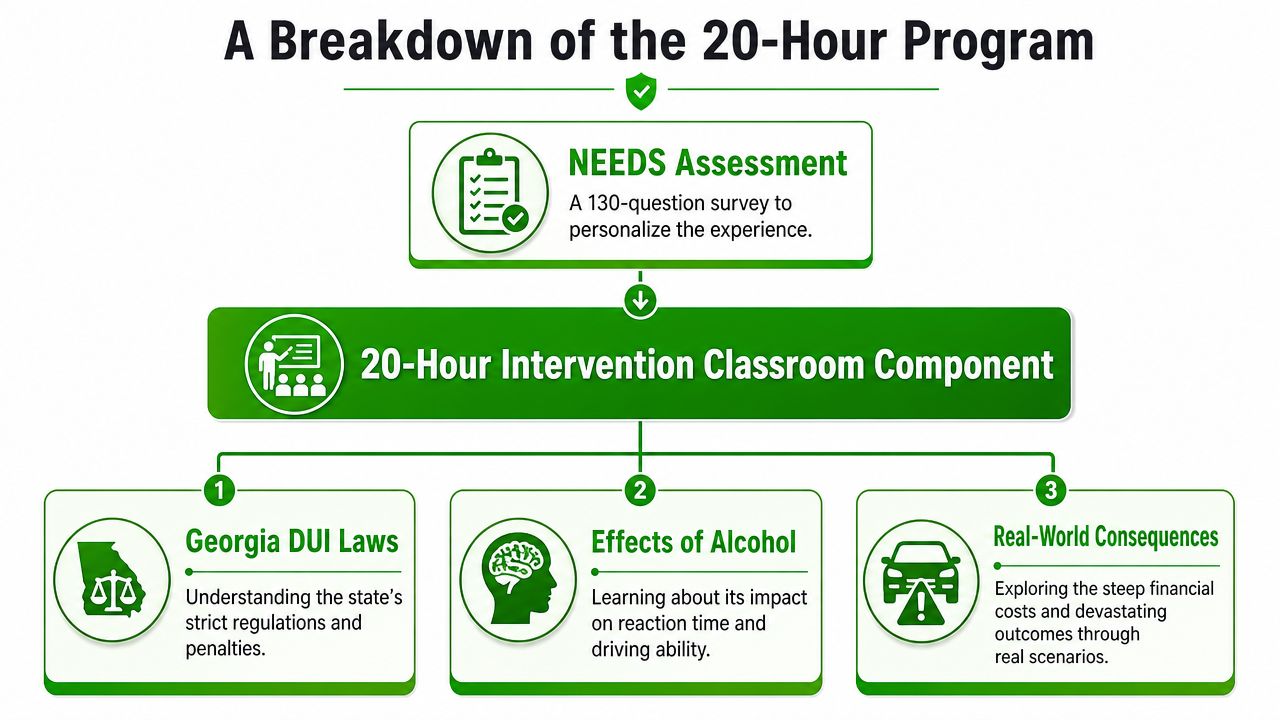
As you can see, the Risk Management course content focuses on education about laws and consequences. The clinical evaluation, on the other hand, is a separate step that’s all about your individual needs.
Potential Outcomes and ASAM Level 1 Treatment
If the evaluation shows no further steps are needed, the counselor will give you the documentation you need for the court or DDS. Simple as that. However, if your habits suggest there might be a risk, the most common recommendation is for ASAM Level 1 treatment.
An ASAM Level 1 recommendation is not an inpatient rehab program. It is the least intensive level of outpatient care, typically involving a few weeks of group counseling sessions designed to provide education and support.
This treatment is designed to give you a supportive space to meet court requirements and, more importantly, build strategies for making safe decisions in the long run.
At Georgia DUI Schools, our certified counselors can handle both the clinical evaluation and any recommended ASAM Level 1 treatment. This approach keeps everything simple, creating a clear path from your Risk Reduction course to getting all state and court mandates satisfied. To get a deeper look, check out our guide on what a drug and alcohol evaluation entails. We help take the stress and confusion out of the process so you can move forward.
Choosing Your Course Format: Online vs. In-Person
Once you know you need to complete the 20-hour Risk Reduction course, the next question is simple: how do you fit it into your life?
The good news is that Georgia law makes this easy. The official Risk Management course content is identical whether you’re sitting in a classroom or joining a live video class. This means you can pick the format that works for your schedule and learning style without having to worry about state compliance.
In-Person vs. Live Virtual Classes
The main difference really just comes down to your personal preference for learning and logistics.
-
In-Person Classes: These are perfect if you thrive on social interaction and prefer a clear separation between home and class. The direct guidance from an instructor in the room can help keep you focused, and there are far fewer distractions. With 18 locations across metro Atlanta and Athens, it’s easy to find a convenient spot.
-
Live Virtual (Zoom) Classes: This format offers incredible flexibility. You can attend from anywhere in Georgia, which completely eliminates travel time and costs. It's a great choice if you have a packed schedule, transportation challenges, or just feel more comfortable learning from your own home.
It’s crucial to know that Georgia does not allow for self-paced, pre-recorded online DUI courses. To be compliant, all virtual options must be live and led by an instructor. This ensures you get the same real-time interaction and participation as you would in a physical classroom. If you're curious about the pros and cons, this guide for course creators on learning formats breaks down the differences well.
Ensuring State Compliance with Both Formats
No matter which format you choose, your completion is fully recognized by the Georgia Department of Driver Services (DDS) and all Georgia courts.
The bottom line is that both in-person and live virtual courses deliver the exact same state-certified Risk Management course content. You will receive the same official Certificate of Completion needed for license reinstatement, probation, or any other court requirement.
This guarantee lets you focus on what works best for you. Whether you prefer the traditional classroom experience or the convenience of a Zoom session, you can be confident that you’re fulfilling your legal obligations.
Our goal is to make this as straightforward as possible. We offer certified courses seven days a week, with both weekday and weekend schedules available in person and online. You can find a DUI/Risk Reduction course that fits your life and helps you take the next step forward.
The Purpose of the Victim Impact Panel
While your main Risk Reduction course covers the laws, science, and skills for making better decisions, some court orders require another, incredibly powerful component: the Victim Impact Panel (VIP). This isn't just another classroom session. It’s a raw, human experience that connects the abstract lessons you've learned to their real-world consequences.
The point of a VIP isn't to make you feel ashamed or guilty. The real goal is to build genuine empathy by putting a face to the statistics. It shifts the focus from fines and license points to the permanent, life-shattering impact an impaired driving crash has on real families right here in Georgia.
What to Expect During a Session
During a VIP session, you will listen to speakers who have been directly and tragically affected by an impaired driver. These aren't actors reading from a script; they are your neighbors and community members—parents, spouses, children, or even first responders—who volunteer to share their personal stories.
You’ll hear them speak about:
- The loved one they lost forever.
- The life-altering injuries they or a family member now live with.
- The emotional and financial chaos that a single crash created.
These firsthand accounts bring the classroom curriculum to life in a way a textbook never could. Hearing how one person's choice completely devastated others' lives provides a profound level of understanding that sticks with you.

Fulfilling Your Court Requirements
If a judge or probation officer has ordered you to attend a VIP, it’s not optional—it is a mandatory part of completing your sentence. To get credit, you must attend a state-approved panel.
After the session, you will be given proof of attendance, which you must submit to the court to show you’ve met this requirement. Don't lose it!
The Victim Impact Panel is a solemn reminder of the huge responsibility that comes with having a driver’s license. It’s meant to be a reflective, eye-opening moment that reinforces the ultimate reason for making safer choices on the road.
These panels are a critical step for many people working to satisfy their legal obligations. You can find more information on how to sign up for a state-approved Victim Impact Panel in Georgia and make sure you complete your specific court order.
Common Questions About the Risk Reduction Program
Getting a handle on the rules after a DUI or other serious driving violation can be a headache. To clear things up, we've put together some plain-English answers to the questions we hear most often about Georgia's Risk Reduction Program—the official name for the state's DUI course.
How Long Is My Completion Certificate Valid?
So you’ve finished the course and have your certificate in hand. What now? First, know that it doesn't last forever.
Your Certificate of Completion is generally valid for two years from the day you get it, both for the Georgia Department of Driver Services (DDS) and the courts. But be careful—some courts might demand it sooner. If you wait too long, you could find yourself having to retake the entire 20-hour program. The best move is to submit your certificate to the court, your probation officer, and the DDS right away.
Can I Take the Course If I Live Out of State?
This comes up a lot. If you got a DUI in Georgia but live somewhere else, you still have to play by Georgia's rules. The Georgia DDS will not accept a certificate from a program in another state for a Georgia offense.
The fix is simple, thanks to modern technology. You can enroll in a Georgia DDS-approved course that’s offered live on Zoom. This lets you join from your home state, complete the official Risk Management course content, and get the valid Georgia Certificate of Completion you need for your license reinstatement.
It's on you to check if the Georgia certificate will also satisfy any requirements from your home state's licensing agency. Always double-check with both states to be sure.
What Happens After I Finish the 20-Hour Course?
Finishing the course is a huge step, but you're not quite at the finish line. Think of it as getting the key to your car—you still have to actually use it to get where you're going.
Here’s what you need to do next:
- Get Your Official Certificate: We’ll issue your numbered, state-approved Certificate of Completion.
- Share It Everywhere: You have to give copies to the court, your probation officer, and the Georgia DDS. Don't ever assume they talk to each other; they usually don't.
- Handle Everything Else: The course is just one piece of the puzzle. You’ll also need to pay all your fines, finish other court requirements (like a Victim Impact Panel), and pay the license reinstatement fee directly to the DDS.
Can I Split the Course Over Several Weeks?
Unfortunately, no. The Georgia DDS is very clear on this: the 20-hour classroom part of the program must be done as a single, continuous course. This rule is designed to make sure the program is effective and the material really sinks in.
This means you can’t do a few hours one weekend and the rest a month later. Schools typically schedule the course over a single weekend (like a Friday night, all day Saturday, and Sunday) or on a few consecutive weekdays. This structure helps maintain the impact of the Risk Management course content.
At Georgia DUI Schools, we're here to give you clear answers and a direct path to getting back on the road. We offer DDS-approved Risk Reduction courses that meet all court and state requirements.
Find a convenient schedule and enroll in a Georgia DUI/Risk Reduction Program today.