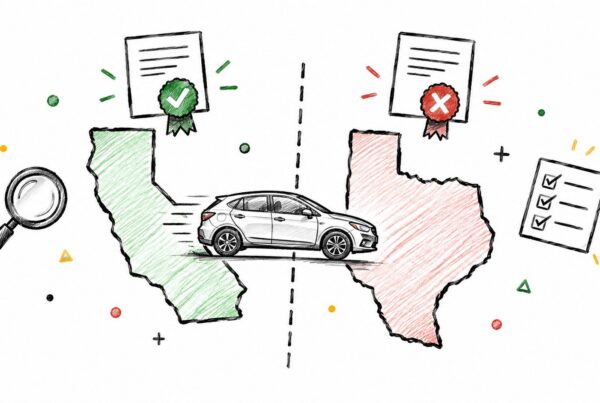
Georgia's Risk Reduction Program is a mandatory 16-hour course required by the Department of Driver Services for people with a DUI or certain related offenses who need to restore driving privileges. It includes an assessment and an intervention class designed to lower the chance of another offense by helping drivers understand behavior, choices, and risk.
If you're reading this after a court date, a probation meeting, or a notice from DDS, you're probably trying to answer a simple question under stress: what is risk reduction, and what exactly do I need to do now? In Georgia, the phrase doesn't mean a vague self-help idea or a corporate safety term. It means a specific state-required process tied to DUI compliance and, for many people, license reinstatement.
That distinction matters. Many drivers waste time signing up for the wrong class because the names sound similar. A defensive driving course is not the same as DUI Risk Reduction. A clinical evaluation is not the same as the 16-hour class. A victim impact panel may be required in your case, but it doesn't replace the DDS program either.
The good news is that this process is more straightforward than it first appears once you break it into steps. You need to know what the program is, why Georgia requires it, what happens in class, which format fits your schedule, and how to enroll in a DDS-approved option that satisfies the requirement.
Navigating Your DUI and Risk Reduction Requirement
A common Georgia DUI scenario goes like this. You leave court, look down at your paperwork, and see a requirement for a Risk Reduction Program. Then DDS, probation, or your attorney mentions license reinstatement, assessments, and other conditions, and suddenly the wording starts to blur together.

In Georgia, risk reduction isn't a generic phrase. It's a state-mandated educational process connected to DUI and certain other driving-related cases. The point isn't just to check a box. The state uses it as a structured intervention to help drivers look at the decisions, patterns, and pressures that led to the offense in the first place.
What the requirement usually means
This requirement generally appears in one of three ways:
- Court paperwork mentions it: A judge or probation officer tells you to complete the DUI or Risk Reduction Program.
- DDS reinstatement rules trigger it: You can't move forward with your license until the program is completed.
- Your case includes related steps: You may also need a clinical evaluation, treatment, or another documented condition before you're fully done.
If you're still dealing with the very first phase after an arrest, practical help matters too. Some drivers also need immediate legal-process support, including understanding release and bond logistics. In that situation, One Call Bail Bonds DUI services can help you understand that early part of the process.
Why people get confused
The confusion usually comes from the words themselves. "Risk reduction" sounds broad, but in Georgia it has a narrow legal meaning. It refers to a DDS-approved program, not just any educational class about safety.
Practical rule: If your paperwork says Risk Reduction, DUI School, or DUI Alcohol or Drug Use Risk Reduction Program, make sure the course is DDS-approved for that exact purpose.
Some cases also overlap with workplace or professional compliance issues. If your situation includes substance-related employment requirements, this overview of the return to duty process can help you understand how those obligations differ from a court-ordered DUI class.
The most important first step is simple. Read your paperwork carefully and match each requirement to the correct program. That saves time, avoids rejected certificates, and keeps your reinstatement process moving.
The Core Concept of Risk Reduction Explained
At its simplest, risk reduction means lowering the chance that something bad happens again. In the DUI context, that "bad outcome" is usually another impaired driving event, another arrest, another crash, or another decision that puts you and other people at risk.
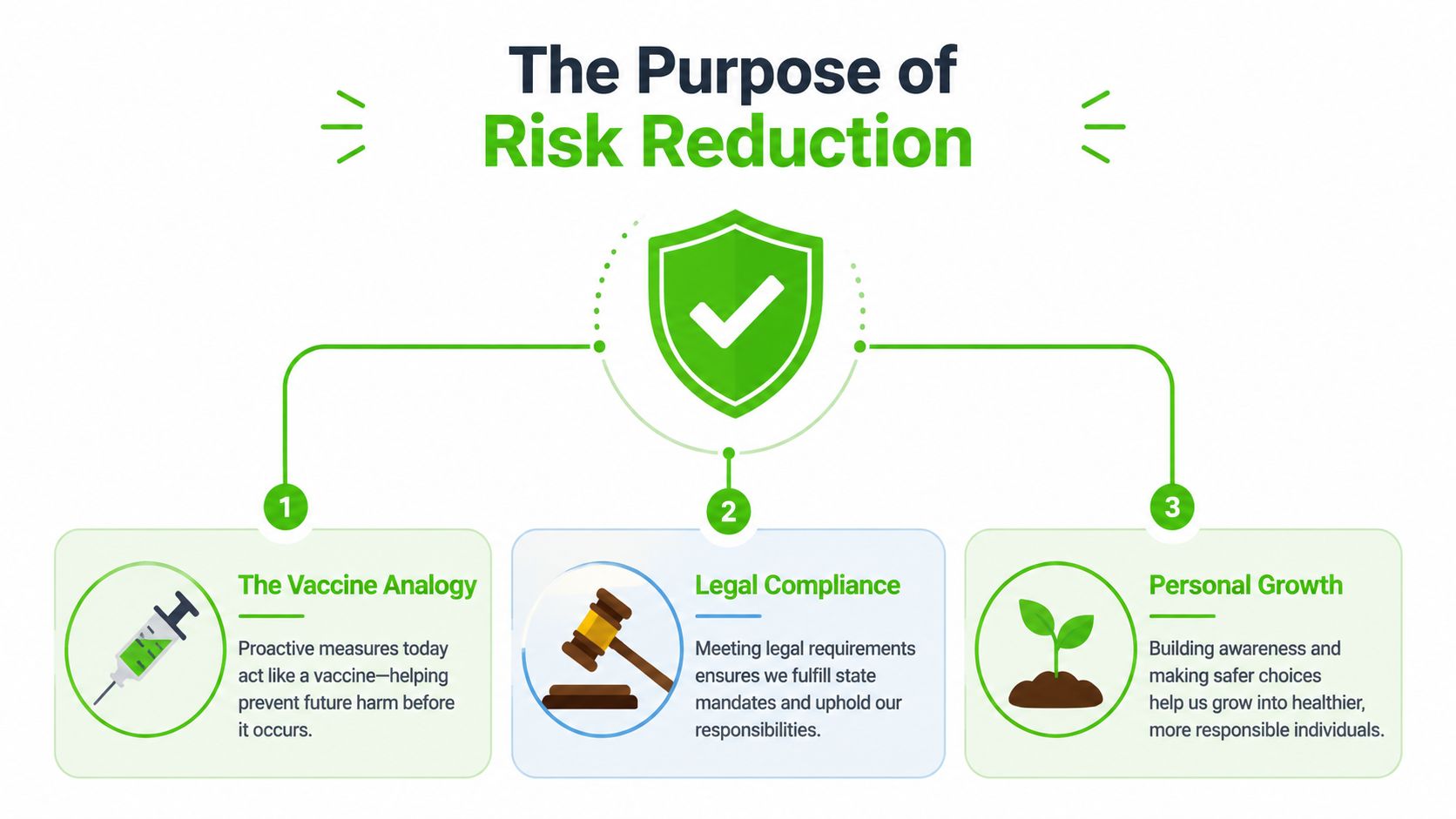
A useful way to understand it is through Relative Risk Reduction, often shortened to RRR. In plain language, RRR measures how much an intervention reduces the risk of a bad outcome compared to doing nothing. A standard example used in health research shows that if one group has a 20% risk of an adverse event and a treatment lowers that to 12%, the RRR is 40%. The explanation and example come from the NCBI overview of Relative Risk Reduction.
Why that idea matters for DUI education
That medical example isn't about driving, but the logic is the same. Georgia's Risk Reduction Program exists because education and structured self-examination can lower the likelihood of repeat behavior. The course aims to interrupt the chain between thoughts, habits, substance use, and driving decisions.
Here's the part many people miss. Risk reduction doesn't promise perfection. It doesn't mean a person becomes immune from mistakes. It means the state is using a structured intervention that is meant to reduce the probability of another offense.
What “risk” really means in daily life
In class, "risk" isn't just a legal word. It can include things like:
- Driving after drinking because you felt “fine”
- Misjudging timing and saying you only live a few minutes away
- Letting stress, anger, or routine override better judgment
- Relying on old assumptions about alcohol, medication, or tolerance
A lot of drivers don't think of themselves as risky people. They think they made one bad call. The course asks a harder question: what made that call feel reasonable in the moment?
That question is why the class focuses on cause and effect. Not abstractly. Practically. You look at choices, triggers, beliefs, and consequences.
The program is about behavior, not labels
Many people come in worried that the course will treat them like they fit into a single category. It shouldn't. A good learning environment recognizes that people arrive with different backgrounds, different levels of insight, and different reasons for being there.
Risk reduction works best when you stop asking, "How do I get through this?" and start asking, "What pattern do I need to stop repeating?" That shift is where the program becomes useful instead of just mandatory.
Why Risk Reduction is Mandatory in Georgia
Georgia doesn't require this program by accident. The state uses it as a formal part of the response to DUI and related offenses because the program is tied to both public safety and license reinstatement. If DDS says you need it, this is not optional paperwork. It's a required step.
One reason the program remains central is that Georgia has data showing it matters. A Georgia DDS study of over 50,000 participants found that completing the Risk Reduction program was associated with a 25% to 35% reduction in DUI reoffense rates within three years, according to the Georgia DUI risk reduction overview. That's a strong reason for the state to keep the requirement in place.
Who usually has to take it
The exact legal path can vary by case, but these are the situations where people commonly encounter the requirement in Georgia:
- DUI-related cases: This is the situation most readers are dealing with. A conviction or related DDS action often triggers the program as part of getting back into compliance.
- Drug-related driving or possession situations connected to driving status: Some cases involve substances even when the paperwork isn't labeled in the simplest possible way.
- License reinstatement conditions: Sometimes the question isn't whether the course is educational. It's whether DDS will process the next step without it. Often, they won't.
- Court or probation instructions: Even when a person is focused on fines, dates, or reporting requirements, the class may still be a standalone completion item.
Why the state makes it part of reinstatement
Georgia's approach is practical. Driving is a licensed activity, and the state can require steps that it believes support safer driving before restoring full privileges. Risk Reduction fits that purpose because it focuses on the decisions that often sit behind repeat offenses.
That also explains why taking the wrong class creates problems. A person may complete a different program in good faith and still find that DDS or the court doesn't accept it for this requirement. The label matters. The approval status matters. The exact course type matters.
Keep this separate in your mind: the court may punish the offense, but the Risk Reduction course is aimed at reducing the chance of another one.
What Georgia is really saying with this requirement
The state's message is straightforward. Before you return to the road under full legal approval, you need to complete a structured program that addresses impaired-driving risk directly.
That doesn't mean the state assumes every driver has the same history or the same level of need. It means Georgia has chosen a standard intervention that can be applied consistently when a case reaches that threshold.
For drivers, the practical takeaway is simple. If your case or your reinstatement instructions call for Risk Reduction, treat it as a core compliance task, not an optional add-on.
What to Expect from a Georgia Risk Reduction Course
You enroll, show up, and wonder what the day will look like. That uncertainty is common, especially if the court papers and DDS instructions feel more legal than practical. In Georgia, the Risk Reduction Program follows a set structure: first a needs assessment, then a 20-hour class delivered by a DDS-approved provider.
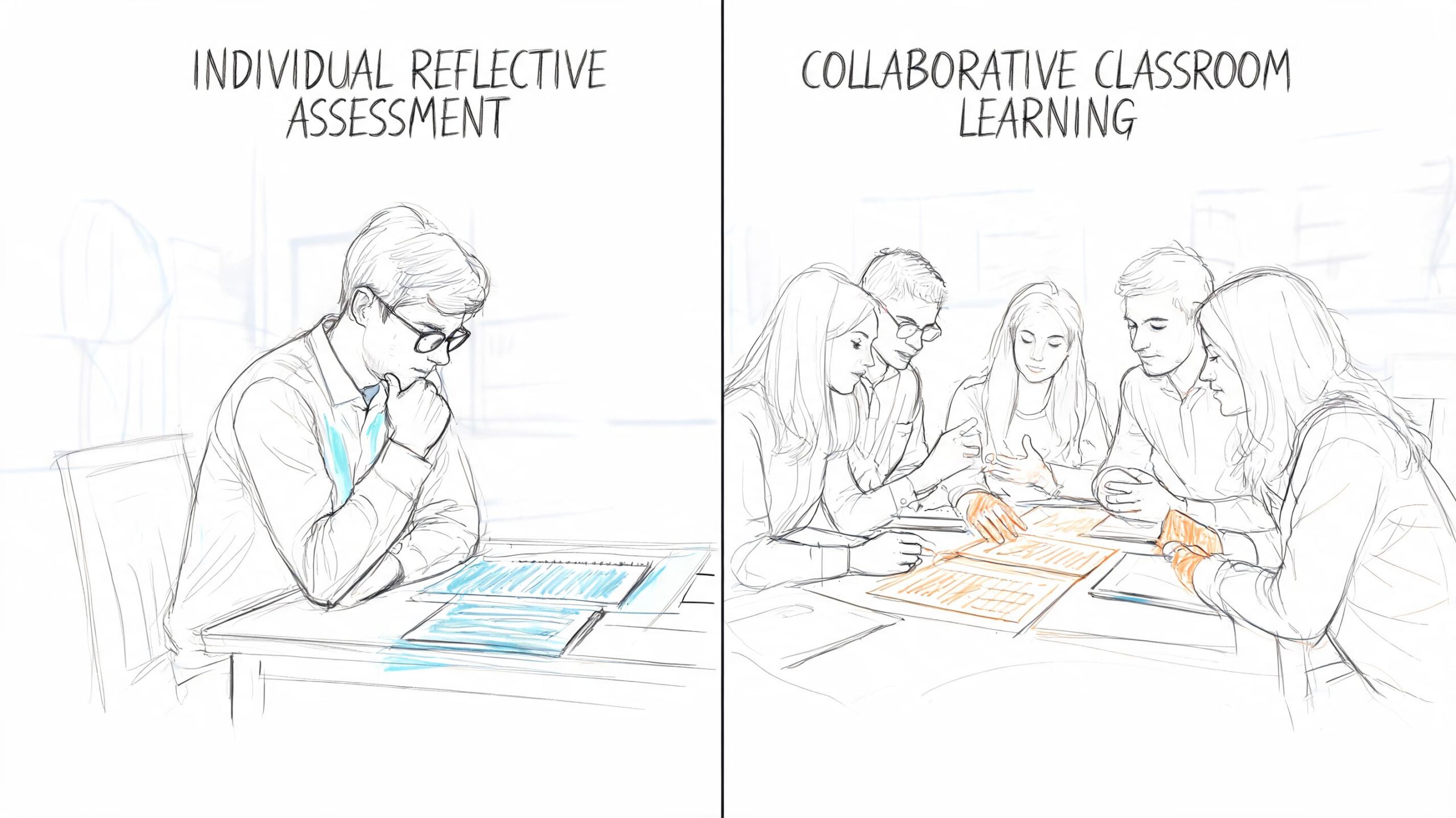
This helps to clear up a common misunderstanding. In everyday business writing, "risk reduction" can mean almost anything. In Georgia DUI and license reinstatement cases, it means a specific state-recognized program with a defined format and completion rules.
The assessment component
The first step is the assessment. Georgia providers describe this as the needs assessment portion of the program, completed before class begins, as shown by the Georgia DDS Risk Reduction Program requirements.
The assessment is meant to gather information, not to shame you. It gives the provider a structured picture of your alcohol or drug use history, driving record, attitudes, and past consequences. A good way to understand it is to compare it to a starting-point check before a course begins. The state wants the program to begin with a clear view of the patterns that may have contributed to the offense.
Questions often focus on areas such as:
- Alcohol or drug use history
- Past driving behavior
- Prior legal or personal consequences
- Attitudes about the offense
- Triggers, habits, and warning signs
Some students worry that there is a "right" answer to every question. There usually is not. The practical goal is honest information so the program can address decision-making risk in a real-world way.
The class portion
After the assessment, you complete the class itself. Georgia's Risk Reduction Program is a 20-hour intervention course through a DDS-approved school. That is the part many drivers casually call "DUI school," but for Georgia compliance, the approval status and exact course type are what count.
The curriculum usually covers two big areas. One part focuses on alcohol and drug use and how impairment affects judgment, reaction time, attention, and self-control. The other part focuses on driving behavior, including safer choices, hazard awareness, and the decision points that lead up to risky conduct on the road.
What you usually learn
A Georgia Risk Reduction class often includes topics like:
- Alcohol and drug effects on driving: how substances change perception and response
- Georgia DUI laws and consequences: the legal rules tied to impaired driving
- Personal decision patterns: how routine, stress, denial, or overconfidence can lead to bad choices
- Safer driving habits: practical defensive driving ideas you can apply after the course
If you have looked at other state-required classes, some of this may sound familiar. The difference is the purpose. This course is built for the Georgia legal requirement tied to DUI-related risk and reinstatement, not for general workplace safety or a standard driver improvement class. If you are also comparing it to a broader online driver education course in Georgia, keep in mind that driver education and Risk Reduction serve different legal functions.
What the class experience feels like
Students often expect a lecture where they sit and wait for the clock to run out. The actual experience is usually more structured and more personal than that. Instructors guide discussion, present information in plain language, and ask you to apply it to real choices drivers make before, during, and after drinking or drug use.
A lot of DUI cases grow out of familiar human patterns. Overconfidence. Stress. Rationalizing one more trip. Assuming "I'm fine" without checking the facts of your condition. The course addresses those habits directly, which is why many students leave understanding their case more clearly than they did when they walked in.
The practical takeaway is simple. Expect a formal process, an educational setting, and a course that asks for honest participation so you can finish the requirement correctly and keep your reinstatement steps on track.
Course Formats Online vs In-Person Learning
One of the most common questions after "what is risk reduction" is this one: Do I have to sit in a physical classroom, or can I complete it online? The answer depends on what DDS approves and what format is currently available through a provider, but many Georgia drivers now have more flexibility than they expect.
Older assumptions said virtual learning was automatically less effective. That's no longer a safe assumption. A 2025 IIHS study on Georgia participants found that state-approved online and virtual DUI risk reduction courses produced comparable crash rate reductions of around 12% to in-person classes, according to the report summary discussing online risk reduction effectiveness.
In-person classes
Some people do best in a physical classroom. The structure helps. So does getting out of the house, minimizing distractions, and being in a space that feels official.
In-person learning can be a strong fit if you:
- Need external structure: You're more focused when you're physically present.
- Prefer face-to-face instruction: You learn better by interacting directly with an instructor and classmates.
- Want fewer tech issues: No login problems, camera setup, or internet interruptions.
Live virtual options
Live virtual formats can be a practical solution for drivers who work irregular hours, care for family members, or live far from a convenient location. The key issue is approval. It must be a format the state accepts for your requirement.
Virtual learning may work well if you:
- Have transportation barriers: You're trying to stay compliant while your license status is still limited.
- Need schedule flexibility: Home access can make attendance much easier.
- Can stay engaged online: You're comfortable following rules and participating in a live remote environment.
Some readers also compare this with other online driving-related education. If you're sorting out the difference between DUI compliance and other web-based courses, this page on Georgia online driver education options can help clarify that they serve different purposes.
Which format should you choose
The best format is the one that meets three tests:
- DDS-approved for your exact requirement
- Realistic for your schedule
- A good fit for how you learn
Convenience matters, but completion matters more. The best class format is the one you'll attend fully, finish on time, and submit correctly.
A busy nurse working shifts may choose live virtual. A driver who struggles with distractions may prefer the classroom. Neither choice is automatically better. Compliance and follow-through are what count.
Risk Reduction vs Other Court-Ordered Programs
After a DUI, people often hear a cluster of terms that sound interchangeable when they aren't. Risk Reduction, Defensive Driving, Clinical Evaluation, ASAM Level 1 treatment, and Victim Impact Panel can all appear in the same general conversation. They do different jobs.
Here's a simple side-by-side comparison.
Georgia Driver Program Comparison
| Program | Primary Purpose | Typical Duration | Who Needs It? |
|---|---|---|---|
| Risk Reduction Program | Meets Georgia DUI-related educational requirement and supports license reinstatement compliance | 16-hour course plus assessment process | Drivers ordered by court, probation, or DDS for DUI-related or similar qualifying cases |
| Defensive Driving | Improves general driving habits, often for point reduction or other non-DUI driving purposes | Varies by approved course | Drivers handling points, ticket issues, or general driving improvement |
| Clinical Evaluation | Assesses whether substance use treatment or additional services are appropriate | Varies by provider and case needs | Drivers specifically ordered to complete an evaluation or those referred based on case facts |
The mistake that causes the most delay
The biggest problem happens when someone takes a Defensive Driving class thinking it will satisfy a Risk Reduction requirement. It usually won't. Defensive driving may be useful in its own lane, but it isn't the same legal product.
A clinical evaluation is also different. It doesn't replace the Risk Reduction course. Instead, it can exist alongside it if your court, probation officer, or treatment recommendation requires more than education alone.
When treatment enters the picture
Some cases involve substance use concerns that go beyond the educational scope of the DUI course. In those situations, drivers may be referred for clinical services or treatment planning. If you're trying to understand a broader workplace or substance-related compliance pathway, this explanation of what the SAP program is can help separate that process from a Georgia DUI class requirement.
For families looking beyond the immediate court checklist and trying to understand treatment resources more broadly, it can also help to review accredited recovery options at Newport Beach Rehab as a general educational resource.
One program can satisfy one requirement and still leave two others unfinished. Always match each document you received to the exact service it names.
A practical way to sort your paperwork
Use this question for every item on your list: Is this education, evaluation, treatment, or impact programming? Once you sort each requirement into the right bucket, the process becomes much easier to manage.
That approach prevents duplicate effort, rejected certificates, and last-minute surprises when you're expecting your reinstatement process to move forward.
Your Next Steps Enrolling in a DDS-Approved Course
You are ready to sign up, but one wrong click can cost you time. A driver may finish a class, pay the fee, and still find out later that the school was not DDS-approved or that the course did not match the paperwork. That is the part that frustrates people most. The class itself is usually straightforward. Matching the class to the Georgia requirement is what matters.
In Georgia, "Risk Reduction" is not a broad corporate idea about lowering risk at work. It is a specific state-recognized DUI intervention program tied to court compliance and, in many cases, license reinstatement. The Georgia Department of Driver Services explains the approved DUI Alcohol or Drug Use Risk Reduction Program and lists licensed providers, which is the safest place to verify that you are enrolling in the right course.
What to gather before you enroll
Set your papers out like a checklist before you call or register online. That small step prevents mix-ups.
- Your photo ID and contact information: The school needs to match your record correctly.
- Court, probation, or arrest paperwork: Read the exact language used in your case.
- Any DDS notice related to reinstatement: This helps confirm whether the course is part of getting your license back.
- Questions about other requirements: If you were also told to complete an evaluation, treatment, or a victim impact panel, ask how each item should be handled and in what order.
A good rule is simple. If a document names a program, match that exact program name before you enroll.
A practical enrollment path
- Check the wording on every document. Look for "DUI Alcohol or Drug Use Risk Reduction Program," "Risk Reduction," or similar court language.
- Verify the school is DDS-approved. Use the DDS provider information, not a general driving school ad or a course that sounds similar.
- Ask about the class format and schedule. Choose the option you can complete on time.
- Confirm what you receive after completion. You want to know how your completion is documented and what you need to keep for your records.
- Store every receipt, email, and certificate. Reinstatement often goes more smoothly when you can produce documents quickly.
If you feel confused here, that is normal. Georgia's process has several moving parts, and the names of programs can sound alike. The easiest way to avoid a delay is to slow down for ten minutes before enrollment so you can confirm approval, course type, and paperwork.
If you are comparing Georgia to other states
Some readers are also looking at alternatives used elsewhere, especially diversion or second-chance options. If you want a comparison point, this overview of a DUI second chance program in Florida shows how different another state's approach can be.
Georgia usually rewards accuracy more than speed. Choose the DDS-approved provider, enroll in the exact course named in your documents, complete it on schedule, and keep your records together. That gives you the clearest path from court order to course completion and, when required, toward reinstatement.
If you need to complete Georgia's required DUI program, take the next step with Georgia DUI Schools Risk Reduction courses. You can review approved class options, find a format that fits your schedule, and move ahead with the exact requirement tied to DUI compliance and license reinstatement.