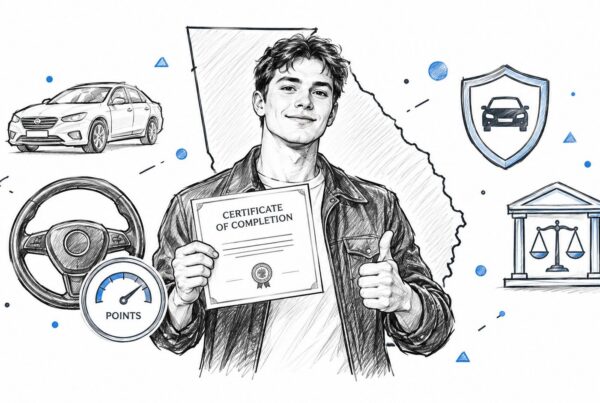
You're sitting in a room you didn't choose, or you're staring at a login page for a class you'd rather skip if the court allowed it. That's the honest starting point for many who end up in a defensive driving course comedy format, whether they found it through a judge's order, a DDS requirement, or a ticket deadline that won't wait. The surprise is that the jokes aren't there to make the class softer, they're there to make the rules stick when you get back behind the wheel.
Why a Required Class Can Still Make You Laugh
The first thing students usually notice is the mismatch. You're there because a court, a licensing rule, or a safety requirement put you there, not because you woke up excited about traffic law. That tension is exactly why comedy shows up in this kind of course, because a class that feels hostile or dull is harder to remember once you leave.
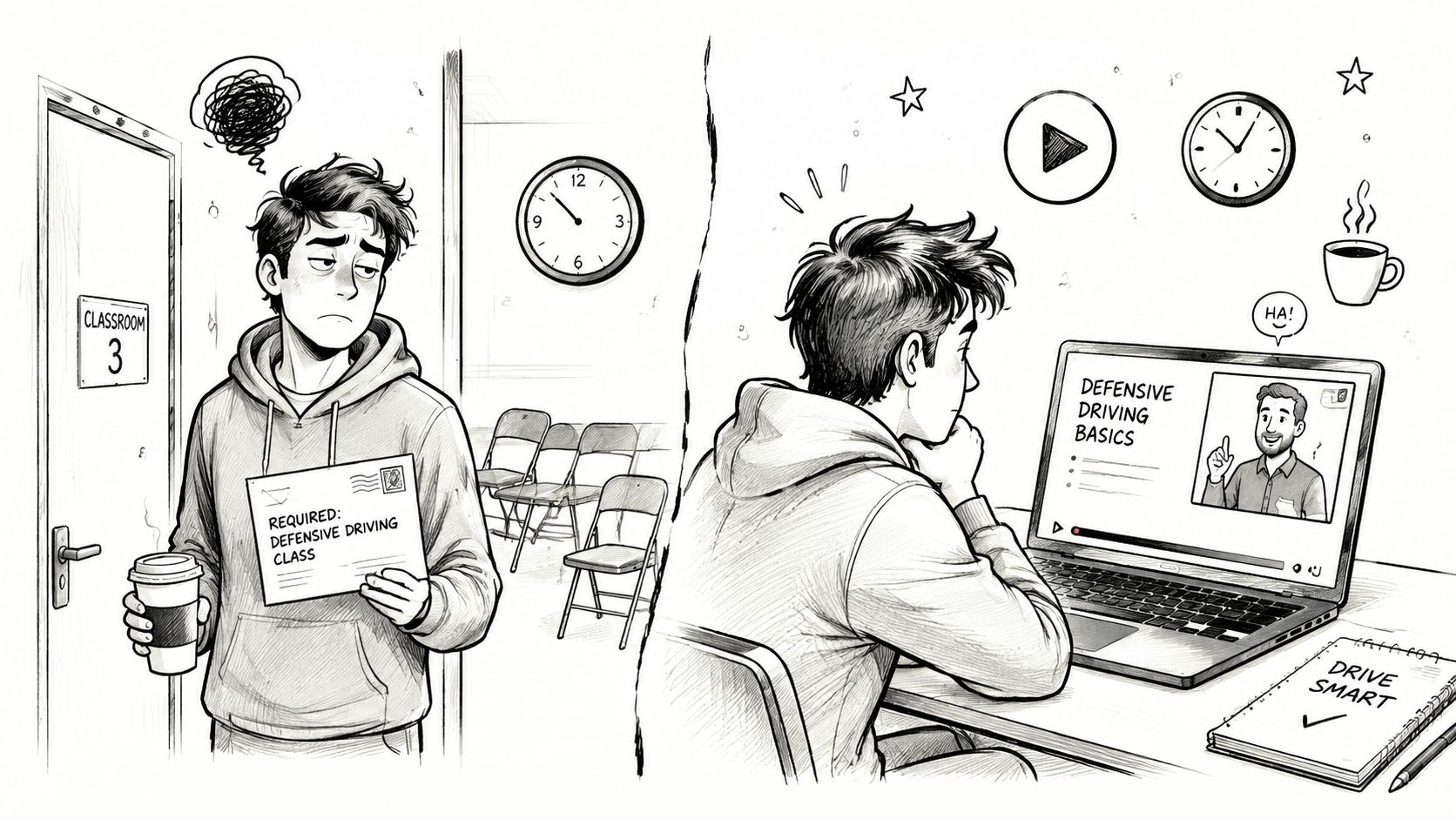
A good instructor uses humor to lower the “I'm being punished” feeling without lowering the standard. That's the difference between a joke that teaches and a joke that wastes time. If you want a useful parallel from the broader world of training, LearnStream's piece on engaging compliance training that works makes the same basic point, people remember rules better when the delivery keeps them awake and attentive.
Practical rule: if the humor helps you notice the unsafe choice, it earns its place. If it only gets a laugh and leaves the lesson unchanged, it's filler.
A courtroom-bound student usually doesn't need more entertainment. You need a course that makes the next morning's driving feel less automatic and more deliberate. That's why the better versions of this format feel light on the surface and serious underneath.
For a Georgia driver trying to understand why a defensive class can still be structured well, the state-specific side of the story is laid out in Georgia DUI Schools' defensive driving overview, which fits neatly with the idea that the class should be usable, not just amusing.
What Defensive Driving Course Comedy Actually Means
Defensive driving course comedy is not a separate curriculum. It's an instructional style that wraps approved traffic safety content in humor so the lesson lands faster and stays longer. The material still has to cover the driving behavior, the danger, and the safer response, but the delivery can use jokes, sketches, visual exaggeration, and conversational asides to keep students engaged.
The joke comes after the lesson, not before it
The cleanest way to think about it is this. The course starts with a real safety problem, such as distraction, tailgating, weather, fatigue, or a bad reaction to another driver's mistake. Then the humor gives the problem a shape the brain can remember, and the takeaway points straight back to the safer choice.
That matters because students often arrive defensive. Some feel embarrassed, some feel annoyed, and some are counting the minutes until the requirement is over. Comedy works here because it breaks that defensive posture without pretending the rule doesn't matter.
A course can still be rigorous even when it's funny. The humor should create an emotional marker, a little mental hook that makes the unsafe choice easier to recall later. If an instructor jokes about glancing at a phone at the worst possible moment, the joke only works if the class leaves with the actual habit change, not just the laugh.
What it is not
It's not stand-up comedy with traffic signs in the background. It's not a room full of random punchlines loosely related to cars. And it's definitely not a way to dodge the seriousness of a violation or a license issue.
A real defensive driving course comedy format uses humor as an instructional layer, not a replacement for the safety lesson. When that line stays clear, the course can feel easier to sit through and easier to remember later.
How Comedy Entered the Traffic School Classroom
Comedy didn't wander into traffic school by accident. It showed up because the market got crowded, and providers had to compete for attention in a space where many students were only half-willing participants. A 1991 Los Angeles Times report described California traffic schools as a major consumer market, generating about $30 million a year, with roughly 4,000 people attending every day except Sundays and holidays and about 1.2 million of the state's 19.5 million drivers taking a traffic school course in the prior year. The same report notes that some schools hired comics and even offered cooking lessons to attract customers, which shows how humor became part of a business strategy, not a novelty on the side. Los Angeles Times report on California traffic schools
Competition pushed providers to sound human
Once providers realized students had options, they had to make the class feel less like a penalty box. Humor was an obvious tool because it made the room feel less threatening and gave instructors a way to keep attention without lecturing for hours in the same tone.
That pressure still exists today, especially with online delivery. A self-paced class has to hold attention with voice, pacing, and a few smart visual moments. A live class has to hold it with timing and presence. Either way, the old lesson still applies, if students tune out, the safety message never lands.
The modern comedy-style provider model has also grown well beyond a regional gimmick. One long-running comedy-format defensive driving provider says it has taught more than 3 million students since 1989, and the same brand says its online course has a 99.99% pass rate and has served over 2.5 million students. Those figures show that humor-based traffic instruction has become a durable format rather than a one-off marketing stunt. Comedy Defensive Driving
In Georgia, the reason for using comedy is less about novelty and more about fatigue. People come into court-ordered or ticket-related classes already irritated, which means the delivery has to work harder to earn attention. Humor does that job best when it stays tethered to the safety lesson.
Where the Joke Has to Stop
Georgia students need one thing made very clear. A Risk Reduction or defensive driving class is still a compliance class first. Humor can make the material easier to sit through, but it can't erase the legal purpose of the course, the seriousness of a DUI case, or the fact that someone may also need a clinical evaluation or a Victim Impact Panel.
Comedy can't soften consequences
The safest line is simple. Don't joke about the arrest itself, don't joke about losing a license, and don't turn the Victim Impact Panel into a punchline. Those moments exist because real people were harmed or real legal consequences followed, and a serious course has to treat that reality with respect.
Comedy also can't drift away from the approved lesson plan. If the class is supposed to cover impaired driving risks, state requirements, or hazard recognition, the humor has to support those topics rather than replace them. A funny story that never comes back to the rule is just noise.
A joke can make the room open up. It can't make the law go away.
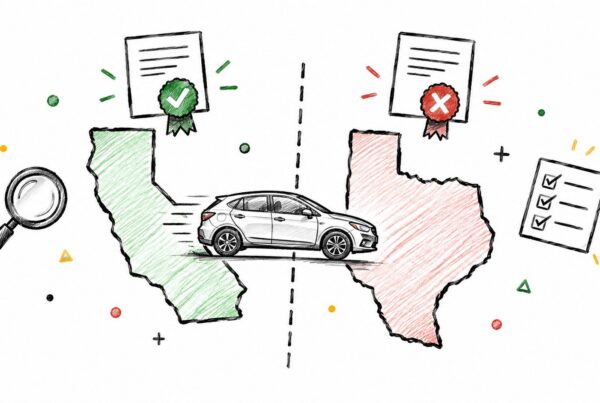
That's the useful boundary for a Georgia student. The state-approved course still has fixed requirements, and the delivery style doesn't change the fact that the student has to complete the proper class, meet the deadline, and follow the compliance steps that go with the case. In Texas, for example, a comedy defensive driving class is still the same approved six-hour Driver Safety Course, and the humor changes the delivery style, not the underlying requirements; that's a good comparison point for understanding how comedy should be treated as an instructional layer, not a legal shortcut. Texas comedy defensive driving explanation
What serious instruction still looks like
The material still has to teach hazard recognition, following distance, distraction avoidance, and response timing. If comedy pushes those topics into the background, the course has missed the point. The funniest class in the world is still a bad class if a student leaves without understanding what to do differently on the road.
Georgia students usually get this once it's explained plainly. The joke is there to keep you listening. The rule is there to keep you alive, keep you licensed, or keep your case moving in the right direction.
Sample Comedy Patterns That Actually Teach
The strongest humor in this kind of class follows a pattern. First comes the setup, then the laugh, then the safety takeaway. That structure works because it mirrors how people remember mistakes, not how comedians chase applause.
The exaggerated mistake
An instructor might say, “You know that driver who thinks the brake pedal is a suggestion in the rain? That's the person who discovers following distance after the rear bumper has already met the truth.” The joke is exaggerated, but the lesson is plain. Wet roads stretch stopping distance, and overconfidence turns into a collision fast.
That same pattern works for distraction. A teacher can playfully describe a driver who changes the radio, checks a text, and then suddenly acts shocked that the car ahead slowed down. The point isn't the joke itself. The point is that the joke names a real hazard in a way the brain can replay later.
The callback to a familiar habit
A lot of students laugh hardest when the joke points at a habit they already recognize. “If your habit is ‘I can still make that light,’ your hazard recognition is already late.” That line works because it's specific, and it pushes the student to notice the habit without turning the room into a lecture hall full of guilt.
The visual gag
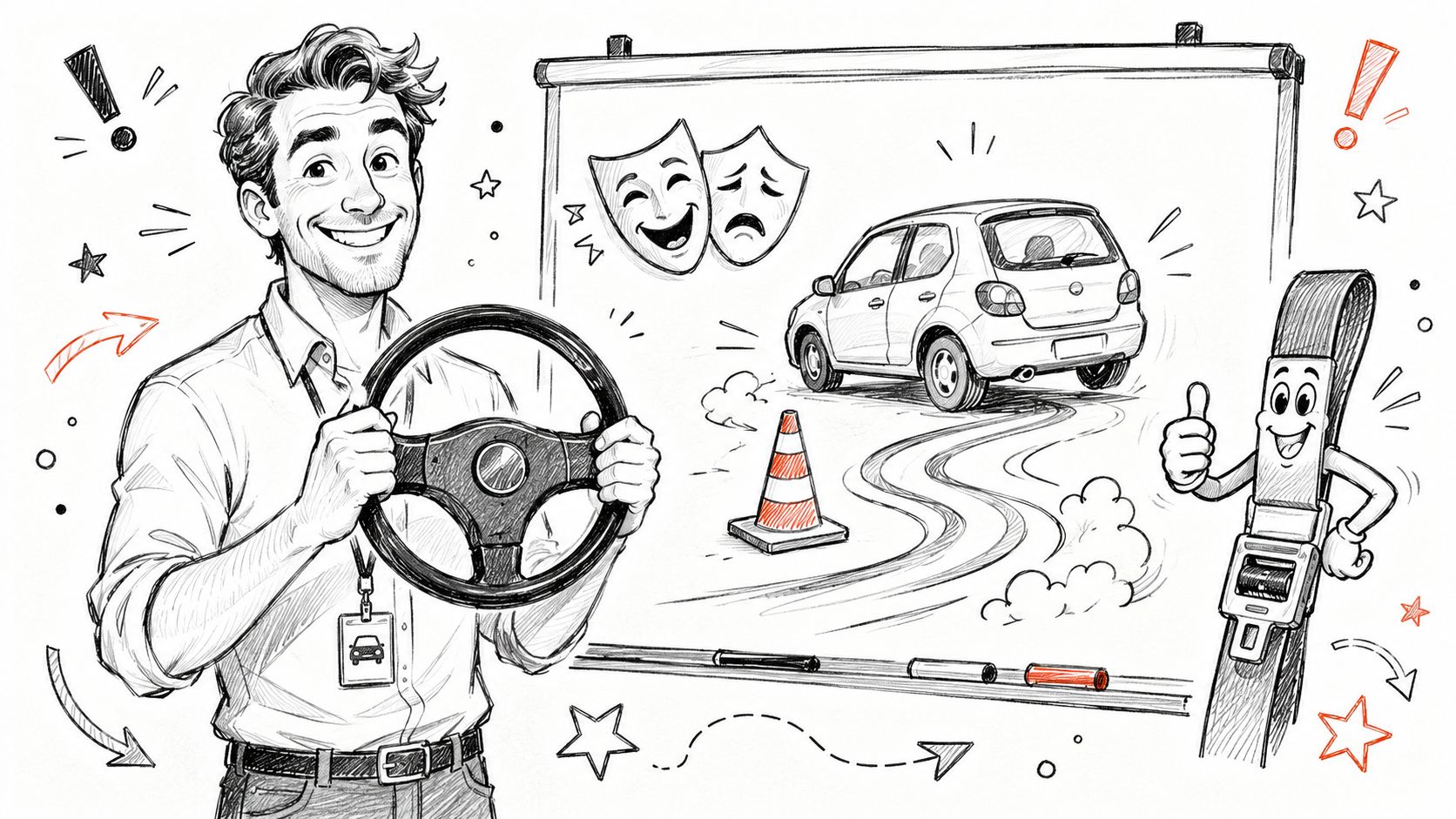
Some lessons become memorable when the instructor uses a physical object or a simple visual. A marker line on a board, two chairs spaced apart, or a mock steering motion can make following distance or reaction time easier to picture than a paragraph of warning ever could. In a real classroom, that kind of visual humor keeps the idea grounded in movement and space.
The safe punchline
The punchline should land on the safer choice. “The hero move wasn't swerving like a movie extra. The hero move was slowing down early and keeping the car where it belonged.” That last line matters because it rewards the behavior you want repeated.
The best comedy in defensive driving doesn't invite students to admire the mistake. It uses the mistake to spotlight the right response.
Online, Live Virtual, or In-Person Classroom
The format changes the feel of the humor, even when the safety lesson stays the same. Some people do better when they can work at their own pace. Others need a live instructor to keep them engaged. A few learn best when they're in a room, hearing the reaction, seeing the examples, and asking questions in real time.
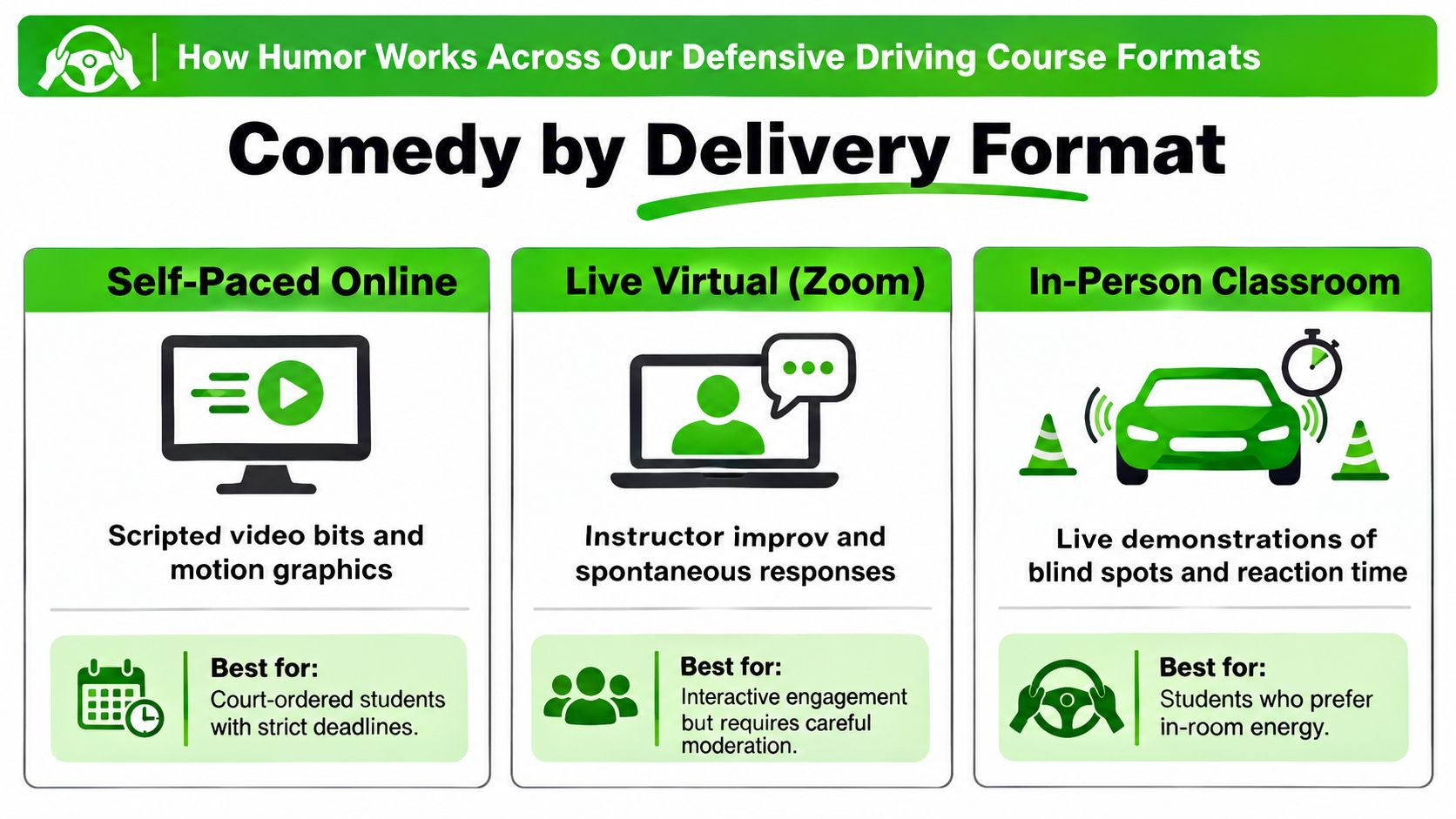
Comedy by Delivery Format
| Format | How comedy shows up | Best for |
|---|---|---|
| Self-Paced Online | Scripted video bits, motion graphics, conversational quiz prompts | Court-ordered students with strict deadlines |
| Live Virtual | Instructor improv, spontaneous responses, room interaction | Students who want engagement but need to stay home |
| In-Person Classroom | Live demonstrations, audience feedback, physical room energy | Students who like face-to-face instruction |
In a self-paced course, the humor has to be clear without depending on crowd timing. That usually means short video segments, animated examples, and a friendly tone that keeps the student moving. A course like this can be a practical fit for someone who needs to finish on schedule and doesn't want to spend hours in traffic just to attend class. If you're checking whether that style is acceptable for a court situation, this explanation of online defensive driving legitimacy is useful context.
Live virtual classes give the instructor more freedom. A Zoom room lets a teacher read the room, respond to questions, and shift the tone when the topic gets heavy. That flexibility can make comedy feel more natural, but it also means the instructor has to manage it carefully so the class doesn't drift into casual chatter.
In-person classrooms bring back the energy of a real room. Students can watch demonstrations of blind spots or reaction time, and the humor often lands because everyone sees the same physical example at the same moment. If you're choosing based on the fastest route to compliance, Georgia DUI Schools also offers a classroom-style PowerPoint explanation of defensive driving, which may help you compare the feel of a live setting with a self-paced one.
Tips for Instructors and Marketers Using Humor
Instructors should start with the rule, then find the joke that supports it. If the lesson is about distracted driving, write the safety point first, then build a line that makes the bad habit obvious without making light of the injury risk. That order matters because the joke should sharpen the lesson, not outrun it.
A short checklist that keeps the tone right
- Test the line on a non-expert. If someone outside the traffic-school world doesn't instantly understand the safety point, the joke is probably too clever for its own good.
- Avoid punching down. Students in court-ordered classes are already dealing with pressure, deadlines, and embarrassment. Humor should never sound like ridicule.
- Keep a fallback response ready. A joke can fall flat in a serious room. When it does, the instructor needs a clean way to move back to the lesson without making it awkward.
Marketers need a different discipline. Don't sell the course as if it's a comedy show that happens to mention driving. That framing can make students assume the class is unserious, which creates a bad surprise when they realize the approval, paperwork, and deadlines still matter. The clearer promise is that the course uses humor to make the safety material easier to absorb.
Strong marketing also shows the actual format. If the course is online, show the online flow. If it's classroom-based, show a typical classroom. That keeps expectations honest and helps students choose the right path before the deadline gets tight.
For creative framing, Crowbert's examples of creative marketing are useful as a reminder that strong promotion can still be concrete, specific, and truthful. The best course marketing doesn't oversell fun, it shows how the format supports actual completion.
Picking the Right Georgia Course for Your Situation
The cleanest way to think about this is simple. Humor is the wrapper, safety is the content. Once you understand that, the right course depends on why you're taking it and what Georgia process you're trying to satisfy.
If you're court ordered after a DUI
If your case requires a state-compliant DUI education path, the focus is on the Risk Reduction requirement, not on whether the class sounds amusing. In that situation, you want the approved course that matches the legal obligation, plus any related requirements such as a clinical evaluation or a Victim Impact Panel if your case calls for them. Comedy can make the class easier to absorb, but it doesn't change what the court expects.
If you just need a defensive driving class
If you're taking a course to address points, improve habits, or potentially help with insurance, then the format matters more. Some people do better with a self-paced online class because it fits around work and deadlines. Others want a live virtual room or an in-person session because they stay more focused when another human is guiding the pace.
If your case includes evaluation or panel requirements
A DUI case can involve more than one step, and that's where students get confused. A clinical evaluation is not the same thing as a defensive driving class, and a Victim Impact Panel is not a substitute for either one. Each requirement serves a different purpose, so the smart move is to match the course to the actual obligation instead of assuming one class will cover everything.
Georgia DUI Schools offers the pieces separately, including the required Risk Reduction course, defensive driving options, clinical evaluations, ASAM Level 1 treatment, and Victim Impact Panels. The right choice is the one that fits your paperwork, your deadline, and your learning style, not just the one with the funniest trailer.
If you're trying to get this handled correctly and move on with your life, start with the course or service that matches your situation and verify the court or DDS requirement before you enroll. Georgia DUI Schools can help you sort out the next step, and you can do that by visiting Georgia DUI Schools to find the option that fits your case.