
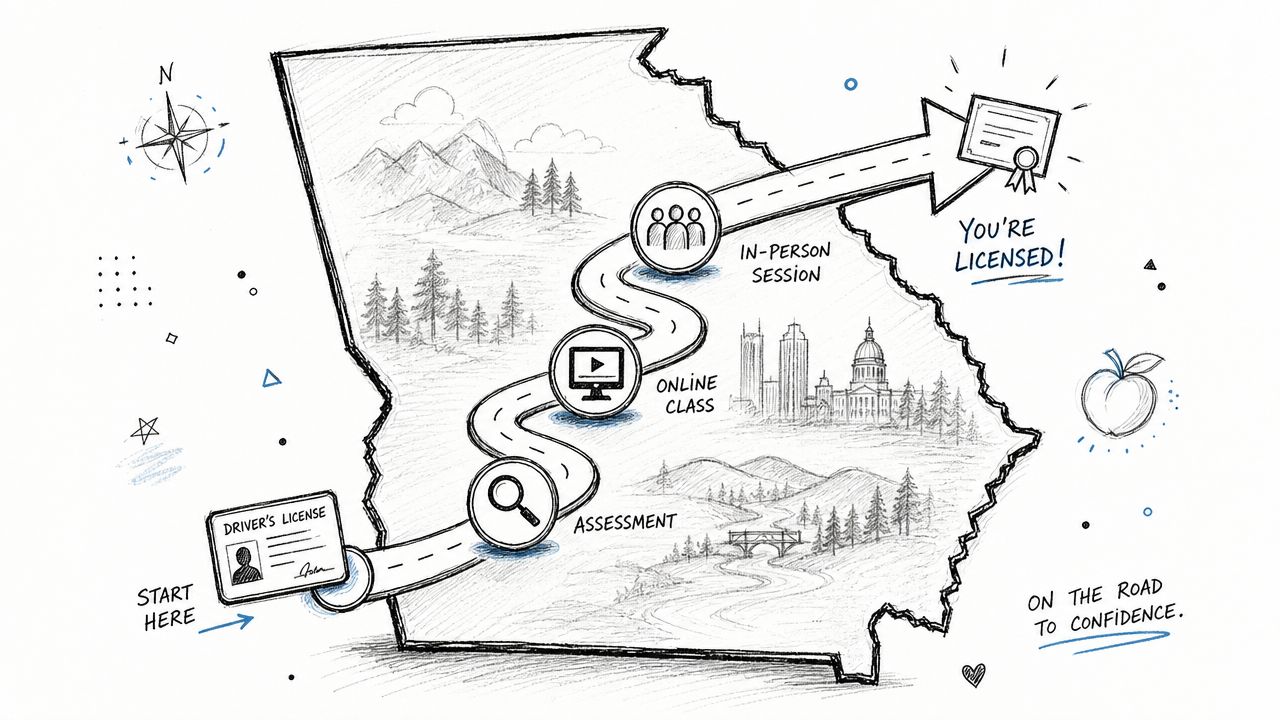
A lot of people find this page at the same point in the process. The arrest is behind them, the court paperwork is confusing, the license issue is hanging over work and family, and nobody seems to explain the middle part very well. You know you need to do something, but the order of steps feels unclear.
That “in between” period is where most stress builds. You may be waiting on court dates, DDS requirements, probation instructions, or a reinstatement answer that doesn't come as quickly as you hoped. The practical way forward in Georgia usually starts with one mandatory requirement: the Back on Track course, formally the state's DUI Risk Reduction Program.
This isn't about guilt or labels. It's about getting compliant, avoiding extra delays, and moving one step closer to lawful driving again.
Your First Step After a Georgia DUI
If you've been told to complete a DUI class in Georgia, the first thing to understand is simple. The state-approved Risk Reduction Program is part of the path back to driving privileges. Waiting to “figure it out later” usually makes the process harder, not easier.
For many drivers, the first days after a DUI are a blur of separate demands. Court dates. Possible license suspension. Questions from work. Transportation problems. Calls to attorneys, family, or probation. In that noise, people often miss the fact that some requirements move on their own timeline and won't pause just because you feel overwhelmed.
Start with the requirement that affects reinstatement
Georgia uses a structured process for drivers dealing with DUI-related consequences. The Back on Track course is a state-certified prerequisite for many people seeking compliance and reinstatement. If your case also involves a clinical issue, a court order, or treatment recommendations, that may come later, but the Risk Reduction requirement is often the first concrete task you can complete.
If you've also been told you may need a clinical evaluation, it helps to understand how that fits into the larger process. A plain-language overview of a Georgia DUI evaluation can help you separate the class requirement from any clinical follow-up.
Practical rule: Don't wait for your stress level to drop before taking action. Enroll in the required process while the details are still fresh and deadlines are easier to meet.
What usually helps most
The drivers who move through this with the fewest setbacks tend to do three things early:
- Confirm the exact requirement: Read your court order, DDS notice, or probation instructions closely.
- Choose a DDS-approved school: Not every program marketed online fits Georgia requirements.
- Keep every document together: Save receipts, enrollment confirmation, and your completion paperwork in one place.
This process can feel personal, but the steps themselves are standardized. That's good news. Once you know the order, you can stop guessing and start finishing requirements one by one.
What Is the Georgia Risk Reduction Program
You finish court, pull together the paperwork, and then hit the part nobody explains well. There is a stretch of waiting between the case itself and getting your license status cleared with DDS. The Georgia Risk Reduction Program sits right in the middle of that stretch. It is the formal name for what many drivers call the Back on Track course, and it has to be completed the way the state requires.
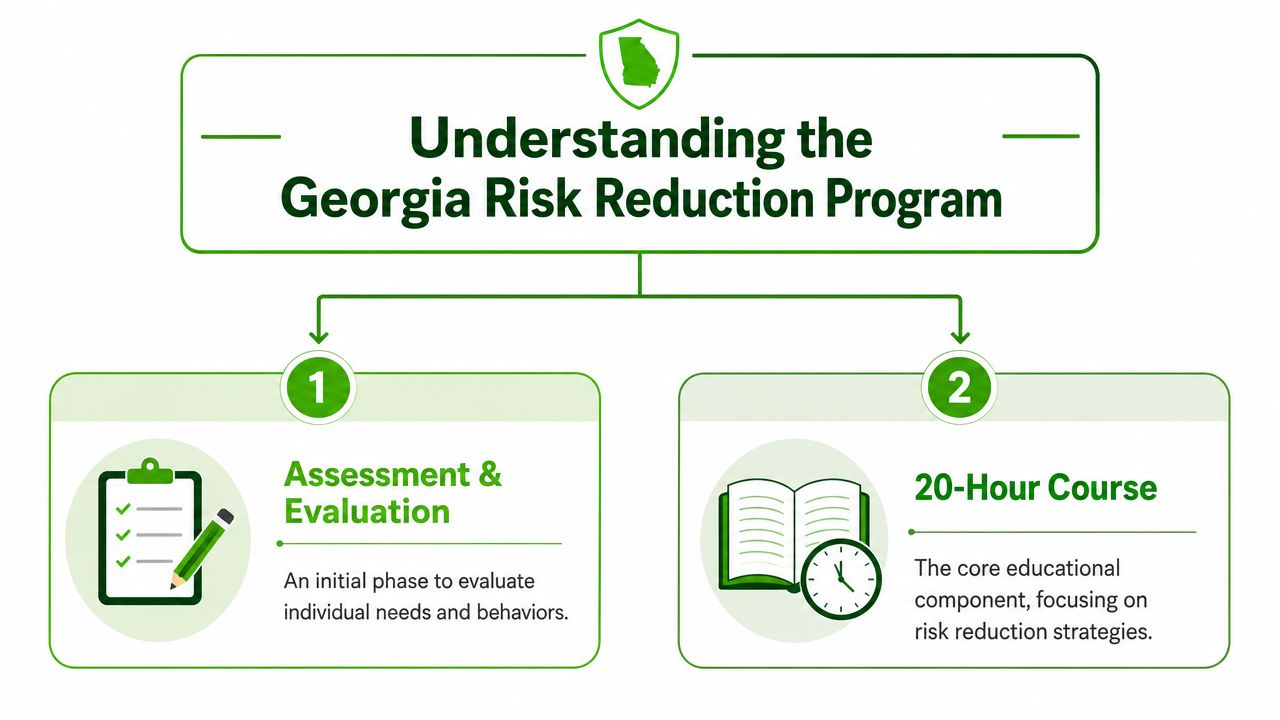
Georgia sets this up in two parts. First comes the Assessment Component. Then comes the 20-hour Intervention Component. The class uses the Prime for Life curriculum, which is built to examine judgment, risk patterns, and the decisions that lead people back into the same trouble.
That order matters more than people expect.
The assessment is not just intake paperwork. It uses the 130-question NEEDS Assessment before enrollment, and schools have to handle the timing correctly for your class attendance to count. A mistake here can create the kind of delay that keeps people stuck in the waiting period longer than necessary, even after they thought they had checked the box.
The state-set costs are straightforward:
| Component | State-Mandated Fee |
|---|---|
| Assessment Component | $100 |
| Intervention Component | $235 |
| Workbook | $25 |
From an instructor's side, the biggest problem is rarely the class content. It is timing, documentation, and assumptions. A driver shows up late for the assessment, misses a required step, or leaves without confirming what paperwork to keep. Then DDS reinstatement gets delayed, and the stress level goes up because it feels like nothing is moving. In reality, the process is moving. It just moves on paperwork and sequence, not on urgency.
That is why completion has to be valid, not just attempted. If the assessment is skipped, done out of order, or not completed on time before class, the certificate can become the issue later when you are trying to satisfy DDS requirements. Keep your receipt, your attendance record, and your completion paperwork together from day one.
In other regulated settings, training has the same basic purpose. It creates a record that a required step was completed under a defined standard. For a business example, AI for compliance training shows how structured training is built around consistency, documentation, and proof of completion.
For drivers in Georgia, that is the practical point. The Risk Reduction Program is both an educational course and an administrative checkpoint. If you treat it seriously and complete it in the required order, you remove one of the biggest sources of uncertainty during the wait to get fully reinstated.
Who Is Required to Take the DUI Course
The surprise usually hits during the waiting period. A driver has already been to court, assumes the hardest part is over, then gets a DDS notice or instruction from probation and realizes the Risk Reduction course is still standing between them and reinstatement. That moment creates a lot of unnecessary panic, especially for people who thought the class only applied to high BAC cases.
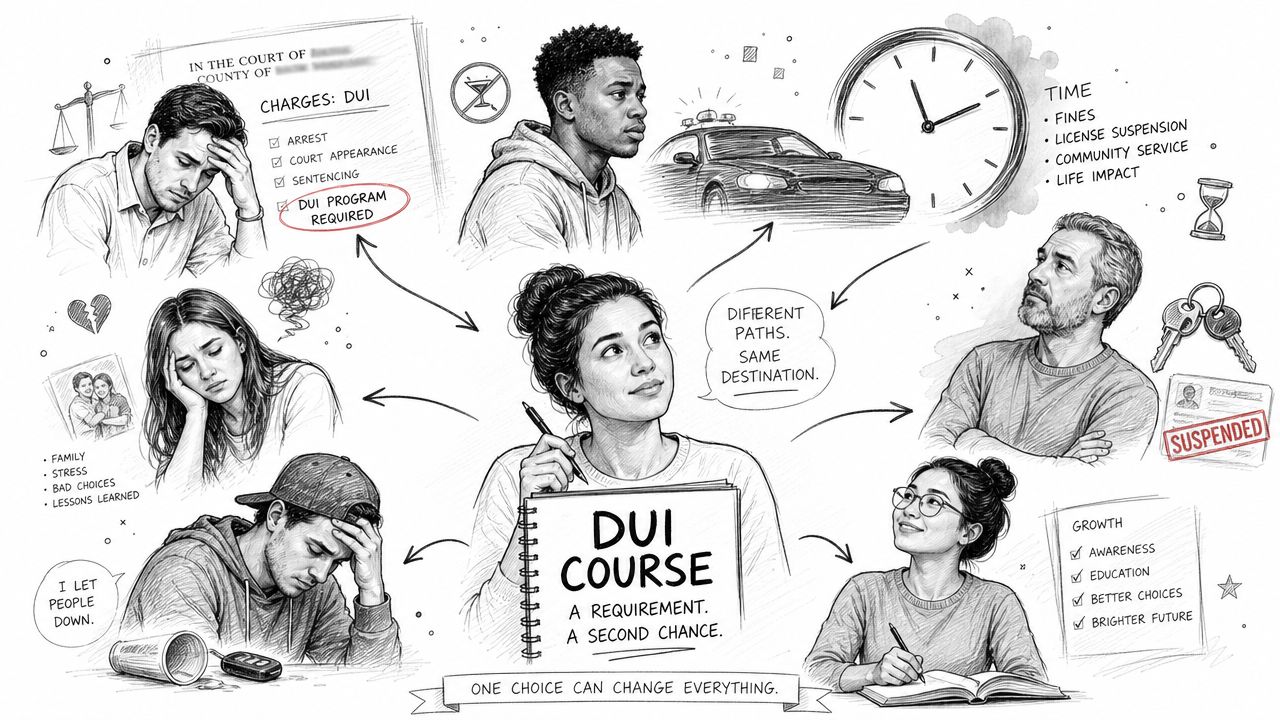
The drivers who are commonly required to enroll
In Georgia, the course often applies to:
- Drivers arrested or convicted for DUI
- People trying to reinstate a license after a DUI-related suspension
- Drivers under 21
- Drivers charged under impairment standards that do not depend on a 0.08 BAC reading
That last group causes a lot of confusion. Georgia does not limit DUI consequences to the standard number people hear about most often. A driver can still end up required to complete Risk Reduction if the state, the court, or DDS treats the case as an impaired-driving matter tied to suspension, conviction, or reinstatement conditions.
Why people get caught off guard
The biggest misunderstanding is usually DUI-Less Safe. In plain terms, a person can face DUI consequences based on observed impairment, even without a test result at or above 0.08. Prescription medication, combined substances, or driving behavior can all become part of that picture.
Under-21 drivers run into a different problem. The margin for error is much smaller, and families often do not realize how quickly a young driver can be pulled into the same state-required course and paperwork cycle as an adult offender.
I have seen this create the most stress after the case is already decided. People expect the waiting period to feel passive. It is not. It is a compliance period, and missed steps during that stretch are what keep licenses from getting cleared on time.
What actually determines whether you need it
Do not rely on guesses, online forums, or another driver's story. Use the documents tied to your case.
If any of the following tells you to complete the course, treat that instruction as controlling:
- Your DDS notice
- Your court order
- Your probation terms
- Your attorney's case-specific guidance
- Your reinstatement checklist from an approved school
If cost is part of your delay, review the current Georgia DUI course fees and program charges early so you can schedule without another setback.
For people who feel overwhelmed by instructions, the problem is usually sequence, not intelligence. A simple checklist helps. Even basic planning tools such as Learniverse course outline templates can help you organize deadlines, documents, and follow-up calls while you wait on reinstatement.
The practical rule
If your paperwork says Risk Reduction is required, assume it is required until DDS says otherwise in writing. That approach saves time, cuts down on second-guessing, and gives you one less uncertainty to carry while you wait for full reinstatement.
Course Formats and State Mandated Costs
When drivers ask which format is “best,” they usually mean which one is fastest, easiest, and least disruptive. Those aren't always the same thing. Convenience matters, but completion matters more.
The format choices people usually compare
In Georgia, drivers often look at three practical options:
- Traditional classroom sessions: A familiar, structured format that works well for people who focus better in person.
- Live virtual classes by Zoom: A good middle ground for people in metro Atlanta, Athens, or smaller communities who need real-time instruction without driving to a site.
- Self-paced online options: Attractive for scheduling flexibility, but not always the strongest fit for people already under administrative pressure.
The trade-off is accountability. Many people think self-paced means easier. It often means easier to postpone.
According to the UChicago Consortium report on online course completion patterns, self-paced online formats increased dropout rates by 34% compared to instructor-led sessions for impaired drivers with prior administrative suspensions. The same source says live virtual or traditional classroom formats produced 42% higher completion rates for first-time offenders with criminal code convictions.
What the state-mandated costs look like
If you're budgeting for the program, keep the course pieces separate so nothing surprises you.
| Component | State-Mandated Fee | Description |
|---|---|---|
| Assessment | $100 | Required first step before the class |
| 20-Hour Intervention | $235 | The core Risk Reduction course |
| Workbook | $25 | Required course material for the intervention component |
For a plain fee reference, review the posted risk management course fees.
How to choose without overthinking it
Some people do best with face-to-face accountability. Others need a live virtual format because transportation is already a problem after a suspension. The right choice is the one you can complete on schedule, with full attention, and without setting yourself up to miss sessions.
If you like to map out steps before enrolling, tools outside the DUI field can still help. These Learniverse course outline templates are useful for building a simple personal checklist so you don't lose track of assessment timing, class attendance, and final paperwork.
Pick the format you're most likely to finish, not the format that only looks easiest on a stressful day.
Your Step-by-Step Path to a Certificate
The hardest stretch for many drivers is not the class itself. It is the waiting period where one missed detail can keep the license problem alive longer than necessary.
Step one and step two
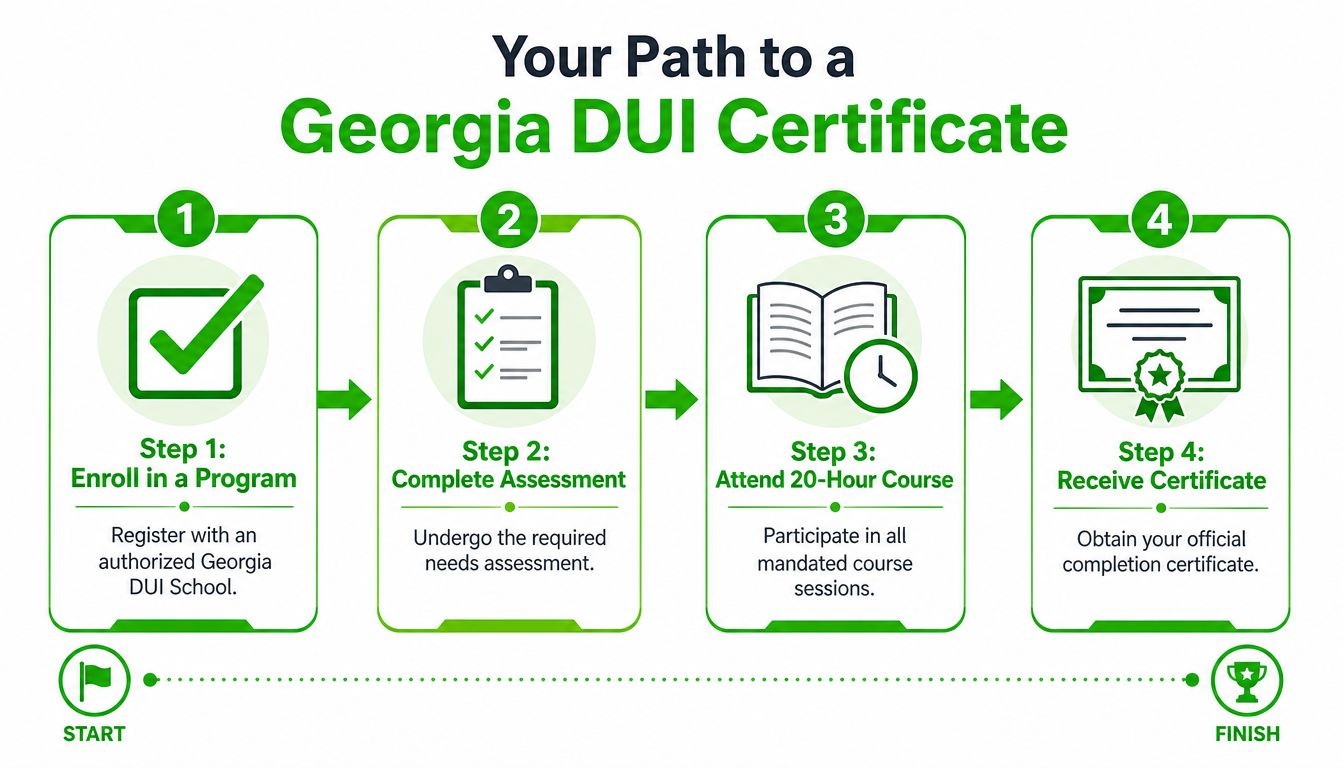
Start with a DDS-approved Risk Reduction school. Do not assume a program is acceptable because the website looks professional or the name sounds familiar. If the school is not approved, the time and money do not help with reinstatement.
Then complete the NEEDS Assessment the way the school instructs you to. Many individuals get tripped up at this point during an already tense period. They wait too long, show up without the right information, or assume they can fix paperwork later. In Georgia, small administrative mistakes can slow down the point when DDS will recognize your compliance.
Step three and step four
After the assessment, enroll in the 20-hour intervention course and finish every required hour. Attendance rules are strict for a reason. If you miss time, arrive late, leave early, or fail to follow participation rules in a virtual class, you may have to reschedule part of the process and extend the period where you still cannot drive legally.
That delay hits harder than people expect. Work, childcare, probation check-ins, and rides from family all start stacking up while you wait for the next available class date.
What happens after attendance
Once you complete the course correctly, the school issues your Certificate of Completion. Keep the original. Keep a photo or scan. Then confirm exactly who needs it in your case.
Many drivers feel relief at this point, and that makes sense. The class is finished. But the certificate is proof of completion, not automatic reinstatement. DDS, the court, probation, or another agency may still need that document before anything changes on your driving record. If you want to see what the document includes, this guide to the risk management course certificate is a useful reference.
The final submission checklist
Use this checklist before you assume you are done:
Confirm the school is DDS-approved
Verify approval before you pay or schedule anything.Complete the assessment first
Do not treat it as optional or postpone it.Finish all 20 hours of class time
Partial attendance does not satisfy a full requirement.Review the certificate for errors
Check your name and other identifying details before you leave.Save copies immediately
Paper gets lost. Phones break. Keep more than one copy.Submit it to every required agency
That may include DDS, the court, probation, or multiple offices.Follow up if your case includes treatment or evaluation
If the assessment or court process points you toward more support, Nexus Recovery's treatment guide gives a clear overview of what recovery can look like beyond the class requirement.
Finish the course, secure the certificate, and verify who has received it. That is how you shorten the waiting period instead of adding another week of uncertainty.
Next Steps After Course Completion
Finishing the Back on Track course is a major milestone. It also isn't always the end of the reinstatement process. A lot of frustration comes from assuming the certificate automatically clears every remaining requirement.

What may still be required
Depending on your case, the assessment results, or your court order, you may still need:
- A clinical evaluation
- ASAM Level 1 treatment
- A Victim Impact Panel
- Additional court or probation compliance steps
- DDS reinstatement processing
These pieces serve different purposes. The Risk Reduction course addresses the educational requirement. A clinical evaluation looks more closely at substance use patterns and recommendations. Treatment, if required, goes beyond education into structured intervention. A Victim Impact Panel focuses on the human consequences of impaired driving.
Why the waiting period feels so draining
The hard part for many people isn't just paying fees or sitting in class. It's living in uncertainty while each separate requirement gets checked off. You may be compliant with one agency and still waiting on another. You may have finished the course but still not know whether your driving privileges will be restored immediately.
That emotional side of the process is real. People need practical next steps, not just a list of penalties.
If your case includes treatment or recovery work, broad recovery guidance can help you stay steady while the legal process unfolds. This Nexus Recovery treatment guide is a useful general resource for understanding how support and structured follow-through work after a major disruption.
The best mindset after completion
Treat course completion like the end of one phase, not the end of the case. Ask a short list of questions right away:
- Has DDS received what it needs?
- Does the court require anything else?
- Has probation cleared your file?
- Did the assessment trigger a clinical follow-up?
That approach prevents the most common mistake after class. People stop moving because they assume the certificate finished everything. Sometimes it did. Sometimes it didn't.
Frequently Asked Questions
A lot of people hit this stage at the same point. The class is scheduled or finished, the court date has passed, and the main question becomes, “Why am I still waiting?”
That waiting period is where confusion builds. Georgia DUI cases often involve separate steps with the court, DDS, probation, and sometimes treatment follow-up. One part can be done while another is still pending, which is why people feel stuck even when they have been doing what they were told.
What if I miss one of my scheduled classes
Call the school the same day.
Do not assume a missed session will sort itself out later. State-approved programs track attendance closely, and missed time can affect whether you get valid completion credit. Ask exactly what can be made up, what deadlines apply, and whether any paperwork is needed to protect your spot.
How long does the waiting period usually feel
Longer than people expect.
The hard part is not always the class itself. It is the stretch where you are waiting for one office to post a requirement, another office to clear it, and someone to confirm what your license status is. The Pathways Back on Track program guidance reports that participants often struggle most with uncertainty about status during the program. The legal system discussed there is different from Georgia, but the stress pattern is familiar.
Use a written checklist. Track the date you completed each step, who received it, and what still needs confirmation. That simple habit cuts down on guessing and gives you something concrete to ask about when you call DDS, the court, or probation.
How long is the certificate valid
Do not let the certificate sit in a folder.
Submit it as soon as the proper office tells you to submit it. Keep a paper copy, save a digital copy, and write down when and where you sent it. If your case is time-sensitive, confirm receipt instead of assuming it posted.
Can I take the course out of state for a Georgia DUI
Only if Georgia will accept it.
That answer needs to come from the authority handling your compliance, not from a general promise on a website or from what worked for someone else. Before you enroll, verify approval with DDS, the court, or probation, depending on who required the course in your case.
What if I already finished the course but still can't drive
Course completion and license reinstatement are not always the same step.
In practice, this usually means something else is still open. Common hold-ups include DDS processing, unpaid reinstatement fees, unresolved court conditions, probation issues, or a clinical follow-up that was triggered earlier in the case. Pull out every document you have and check each requirement one by one.
What helps most during the uncertainty
Stay organized and stay specific.
Ask direct questions: Has DDS posted my completion? Is there a reinstatement fee still due? Is my court file cleared? Does probation show anything outstanding? People get through this faster when they stop guessing and start verifying each item with the office that controls it.
| Question | Answer |
|---|---|
| What if I miss class? | Contact the school immediately and ask about attendance and make-up rules. |
| Is finishing the course the same as getting reinstated? | No. DDS, the court, probation, fees, or treatment follow-up may still need to be cleared. |
| Can I wait to submit my certificate? | Submit it promptly, keep copies, and confirm receipt if possible. |
| Why does the process feel so unclear? | Different agencies may handle different parts of the case, and they do not always update on the same timeline. |