
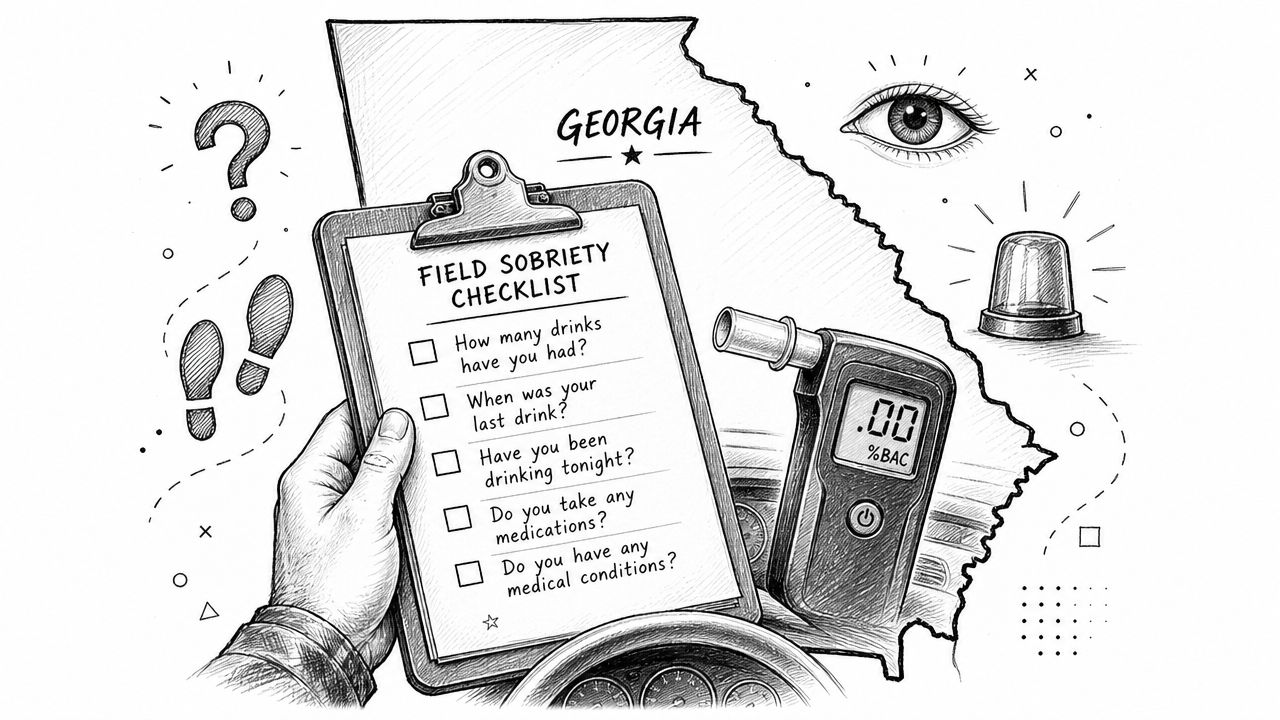
A lot of people reading this are in the same place emotionally. You saw the lights. Your stomach dropped. Now you're replaying every drink, every turn, and every word you might say if an officer walks up to your window.
In Georgia, most DUI stops follow a recognizable pattern. The officer watches your driving, starts asking sobriety test questions, and decides whether to move from conversation to roadside tests and then to chemical testing. If you understand that sequence, you're less likely to make a panicked decision that creates bigger problems later. That matters in Atlanta traffic, on a late-night road in Athens, or leaving a restaurant in Gwinnett, Cobb, or DeKalb. The details change. The process usually doesn't.
The Moment You See Flashing Lights
A common Georgia DUI stop starts subtly. You may have drifted over a lane line on I-285, rolled through a right turn near downtown Athens, or tapped the brakes late at a light in Sandy Springs. The officer activates blue lights, and from that moment forward, the investigation has already started.
The first thing many drivers miss is this. The officer isn't just interested in why you were stopped. The officer is also observing how you pull over, whether you fumble with the window, how long it takes to find your license, whether your speech sounds thick, and whether your answers match your behavior. Even before formal sobriety test questions begin, your actions are being assessed.
What the officer is doing
During initial contact, officers usually focus on a few practical points:
- Driving behavior: lane position, braking, speed changes, delayed response to signals
- Physical presentation: bloodshot eyes, balance, odor of alcohol, confusion
- Basic compliance: whether you can safely follow simple directions
- Conversation: whether your answers are clear, consistent, and spontaneous
That doesn't mean every stop leads to an arrest. It does mean the roadside interaction is more than a casual exchange.
Practical rule: Calm behavior helps. Fast talking, overexplaining, arguing on the shoulder, or volunteering extra details usually doesn't.
What you should focus on
Pull over safely. Keep your hands visible. Give the officer the documents required for the stop. If you're unsure what must legally be in your possession while driving, this guide on what documents you need to legally drive gives the Georgia basics.
A driver who understands the process usually does better than a driver who tries to outtalk it. You don't need to perform. You need to stay composed, listen carefully, and recognize that the stop can move in stages. Questioning comes first. Testing may come later. Each stage carries different consequences.
Common Questions Officers Ask During a DUI Stop
Most sobriety test questions aren't random. Officers ask them because each answer can serve more than one purpose. Some questions seek admissions. Others test memory, attention, or consistency. Some are just simple enough that a distracted or impaired driver may struggle with them.
Questions asked at the window
The first set is often conversational:
- “Do you know why I stopped you?”
- “Where are you coming from?”
- “Have you had anything to drink tonight?”
- “How much have you had?”
- “When was your last drink?”
These questions matter because many drivers answer too quickly and too broadly. A short answer can become an admission. A changing answer can become a credibility issue. An officer is listening not only to what you say, but how you say it.
In practice, the most common mistake is volunteering extra detail. Drivers often think honesty means narrating the whole evening. That usually doesn't help. The officer is collecting observations, and broad explanations can create more material for the report.
Divided attention starts early
A DUI investigation doesn't begin only when you step out of the car. It often begins when the officer asks for your license while also asking where you were and whether you drank. That's a divided attention task.
The officer may note things like these:
- Searching slowly: taking an unusually long time to find documents
- Losing track of the request: handing over the wrong card or repeating questions back
- Interrupting your own task: stopping midway because you're focused on answering
- Confusion under simple instruction: needing directions repeated several times
That's why sobriety test questions can feel deceptively ordinary. They're ordinary on the surface. They're investigative underneath.
If an officer asks three things at once, don't rush. It's better to move carefully and respond to each instruction than to scramble.
Questions after you step out
If the stop progresses, officers often shift to instruction-based questions:
- “Do you have any injuries?”
- “Are you taking any medication?”
- “Do you have any medical conditions that affect balance or your eyes?”
- “Do you understand the instructions?”
These questions serve two purposes. First, they can identify conditions that may affect field test performance. Second, they can later support the officer's claim that you said you understood what you were told to do.
That second part matters. In Georgia DUI cases, roadside reports often lean heavily on whether a person appeared able to understand and follow direction. If you say you understand, the officer may treat later mistakes as signs of impairment rather than confusion.
Understanding Standardized Field Sobriety Tests
Georgia officers commonly use the Standardized Field Sobriety Tests, or SFSTs. These are the three NHTSA-approved roadside tests used to assess impairment. According to the NHTSA SFST program page, when all three SFSTs are administered correctly, they are 91% accurate in identifying drivers with a BAC of 0.08% or higher.
That number only applies when the tests are administered correctly. In practice, roadside conditions can be uneven, noisy, dark, and stressful. Those conditions don't erase the tests, but they do explain why officers focus so much on instructions, clues, and how a person performs under pressure.
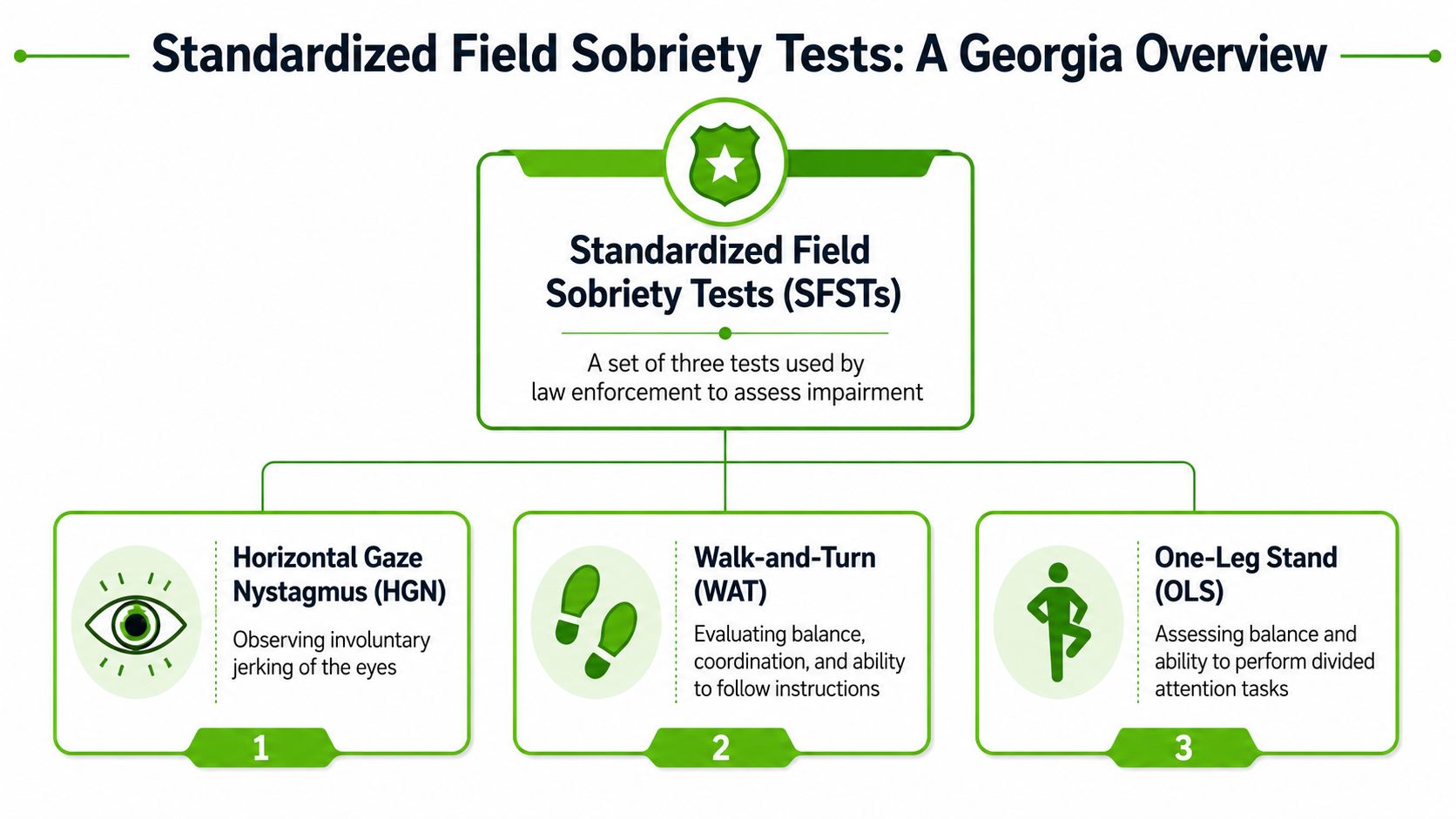
Horizontal Gaze Nystagmus
The Horizontal Gaze Nystagmus, or HGN, test looks at the eyes. The officer asks you to follow a stimulus, often a pen or small light, while keeping your head still. The officer is looking for involuntary jerking as the eyes move side to side.
This test can feel simple, but it's technical. The officer watches whether the eyes move smoothly, whether jerking appears at certain points, and whether that movement becomes more pronounced as the eyes track outward.
Walk and Turn
The Walk-and-Turn test is a divided attention exercise. You'll usually be told to stand in a heel-to-toe starting position, listen to instructions, take a series of heel-to-toe steps, turn in a specific way, and return the same way.
What makes this test difficult isn't only balance. It's sequence. You must listen, remember, count, walk, turn, and avoid stepping off line while an officer watches for clues.
One-Leg Stand
The One-Leg Stand test asks you to raise one foot, keep your arms in the proper position, look where instructed, and count as directed until told to stop. Again, this combines balance with attention and instruction-following.
Drivers often underestimate how much nervousness affects this test. Standing on one leg on the shoulder of a road at night, with headlights passing and an officer watching, isn't normal.
Standardized Field Sobriety Test clues
| Test | What the Officer Looks For (Clues) |
|---|---|
| Horizontal Gaze Nystagmus | Lack of smooth eye tracking, distinct jerking, and eye movement patterns the officer is trained to observe |
| Walk-and-Turn | Trouble keeping the starting stance, beginning too soon, stepping off line, missing heel-to-toe, using arms for balance, improper turn, wrong step count, stopping while walking |
| One-Leg Stand | Swaying, using arms for balance, hopping, or putting the foot down |
These are not strength tests. They are attention, balance, and instruction tests performed under stress.
What works and what doesn't
What works is listening carefully and answering truthfully if an officer asks about a real injury, medical issue, or physical limitation. What doesn't work is guessing at instructions, joking, or treating the tests casually.
A seasoned officer writes reports around details. Did the person start too early? Step off line? Forget the instruction sequence? Raise arms? Put a foot down? Those details, not a vague statement that someone “failed,” are what usually shape the case record.
Chemical Tests Breathalyzers and Blood Draws in Georgia
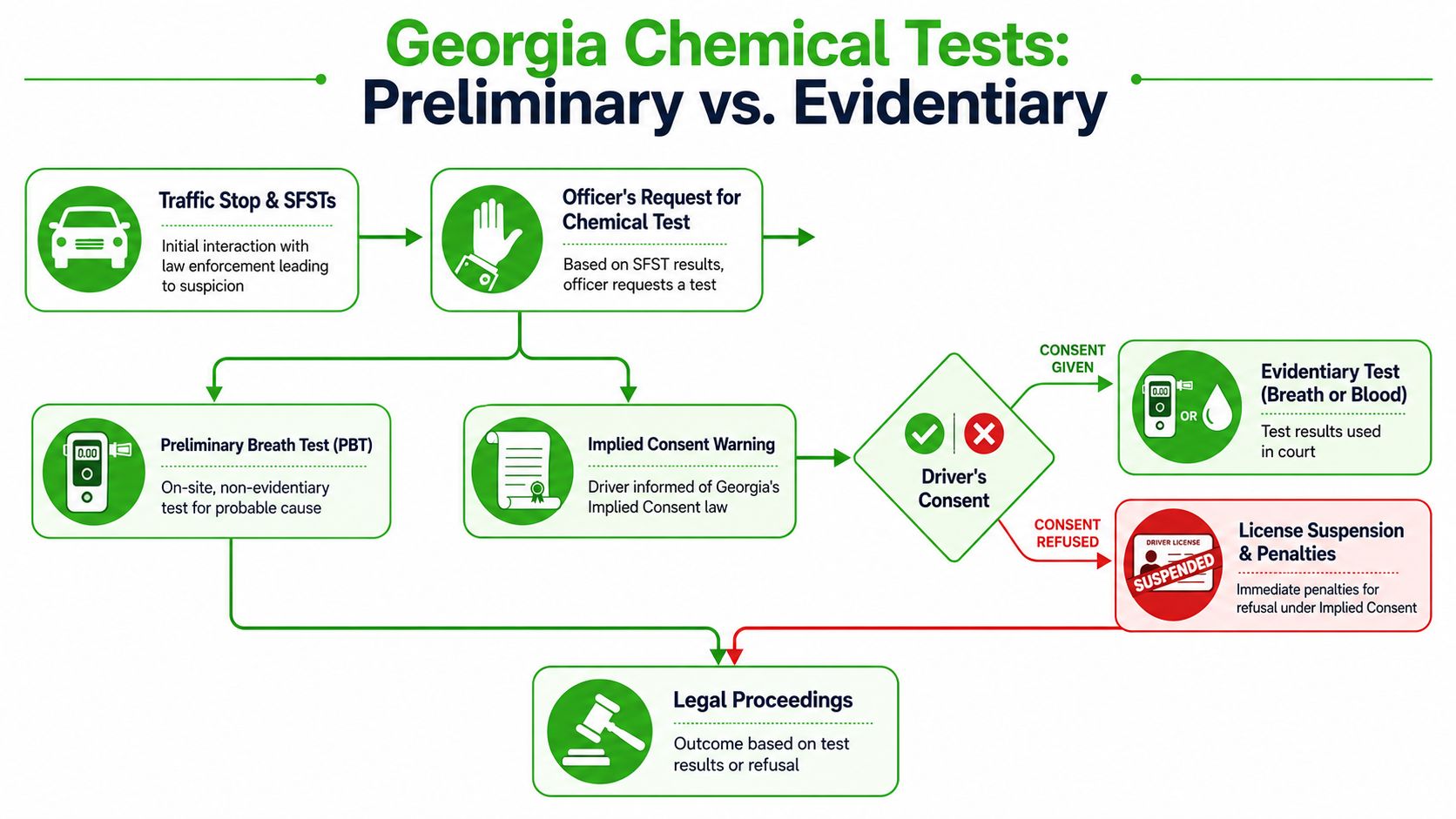
After roadside questioning and possible field tests, the stop may shift to chemical testing. Chemical testing often confuses many Georgia drivers, as not every breath test serves the same legal purpose.
Preliminary versus evidentiary testing
At the roadside, an officer may use a handheld breath device. This is often called a preliminary breath test or PBT. Its role is practical. It helps the officer make decisions during the stop.
Later, after arrest, the state may request an evidentiary test. In Georgia, that may be an official breath test on an approved instrument or a blood test, depending on the circumstances. Blood testing is especially important in cases involving suspected drug impairment or mixed substance use.
For drivers trying to understand timing, metabolism, and why alcohol may still show up hours after drinking, this overview on understanding alcohol in the system is a useful background read.
Why the implied consent warning matters
Georgia uses implied consent rules. By driving on Georgia roads, you're treated as having agreed to state-administered chemical testing under specified circumstances after a lawful DUI arrest. That's why the officer reads a warning. It isn't casual. It's the legal bridge between arrest and the requested chemical test.
The biggest practical mistake drivers make here is assuming the roadside breath device and the state-administered test are interchangeable. They aren't. Roadside interaction, field sobriety testing, and the later chemical test request each sit in a different part of the process.
If your case also involves other court-ordered testing issues, this guide to the court-ordered drug test procedure helps explain how related testing obligations can unfold in Georgia.
When blood or urine enters the picture
Breath testing is commonly associated with alcohol-only cases. Blood testing often becomes more central when the officer suspects marijuana, prescription medication, or another drug. In some cases, a urine request may also arise.
What matters most is understanding that the state's testing decision usually reflects the officer's theory of impairment. If the officer thinks the issue is alcohol, breath may be the focus. If the officer suspects drugs or mixed substances, blood may become the main evidentiary route.
A practical comparison
- Roadside breath device: screening tool during the stop
- State-administered breath test: formal evidentiary test after arrest
- Blood draw: often used when drug impairment is suspected
- Urine test: less common, but still part of the broader testing framework
This is one reason sobriety test questions matter so much. Your answers about drinking, medication, or drug use can influence what type of testing the officer pursues.
Your Legal Rights During a Georgia DUI Stop
Georgia drivers need to understand one distinction clearly. Field sobriety tests and state-administered chemical tests are not the same thing. The consequences of refusing them are not the same either.
Field tests are not the same as chemical tests
The roadside field tests discussed earlier are generally treated differently from a state-administered chemical test after arrest. Practically speaking, many drivers do refuse roadside physical tests. That doesn't trigger the same automatic license consequence that comes with refusing the state's chemical test request after implied consent is read.
That said, a refusal doesn't make the stop disappear. The officer can still rely on driving behavior, appearance, speech, odor, admissions, and other observations. The trade-off is strategic. Performing field tests may create more evidence. Refusing them may still leave the officer believing there is enough to arrest.
Key point: Knowing you can decline a roadside physical test is different from assuming that decline ends the investigation. It usually doesn't.
Refusing the state chemical test carries serious consequences
Under O.C.G.A. § 40-5-67.1, a refusal to submit to a state-administered chemical test for a first-time offense results in a mandatory 12-month suspension of your driver's license with no possibility of a limited permit.
That is one of the most important Georgia DUI consequences to understand before you are standing on the roadside trying to decide what to do. Drivers often focus on the criminal case and forget that the driver's license issue can become immediate and disruptive on its own.
Rights people often overlook
A few practical rights deserve attention:
- You can stay calm and listen carefully: You don't have to fill silence with volunteered explanations.
- You can identify real medical issues: If you have an injury, balance problem, or eye condition, say so clearly.
- You can distinguish between test types: A roadside physical test request is not the same as the state-administered chemical test after arrest.
- You can request an independent test after submitting to the state's test: That can matter in some cases and should be discussed promptly with counsel.
A DUI stop can also expose a broader pattern in someone's life. If alcohol use has already started creating court, employment, family, or driving consequences, a practical article on the legal issues of alcoholism can help frame the bigger picture beyond the traffic stop itself.
What usually helps most
The drivers who handle these situations best aren't the ones who try to argue roadside law. They're the ones who understand the difference between cooperation and self-incrimination, recognize when a decision has license consequences, and get legal guidance quickly after the stop.
That's especially true in metro Atlanta courts, where the administrative side and the court side can move fast and feel like two separate problems. Often, they are.
After the Stop A Clear Path Forward in Georgia
A DUI arrest in Georgia feels chaotic at first, but the next steps are more structured than one might initially think. Once the stop is over, the issue usually shifts from “What just happened?” to “What do I have to do now?”
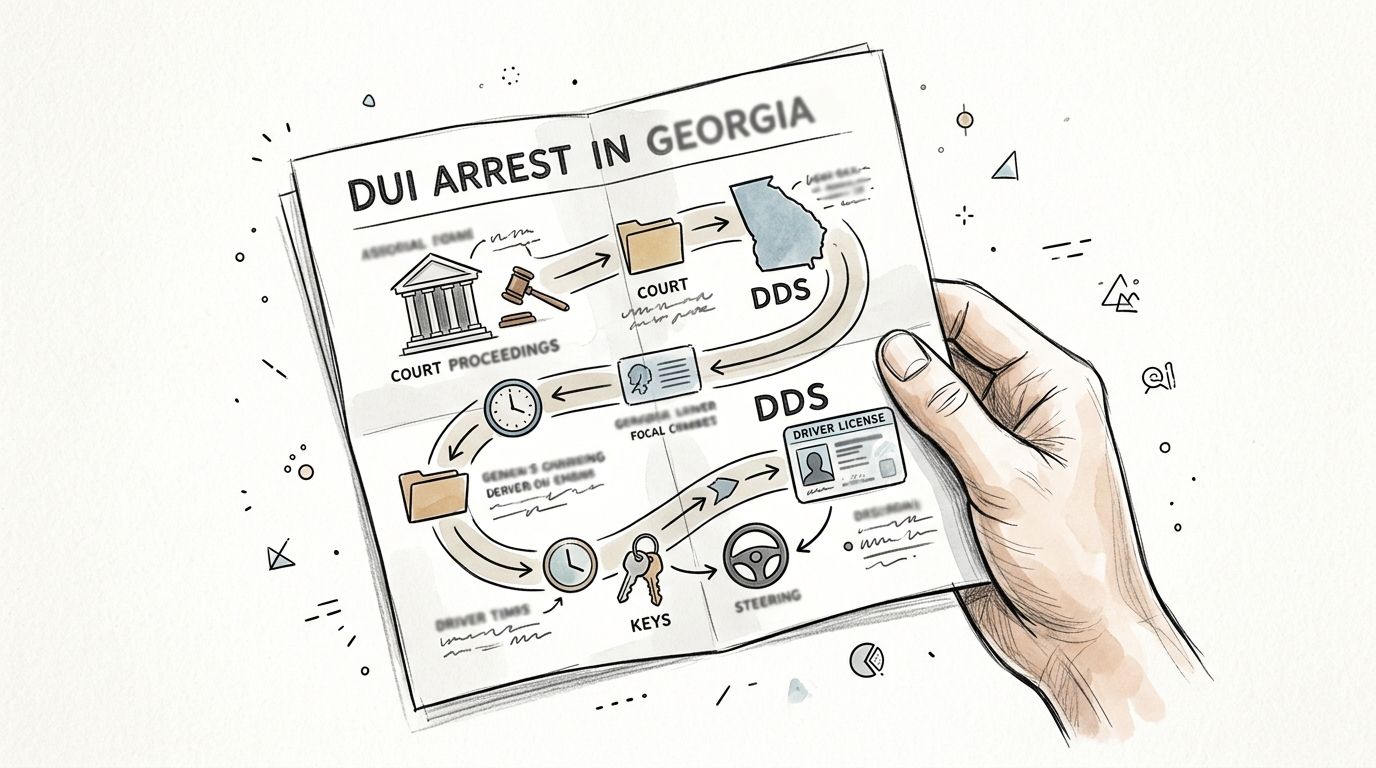
The first layer is the license problem
Many Georgia drivers learn quickly that the court case is only one part of the situation. The driver's license side can move on a separate track. If you're trying to sort out what reinstatement may require, this page on Georgia license reinstatement is a practical starting point.
If an arrest leads to booking and release questions, families often scramble to understand bond procedures. For that narrow issue, One Call Bail Bonds explains DUI bail in a way that helps people understand the process without legal jargon.
The second layer is education and evaluation
For many Georgia DUI-related matters, the DUI Risk Reduction course becomes a central requirement. People often still call it “DUI school,” but the state-approved program has a specific role. It helps satisfy court or Department of Driver Services requirements and often becomes part of the path back toward lawful driving.
A clinical evaluation may also be required. That can happen because of court orders, probation conditions, treatment recommendations, or the outcome of the risk reduction process. If the evaluation recommends additional services, those recommendations matter. Ignoring them usually prolongs the problem rather than containing it.
Other requirements can also appear, including a Victim Impact Panel or additional treatment-related steps. These aren't side issues. In practice, they're often the pieces that determine how quickly someone can move from arrest aftermath into compliance.
The fastest way through a Georgia DUI aftermath is usually not denial. It's organized follow-through.
A practical sequence
Here's the path generally needed to think through:
- Address the immediate legal deadlines: Don't assume the court date is the only date that matters.
- Understand the license status: Know whether you're dealing with suspension, reinstatement steps, or additional DDS conditions.
- Complete the required course work: Risk Reduction is often the first formal educational requirement.
- Handle evaluation or treatment requirements: If ordered, these need to be taken seriously and completed properly.
- Keep proof of every completion: Courts, probation, and DDS processes all run smoother when your records are organized.
People get overwhelmed because they treat the DUI arrest as one event. Georgia treats it more like a chain of obligations. Once you see that clearly, the path forward gets a lot easier to manage.
If you need to complete the step most commonly required after a Georgia DUI, start with the DUI Risk Reduction course at Georgia DUI Schools.