
Getting handed a court order for a drug test can make your stomach drop. Those I consult with in Georgia often grapple with this same mix of questions. What exactly do I have to do? How soon? What happens if I mess up something small?
The good news is that the court ordered drug test procedure is structured. It’s not random, and it’s not something you have to guess your way through. If you know what the paperwork says, what the testing site expects, and how the result connects to your next court requirement, the process becomes manageable.
A lot of the stress comes from not knowing what happens between the judge’s order and the final report. That gap is where people miss deadlines, show up without proper ID, misunderstand a “random” testing rule, or don’t realize a positive result may trigger more clinical requirements. In Georgia, those details matter.
Navigating the First Step After a Court Order
A common Georgia scenario goes like this. Someone leaves court after a DUI or related case with paperwork in hand, then sits in the car reading the order three times and still isn’t sure what they’re looking at. They know they need to act, but they don’t know whether the next step is a lab, a clinical appointment, a probation call, or all three.
That reaction is normal.
The first thing to understand is that a court-ordered test is usually part of a bigger compliance path. The court may be trying to confirm current abstinence, monitor probation, support a treatment plan, or gather information that affects sentencing or license restoration. In Georgia DUI-related matters, that test often connects closely with a clinical assessment, and many people also need a drug and alcohol evaluation online as part of moving their case or reinstatement process forward.
What to do first
Read the order slowly and look for four items:
- The deadline. Some orders require immediate action.
- The testing location or approved provider. Don’t assume any lab will count.
- The test schedule. “Random” doesn’t mean optional.
- Any follow-up requirement. Testing may be tied to an evaluation, treatment, or probation reporting.
If the wording is unclear, call your attorney, probation officer, or the named provider before you guess. Guessing causes more problems than asking.
Practical rule: Treat every line on the order as mandatory until a qualified person connected to your case tells you otherwise.
What not to do
People get into trouble when they wait for “a better time,” assume they can use a nearby clinic not listed on the order, or believe they can explain a missed test later. Courts usually care more about documented compliance than verbal explanations.
Start quickly. Save every receipt, intake form, and testing document. If you’re anxious, that’s understandable. But this process gets easier once you move from worry to action.
Decoding Your Order and Common Test Types
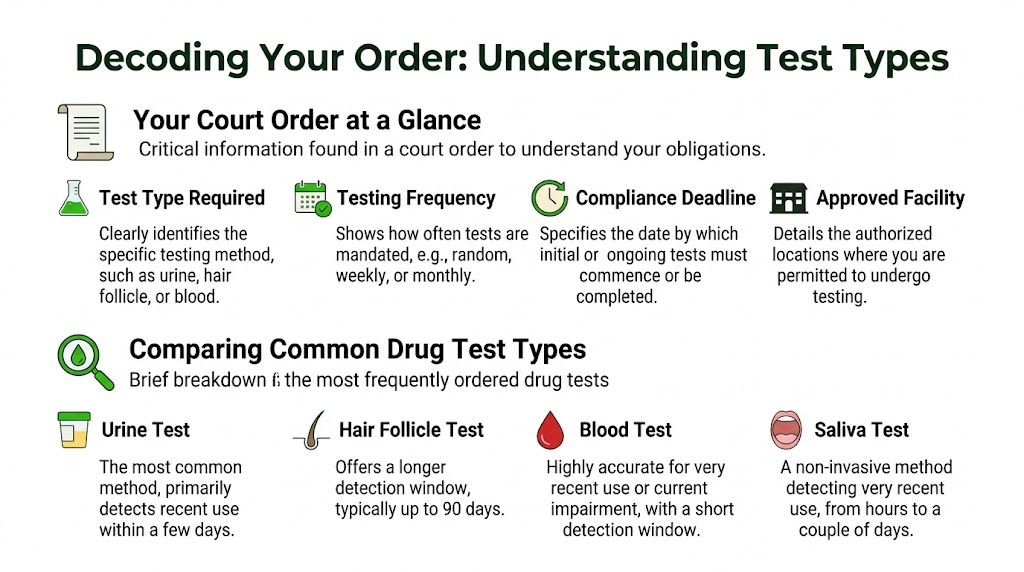
Your order contains more information than is commonly recognized. If you skim it, you may miss the part that matters most. In Georgia cases, one word can change your obligation from a one-time test to ongoing monitoring.
What your order is really telling you
Look for these details before you schedule anything:
| What to find | Why it matters |
|---|---|
| Named substances | The order may refer broadly to drugs and alcohol, or it may list specific substances. |
| Testing frequency | Random, weekly, or another schedule changes how closely you need to monitor messages and reporting instructions. |
| Approved facility | Using the wrong facility can leave you with a test that doesn’t satisfy the court. |
| Start date | Some people focus on the return-to-court date and miss the testing start date. |
| Reporting instructions | You may need to report to probation, court staff, or a treatment provider separately from the lab visit. |
If anything on the order conflicts with what a receptionist tells you on the phone, follow up in writing with your attorney or supervising authority. Administrative misunderstandings happen. Your paperwork is what counts.
The test you’ll usually see first
In court-supervised settings, urine testing is the most common format. It’s widely used because it fits ongoing monitoring well and gives the court a recent-use picture rather than a long historical one.
According to the federal court substance use testing reference guide, court-ordered urine drug testing commonly starts with immunoassay screening, using cutoffs such as 50 ng/mL for THC and 150 ng/mL for cocaine, with any non-negative result confirmed by GC/MS, which has over 99.99% accuracy. That same guide notes urine detection windows can range from 1 to 4 days for cocaine and 3 to 30 days for chronic THC use, while hair testing can look back 90 days (U.S. Courts reference guide on substance use testing and treatment).
That matters because people often misunderstand what a test can and can’t show. A urine test is not usually designed to tell the court what happened months ago. It is often designed to show whether recent use occurred within that method’s detection range.
Common test types in plain language
Urine testing
This is the standard test in many Georgia court and probation settings.
It usually starts with a screening method and only moves to confirmation if needed. The key practical point is that urine testing is often tied to recent use, not necessarily current impairment.
Hair testing
Hair testing reaches further back. It can reflect a much longer history of use, and the verified data allows only one precise benchmark here: up to 90 days in the federal guide linked above.
Hair is less commonly the first test in many DUI-related situations, but it can appear in family court, specialty court, or disputed compliance situations.
Blood testing
Blood testing is generally associated with very recent use or present impairment questions. In DUI matters, it has a different role from routine court monitoring.
For those reviewing a Georgia court order after a DUI-related event, the more common ongoing issue is urine testing, not repeated blood draws.
Saliva testing
Saliva is less invasive and may be used in some settings for very recent use. But if your order specifically names urine, don’t substitute saliva because it seems easier.
Bring the order with you and read the exact test name. “Any drug test” is not the same thing as the test the court ordered.
Detection windows are not promises
People often ask, “How long does something stay in your system?” The honest answer is that detection windows vary. The verified data specifically notes that results can be affected by factors such as drug interactions, elimination rates, and participant history in the court testing context linked through ARCpoint Labs.
That means online myths cause trouble. There is no reliable shortcut in this process. If your order requires testing, your best move is compliance, not internet detox tricks.
A Step-by-Step Guide to Your Testing Appointment
The testing day is where nerves peak. That’s also where routine helps. If you know the sequence, the appointment feels less personal and more procedural.
Before you leave home
Set yourself up for a clean appointment.
Bring:
- Valid photo ID. This is a mandatory requirement.
- Your court order or referral paperwork. Staff need to match the service to the legal requirement.
- Any medication information. Keep it available in case the lab or later review process needs it.
- Payment method if required. Some sites won’t proceed without it.
Don’t bring a casual attitude toward timing. If your program uses random call-ins or same-day reporting, late arrival can create the same practical problem as not showing up.
According to the court-ordered testing procedure details published by US Health Testing, failure to present valid ID at check-in can lead to a refusal status in 5 to 10% of cases, same-gender direct observation has a greater than 95% success rate in ensuring sample integrity, and breaks in the chain of custody can invalidate 2 to 5% of tests (US Health Testing court-ordered testing procedure).
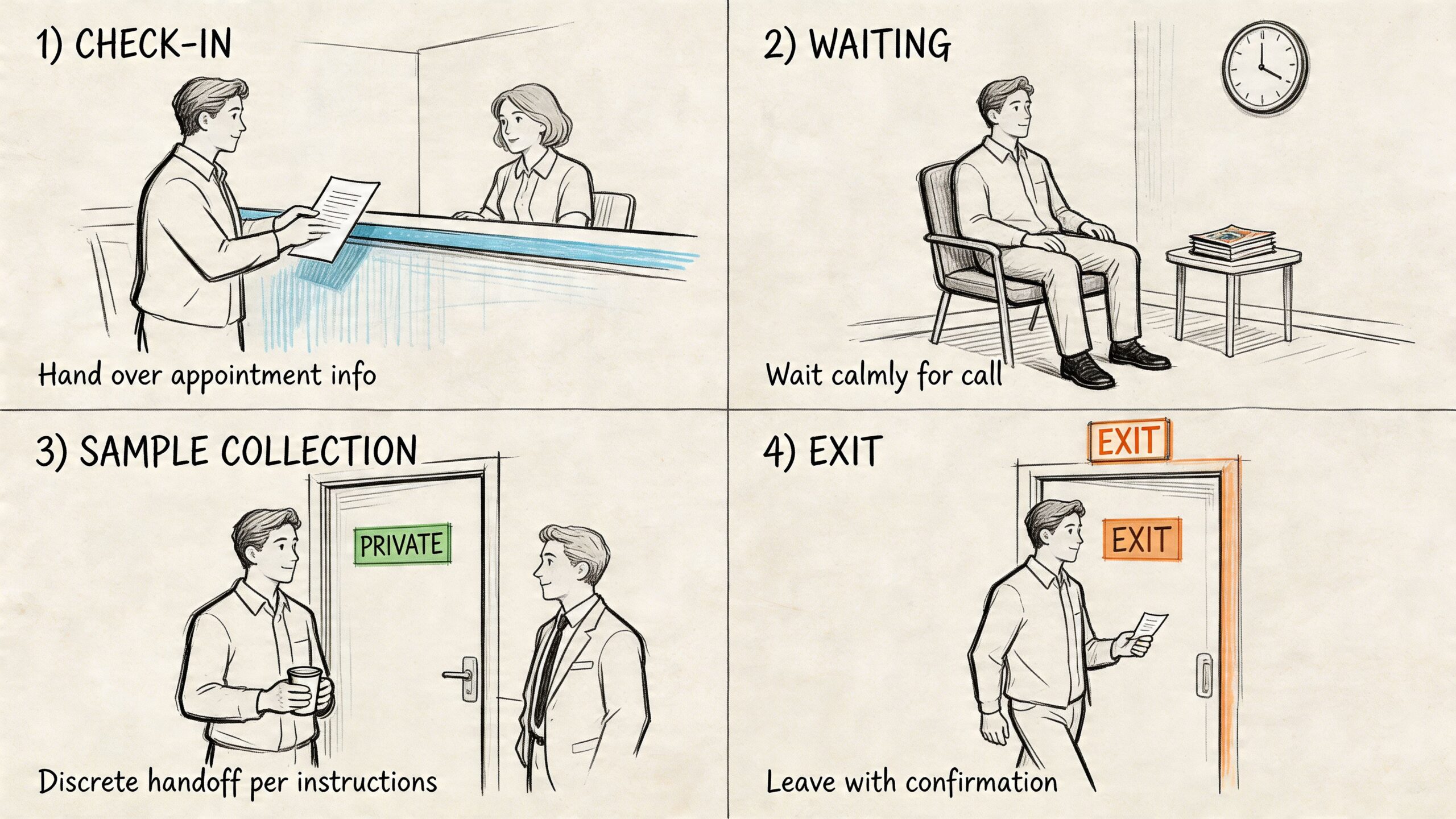
Check-in is administrative, but it matters
Most of the front desk process is about identity, authorization, and documentation.
Expect to:
- Present ID
- Provide the court order or case information
- Sign consent and collection paperwork
- Confirm the ordered test type
- Wait for the collector’s instructions
If staff ask questions, answer directly and briefly. This isn’t the place to explain your whole case history unless the form specifically asks for medical or prescription information.
Understand the chain of custody
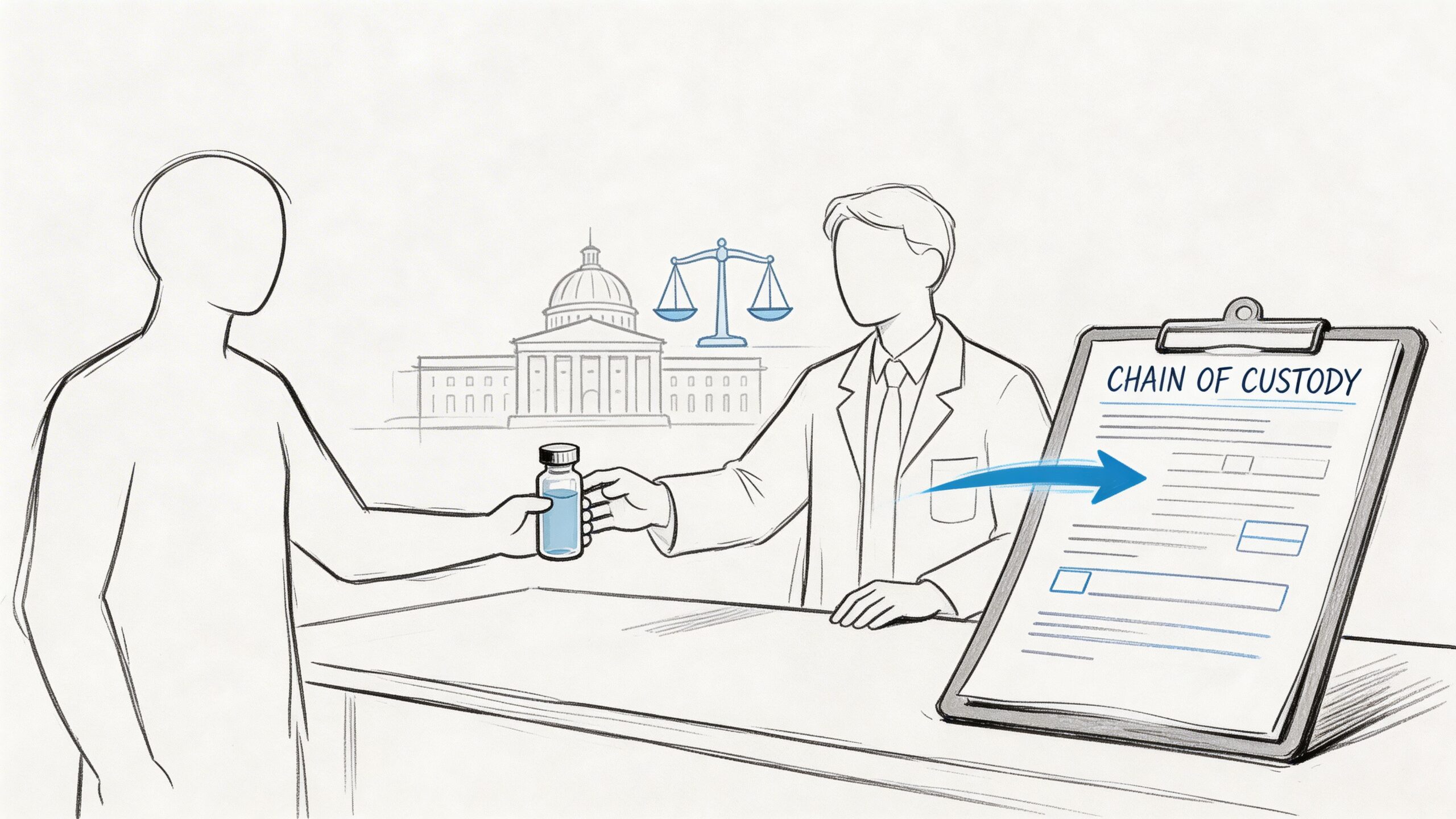
The Chain of Custody, often shortened to CoC, is one of the most important protections in the entire court ordered drug test procedure.
It documents who handled the sample from collection through transport and testing. Names, times, seals, and signatures matter because the result may become part of a legal proceeding.
Why people should care about paperwork
A lot of clients focus only on whether the sample is negative or positive. But legally, the paperwork matters too. If a sample isn’t documented properly, questions arise about whether the tested specimen can be confidently tied to the right person.
Check your name and identifying details before you sign anything. If something is misspelled or clearly wrong, speak up immediately.
If a form is wrong, fix it before the sample leaves your hands. Problems are much harder to correct later.
The collection process
This is the part many people fear most, but the routine is usually straightforward.
In many court and probation settings, a same-gender collector directly observes urine collection. That can feel intrusive, but the reason is simple. Observation is used to prevent substitution, adulteration, or other tampering.
Here’s the typical flow:
- You’ll be directed to a collection area.
- The collector explains the rules.
- You may be asked to empty pockets or leave certain items outside.
- You provide the specimen under the required observation protocol.
- The collector checks temperature or other specimen validity indicators as part of normal procedure.
- The sample is sealed and documented.
If you’re embarrassed, you’re not alone. But the collector is following a routine that’s built for legal defensibility, not personal judgment.
What not to do in the collection room
Avoid trying to over-explain, joke about the process, or improvise. Don’t bring in drinks, supplements, or personal containers. Don’t ask to switch to another test type because this one feels uncomfortable.
And don’t try hydration games. In the verified data, courts and labs are described as checking creatinine and specific gravity to identify dilution or water-loading in monitored testing environments. Those tactics usually create more scrutiny, not less.
After the sample is provided
Once collection is complete, the process usually becomes quieter.
You may be asked to:
- Initial labels or seals
- Review collection information
- Keep a donor copy or receipt
- Confirm where results will go
Save your copy. If your probation officer, attorney, or program later says they don’t see proof of testing, your receipt becomes important.
A smooth appointment usually comes down to four habits
Show up prepared
A missing ID or forgotten order creates avoidable delays.
Follow instructions exactly
Court testing is not the moment to negotiate procedure with staff.
Keep records
Hold onto every paper, screenshot, receipt, and email confirmation.
Report problems fast
If the site says they can’t perform the ordered test, contact the party supervising your compliance the same day.
What works and what doesn’t
Here’s the practical version I give nervous clients:
| Works | Usually backfires |
|---|---|
| Reading the order line by line | Assuming all labs are interchangeable |
| Arriving early | Cutting it close on a random test day |
| Bringing ID and paperwork together | Hoping staff can “look it up” without documentation |
| Asking about errors before signing | Ignoring a paperwork mistake |
| Saving your donor receipt | Assuming the court automatically has everything |
The testing appointment often lasts much less time than people fear. The anxiety usually comes from uncertainty. Once you know the steps, it becomes a compliance task you can handle correctly.
Behind the Scenes at the Lab and Interpreting Results
After you leave the collection site, the sample is often imagined to disappear into a black box. It doesn’t. The process is methodical.
In drug court programs, frequent testing is common, often two to three times per week initially, then less often later, and samples are screened with immunoassay before any non-negative goes to GC/MS confirmation at a SAMHSA-certified lab, with the result then reviewed by a Medical Review Officer, or MRO. The same source notes this procedure has been refined since the first drug court was established in 1989 (ARCpoint Labs discussion of court-ordered drug assessment testing).
Screening first, confirmation second
The first lab step is usually a screening test.
That screen sorts out many negatives quickly. If the sample doesn’t raise an issue at that stage, the matter may end there and the result gets reported according to the program’s process.
If the sample is non-negative, that doesn’t mean the final answer is automatically “positive.” It means the lab needs to do more work.
Why GC/MS matters
GC/MS stands for gas chromatography/mass spectrometry. In practical terms, it is the confirmation method courts rely on when the initial screen needs verification.
This second step matters because screening tests are useful for fast sorting, while confirmation is used for defensible final reporting. That’s one reason people should never panic over rumors or assumptions before the process is complete.
The Medical Review Officer’s role
A lot of people don’t realize a physician may review the result before it goes back to the court or probation system.
The MRO looks at whether there is a legitimate medical explanation for a laboratory finding. If you have a valid prescription, this review can be an important safeguard.
What to do if an MRO contacts you
- Respond quickly. Delay can slow the reporting process.
- Provide accurate prescription information. Don’t guess on names or dates.
- Be direct. The MRO is not your judge or your counselor.
- Keep documentation available. Pharmacy or prescribing records may matter.
A calm response during MRO review helps more than a defensive one. The question is usually medical verification, not your entire case story.
How results usually move back to the court
Once the review process is complete, the result is typically transmitted to the court, probation officer, or supervising program listed in the order.
You may or may not receive the result first. That varies by setting. What matters is whether the official recipient gets a complete, confirmed report.
If you know your deadline for proof of compliance is close, ask the collection site or supervising authority how reporting is handled. Don’t assume the result has already reached the right desk.
Navigating Positive Results and Your Rights in Georgia
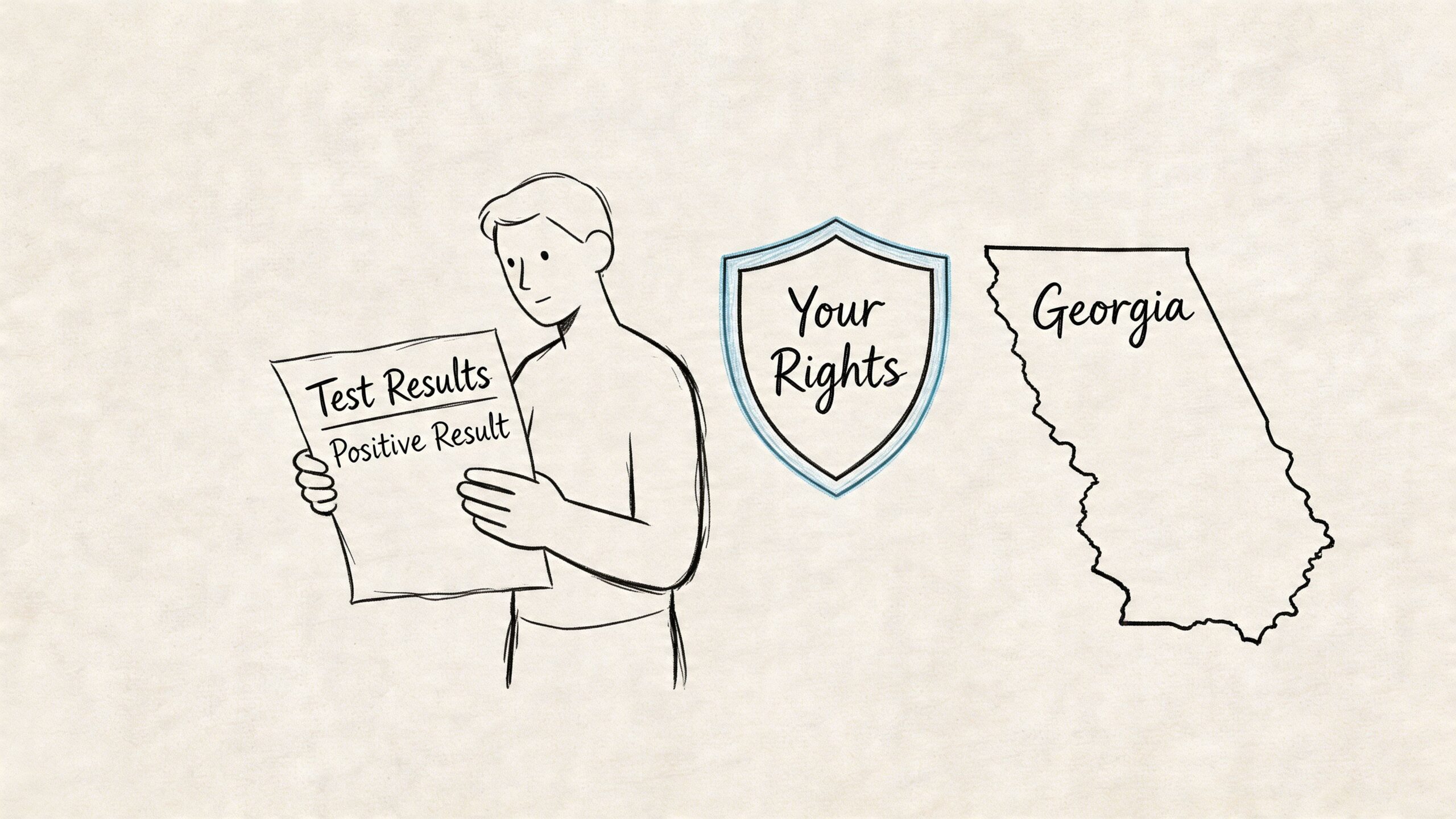
A positive result feels heavy. So does a refusal. In many Georgia supervision settings, refusal is treated about as seriously as a failed test because the system reads it as noncompliance.
That doesn’t mean you should panic or give up. It means you need to respond carefully and fast.
A positive result is not the same as a rumor
The first thing I tell people is simple. Separate fear from procedure.
A confirmed positive can affect probation terms, treatment requirements, court participation, and in some settings your ability to stay in a program. But the response should be based on the actual result and the court’s rules, not hallway advice from other participants.
If your case involves monitoring connected to treatment, employment, or recovery planning, you may also hear related terms used in professional settings, including the SAP program. The important point is to understand which rules apply to your specific Georgia court or supervision track, not someone else’s.
Your Georgia dispute rights matter
Georgia Accountability Courts standards require courts to provide a method for participants to dispute positive results, including by requesting advanced lab confirmation such as GC-MS. The same standards also highlight a practical problem. Many participants don’t understand the exact process, timeline, or potential cost of raising that challenge (Georgia Accountability Courts standards document).
That’s a major point in your favor if you act early and intelligently. You do have rights. But rights only help when you use them correctly.
What to do immediately after learning of a positive
Ask what result stage you are dealing with
Find out whether you’re hearing about an initial screen, a confirmed laboratory result, or an administrative report from probation.
Those are not the same thing.
Request the dispute procedure in writing
Ask the supervising authority, court coordinator, or program staff how to challenge the result. Don’t rely on a verbal summary if your case status is at stake.
Gather your documents
Collect:
- Prescription records
- Your donor receipt
- Any medication list
- Your court order
- Any communication from probation or the court
Stay compliant while disputing
One of the biggest mistakes people make is thinking, “If I’m contesting this, I don’t have to keep testing.” Usually the opposite is true. Continue following every current instruction unless the court changes it.
Rights protect participants who act promptly. They don’t protect people who disappear, stop reporting, or miss the next required test.
Trade-offs you should understand
Challenging a result can be the right move. It can also take time, require paperwork, and create additional pressure while the dispute is pending.
That doesn’t mean don’t do it. It means do it with a clear head.
Here’s the practical balance:
| If you act quickly | If you wait |
|---|---|
| You preserve your ability to question the result through the proper channel | You may lose leverage because deadlines or internal processes move on without you |
| You can present medication or documentation while details are fresh | Staff may assume the result is accepted |
| You show engagement with the process | Silence can be treated as noncooperation |
Grounds people often overlook
A challenge is stronger when it points to something concrete.
Examples include:
- Prescription explanation that should be reviewed
- Chain-of-custody concern
- Confusion about whether confirmation testing occurred
- Administrative mismatch such as identity or reporting errors
- Program process issue involving how the result was communicated or handled
What doesn’t usually help is an unsupported statement like, “That can’t be right.” If you think the result is wrong, pair that belief with a clear procedural or medical reason.
Refusal is usually a bad strategy
Some people think refusing buys time. It usually creates a different problem.
In practice, refusal often gets treated as a violation on its own. If you are worried about privacy, medication, or the fairness of the process, handle that concern through documentation and legal advice, not by refusing to participate.
Keep your communication clean
When you speak with probation, court staff, or a program coordinator:
- Be respectful
- Ask direct questions
- Write down names and dates
- Follow up in email when possible
- Avoid emotional overexplaining
The best disputes are organized. They aren’t loud.
The Next Step Satisfying Court Requirements
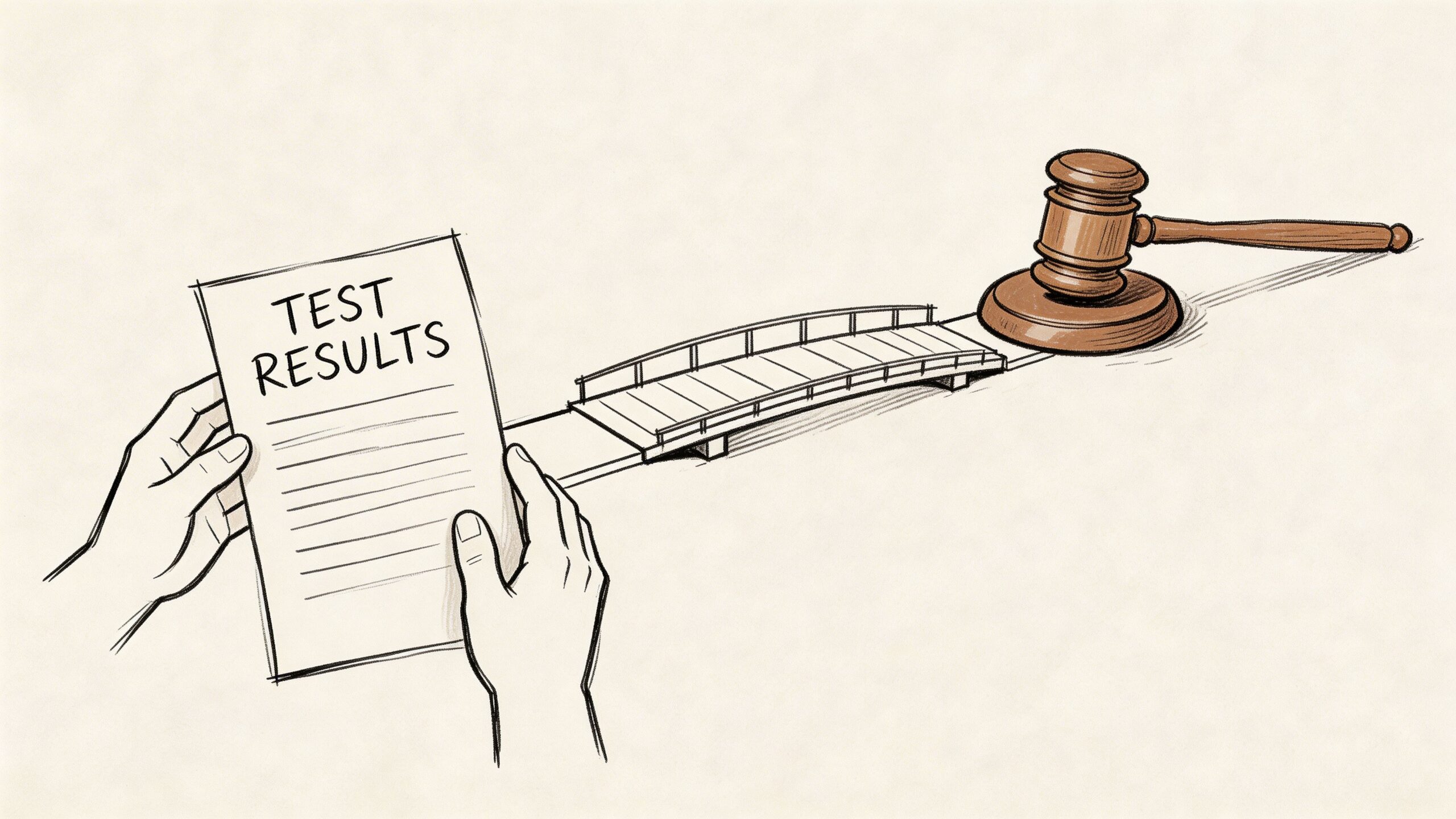
You get your test result, think the hard part is over, and then the court paperwork points you to another requirement. That is a common point of confusion in Georgia DUI and probation cases. The drug test answers one question. The court still may require a clinical step before your case, probation terms, or license matters can move ahead.
In Georgia, that next step is often a clinical evaluation. The evaluator reviews your substance use history, current case, prior treatment, and any facts the court wants considered. The purpose is practical. The court uses that evaluation to decide whether education, treatment, or another level of care is required.
Why the process continues after testing
A lab result does not tell the court everything it needs to know. A negative result does not always end the process. A positive result does not automatically mean the same outcome for every person.
Courts and probation officers usually want two things. Proof that you followed the order, and a clear recommendation about what happens next. That is why people get stuck when they treat testing as a standalone task instead of one part of the full compliance process.
What the clinical evaluation is for
A proper evaluation looks beyond a single test date. It usually covers:
- Substance use history
- Current charges or probation status
- Prior education or treatment
- Risk factors and patterns
- Recommendations for classes, counseling, or treatment
That recommendation matters because it often becomes the roadmap for what you must finish. If the evaluator recommends services, the court will usually expect you to complete them and provide documentation.
How to stay on track in Georgia
Handle this part early. Waiting creates avoidable problems. Hearing dates stay on the calendar, probation deadlines do not pause, and license-related steps can stall while paperwork sits incomplete.
Keep your documents together in one folder. Bring the court order, test result, photo ID, referral paperwork, and any prior completion certificates if you have them. If you take prescribed medication or have recent treatment records, keep those available too. They may not change the requirement to complete the evaluation, but they can help the evaluator understand your history accurately.
Then confirm one practical point that people miss all the time. Ask where the completed paperwork is going, who sends it, and whether you also need to turn in a copy yourself. In Georgia, delays often happen because a person finishes the requirement but never verifies that the right office received proof.
Where people usually fall behind
The problem is usually not one big mistake. It is a chain of small delays.
Someone completes the test but waits too long to schedule the evaluation. Someone else completes the evaluation but does not start the recommended service. Another person finishes everything but does not keep proof of attendance, payment, or completion.
The safer approach is simple:
- Complete the drug test
- Read the order for any follow-up requirement
- Schedule the evaluation quickly if it is required
- Follow the recommendation exactly as written
- Keep copies of every document you receive
- Confirm that the court, probation office, or DDS-related process got the paperwork
For Georgia drivers who need that clinical step, a state-compliant provider offering clinical evaluations for DUI and Risk Reduction requirements is the right place to start.
A lot of stress drops once you stop guessing and start treating the process as a checklist. Show up, complete each requirement in order, keep your records, and verify delivery of your paperwork. That is how people satisfy court requirements without creating new problems for themselves.