
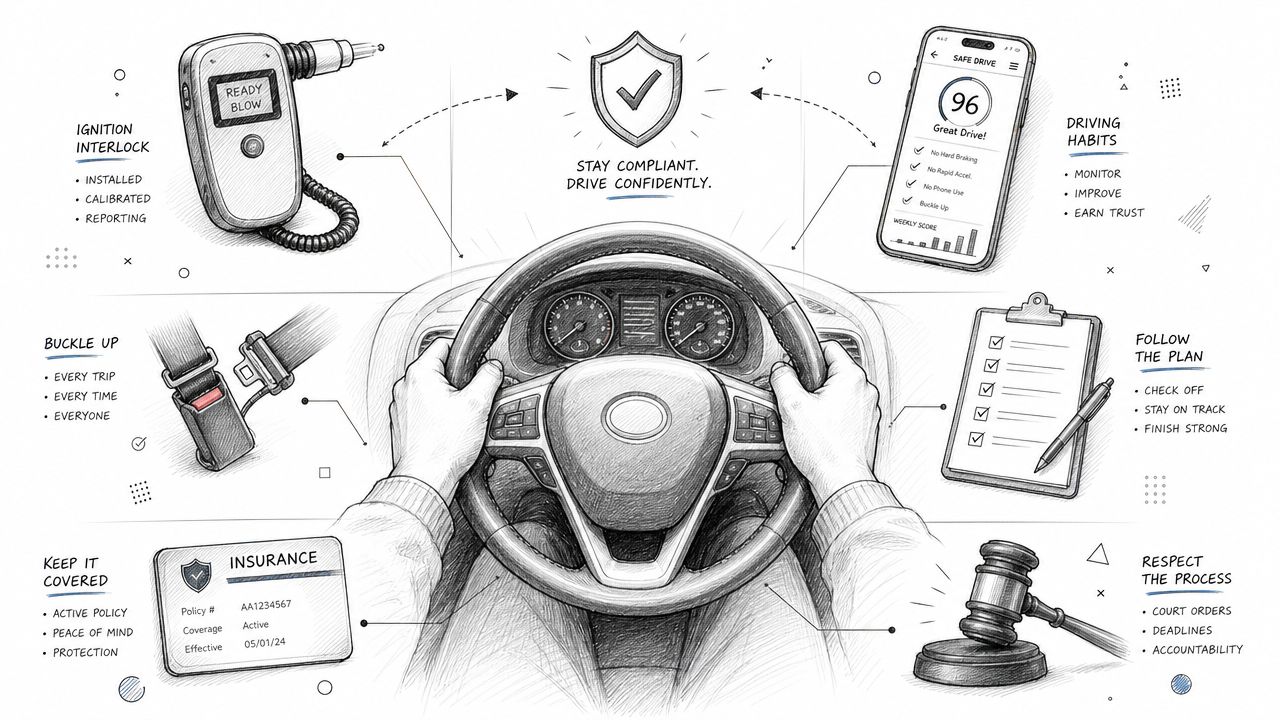
Your Roadmap to a Safer Driving Future in Georgia
Navigating the aftermath of a DUI or serious traffic violation in Georgia can feel like trying to solve five problems at once. You're dealing with court dates, license issues, insurance questions, class requirements, and the very real stress of figuring out what happens next. The confusion isn't due to a lack of concern. It stems from Georgia's compliance process, which involves education, documentation, and sometimes treatment, all moving on different timelines.
The good news is that risk reduction isn't one thing. It's a chain of practical steps that lower the chance of another violation, help you meet state and court requirements, and make it easier to rebuild trust with your family, employer, insurer, and the Georgia Department of Driver Services. Good risk reduction examples aren't just about reacting after something goes wrong. They focus on prevention, structure, and follow-through.
For drivers in Atlanta, Athens, and surrounding Georgia communities, the smartest path is usually the one that combines education, clinical clarity when needed, and a clean paper trail. That means choosing the right course format, completing required evaluations early, and keeping every certificate and recommendation organized from day one.
1. DUI Risk Reduction Education Programs
For many Georgia drivers, the first real turning point is the DUI Risk Reduction course. This isn't busywork. It's the point where a vague legal problem becomes a defined process with specific actions, deadlines, and proof of completion.
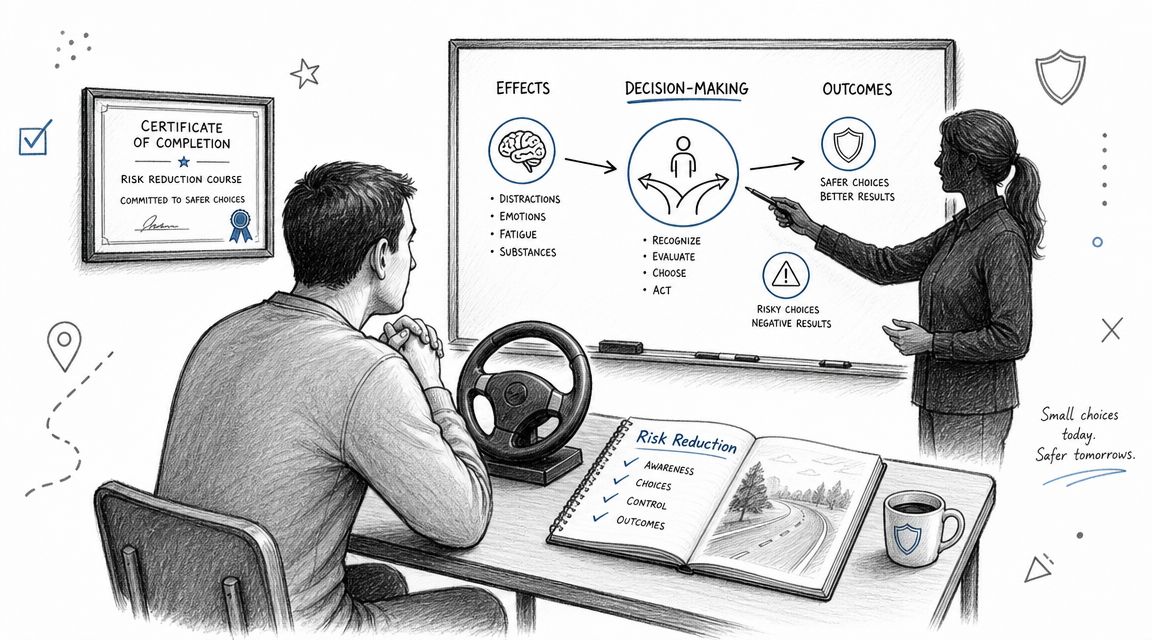
If you're trying to restore driving privileges after a DUI or related offense, state-approved education usually sits near the center of the process. Georgia drivers often do best when they stop treating the course as a box to check and start treating it as the foundation for everything else. A completed course can support your reinstatement timeline, help you stay organized for court or probation, and show that you're addressing the conduct behind the charge.
What works in practice
A solid course gives you more than legal compliance. It gives you a structure for understanding alcohol and drug effects, personal triggers, decision-making failures, and the downstream consequences of impaired driving. That's why people who complete the program early usually have an easier time coordinating the rest of their requirements.
One useful way to think about risk reduction examples is to separate reactive fixes from system-level prevention. Vision Zero guidance argues that stronger risk reduction starts with a High Injury Network and then layers in demographic information to identify where risk overlaps with children, seniors, low-income residents, transit users, people with disabilities, and communities of color, which makes it more useful than a simple hot-spot list for preventing harm at the system level (Vision Zero Network guidance on prioritizing for greatest impact). That same mindset applies personally. Don't just ask what mistake happened. Ask where your decision system failed.
Practical rule: Register as soon as you know the course is required. Waiting usually doesn't improve your legal position, your schedule, or your stress level.
Many drivers in Atlanta and Athens need flexible options because they're balancing work shifts, family obligations, or probation reporting. That's where a provider with statewide access and multiple formats helps. If you need a refresher on the state requirement itself, review what the Georgia Risk Reduction course is.
2. Defensive Driving Courses and Insurance and Point Mitigation Strategy
Not every risk reduction example starts with a DUI. Sometimes the issue is a moving violation, rising insurance costs, or a driving record that's starting to create real consequences. Defensive driving works best when you use it strategically, not casually.
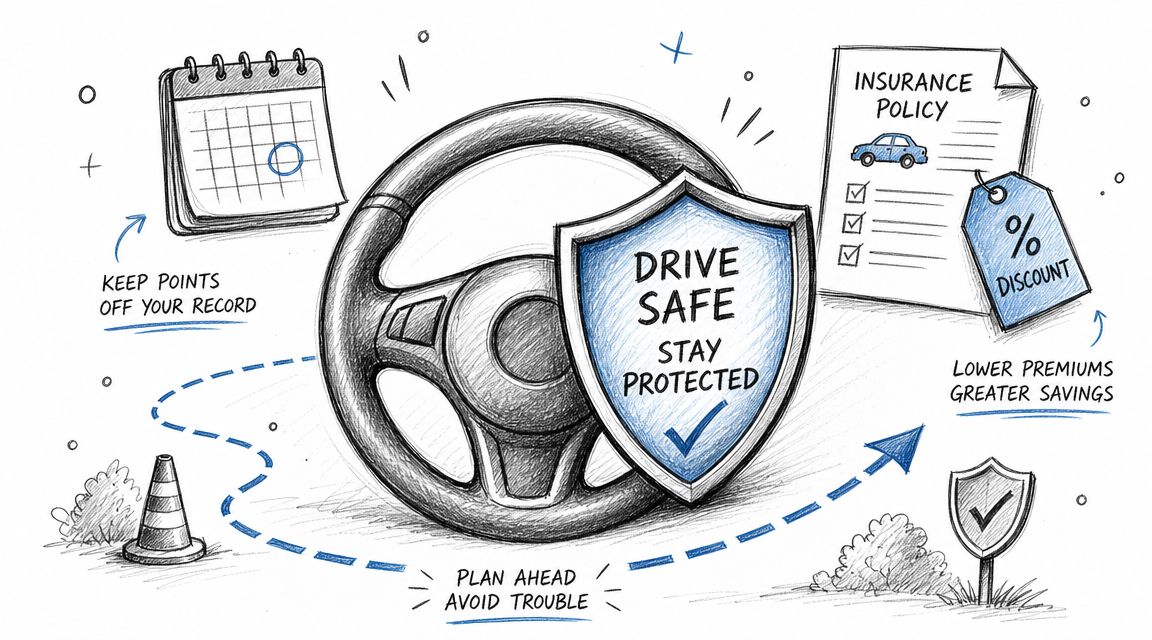
A defensive driving course can help you sharpen hazard awareness, improve spacing and scanning habits, and create a cleaner administrative record when timing matters. But the course only helps if you complete it on time and submit documentation correctly. Drivers often lose the practical benefit because they take the class too late, forget to send the certificate, or assume the court, DDS, and insurer will communicate with each other automatically.
Smart timing matters
If your goal is point mitigation or an insurance conversation, timing is part of the strategy.
- Check insurer requirements first: Some companies want a specific type of course completion record before they'll apply any policy benefit.
- Complete the class before key deadlines: If renewal is approaching, finish the course early enough to give your agent time to process it.
- Save proof in multiple places: Keep a digital copy, a printed copy, and an email trail showing when you submitted the certificate.
A driver in metro Atlanta might take a class after a citation and assume the benefit is automatic. It usually isn't. A better approach is to finish the course, confirm receipt with the insurer, and verify whether any court or record-related step still needs separate action.
If removing points is part of your plan, start with guidance on how to remove points from a Georgia driving record. The course itself teaches safer habits. Effective risk reduction comes from pairing those habits with paperwork discipline.
3. Clinical Evaluations and Assessments
Some drivers need more than education. They need a clinical evaluation that answers a harder question. Is this an isolated lapse, or is there a broader substance use issue that requires treatment?
That distinction matters in court, in treatment planning, and in your own life. A clinical evaluation helps move the process out of guesswork. It creates a professional assessment that can guide next steps, whether that means no further treatment, outpatient counseling, or a more structured response.
Honesty changes the value of the evaluation
People sometimes walk into an evaluation focused on sounding good instead of being accurate. That's understandable, but it often backfires. If you minimize use patterns, leave out prior issues, or hide mental health concerns, the recommendation may not match the risk you need to manage.
Bring what helps the evaluator see the full picture. That can include prior treatment records, medication information, relevant mental health history, and any court paperwork that explains why the assessment was ordered. If your probation officer, attorney, or judge is going to rely on the outcome, clarity matters.
A useful evaluation doesn't just satisfy a requirement. It gives you a map.
There's also a practical lesson from outside the driving context that applies here. In the Solvay Green River mine case study, a field-level risk assessment program was associated with a downward trend in non-fatal days lost incidents after a 2009 spike, and the program used worker hazard ranking plus selected controls to reduce hazards to an acceptable level, with frontline supervisor training reinforcing the improvement (Solvay Green River FLRA case study). The transferable lesson is simple. Risk drops when assessment happens early, the people closest to the risk participate openly, and controls are matched to the actual hazard.
For a Georgia driver, that means scheduling the evaluation early, answering directly, asking for copies, and understanding exactly what the recommendation requires.
4. ASAM Level 1 Treatment Programs
If your clinical evaluation recommends outpatient treatment, ASAM Level 1 is often the next step. Here, risk reduction shifts from insight to repetition. You stop talking generally about better choices and start building routines that support them.
ASAM Level 1 treatment can fit people who need structured counseling but still have to maintain work, parenting, school, or other daily responsibilities. That's one reason it works for many first-time or lower-intensity cases. It gives you accountability without pulling you entirely out of normal life.
What progress actually looks like
The people who get the most from treatment aren't always the ones who talk the most. They're the ones who show up consistently, admit where they're struggling, and use the process to identify patterns. That might mean recognizing that your highest-risk time isn't a party. It's driving home after a stressful shift, arguing with a partner, or telling yourself you're "fine" because the trip is short.
A treatment plan becomes more effective when it includes concrete controls:
- Name your trigger situations: Late-night driving, social drinking, conflict, boredom, and isolation all need different responses.
- Build transportation alternatives early: Waiting until you're tempted to drive is too late.
- Use outside support: AA, NA, faith communities, family accountability, or sober peers can reinforce what happens in counseling.
Treatment also works better when you stop framing attendance as punishment. For many drivers, it's the first place where someone helps connect the offense, the pattern behind it, and the decisions that have to change to prevent another arrest or crash.
If you need that level of care in Georgia, review ASAM Level 1 treatment options in Georgia. The sooner you understand the recommendation, the easier it is to stay compliant.
5. Victim Impact Panels
Some parts of the compliance process are informational. Victim Impact Panels are different. They are designed to make impaired driving feel real again, not abstract.

Drivers sometimes resist this requirement because they expect shame-based messaging. In a well-run panel, the value is different. You hear directly how one impaired decision can permanently alter another person's health, family, finances, and daily life. That kind of exposure can cut through the self-protective story many offenders tell themselves, especially after a case that didn't involve a crash.
What doesn't work
Going to a panel with a defensive attitude usually wastes the experience. If you sit there trying to compare your case, argue internally, or prove that you aren't "that kind of person," you miss the point. The panel isn't a debate. It's a confrontation with consequence.
What tends to help is simple:
- Listen without rebutting: You don't need to respond to every story in your head.
- Write down what hits you: Specific insights are easier to remember than a general feeling of guilt.
- Connect the story to your own risk factors: Ask what choices, habits, and assumptions could put you on the same path again.
This is one of the strongest risk reduction examples because it addresses a problem many classes don't fully reach. Knowledge alone doesn't always change behavior. Emotional recognition can.
For courts, probation officers, and families, completion also shows that the driver has participated in a process centered on accountability, not just compliance paperwork.
6. Online and Self-Paced Learning Platforms
Online learning solves a real Georgia problem. Many drivers need to complete classes while working rotating shifts, caring for children, attending college, or living far from a physical classroom. Flexibility isn't a luxury in that situation. It's what makes compliance possible.
Still, convenience has a trade-off. Self-paced systems work best for people who can manage their own time. If you already procrastinate, forget deadlines, or rush through required reading, online access can make things easier to postpone.
Use flexibility without losing structure
The best way to handle self-paced coursework is to treat it like an appointment, not an open-ended option. Set a calendar block, use a quiet room, and finish sections in a deliberate order. People often absorb more when they take notes, pause to reflect, and complete modules over planned sessions instead of trying to force everything into one exhausting sitting.
A practical Atlanta example is the worker with inconsistent hours who can't reliably get to a classroom at the same time each week. A self-paced or online format can keep that person moving toward completion. The mistake would be assuming access equals progress.
Schedule your study time before life fills the space for you.
This format also helps drivers in more rural parts of Georgia who need a state-approved option without long travel time. When your course provider offers online access statewide, you're not limited by geography. That's a strong risk reduction feature because missed travel, traffic delays, and scheduling friction often become the reasons people fall out of compliance.
7. Live Virtual Synchronous Instruction via Zoom
Live virtual classes sit in the middle ground between self-paced learning and sitting in a classroom. For many drivers, that's the best balance. You get real-time accountability and instructor interaction without needing to drive across town.
This matters more than it sounds. Some students need the pressure of a scheduled start time, but they also need a format that works around work, family, or transportation limits. Live Zoom instruction can meet both needs if you treat it seriously.
How to avoid common mistakes
The most common failure points in virtual classes aren't academic. They're logistical. Bad internet, late logins, missing identification, background noise, and multitasking can create attendance problems fast. If the class is required for court, probation, or reinstatement, technical sloppiness can cost you time.
A better approach looks like this:
- Test your setup early: Camera, audio, internet, and login details should be confirmed before class starts.
- Choose a distraction-free location: Driving, working, or supervising a chaotic room during class usually doesn't go well.
- Engage with the instructor: Ask questions when you don't understand a concept about compliance, substance risk, or safe driving decisions.
Virtual instruction often works well for people in metro Atlanta who deal with traffic and for students in Athens who need a schedule that fits around classes or part-time jobs. It also works for adults who prefer instructor guidance but can't spend half a day commuting.
A live format creates social accountability. You have to show up, stay present, and participate. For many people, that alone reduces the risk of delay.
8. In-Person Classroom Instruction at Multiple Locations
Some drivers do better face to face. They focus more, ask more questions, and leave with a clearer sense of what they need to do next. In-person instruction still matters for that reason.
For Georgia residents, multiple classroom locations can reduce a lot of friction. If you live in Buckhead, Dunwoody, Athens, or another nearby community, having a local option can make attendance feel manageable instead of disruptive. That's not a small thing. When travel becomes difficult, required steps often get pushed back.
Why the classroom still works
A physical classroom gives you fewer ways to hide. You're present, you're accountable, and it's easier for an instructor to notice confusion before it turns into noncompliance. That's especially useful if you're trying to sort out multiple requirements at once, such as a DUI school obligation, a clinical evaluation, and communication with your attorney or probation officer.
There's also a broader lesson in choosing higher-quality prevention over shallow reaction. In the Federal Highway Administration's SHRP2 R09 case studies, Arizona DOT's risk-management process identified an opportunity to close Bell Road during construction, producing $10.9 million in savings and cutting the schedule by 10 months, and the report attributes those gains to earlier identification and mitigation of project risks rather than reactive change management (FHWA SHRP2 R09 case studies). The personal version of that lesson is straightforward. Early, organized action usually beats scrambling later.
Field note: If you learn best by asking questions in real time, don't force yourself into a format that keeps you detached just because it sounds convenient.
Classroom learning often helps first-time participants who feel intimidated by the process. A good instructor can explain requirements clearly, answer procedural questions, and keep you from making simple mistakes with attendance, identification, or certificates.
9. License Reinstatement Pathway Programs
The biggest compliance mistake Georgia drivers make is handling each requirement separately without a master plan. They sign up for one class, wait on another step, lose a certificate, and then realize DDS, the court, or probation still needs something else. That's how a short process turns into a long one.
A reinstatement pathway works because it puts the requirements in sequence. Instead of asking, "What do I do next?" every week, you map the whole process from suspension to completion. That usually includes education, evaluation if ordered, treatment if recommended, documentation, and follow-up with the right agency.
Build one file and one timeline
Treat your case like a project. Keep one folder with every court order, certificate, evaluation, treatment letter, and payment receipt. Keep one written timeline with deadlines, provider contacts, and confirmation dates. Drivers who do this are far less likely to repeat classes, miss filing steps, or show up to a hearing without proof.
This matters even more when you're juggling multiple obligations. A driver in Athens might need a risk reduction course, a clinical evaluation, and communication with a probation officer, while also trying to get back to work legally. Without a single timeline, those steps can drift apart.
Another important angle in risk reduction examples is what happens when the ideal fix isn't fast or affordable. Disaster-risk guidance on vulnerable communities emphasizes non-structural measures such as better risk communication, community partnerships, evacuation access, administrative simplification, and targeted support for housing, healthcare, and recovery, especially where people can't easily relocate or buy their way out of risk (PreventionWeb discussion of protecting vulnerable communities). That principle fits license reinstatement too. Sometimes the best risk reduction is not a complicated intervention. It's simplifying the process so people can complete it.
When in doubt, ask for a written list of requirements and keep updating it until every box is closed.
10. Employer and Attorney Referral Programs
Not every risk reduction example is aimed directly at the driver. Some of the most effective ones involve the professionals around the driver, especially attorneys, employers, and probation staff who help move people into compliant programs quickly.
An attorney who refers a client to the right course or evaluation early can reduce confusion and keep the case moving. An employer who understands what documentation the employee needs can help protect work attendance and scheduling. A probation officer who points someone toward a complete provider pathway can reduce repeated delays and missing paperwork.
Better referrals create better outcomes
What doesn't work is vague direction. Telling someone to "find a class" or "get evaluated somewhere" often leads to mismatched services, bad scheduling, or incomplete documentation. A better referral includes the exact service needed, any deadline attached to it, and what proof must be returned.
For referral partners, a practical process includes:
- Use one contact point: A clear scheduling and reporting channel cuts down on crossed messages.
- Clarify the required service: Risk Reduction course, defensive driving, clinical evaluation, ASAM Level 1 treatment, or Victim Impact Panel all solve different problems.
- Request completion documentation promptly: Waiting until a hearing or probation check-in invites mistakes.
This is especially useful in metro Atlanta, where high caseloads and fast-moving calendars can make loose referrals expensive. It's also useful for employers with staff who need a compliant way to address a driving-related issue without repeated absences and confusion.
Strong referral systems don't replace personal accountability. They support it by making the path clearer, faster, and harder to misunderstand.
10-Point Risk Reduction Programs Comparison
| Program/Service | Implementation complexity | Resource requirements | Expected outcomes | Ideal use cases | Key advantages |
|---|---|---|---|---|---|
| DUI Risk Reduction Education Programs | Low, standardized, DDS-approved curriculum | Certified instructors, course materials, classroom/online delivery | Meets license reinstatement requirements; increased DUI awareness | Court-ordered education; license reinstatement after DUI | Fulfills legal requirements; flexible formats; proven record |
| Defensive Driving Courses & Insurance/Point Mitigation Strategy | Low, short courses plus insurer coordination | Approved course content, certificate management, timing with insurers | Point reduction on record; insurance premium discounts | Post-violation point mitigation; reduce insurance costs | Immediate financial savings; improves driving record; short duration |
| Clinical Evaluations and Assessments | Moderate, requires clinical protocols and credentialing | ASAM-certified clinicians, assessment tools, scheduled appointments | Risk-level determination; court-admissible treatment recommendations | Court-ordered assessments; tailoring treatment level | Accurate risk assessment; professional documentation; individualized plan |
| ASAM Level 1 Treatment Programs | Moderate, outpatient program structure and oversight | Licensed counselors, group/individual sessions, monitoring (possible screenings) | Outpatient recovery support; demonstrated compliance; coping skills | Mild–moderate substance use; first-time offenders needing outpatient care | Least restrictive; allows work/family commitments; evidence-based counseling |
| Victim Impact Panels | Low, session organization and facilitator coordination | Panel speakers (victims), facilitator, venue or virtual room | Emotional behavior change; reduced recidivism (20–40% studies) | Court-ordered empathy-building for offenders | High emotional impact; low cost; strong attitude change potential |
| Online and Self-Paced Learning Platforms | Moderate, platform development and content management | LMS/platform, multimedia content, progress tracking, ADA features | Flexible completion; immediate certificates; wide accessibility | Busy professionals, remote learners, shift workers | Maximum scheduling flexibility; lower cost; privacy and convenience |
| Live Virtual (Synchronous) Instruction via Zoom | Low–moderate, scheduled live delivery with tech coordination | Instructor, video conferencing tools, attendance/engagement tracking | Real-time engagement and accountability; certificate on completion | Remote learners needing structure and interaction | Live Q&A and peer interaction; more engaging than self-paced |
| In-Person Classroom Instruction at Multiple Locations | Moderate, multi-site logistics and staffing | Facilities, certified instructors, printed materials, scheduling | High engagement and retention; immediate in-person verification | Learners without reliable internet; those preferring face-to-face | Maximum interaction; strong accountability; no tech barriers |
| License Reinstatement Pathway Programs | High, integrates multiple services and coordination | Multi-service coordination, document management, advisors | Organized pathway to meet all DDS requirements; reduced delays | Drivers seeking end-to-end reinstatement assistance | Single point of contact; reduces confusion; ensures full compliance |
| Employer and Attorney Referral Programs | Moderate, B2B arrangements and reporting systems | Bulk enrollment systems, priority scheduling, professional reporting | Efficient client placement; verified completion for referrers | Employers, attorneys, probation officers managing multiple clients | Bulk pricing and priority service; standardized documentation for liability management |
Take the First Step Toward Compliance and Safety
A driver completes a class, assumes the hard part is over, and then finds out DDS still needs an evaluation, a treatment record, or a different certificate before reinstatement can proceed. Another waits to schedule the next requirement and loses weeks. In Georgia, delays usually come from sequence problems, missing documents, or signing up for the wrong service first.
Treat the process as one path, not a set of unrelated tasks.
Start with the requirement that is blocking you today. If your case calls for the state-required Risk Reduction course, register for that first through a DDS-approved provider. If the hold-up is a clinical evaluation, treatment follow-up, or reinstatement paperwork, address that item before adding another class to your schedule. If points, insurance pressure, or a traffic citation are the issue, a defensive driving course may be the better first move.
Order matters because one step often triggers the next. A clinical evaluation can determine whether treatment is required. Treatment completion can affect what paperwork you need to submit. Reinstatement can stall even after you finish classwork if your records are incomplete or out of order.
The drivers who finish with fewer setbacks usually do four things. They confirm the court, probation office, attorney, or DDS requirement before they register. They choose an approved provider. They keep copies of every certificate, receipt, and assessment. They pick a format they can complete on time, whether that means self-paced study, live Zoom instruction, or in-person attendance.
Attitude matters too.
If treatment is recommended, complete it on schedule and take it seriously. If a Victim Impact Panel is part of the case, show up ready to listen and participate. Those steps are not just formalities. They can affect compliance, timing, and how smoothly the rest of the process goes.
For drivers in Atlanta, Athens, and nearby communities, Georgia DUI Schools provides DDS-approved DUI/Risk Reduction and defensive driving courses, along with clinical evaluations, ASAM Level 1 treatment, and Victim Impact Panels. That setup helps when you need more than one service and want one coordinated path instead of trying to piece together classes, assessments, and reinstatement documents from different providers. If you are ready to begin, review the Georgia DUI Risk Reduction Program and confirm the first requirement you need to complete.
Start there. Then finish each next step in the right order. That is the shortest path back to compliance, reinstatement, and safer decisions behind the wheel.