
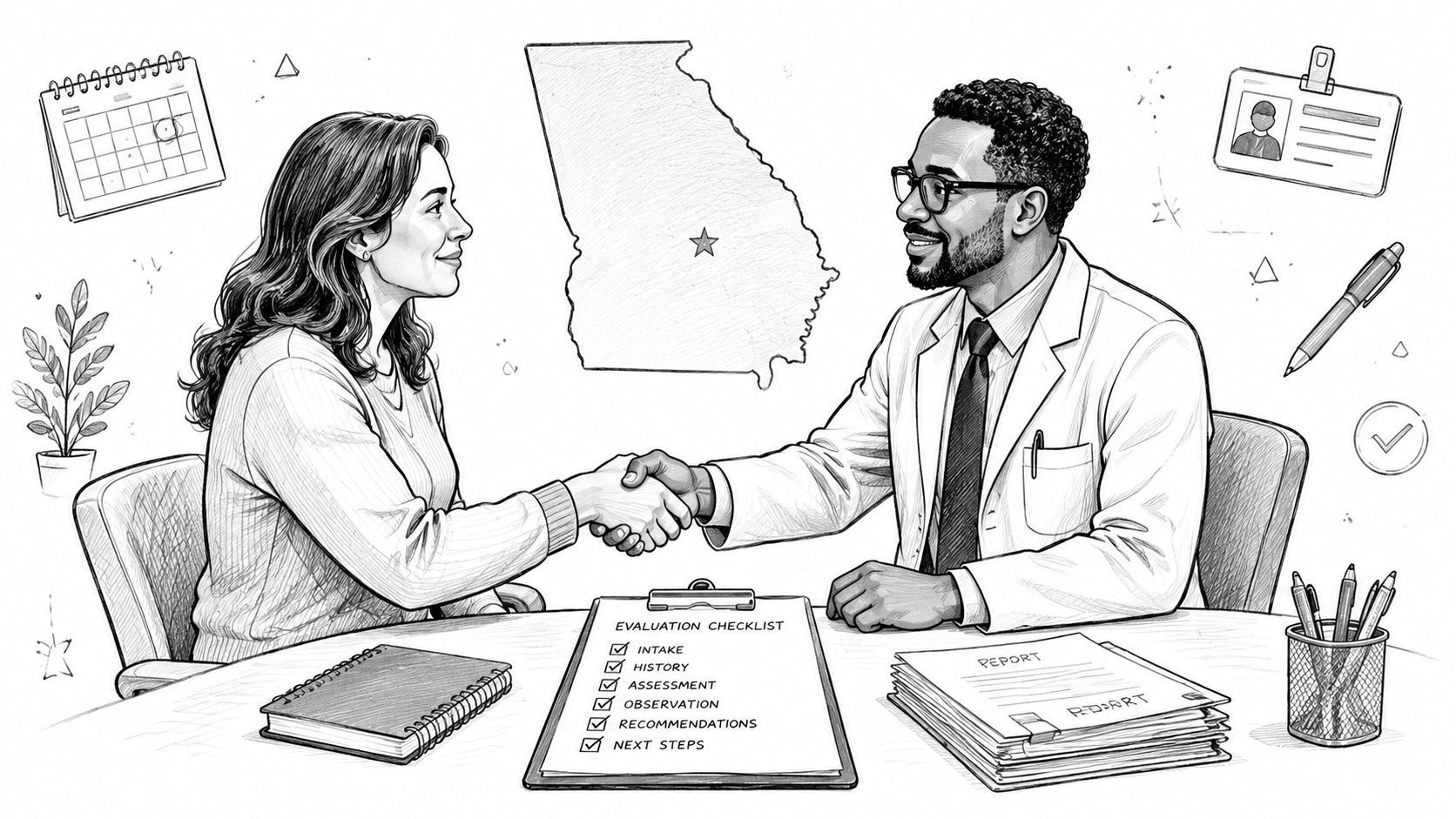
Getting told you need a drug and alcohol evaluation in Georgia usually happens at the worst time. You may have a court date coming up, a letter from DDS in your hand, or an attorney telling you this has to be done quickly. The first question that often arises is: how do I pass?
The better question is how to go through the evaluation in a way that leads to a fair, accurate result. That shift matters. If you treat the process like a trick test, you increase the odds of sounding evasive. If you treat it like a documented clinical review, you give yourself a better chance of being understood correctly by the evaluator, the court, and DDS.
Your Guide to Navigating the Evaluation Process
In Georgia, people often come to this step after a DUI arrest, a probation requirement, or a DDS reinstatement issue. By the time they call, they're usually worried about saying the wrong thing. That anxiety makes sense, but it also causes the most common mistake: trying too hard to look perfect.
A drug and alcohol evaluation is usually not a pass/fail event. It is a required assessment used to decide what recommendation fits your situation. That recommendation may affect court compliance, license issues, treatment requirements, or all three.
If you need a court ordered substance abuse evaluation in Georgia, the smartest approach is simple. Prepare your facts. Bring your paperwork. Answer in a way that is clear, steady, and consistent.
Reframe what success looks like
People get into trouble when they think success means denying every problem. In practice, success means helping the evaluator reach an informed conclusion based on real information. If your history shows a one-time lapse, your preparation should help the evaluator see that. If your record shows a bigger pattern, trying to hide it usually makes things worse.
Practical rule: Don't aim to “beat” the evaluation. Aim to make your account organized, believable, and easy to verify.
That is especially important in Georgia cases involving courts, probation, and DDS paperwork. Evaluators know they may be writing something that other professionals will rely on. A report that holds up well usually comes from a client who showed up prepared and didn't keep changing the story.
What helps and what hurts
A few habits tend to help right away:
- Bring structure: Write out a basic timeline before your appointment.
- Use real descriptions: Say what you used, when, and how often, instead of speaking in generalities.
- Treat it like an official appointment: Be on time, sober, and ready with documents.
The habits that hurt are just as predictable:
- Minimizing obvious facts: If a police report, prior case, or test result says one thing and you say another, the gap matters.
- Guessing instead of clarifying: If you don't remember something exactly, say that plainly.
- Trying to sound rehearsed: Evaluators hear that quickly.
A fair outcome starts long before the interview begins. It starts with how you prepare.
Understanding What Evaluators Really Look For
Most of the fear around this process comes from not knowing what the evaluator is doing. In reality, the evaluation is usually a structured clinical interview, not a quiz with hidden right answers. Major providers describe it as typically taking about 60 to 90 minutes and covering areas such as alcohol and drug history, family background, legal history, medical and mental health history, and current life impact, as explained by Bicycle Health's overview of the drug and alcohol evaluation process.
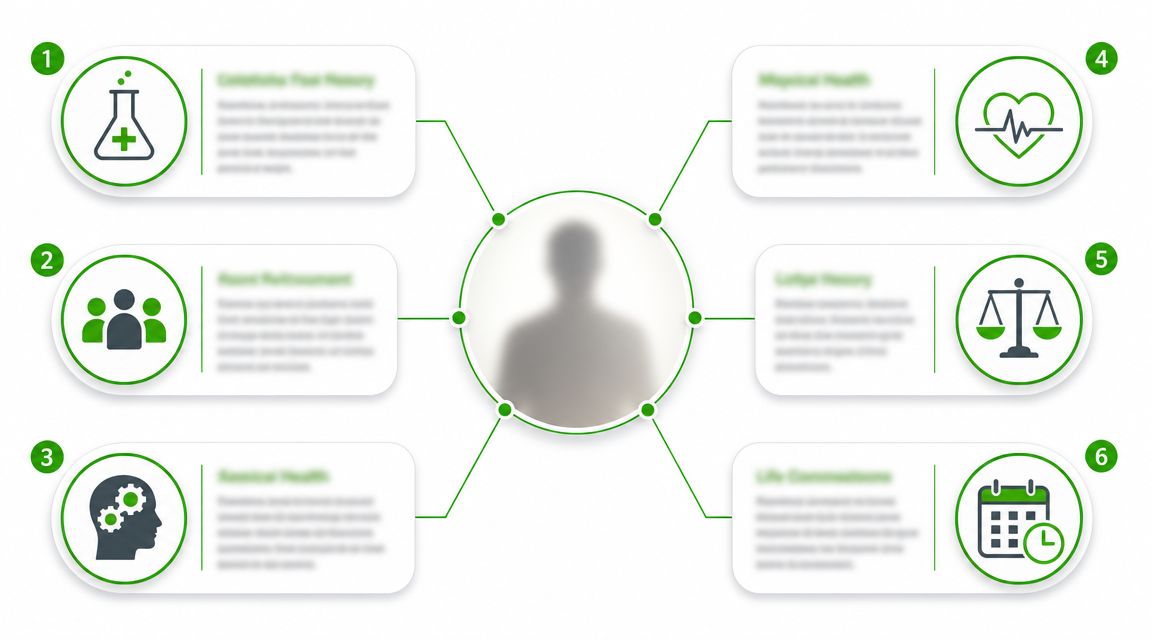
That structure helps you. It means the evaluator isn't supposed to rely on a gut feeling alone. They're looking across multiple areas of your life to understand whether substance use appears isolated, situational, or part of an ongoing disorder pattern.
The main areas under review
Here's what usually gets attention during the interview.
| Area | What the evaluator is trying to understand |
|---|---|
| Substance use history | What substances were used, how often, in what amounts, and over what period |
| Family background | Whether there's relevant family history or home instability |
| Legal history | DUI, arrests, probation terms, prior charges, or court involvement |
| Mental health | Anxiety, depression, trauma, counseling, medication, or past diagnoses |
| Medical history | Conditions, prescriptions, and anything affecting functioning |
| Current life impact | Whether use has affected work, driving, finances, relationships, or daily stability |
None of those categories exists to trap you. They exist because one answer by itself rarely tells the full story.
Standardized tools matter
Evaluations have become more standardized over time. One source discussing this process notes that screening often relies on recognized criteria and tools rather than a personal impression, including instruments such as the 4-question CAGE and 11 yes/no DSM substance-use criteria, with 2 to 3 positive criteria noted as potentially indicating a mild disorder in that framework, as described in this explanation of modern drug and alcohol assessments.
That matters for one reason. If you're wondering how to pass a drug and alcohol evaluation, sounding polished is less important than being internally consistent.
Evaluators don't just listen for whether you admit use. They listen for whether your timeline, consequences, and behavior fit together.
Someone who says “I hardly ever drink” but then describes regular weekend binge episodes, a recent DUI, and repeated family conflict creates a mismatch. Someone who says, “I drank socially, it escalated during a stressful period, and here's what happened around the arrest,” sounds much more credible because the facts line up.
What this means for you
Approach the interview like a fact-finding process. Give exact details when you have them. If you don't, be honest about that too. The evaluator is building a picture from many data points, not waiting for one magic answer.
Gathering Your Documents for a Smooth Process
A well-prepared client is easier to evaluate accurately. That's not about appearances. It's about verification. The clinical standard combines an interview with document review, and evaluators are trained to compare what you say with objective records. Arriving with court documents, DDS paperwork, and medication lists helps the clinician verify your account, as outlined in NIH guidance on substance abuse assessment.
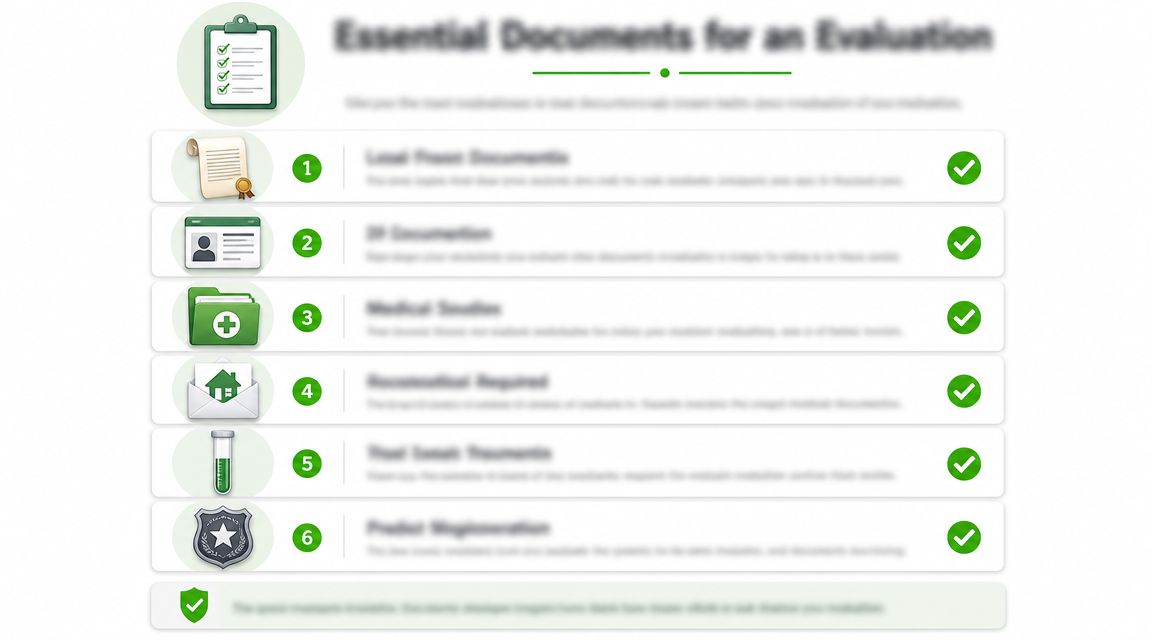
When people show up empty-handed, they often leave out dates, charges, prescriptions, or prior counseling details. That creates gaps. Gaps can look like avoidance even when the person is just stressed and forgetful.
What to bring to the appointment
Use this as a practical checklist before you leave home:
- Court paperwork: Bring the order requiring the evaluation, bond conditions, probation instructions, or any referral form.
- DDS letters or notices: If Georgia DDS sent a reinstatement or compliance letter, include it.
- Citation or arrest records: A police report, citation, or booking paperwork can help fix dates and offense details.
- Medication list: Include current prescriptions, dosage information if available, and the reason you take them.
- Attorney or probation contact information: This helps if the evaluator needs to confirm who should receive the report.
- Past treatment or counseling records: Discharge summaries, attendance letters, or prior assessments can add needed context.
- Photo ID: Make sure your identification matches the referral paperwork.
If you're also being asked to complete screening steps tied to compliance, it helps to understand the court ordered drug test procedure before the appointment so you're not caught off guard by testing expectations.
Why paperwork changes the outcome
Documents do more than prove you're organized. They help separate a vague story from a defensible one.
For example, a client may remember a DUI arrest as “last spring,” but the court order may show the exact date and charge language. A person may say they've never had counseling, then remember halfway through the interview that they completed sessions years earlier after another case. Those aren't always lies, but they can still create credibility problems.
Bring records that support your timeline, not records you think make you look good.
That distinction matters. Evaluators are not helped by selective paperwork. They're helped by a complete picture.
A better way to prepare your timeline
Before the appointment, write down a simple sequence in your own words:
- Current case details
- Substance use around the incident
- Any prior legal or treatment history
- Periods of abstinence or reduced use
- Current supports, such as counseling, family, church, or work structure
Keep it plain. Don't write a speech. Just create a reference sheet that helps you stay accurate.
How to Communicate Honestly and Effectively
You sit down for the interview already worried that one wrong answer will make things worse. That fear is common. It also causes the mistakes evaluators notice fastest.
The goal is not to sound polished. The goal is to be accurate, consistent, and accountable. In a Georgia DUI evaluation, that gives the evaluator something they can defend to the court, your attorney, probation, and DDS.
Give specific answers the evaluator can use
Evaluators are listening for patterns, insight, and consistency. Broad statements such as “I hardly drink” or “it was just a misunderstanding” do not help them separate a one-time lapse from a larger concern. Specific facts do.
Here is the difference:
| Less effective answer | Better answer |
|---|---|
| “I barely drink.” | “I usually drink on weekends, and on a typical night I have a few beers.” |
| “I don't really use anything.” | “I used marijuana occasionally, and my last use was recent.” |
| “That arrest was no big deal.” | “I was arrested after driving, and alcohol was involved.” |
| “I'm fine mentally.” | “I have had anxiety before, but I am not in treatment right now.” |
Those stronger answers do not add drama. They give the evaluator a timeline, frequency, and context.
Answer the question asked
A common problem in these interviews is overexplaining. People start defending themselves before they answer. That can make a straightforward answer sound evasive.
Keep your responses plain. If the evaluator asks how often you drink, answer that question first. If more detail matters, they will ask for it.
This approach usually helps in three ways:
- It reduces contradictions
- It shows self-control under stress
- It makes your account easier to match against records and screening results
If you misspeak, correct it immediately. That improves credibility more than trying to protect a bad answer.
Recent use needs a direct answer
If you drank recently, used THC, or took something that could appear on a screen, say so. Trying to outguess the test or tailor your story around what you hope will not show up often creates a bigger credibility issue than the use itself.
I tell clients this often at our Georgia DUI school. Evaluators can work with difficult facts. They have a harder time with shifting stories, selective memory, and obvious minimization.
A clear response sounds like this:
“I need to be accurate. I used recently, and I understand that may affect the evaluation.”
That statement will not erase the issue. It does show maturity, which matters. It also gives the evaluator a fair basis to decide whether education, monitoring, or treatment is appropriate, including situations where ASAM Level 1 treatment in Georgia may be discussed.
Accountability matters more than labels
You do not need to call yourself an alcoholic or deny that anything is wrong. Both extremes can create problems. Evaluators are looking for whether you understand the risk, accept your part in the incident, and can describe what has changed since then.
Useful statements include:
- “I made a bad decision to drive after drinking.”
- “I can see why this raised concern.”
- “I have cut off the situations that led to this arrest.”
- “I have not handled stress well, and I need better coping tools.”
That is very different from blaming the officer, blaming everyone else at the event, or acting as if the case exists in a vacuum.
A few communication habits help
During the appointment:
- Maintain a calm tone
- Pause before answering if you need a moment
- Stick to facts you know
- Say “I don't remember exactly” when that is true, then give your best estimate
- Avoid rehearsed speeches
If your case is outside Georgia, local legal strategy may differ. Some readers may also need to get help with Florida DUI issues through counsel familiar with that system.
The strongest presentation is usually the simplest one. Tell the truth, keep your timeline straight, and let the evaluator see the difference between a person hiding a pattern and a person owning a mistake.
Understanding Recommendations and Next Steps in Georgia
After the interview and record review, the evaluator makes a recommendation. That recommendation is not a grade. It is the clinical path the evaluator believes matches the information provided. Public guidance on this subject points out that many people are less interested in gaming the process than in getting a fair, defensible result that courts, attorneys, or treatment programs will accept, and that recommendations are driven by standardized screening, history, behavior, and collateral evidence, as described in this discussion of substance abuse evaluation methodology.
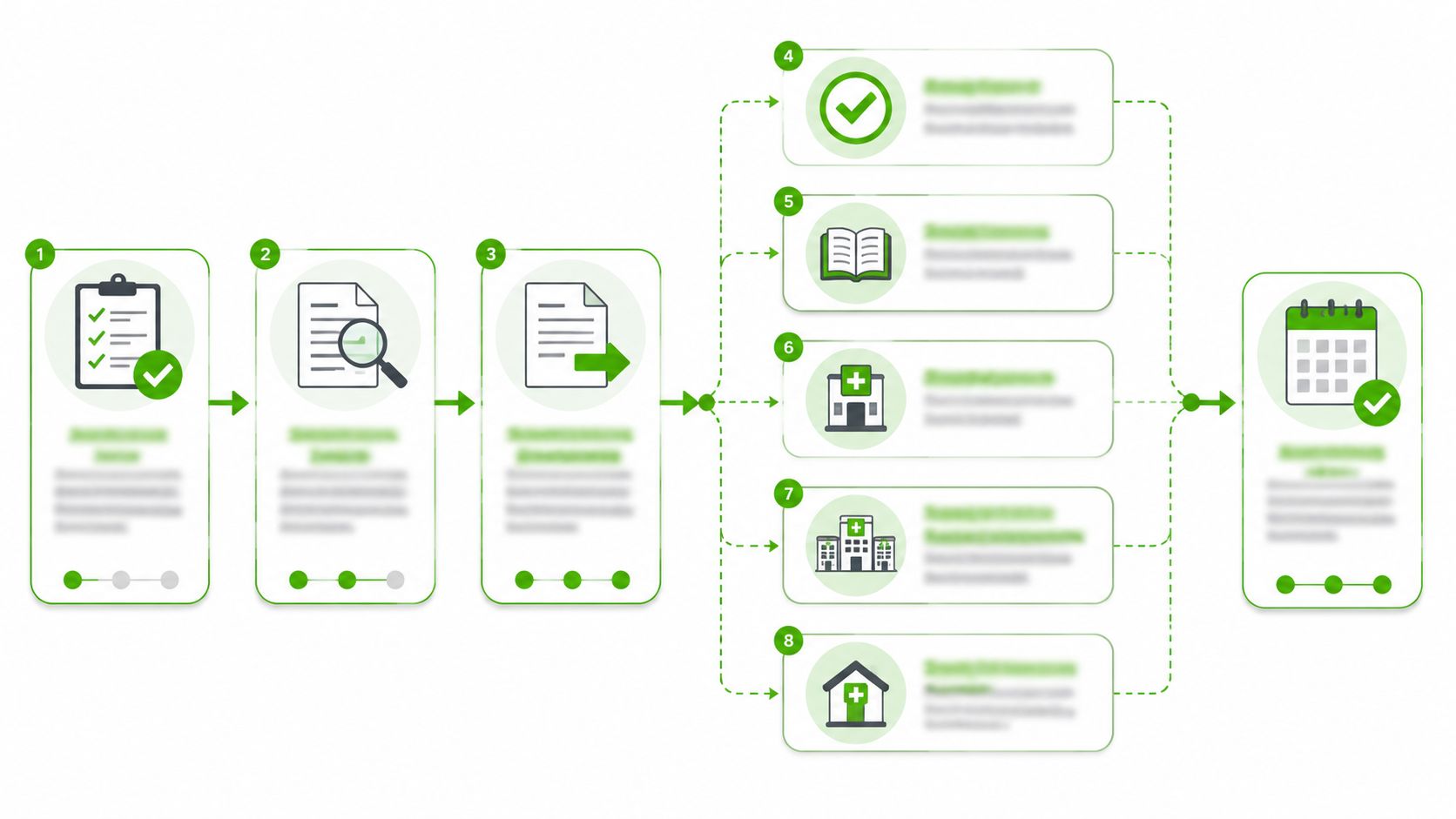
In Georgia, that recommendation may affect what you have to do next for court compliance, probation, or DDS reinstatement.
Common recommendation paths
Different evaluators may use slightly different language, but the practical outcomes usually fall into a few buckets.
No further treatment recommended
This means the evaluator did not find enough evidence to recommend treatment beyond the required legal steps already in place. That does not erase a court's separate requirements. It means only that the clinical recommendation did not add counseling or treatment.
Education-focused recommendation
For some people, the next step is primarily educational. In Georgia DUI matters, that may work alongside the state-required DUI or Risk Reduction process when applicable.
Outpatient counseling or ASAM Level 1
This usually applies when the evaluator sees enough concern to recommend ongoing counseling in a structured outpatient setting. If you've been referred to this level of care, you can review ASAM Level 1 treatment in Georgia to understand what that requirement generally involves.
One Georgia provider that offers clinical evaluation and related follow-up services is Georgia DUI Schools. That matters if you're trying to coordinate evaluation, reporting, and any recommended next steps through one compliance process rather than piecing them together from separate offices.
How to read the recommendation the right way
Don't ask only, “Is this strict?” Ask, “Does this match the record the evaluator had?”
If the recommendation feels heavier than expected, look back at the facts that likely drove it:
- Prior arrests or prior treatment
- Recent positive testing
- Contradictory self-report
- Evidence of repeated impact on driving, work, or family
- Mental health concerns that appear connected to use
That doesn't mean the recommendation is always beyond question. If something in the report is factually wrong, bring it up appropriately through the proper channels. But if the report reflects the records and interview accurately, the better move is usually compliance.
Georgia context matters
In Metro Atlanta, Athens, and surrounding courts, a clear and well-supported evaluation tends to move more smoothly through the system than a thin or confusing one. Judges, lawyers, probation officers, and DDS-related reviewers are all more comfortable with reports that show method, documentation, and consistent findings.
If your case has ties outside Georgia, legal strategy may also matter alongside the evaluation. For example, people dealing with charges in another state may need legal guidance specific to that jurisdiction. In that situation, a focused defense resource such as get help with Florida DUI can be useful for understanding how the legal side differs from the clinical side.
Take Control of Your Next Steps Today
A lot of people reach this point still asking the wrong question. They want to know how to say the right thing to pass. In Georgia, the better question is how to show up prepared enough that the evaluator, the court, and DDS can see your case accurately.
That matters because a fair outcome is not the same as an easy one. If the record points to a one-time lapse, good preparation helps that come through. If the record shows a larger problem, trying to minimize it usually makes the result worse, not better.
Keep the final stretch simple and disciplined:
- Confirm exactly what the court, attorney, probation officer, or DDS requires
- Bring the records that support your timeline
- Treat a virtual appointment with the same seriousness as an office visit
- Arrive sober, settled, and on time
- Answer directly instead of trying to sound perfect
- Complete the recommendation promptly once you receive it
That approach gives you the strongest chance of an evaluation that is accurate, credible, and easier for Georgia decision-makers to rely on. It also reduces avoidable delays, which is often one of the biggest practical problems after an arrest.
If you need to complete the next required step, Georgia DUI Schools offers court-related services that may include evaluations, treatment follow-up, and DUI education in the formats many Georgia clients need. To move forward with the course most commonly tied to DUI compliance, review the Georgia DUI Risk Reduction Program.