

You got told to complete an alcohol evaluation for dui, and now you're trying to figure out what that entails. Many individuals reach this point after a stressful arrest, a confusing court date, or a conversation with probation, a lawyer, or a DUI school office that moved too fast.
Here's the plain version. This evaluation is a required clinical assessment used in DUI cases to decide whether you need education only, treatment, or a higher level of follow-up. It isn't a trivia test. It isn't something you “beat.” It's a structured interview and record review that can affect what the court expects from you and what you must finish before your license issues are fully resolved.
People often get hung up on one question: “If my BAC wasn't that high, why do I still need this?” Because the evaluation doesn't look at only one number. It looks at your full risk picture, including the arrest facts, your history, and what the evaluator sees during the interview.
That's why it helps to approach the process calmly and realistically. The more clearly you understand it, the less likely you are to make avoidable mistakes that slow down your case.
Navigating Your DUI Alcohol Evaluation
A lot of clients walk in thinking the alcohol evaluation for dui is just another box to check. Then they realize the result can shape what happens next. That's where the confusion starts.
Take a common Georgia scenario. A driver finishes the immediate court paperwork, gets told to complete DUI School, and then hears they also need a clinical evaluation. They assume it's just a short conversation. What they don't realize is that the evaluator is trying to answer a much bigger question: Was this a one-time incident, or does the record suggest a pattern that needs intervention?
That distinction matters. If the evaluator sees low apparent risk, the recommendation may lean toward education. If the evaluator sees warning signs in the record, the recommendation can move toward treatment. The evaluation isn't there to punish you twice. It's there to classify risk.
Practical rule: Treat the evaluation like an official part of your case, because that's exactly what it is.
Many people also assume the interview is private in the same way a casual counseling session would be. It is clinical, but it's also tied to legal requirements. The evaluator gathers information to make a formal recommendation. That recommendation can affect court compliance, probation expectations, and what you must complete before moving forward.
What clients usually misunderstand
- It's not just about BAC. Your chemical test matters, but so do your driving history, arrest facts, and screening results.
- It's not pass or fail. The outcome is a recommendation, not a grade.
- It's not optional once ordered. If your case requires it, delaying it usually creates more trouble, not less.
What helps most going in
Bring a calm mindset. Answer directly. Don't minimize obvious facts that are already in the record. If your paperwork says one thing and your interview says another, the inconsistency becomes part of the picture.
That's why understanding the process before you sit down with the evaluator can save you time, money, and frustration.
Why Georgia Mandates a DUI Evaluation
You pay the fine, sign up for DUI School, and expect the case to be mostly about classes and paperwork. Then Georgia requires a clinical evaluation. For many clients, that is the moment the process stops feeling routine and starts feeling personal.
Georgia requires the evaluation because the state is trying to answer a practical question, not just a legal one. After a DUI arrest, the court system needs to know what level of intervention fits the person in front of it. A traffic charge tells the state that alcohol and driving crossed paths. The evaluation helps determine whether that points to a one-time lapse, a larger substance-use problem, or a risk level that calls for treatment before someone gets back on the road.
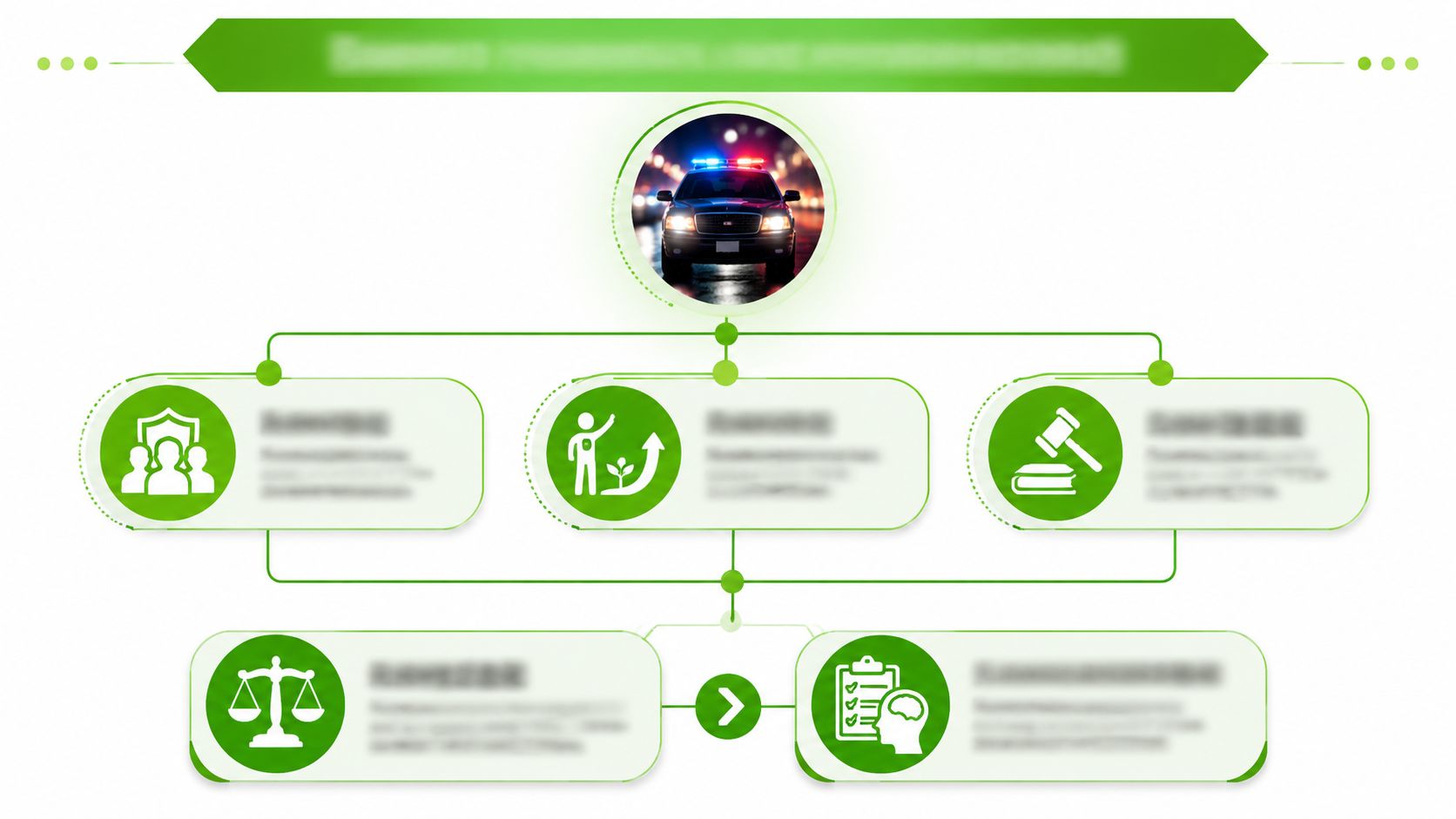
The Georgia Department of Behavioral Health and Developmental Disabilities states that DUI offenders must attend DUI School, complete a clinical evaluation, and complete any recommended treatment through the DUI Intervention Program (Georgia DBHDD DUI Intervention Program). That requirement is the backbone of Georgia's DUI intervention system.
Why the state does not stop at the arrest
A DUI case gives the court part of the picture. The evaluation fills in the rest.
A judge or probation officer does not just want to know that alcohol was involved. They want to know whether your record and your interview suggest low risk, moderate risk, or a need for treatment services at a specific ASAM level. In Georgia, that decision has real consequences. It can affect what you must complete for court compliance, what probation expects, and what stands between you and license reinstatement.
That is why the evaluation works like a sorting tool. It places people into the intervention path the state believes matches the level of risk.
The legal system and the treatment system are connected
Clients often expect the criminal case and the clinical process to stay in separate boxes. In Georgia, they overlap.
The court process handles guilt, sentencing, probation terms, and deadlines. The clinical process answers a different question: what does this person need to complete under state DUI rules before the case is fully resolved? If the evaluator recommends treatment, that recommendation is not a side note. It can become part of what you must finish to satisfy the court and regain driving privileges.
That is the point many people miss. The evaluation is not extra paperwork. It is one of the state's decision points.
Why Georgia uses treatment levels instead of one standard class
A single class cannot address every DUI case. One driver may need education only. Another may show warning signs that call for counseling or a higher level of care. Georgia uses ASAM criteria to match the recommendation to the person, much like a triage system in medical care matches treatment intensity to the patient's condition.
That is also why evaluators ask about more than the arrest itself. They are looking at patterns, prior history, current substance use, and whether there are signs that alcohol is affecting daily functioning. If you want a plain-language overview before the appointment, this guide to a Georgia DUI drug and alcohol evaluation online explains how the requirement fits into the state process.
Some clients worry that any mention of alcohol problems will automatically trigger the highest level of treatment. That is not how the system is supposed to work. The purpose is classification. In that context, recognizing signs of alcohol abuse helps explain the kinds of patterns evaluators are trained to notice when deciding whether education is enough or treatment is more appropriate.
Who usually ends up needing one
In Georgia practice, the evaluation is commonly tied to the DUI intervention process for repeat offenders, and a judge can also order it in a first-offense case. The practical rule is simple. If your court paperwork, probation terms, or DUI School instructions require an evaluation, treat it as a deadline tied to the outcome of your case.
Missing it or delaying it can create problems that have nothing to do with your explanation of the arrest. Georgia mandates the evaluation because the state wants a clinical recommendation before it decides what you must complete next.
The Evaluation Process What to Expect
Most clients are less anxious once they know what happens in the appointment. The alcohol evaluation for dui is structured. It isn't random, and it isn't a casual chat.
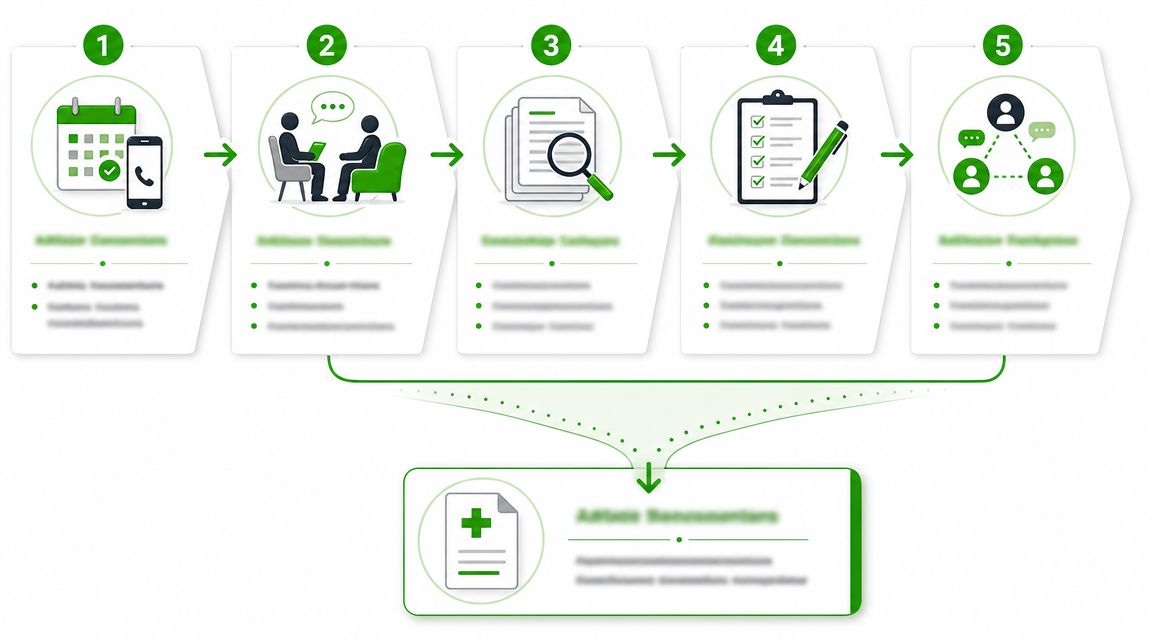
Illinois DHS describes this type of alcohol and drug evaluation as a risk-stratification tool that uses at least four evidence streams: driving history, chemical test results, objective test scores, and the clinical interview (Illinois DHS DUI evaluation overview). That framework is useful because it explains why your own version of events is only one part of the overall picture.
Step one and step two
The process usually starts with scheduling and document collection. Then comes the interview itself.
Georgia clinical-evaluation guidance says the interview typically takes about one hour. During that time, the evaluator may ask about your alcohol use, other substances, prior treatment, medical background, criminal history, and the events around the DUI arrest.
Step three and step four
After the interview, the evaluator reviews records and screening results. At this stage, many clients falter. They think being polite and saying “I barely drink” settles the issue.
It doesn't.
If the arrest report, driving record, or chemical test points in another direction, the evaluator has to account for that. A high BAC, prior alcohol-related driving events, or a pattern in the driving history can raise concern even when the client minimizes use.
If the paperwork and your answers don't match, the mismatch becomes clinically important.
You may also complete standardized questionnaires or screening tools. These aren't there to trick you. They help the evaluator organize the risk assessment in a more objective way.
What honesty actually looks like
Honesty doesn't mean volunteering dramatic statements. It means being accurate.
- Acknowledge the arrest facts if they are already documented.
- Answer directly instead of trying to sound perfect.
- Avoid rehearsed language that makes it seem like someone coached you.
- Bring relevant records if you've had prior counseling or treatment.
If you're trying to understand whether your own drinking pattern raises bigger concerns, a plain-language resource on recognizing signs of alcohol abuse can help you think more clearly before the appointment.
For people trying to complete this requirement efficiently, some providers also offer a Georgia online drug and alcohol evaluation tied to DUI-related compliance needs, as long as it fits the court or program requirements in your case.
What the evaluator is deciding
The evaluator is not deciding guilt or innocence. The evaluator is deciding what recommendation fits the evidence in front of them. That recommendation is what follows you into the next phase of the case.
Understanding Your ASAM Level Recommendation
After the interview and record review, the recommendation usually gets translated into a level of care. In Georgia DUI cases, people often hear terms like ASAM Level 0.5 or ASAM Level I without any explanation. That creates unnecessary panic.
Here's the plain English version. The level tells the court and the program system how much intervention the evaluator believes is appropriate. Lower levels generally point toward education and early intervention. Higher levels point toward more structured treatment.
Common ASAM levels in Georgia DUI cases
| ASAM Level | Description | Typical Requirement |
|---|---|---|
| ASAM Level 0.5 | Early intervention or risk-reduction focused care for lower apparent severity | Education-oriented programming tied to risk reduction |
| ASAM Level I | Outpatient treatment for people who need more than basic education | Structured outpatient counseling or treatment participation |
| Higher level recommendation | More intensive care if the evaluation shows broader or more serious substance-use concerns | A higher-intensity treatment plan based on the evaluator's findings |
How to think about the difference
Level 0.5 usually means the evaluator sees a need for intervention, but not full outpatient treatment in the traditional sense. In DUI settings, people often experience this as a risk-reduction focused response.
Level I means the evaluator sees a stronger need for ongoing treatment. That usually involves repeated contact over time, not a single educational experience. You're no longer dealing with “just a class.” You're dealing with a treatment requirement that has to be documented and completed.
A higher recommendation means the evaluator believes the case involves more serious substance-use concerns or a more complicated clinical picture. If that happens, the issue isn't whether you like the result. The issue is what the court and licensing process will require you to do with it.
A recommendation level is really a statement about intensity. How much structure does this person need to lower risk and meet legal requirements?
Why the recommendation can feel confusing
People expect a clean yes-or-no answer. Evaluations don't work that way. They sort people into levels of concern.
That also explains why two drivers with similar charges may not receive the same recommendation. One person may have a more troubling history. Another may have more stable facts around the incident. The evaluator is looking at the whole picture, not only the charge name.
If you've ever wondered why treatment paperwork has to be coded and categorized so carefully, this background on reduce denials with behavioral health coding gives useful context on how behavioral health services are formally documented.
For a Georgia-specific treatment path, people who receive this recommendation often need to enroll in an ASAM Level 1 treatment program in Georgia.
What matters most
Don't get stuck arguing with the label. Focus on what the recommendation requires you to complete, how long it may take, and what proof you'll need when probation, the court, or DDS asks for documentation.
How Evaluation Results Affect Your Case and License
This is the part many people don't understand until they're already behind schedule. The evaluation result doesn't stay inside a counselor's file. It affects the outcome path of your case.
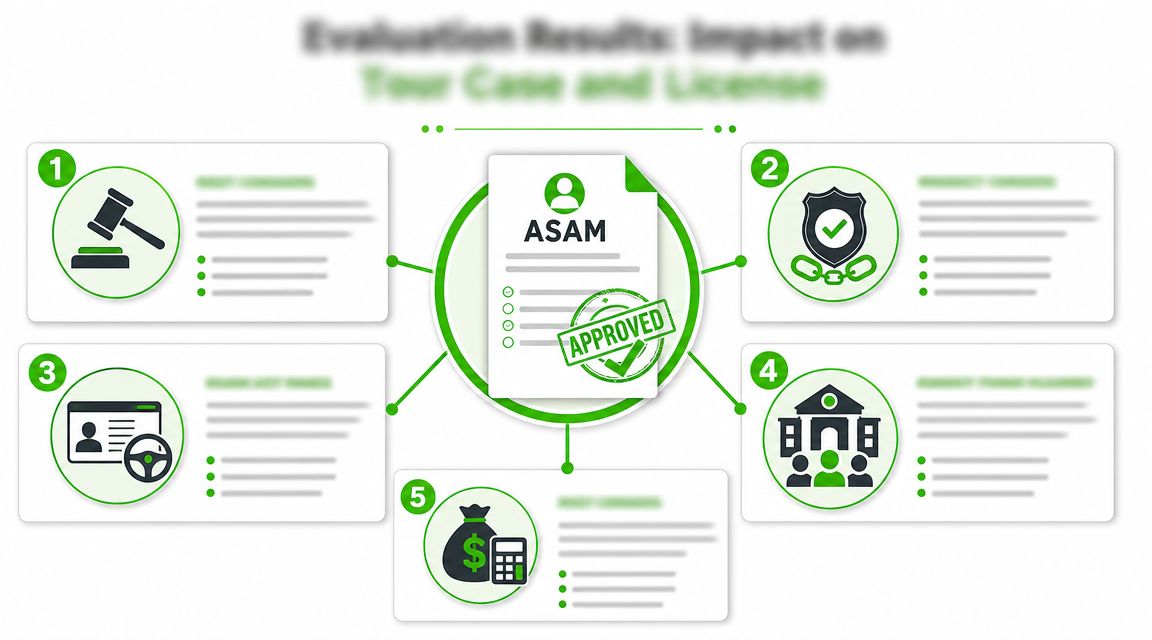
Gateway Foundation puts it plainly. The primary purpose of an alcohol evaluation in a DUI case is to determine the outcome, including whether the court orders simple education or a more intensive treatment program, and that result can affect sentencing, probation terms, and the path to license restoration (Gateway Foundation on DUI substance abuse evaluation outcomes).
Court consequences
Judges and probation officers use the recommendation to decide what they want completed. If the evaluation points toward education only, the legal burden may stay narrower. If it points toward treatment, treatment becomes part of the compliance path.
That matters because courts don't usually treat treatment recommendations as casual advice. Once adopted into the case, they function like conditions you must satisfy.
License consequences
For many drivers, the practical question is not “What did the evaluator think?” It's “What do I need to finish so my case and license issues stop following me?”
That's where the evaluation result becomes critical. If the requirement includes treatment, finishing only the classroom portion won't be enough. You need documentation that you completed what was recommended, not what you personally preferred to do.
Negotiation and timing
Your lawyer may look at the evaluation as part of the overall case strategy. A completed recommendation can help show compliance and seriousness. An ignored recommendation can create the opposite impression.
That doesn't mean the evaluation controls every legal decision. It does mean it becomes a central document in how decision-makers view risk, accountability, and follow-through.
The fastest way to complicate a DUI case is to treat the evaluation like paperwork instead of a compliance roadmap.
Where clients often slip up
- They complete DUI School but not the clinical recommendation.
- They enroll late and miss court or probation deadlines.
- They assume a lesser course will substitute for the ordered level of care.
- They don't keep proof of completion.
If your case touches employment-related driving or return-to-duty issues, it also helps to understand related program structures such as what the SAP program is, because different systems often use evaluations and treatment recommendations in similarly formal ways.
The bottom line is simple. Your evaluation result is not background noise. It helps determine what must happen next.
Your Next Steps for a Compliant DUI Evaluation
You leave court thinking the hardest part was standing before the judge. Then Georgia hands you the next test. The evaluation has to be done by the right provider, in the right format, and followed by the exact level of care that is recommended. If any part of that chain breaks, the court and the Department of Driver Services may treat your case as incomplete.
That is why this step deserves careful attention. In Georgia, an alcohol and drug evaluation is not just a clinical interview. It often becomes the document that connects your case to treatment requirements, probation compliance, and license reinstatement steps. A recommendation tied to ASAM levels works like a placement decision. It tells the state what type of service you must complete, not what sounds close enough.
Before you schedule, slow down and verify the basics.
- Will this evaluation be accepted for your specific Georgia requirement? Court, probation, and DDS rules can differ in how they review paperwork.
- Does the provider know Georgia DUI intervention rules and ASAM placement levels? A general counseling office may not understand what Georgia requires after a DUI.
- Can the office direct you into the recommended level of care if treatment is assigned? That can prevent delays between the evaluation and the start of services.
- What paperwork will you receive at the end? You may need copies for court, probation, your lawyer, or DDS.
- How soon can you get an appointment? A late start can turn a manageable requirement into a missed deadline problem.
One mistake shows up again and again. A person gets an evaluation, hears a treatment recommendation, and then signs up for a different class because it seems similar. That approach usually fails. If the recommendation says one level of care, Georgia expects completion of that level of care.
Some cases also involve mental health concerns along with substance use issues. If that may apply to you, it helps to find dual diagnosis treatment programs so you understand what kind of care may fit both the clinical need and the DUI requirement.
A coordinated process can reduce confusion. Georgia DUI Schools offers clinical evaluations and related DUI intervention services in Georgia. That means a client can often move from assessment to the required next step without guessing which program matches the recommendation. The rule still stays the same. Show up, answer truthfully, complete the assigned service, and keep your proof of completion.
Use this short checklist before your appointment:
| Service | Link |
|---|---|
| Clinical evaluation and next-step DUI services | Georgia DUI Schools DUI services |
Bring your court paperwork. Confirm your deadline. Ask what identification and case documents the office needs. Write down exactly where the final paperwork must be sent.
Handle the evaluation like a compliance file, not a formality. In Georgia, the right evaluation can help clear the path toward court compliance, proper ASAM placement, and license reinstatement. The wrong provider, the wrong paperwork, or the wrong follow-up can keep the case open longer than expected.