

You're staring at paperwork, a court date, and the nagging question most Georgia drivers ask after a DUI stop, “What do I have to finish before I can move on?” In Georgia, the answer usually starts with the dui intervention program Georgia drivers hear about from the court, the DDS, or a lawyer, but the process is more structured than a lot of people expect. It's not just a class, it's a compliance track with screening, education, and sometimes clinical add-ons that connect your case to reinstatement.
What a DUI Intervention Program in Georgia Actually Means
A DUI citation in Atlanta can feel like a one-page problem until the paperwork starts asking for assessments, certificates, and deadlines. That's when the dui intervention program Georgia drivers get assigned to stops being a vague requirement and starts looking like the bridge between arrest and getting legal driving privileges back.
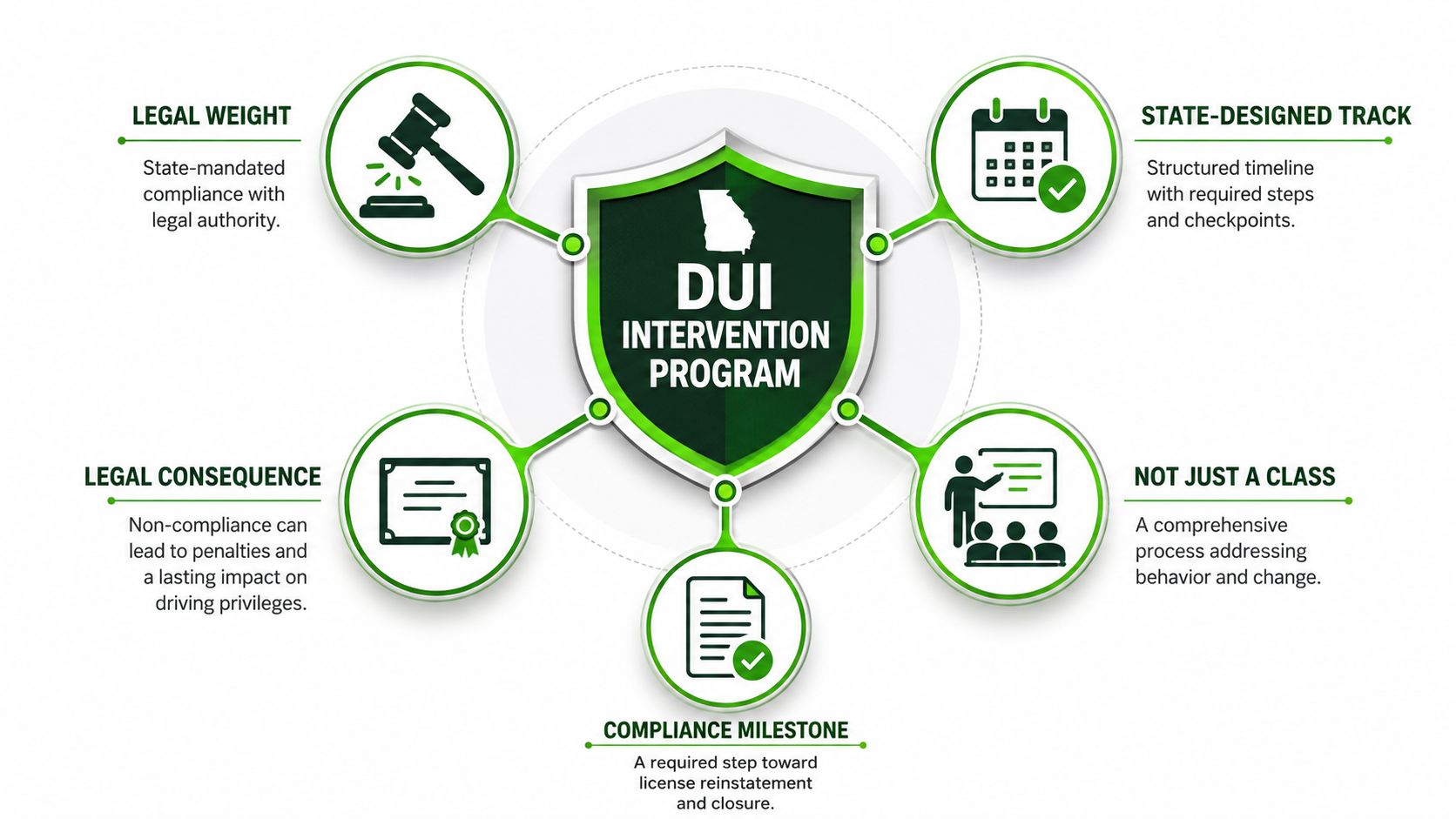
Georgia's behavioral health department describes a statewide system built around about 200,000 DUI arrests, about 50,000 people coming to DUI school, and an average BAC of 0.15, which is nearly twice the adult legal limit of 0.08. The same source also says alcohol-related fatalities are down 81% since 1982, which shows why Georgia treats intervention as part of long-term public safety, not a one-off class. That network also includes 675 clinical evaluators and 325 treatment providers, so the program sits inside a real compliance and treatment infrastructure, not a standalone lecture Georgia DBHDD overview.
Practical rule: if a Georgia court or DDS says you need intervention, treat it like a license-restoration step, not an optional educational seminar.
The easiest way to think about it is this. The intervention program is the state's handoff point between the violation and the path back to lawful driving. If you want a plain-English overview of the risk reduction framework, the DDS-oriented explanation at what is risk reduction is useful background, and a helpful outside resource on working with intervention professionals is what to expect from an interventionist from Zoe Behavioral Health.
Georgia also makes the timing matter. Under state law, the program has to be finished within 120 days of conviction, or within 90 days after release if incarceration makes the normal deadline impossible Georgia DUI sentencing rule. That deadline is why drivers in Fulton, Clarke, Chatham, and every other county should read the notice carefully and start early.
The Two-Part Design Behind Georgia's Risk Reduction Program
Georgia's Risk Reduction Program begins with a simple sequence. The state collects a risk picture first, then it delivers the education piece that fits that picture. That keeps people from being treated as if every DUI case needs the same response.
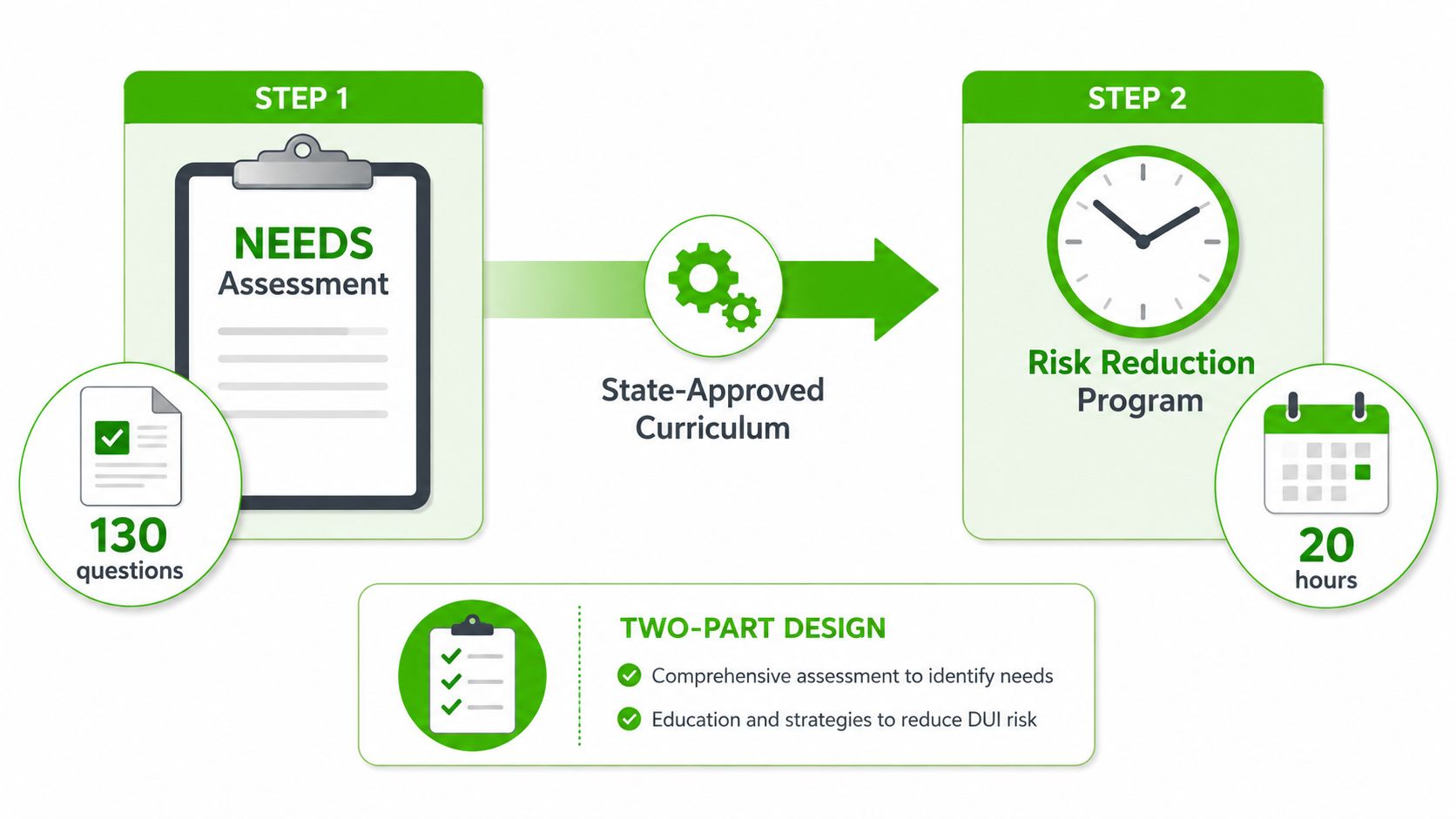
The first step is the 130-question NEEDS assessment, which Georgia describes as part of a two-part intervention model Georgia DDS DUI FAQs. The second step is the 20-hour intervention component, delivered in a group setting, and both parts have to be completed to earn the certificate tied to reinstatement-related compliance. Together, they make the program feel more like screening followed by prescribed instruction than a single one-size-fits-all class.
Why the assessment comes first
The assessment does not decide guilt. It helps the program sort lower-risk and higher-risk participants before the education piece starts, so the response fits the case instead of relying on a generic lecture. A driver who needs a closer review should not be placed in the same bucket as someone who mainly needs a structured reminder of the law.
Georgia's administrative rule also says the intervention component must be taught only by Department-certified instructors and must be completed within four weeks Georgia administrative rule. The same rule requires a contract between the program and the student before the intervention component can be administered, so enrollment is a formal compliance step, not just an online checkout screen.
What the 20-hour class is doing
The 20-hour component moves from screening to behavior change. It covers the realities behind impaired driving, then documents that the participant completed the state-required education path. For a driver, the important point is straightforward. The assessment sets the lane, the class finishes the lane, and both pieces belong to the same reinstatement track.
If the assessment feels like paperwork, that is because it is. It is paperwork with a purpose, because it tells Georgia what kind of intervention fits your case.
Who Must Attend and What Triggers the Requirement
Not every Georgia driver ends up in the exact same track. A first offender who needs standard Risk Reduction is in a different place than a repeat offender facing additional treatment, and a driver under 21 may be dealing with a separate zero-tolerance issue tied to age and offense type.
| Driver Category | Typical Georgia Requirement | Approximate Time Commitment |
|---|---|---|
| First offender | Standard DUI intervention track with assessment and the 20-hour class | Two-part program and any related deadlines |
| Repeat offender | Standard intervention plus possible treatment, supervision, or court-directed conditions | Varies by court order |
| Driver under 21 | Zero-tolerance or underage alcohol-related compliance path if the case triggers it | Depends on the order and related requirements |
The table is the shortcut. The core question is what the court, DDS, or solicitor's office wrote in your case file. A lot of confusion comes from drivers assuming “DUI school” means the same thing in every case, when in practice the assignment can differ based on offense history, age, and whether the court pushes the person toward additional supervision.
If you're in a county like Fulton or Chatham, the label on the paper matters more than the local office name. A standard intervention requirement usually means the DDS Risk Reduction path. A repeat or more serious case can bring in treatment and court monitoring, which is a different compliance lane altogether.
Plain-English shortcut: if your paperwork mentions risk reduction, assessment, or reinstatement, you're likely looking at the state intervention path. If it mentions treatment or court supervision, you may be looking at a layered requirement, not just school.
One more thing drivers miss. Some people think a defensive driving course will solve a DUI requirement. It won't, unless the court specifically ordered something else. DUI intervention is its own compliance track, and the trigger is the offense and the order, not convenience.
Enrollment, Deadlines, and How to Complete the Program
If your paperwork has already landed on your desk, the next job is to treat the deadline like a court clock. Get the contract signed, schedule the assessment, and reserve the class dates before the intervention window turns into a last-minute rush.
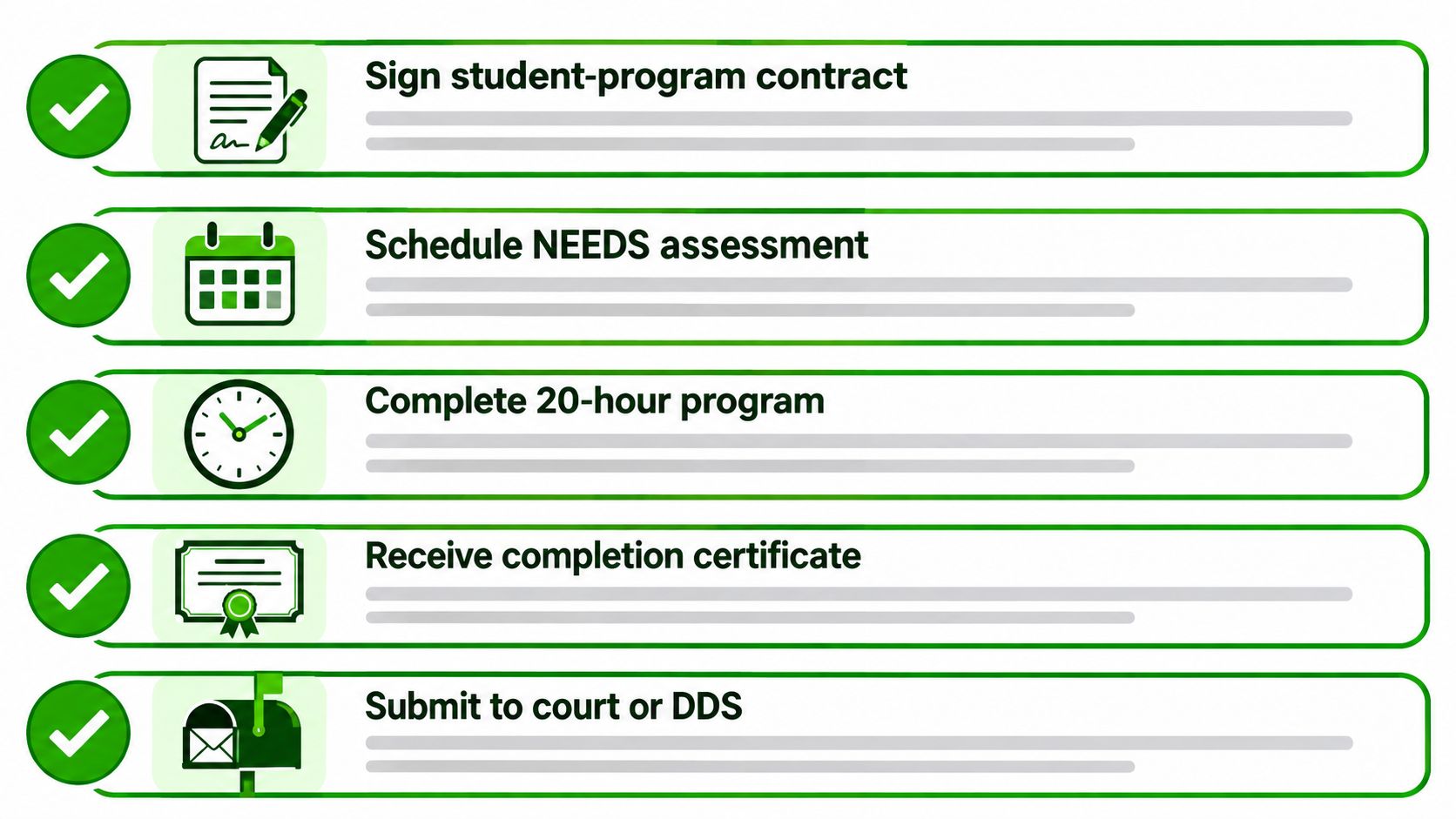
A clean sequence helps
Georgia law ties completion to the case timeline. The program has to be finished within 120 days of conviction, or within 90 days after release if jail time keeps the normal schedule from working Georgia DUI sentencing rule. Plan around the court date, because that is the timeline the state uses.
A simple path usually looks like this.
- Sign the student-program contract. The state rule treats this as the formal entry point, so do not assume you can attend first and sort out the paperwork later.
- Schedule the NEEDS assessment. This is the screening step that comes before the intervention class and helps show whether treatment or other services are part of the compliance chain.
- Finish the 20-hour component. Georgia requires the intervention class to be completed within the time limits tied to the program rule, so the class schedule has to fit the case timeline.
- Get the completion certificate. This document shows the school completed its part of the process.
- Send the proof to court or DDS. Your clerk, lawyer, or reinstatement process may need that certificate in the file, and missing it can hold up the next step.
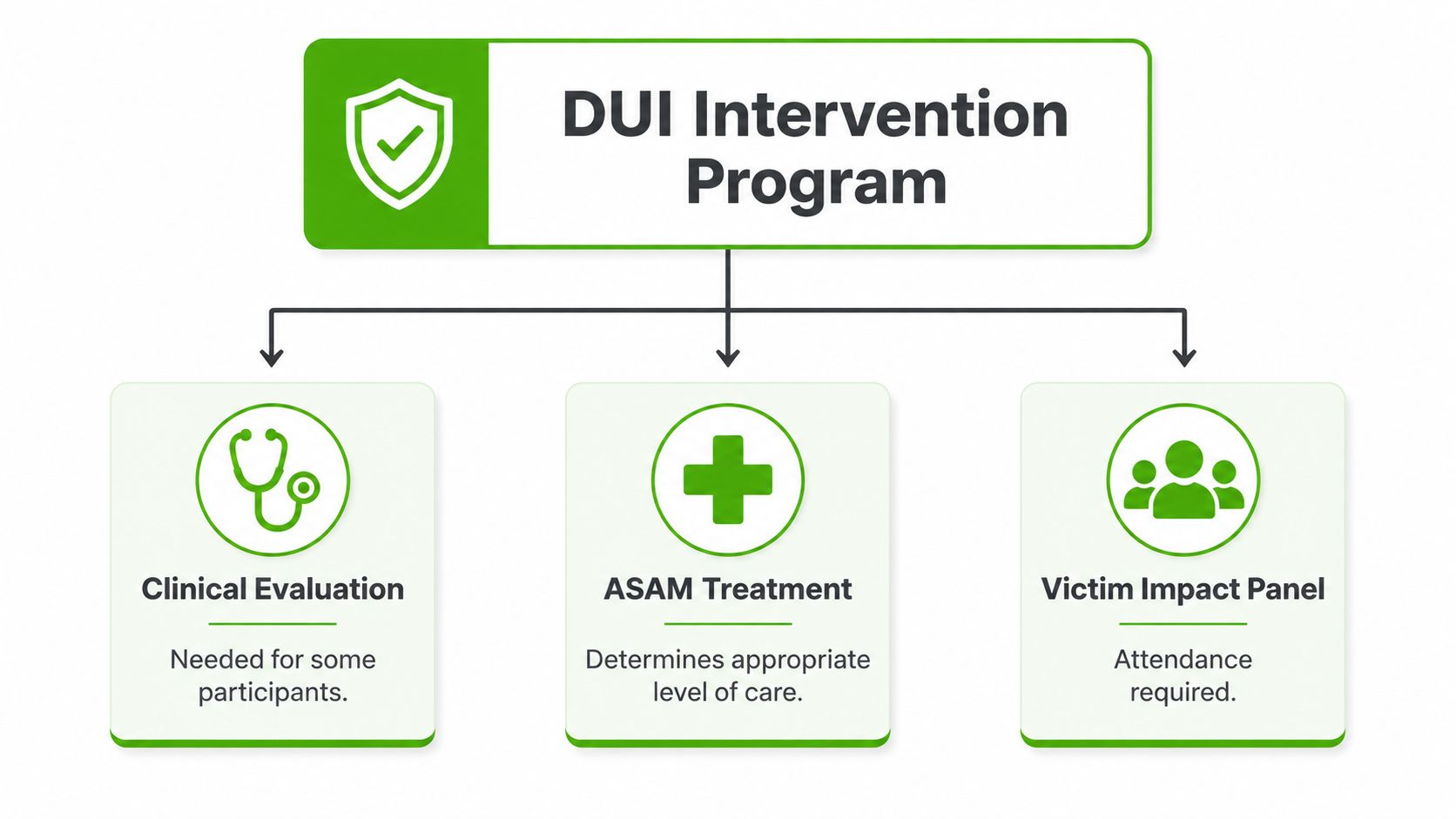
What to bring on day one depends on the provider, but the basics stay the same. Bring identification, any court paperwork, and enough time to complete the instructor's requirements. If your case also calls for a clinical evaluation, keep that separate in your mind, because the evaluation and the intervention class do different jobs. The class is the education piece, while the evaluation helps decide whether treatment or a Victim Impact Panel belongs in the larger compliance chain.
Georgia's process also leaves room for different formats and follow-up requirements, so the paperwork matters as much as the class itself. A driver in Fulton County and a driver in Chatham County may both be working through the same state program, but their court file can still point to different next steps. That is why the certificate, the assessment, and any added treatment documents need to line up with what the court ordered, not just with what was convenient to attend.
Scheduling tip: choose a class start date that gives you room before the court deadline, because the deadline is tied to your case, so plan around the court date rather than your personal schedule.
Choosing Between In-Person, Virtual, and Online Formats
A busy driver doesn't need more theory, just a format that fits work, family, and the court calendar. Georgia drivers usually compare three delivery styles, in-person classroom, live virtual Zoom, and self-paced online, but the key question is which version the court and DDS will accept for your specific case.
In-person works well for drivers who want a set room, a set instructor, and less temptation to multitask. Live virtual Zoom helps people who can't easily get to a classroom but still need real-time instruction and attendance verification. Self-paced online is the most flexible on paper, but flexibility only matters if the format is accepted for the requirement you've been assigned.
The safest filter is not “Which one is easiest?” It's “Which one matches the order in my hand?” If the court file calls for DDS-approved intervention, a random internet class won't help just because it's convenient. A legitimate option has to fit the state's rules and the compliance paperwork behind them.
For many drivers, the deciding factors are practical. A UGA student may need a weekend slot. A parent may need a live virtual option that doesn't break the school pickup schedule. An Atlanta professional may want a classroom near work so the certificate lines up with a court deadline.
Georgia DUI Schools offers DDS-approved DUI/Risk Reduction education through classroom and online formats, along with related compliance services, so it's one provider drivers sometimes compare when they're trying to match a court order to a workable schedule. The important part is still the same, the program has to be the right one for the requirement, not just the easiest one to click.
Clinical Evaluations, ASAM Treatment, and the Victim Impact Panel
Some cases stop at the intervention class. Others add a clinical layer, and that's where a lot of confusion starts. The classroom is one step, but Georgia also uses clinical evaluations and treatment referrals when the case calls for more than basic education.
Georgia training materials say a clinical evaluator must either hold specific substance-abuse credentials from GACA or ADACB-GA, or be a licensed professional such as an LPC, M.D., psychologist, or social worker with 3,000 hours of clinical experience. Those same materials say evaluators must be on the state registry, operate under DBHDD rules, and charge a minimum $110 for the evaluation Georgia DUI laws and training materials. That means a cheap out-of-network screening might look tempting, but it can become a useless expense if the court won't accept it.
Where ASAM fits
ASAM treatment comes in when the clinical evaluation points to a level of care beyond classroom education. The point isn't punishment for its own sake. It's matching the person to the right intensity of service, which is why the evaluation sits before treatment decisions instead of after them.
The Victim Impact Panel works differently. It's not a diagnosis, it's a perspective requirement, where the driver hears directly from people affected by impaired driving. If your court or probation officer requires it, the attendance proof becomes part of your compliance file. A Georgia-focused overview of that requirement is available at Victim Impact Panel in Georgia.
If you're trying to keep the calendar straight, think of the sequence this way. Classroom completion proves you finished the state education requirement. Clinical evaluation tells the system whether treatment is needed. The panel adds accountability and perspective when the order calls for it.
Why the Intervention Works and When DUI Court Changes the Equation
A Georgia DUI intervention program works because it gives the court a structured way to match the response to the driver's situation. For someone who only sees it as a form to finish, the process can feel like paperwork. For the state, it functions more like a checklist with a purpose. Assessment comes first, then education, then treatment or accountability measures when the case calls for them.
The clearest example is DUI Court. In the state evaluation, DUI Court graduates had a 9% recidivism rate, while matched offenders in similar counties had 24% and a retrospective comparison group had 35%. The same evaluation also found 9% recidivism for graduates and 26% for participants who were removed or did not comply federal DUI court evaluation. Those comparisons show why courts pay attention to participation, follow-through, and completion.
Georgia DUI Court materials emphasize accountability, behavior change, reduced recidivism, and improved re-licensure rates. That is the practical difference between a standard class track and a court-supervised track. A driver may complete the classroom requirement and still face a separate court process if the case file points that way. For that reason, some drivers need to ask the solicitor's office whether a court track is available instead of assuming the basic course covers everything.
The goal is matching the person to the right intensity of service. A first-time driver with a limited issue may move through education and documentation, while a higher-risk case can require closer supervision, treatment, or both. That is why the system includes clinical evaluation, ASAM treatment when needed, and accountability tools like the Victim Impact Panel. Each part answers a different question about risk, insight, and compliance.
For drivers who also need to think about vehicle costs and insurance, interlock device insurance discounts can be part of the larger recovery plan. If you are trying to confirm whether your case involves a court path or a standard intervention track, use the state-facing directory at Georgia DDS contact information to verify the right office before you act on assumptions.
Documentation, DDS Submission, and Your Next Step
Once the program is finished, the paperwork has to match the case. Keep the court order or DDS letter, the certificate of completion, any clinical evaluation report if your case required one, Victim Impact Panel attendance confirmation if ordered, and proof of any required treatment. If one of those pieces is missing, the rest of the file can stall.
A good next-step habit is to verify where each document goes. Some papers are for the court file, some are for DDS reinstatement, and some need to be kept by you in case anyone asks for a copy later. If you're unsure about the DDS contact path, the state-facing directory at Georgia DDS contact information is a useful place to confirm the right office.
In the first 30 days after finishing, do three things. Check that the completion certificate is in hand, confirm whether the court or DDS needs an additional submission, and keep copies of every document in one folder. Then make sure no follow-up treatment, panel proof, or evaluation report is still outstanding.
The clean finish matters because reinstatement is a paperwork chain, not a single checkbox. Finish the class, file the proof, and keep your records organized so you're not recreating the same paperwork later.
If you need a clear path through Georgia's DUI requirements, Georgia DUI Schools can help you line up the Risk Reduction course, related compliance services, and the documents that follow. Visit Georgia DUI Schools to find the option that fits your case and get started on the next step with confidence.