You're in Georgia, comparing driving lessons in an automatic because you want less stress behind the wheel, but your paperwork may involve much more than choosing between two vehicles. A DUI conviction, a court order, a suspended licence, or a reinstatement requirement can make the difference between an ordinary driving lesson and a program that must satisfy Georgia DDS and the court.
The first point to understand is scope. Georgia DUI Schools focuses on DDS-approved DUI Risk Reduction, defensive driving, and related clinical services, not general driver education for someone learning to drive. Automatic instruction can still matter to a returning driver, particularly when the driver wants to rebuild confidence or prepare for safe driving after a DUI-related interruption. It just doesn't replace the state-required compliance steps.
An automatic vehicle removes clutch control and manual gear selection. That can leave more attention available for lane position, observation, speed control, and hazard anticipation. But easier vehicle operation doesn't erase legal obligations. A driver must still complete the correct course, use an approved provider, follow court instructions, and keep completion records.
Practical rule: Treat the vehicle choice and the compliance requirement as two separate decisions. An automatic may simplify driving, but only the correct DDS-approved program can satisfy a Risk Reduction or defensive driving obligation.
This guide keeps the Georgia context at the center. It explains how to verify providers, what automatic instruction generally emphasizes, how Risk Reduction is structured, and where clinical evaluations or Victim Impact Panels may fit. It also addresses the long-term question many learners miss: whether an automatic-only licence gives you convenient access now while limiting your choices later.
Introduction to Driving Lessons in an Automatic in Georgia
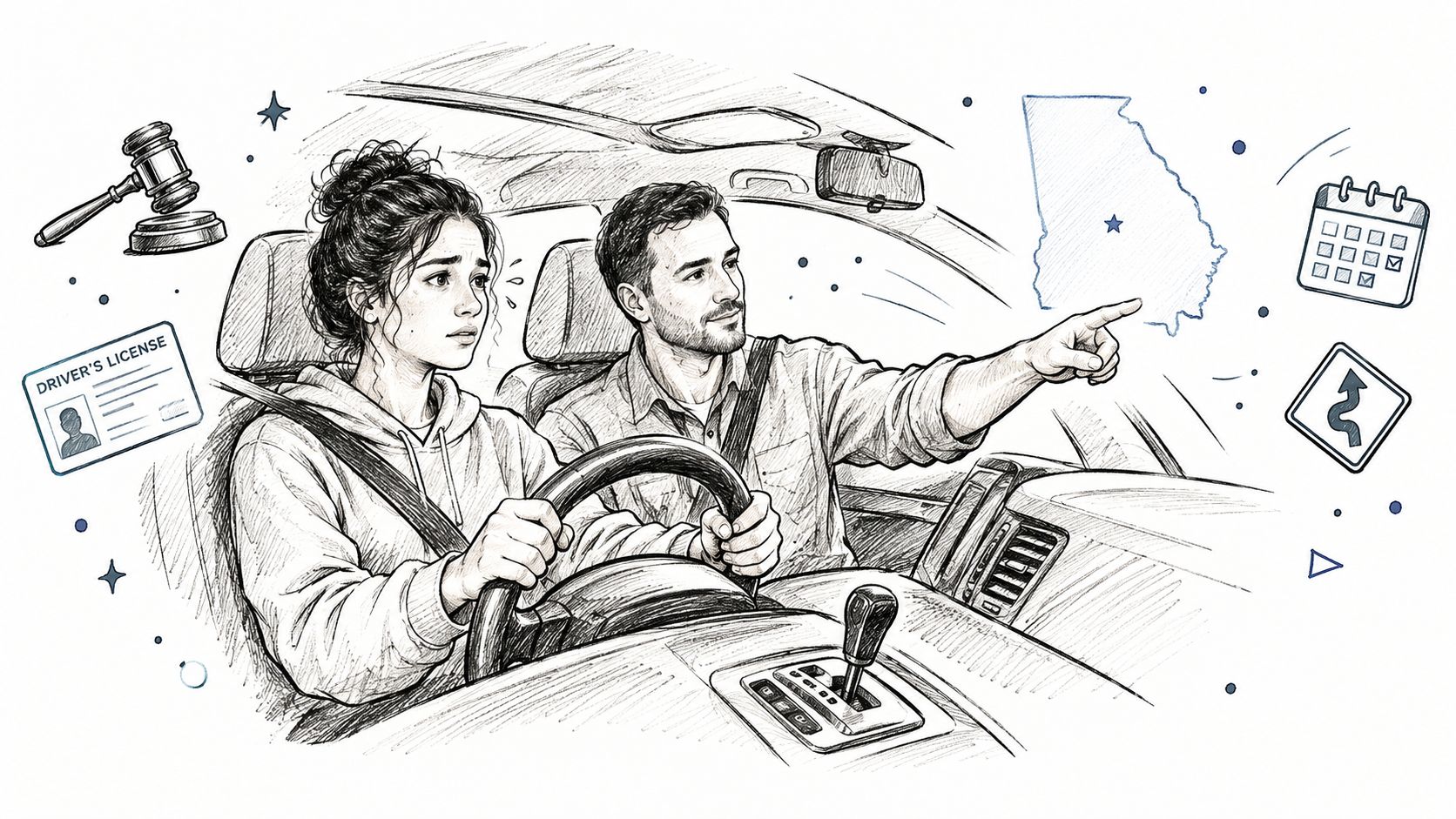
You are returning to driving after a DUI suspension. An automatic vehicle feels manageable, your attorney or probation officer has mentioned a course, and you are searching for lessons. Booking time behind the wheel may seem like the main task. In Georgia, begin by identifying which requirement applies to your case.
A behind-the-wheel lesson and a DUI Alcohol or Drug Use Risk Reduction program have different jobs. Automatic instruction builds vehicle-control and road-safety skills. Risk Reduction is a required intervention program for people convicted of DUI, possession of illegal drugs, underage possession of alcohol while operating a motor vehicle, or Boating Under the Influence. The program also includes assessment and intervention requirements. The exact course and completion record for your case should be confirmed before you enroll.
Driving practice does not automatically satisfy a court order for Risk Reduction. A classroom course does not prepare you to drive if you are nervous, inexperienced, or returning after a long gap. Some learners need both forms of support, scheduled for separate purposes.
Why automatic instruction can help
An automatic car removes clutch coordination and manual gear changes. That leaves more lesson time for practical decisions, such as spotting a developing hazard near an Atlanta intersection, holding a safe position on a busy Athens road, or checking for pedestrians and cyclists before turning.
The simpler controls can help a driver rebuild confidence. This approach suits learners focused on controlled, defensive driving rather than every transmission type. Safe habits still require active attention. Smooth steering, mirror checks, following distance, and anticipation of other road users matter in any vehicle.
An automatic reduces one layer of vehicle operation. It does not reduce the need to observe, decide, and respond.
What this guide does not promise
Automatic lessons are not a shortcut around Georgia DDS rules, and they do not guarantee a passing test, licence reinstatement, or a particular legal outcome. Your court order, driving record, and DDS instructions determine what you must complete.
Separate the decision into three questions:
- Vehicle question: Will an automatic help you learn or regain confidence?
- Compliance question: Which DDS-approved course or clinical service does your case require?
- Licence question: Will an automatic-only test limit the vehicles you may drive later?
Answer the compliance question through your court and DDS paperwork, then choose instruction that supports your driving needs. This keeps a practical vehicle decision from creating a paperwork problem.
Finding and Booking DDS Certified Providers Near You
If a course connects to licensing, reinstatement, or court compliance, provider verification comes before payment. Georgia DDS states that DUI Risk Reduction and defensive driving programs must be taken at DDS-certified schools. Classes from uncertified schools won't be accepted for licensing, reinstatement, or court requirements, according to the Georgia DDS regulated programs guidance.
That rule matters even if a website uses familiar terms such as “DUI class,” “defensive driving,” or “online certificate.” A polished registration page doesn't prove that the provider's course will satisfy your order. Check the school's DDS status and confirm that the course matches the requirement written in your paperwork.

A practical verification process
Use this sequence before you reserve a seat:
- Read the order carefully. Identify whether it names Risk Reduction, defensive driving, a clinical evaluation, treatment, a Victim Impact Panel, or more than one requirement.
- Confirm certification. Ask whether the school is DDS-certified for the specific program, not merely licensed as a general business.
- Ask about completion records. Find out what certificate or documentation you'll receive and how it is delivered.
- Check the format. Confirm whether the program is in-person, live virtual, or self-paced online, and make sure that format is acceptable for your court or supervising agency.
- Save every confirmation. Keep registration details, attendance information, payment records, and completion documents together.
A provider serving Georgia drivers may offer classroom locations around Atlanta, Athens, and surrounding metro communities, as well as online options for drivers elsewhere in the state. Local access can reduce missed appointments, while online scheduling may help a student, employee, or parent manage a requirement without crossing the state.
Choose a format that you can complete
In-person classroom instruction may be the best fit if you need a structured setting and direct access to an instructor. A live virtual Zoom class can provide scheduled participation from home, while self-paced online defensive driving may suit someone who needs flexibility. Courses can run seven days a week, with weekday and weekend choices, but availability and eligibility depend on the specific program.
Before paying, ask one direct question: “Will this exact course and format satisfy my DDS, court, or reinstatement requirement?” If the answer is unclear, pause and verify with the provider, your attorney, probation officer, or the relevant court.
For a separate education requirement, review the DDS-approved driver education course. Don't confuse that course with the DUI Risk Reduction program if your order specifically requires Risk Reduction.
What to Expect During Automatic Instruction
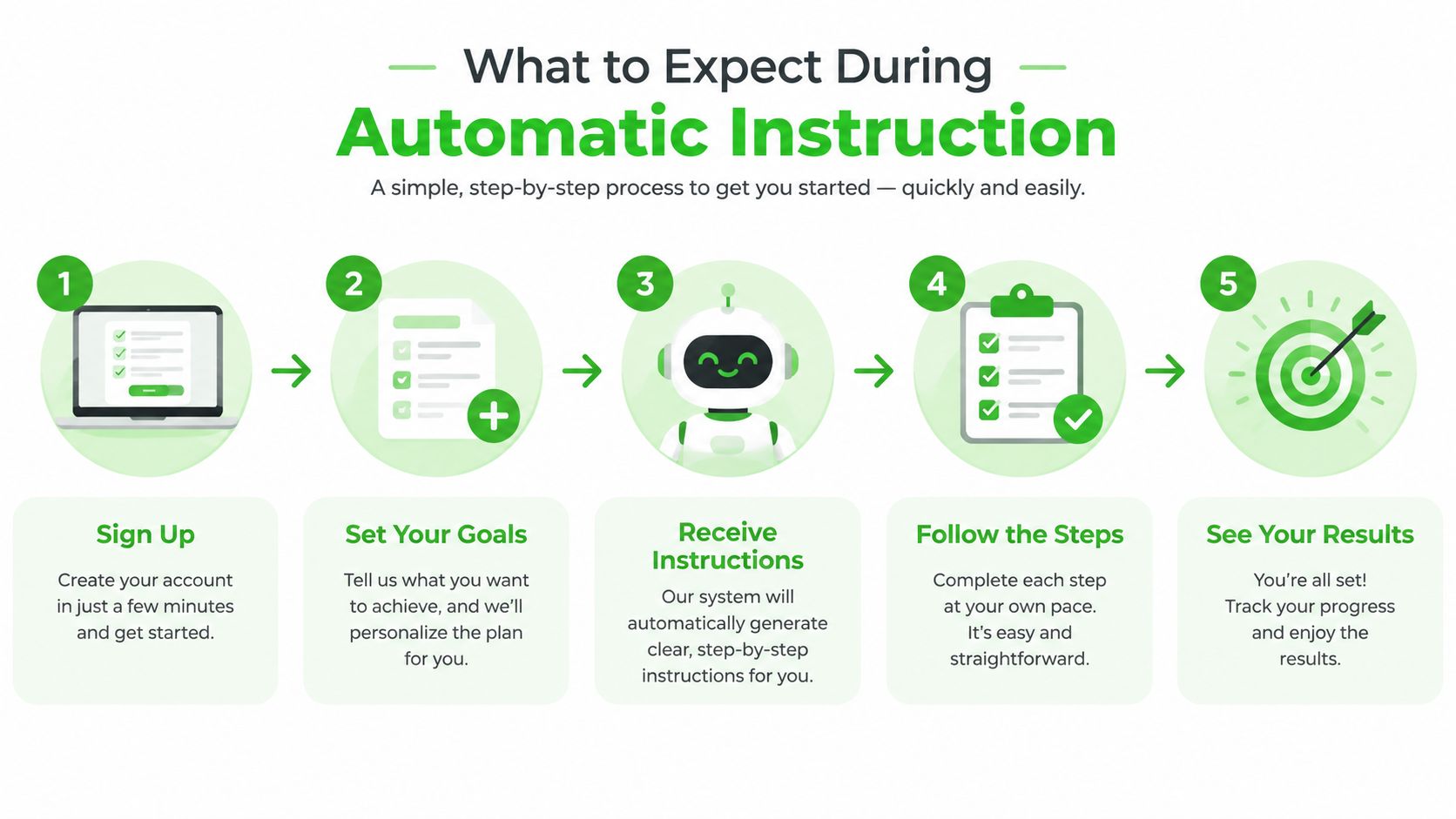
Automatic instruction starts with the vehicle, but it shouldn't stay focused on the vehicle for long. Because you're not coordinating clutch engagement or choosing manual gears, the instructor can move earlier toward road positioning, observation, and hazard anticipation. That doesn't mean the lesson becomes casual. It means the practice time targets the decisions that keep you safe.
A first session usually begins with a short orientation. You'll adjust the seat and mirrors, identify the brake and accelerator, review indicators and controls, and discuss your experience. A nervous learner may begin in a quiet area with basic starts, stops, steering, and controlled turns. A returning driver may move more quickly to lane changes, parking, intersections, or traffic observation.
How a session develops
The instructor's job is to match the practice to your ability, not to force a fixed sequence. A typical progression may look like this:
- Orientation: Learn the controls, seating position, mirror use, and basic safety checks.
- Vehicle handling: Practice smooth braking, acceleration, steering, and controlled turns.
- Road awareness: Scan intersections, read traffic movement, and identify developing hazards.
- Defensive decisions: Manage space, anticipate mistakes by other drivers, and choose safe responses.
- Independent practice: Complete connected sections of a route while receiving less prompting.
A learner recovering from a DUI-related driving interruption may need special attention to confidence, judgment, and defensive habits. The instructor can use familiar Georgia settings, such as suburban roads near a metro community, to build skills gradually before introducing denser traffic. The lesson should remain a learning environment, not a test of pride.
How many lessons might you need?
Independent driving-school guidance gives an instructional benchmark of about 20 to 30 hours for automatic learners, compared with 40 to 45 hours for manual learners, as reported by Cambridge automatic driving lesson guidance. That source isn't a government standard, and the figures aren't a universal pass requirement. Your readiness depends on your experience, practice between lessons, comfort in traffic, and ability to make safe decisions consistently.
The benchmark also shouldn't be used to calculate a legal deadline. Risk Reduction completion, clinical services, and reinstatement paperwork follow Georgia requirements, not a private instructor's estimate of driving hours.
For foundational practice, you can review driving lessons for first-time drivers. If you're taking lessons after a conviction, tell the instructor what you're trying to accomplish and keep that separate from the course certificate your case requires.
Licensing Rules Costs and Risk Reduction Requirements in Georgia
You may choose an automatic for practical reasons, then discover that your court or DDS requirements involve more than the driving test. Before booking automatic-only lessons, confirm what licence class and vehicle restrictions apply in Georgia. That question matters if your work, travel, or family responsibilities may later require access to a manual vehicle.
Automatic instruction can reduce the physical workload of driving, but it does not replace compliance steps. A lesson helps you operate the vehicle. A Risk Reduction certificate, court paperwork, and reinstatement documents serve different purposes.
Georgia Risk Reduction has two required parts
Georgia's DUI Alcohol or Drug Use Risk Reduction program applies to convictions identified by DDS, including DUI, certain drug offenses, underage alcohol possession while operating a motor vehicle, and BUI. The program has an Assessment Component, called the NEEDS Assessment, and an Intervention Component. Both are required for the certificate.
The sequence works like a checklist. Complete the assessment before the intervention. Booking only the classroom intervention can leave the case incomplete if the full program is required.
| Component | Requirement and Cost |
|---|---|
| Assessment Component | NEEDS Assessment, $100 |
| Intervention Component | Required intervention service, $235 |
| Workbook | Required workbook, $25 |
| Total | $360 |
These amounts and the two-part structure are stated in Georgia DDS DUI FAQs. You can also read this plain-language explanation of what Risk Reduction means in Georgia before enrolling.
Automatic lessons fit alongside this process, rather than replacing it. Keep your lesson records, course certificate, and court instructions in separate files so you can provide the correct document when requested.
Check the driving record before planning reinstatement
A serious or repeated record may create consequences beyond course completion. Under Georgia's habitual violator framework, three convictions within a five-year period for specified offenses, including DUI, can result in habitual violator status. The driver's licence is then revoked for five years, according to the Georgia Department of Public Safety habitual violator document.
DDS states that a declared habitual violator may drive only with a probationary licence, or after the five-year period has passed and a new licence has been issued. An automatic lesson cannot change that status. It can only help you build vehicle-control skills for lawful driving once your authorization allows it.
If an arrest has just occurred, this guide to the bail process step by step may clarify the immediate legal stage. It does not replace your attorney's advice or the court's instructions.
Clinical Evaluations Treatment and Victim Impact Panels After Your Course
Finishing the classroom portion may not end the compliance path. A court, probation officer, or licensing authority may also require a clinical evaluation, treatment, or a Victim Impact Panel. These services address different needs, so don't assume that one certificate substitutes for every item on your order.
Georgia's rules require the assessment component before the intervention component. After those assessment and intervention services are finished, the rules allow a clinical evaluation component. The legislation specifies that the evaluation must be conducted by a clinical evaluator licensed by the Georgia Department of Behavioral Health and Developmental Disabilities and trained in alcohol and drug abuse evaluation or assessment. You can review the statutory language in the Georgia General Assembly legislation document.
Keep the sequence and paperwork clear
A common compliance pathway may involve:
- Assessment: Complete the NEEDS Assessment first.
- Intervention: Finish the required Risk Reduction intervention.
- Clinical evaluation: Schedule an evaluation if the court, probation officer, or case plan requires it.
- Treatment: Complete any ordered service, such as ASAM Level 1 treatment, with the appropriate provider.
- Victim Impact Panel: Attend the panel if it appears in your order or referral instructions.
The exact sequence after the two Risk Reduction components can depend on the court or treatment direction. Ask each provider what documentation they issue, when it will be available, and whether the document is sent directly to the court, probation officer, attorney, or you.
A qualified evaluation provider can help you understand what records to bring and how the appointment fits into your case. If you're comparing services, the Zoe Behavioral Health evaluation resource offers information about substance-abuse evaluations and the questions an evaluator may address.
Automatic lessons fit beside, not inside, these services
Automatic lessons may support your practical safety and confidence, but they don't replace clinical work. A person can be comfortable operating an automatic vehicle and still need an evaluation or treatment under a court order. Conversely, completing clinical services doesn't demonstrate that the driver can safely manage traffic, intersections, parking, or defensive decisions.
Keep separate folders, whether digital or paper, for driving practice, Risk Reduction, clinical services, treatment, and panel attendance. That simple separation makes it easier to answer a probation officer's question or respond to a DDS documentation request without searching through unrelated records.
Tips for Success and Your Next Step Toward Compliance
Choose a course format you can complete reliably. In-person classroom learning can provide accountability, live virtual instruction can reduce travel, and self-paced online defensive driving may fit a changing work or school schedule. Match the format to your court or DDS paperwork, and attend without interruptions.
Before the first appointment, gather every document your provider or supervising authority requested. Bring identification, court or probation paperwork, DDS correspondence, and referral information. If a requirement is unclear, ask before class. Fixing a documentation question early is easier than correcting it after attendance.
Protect your completion record
Treat attendance records as part of the requirement. Use the same name shown on your court or DDS records, confirm the class dates, and save each certificate as soon as it arrives. Send copies only through the channel approved by your attorney, probation officer, court, or DDS.
Create a simple completion checklist for your case. Record the provider's name, course completed, attendance date, certificate date, and delivery method. Keep the certificate, payment receipt, referral, and submission confirmation together. If DDS or probation asks for proof later, you can provide a complete packet instead of searching through separate files.
If automatic driving lessons are part of your plan, set practical goals. Practice smooth braking, safe lane placement, mirror checks, intersection scanning, and hazard anticipation. Comfort with an automatic vehicle does not replace defensive driving habits or legal compliance.
Defensive driving may help eligible motorists address licence points or insurance concerns, but eligibility and any benefit depend on Georgia rules, the insurer, and the individual record. A defensive driving course is separate from DUI Risk Reduction. Confirm the program named in your paperwork before registering.
Take reinstatement consequences seriously
As noted in Licensing Rules, habitual violator status carries a five-year revocation. A course certificate cannot remove that status. Follow DDS instructions and obtain legal advice about the record and available licensing options when this situation applies.
Your final check should be straightforward: verify the provider, confirm the exact course, complete required components in the ordered sequence, schedule any ordered clinical services, and preserve every record. Automatic instruction can make vehicle operation easier to practice. Careful compliance is what supports a Georgia reinstatement case.
Georgia DUI Schools offers DDS-approved Risk Reduction and defensive driving programs, along with clinical evaluations, ASAM Level 1 treatment, and Victim Impact Panels for drivers completing Georgia requirements. Visit Georgia DUI Schools to choose a compliant option in Atlanta, Athens, surrounding metro communities, or statewide online.