Protect Your License, Wallet, and Peace of Mind
The flash of blue lights in the mirror can ruin your whole day. In Georgia, a speeding ticket often means more than paying a fine. It can add points to your record, push up insurance costs, and create bigger problems if you already have a DUI history, a restricted license issue, or court requirements hanging over you.
That’s why drivers who want to avoid speeding tickets need more than the usual advice to “slow down.” You need habits that work on I-285, in Atlanta school zones, on the drive to Athens, and on those long stretches of I-75 where speed creeps up before you even notice. You also need to understand how one bad stop can snowball into DDS trouble.
Speeding isn’t a small issue nationally either. It contributed to 29% of all U.S. traffic fatalities, with 11,775 deaths in 2023, according to the National Safety Council’s speeding safety data. That’s why instructors harp on speed control. It protects people, not just your wallet.
As a Georgia driving instructor, I tell students the same thing every week. The best way to avoid tickets is to build simple, repeatable habits before you’re stressed, late, or frustrated. These eight tips will help you do exactly that, while keeping Georgia laws and Georgia enforcement realities in view.
1. Know and Obey Posted Speed Limits
The first rule is the one drivers try hardest to talk themselves out of. A posted speed limit is the legal maximum, not a suggestion and not a number you can casually round up. If the sign says 35, that’s the speed you need to respect.
This matters even more in Georgia because speed limits can change fast. You can move from an open multilane road into a school zone, a neighborhood street, or a work zone in seconds. Around Atlanta, that happens all the time. A road that feels comfortable at one speed can become a citation magnet after one turn or one flashing sign.
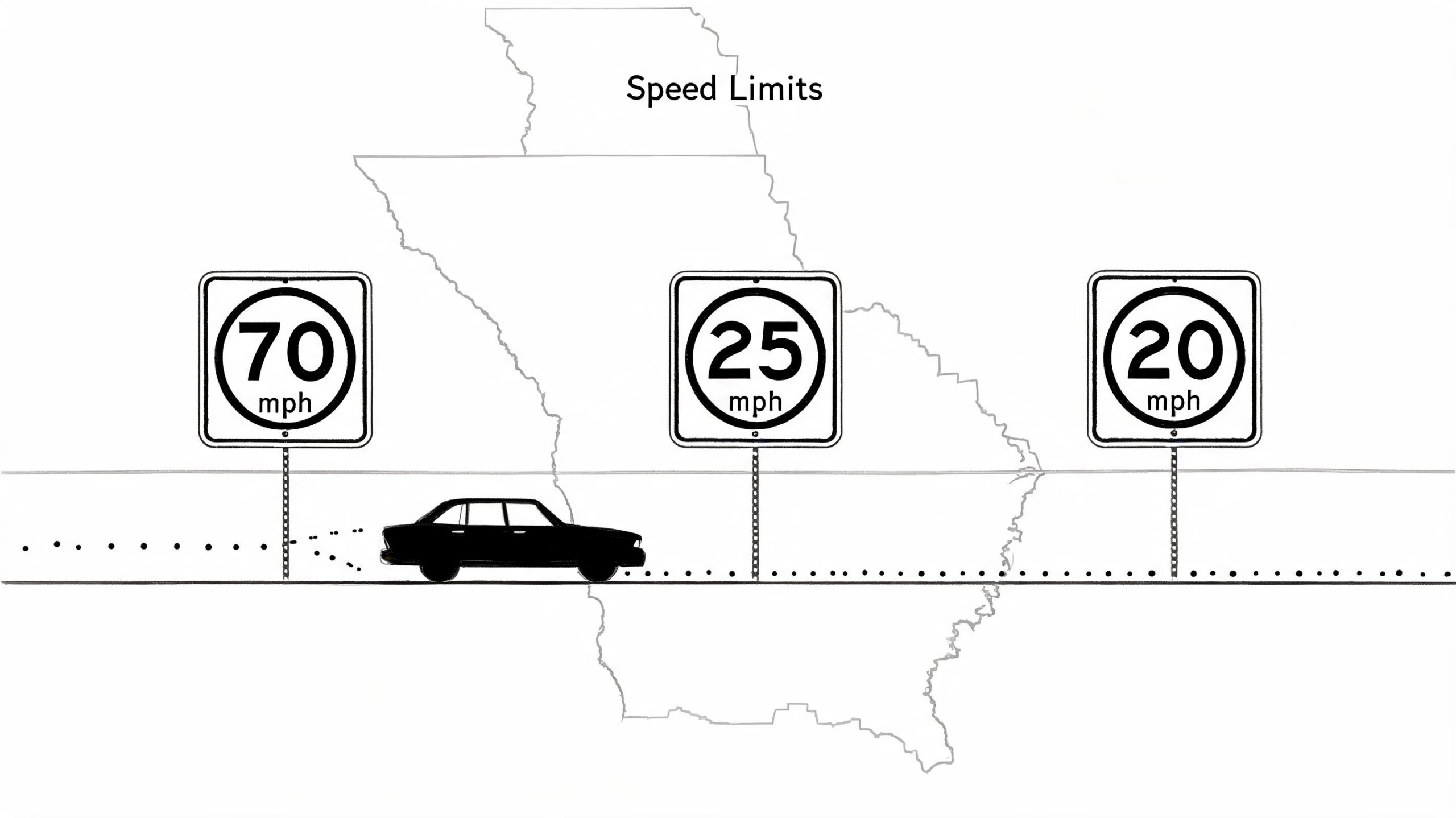
A good local example is the typical school zone setup you’ll see around metro Atlanta. Drivers roll along at normal traffic speed, then miss the reduced limit because they’re watching the car ahead instead of the signs. That’s how ordinary commuters get tickets in places they drive every week.
Where Georgia drivers get tripped up
Use tools that keep the speed limit visible, but don’t rely on them blindly. Your dashboard, your navigation app, and roadside signs should all work together.
- Watch transition zones: Pay attention when entering towns, neighborhoods, and campus areas like Athens where limits often drop quickly.
- Slow down before the sign cluster: Don’t wait until you’re already inside a school or work zone to brake.
- Study the rules: Georgia drivers should understand local enforcement basics and related traffic rules through resources like Georgia driving laws.
Practical rule: If you’re unsure what the limit is, your safest move is to ease off the gas until you confirm it.
The drivers who avoid speeding tickets most consistently aren’t guessing. They’re reading the road early and treating every posted limit like it matters.
2. Use Cruise Control on Highways to Maintain Consistent Speed
You are on I-75 south of Atlanta, traffic opens up, the road feels easy, and your speed climbs a little at a time without much effort. A few miles later, you look down and realize you are well over the limit. That is how many Georgia speeding stops begin. Not with aggressive driving, but with speed drift.
Cruise control works like a steady hand on the gas pedal. On long interstate stretches, it helps you hold one legal speed instead of creeping up every time the road gets wider, flatter, or less crowded. That matters in Georgia, especially on corridors like I-75, I-85, and parts of I-16 where drivers often settle in and stop checking their speed as often.
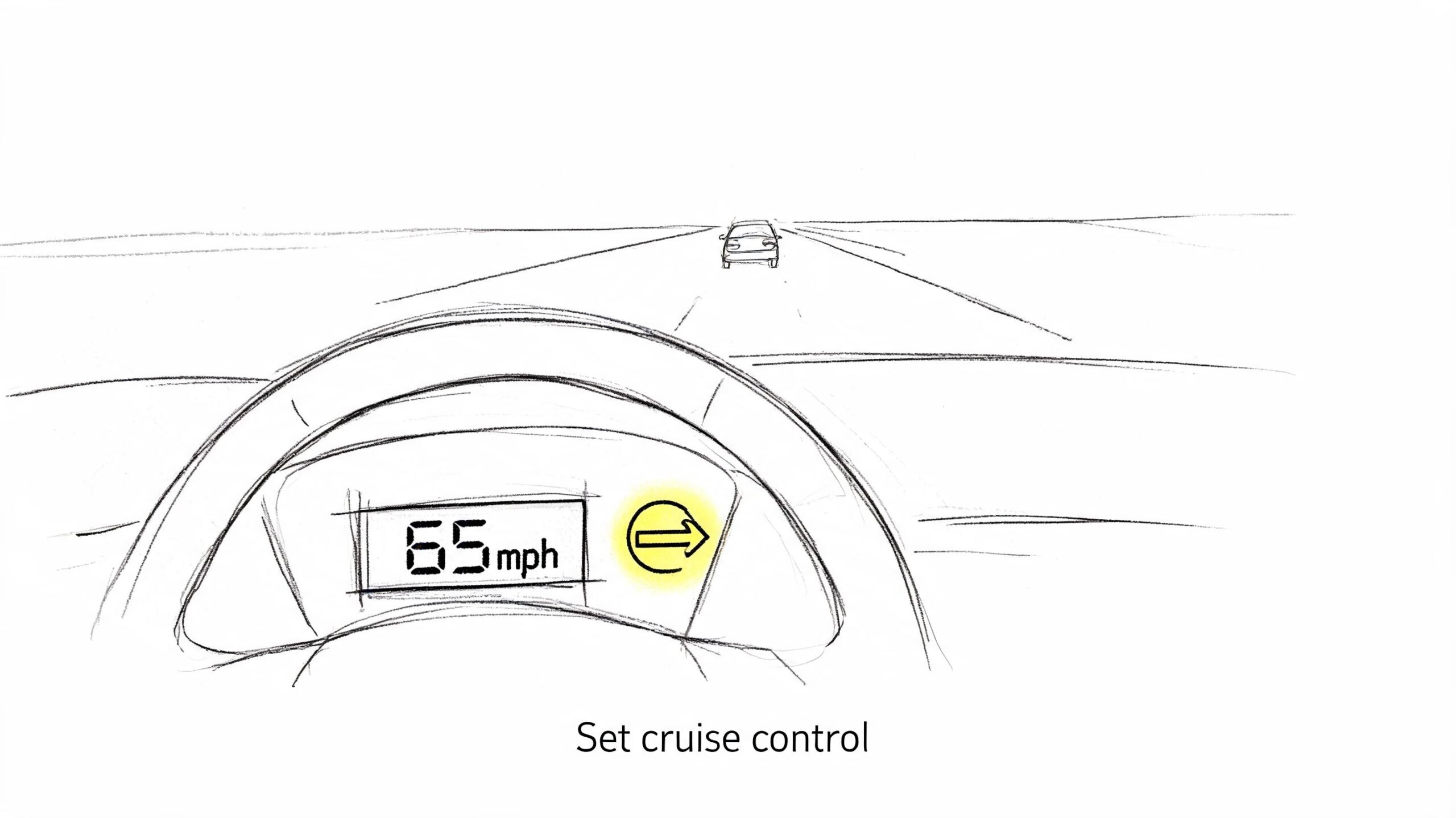
It also helps you avoid a costly Georgia mistake. In this state, a speed that feels only a little too fast can trigger more than the base ticket. If you are convicted of driving at 75 mph or more on a two-lane road, or 85 mph or more on any road or highway, Georgia's Super Speeder law can add a separate state fee on top of the local citation. Cruise control will not solve every speed problem, but it can reduce the slow creep that pushes drivers into that range.
How to use it the right way
Use cruise control on dry, steady highway stretches where traffic is flowing predictably. Basic cruise control is enough for this. Adaptive cruise control can help even more because it adjusts with traffic, though you still need to stay fully engaged.
Skip it in rain, fog, heavy traffic, construction areas, or anywhere speeds change often. If your car shakes or feels unstable when you brake, deal with that first. Mechanical issues can make speed control less predictable, and the causes of front end braking shakes are worth understanding before a long highway trip.
A simple routine helps:
- Set it only after you confirm the limit: Highway speeds can change as you pass through different counties or approach metro areas.
- Leave a small buffer under the limit: That gives you room for hills and minor variations without drifting over.
- Keep your foot and attention ready: Tap the brake or cancel cruise as soon as traffic tightens.
- Use the drive to build better habits: The same calm, controlled style taught in defensive driving courses and their safety benefits helps you stay smoother and more alert.
A good local example is I-285 outside rush hour. Drivers often speed up with the flow, then keep accelerating because the road feels built for it. Cruise control helps set a ceiling. You still have to read the road, but you are less likely to drift into ticket territory while trying to keep pace with everyone else.
3. Maintain Proper Following Distance to Allow for Safe Speed Adjustments
Tailgating and speeding often travel together. When you follow too closely, you stop driving your own car and start reacting to somebody else’s bumper. That creates tension, late braking, and sudden acceleration. It also makes you more likely to push your speed just to feel like you’re keeping up.
On I-285, this happens every day. One driver closes the gap, another taps the brakes, then everyone around them speeds up and slows down in short bursts. That kind of driving gets messy quickly.
The fix is simple. Leave enough space so you can lift off the gas instead of stomping the brake. Drivers who want calmer speed control should also understand the broader benefits of defensive driving, especially if they’ve already had a ticket.
Give yourself room to stay legal
Try the classic count. Pick a fixed object the vehicle ahead passes, then count until you reach it. If your gap is short, back off smoothly.
- Use a steady count: “One Mississippi, two Mississippi, three Mississippi” is an easy way to keep honest distance.
- Add space at night or in rain: Reduced visibility and slick roads mean you need more time, not less.
- Refuse pressure from aggressive drivers: If someone behind you wants to crowd, don’t let them train you into bad habits.
Good following distance gives you time to slow down gently instead of driving in bursts.
There’s another practical benefit. If your car shakes or feels unstable under braking, that can make close-following even riskier. Mechanical issues like causes of front end braking shakes should be fixed before they turn a routine slowdown into a panic stop.
4. Anticipate Traffic Patterns and Plan Routes to Avoid Speed Temptation
A lot of speeding starts before you even put the car in gear. You leave late, choose a crowded route, and then spend the next half hour trying to make up time. That’s not a speed problem first. It’s a planning problem.
Georgia drivers know the usual pressure points. Downtown Atlanta during peak traffic, Perimeter backups, school drop-off corridors, and the Friday rush on I-75 can all create that “I’ve got to make up time” feeling. Once that mindset takes over, speeding becomes more tempting even if traffic won’t let you get anywhere faster.
Build a route that helps you stay patient
Navigation apps can help if you use them before the trip starts. Check conditions early, not after you’re already frustrated.
- Leave extra time: A few extra minutes reduces the urge to push every yellow light and every straightaway.
- Learn backup routes: If one corridor is always stressful, have another option ready.
- Choose smoother over shorter: Sometimes the route with steadier traffic is better for speed control than the “fastest” route.
Drivers who commute regularly can also benefit from basic route optimization ideas, especially when they make multiple stops or cross busy metro areas. The goal isn’t to race smarter. It’s to remove the pressure that leads to bad choices.
Take a common local example. If you know your route passes multiple school zones near the same time each morning, don’t schedule yourself so tightly that every slowdown feels like a crisis. A calmer plan makes it much easier to avoid speeding tickets because you’re not constantly trying to win back lost minutes.
5. Be Aware of Speed Enforcement Patterns and Police Presence
You should never drive based on the idea that you can outsmart enforcement. But you absolutely should understand where Georgia officers and camera systems tend to watch speed more closely. Awareness helps you stay sharper.
Metro Atlanta drivers already know some of the obvious areas. School zones, major commuter corridors, and places where traffic shifts from fast to slow are common enforcement spots. I-285 gets plenty of attention because drivers often treat it like a racetrack when lanes briefly open up.
Automated enforcement has changed the picture too. In major U.S. markets such as New York City, traffic cameras placed in school zones and major intersections were linked to a 94% reduction in speeding offenses in just a few years, according to SlashGear’s summary of traffic camera results. Georgia drivers should take the lesson, even if local systems differ. Cameras and targeted patrols work best against people who drive on autopilot.
Use alerts as reminders, not as a game
Apps like Waze can notify you about hazards, traffic, and possible police presence. Used properly, they can support safer driving because they keep you more aware of changing conditions.
- Treat alerts as a cue to check yourself: Look at your speed and your surroundings.
- Stay compliant everywhere: Don’t behave in one zone and ignore the next.
- Expect school zone enforcement: Those are among the least forgiving areas for sloppy speed habits.
The safest mindset is simple. Drive like enforcement could be present anywhere, because your responsibility doesn’t change block to block.
That approach helps you avoid speeding tickets without turning the road into a cat-and-mouse contest.
6. Avoid Speeding in School Zones and Residential Areas
You turn off a busy Atlanta road, the lanes narrow, cars line both sides of the street, and a school zone sign appears. That is the moment many drivers get in trouble. Their eyes are still in highway mode, but the street has changed completely.
School zones and residential streets need a slower rhythm. A neighborhood road works like a parking lot with driveways, bikes, dogs, delivery vans, and children who may move without warning. Even if the pavement looks open, the risk is higher because so much can enter your path in one second.
In Georgia, school zone speeds are not suggestions. Under Georgia law, speed limits in school zones can be enforced during posted times, and many metro Atlanta areas use school zone speed cameras to cite drivers who drift over the limit during those active periods, as outlined by the Governor’s Office of Highway Safety in Georgia. That matters in places like Atlanta, DeKalb County, and Fulton County, where a driver can go from a 35 or 45 mph corridor into a much lower-speed school area very quickly.
Build a school-zone and neighborhood routine
Use the same routine every time so you are not relying on guesswork.
- Slow down before the sign: Braking late is how drivers end up a few miles per hour over right where enforcement begins.
- Check for the active school zone signals or posted hours: The lower limit applies based on the signs and flashing warnings, not your best guess.
- Cover the brake in dense neighborhoods: Parked cars, crosswalks, and bus stops can hide movement until the last moment.
- Hold your speed even if someone tailgates you: Their impatience does not change the law or the stopping distance your car needs.
A good Georgia example is a morning cut-through near an elementary school in Atlanta. One driver treats it like a shortcut and tries to save 20 seconds. Another driver eases off early, watches the crosswalk, and rolls through at the posted school-zone speed. The second driver is doing more than avoiding a ticket. They are protecting their record, avoiding points, and reducing the chance of ending up in a court-ordered class over a preventable mistake.
That is the habit to build. Enter these areas like a guest, not like you still belong on the main road.
7. Monitor Your Speed Using Dashboard Gauges and Speedometer Awareness
You merge onto I-285, traffic opens up, and your car feels calm and quiet. A few minutes later, you glance down and realize you are running faster than you thought. That happens to careful drivers all the time in Georgia, especially in newer vehicles that mask the feeling of speed.
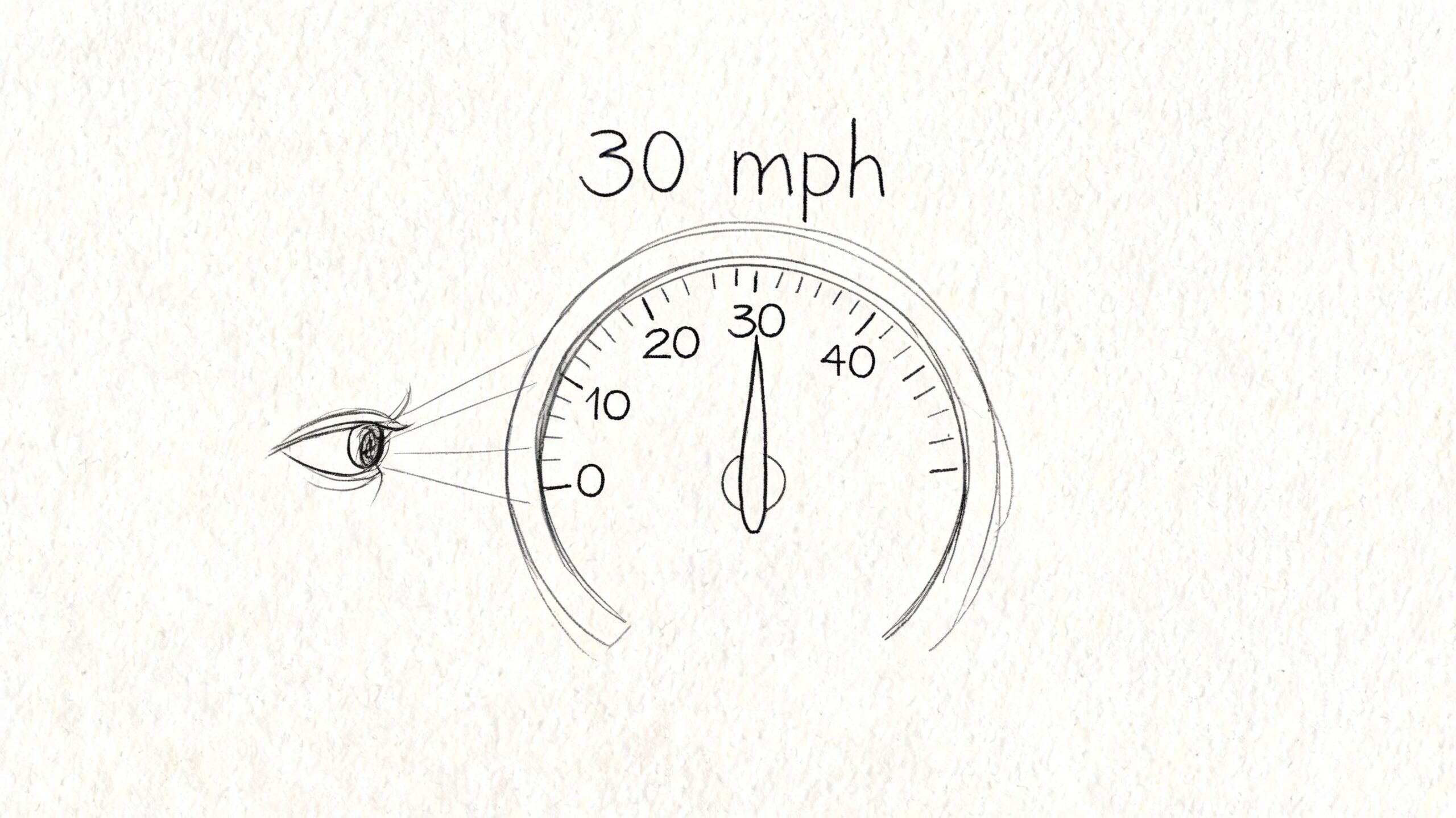
The fix is simple, but it has to become a habit. Treat your speedometer like one more mirror in your scan. Check the road ahead, check your mirrors, glance at your speed, then return your eyes forward. That rhythm works like a pulse check. It tells you whether your car is doing what you think it is doing.
Train your eyes before speed drift becomes a ticket
Speed drift is common on wide Georgia roads where the lane feels forgiving and traffic pace keeps creeping up. Atlanta perimeter traffic, long suburban arterials, and open stretches outside town can all tempt you to drive by feel instead of by the gauge. Driving by feel is like cooking without looking at the oven temperature. You may be close, but close is not always legal.
A better routine is to tie speed checks to specific moments:
- After every major speed change: Check the gauge after accelerating from a light, merging, or coming out of congestion.
- Whenever the road opens up: A clear lane often makes drivers add speed without noticing.
- As signs or road conditions change: Construction areas, downhill sections, and wider roads can all hide speed drift.
- Any time your cabin feels unusually quiet or smooth: Comfort can trick you into thinking you are going slower than you are.
This matters for more than the ticket itself. In Georgia, one speeding stop can lead to points, insurance trouble, and in some cases a closer look at your driving record. If you are already trying to protect your license, review these steps to remove points from your Georgia driving record so you understand what recovery looks like before you need it.
Your dashboard can also affect how easily you read the road and your instruments. Dark window film may reduce glare, but it still has to stay within the law. If you have questions, review Georgia car tint laws 2026 and make sure visibility is helping you, not working against you.
One last instructor tip. Do not wait until you feel fast. By then, you are already reacting late. Check early, correct early, and keep your speed steady on purpose. Attentive drivers usually avoid speeding tickets the same way they avoid hard braking. They catch small mistakes before those mistakes turn into expensive ones.
8. Understand Georgia's Point System and Consequences of Speeding Violations
If you need motivation to slow down, Georgia’s point system should do it. A speeding ticket can follow you long after the stop is over. The fine is just the start. Points, insurance consequences, court requirements, and license problems can all follow.
For Georgia drivers, prevention connects directly to defensive driving. The verified guidance for this article notes that Georgia’s DDS point system can lead to suspension at 15 points, that speeding tickets can add 3 to 4 points, and that a Georgia DDS-approved defensive driving course can remove 7 points while also helping with insurance savings, as summarized in this discussion of post-ticket strategies for Georgia drivers. That’s why one speeding citation matters more than people think.
Why this matters even more after a DUI or court issue
If you’ve already dealt with a DUI, a reinstatement issue, or a court order, another traffic violation can make everything harder. Judges and DDS don’t view repeated risky driving in isolation. It affects the whole picture of your record.
You should also know your options if you’ve already been cited. Georgia drivers looking for recovery steps can review how to remove points from a driving record. That’s especially useful if you’re trying to protect your license before things escalate.
- Know your current record: Don’t guess about your points.
- Act quickly after a ticket: Waiting can limit your options.
- Use approved education strategically: Defensive driving can be part of a real solution, not just a box to check.
Vehicle compliance issues can pile onto traffic trouble too, so drivers should stay current on other legal requirements such as Georgia car tint laws 2026. Clean records come from paying attention to the full picture, not just your speed.
8-Point Comparison: Avoiding Speeding Tickets
| Strategy | Implementation complexity | Resource requirements | Expected outcomes | Ideal use cases | Key advantages |
|---|---|---|---|---|---|
| Know and Obey Posted Speed Limits | Low, straightforward habit change | None beyond attention; GPS with limit display optional | Eliminates most speeding violations; improves safety | All driving environments, especially changing speed zones | Direct legal compliance; highest reduction in ticket risk |
| Use Cruise Control on Highways to Maintain Consistent Speed | Low–Medium, simple to set; requires judgment | Vehicle with cruise control; brief familiarity | Reduces unconscious speed creep; better fuel economy | Long highway stretches and open roads | Consistent speed control; reduces fatigue |
| Maintain Proper Following Distance | Low, needs discipline and attention | Time and concentration; defensive driving training helpful | Fewer forced speed adjustments; lower collision risk | High-speed roads, congested highways, urban traffic | Increases reaction time; reduces aggressive driving |
| Anticipate Traffic Patterns and Plan Routes | Medium, requires pre-trip planning | Real-time traffic apps; time to plan alternatives | Less stress-induced speeding; potentially faster trips | Commutes, peak-hour travel, corridor-heavy regions | Prevents speeding triggers; improves travel predictability |
| Be Aware of Speed Enforcement Patterns and Police Presence | Low, awareness habit | Community apps; local enforcement knowledge | Heightened compliance in high-risk areas | School zones, known speed trap corridors, peak enforcement times | Encourages vigilance where enforcement is concentrated |
| Avoid Speeding in School Zones and Residential Areas | Low, requires consistent speed reduction | Attention to signage; possible time adjustments | Avoids enhanced penalties; protects vulnerable road users | School hours, neighborhood streets, campus areas | Reduces severe legal and safety consequences |
| Monitor Your Speed Using Dashboard Gauges and Speedometer Awareness | Low, habit formation | Vehicle speed display or HUD; optional apps | Immediate self-correction of speed creep | All driving, especially variable-limit areas | No-cost method; creates real-time feedback loop |
| Understand Georgia's Point System and Consequences of Speeding Violations | Medium, requires learning rules | Time to review state DMV materials; possible course enrollment | Motivates long-term compliance; enables point mitigation | Drivers concerned about records, repeat offenders | Clarifies legal consequences; enables strategic point reduction |
Take Control of Your Driving Record
To avoid speeding tickets in Georgia, you need more than good intentions. You need habits that hold up when traffic is heavy, when you’re running late, and when the road suddenly changes from open highway to school zone or neighborhood street. That means reading signs early, using cruise control wisely, leaving enough following distance, planning routes before stress takes over, and checking your speed often enough to catch drift before an officer or camera does.
The legal side matters, but the safety side matters more. Nationally, over 100,000 speeding citations are issued every day in the United States, according to DriveSafe Online’s review of speeding ticket patterns. That tells you two things. Enforcement is common, and drivers who assume they’ll slide by unnoticed are taking a bad gamble.
It also helps to remember that enforcement isn’t always distributed evenly. A telematics-based analysis described in the verified data found that actual speeding behavior was roughly uncorrelated with neighborhood demographics, while police enforcement disproportionately targeted areas with higher non-White populations after adjustment for true violation rates, based on the linked telematics and enforcement disparity reference. For drivers, the practical lesson is to rely on your own consistent habits, not assumptions about where scrutiny will or won’t happen.
If you’ve already gotten a ticket, don’t treat it like a one-time annoyance and move on. In Georgia, one citation can start a chain reaction. Points can build. Insurance can get more expensive. Court expectations can get stricter, especially if you already have DUI-related history or you’re working through reinstatement requirements.
That’s where a defensive driving course can make a real difference. The right class can help you strengthen the exact habits that keep drivers out of trouble in the first place. It can also be part of the recovery process when you need point reduction or want to show the court and DDS that you’re taking safer driving seriously.
Ready to protect your license and become a safer driver? Enroll in a Georgia-approved Defensive Driving course today.
If you need a trusted Georgia provider for point reduction, court requirements, DUI Risk Reduction, clinical evaluations, or flexible online and in-person options, Georgia DUI Schools offers DDS-approved programs designed to help you protect your record, restore driving privileges, and build safer habits for the road ahead.