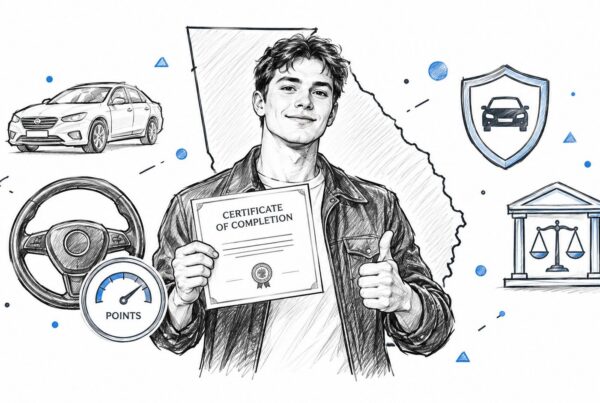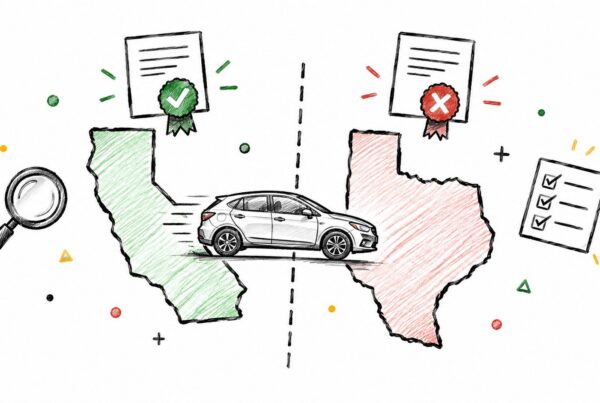
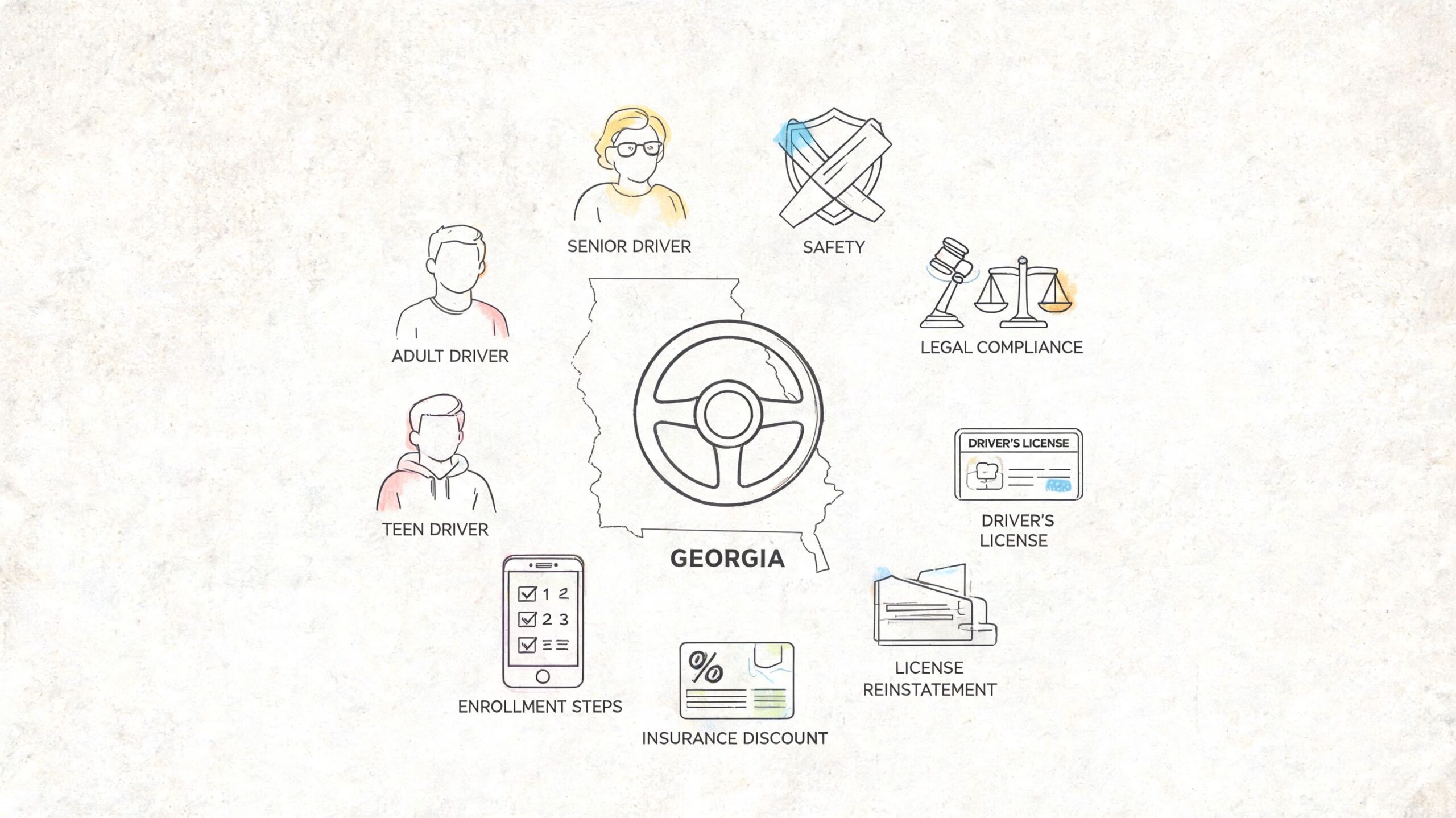
More Than Just a Class: Your Path Back to the Road
What do you do when a traffic violation, DUI charge, or court order puts your driving privileges at risk? In Georgia, the answer often isn't “just drive more carefully next time.” It's completing the right kind of state-approved driver education.
That matters because the benefits of drivers ed aren't limited to basic road skills. For many people in Atlanta, Athens, and surrounding Georgia communities, specialized programs like Risk Reduction and Defensive Driving solve immediate problems. They help satisfy court requirements, support license reinstatement, reduce points, and create a cleaner path with insurers and employers.
These courses also work differently from the high school version many people remember. A Georgia DUI or drug-related case can involve a Risk Reduction course, a clinical evaluation, ASAM Level 1 treatment, a Victim Impact Panel, or a combination of requirements. A speeding ticket or point problem may call for a Defensive Driving course instead. Picking the wrong class wastes time. Picking the right one moves things forward.
There's also a practical safety benefit. An eight-year Nebraska study of more than 150,000 teen drivers found lower crash and violation rates among those who completed formal driver education compared with those who only logged supervised driving hours without instruction, according to the University of Nebraska-Lincoln study on driver's ed outcomes.
For Georgia drivers, that same principle applies in a more targeted way. Structured instruction helps people correct habits, understand legal consequences, and get back into compliance before a bad record becomes a bigger problem.
1. Enhanced Safety Skills and Accident Prevention
A good driving course should change how you scan traffic, judge risk, and respond under pressure. That's the first real benefit. Defensive driving is less about memorizing rules and more about building habits that hold up on I-285, downtown Atlanta surface streets, two-lane highways outside Athens, and crowded parking lots where low-speed crashes happen every day.
Recent state evaluations back that up. In Oregon, statewide driver's ed was associated with crash reductions ranging from 5% to 15%, and traffic violations dropped by more than 40%, according to the CHOP summary of state driver education findings. That doesn't mean every class prevents every collision. It does mean structured instruction can improve the odds when it teaches real-world hazard response instead of passive theory.
What actually helps on Georgia roads
The most useful courses teach drivers to read developing problems early. That includes following distance, blind spot checks, speed choice in rain, intersection awareness, and how to avoid stacking one mistake on top of another after a close call.
On Georgia roads, that often looks like this:
- Merging with patience: Drivers entering fast-moving traffic on metro Atlanta interstates need gap judgment, not aggression.
- Responding to distraction around you: Defensive driving isn't just about your phone. It's also about spotting the driver drifting toward your lane.
- Handling pressure without overcorrecting: Sudden braking and sharp steering create secondary risks, especially in heavy traffic.
Practical rule: The safest move is usually the earliest one. Small speed adjustments and better spacing prevent the panic maneuver later.
That's where specialized instruction earns its value. People often come in focused on a ticket, a court date, or reinstatement paperwork. They leave with driving habits that reduce the chance of repeating the same mistake. Georgia drivers looking for a practical breakdown can review these benefits of defensive driving.
2. License Reinstatement and Legal Compliance
When your license is suspended after a DUI or drug-related offense, the class isn't optional. It's part of the route back. In Georgia, completing the required state-approved program gives you the documentation you need for the next step with DDS and, in many cases, helps you satisfy court or probation expectations at the same time.
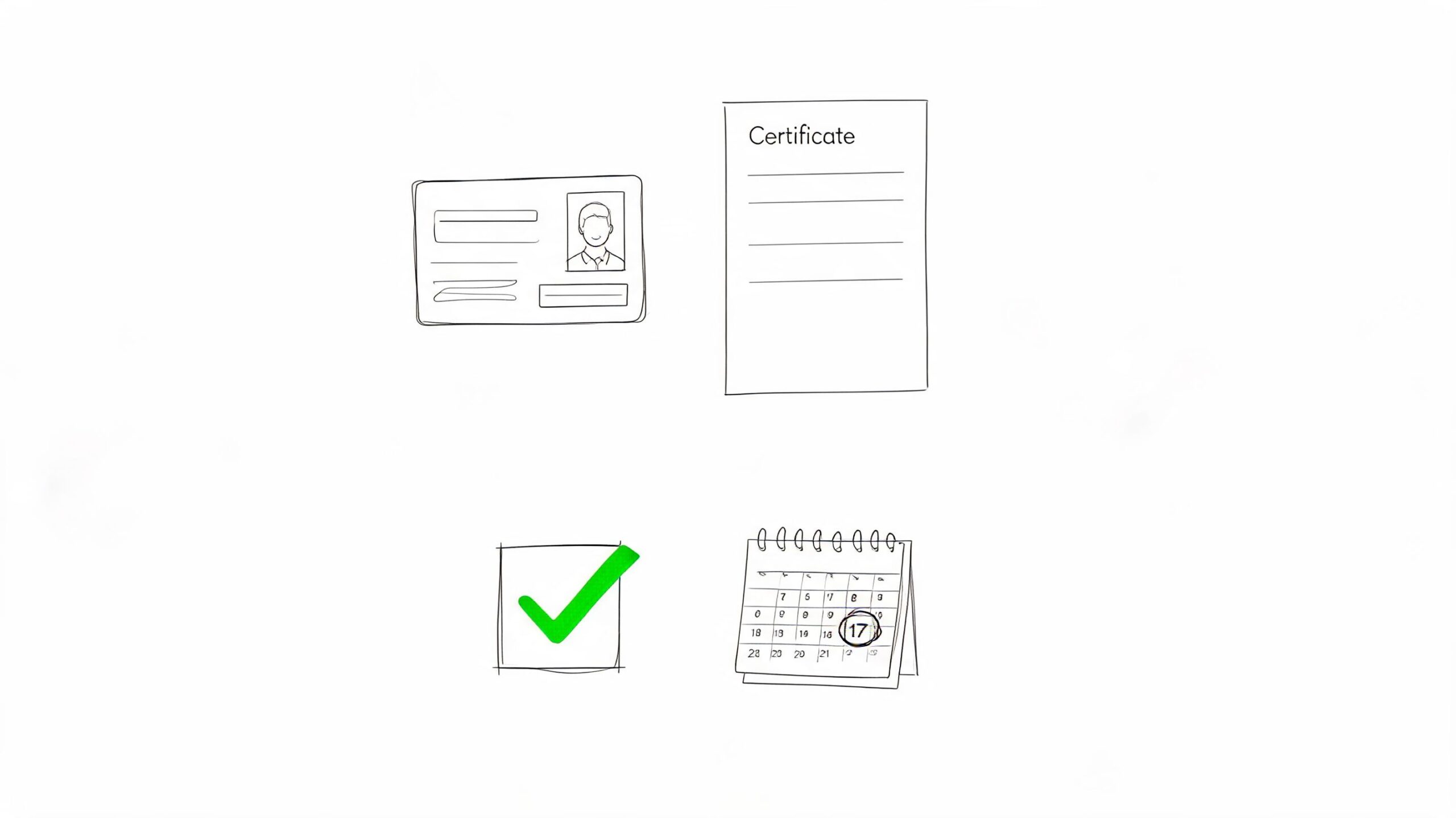
Many drivers lose time because they assume any driving class will work, or they wait until the last minute and then discover they still need a Risk Reduction course, a clinical evaluation, or another required component. In Georgia, details matter. The name of the course, the provider's approval status, and the completion paperwork all matter.
Georgia DUI Schools reports serving participants for more than 38 years and guiding over 100,000 people through required programs. For a driver in Fulton, DeKalb, Gwinnett, or Clarke County, that kind of administrative familiarity matters because reinstatement problems are often paperwork problems as much as behavior problems.
Where drivers get tripped up
The common mistake is treating legal compliance like a single task instead of a sequence. One class may satisfy one requirement, while DDS, the court, and probation may each want their own proof or follow-up steps.
A better approach is simple:
- Confirm the exact requirement: Risk Reduction and Defensive Driving are not interchangeable.
- Enroll early: Waiting compresses your timeline and leaves no margin for errors in registration or completion records.
- Protect your documents: Keep your certificate and any related paperwork accessible for DDS, your attorney, or probation.
Finish the required course first, but don't assume completion alone restores your license. Reinstatement usually involves follow-up action with DDS.
If you're trying to understand the broader testing and licensing framework drivers deal with in other jurisdictions, G1ready.ca's G1 test guide offers a useful comparison point for how structured compliance works, even though Georgia's process is different.
3. Insurance Premium Reduction and Discount Eligibility
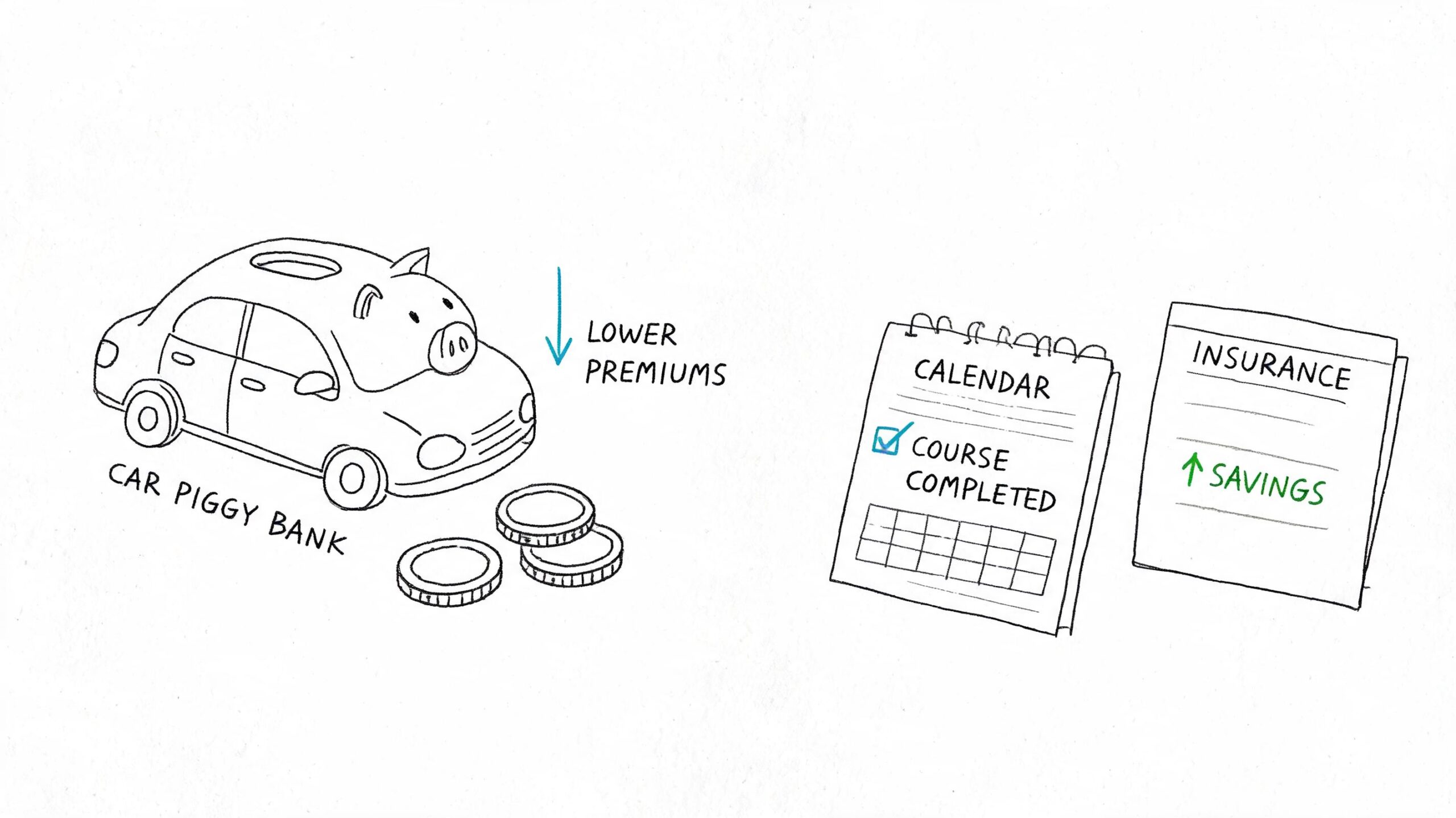
Want a driver improvement course to do more than check a box? For many Georgia drivers, the primary value is financial. A state-approved Defensive Driving course can improve your standing with insurers after a ticket, support a discount request at renewal, and help contain the kind of premium increase that strains a household budget.
That benefit is practical, not automatic.
Insurance companies set their own underwriting rules, discount programs, and documentation standards. A course certificate will not wipe out every rating problem on a policy, especially after recent violations or claims. It can still give you one more legitimate reason to ask for a better rate, which matters if you drive for work, insure a teen, or are already paying a high premium because of your record.
How to improve your chances of getting the discount
Start with the carrier, not the class schedule. Before you enroll, ask whether your insurer accepts a Georgia-approved Defensive Driving course for a premium reduction, which course providers they recognize, and how proof of completion must be submitted. That five-minute call can save you from taking a course that helps with driving habits but does nothing for your policy.
Then handle the paperwork fast.
- Confirm eligibility first: Ask whether your age, policy type, or recent violations affect discount availability.
- Choose a Georgia-approved course: Approval status matters if the insurer requires a recognized program.
- Submit the certificate promptly: Delays can push the discount past your renewal date.
- Ask when the new rate applies: Some carriers adjust mid-term. Others wait until renewal.
This section matters most for drivers trying to solve a money problem tied to a legal or record problem. In Georgia, specialized driver education often serves both purposes at once. The same Defensive Driving course that supports point reduction in one situation may also strengthen your case for insurance savings in another. If reducing premium pressure is part of your larger plan, this guide on how to lower car insurance rates gives you a useful next step.
It also helps to understand how insurers stack savings. Multi-policy, safe-driver, homeowner, and course-completion discounts often work together rather than separately. For a comparison of how carriers package those options, Florida home and auto insurance discounts shows the kind of discount structure many drivers will recognize.
4. Traffic Violation Point Reduction and License Protection
Sometimes a significant benefit of drivers ed is defensive, not dramatic. It keeps a manageable problem from becoming a suspension. If you've picked up multiple tickets in a short period, point reduction can be the difference between fixing the record now and dealing with much bigger consequences later.
In Georgia, point pressure builds fast. Drivers who are close to the suspension threshold usually don't need motivation. They need a lawful way to create breathing room. A state-approved Defensive Driving course can do that, and it's one of the most practical reasons people enroll.
Why this matters before the next ticket
Point reduction is most useful when you act before the record gets worse. Waiting until another citation posts can leave you with fewer options and a harder conversation with DDS, your employer, or your insurer.
Common Georgia situations include:
- A commuter with recent speeding tickets: One more mistake could trigger serious licensing consequences.
- A rideshare or delivery driver: Even if the state allows you to keep driving, the platform or employer may not like the record.
- A younger driver on a short leash at home: Parents often care less about the fine than the pattern.
The practical value here isn't abstract. A completed course can remove up to 7 points from a Georgia driving record once every 5 years, based on the publisher's product information for its Defensive Driving offerings. That doesn't excuse future violations, and it won't solve a suspended license that already requires another process. It does give people a legitimate way to protect a record that's drifting in the wrong direction.
A point reduction course works best as an early correction, not a last-second rescue.
If you need the mechanics, this page explains how to remove points from a driving record. For Georgia drivers trying to stay employed, insured, and legally mobile, that's one of the clearest benefits of drivers ed.
5. Court Order Compliance and Criminal Record Relief
For court-involved drivers, the value of a class is simple. It creates proof. Judges, probation officers, and attorneys need documentation that a person did what the order required, and an approved course gives them something concrete to work with.
That doesn't mean a class magically fixes a criminal case. It does mean compliance is easier to demonstrate when the course is recognized, completed on time, and backed by proper records. In practice, that can stabilize a case that's drifting because the driver hasn't taken action.
What courts usually care about
Courts generally care less about your intentions than your follow-through. If an order requires Risk Reduction, a clinical evaluation, or another step, the best move is to complete the exact requirement and send proof where it needs to go.
A few practical patterns show up often in Georgia:
- A DUI defendant needs documented completion: The certificate supports the record that the person complied.
- A probationer needs to avoid a violation: Missing deadlines can create consequences unrelated to the original traffic stop.
- An attorney wants cleaner presentation before a hearing: Completed requirements show the client is taking the matter seriously.
There's also a broader context behind why formal instruction matters. A Georgia-specific review cited in the ANSTSE state-of-driver-education report found that scholarship participants in classroom-plus-behind-the-wheel instruction had up to a 40% reduction in convictions compared with alternative formats, according to the ANSTSE report on state driver education. That finding came from youth driver education, not DUI court compliance, so it shouldn't be overstated. But it supports a practical point that also applies in court settings: structured, instructor-led programs tend to produce better compliance-related outcomes than lighter-touch alternatives.
Courts respond well to clean paperwork, completed requirements, and no confusion about whether the provider met state standards.
6. Improved Decision-Making and Impairment Awareness
The strongest DUI-related courses do more than repeat that impaired driving is dangerous. They force drivers to look at the chain of decisions that led there. That includes drinking or drug use, yes, but also the smaller choices that happen earlier. Driving anyway, trusting “I'm fine,” ignoring alternatives, or repeating a routine that has already caused trouble.
That's one of the more important benefits of drivers ed in the DUI context. It gives people a structured setting to examine judgment, impulse, and risk without pretending information alone fixes behavior.
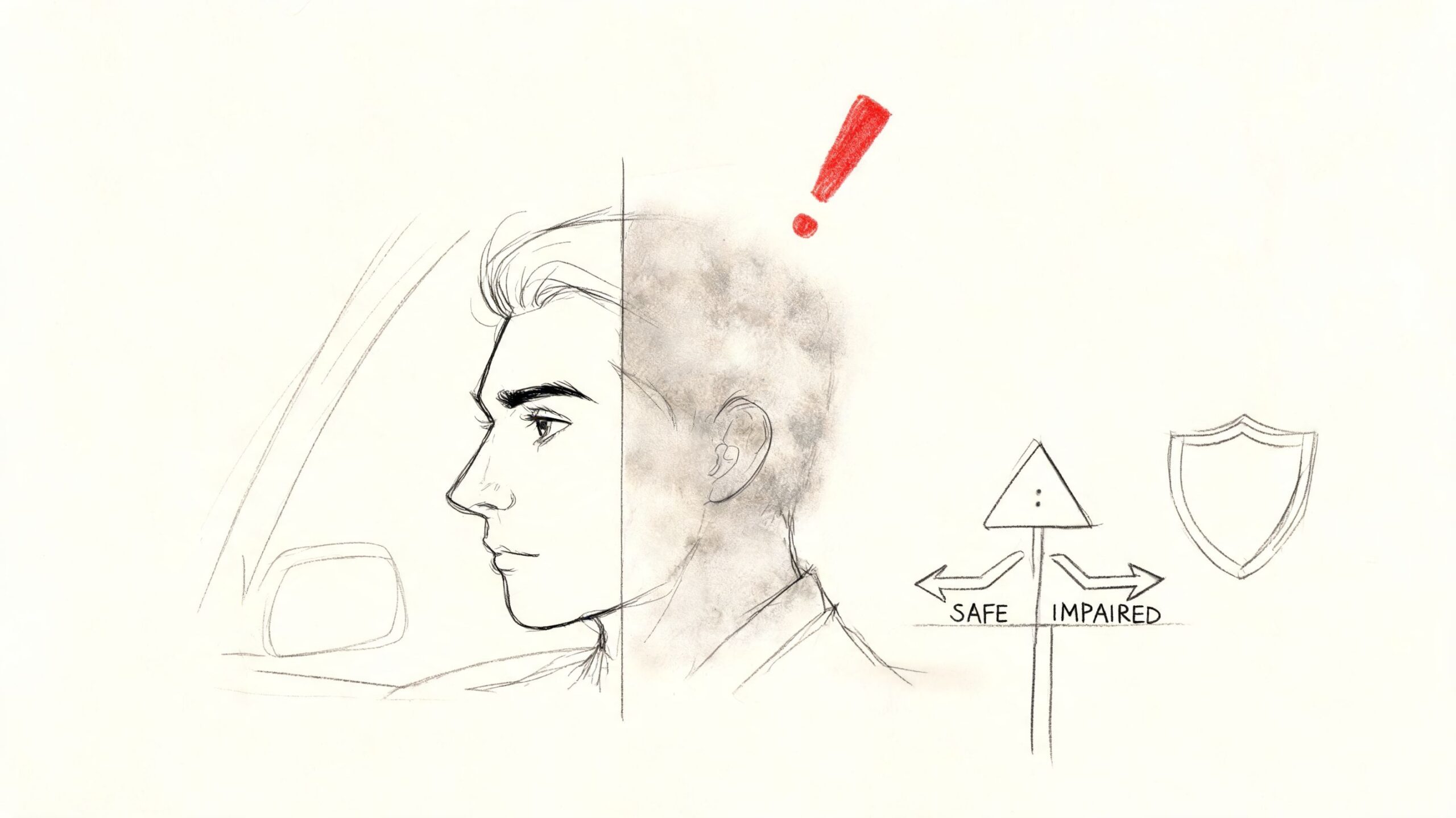
The trade-off is worth stating clearly. A systematic review of seven major studies found that pre- and post-license driver training improved driving performance and self-perceived ability and may slightly reduce traffic offenses, but those educational interventions were not effective in reducing crashes and injuries at the individual or community level, according to the systematic review on driver training limits. That's important because it keeps expectations honest. Classroom instruction helps, but behavior change often requires more than a class.
Why specialized programs still matter
For someone with a DUI or drug-related issue, the course can still be a turning point because it identifies blind spots and often points toward the next needed step, including evaluation or treatment when appropriate.
That tends to help in three ways:
- It sharpens self-awareness: Drivers start recognizing the decisions that place them at risk before they get in the car.
- It normalizes planning: Backup rides, designated drivers, and avoiding high-risk situations become part of the routine.
- It supports treatment when needed: Education and clinical services work better together than either one alone for people with deeper substance-use concerns.
A driver in Georgia who's serious about not repeating the same case should treat the course as part of a broader correction process, not the whole process.
7. Professional and Employment Credential Maintenance
For some drivers, a bad record doesn't just threaten convenience. It threatens income. If you drive for work, supervise fleet vehicles, visit job sites, or need a clean MVR to stay employable, driver education can become a career protection tool.
That's especially true in metro Atlanta, where long commutes, delivery work, service routes, and employer screening all put driving records under constant scrutiny. A suspension, a rising point total, or a DUI-related requirement can affect whether you stay on schedule, stay insured under a company policy, or stay in the role at all.
Why employers care about course completion
Employers usually aren't looking for abstract self-improvement. They want risk management. A completed course shows the driver addressed the issue, met a requirement, and took a documented step toward safer operation.
The workforce angle is broader than one ticket. The driving school software market is projected to reach USD 132.12 billion by 2030 from USD 105.55 billion in 2026, with a 5.8% CAGR, according to the Research and Markets report on driving school software projections. For Georgia drivers, the practical takeaway isn't the market size itself. It's that flexible delivery options have become normal in regulated environments, making it easier for working adults to complete required training without blowing up a workweek.
That matters for:
- Commercial and fleet drivers: A clean record supports insurability and assignment eligibility.
- Rideshare and delivery workers: Driving status often affects platform access and income continuity.
- Field staff and sales employees: Many employers review motor vehicle records before assigning company cars.
If driving is tied to your paycheck, handle the course requirement like a job task, not a side errand.
Flexible scheduling helps, but its true value is preserving employability while staying compliant.
8. Comprehensive Support System and Integrated Clinical Services
What happens when a Georgia driver needs more than one class to clear a case and keep life on track?
In many DUI or drug-related cases, the actual problem is not understanding what to do next. It is keeping each required step in the right order and getting proof of completion where it needs to go. A driver may need a Risk Reduction course, a clinical evaluation, ASAM Level 1 treatment, and a Victim Impact Panel. If those services sit with different providers, people miss deadlines, duplicate paperwork, and lose time they cannot afford to lose.
A provider that handles these services in one coordinated process reduces those errors. That matters for drivers dealing with court dates, probation reporting, work shifts, and family logistics at the same time.
The value is practical. One intake process usually means fewer conflicting records. One staff team can explain whether the evaluation comes first, what treatment level was assigned, and what document needs to be sent to the court, probation, or another agency. That kind of clarity helps people finish the process correctly the first time.
Access also affects completion. As noted earlier, easier-to-reach programs tend to improve follow-through. For Georgia drivers, that means flexible scheduling, clear instructions, and staff who understand how DUI education and clinical requirements fit together under state and court rules.
A coordinated setup helps with:
- Correct sequencing: Drivers can confirm whether they need an evaluation first and what comes after it.
- Cleaner records: Fewer handoffs usually means fewer missing certificates, mismatched dates, or inconsistent files.
- Less time lost: One provider can answer questions across the full process instead of sending the driver to several offices.
- Better case management: Drivers are less likely to miss a required step that delays reinstatement, probation compliance, or case closure.
I have seen the same pattern repeatedly. Drivers under pressure do better when the process is clear, documented, and handled in one place. For Georgia drivers trying to solve legal, financial, and employment problems tied to a DUI or related case, that support is not a convenience. It is often what keeps the case from dragging on longer than it should.
Drivers Ed: 8-Key Benefits Comparison
Georgia drivers usually are not comparing classes for theory alone. They are trying to solve a specific problem. Get a license back, satisfy a court requirement, cut insurance costs, protect a CDL, or keep a case from getting worse. That is the practical lens that matters here.
| Item | Implementation complexity | Resource requirements | Expected outcomes | Ideal use cases | Key advantages |
|---|---|---|---|---|---|
| Enhanced Safety Skills and Accident Prevention | Medium. Structured coursework plus practice | Moderate time commitment, instructor-led sessions, refresher practice | Better hazard recognition, steadier vehicle control, lower crash exposure | New drivers, returning drivers, and fleets trying to reduce preventable incidents | Builds defensive-driving habits that hold up under stress |
| License Reinstatement and Legal Compliance | Medium. Must follow Georgia-approved course rules and submit the right paperwork | Course completion, DDS paperwork, possible court coordination, time and fees | Proof needed for reinstatement or other state requirements | Drivers with DUI or drug-related suspensions who need a recognized path back to legal driving | Meets Georgia requirements with accepted documentation |
| Insurance Premium Reduction and Discount Eligibility | Low. Finish the course and send the certificate to the insurer | Tuition, certificate submission, eligibility check with the carrier | Possible premium discounts and a clearer basis for rate review | Drivers looking to lower insurance costs after a ticket, violation, or rate increase | Can turn a class fee into real savings if the carrier applies the credit |
| Traffic Violation Point Reduction and License Protection | Low. One approved course, subject to Georgia limits | Course completion, DDS filing, timing before a suspension problem grows | Point reduction that helps protect driving privileges | Drivers nearing suspension or trying to keep a record manageable for work | Helps preserve a license before points create larger legal and job problems |
| Court Order Compliance and Criminal Record Relief | Medium to High. Deadlines and court terms must be followed closely | Court-ordered classes, records, and sometimes added evaluations or follow-up services | Satisfies ordered conditions and may support better probation or sentencing outcomes | Drivers handling DUI, drug, or other traffic-related court cases | Produces court-ready proof of completion and shows documented follow-through |
| Improved Decision-Making and Impairment Awareness | Medium. Class time plus real behavior change outside class | Training time and a willingness to apply what is taught | Better recognition of impairment, triggers, and high-risk choices | Drivers with alcohol or drug-related cases, younger drivers, repeat-risk drivers | Addresses the judgment problems that often lead to repeat violations |
| Professional and Employment Credential Maintenance | Medium. Must match employer, CDL, or agency rules | Scheduling around work, approved documentation, employer verification when needed | Better protection for credentials, driving status, and job eligibility | CDL holders, rideshare drivers, delivery drivers, fleet employees | Helps reduce employment fallout from points, suspensions, or unresolved requirements |
| Integrated Support System and Clinical Services | High. Several services may need to be completed in the right order | Evaluations, treatment recommendations, victim impact requirements, education, added time and cost | Handles legal and treatment needs together, with an easier path to finishing multiple requirements correctly | Drivers who need both compliance documents and clinical follow-up after a DUI or related case | All-in-one coordination, fewer record errors, and clearer next steps across services |
The trade-off is simple. Lower-complexity courses often solve one problem well, such as points or insurance. Higher-complexity programs take more time and money, but they address the cases that can affect reinstatement, probation status, treatment compliance, and employment all at once.
For Georgia drivers, that distinction matters. A defensive driving class helps in one set of situations. A DUI Risk Reduction course or related clinical service helps in another. The best fit is the one that matches the actual requirement on your record, court paperwork, employer file, or DDS status.
Take the Next Step Towards a Clean Record
The benefits of drivers ed are easy to misunderstand if you're only thinking about basic driving skills. In Georgia, specialized education often solves much more immediate problems. It can help you satisfy a court order, support license reinstatement, reduce points, improve how insurers view your record, and build safer habits that lower the chance of another violation.
That practical value matters because most drivers who enroll aren't doing it for theory. They're trying to protect a job, get back on the road legally, avoid further penalties, or put a difficult case behind them. A good course gives them a structured, recognized way to do that.
It's also worth keeping the trade-offs in view. Education helps, but it isn't magic. A class can improve awareness, strengthen hazard recognition, and document compliance. It can't erase a record by itself, and it won't replace treatment when substance use is part of the problem. The strongest outcomes usually come when drivers match the course to the actual issue. Defensive Driving for points, tickets, or insurance. Risk Reduction for Georgia DUI and drug-related requirements. Clinical services when the case calls for more than classroom work.
That's why the right first step is usually a clarification step. Find out exactly what DDS, the court, probation, your insurer, or your employer requires. Then enroll in the program that matches that requirement instead of guessing. That saves time and prevents the common mistake of finishing a course that doesn't satisfy the actual obligation.
For Georgia drivers, access is better than many people assume. Online, virtual, and in-person options make it easier to fit a class around work, family responsibilities, and deadlines. If you're in Atlanta, Athens, or nearby metro communities, local availability can make a stressful process more manageable. If you're elsewhere in the state, online options can reduce travel and scheduling pressure.
Georgia DUI Schools is one Georgia DDS-approved option for drivers who need Risk Reduction, Defensive Driving, clinical evaluations, ASAM Level 1 treatment, or related support. The key is choosing the service that fits your actual situation and then completing it promptly.
When a traffic case or DUI issue starts affecting your license, finances, or employment, delay usually makes things harder. The better move is to start the compliance process now, complete the correct program, and give yourself a clear path back to legal, safer driving.
If you need help with a Georgia DUI, court order, license reinstatement step, or point reduction, Georgia DUI Schools offers DDS-approved options in formats that fit busy schedules. Review the Georgia DUI Schools Risk Reduction course to find the class that matches your next step.