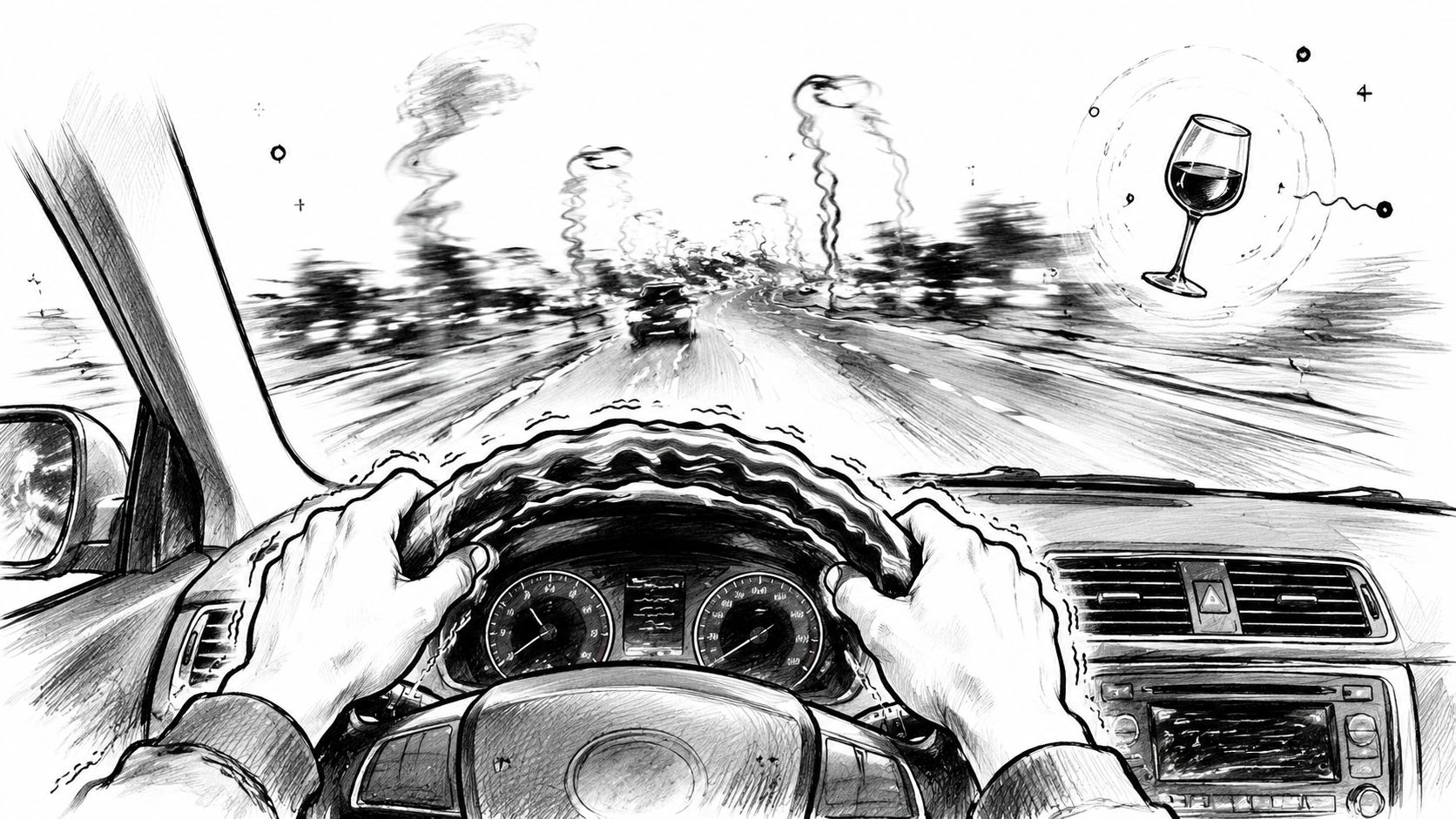
Alcohol doesn't wait for a person to feel “drunk” before it starts changing the way they drive. In the United States, 11,904 people were killed in alcohol-impaired driving crashes in 2024, representing 30% of all traffic fatalities, and the risk of being in a single-vehicle fatal crash nearly doubles with each 0.02% increase in blood alcohol concentration according to the Foundation for Advancing Alcohol Responsibility.
For Georgia drivers, that matters for two separate reasons. First, the alcohol effects on driving show up before many people expect them to. Second, Georgia law doesn't require a driver to be over 0.08% BAC to face a DUI charge. If alcohol made you less safe behind the wheel, that can be enough.
As a DUI educator would tell any class in Atlanta, Athens, or anywhere else in the state, the safest decision is simple: if you've been drinking, don't drive. But people still need clear answers about how impairment works, what officers look for, what Georgia law says, and what happens after an arrest.
The Unmistakable Risks of Impaired Driving
In the United States, 11,904 people were killed in alcohol-impaired driving crashes in 2024, representing 30% of all traffic fatalities, and the risk of being in a single-vehicle fatal crash nearly doubles with each 0.02% increase in BAC according to the Foundation for Advancing Alcohol Responsibility.
Those numbers matter because they describe a pattern, not a rare exception. Alcohol-related crashes usually start with small losses that a driver cannot measure in real time. A wider turn. A delayed brake. A missed traffic signal. The driver may feel capable while the margin for error keeps shrinking.
Georgia law connects directly to that reality. A DUI charge in Georgia is not limited to cases where a chemical test shows 0.08% BAC or higher. Under the state's DUI Less Safe rule, prosecutors can focus on whether alcohol made the person less safe to drive. That means the legal question often tracks the actual danger more closely than drivers expect.
A simple comparison helps here. BAC is a number. Safety is a performance issue. If alcohol reduces the ability to judge distance, hold a lane, respond to a light change, or react to another driver, the risk is already on the road.
That is why this topic is not just about statistics or personal choices. It is about how impairment turns into evidence, and how that evidence can lead to arrest, license suspension, court requirements, and later reinstatement steps in Georgia.
For families dealing with the aftermath of a drunk driving crash outside Georgia, it can also help to understand what immediate legal steps are available. A practical example is this resource on Philadelphia legal help for drunk driving victims, which explains common post-crash concerns from the victim side.
How Alcohol Hijacks Your Brain and Body
Alcohol starts changing driving ability before a person feels drunk. It reaches the brain quickly, slows communication between brain cells, and weakens the skills driving depends on most, such as attention, timing, visual tracking, and muscle coordination.
Alcohol reaches the brain within seconds of entering the bloodstream, acts as a depressant that degrades judgment, blurs vision, and slows reaction time, and impairment begins with the first drink. After the first 40 minutes, an average body eliminates alcohol at about 0.01% per 40-minute interval according to this explanation of how alcohol reaches the brain and is eliminated.
The order of impairment matters. Judgment often slips before obvious physical control does. That creates a dangerous mismatch. A driver may still hold the wheel and stay convinced they are fine, even while their brain is already making poorer choices about speed, distance, and risk.
A useful comparison is a phone with multiple apps running in the background. The screen may still work, but the system lags. Alcohol works in a similar way on the brain. Processing slows, attention narrows, and tasks that should happen together start falling out of sync.
What changes first
Early alcohol impairment usually affects four connected functions:
- Judgment. The driver is more likely to accept a gap that is too small or follow too closely.
- Attention. It becomes harder to monitor mirrors, signals, pedestrians, and brake lights at the same time.
- Vision and tracking. Eyes and brain work less efficiently together, which weakens depth perception and motion tracking.
- Coordination and reaction time. Steering corrections, braking, and foot-to-pedal timing become less precise.
That sequence helps explain why Georgia's DUI Less Safe law matters. A person does not need to look completely out of control for alcohol to make them less safe to drive. If drinking has reduced safe performance, the impairment is already legally important.
Why one drink can still matter
Drivers often look for a simple rule like “one drink is fine.” The body does not work by fixed social rules. Alcohol absorption changes based on body size, food intake, time, sex, medication use, and drink strength. Two people can consume similar amounts and perform very differently.
Driving also requires constant task-switching. You check speed, scan ahead, read signals, watch lane position, judge closing distance, and prepare for someone else's mistake. Alcohol weakens that split-second coordination. The person may feel calm or confident while the brain is doing slower, less accurate work.
You do not need to feel obviously impaired for alcohol to lower driving safety. You only need enough alcohol in your system to reduce decision quality, attention, or response time.
Blood Alcohol Concentration and its effects on driving
| BAC Level (%) | Typical Effects | Impact on Driving Ability |
|---|---|---|
| 0.05% | Measurable declines in visual focus, alertness, and coordination | Steering control becomes less precise, and emergency responses become less reliable |
| 0.07% | Clinically significant impairment in driving performance | Lane-keeping becomes less stable and routine driving tasks become more error-prone |
| 0.08% to 0.10% | Reaction time, multitasking, judgment, tracking moving targets, lane position, and overall control are all significantly impaired, as described by Michigan Medicine's summary of alcohol impairment and crash risk | A driver may brake later, miss hazards, drift within the lane, and struggle to manage changing traffic conditions |
The practical point is simple. Alcohol does not wait for a dramatic collapse in behavior. It first interferes with the hidden skills that keep an ordinary trip safe. In Georgia, that connection between early impairment and reduced safe driving is exactly why a DUI case can be built around being less safe, even before a driver thinks they have crossed a line.
From Impaired Judgment to Dangerous Driving
The science becomes easier to understand when you translate it into what happens on a road in Georgia.
A sober driver in Marietta approaches a stale yellow light, checks distance, and decides whether to stop. A driver who has been drinking may make that same decision too late because alcohol has already weakened judgment and slowed processing. That delay turns a routine stop into a hard brake, a red-light entry, or a rear-end crash.
What lane drift really means
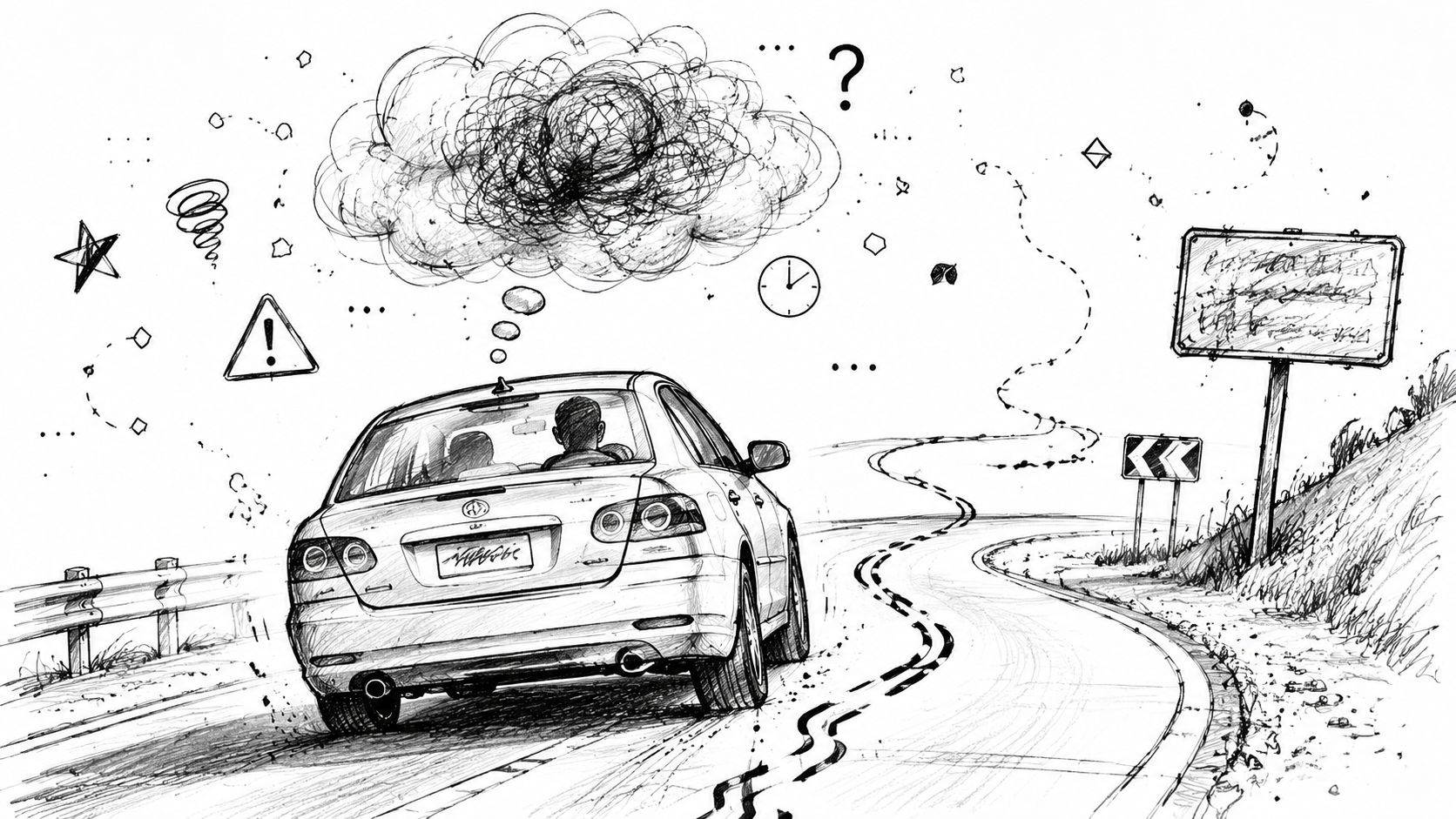
Many people think weaving is a dramatic, obvious swerve. Often it's subtler than that. The driver touches the lane marker, corrects too much, then drifts again.
At 0.07% BAC, alcohol causes a measurable 4.06 cm increase in Standard Deviation of Lateral Position, indicating reduced lane-keeping stability and greater difficulty maintaining proper vehicle trajectory according to this clinical review of alcohol-related lane control impairment. In plain language, alcohol makes it harder to hold a steady line.
How small errors pile up
Driving safely requires divided attention. A driver must watch the car ahead, monitor mirrors, keep speed consistent, stay centered in the lane, and react to signs and signals. Alcohol weakens that chain.
Common examples include:
- Late braking: The driver sees brake lights ahead but responds too slowly.
- Poor tracking: The vehicle drifts wide during a curve or turn.
- Missed scanning: The driver checks straight ahead but neglects mirrors or cross traffic.
- Overcorrection: A small drift leads to a bigger steering correction than needed.
One mistake can be recoverable. Several in a row can lead directly to a stop by law enforcement, a collision, or both.
Understanding Georgia's Specific DUI Laws
Georgia drivers often assume one thing that gets them into serious trouble. They think that if their BAC is below 0.08%, they can't be convicted of DUI. That isn't true.
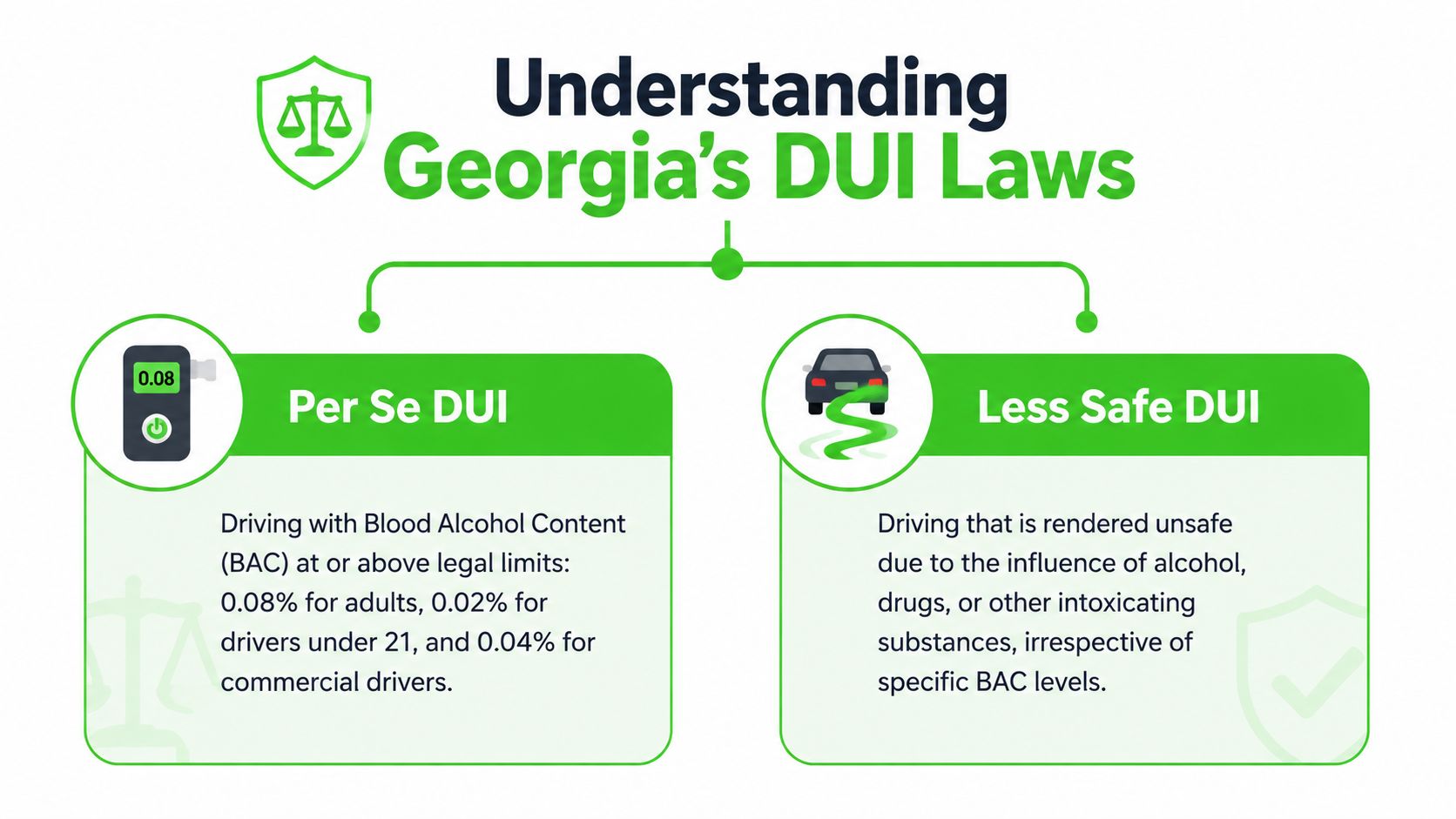
Georgia law allows DUI charges in more than one way. One is based on BAC. The other is based on impaired driving behavior.
Per se DUI in Georgia
Under Georgia Code Section 40-6-391(a)(5), a driver with a BAC of 0.08% or higher is legally presumed to be driving under the influence. That means the BAC reading itself can support the charge.
Georgia also uses different BAC thresholds depending on the driver category under Georgia Code Section 40-6-391:
- Adults 21 and older: 0.08%
- Commercial drivers operating commercial motor vehicles: 0.04%
- Drivers under 21: 0.02%
For underage drivers, the zero-tolerance rule is especially strict. If the alcohol concentration is at or above that threshold within the legal window, visible impairment isn't required for the charge.
DUI less safe in Georgia
Georgia also allows a charge under Section 40-6-391(a)(1), often called DUI Less Safe. Under that theory, a driver can be charged if alcohol made them less safe to drive, even when their BAC is below 0.08% or there was no chemical test, as explained in this discussion of Georgia DUI less safe and per se rules.
That's where the alcohol effects on driving connect directly to Georgia law. If an officer observes lane drift, erratic speed changes, delayed responses, odor of alcohol, slurred speech, or poor field performance, the case may focus on diminished driving safety rather than one number alone.
For a plain-language overview of related state rules, this guide to driving laws in Georgia can help put DUI rules in the broader context of Georgia road law.
A BAC result matters in Georgia. Driving behavior matters too.
Recognizable Signs of an Impaired Driver
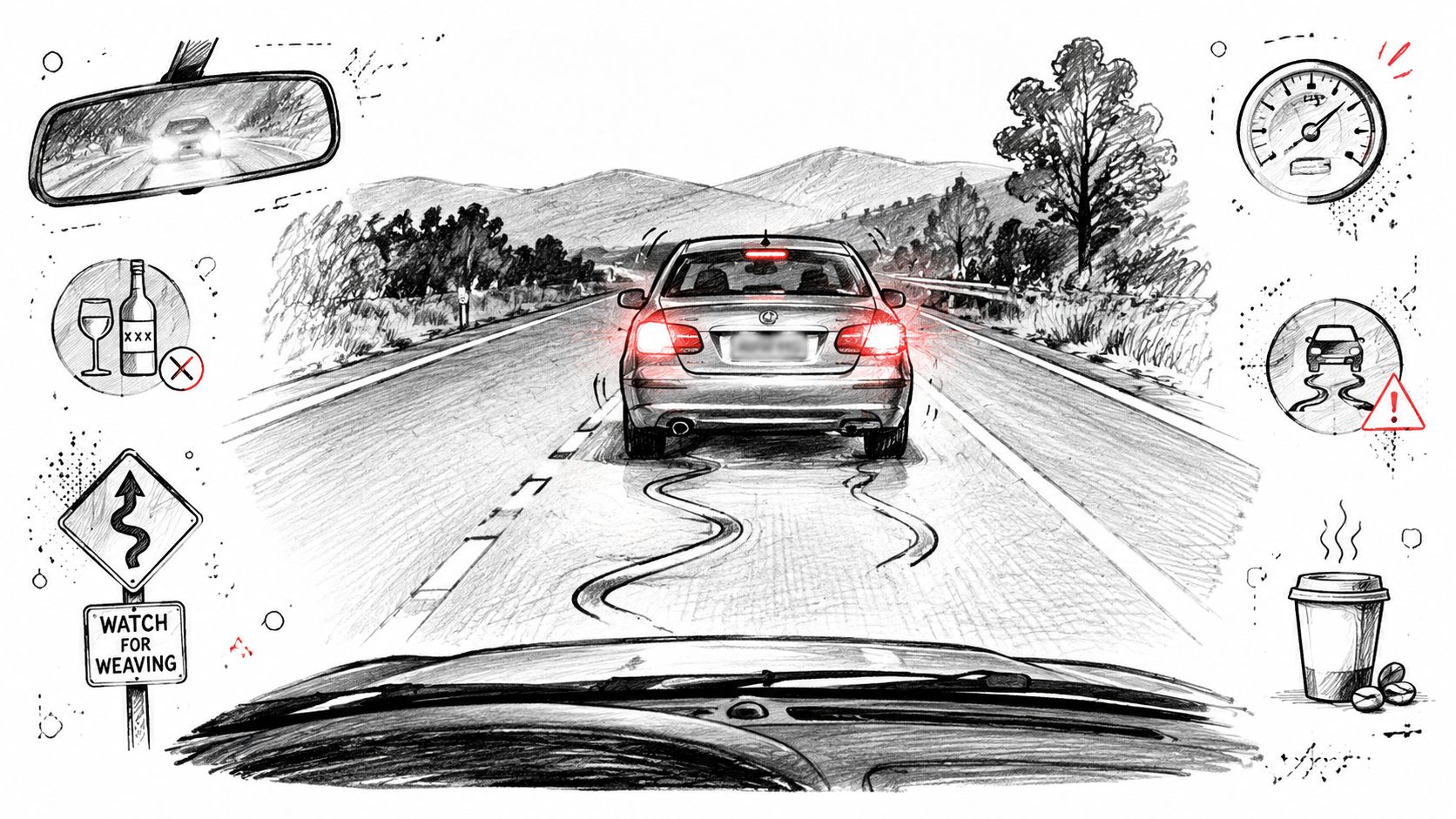
Most impaired drivers don't announce themselves. Other motorists notice them because the car starts doing things a sober driver usually wouldn't do. Officers notice the same patterns.
What you may see on the road
Watch for behaviors like these:
- Weaving within a lane: The vehicle doesn't stay centered and keeps drifting left and right.
- Straddling lines: Tires ride on the center line or lane marker for too long.
- Wide turns: The driver swings farther than necessary during a turn.
- Erratic braking: Braking comes too early, too late, or for no clear reason.
- Unusual speed control: The driver moves well below the flow of traffic or changes speed without cause.
If you see those signs, increase your distance. Don't try to pass aggressively or confront the driver.
What officers often observe during a stop
Once the vehicle is stopped, the signs often become more personal and obvious:
- Bloodshot or glassy eyes
- Slurred or slowed speech
- Fumbling for a license or insurance card
- Confused answers to simple questions
- Odor of alcohol
These observations often become part of the officer's report and can support a DUI investigation. For readers who want a broader legal explanation of how DUI is defined and charged in this state, Brian Hansford Law on Georgia DUI offers a useful overview.
The Process After a DUI Arrest in Georgia
A DUI arrest in Georgia sets off two problems at once. There's the criminal case, and there's the driver's license problem. People often focus only on court and overlook the steps tied to reinstatement.
Georgia uses a 10-year look-back period for DUI penalties, and a first DUI conviction in Georgia mandates a $300 to $1,000 fine, 40 hours of community service, 12 months probation, a minimum 10-day jail sentence, and completion of a DUI Alcohol or Drug Use Risk Reduction Program within 120 days under this summary of Georgia DUI penalties and course requirements.
What happens early
Soon after arrest, drivers usually need to start gathering information fast. That includes court dates, bond conditions, and license-related deadlines. A person may also need to determine whether a clinical evaluation, treatment recommendation, or other compliance item will become part of the case or reinstatement path.
A practical next step for many people is learning how screening and follow-up services work. This page on drug and alcohol evaluations in Georgia explains one of the common requirements that can come up after a DUI or related offense.
What a first conviction requires
For a first conviction, the court-ordered penalties aren't optional. The fine, probation, community service, jail sentence, and Risk Reduction requirement are part of the legal consequence structure.
The course deadline matters. Missing it can slow progress with court compliance and the steps needed to regain lawful driving status.
Key point: If the court or DDS requires a Risk Reduction course, waiting too long can create more problems than the original deadline suggests.
Why reinstatement takes planning
License reinstatement isn't usually one single form. Drivers may need to complete the state-required course, pay required fees, satisfy suspension terms, and submit proof of completion. Some people also need additional clinical services, depending on the case history and evaluation outcome.
That's why it helps to treat the process like a checklist, not a guess.
Your Path to Reinstatement with Georgia DUI Schools
Once a DUI case reaches the compliance stage, drivers need the exact service the state or court requires. In many Georgia cases, that means the 20-hour DUI Alcohol or Drug Use Risk Reduction Program. Some people also need a clinical evaluation, ASAM Level 1 treatment, a Victim Impact Panel, or steps tied to habitual offender rules and license restoration.
Matching the requirement to the solution
For Georgia residents trying to get back on track, Georgia DUI Schools is one DDS-approved option for Risk Reduction classes, clinical evaluations, and related compliance services in Atlanta, Athens, and other metro areas, with online and in-person formats available depending on the program.
Some drivers also need support that goes beyond course completion, especially when alcohol use has become a larger professional or personal problem. In those situations, a program such as Reflections executive DUI treatment may be relevant for people seeking a more intensive private treatment setting.
Reinstatement works better when you know the sequence
A reinstatement plan usually goes more smoothly when the driver confirms:
- Which course is required
- Whether a clinical evaluation is needed
- Whether treatment or a Victim Impact Panel has been ordered
- What documents DDS or the court expects
- When the license can be restored
For a practical overview of the steps involved, review license reinstatement in Georgia.
Common Questions About Alcohol and Driving
Can coffee or a cold shower sober me up faster
No. Research confirms that while coffee may increase alertness, it does not reduce blood alcohol concentration or reverse motor or cognitive impairments. The body eliminates alcohol at a constant rate, and no substitute can accelerate this process according to the Centre for Addiction and Mental Health guide on alcohol and driving.
Coffee can make a person feel more awake. It doesn't restore judgment, coordination, or safe reaction time.
If I feel fine, am I safe to drive
Not necessarily. Feeling fine is a poor test because alcohol affects judgment early. A person who feels “normal” may already be making worse decisions, scanning less effectively, and reacting more slowly than they realize.
That mismatch is one reason people get arrested for DUI Less Safe in Georgia. They may not think they look impaired, but their driving shows otherwise.
Why do people get confused about the legal limit
Because many people treat 0.08% as the point where impairment starts. It isn't. It's one legal threshold for certain adult drivers. Georgia law also recognizes less-safe driving and uses different BAC limits for commercial and underage drivers.
What should I do if I've been drinking
Don't drive. Use a rideshare, call someone, stay where you are, or plan ahead with a sober driver. The safest answer is the one that keeps you from turning a temporary inconvenience into a crash, an arrest, or a suspended license.
If you need to complete state-required steps after a DUI, review the Georgia DUI/Risk Reduction course from Georgia DUI Schools. It's the most direct next step for many Georgia drivers working toward compliance, reinstatement, and safer decisions on the road.