
You're probably here because “first driving school” sounds simple, but your situation isn't. Maybe you got a DUI in Fulton County, picked up too many points driving I-285, or a court in Athens told you to complete a class before your next date. In Georgia, your first driving school usually has nothing to do with teen lessons. It's about compliance, approval, and getting your record straight without wasting time or money.
That's where people make avoidable mistakes. They sign up for the wrong class, assume any online school will count, or miss a required step like a clinical evaluation or Victim Impact Panel. If you're a licensed professional trying to protect your privacy while dealing with a DUI-related issue, this guide on confidential rehab for professionals is worth reading alongside your Georgia course planning.
What Your First Driving School Means in Georgia
For an adult in Georgia, a first driving school is usually one of three things.
It might be a DDS-mandated Risk Reduction course after a DUI or related offense. It might be a defensive driving course to deal with points or a reinstatement issue. Or it might be the start of a larger compliance path that includes a clinical evaluation, ASAM Level 1 treatment referral, or a Victim Impact Panel.
The search term is misleading, but the stakes are real
If you live in Atlanta, your first concern is often speed and legitimacy. You need a class that counts. If you're in Athens, you may also need a provider that can connect the class to the rest of your court or DDS requirements instead of sending you across town to chase separate services.
Britain had commercial driving lessons as early as June 1900, and a branded driving-school model was established in May 1901. In the United States, the first known driver training program appeared in 1916 (early driving school history). That history matters for one reason. Driver training started early, but modern Georgia compliance courses serve a different purpose. They're not casual lessons. They're regulated programs tied to your legal ability to move forward.
Practical rule: If a class affects your license, court paperwork, or reinstatement, treat it like a regulated service, not a casual course purchase.
Know which lane you're in
Before you enroll anywhere, sort yourself into the right category:
- Risk Reduction course: Usually tied to DUI or related alcohol and drug offenses.
- Defensive driving course: Used for point reduction, some reinstatement situations, and often insurance-related goals.
- Clinical services track: Needed when the court, probation, or another requirement calls for an evaluation, treatment follow-up, or a panel.
People get in trouble when they mix those up. A defensive driving class is not a substitute for a DUI course. A general driver education page is not what you need if DDS or the court ordered a specific program.
How to Verify a DDS Approved Provider Before You Enroll
The first question to ask any school is simple. Are you DDS-certified for the exact course I need? If the answer is vague, keep moving.
Georgia draws a hard line here. DDS says only certified schools may offer Georgia driver education, defensive driving, and DUI programs, which means completion for legal or reinstatement purposes depends on using a DDS-certified provider rather than an unapproved training school (Georgia regulated programs information).
What Georgia requires for Risk Reduction
Georgia's DUI, Alcohol or Drug Use Risk Reduction Program is mandated by law and applies not only to DUI convictions but also to possession of illegal drugs, underage possession of alcohol while operating a motor vehicle, and boating under the influence. DDS says the program has two required parts, an assessment component and an intervention component, and both must be completed to receive a completion certificate (Georgia DUI FAQs).
That one fact eliminates a lot of bad options.
If a school says you can skip the assessment, rush through the class, or get a certificate without both parts, it's not the right provider. Georgia doesn't treat this as a generic education class. It's a defined program with fixed pieces.
How to check before you pay
Use this quick filter before you hand over your card:
- Confirm DDS approval: Ask the school to identify the exact program they're certified to offer, not just “driving classes.”
- Match the course to your paperwork: Court order, DDS notice, probation terms, and reinstatement needs should all point to the same course type.
- Ask about the certificate process: You need to know when completion is recorded and what proof you'll receive.
- Watch for shortcut language: “Fast certificate,” “same-day completion,” or loose explanations about state requirements are warning signs.
- Review course specifics: If you're comparing providers, a DDS approved driver education course page can help you see how approved programs are described versus broad marketing copy.
If the provider can't explain approval status in plain English, don't trust them with a requirement tied to your license.
Local reality in Atlanta and Athens
Metro Atlanta students often need weekday evening or weekend access. Athens students may care more about avoiding multiple providers for one case. In either setting, the smart move is the same. Verify approval first, then schedule. Never reverse that order.
Choosing the Right Course Format and Schedule for You
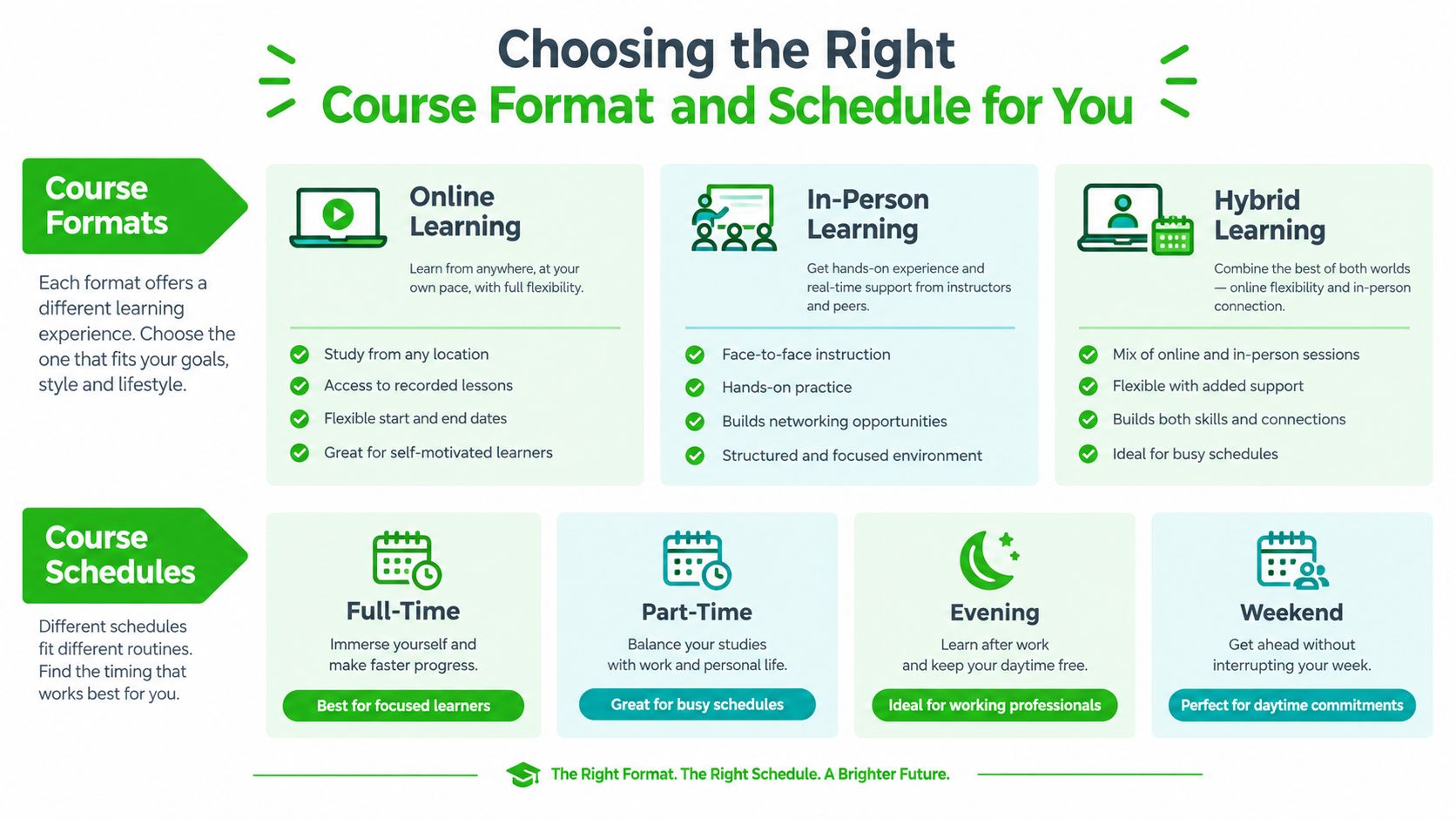
Format matters less than people think. Compliance matters more. A convenient class that doesn't fit your legal requirement is useless.
Research on driver-improvement programs points in the same direction. A meta-analysis of 106 interventions found very small but statistically significant reductions in crashes (dw = 0.03) and violations (dw = 0.06), with stronger effects in remediation-style interventions such as warning letters, group meetings, hearings, and license suspension or revocation (driver improvement intervention meta-analysis). My takeaway is simple. The course works best when it's targeted to your actual risk and requirement, not when it just feels convenient.
Don't assume online means easier
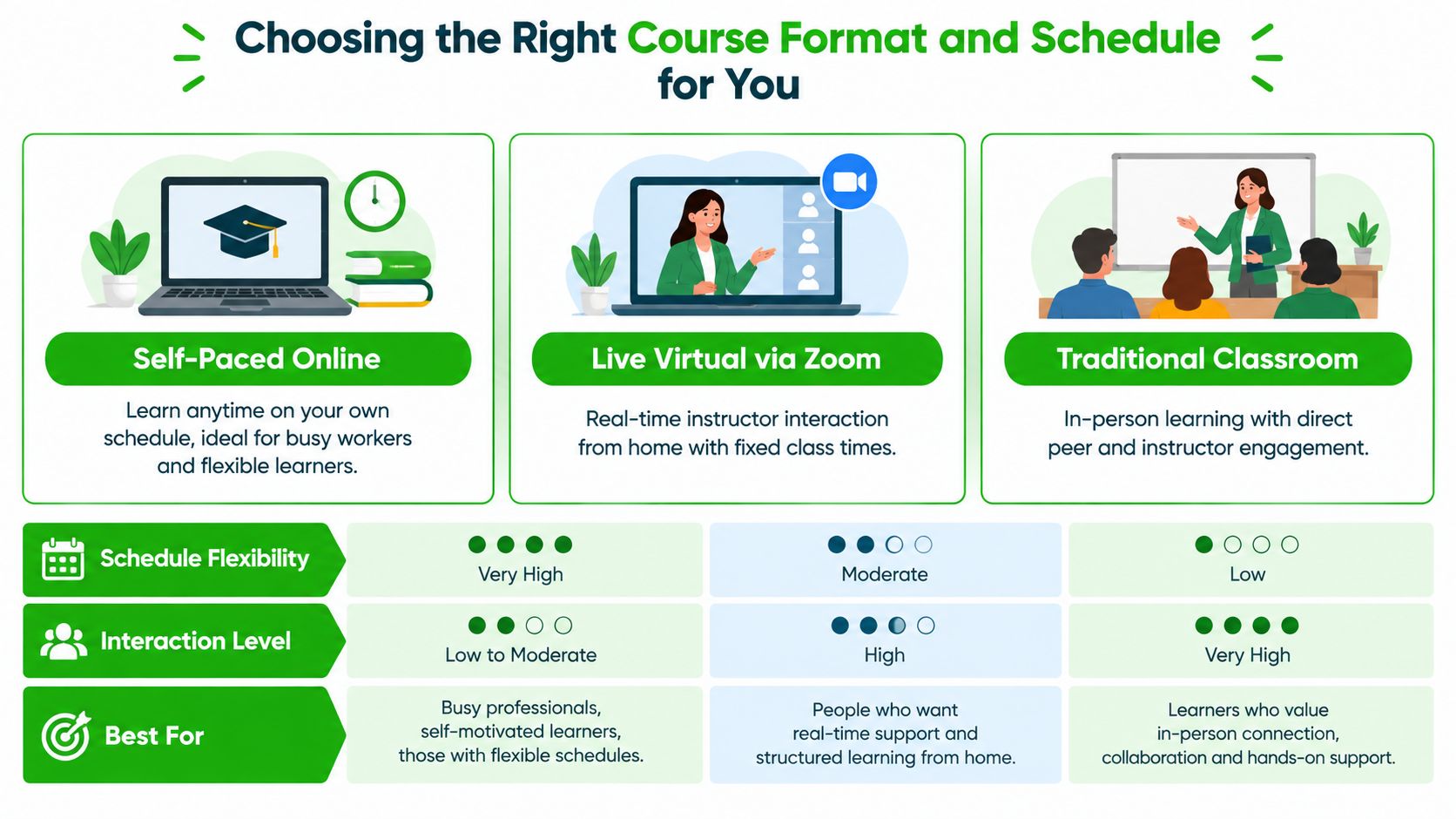
Some students in Atlanta want self-paced access because of shift work. Others in Athens prefer a classroom because they focus better face to face. Either can be the right call for a defensive driving course if the provider and format are approved for that use.
What matters is structure. A good program has clear content, attendance tracking, defined evaluation, and a certificate process you can verify. That's why this breakdown of whether online defensive driving courses are legit matters. The question isn't whether online exists. The question is whether your specific course and provider satisfy your requirement.
Georgia Course Format Comparison
| Format | Best For | DDS Compliance Note |
|---|---|---|
| Self-paced online | Busy workers, parents, people with changing schedules | Best for eligible defensive driving situations when the provider and course format are approved |
| Live virtual via Zoom | Students who want instructor interaction without commuting | Useful when a provider offers it for the course you need and attendance rules are clear |
| Traditional classroom | Students who learn better in person or need a structured setting | Often the safest choice when you want fewer format misunderstandings |
Pick by constraint, not by mood
Ask yourself three direct questions:
- What does my paperwork require? Start there.
- Can I attend reliably? A perfect schedule on paper means nothing if you keep missing sessions.
- Do I need support beyond the class? If you also need evaluations or follow-up services, choose a provider set up for that path.
A course that fits your calendar but misses your legal requirement creates more delay, not less.
Questions to Ask and Credentials to Check at Any School
Most students ask about price first. I'd ask about proof first.

Georgia's DDS-approved DUI program framework requires a 20-hour intervention component, and the DDS program guide states that students must attend the mandatory twenty (20) hours of intervention, making the course structure a fixed-duration requirement rather than a flexible short seminar (DDS Risk Reduction program guide).
That should shape the questions you ask. If someone talks like this is a quick drop-in class, they're either careless or hoping you won't notice.
Ask these questions before you enroll
Use this like a phone script or front-desk checklist.
- What exact program are you certified to offer? Don't settle for “we do driving classes.”
- How is attendance handled for the required hours? You need a clear answer on check-in, participation, and what counts as present.
- What happens if I miss part of a session? Rescheduling rules matter when the course has mandatory hours.
- When is the assessment scheduled? For Risk Reduction students, that timing affects everything else.
- Do you coordinate related services? Ask about clinical evaluations, Victim Impact Panel options, and treatment referrals if your case may require them.
- How is completion documented? You need to know what you receive and what the school records.
Watch how they answer
A reliable school gives direct answers. A weak one hides behind broad language.
Good providers can explain whether your need is court-driven, DDS-driven, or both. They'll also tell you plainly if you're asking for the wrong course. That honesty saves you from paying twice.
What support actually matters
Some schools only sell a seat in a class. Others can help you line up the rest of the compliance path. That difference matters if you're juggling work, family, probation reporting, or reinstatement deadlines.
One practical option is Georgia DUI Schools, which offers DDS-approved Risk Reduction and defensive driving courses along with clinical services in the same system, including an all-in-one driving school path for students who need more than a single class.
Understanding Course Components Beyond the Classroom
The class is only part of the job. Many Georgia drivers learn that late, and it costs them time.
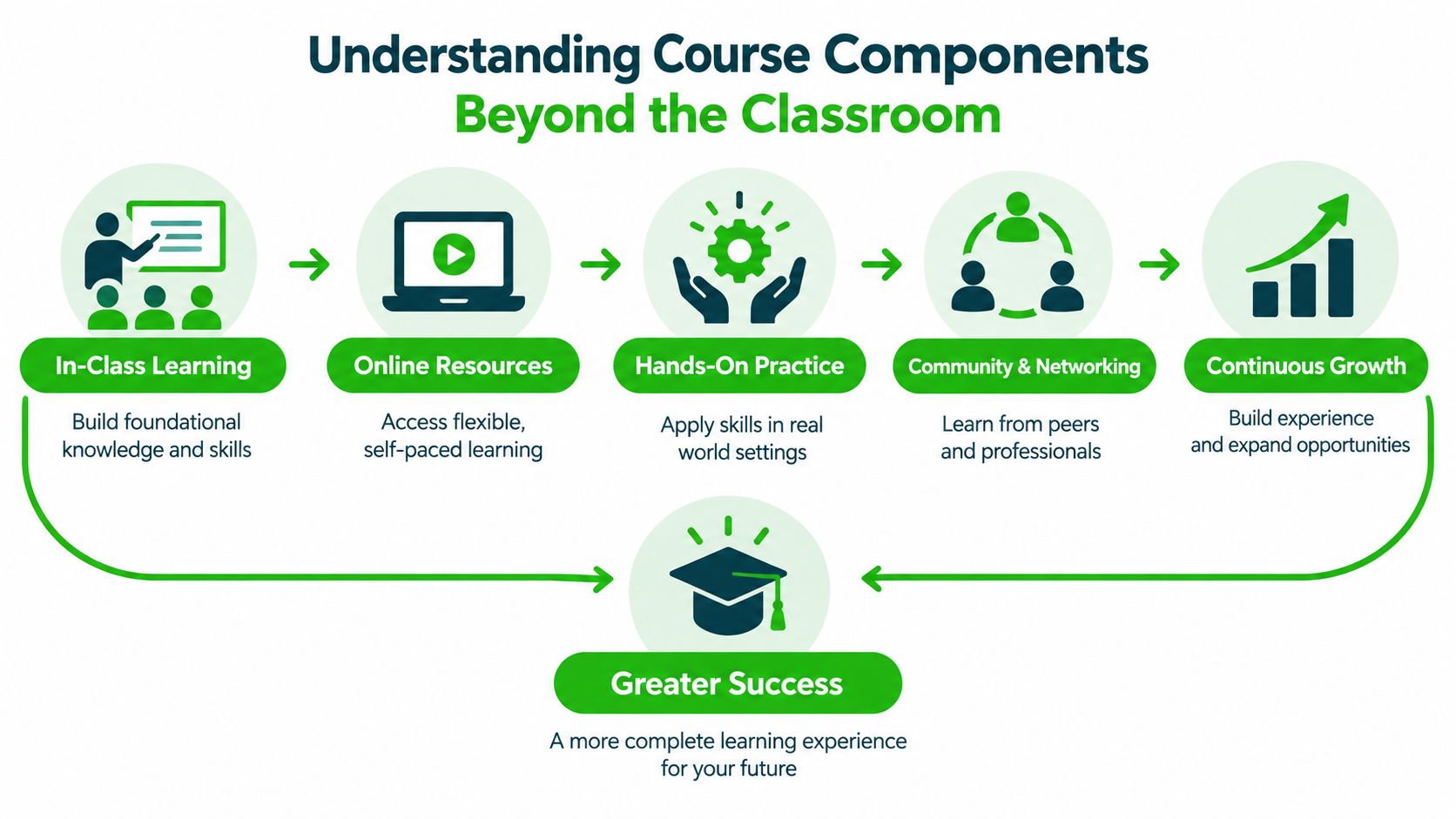
If your case involves alcohol, drugs, or a reinstatement issue, you may also need to handle a clinical evaluation, follow treatment recommendations such as ASAM Level 1, or attend a Victim Impact Panel if required by the court or referral source. None of those should be treated as side notes. They can control whether your case moves forward smoothly.
Defensive driving is not general driver education
Georgia DDS says the defensive-driving program can reduce up to 7 points from a driver's record, but this benefit is limited to once every 5 years. DDS also states the program is a certified driver-improvement option tied to point reduction and license reinstatement, not a general driver-education class (Georgia defensive driving FAQs).
That means defensive driving has a very specific job. It isn't the class you take because you want “something that helps.” You take it when it matches your record problem.
The full compliance path usually looks like this
Different cases follow different sequences, but the common pattern is straightforward:
- Start with the right class: Risk Reduction or defensive driving, based on your paperwork.
- Handle extra requirements early: If a clinical evaluation or panel is likely, schedule it before deadlines pile up.
- Keep your documents organized: Save completion proof, referral paperwork, and any instructions tied to reinstatement.
- Finish the DDS side, not just the class side: Course completion alone doesn't automatically fix every license issue.
Some students finish a course on time and still stay stuck because they assumed the certificate alone restored everything. It doesn't always work that way.
Why bundled support matters
When one provider can connect classes, evaluations, and related requirements, you avoid the usual mess. Fewer handoffs. Fewer mixed instructions. Less scrambling before a court date.
That's especially useful in metro Atlanta, where commuting between separate offices can eat half a day, and in college-heavy areas like Athens, where students often need a clear plan they can follow between work and school.
Enroll With Confidence and Take Your Next Step
Your first driving school in Georgia isn't about checking a box. It's about choosing the correct DDS-approved program, in the right format, with a provider that can explain the rules clearly and document your completion properly.
Don't overcomplicate it. Match the course to your paperwork. Verify the provider's approval. Ask what happens if you miss time, how the certificate is issued, and whether you need anything beyond the class. If the answers are fuzzy, walk away.
The right school should make the process feel clearer, not more confusing. If you're dealing with a first DUI, a drug-related offense, a boating under the influence matter, or a points issue, move quickly and get into a compliant program before deadlines start controlling your schedule.
Georgia's public-school driver education model took shape in 1933 and by 1940 had become a required segment of the high-school curriculum in that setting (history of driver education in U.S. schools). Today, your first driving school in Georgia is usually less about learning to steer and more about meeting a legal standard the right way. Treat it with that level of seriousness, and the rest gets easier.
If you need a first driving school in Georgia for Risk Reduction, defensive driving, or related compliance services, Georgia DUI Schools offers DDS-approved options with statewide online access, in-person availability in Atlanta and Athens, and support for the steps that often come after enrollment. With 18 locations, seven-day scheduling, and more than 38 years of experience guiding over 100,000 students through Risk Reduction, it's a practical place to start if you want one clear path instead of piecing the process together on your own.