
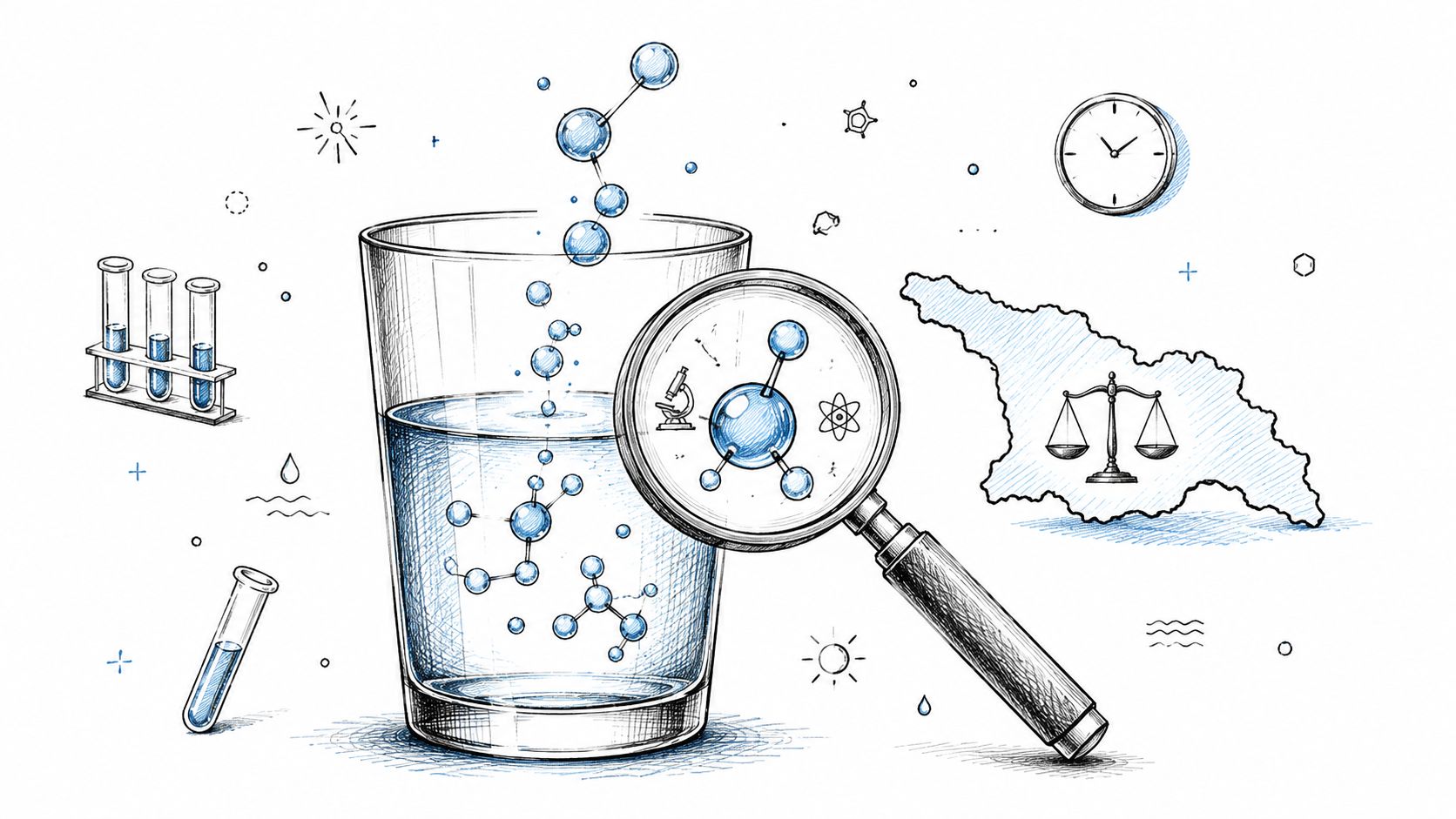
The most popular advice about what can I drink to pass a drug test is also the advice most likely to leave you with a dilute result, a retest, or a bigger legal problem. Water, cranberry juice, detox tea, and commercial cleansing drinks don't erase drug metabolites from your body. They may change urine concentration for a short time, and that change is exactly what laboratories are trained to notice.
If this test connects to a Georgia DUI, probation, court order, license suspension, or employment requirement, treat it seriously. The reliable path isn't a bottle. It's understanding the test, avoiding adulteration, documenting legitimate prescriptions, and completing the lawful Georgia requirements that restore driving privileges.
Why No Drink Reliably Beats a Drug Test
No beverage reliably clears a modern laboratory drug screen. The detox-drink industry depends on a flawed assumption, that drinking more fluid can remove chemical exposure after the body has already processed a substance into identifiable metabolites.
Think of the difference between a surface stain and smoke trapped in fabric. You might wash a countertop and remove a visible stain. But if smoke has settled into curtains, pouring water over the curtains doesn't make the smoke disappear. Drug metabolites work more like the second example. The body processes a parent drug into chemical fingerprints, and a beverage can't scrub those fingerprints out of every specimen type.
Urine is especially vulnerable to temporary dilution, not because dilution cleans the body, but because it lowers the concentration of the target compound in the collected sample. Federal testing rules treat dilution as a specimen-validity issue, not a cleansing method. Under 49 CFR § 40.197, a verified positive that's dilute remains a verified positive, while a negative dilute may require recollection. If creatinine falls between 2 mg/dL and 5 mg/dL, the recollection must happen immediately and under direct observation.
Practical rule: A sample that looks manipulated isn't the same thing as a clean sample.
A federal research summary reported that drinking just two or three 12-ounce glasses of water can produce urine diluted by up to tenfold within 30 minutes. That finding illustrates how quickly excess fluid can change a specimen's concentration, not how quickly it removes a drug from the body. The same guidance explains why analytes can fall below an initial cutoff and create a false negative, followed by validity concerns.
People searching for options may find general discussions of drinks that help pass a drug test from Addiction Resource Center LLC. Read those pages critically. The important question isn't whether a drink changes urine color or volume. It's whether the laboratory accepts the specimen as valid and whether confirmation testing supports the initial result.
How Labs Actually Detect Substances
Laboratories don't ask whether you feel hydrated or whether your urine looks clear. They test for specific chemical targets and then evaluate whether the specimen itself appears authentic.
Urine testing follows a screening and confirmation process
A urine test commonly begins with an immunoassay screen. If the screen identifies a possible drug class, the laboratory may use GC-MS or LC-MS/MS confirmation, which separates and identifies compounds with much greater specificity.
The body often converts a parent drug into a metabolite. THC can produce the metabolite THC-COOH, while cocaine can produce benzoylecgonine. Those compounds are the laboratory's targets. Drinking water may lower their concentration in one urine sample, but it doesn't reverse the exposure or guarantee that the concentration will stay below a reporting cutoff.
A Georgia court-ordered test can also include collection procedures, validity testing, confirmation workflows, or observed recollection. Anyone facing that process should review the court-ordered drug test procedure in Georgia and follow the collecting agency's written instructions.
Saliva testing looks for more recent exposure
Oral fluid tests use a swab to collect material from the mouth. Their detection window is generally shorter than urine or hair, so they're aimed more at recent exposure than a historical pattern. A drink may briefly affect the mouth, but it can't reliably remove compounds already present in oral fluid or control how a laboratory interprets the swab.
Hair testing records exposure as hair forms
Hair testing works differently. As keratin forms in the hair shaft, drug-related metabolites can become incorporated into the cortex. A beverage has no practical route to reach those compounds after the hair has formed, which is why “flushing” strategies aimed at urine don't translate to hair analysis.
| Substance | Urine | Saliva | Hair |
|---|---|---|---|
| THC | Commonly used for metabolite testing | Generally aimed at more recent exposure | Can reflect exposure over a longer historical period |
| Cocaine | Metabolites may be confirmed in urine | Generally captures more recent exposure | Metabolites can become incorporated as hair forms |
| Opioids | Specific compounds or metabolites may be tested | Generally shorter window than urine | Can provide a longer-term exposure record |
| Alcohol | Requires an alcohol-specific test or marker | Depends on the ordered test | Depends on the specific hair analysis |
Detection windows vary with the substance, test design, metabolism, frequency of exposure, and collection method. For alcohol-related questions, a separate explanation of Dallas alcohol test detection windows helps show why “a drug test” isn't one universal test with one universal window.
Dilution Markers Labs Look For
A certified laboratory checks specimen validity before treating the result as ordinary positive or negative data. Creatinine and specific gravity are central markers because they show whether the urine has the concentration expected from a normal human specimen.
Clinical guidance commonly treats urine creatinine below 20 mg/dL as dilute, while normal urine specific gravity is roughly 1.003 to 1.030. Some testing programs use a dilute specific-gravity range around 1.0010 to 1.0030. The exact reporting rule depends on the program, but the principle is consistent, a sample can be too watery to interpret normally.
A controlled observation of consecutive urine samples after fluid intake recorded mean minimum creatinine concentrations of 60.4 mg/dL, 15.8 mg/dL, and 10.9 mg/dL across groups in the second void two hours later. The researchers noted that 20 mg/dL has been proposed as a dilution marker. That's why rapid fluid loading can create a dilute result instead of a clean negative.
What the laboratory may conclude
A dilute specimen may be reported as negative dilute or positive dilute. A positive dilute doesn't become harmless because the urine is watery. Under the federal rule cited earlier, it remains a verified positive. A negative dilute may lead to recollection, and a very low creatinine value can trigger additional scrutiny.
A large workplace and court specimen study found dilution was the most common form of tampering. Mean five-year tampering prevalence was 1.09% in workplace specimens and 3.81% in court specimens. Among tampered workplace specimens, 89.2% were dilute, 6.8% substituted, and 4.1% invalid. In court specimens, 94.8% were dilute, 1.4% substituted, and 3.8% invalid. These figures come from the clinical discussion of detecting urine drug-test tampering.
| Marker | Normal range | Dilute flag | Substitute flag |
|---|---|---|---|
| Creatinine | Often expected to be at least 20 mg/dL for ordinary validity interpretation | Below 20 mg/dL is commonly considered dilute | Extremely low values may prompt substitution or validity review |
| Specific gravity | Roughly 1.003 to 1.030 in normal human urine | Some programs use approximately 1.0010 to 1.0030 | Values outside the program's accepted range may require review |
| Drug concentration | Interpreted against the applicable cutoff | May fall below a cutoff because of dilution | May be inconsistent with a genuine specimen |
The safest conclusion is simple. Drinking excessive water is one of the fastest ways to produce the exact result you're trying to avoid, a specimen that draws attention.
Debunking the Most Popular Home Remedies
Home remedies usually promise one of three things: change the urine's pH, increase urination, or hide a target compound. None provides a dependable way to defeat laboratory testing, and some create direct health risks.
Juices and acidic drinks
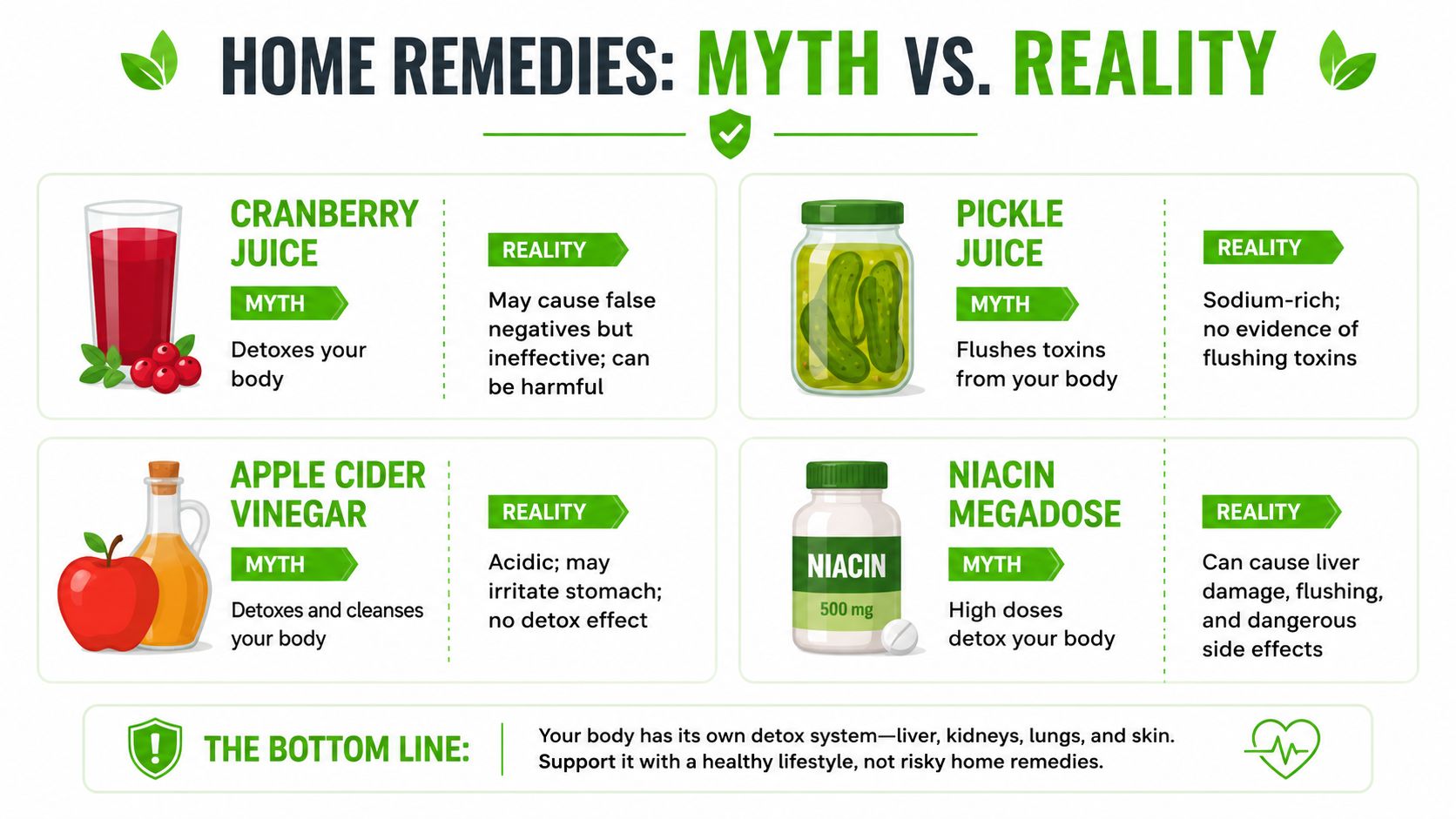
Cranberry juice can increase fluid intake and may affect urine composition, but it doesn't remove drug metabolites. Pickle juice is sodium-rich and doesn't flush toxins from the body. Apple cider vinegar is acidic and may irritate the stomach, yet it has no established detox effect on a laboratory drug target.
These drinks can create the appearance of a strategy without changing the underlying exposure. More fluid can also lower creatinine and specific gravity, which moves the specimen toward a dilute finding.
Supplements and teas
Niacin megadoses can cause flushing and dangerous side effects, but flushing isn't the same as changing drug excretion. Excessive use can harm the liver. Goldenseal tea is often promoted as a masking remedy, but it doesn't reliably defeat modern, substance-specific panels.
Detox teas mostly act as diuretics or increase fluid intake. That can produce more urine without making the urine valid or drug-free. If you're weighing internet claims against laboratory interpretation, drinking the night before a pre-employment drug test should be approached as a question of specimen validity, not a contest to produce the clearest urine.
Adulterants and commercial drinks
Bleach, vinegar, and baking soda aren't clever laboratory tactics. Bleach and vinegar can trigger adulteration checks, while baking soda can overload the body with sodium. Ingesting bleach is dangerous, and adding chemicals to a specimen can produce an invalid or adulterated result.
Commercial products such as Ready Clean, QCarbo, and Stinger generally rely on temporary dilution, vitamins, flavoring, or concentrated ingredients. They don't remove the body's drug metabolites. If the resulting urine has creatinine below 20 mg/dL, the laboratory may flag the specimen as dilute, as described in the drug testing pocket guide.
A remedy that seems to delay detection for a few hours still doesn't solve the collection problem. Follow-up testing, observed recollection, or confirmation workflows can expose the gap between a marketing promise and a valid result.
Legal and Health Risks of Adulteration
A flagged sample can create consequences beyond the original test. The collector or laboratory may report the specimen as dilute, invalid, adulterated, substituted, or otherwise unacceptable. The next step may include recollection, direct observation, probation notification, employer review, or court scrutiny.
Georgia's implied-consent rules matter when a properly requested chemical test follows an arrest. Under OCGA 40-5-67.1, refusing or failing to submit to a properly requested test can lead to an automatic one-year license suspension. Because a refusal question turns on the facts of the stop, the request, the warning, and the collection, speak with a Georgia DUI lawyer about your specific situation rather than relying on forum advice.
Tampering can also create a separate obstruction concern. A positive result presents one issue for the prosecutor to evaluate. A specimen that appears deliberately altered can support an argument that the person knew the test mattered and tried to interfere with it. Depending on the circumstances, that conduct can raise a misdemeanor DUI matter to felony obstruction exposure.
The health risks are just as direct:
- Bleach ingestion: Can cause severe injury to the mouth, throat, stomach, and other organs.
- Niacin toxicity: Can cause flushing and liver damage, especially when taken in excessive amounts.
- Diuretic overuse: Can disrupt electrolytes and create a medical emergency.
- Zinc sulfate: Can cause vomiting and other harmful effects.
A failed test creates one legal problem. Tampering can create two, and the second problem may be harder to explain.
Don't ingest chemicals or megadoses to manipulate a result. If you have a legitimate prescription, bring the documentation to the medical review process. If illness, prescribed medication, or unusually heavy fluid intake may affect a specimen, disclose that through the proper testing channel.
What Georgia Courts and the DDS Expect
Georgia courts and the Department of Driver Services don't ask which detox beverage you purchased. They look for lawful compliance, qualified evaluations, approved education, and proof that you completed every ordered requirement.
Start with the required evaluation and course
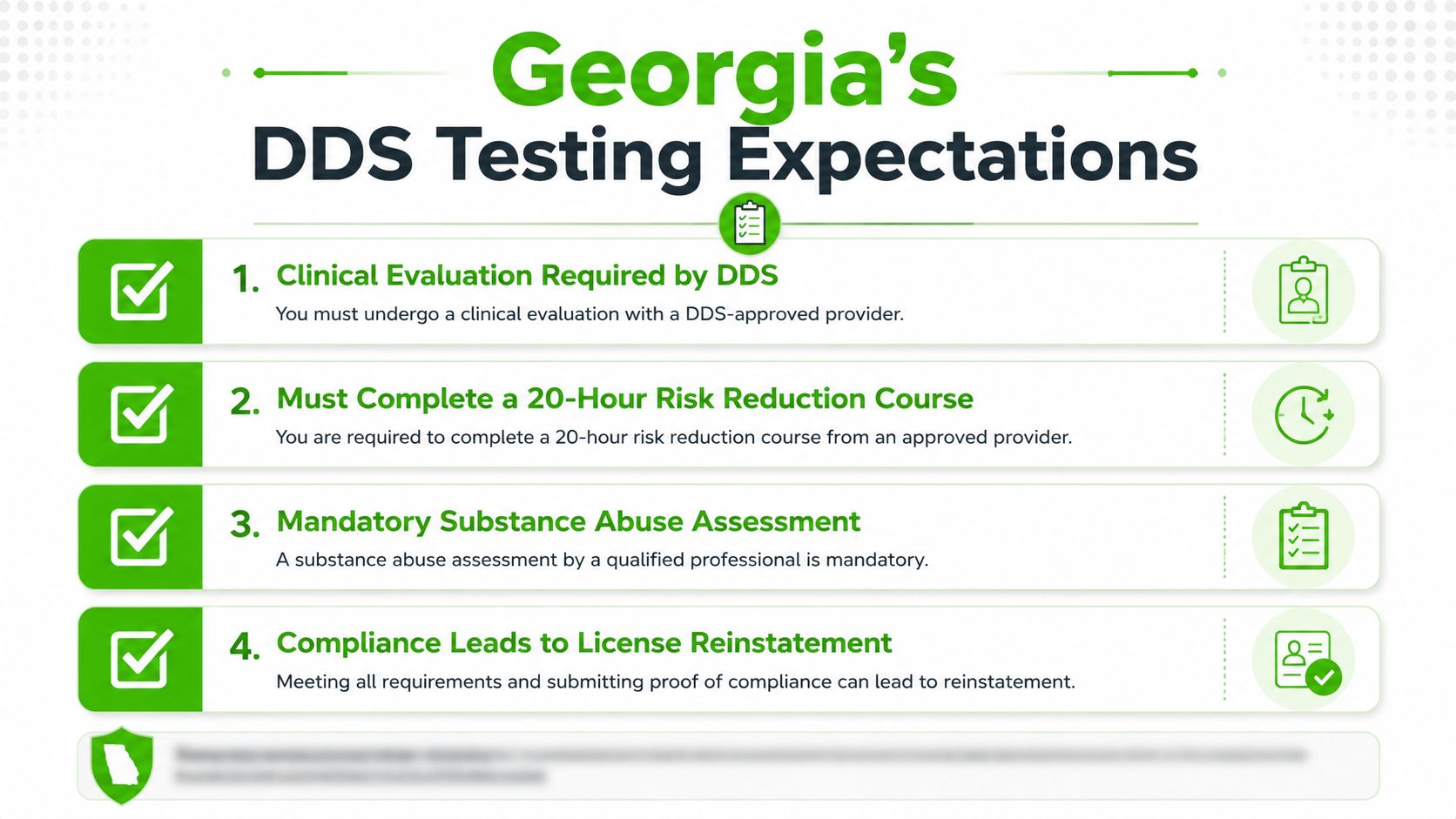
Georgia DUI guidance describes a clinical evaluation as part of the post-conviction pathway. The evaluation must come from a qualified provider, and it can identify whether treatment, education, or additional services are appropriate.
The state-approved DUI Risk Reduction Program is structured as a 20-hour course and includes a 130-question assessment component that screens alcohol and drug use and their effect on driving behavior. That assessment isn't a home drug-test workaround. It's part of the formal process courts and licensing authorities use to address impaired-driving risk.
Complete the requirements the court orders
A Victim Impact Panel in Georgia is commonly described as a 2-hour educational requirement for DUI and some drug-related cases. The panel focuses on the human consequences of impaired driving and is frequently court-ordered as part of sentencing.
Some cases also include ignition interlock requirements, continuous alcohol monitoring, or SCRAM as a bond or sentencing condition. The exact obligation depends on the court order, license status, conviction, and case facts.
At sentencing or reinstatement review, keep organized copies of:
- Enrollment proof: Evidence that you registered for the required program.
- Evaluation records: Documentation from the licensed clinical provider.
- Completion certificates: Proof that you finished the approved education.
- Treatment compliance: Records required by the court or supervising agency.
- Monitoring records: Reports connected to interlock, SCRAM, or other conditions.
No DDS form asks for cranberry juice, niacin, or a detox drink. If your case also involves treatment planning, general discussions of Orange County DUI treatment options may help you understand how education, evaluation, and treatment can fit together, although Georgia requirements must be confirmed with your attorney, provider, or DDS.
The Lawful Path Back to Driving
The better question isn't “What can I drink to pass a drug test?” It's “What documentation and lawful steps will Georgia accept?”
Begin by confirming the exact test and the agency requesting it. Don't guess whether it's urine, oral fluid, hair, alcohol-specific, or a specialized panel. If you take prescribed medication, disclose it through the medical review process and keep prescription records available.
A practical Georgia checklist
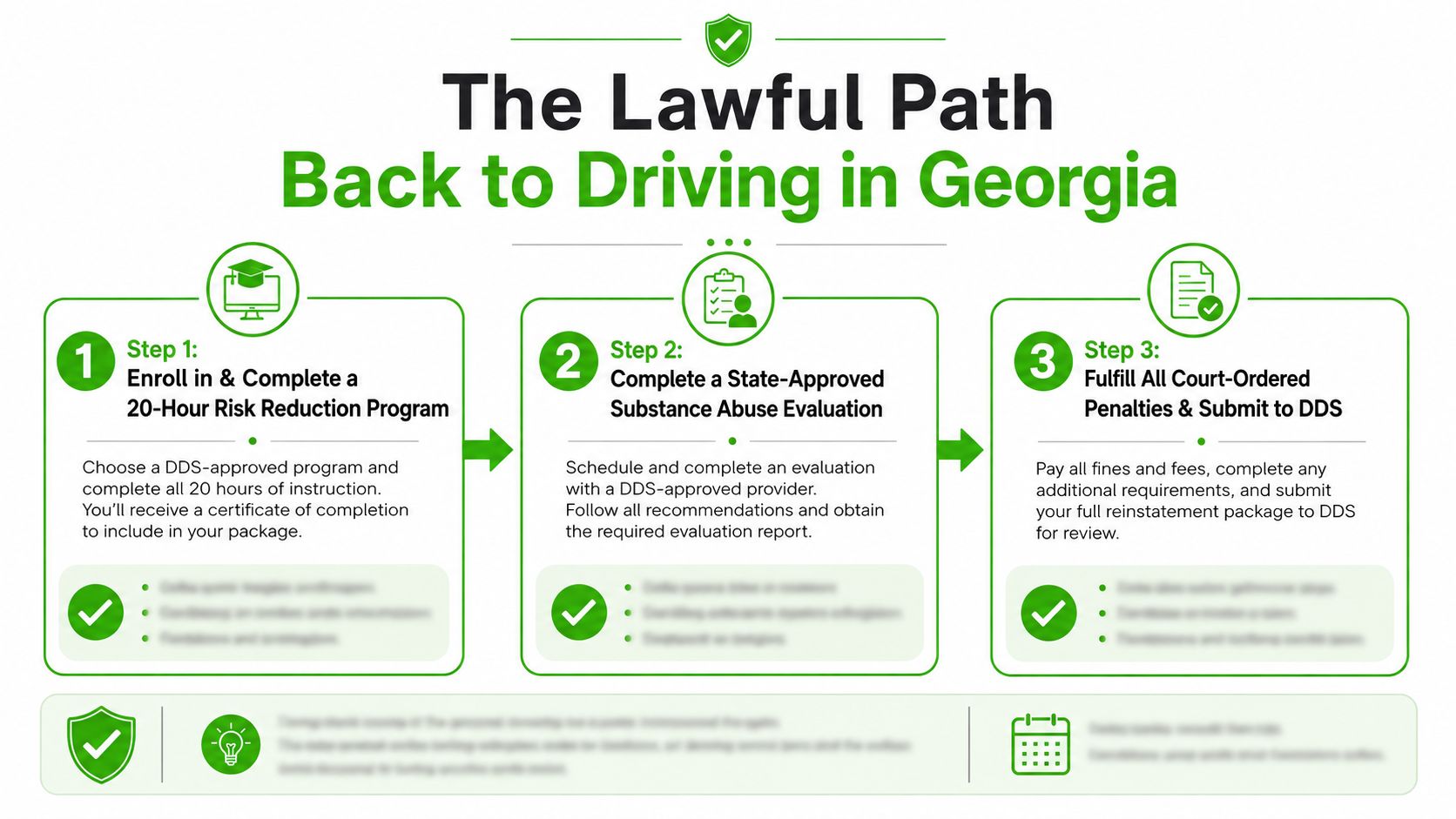
- Complete the 20-hour Risk Reduction Program. Use a DDS-approved provider and retain your completion certificate.
- Obtain the required clinical evaluation. Use a licensed counselor or approved clinical provider and follow any treatment recommendation that the court or supervising authority adopts.
- Attend the Victim Impact Panel if ordered. Keep proof of attendance with your other court documents.
- Complete additional conditions. These may include monitoring, ignition interlock, treatment, or other requirements in the court order.
- Address reinstatement. Pay applicable reinstatement fees, wait until any suspension period ends, and submit the required documentation to DDS.
- Ask about limited driving privileges. Hardship or limited permits depend on eligibility and the specific suspension, so confirm timing directly with DDS or a Georgia attorney.
One DDS-certified defensive driving course can remove up to 7 points from a Georgia driving record once every 5 years, and Georgia suspends a license at 15 or more points within 24 months, according to Georgia defensive driving course guidance. That's a separate pathway from DUI Risk Reduction, but it matters for drivers managing both a points problem and a DUI-related reinstatement issue.
If you need an evaluation before starting the process, review online drug and alcohol evaluation options in Georgia. The fastest route past a failed or disputed test is honest compliance, proper documentation, and professional legal advice, not another bottle from a convenience store.
Georgia DUI Schools offers DDS-approved DUI Risk Reduction education, clinical evaluations, treatment services, and Victim Impact Panels for people working through Georgia court and license requirements. If you're facing a drug test or reinstatement deadline, visit Georgia DUI Schools to review available online and in-person options and choose the next lawful step.