

You're staring at a Georgia court or DDS letter, and the phrase “just driver training” appears nowhere in the paperwork. Maybe someone told you to take a class, but you don't know whether that means a beginner driving course, a DUI Risk Reduction program, or defensive driving for points. Choosing the wrong course can waste time and leave a licensing requirement unfinished.
The practical answer is to identify why you were referred, what the letter says, and whether the program must be DDS-approved. Georgia uses different courses for different situations, and a basic driver-education class isn't interchangeable with a post-conviction program.
What Most People Mean by Just Driver Training
In everyday conversation, just driver training usually means foundational instruction for someone learning to drive. It may include classroom lessons about traffic laws and road signs, followed by behind-the-wheel practice covering vehicle control, turns, lane changes, parking, observation, and safe decision-making.
Parents, new drivers, and sometimes court offices use the phrase loosely. They may be referring to a standard certified driving-school course, a teen driver-education program, or a Joshua's Law curriculum. Those programs help a new driver work toward a learner's permit or driver's license. They aren't designed to satisfy every court or DDS requirement after a violation.
The reason for the course changes the answer
Start with the document in front of you. A beginner normally needs education and supervised practice. A driver dealing with an impaired-driving conviction may need a specialized DUI Alcohol or Drug Use Risk Reduction Program. Someone trying to reduce license points may need a defensive driving course instead.
Georgia DDS states that its DUI Risk Reduction Program is required for people convicted of DUI, possession of illegal drugs, underage possession of alcohol while operating a motor vehicle, or Boating Under the Influence. The program has two required parts, an assessment component and an intervention component, and both must be completed before the provider issues a certificate of completion. You can review those requirements in the Georgia DDS DUI frequently asked questions.
Practical rule: Match the course to the legal trigger, not to the vague phrase someone used to describe it.
Formal instruction alone also has limits. A systematic review found no evidence that pre-license or post-license driver education reduced crashes or injuries at the individual or community level, while an older review of 16 studies estimated only 1.9% fewer crashes per driver and a 4% lower crash rate per kilometer driven, results that were close to the margin of statistical significance. The systematic review of driver education and crash outcomes supports a straightforward lesson: education works best when combined with licensing controls, supervision, and real practice.
How Regular Driver Training Differs from DUI and Defensive Driving Courses
The three course types may all be called “driving school,” but they serve different drivers and produce different paperwork. A beginner course prepares someone to drive. DUI Risk Reduction addresses impaired-driving behavior and the consequences of a conviction. Defensive driving generally serves drivers who need point reduction or an approved traffic-safety course.
The phrase “just driver training” causes trouble because it collapses those separate purposes into one label. Use the comparison below as a starting point, then confirm the exact requirement on your DDS or court notice.
| Course Type | Typical Length | Who It Is For | Certificate Use |
|---|---|---|---|
| Regular driver training | Varies by program | New drivers working toward licensing | Supports foundational education and licensing steps |
| DUI Risk Reduction | 20 hours | Drivers assigned the program after a qualifying DUI or related offense | Documents completion for applicable reinstatement or court requirements |
| Defensive driving | 6 hours | Drivers seeking approved point reduction or completing a traffic-related requirement | Documents completion for eligible point-reduction purposes |
Regular driver training concentrates on traffic rules, signs, vehicle handling, and supervised road experience. It may be appropriate for a teen or adult learner, but a completion certificate from a beginner course doesn't automatically satisfy a DUI-related requirement.
DUI Risk Reduction has a different purpose
The Georgia DUI program is a DDS-approved, specialized course. It addresses alcohol and drug effects, risk recognition, decision-making, and the legal consequences connected with impaired driving. DDS requires both the assessment and intervention components, so completing only one part isn't enough.
The U.S. Department of Transportation has also reported more encouraging results from structured training connected to broader novice-driver systems. Drivers who completed GDL-mandated training had about 70% lower odds of severe-crash involvement one year after licensure than drivers who didn't, as reported in the U.S. Department of Transportation study. That finding reinforces the distinction between a stand-alone class and training embedded in a larger safety and licensing system.
For the Georgia course distinctions and beginner education context, review the Georgia driver education course. A provider should be able to tell you whether the class is for licensing, DUI compliance, or point reduction before you enroll.
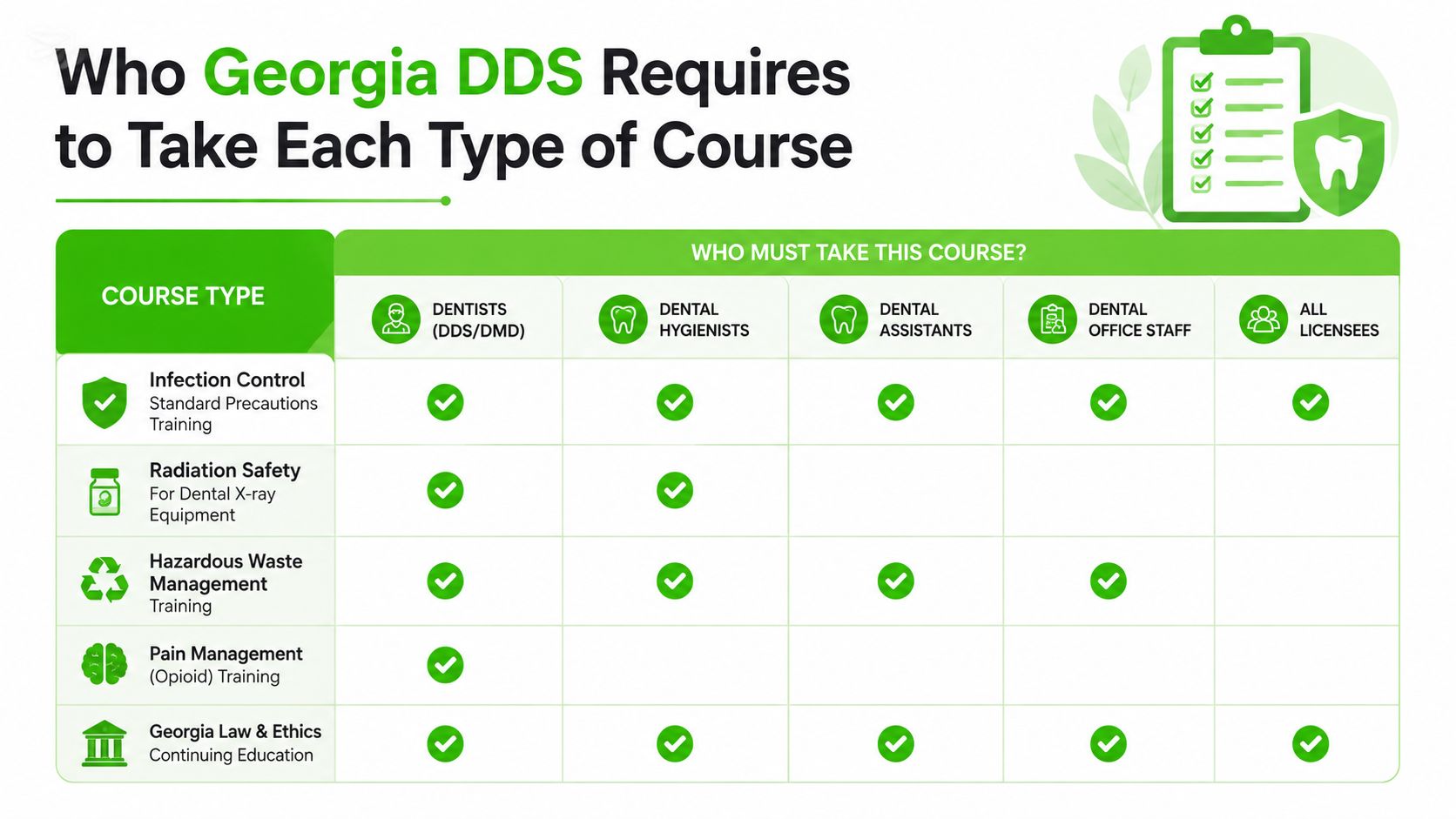
Who Georgia DDS Requires to Take Each Type of Course
The correct program depends on the action affecting your license. A DUI conviction, a points issue, and a beginner's licensing requirement don't create the same obligation.
DUI-related referrals
Georgia DDS says all DUI convictions require completion of a DUI Drug or Alcohol Risk Reduction Program plus a clinical evaluation. Treatment is added if the evaluation indicates it's needed, according to the Georgia impaired-driving law guidance.
A first-time offender may need the Risk Reduction certificate as part of reinstatement. A repeat offender may face additional treatment or other court conditions, so the course certificate shouldn't be treated as the entire case plan. Drivers under 21 charged with DUI can face a Risk Reduction assignment and a six-month license suspension, but the precise requirements depend on the charge and the governing order.
Habitual violator and point situations
Georgia classifies a driver as a habitual violator after three or more convictions within a five-year period for covered offenses. DDS states that the resulting license revocation lasts five years, and once the driver becomes eligible for reinstatement, a 12-month ignition interlock requirement applies. The details appear in the Georgia habitual violator and suspended-license information.
A defensive driving course may be appropriate for voluntary point reduction or a traffic-related referral, but it won't replace a Risk Reduction program when the notice specifically requires DUI education. Georgia DDS also says DUI, defensive driving, and driver-education programs must be offered by DDS-certified driving schools. Approved providers must meet requirements that include a $10,000 surety bond per location, a recent fire-code inspection report, and a criminal background check through GAPS, as described in the DDS regulated-program requirements.
In-Person, Live Virtual, and Self-Paced Options in Georgia
Once you know which course you need, the next decision is delivery format. Georgia DUI Schools offers approved formats for the 20-hour Risk Reduction Program and the 6-hour defensive driving course, including classroom, live virtual, and self-paced options.
Choose the format that fits the requirement and your schedule
In-person classroom instruction suits drivers who want direct contact with an instructor. Georgia DUI Schools offers classroom locations in Atlanta, Athens, and other regional communities, with weekday evening and Saturday scheduling. Students attend on site and complete the required proctored examination in the classroom setting.
Live virtual instruction uses Zoom and keeps the instructor and students together in real time. Camera use is mandatory, and the format includes live participation, questions, and instructor interaction. It can work well for a parent managing childcare or a shift worker who can't reach a classroom after work.
Self-paced online learning gives students access to modules over a flexible period, allowing them to study from a device rather than attend at a fixed time. The format is especially useful for eligible defensive-driving students who need to fit coursework around work, family, or travel. For a broader explanation of how flexible training works, see this resource on self-paced learning for onboarding managers.
The convenience of online access doesn't remove the state requirements. Approved programs still use identity checks, progress controls, and a proctored final exam. After successful completion, the provider transmits the electronic Certificate of Completion to the driver's DDS record.
Format choice: Pick in-person for face-to-face accountability, live virtual for scheduled interaction from home, and self-paced learning when flexibility matters most.
A Look Inside Georgia's 20-Hour DUI Risk Reduction Program
A Georgia DUI Risk Reduction class isn't a quick online quiz attached to a certificate. It's a structured 20-hour program with assessment and intervention components required by DDS.
For an Atlanta driver, the schedule may involve evening sessions or weekend attendance. An Athens driver may choose a regional classroom, while another participant may use an approved virtual format. The important question isn't which setting feels easiest. It's whether the provider and delivery method meet the applicable DDS rules and the court or reinstatement deadline.
What the instruction addresses
The curriculum deals with subjects that connect impaired driving to real decisions, including:
- Alcohol and drug pharmacology: How substances can affect judgment, attention, coordination, and driving choices.
- Georgia implied consent law: Why the law matters after an impaired-driving stop and how it relates to the driver's responsibilities.
- Post-conviction consequences: The licensing, legal, financial, and personal effects that can continue after the court date.
The program uses scheduled seat time, instructor-led discussion, exercises, and an examination process. Providers may organize the instruction across multiple sessions, but students should confirm the schedule, attendance rules, and examination requirements before paying.
The evidence on intervention design helps explain why active instruction matters. A systematic review of hazard-perception training found stronger results when instruction combined expert demonstration, active practice, and feedback. The review identified improvements in reaction time, hazard detection, and eye-scanning patterns across picture, video, computer, and simulator formats, as reported in the hazard-perception training review.
Clinical Evaluations Treatment and Victim Impact Panels Explained
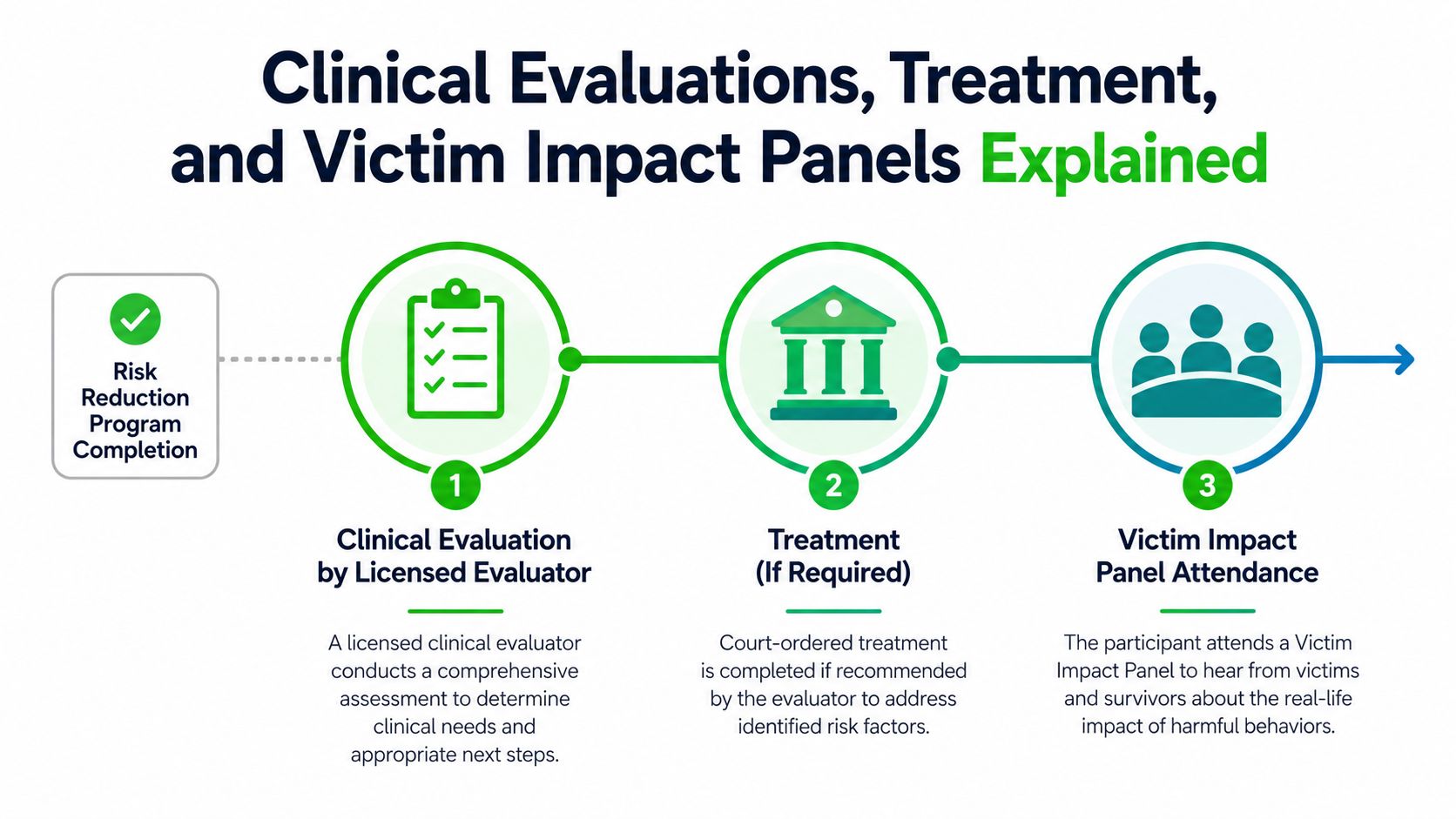
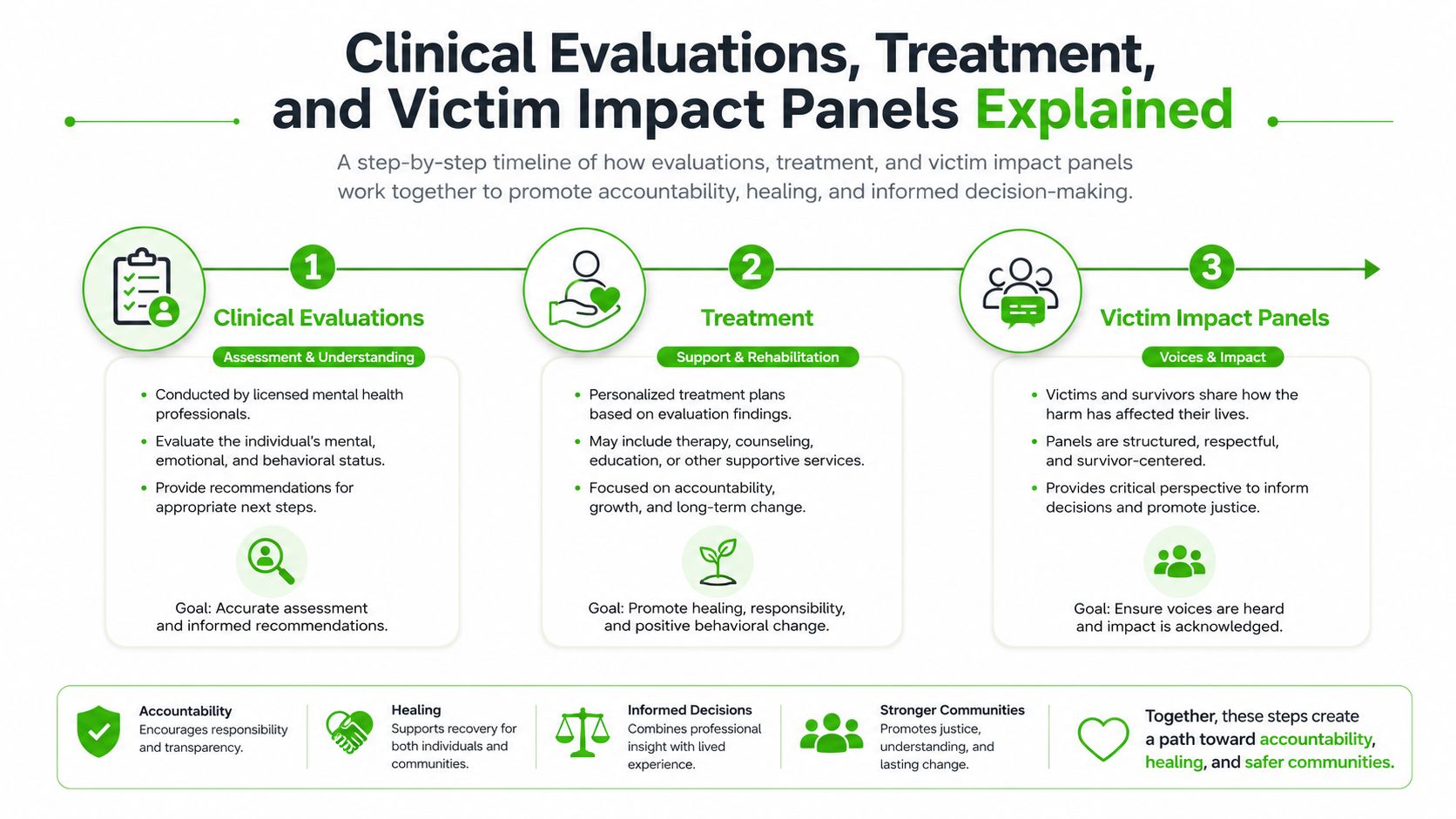
Finishing Risk Reduction may be a major requirement, but it may not be the last one. Georgia DDS guidance connects DUI convictions with a clinical evaluation, and treatment may follow when the evaluation identifies a need.
Clinical evaluation comes first
A licensed clinical evaluator reviews the driver's alcohol or drug-use history and related risks. The evaluation helps determine whether additional education, outpatient treatment, or another recommended service belongs in the driver's compliance plan. The evaluator's findings can affect what the court or licensing authority expects next, so drivers shouldn't assume that taking a class automatically ends every obligation.
Treatment can take different forms depending on the evaluation and court order. It may include an outpatient substance-use program, an education group, or a more intensive program. The correct level isn't something a driving school should guess at for an individual. The evaluator and court documents control that decision.
For a plain-language explanation of the assessment process, review what a drug and alcohol evaluation involves.
Victim Impact Panels serve a separate purpose
A Victim Impact Panel gives participants an opportunity to listen to people affected by impaired-driving crashes and their families. It isn't a substitute for the Risk Reduction course or the clinical evaluation. If the court orders panel attendance, the participant must complete that obligation through an accepted provider and preserve the attendance documentation.
Drivers in the Atlanta and Athens areas may encounter local panel options through organizations serving those communities. Before attending, confirm that the panel is accepted for your case and that the attendance record will reach the appropriate court, probation office, or DDS process.
The safest approach is to create a document checklist: Risk Reduction certificate, clinical evaluation result, treatment records if ordered, and Victim Impact Panel proof if required. Ask the court or probation contact which documents must be filed and by what deadline.
Common Misconceptions About Online and Self-Paced DUI Courses
Online availability doesn't mean every internet course qualifies. Georgia DDS requires DUI, defensive driving, and driver-education programs to come from DDS-certified driving schools, so a random video course or unverified quiz may leave you without an accepted certificate.
The most expensive mistake is enrolling before checking approval
A self-paced course can be convenient, but the provider must explain the attendance controls, identity verification, instructional requirements, and final examination process. Live virtual instruction is different because an instructor teaches in real time and students participate through a monitored session.
| Common Assumption | What DDS Actually Requires |
|---|---|
| Any online DUI video course counts | The Risk Reduction provider and program must be DDS-approved |
| A short quiz replaces the full program | The required assessment and intervention components must be completed |
| The certificate clears the DUI conviction | The certificate supports the applicable licensing or court process, but it doesn't erase the conviction |
| The provider will mail paperwork automatically | Completion data is transmitted electronically to the driver's DDS record |
| Defensive driving and Risk Reduction are interchangeable | Each course serves a different legal or licensing purpose |
A certificate also doesn't resolve unrelated obligations such as jail conditions, probation terms, treatment ordered after an evaluation, or a Victim Impact Panel. Those requirements come from the case and must be checked separately.
Drivers who need a flexible approved option can compare the Georgia online driving course with the exact language on their notice. Don't register until the provider confirms that the course title matches the requirement.
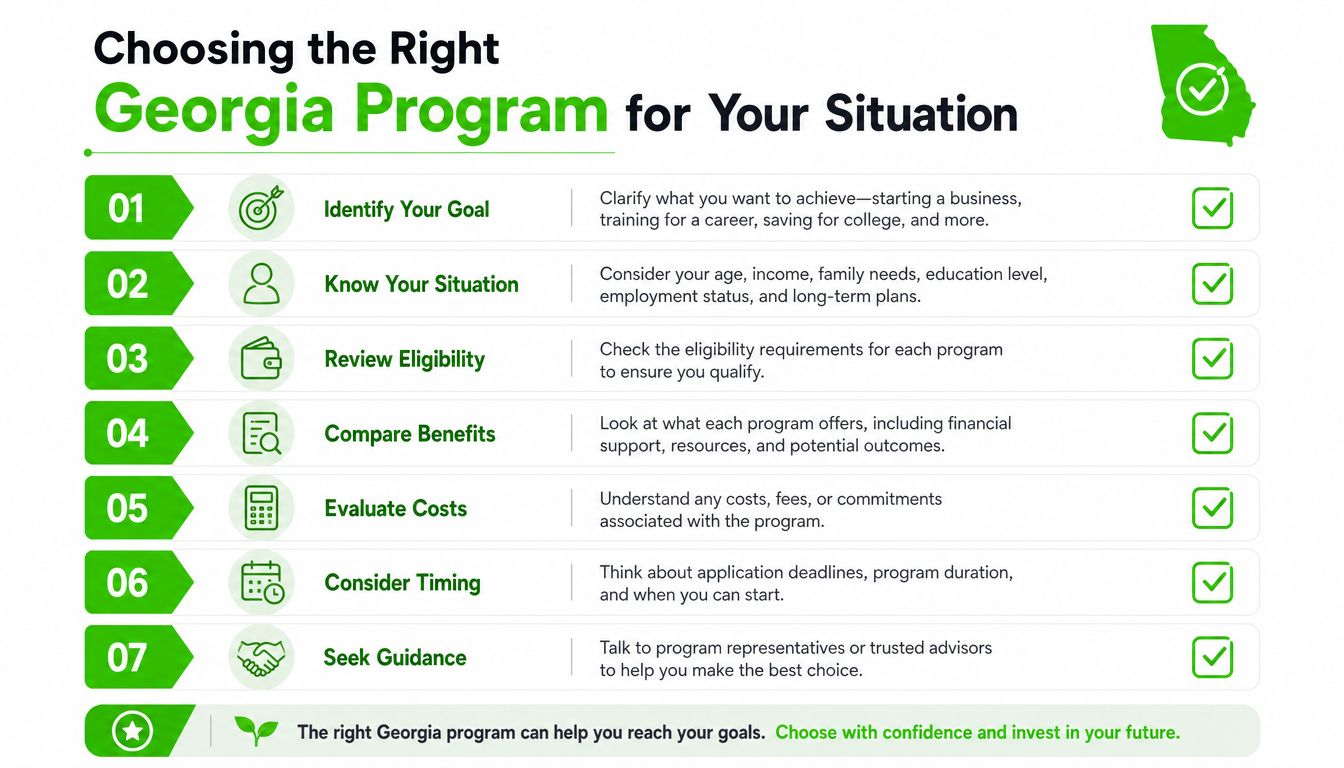
Choosing the Right Georgia Program for Your Situation
The simplest way to choose is to start with the event that sent you looking for just driver training.
A DUI-related referral points toward the 20-hour Risk Reduction Program, followed by the clinical evaluation and any treatment required by the evaluation or court. A repeat offense may involve additional conditions, and a Victim Impact Panel may appear on the case checklist. A habitual-violator matter is different again, because DDS describes a five-year revocation and a later ignition-interlock requirement, not a routine beginner class.
Use the document, not a guess
Drivers seeking point reduction should ask about the 6-hour DDS-approved defensive driving course. Someone learning to drive needs foundational education and road practice. A court or DDS letter that names a specific program should control over a friend's advice or a search result that promises a quick certificate.
Georgia DUI Schools provides DDS-approved DUI and Risk Reduction education, defensive driving options, and related clinical services through classroom and online formats. Availability, deadlines, and acceptance can vary by case, so confirm the details before enrollment.
Use this four-question checklist:
- Why were you referred? DUI, drug-related offense, points, habitual-violator action, or initial licensing?
- What deadline appears on the letter? Write down the court, DDS, probation, or reinstatement date.
- Which format can you complete reliably? Choose classroom, live virtual, or self-paced only when that format is approved for your required program.
- Is a clinical evaluation required? If the answer is unclear, ask the court, probation officer, attorney, or certified provider before assuming the course is enough.
Georgia DUI Schools offers DDS-approved Risk Reduction and defensive driving courses in classroom, live virtual, and eligible self-paced formats, along with clinical evaluation and related services for drivers handling DUI requirements. Review the available options at Georgia DUI Schools, then contact the provider with the exact wording of your DDS or court letter so you enroll in the program that matches your situation.