
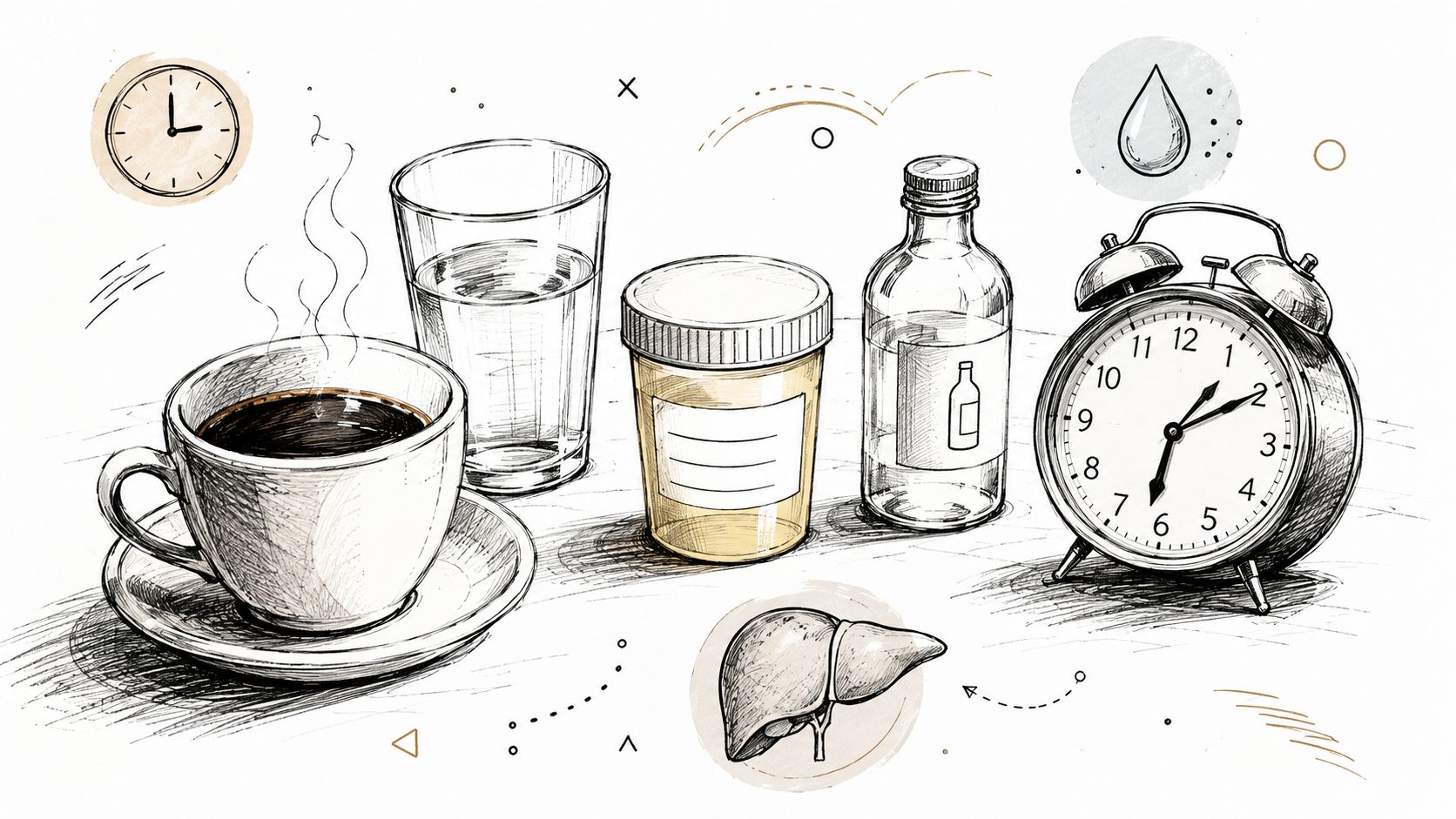
You wake up with a dry mouth, a headache, and a phone buzzing beside the bed. The testing site has confirmed your appointment, and then the realization lands: last night's drinks may still matter. You feel sober, but you're wondering whether the lab can detect what you drank, whether an employer can reject you, and what you should do before leaving home.
The honest answer depends less on internet “detox” advice and more on the exact test your employer ordered. A standard drug panel may not test for alcohol at all. A separate ethanol, breath, blood, or EtG urine test can produce a very different result. If this concern connects to a broader pattern of alcohol or drug use, a private substance use assessment for Pennsylvania adults can also help you understand whether the issue is an isolated mistake or something worth addressing.
What the Morning of Your Drug Test Really Looks Like
Start with the paperwork, not panic. Find the testing order, consent form, employer email, or appointment instructions and look for terms such as alcohol, ethanol, EtG, EtS, breath alcohol, or drug and alcohol screen. If the paperwork only names a standard drug panel, alcohol may be outside the panel, but vague wording shouldn't be treated as a guarantee.
The collector usually verifies your identity, records the order, and gives you instructions for providing the specimen. For urine collection, the lab handles the sample under its chain-of-custody procedures. The collector isn't judging your hangover, and the lab isn't measuring whether you feel embarrassed or anxious. It's analyzing the specimen against the substances and cutoffs specified by the employer or program.
Three questions usually drive the fear:
- Will last night's drinking show up? That depends on whether the test detects ethanol itself or an alcohol metabolite such as EtG.
- Can the employer reject me? A positive alcohol result may matter under a safety-sensitive, zero-tolerance, treatment, probation, or employer-specific policy. A standard panel that doesn't include alcohol can't report alcohol as a positive result.
- What should I do now? Avoid more alcohol, skip unverified detox products, hydrate normally, and confirm the test type instead of guessing.
Feeling sober doesn't prove that every alcohol-related test will be negative. Alcohol leaves the body at a rate that isn't meaningfully accelerated by coffee, water, or exercise, as discussed in Georgia's court-ordered drug test procedure. If your appointment is today, your most useful move is to arrive on time, provide accurate information, and ask the collection site what specimen and test are listed on your order.
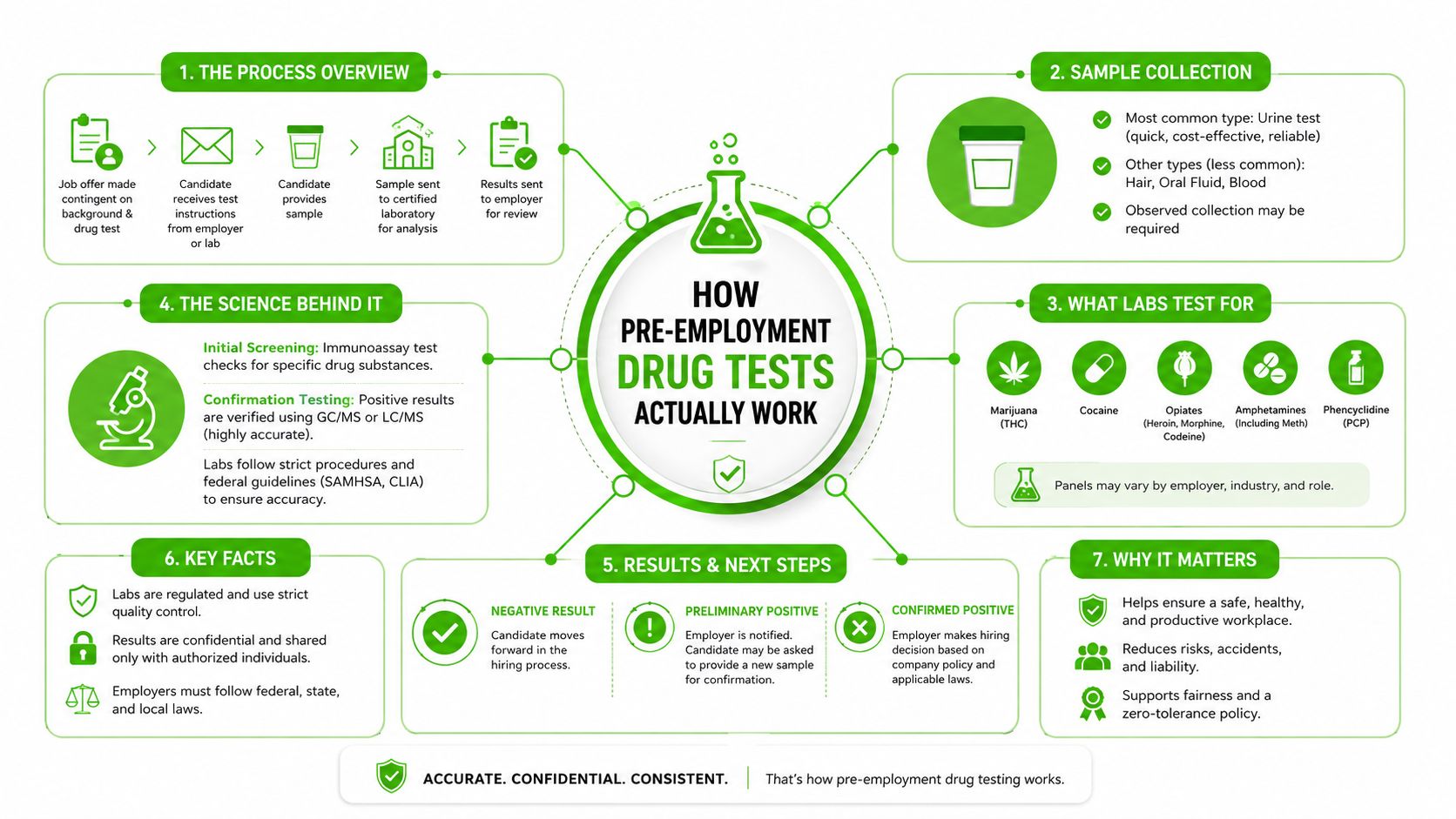
How Pre-Employment Drug Tests Actually Work
Think of the testing process as a security checkpoint with separate lanes. A standard drug panel is one lane. An alcohol test is another. Passing through the first lane doesn't tell you what would happen in the second.
A common urine panel is designed to look for specified drug classes or their metabolites. The familiar 5-panel, 7-panel, and 10-panel labels describe the substances included in that order, not a universal promise that alcohol is included. Alcohol is often handled separately because ethanol disappears relatively quickly, while an alcohol-metabolite test looks for evidence left after the body processes it.
Three different lenses
A useful analogy is a lunchbox, a magnifying glass, and a security camera:
- The standard panel is the lunchbox. The lab opens only the compartments named on the order. If alcohol isn't one of those compartments, the panel isn't automatically checking for it.
- An ethanol test is the magnifying glass. It looks for alcohol itself, which makes it more relevant to current or very recent drinking.
- An EtG or EtS test is the security camera. It looks for a trace associated with prior alcohol use and can detect drinking after the alcohol itself is no longer producing intoxication.
Employers can use different specimens and methods. Breath testing estimates current alcohol concentration from exhaled air. Blood testing measures alcohol in the bloodstream and is more invasive, so it isn't the usual choice for routine pre-employment screening. Urine ethanol testing looks for alcohol in urine, while EtG urine testing looks for a metabolite that extends the detection period.
What happens at the collection site
The collector isn't usually deciding whether you “pass.” The collector follows the order, obtains the specimen, documents the chain of custody, and sends the sample through the laboratory process. If a result needs medical interpretation, a Medical Review Officer, or MRO, may contact you before the employer receives a final report.
That distinction matters. A screening result isn't always the final employment decision, and an invalid or dilute specimen isn't the same thing as a confirmed positive. The employer's policy, the test method, and the review process determine what happens next.
Detection Windows That Actually Apply to Night-Before Drinking
Suppose someone drinks late Friday night and reports for testing Saturday morning. A basic urine ethanol screen may detect alcohol for about 12 hours, while medical references commonly describe a general urine ethanol window of 12 to 24 hours after the last drink. Healthline's explanation of alcohol urine testing describes this distinction between ethanol and longer-lasting metabolites.
EtG changes the timeline. Urine EtG is commonly reported as detectable for 24 to 72 hours, and medical sources note that it can remain detectable for up to 80 hours, particularly after heavier drinking. Scientific literature also describes EtG detection for up to five days, depending on the cutoff and amount consumed, as explained in this peer-reviewed discussion of EtG testing.
| Test Type | What It Detects | Typical Detection Window | Common in Pre-Employment |
|---|---|---|---|
| Standard drug panel | Named drug classes and their metabolites | Depends on the drug and specimen | Common, but alcohol often isn't included |
| Urine ethanol | Alcohol itself in urine | About 12 to 24 hours after drinking, depending on the source and circumstances | Possible, but separate from many routine panels |
| Breath alcohol | Current alcohol in exhaled air | About 12 hours in some screening guidance | Common when current impairment matters |
| Blood alcohol | Alcohol in the bloodstream | A short window tied to current alcohol presence | Uncommon for routine hiring screens |
| EtG or EtS urine | Alcohol-use metabolites | Roughly 48 to 80 hours, with some literature describing up to five days | Used by some employers and occupational programs |
At 8 hours, a late-night drink may still matter for a breath or urine ethanol test. At 24 hours, a basic ethanol result becomes less predictable, while an EtG result can remain relevant. At 48 and 72 hours, EtG and EtS are the main concern, especially after heavier drinking. An explanation of how long meth stays in urine illustrates why people shouldn't assume every urine test has the same window, although methamphetamine and alcohol are different substances with different testing methods.
The key point is simple: a standard 5-panel screen often doesn't test for alcohol at all. The risk comes from a separate alcohol-specific test, not from alcohol somehow appearing in a panel that wasn't designed to detect it.
Why the Same Drinks Hit Different People Differently
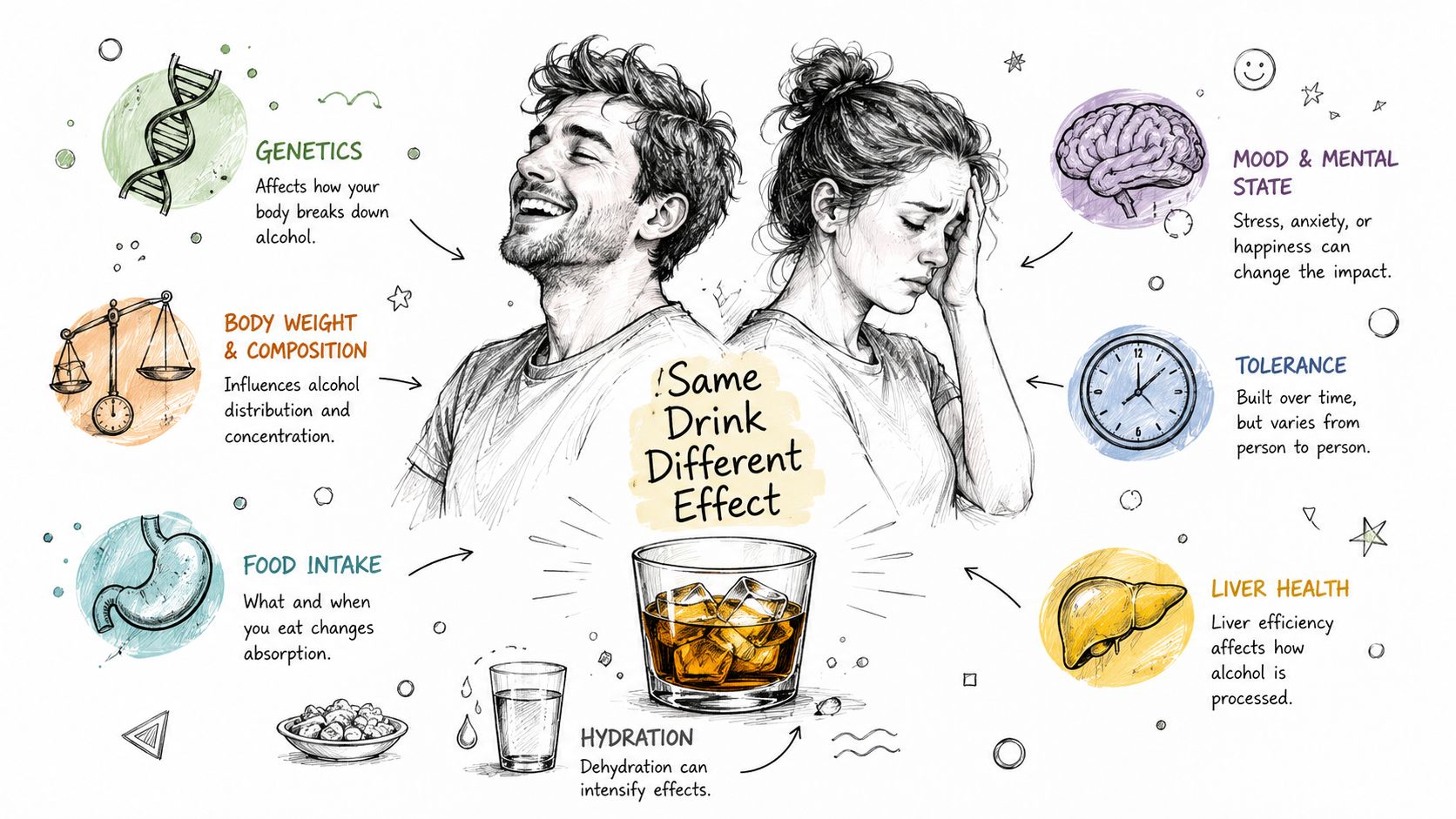
Two applicants can describe the same evening and still produce different chemistry. Body composition, liver enzyme activity, food intake, hydration, sleep, and the laboratory cutoff all influence what a test may detect. The test measures a specimen, not character.
Consider two hypothetical applicants, one weighing 140 pounds and another weighing 220 pounds. Those body weights alone don't predict an outcome, but they show why “we drank the same amount” isn't a reliable comparison. Food also changes the experience. Drinking on an empty stomach can produce a faster rise in alcohol concentration than drinking with dinner, while poor sleep and vomiting can make the next morning feel much worse without providing a dependable clue about the lab result.
The cutoff matters too
EtG programs may use thresholds such as 100, 200, 500, or 1,000 ng/mL, and the cutoff can change how a laboratory interprets a specimen. A 500 ng/mL cutoff is often described as a balanced threshold in treatment, probation, and employer-related programs because it is intended to reduce incidental positives, according to the scientific review linked above.
Hydration creates another source of confusion. Drinking a normal amount of fluid supports an ordinary collection, but aggressively consuming water can produce a dilute specimen. A dilute result may trigger a retest or delay rather than giving the clean resolution the applicant hoped for.
The most useful personal question isn't “Did I have any alcohol?” It's “How recently did I drink heavily, and what exact test is being used?” That question is more informative than comparing yourself with a coworker. If alcohol use occurs alongside anxiety, depression, trauma, or another substance concern, reading about why co-occurring disorders happen may offer helpful context without turning one test into a diagnosis.
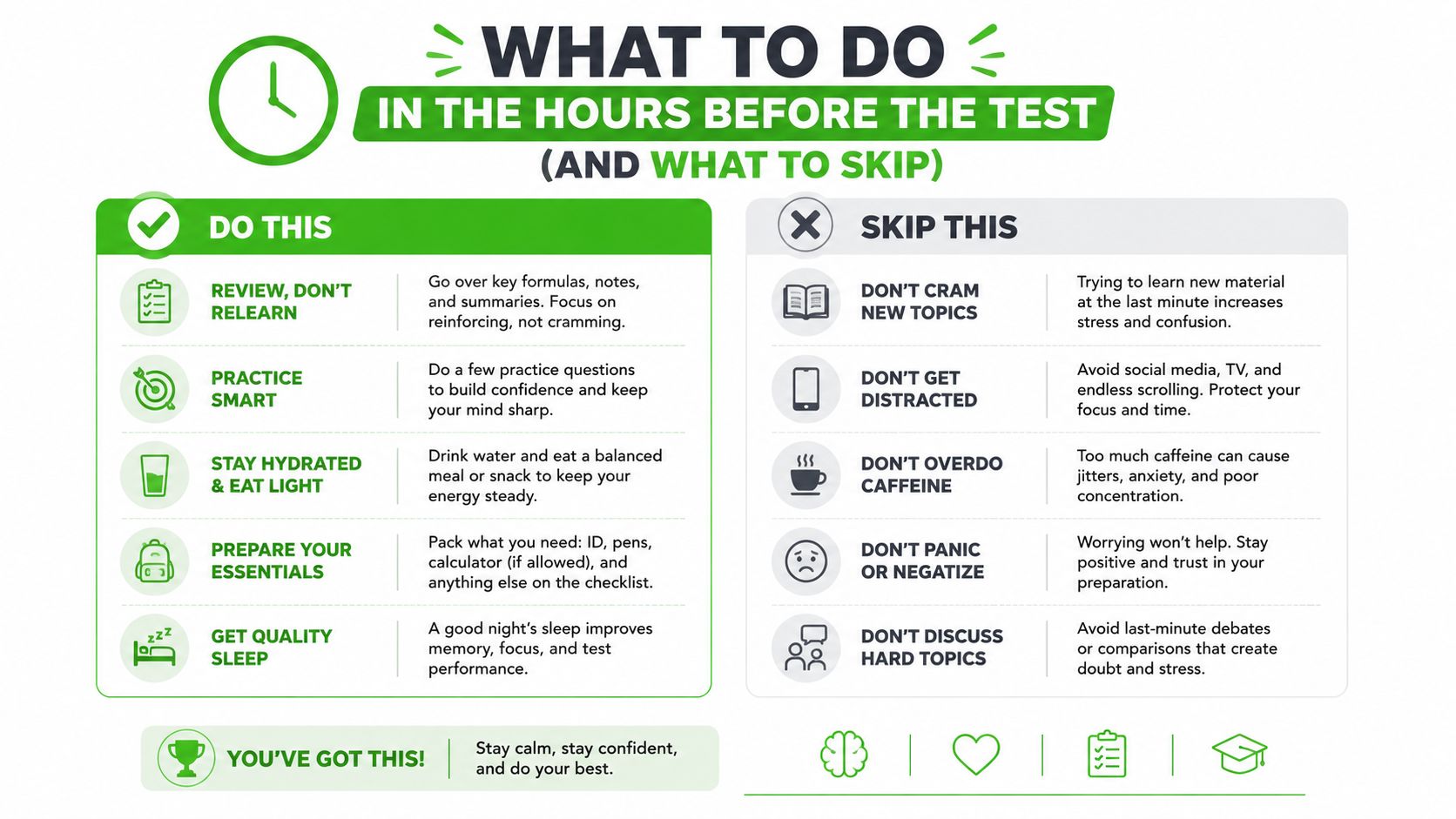
What to Do in the Hours Before the Test and What to Skip
Consider a candidate who drank heavily late the previous evening and has a morning appointment. The candidate wakes up, searches for a detox drink, sees advice about flushing the body with water, and considers taking niacin. That sequence is understandable, but it creates more uncertainty rather than changing the underlying metabolism.
Eat a normal breakfast if you can tolerate it. Drink fluids normally, not in extreme quantities. Bring identification, arrive on time, and avoid any additional alcohol or unapproved substances. These steps won't erase a prior exposure, but they reduce preventable problems such as rushing, dehydration, or an unnecessarily dilute sample.
Practical rule: Don't try to outsmart the laboratory with a product or a timing trick. Give the lab an ordinary specimen and give the MRO accurate information.
What to avoid
- Niacin pills: They don't reliably remove alcohol or its metabolites, and taking unnecessary supplements can make you feel worse.
- Fake urine: Substituted or tampered specimens can create a separate compliance problem and may lead to disqualification.
- Excessive water: Overhydration can dilute the specimen and prompt another collection.
- Cranberry juice cleanses: Cranberry juice doesn't accelerate the liver's alcohol-processing rate.
- More alcohol or unfamiliar substances: Adding another substance makes the situation harder to interpret and can create a new testing issue.
- Alcohol-containing products immediately before testing: Follow the collection site's instructions and don't use products that could interfere with an alcohol-specific procedure.
A laboratory may report a specimen as negative, positive, dilute, or invalid, depending on the test and specimen quality. A dilute sample isn't the same as a positive alcohol result, but it can still cause a retest or onboarding delay. An invalid sample may require recollection because the lab can't use it reliably.
If an MRO calls, answer and be truthful. The MRO's role may include reviewing legitimate medications or other relevant explanations for a result, but a candidate shouldn't invent an explanation or deny facts that the testing process can document. The most useful response is calm, complete, and limited to accurate information.
Job Type and Panel Type Change the Entire Equation
A marketing agency and a hospital may use the same collection site but order very different testing. A private employer may use a routine drug panel where alcohol is outside the scope. A safety-sensitive employer may add breath or urine alcohol testing. A treatment program or probation-related program may use EtG because it is trying to identify recent drinking, not current impairment.
Healthcare, transportation, law enforcement, defense-related work, construction, and other safety-sensitive settings may apply stricter alcohol policies than ordinary office roles. That doesn't mean every employer in those industries uses the same test. It means the job category makes it more important to read the order instead of relying on a generic “wait 24 hours” rule.
Read the consent paperwork
Look for the actual test name, specimen type, and listed analytes. Terms such as EtG, EtS, alcohol, ethanol, breath alcohol, or drug and alcohol testing signal that alcohol may be assessed separately. If the document only says “urine drug screen,” ask the employer or collection site whether alcohol is included rather than assuming.
For Georgia applicants in Atlanta, Marietta, Athens, and surrounding communities, employers commonly send candidates to third-party occupational laboratories. The collection location may not know the employer's entire hiring policy, but it can often identify the order's specimen and test designation. You can also ask the employer's human resources contact a narrow question: “Does this appointment include an alcohol-specific test, and if so, which method?”
DOT-related work deserves special care because federal rules and employer policies operate together. Review the DOT drug test regulations that apply to your role, then confirm whether the employer added a separate alcohol condition. The decisive question isn't whether someone drank “the night before.” It's what the employer ordered, what the job requires, and what the written policy says.
Your Legal Protections and Real-World Risks
The legal picture has several layers. The Americans with Disabilities Act can protect a person in recovery from alcoholism, but it generally doesn't protect current alcohol use from ordinary workplace consequences. A pre-employment screen can also operate differently from discipline imposed on an existing employee.
Georgia generally follows an at-will employment framework, but that doesn't erase written policies, contract terms, anti-discrimination rules, or industry-specific requirements. An employer may decide not to hire after a confirmed positive when its policy allows that action, especially for a safety-sensitive role. The employer still must apply its process lawfully and consistently.
Four results that applicants confuse
- Negative: The tested substance wasn't reported above the applicable cutoff.
- Positive: The result met the program's reporting standard after required review.
- Dilute: The specimen contained too little concentration for ordinary interpretation and may require another collection.
- Invalid: The laboratory couldn't validate the specimen or process it as required.
An MRO may call before a result becomes final. That conversation can allow you to explain a legitimate prescription or clarify a documented medical issue, but it isn't an invitation to create a story. Lying about alcohol use, tampering with a specimen, or providing a substitute can create an independent compliance issue.
A positive result may slow onboarding, but it doesn't automatically define an entire career. If the test was ordered for a court, probation, or treatment program rather than ordinary hiring, the consequences can be different and should be discussed with the appropriate attorney, probation professional, or clinician.
Practical Next Steps and Where to Get Help
Use this short checklist:
- Find the order. Identify whether it names a routine drug panel, ethanol, breath alcohol, EtG, or EtS.
- Contact the right person. Ask the employer or collection site what alcohol-specific testing, if any, is included.
- Prepare normally. Eat, hydrate sensibly, avoid detox products, and arrive with identification.
- Answer the MRO. Provide accurate medication and health information if contacted.
- Address the pattern. If drinking is connected to a DUI, probation condition, repeated workplace concern, or difficulty stopping, seek a professional assessment rather than relying on test-day tactics.
For Georgia residents who need a formal evaluation connected to an employer, court, or licensing matter, an online drug and alcohol evaluation can provide a private virtual meeting with a certified clinician. Depending on the situation, a person may also need a DDS-approved Risk Reduction course, clinical evaluation, ASAM Level 1 treatment, or a Victim Impact Panel. The right requirement depends on the referral and the governing agency.

One missed appointment or delayed result doesn't have to become a permanent career setback. It can also be a useful signal to get clear, confidential support before a drinking pattern creates a larger employment, legal, or health problem.
Georgia DUI Schools provides online drug and alcohol evaluations, Risk Reduction education, clinical services, and related programs for people working through employment, court, or licensing requirements in Georgia. If recent drinking has raised concerns beyond one test, visit Georgia DUI Schools to review the appropriate evaluation or course option and take the next step with accurate guidance.