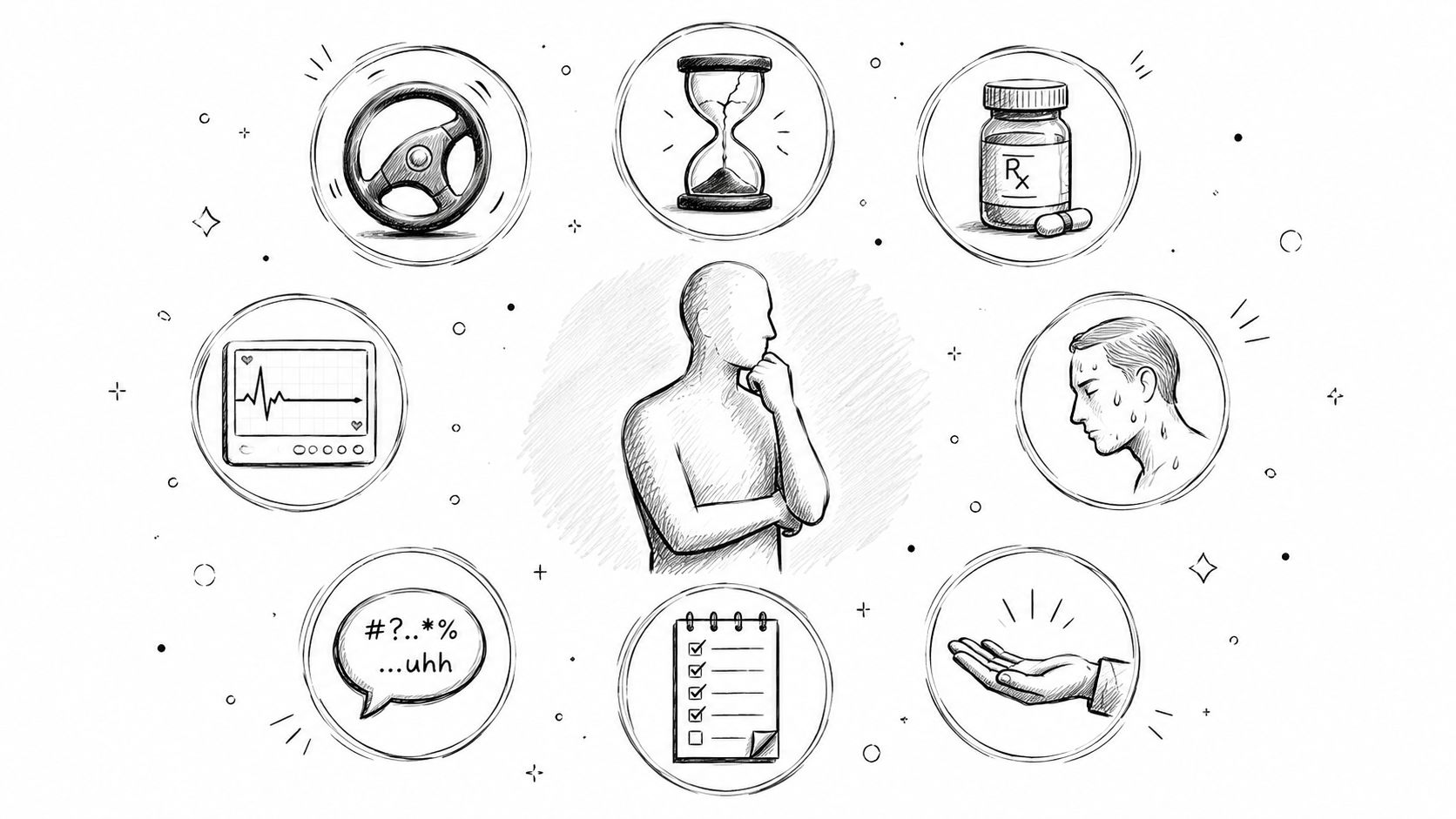
You may be in that uncomfortable spot right now. A family member says they're just tired. A friend insists the speeding ticket was bad luck. An employee who used to be steady now seems distracted, late, or oddly withdrawn. Their driving looks rougher than it used to, and small problems keep piling up.
It's easy to write these changes off as stress, burnout, or a rough season. Sometimes that's true. But substance abuse warning signs often show up as a pattern, not one dramatic moment. Driving trouble, money issues, secrecy, bloodshot eyes, skipped responsibilities, and sudden mood shifts can all fit together in ways that are hard to ignore.
That matters in Georgia, where risky substance use often becomes visible after a traffic stop, a DUI arrest, a failed workplace expectation, or a court order for education and evaluation. Recognizing the signs early can protect health, jobs, relationships, and everyone sharing the road.
If you want a broader clinical perspective on stimulant-related red flags, Maverick Behavioral Health insights offer additional background. For this guide, the focus is practical. Here are eight warning signs to take seriously, especially when driving and legal consequences are already entering the picture.
1. Sudden Changes in Driving Behavior and Traffic Violations
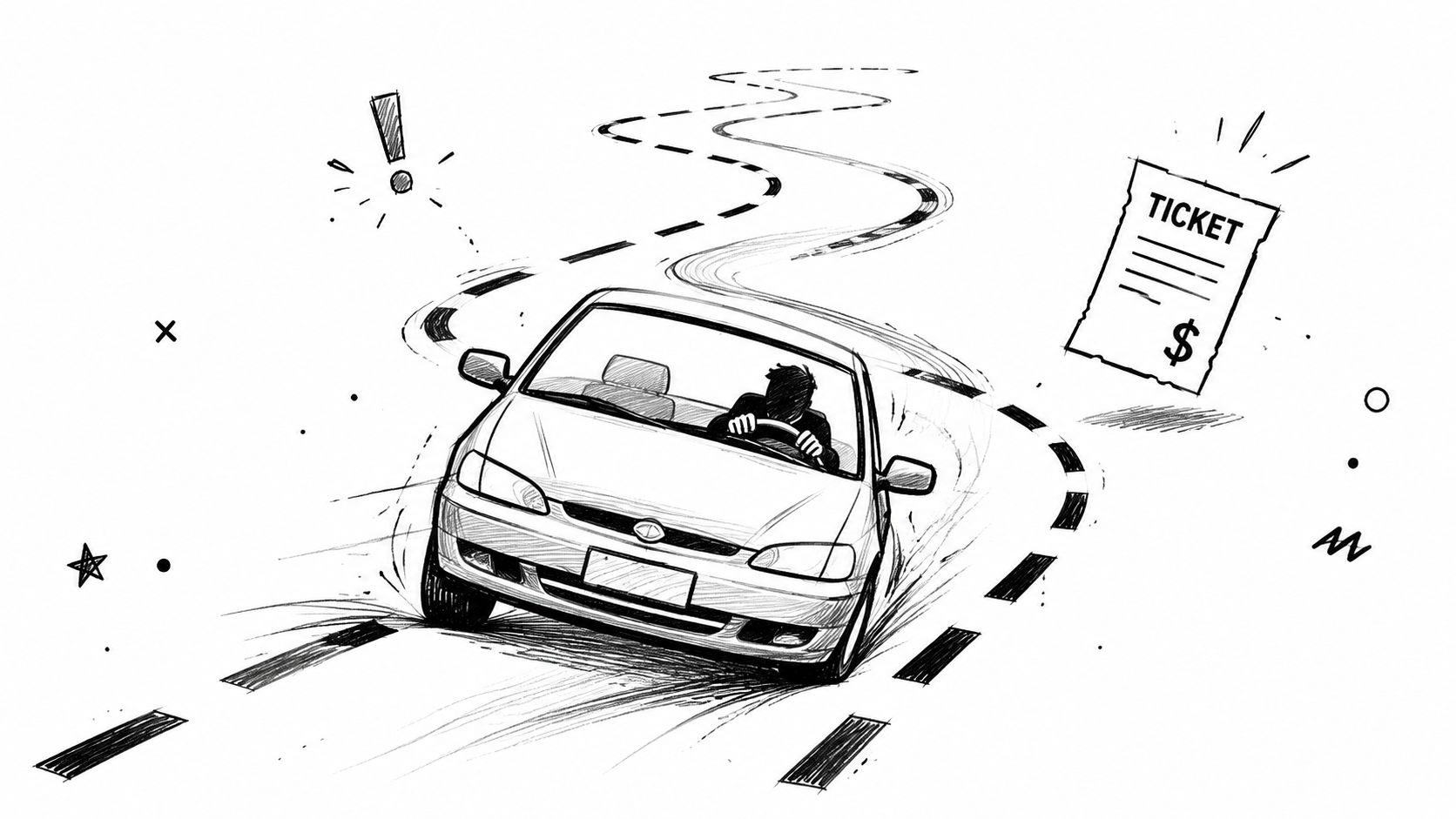
One of the clearest substance abuse warning signs is a visible drop in driving judgment. A person who used to drive calmly may start tailgating, drifting between lanes, missing turns, braking late, or driving too fast for conditions. Even when they avoid a DUI charge, the pattern can still point to a deeper problem.
Public-health and clinical guidance specifically include impaired coordination, slurred speech, and driving under the influence among warning signs worth taking seriously, as outlined in Indian Health Service guidance on drug warning signs. In real life, this can look like a Georgia commuter who suddenly racks up avoidable citations, a parent who gets lost on familiar roads, or a company driver who starts having minor incidents with no clear explanation.
When driving becomes the first documented sign
For many Georgians, the road is where substance use first becomes visible to other people. A spouse notices a dented bumper. A supervisor sees a preventable fleet incident. An officer notices erratic speed changes during a stop. The legal system often responds to the driving behavior first, even when the substance issue has been building for months.
That's why a traffic pattern matters. One bad decision can happen to anyone. Repeated unsafe decisions usually deserve a closer look.
- Watch for new patterns: More tickets, close calls, curb strikes, and aggressive driving can signal worsening judgment.
- Use the record as a reality check: Citation history and crash reports can help a person see the problem in concrete terms.
- Rebuild safe habits deliberately: A structured course can help after risky driving starts to feel normal. Georgia drivers trying to correct unsafe habits can review practical prevention steps in this guide on how to avoid speeding tickets.
Practical rule: If someone's driving has changed sharply and no medical or situational reason explains it, don't treat it as a personality quirk.
2. Neglect of Vehicle Maintenance and Safety Standards
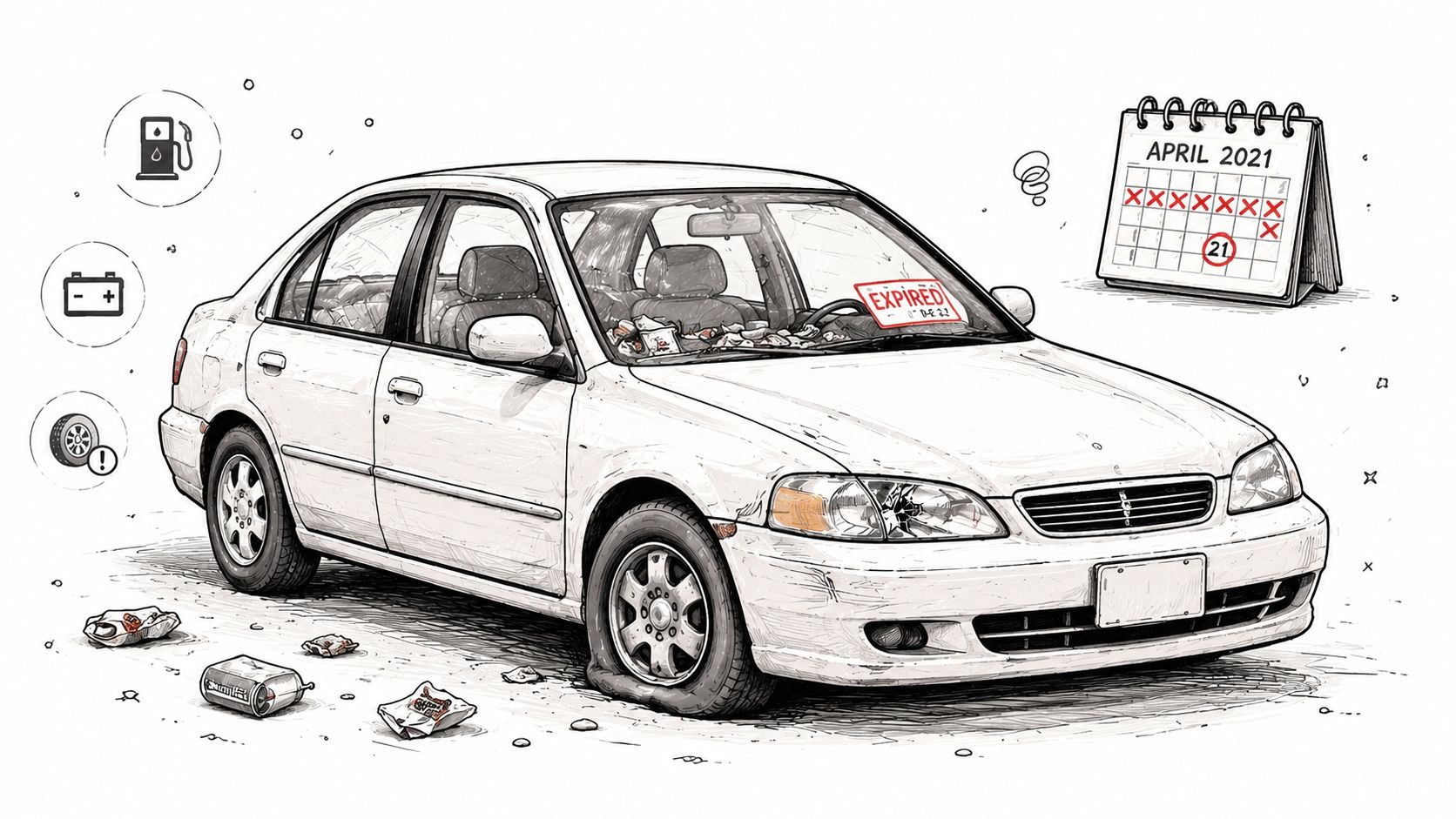
Substance abuse doesn't just affect big decisions. It often weakens routine responsibility. One sign families and employers miss is deteriorating vehicle care. A person who once handled basic upkeep may start driving with broken lights, worn tires, cluttered interiors, ignored warning lights, or expired paperwork.
Vehicle neglect often reflects a broader pattern of life neglect. The same person may also be forgetting appointments, avoiding calls, missing work, or letting bills slide. Mayo Clinic's clinical description of substance-use problems includes failing at school or work, neglecting responsibilities, spending money on the substance, and hiding use. Those patterns fit the same larger picture of functional decline described in the verified clinical guidance above.
What this looks like on a Georgia road
In Georgia, a broken tag light or expired registration can lead to a stop that opens the door to broader questions. For employers with delivery vans, service trucks, or sales fleets, a poorly maintained vehicle can also reveal that the driver isn't functioning at their usual level.
A practical example is the worker whose truck used to be organized and road-ready but now stays dirty, low on fuel, and overdue for simple fixes. Another is the parent whose car seat is unsecured, insurance card missing, and dashboard full of ignored alerts. The issue isn't just messiness. It's a loss of follow-through.
- Check the basics regularly: Lights, tires, registration, insurance card, and mirrors are simple but revealing checkpoints.
- Treat neglected vehicles as a conversation starter: Ask what else feels hard to keep up with right now.
- Use accountability systems: Calendar reminders, shared maintenance logs, and employer inspection routines can help spot decline early.
A neglected vehicle won't prove substance misuse on its own. But when it appears alongside secrecy, irritability, unexplained financial strain, or driving problems, it becomes one more sign that the person may need help.
3. Bloodshot Eyes, Dilated or Constricted Pupils, and Facial Flushing
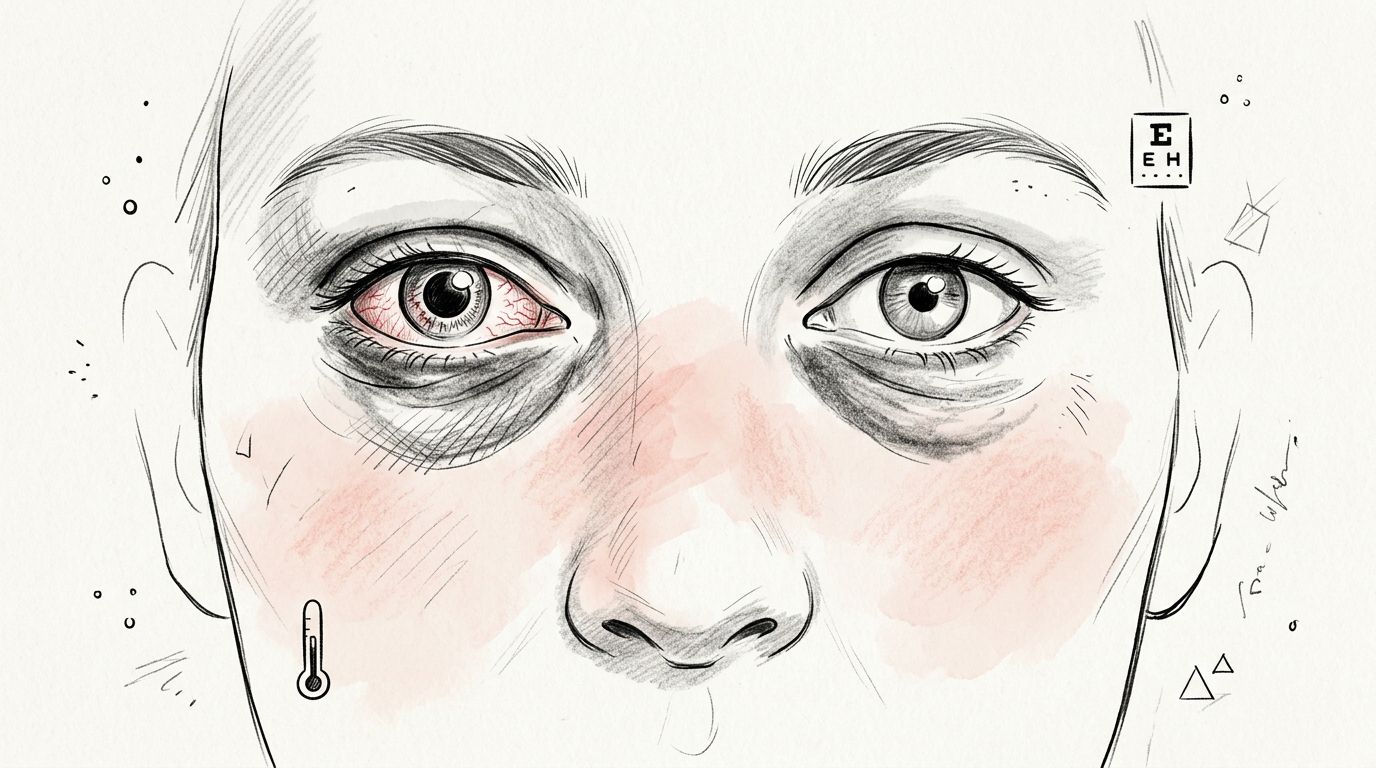
A Georgia driver gets pulled over for drifting across a lane line. During the conversation, the officer notices intensely red eyes, pupils that seem unusually large, and a face that looks hot and flushed. The driver says it is only allergies. Sometimes that is true. Repeated physical changes like these still deserve attention, especially when they appear alongside risky driving or confusion.
These signs matter because the eyes and face often show body stress early. Pupils work like a camera aperture. They open and close in response to light, but they can also shift because of certain drugs, alcohol, fatigue, or medical issues. Bloodshot eyes can come from irritation, lack of sleep, or substance use. Facial flushing can signal alcohol use, a drug reaction, anxiety, or another health problem. One sign alone proves very little. A pattern tells you more.
That pattern becomes more important in everyday settings where people are seen up close.
Families may notice a loved one coming home with glassy eyes night after night. A supervisor may spot the same employee arriving with pinpoint pupils, a flushed face, and slow responses during a morning route check. A person may catch their own reflection and realize their appearance has changed in ways they keep explaining away.
Why these visible signs matter after a stop or arrest
Officers, employers, and family members often notice eye and facial changes first because they are hard to hide in a face-to-face conversation. The key question is not, "Could there be another explanation?" There often could be. The better question is, "Is this happening again, and is it showing up with other safety problems?"
On the road, those other problems might include delayed braking, missing turns, overcorrecting, or seeming unusually agitated during a simple traffic stop. In Georgia, observations like these can become part of a DUI investigation and may later connect to education and screening requirements. If you need to understand that process, this overview of a drug and alcohol evaluation in Georgia explains how evaluators look at the full picture rather than one physical symptom.
Eyes and facial appearance do not diagnose addiction. Repeated clusters of signs can point to a problem that needs follow-up.
Use a practical checklist:
- Notice frequency: Is this a one-time issue or something you see several times a week?
- Compare with behavior: Are the eye changes showing up with unsafe driving, secrecy, unusual speech, or poor judgment?
- Look at timing: Do the symptoms appear late at night, before work, after breaks, or before driving home?
- Rule in a medical check if needed: Allergies, infections, and some prescriptions can affect appearance too.
If you are concerned about yourself, write down when these changes happen and what else is going on that day. If you are concerned about someone else, stay specific. "Your eyes have been bloodshot three times this week, and yesterday you missed your exit" is more useful than "You do not seem like yourself." Clear observations make it easier to address risk early, before it turns into a crash, a DUI arrest, or a required trip through Georgia's Risk Reduction and evaluation process.
4. Significant Changes in Sleep Patterns and Energy Levels
A sudden shift in sleep is easy to minimize because everyone gets tired. But persistent insomnia, sleeping at unusual hours, heavy daytime drowsiness, or wild swings between high energy and exhaustion can be meaningful substance abuse warning signs. The road risk is immediate. A person doesn't have to be visibly intoxicated to drive badly when they're overstimulated, sleep deprived, or struggling through a crash after use.
Some substances keep people awake for long stretches. Others leave them slowed down, groggy, and mentally foggy. In both cases, reaction time and judgment can suffer. A Georgia driver might insist they're fine to head home after being awake most of the night, then miss a stop sign, drift on I-285, or nod off at a red light.
Sleep disruption often spills into everything else
Families usually notice this sign through routine changes. Someone who used to be reliable in the morning can't get moving. Someone who once kept a normal evening schedule suddenly disappears for hours and then sleeps all day. Employers may notice increased lateness, mistakes, or that unfocused look of someone who isn't fully present.
Sleep changes also connect to recovery. As substance use slows or stops, many people have to relearn normal rest patterns. That can be frustrating, but it's still a positive sign that the body is adjusting.
- Track the pattern: Keep note of bedtime, wake time, naps, and nights with almost no sleep.
- Don't separate fatigue from driving risk: A dangerously tired driver can still cause severe harm.
- Bring it up during treatment or course participation: Sleep disruption is relevant in clinical evaluation, counseling, and safety education.
A useful local example is the person ordered into Georgia DUI-related programming who realizes the driving issue wasn't only about alcohol or drugs in one moment. It was also about living in a constant cycle of use, poor sleep, shaky concentration, and bad decisions behind the wheel.
5. Social Withdrawal, Isolation, and Loss of Interest in Relationships

A person doesn't need to become openly chaotic for substance use to be serious. Some people get quieter instead. They stop showing up. They skip family dinners, ignore texts, pull away from old friends, and lose interest in activities that once mattered.
This can happen for several reasons. They may want privacy to use. They may feel shame. They may be trying to avoid questions. Or their priorities may have shifted so far that normal relationships start feeling like obstacles.
Isolation changes the safety picture
Withdrawal isn't just sad. It can be dangerous. Isolated people are less likely to hear honest feedback, less likely to ask for a ride, and more likely to make risky choices alone. That includes driving after using, driving while exhausted, or leaving a scene because they're panicked and don't want anyone to know what's going on.
For Georgia families, this often shows up after a DUI arrest or court case. The person may become more secretive instead of more open. They may stop attending gatherings because they know people will ask about the license suspension, court dates, or treatment requirements. Employers can see a version of the same thing when a worker who used to joke with the team starts eating alone, avoiding meetings, or disappearing on breaks.
- Lead with observation, not accusation: “You haven't been yourself lately” works better than “You're using something.”
- Keep inviting them in: Isolation tends to deepen when people feel judged or written off.
- Use structured group settings when appropriate: Risk Reduction classes, treatment groups, and Victim Impact Panels can reconnect a person to the reality that their choices affect other people.
A person who's pulling away may not need more pressure first. They may need one calm, direct conversation that names what others have noticed.
Loss of interest in relationships doesn't automatically mean substance misuse. But when it arrives with secrecy, money trouble, visible physical changes, or unsafe driving, it becomes one of the clearest substance abuse warning signs to address early.
6. Significant Weight Loss or Gain and Deterioration in Personal Hygiene
A changing body can tell a story before a person admits anything is wrong. Noticeable weight loss or gain, skipped meals, a sudden fixation on junk food, unwashed clothing, body odor, or a decline in grooming can all signal that substance use is affecting daily function.
Clinical and public-health sources consistently identify poor grooming, changes in appetite, and changes in sleep as common indicators of misuse in the broader warning-sign pattern already noted earlier. In everyday life, this often looks less dramatic than movies suggest. A person may stop caring for themselves the way they used to.
These signs often show up in routine environments
At home, a parent might notice the same outfit being worn repeatedly, untouched groceries, or a bathroom cabinet that no longer gets used. At work, a supervisor may see a once-polished employee arrive disheveled, unfocused, and unprepared. In Georgia court-related cases, this kind of decline often becomes more obvious when someone starts missing deadlines tied to driving, probation, school, or employment.
Personal hygiene also connects to safety. If someone is ignoring basic self-care, they may also be ignoring medication schedules, meal timing, rest, and whether they're in shape to drive. The risk isn't just appearance. It's impaired functioning.
- Look for change from their normal baseline: The warning sign is the shift, not whether they meet someone else's standard.
- Keep the conversation concrete: Mention missed meals, dirty uniforms, or obvious grooming decline instead of making broad character judgments.
- Tie self-care to recovery: Eating regularly, showering, sleeping, and dressing appropriately are small actions that support clearer thinking and safer driving.
A useful Georgia-specific example is the person trying to regain control after a DUI case who realizes that recovery starts with basic routines. Before confidence returns, simple structure usually has to return first.
7. Erratic Mood Swings, Irritability, and Emotional Instability
A Georgia family may first notice this sign in the car, not in the living room. A person who was calm last month now explodes over a missed turn, tailgates after a minor delay, or starts an argument the moment someone questions whether they should be driving. Those reactions can look like a bad temper. They can also be a warning that substance use is affecting judgment, impulse control, and emotional balance.
Mood swings tied to substance use often come fast and feel out of proportion to the situation. Someone may be upbeat and talkative in the morning, then angry, suspicious, tearful, or shut down by afternoon. In simple terms, their emotional “steering wheel” is harder to control. Intoxication, withdrawal, poor sleep, shame, and existing mental health symptoms can all push those shifts harder and faster.
This overlap is what confuses families, employers, and even the person experiencing it. They may ask whether the problem is stress, anxiety, depression, anger, or substance use. Sometimes the answer is more than one. As noted earlier, mental health problems and substance use often show up together, which is why emotional instability should be taken seriously instead of brushed off as “just attitude.”
For Georgians, this matters on the road and after the road. A DUI arrest can lead to court requirements, a Risk Reduction course, and a clinical evaluation at a Georgia DUI School. If anger and reactivity are also part of the pattern, a separate anger management assessment may help clarify what kind of support is needed.
What this often looks like in daily life
At home, it may sound like snapping at children over normal noise, picking fights over small questions, or withdrawing after an emotional blowup. At work, it can show up as sudden defensiveness, conflict with coworkers, or visible agitation when routines change. Behind the wheel, it may look like aggressive lane changes, yelling at other drivers, or refusing to let someone else drive.
A useful rule is to watch for pattern, not one bad day.
- Notice timing: Do mood shifts happen before use, during use, or several hours later when withdrawal may be starting?
- Watch intensity: Is the reaction much bigger than the problem in front of them?
- Protect safety first: If someone is highly agitated, impulsive, or emotionally flooded, they should not be driving.
- Stay concrete in conversation: Point to the yelling, the road rage, the slammed doors, or the sudden crying. Avoid broad labels like “crazy” or “unstable.”
- Connect behavior to next steps: In Georgia, emotional volatility after a driving-related incident may signal the need for more than a class alone. It may point to evaluation and treatment.
Strong mood swings do not prove substance abuse by themselves. But when they appear alongside secrecy, risky driving, legal trouble, or a clear change from the person's normal baseline, the problem is too important to ignore.
8. Declining Work Performance and Job Instability
For many adults, work is where the consequences become impossible to hide. Missed shifts, tardiness, poor concentration, workplace conflict, incomplete tasks, and sudden unreliability often signal that substance use is interfering with daily function. This isn't just about productivity. It's about safety, trust, and whether the person can manage normal responsibilities.
Mayo Clinic's hallmark behaviors include failing at school or work, neglecting responsibilities, spending money on the drug, and hiding use. Those are practical signs, not abstract ones. In Georgia, they often show up after a DUI when a person has to explain license trouble, arrange transportation, attend required programs, or deal with employer concern about driving-related liability.
Work decline often pushes people toward help
Sometimes a job scare becomes the turning point. A supervisor notices repeated lateness. A fleet driver gets removed from duty after a driving incident. A worker starts making mistakes that would have been unthinkable a year earlier. The person may still insist they're functioning, but the job record says otherwise.
Treatment and help-seeking data show how large the gap remains between recognizing a problem and getting care. SAMHSA reported that among people age 12 and older who needed substance-use treatment in the past year, only 19.3%, about 10.2 million people, received it, and among 27.9 million people with past-year alcohol use disorder, just 2.5% received medications for alcohol use disorder. That's why awareness alone isn't enough. People often need immediate referral, evaluation, and a concrete next step.
For employers, this means documentation and referral matter. For individuals, it means acting before the next missed day, failed screen, or preventable incident costs you your position.
- Take job decline seriously early: Waiting for termination usually means the problem has already spread.
- Use structured compliance as support: Court orders, evaluations, and education can become a starting point rather than just a penalty.
- Link help to practical goals: Keeping a job, restoring a license, and rebuilding trust are strong reasons to follow through.
8-Point Substance Abuse Warning Signs Comparison
A comparison chart can look tidy, but substance abuse rarely shows up in tidy boxes. Real life is messier. A person may have clear physical signs but no job problems yet. Another may keep up appearances while their driving record, sleep, and relationships are already slipping.
That is why the best way to use the eight warning signs is as a pattern check, not a scorecard.
For families, employers, and individuals in Georgia, a simple question helps: Which signs are showing up together, and which of them create immediate driving risk or legal exposure? A missed oil change matters. Bloodshot eyes matter. Sudden isolation matters. But a cluster of signs, especially when it includes risky driving, traffic violations, or poor judgment behind the wheel, often points to a problem that needs action now rather than later.
Here is a practical way to read the eight signs without repeating them one by one:
- Highest immediate safety concern: Changes tied to driving, alertness, reaction time, and emotional control
- Most visible to others: Physical appearance changes, hygiene decline, eye changes, and vehicle neglect
- Often noticed first at home: Sleep disruption, withdrawal from relationships, irritability, and mood instability
- Often documented first outside the home: Traffic citations, workplace errors, attendance problems, and disciplinary issues
- Most likely to trigger formal consequences in Georgia: Driving-related incidents that lead to DUI arrests, court requirements, license issues, Risk Reduction courses, and clinical evaluations
A useful way to understand these signs is to treat them like dashboard warning lights in a car. One light may point to a limited issue. Several lights at once usually mean the problem is broader than it first appears. The same is true here. If someone is sleeping poorly, snapping at people, neglecting basic responsibilities, and driving in a way that feels unsafe, the concern is no longer speculative. It is showing up across daily life.
Context still matters. A single sign can have many causes. Stress, medical conditions, grief, depression, and burnout can overlap with substance-related behavior. That is why observation should lead to a careful response, not a rushed label. In Georgia, that response often becomes more structured once driving or legal trouble enters the picture. A DUI arrest or related offense can force a person into a process that includes education and evaluation, sometimes before they would have asked for help on their own.
The goal is not to diagnose someone from a checklist. The goal is to recognize patterns early enough to protect safety, reduce harm, and connect the person to the next appropriate step.
Your Path Forward in Georgia
Recognizing substance abuse warning signs is an act of care. It protects the person at the center of the problem, the family trying to respond, the employer managing risk, and every driver sharing the road. The signs rarely appear one at a time. More often, they cluster together. Driving gets worse. Sleep changes. Mood becomes unstable. Work slips. Relationships thin out. Basic responsibilities stop getting handled.
In Georgia, many people don't address these patterns until the legal system forces the issue. A DUI arrest, drug-related driving offense, license suspension, probation requirement, or court order can suddenly turn a private problem into a public one. That moment can feel humiliating, but it can also create structure. Instead of guessing what to do next, the person is given a defined path.
That path often starts with a clinical evaluation. From there, it may include the state-required 20-hour Risk Reduction Program, ASAM Level 1 treatment if indicated, and other steps tied to the person's case and recovery needs. These aren't just boxes to check. When done seriously, they help people connect risky choices to real-world harm, rebuild safer habits, and start functioning better again at home, at work, and behind the wheel.
Georgia DUI Schools is built around that practical reality. The goal isn't only compliance. It's helping people move from denial and disruption toward stability. For some, that means satisfying a court requirement and getting a license back on track. For others, it means finally addressing a pattern they've hidden for too long. If you're supporting a loved one, representing a client, supervising an employee, or facing the process yourself, clarity matters. A confusing system keeps people stuck. A clear one helps them move.
Support can also include connection with others who understand recovery in group settings. If you want added perspective on that side of treatment, these addiction group therapy programs offer a helpful overview.
The most important next step is the one taken now. If the warning signs are already affecting driving, court obligations, work, or family stability, waiting usually adds cost and risk. Georgia has a defined educational and clinical pathway for people in this position. Use it.
If you need a Georgia-approved next step, Georgia DUI Schools offers state-required Risk Reduction courses along with clinical evaluations, ASAM Level 1 treatment, Victim Impact Panels, and defensive driving options to help you meet court or DDS requirements and get back on the road safely.