

A lot of people search how much is driving school right after something stressful happens. A court notice arrives. DDS tells you a course is required. Your insurer mentions a discount if you complete defensive driving. In that moment, you usually don't need a broad article about teen driving lessons. You need a straight answer about the Georgia courses that affect your license, your court compliance, and your money.
For many adults in Georgia, “driving school” means one of two things. It means a DUI Risk Reduction Program that you must complete to satisfy a legal requirement, or a Defensive Driving Course that can help with points, reinstatement issues, or insurance savings. Those are different courses with different rules, and the cost question only makes sense once you separate them.
Understanding Driving School Costs in Georgia
If you're dealing with a DUI-related requirement, the price of the class is only one part of the decision. You also need to know whether the course is state approved, whether it meets the exact requirement on your paperwork, and whether the provider can help you stay on schedule.
That's where people often get confused. They search “how much is driving school” and land on articles about teen driver education, hourly lessons, or Joshua's Law packages. Those prices exist in Georgia, but they don't answer the question most court-referred adults are asking. If you need a quick distinction between teen driver education and court-related programs, Georgia providers also list Georgia drivers education classes separately.
What counts as driving school for adults in Georgia
For an adult trying to get back into compliance, the common categories are:
- DUI Risk Reduction Program. This is the state-regulated course often required after a DUI, drug offense, or certain license issues.
- Defensive Driving Course. This is typically used for point reduction, some reinstatement situations, and possible insurance discounts.
- Related compliance services. Some people also need a clinical evaluation, treatment, or a Victim Impact Panel, depending on the case.
Practical rule: Start with your court order, DDS notice, probation instructions, or attorney guidance. The right price only matters after you confirm the right course.
Why the cheapest option isn't always the lowest total cost
The biggest mistake is comparing classes by tuition alone. A lower posted price can still cost more if the schedule doesn't work, if you miss a session, or if the provider can't handle the exact requirement on your paperwork.
That's especially true for people juggling work, family, and deadlines. If a class format helps you finish on time and avoid repeat trips, that can matter more than a small difference in advertised price.
The Cost of a Georgia DUI Risk Reduction Program
The Georgia DUI Risk Reduction Program is different from most other driving-related classes because the price is set by the state. Schools don't create their own fee structure for this program.

According to the Georgia DDS Risk Reduction Program rules, the total fee is $360, and it includes a $100 Assessment fee, a $235 Intervention course fee, and a $25 workbook fee. If you're trying to understand the course itself before registering, this overview of what the Risk Reduction course is can help.
What that fee covers
The state-mandated total covers the required program itself. In plain terms, you're paying for:
| Program part | Cost |
|---|---|
| Assessment | $100 |
| Intervention course | $235 |
| Official workbook | $25 |
| Total | $360 |
Because this amount is regulated by DDS, cost usually should not be the main reason you choose one approved provider over another for this specific class. The course fee is the same. The practical differences are more likely to be scheduling, location, customer support, and how clearly the provider explains next steps.
What the fee does not automatically include
Many individuals are caught off guard. The $360 is the course cost. It doesn't automatically mean every part of your full DUI-related compliance process is finished.
Depending on your case, you may still need other steps before your driving privileges are restored or your court requirements are fully satisfied. Those can include a clinical evaluation, treatment recommendations, a Victim Impact Panel, or fees paid directly to DDS.
The class price is fixed. Your total compliance cost may not be.
That's why a person who asks, “How much is driving school?” after a DUI often needs a broader answer than just one number.
What to compare if every approved school charges the same amount
If the state sets the price, compare providers on the points that change your actual experience:
- Scheduling fit. Can you attend without missing work or scrambling for transportation?
- Format options. Does the provider offer the format you're allowed to take?
- Administrative clarity. Will staff explain what the course does and does not satisfy?
- Related services. If you need more than the class, can the provider point you to the next required step?
Those questions matter more than bargain shopping, because bargain shopping doesn't apply much when DDS has already fixed the fee.
Defensive Driving Course Prices for Point and Insurance Reduction
Defensive driving is a separate category. It's usually shorter, more standardized, and far less expensive than the DUI Risk Reduction Program.
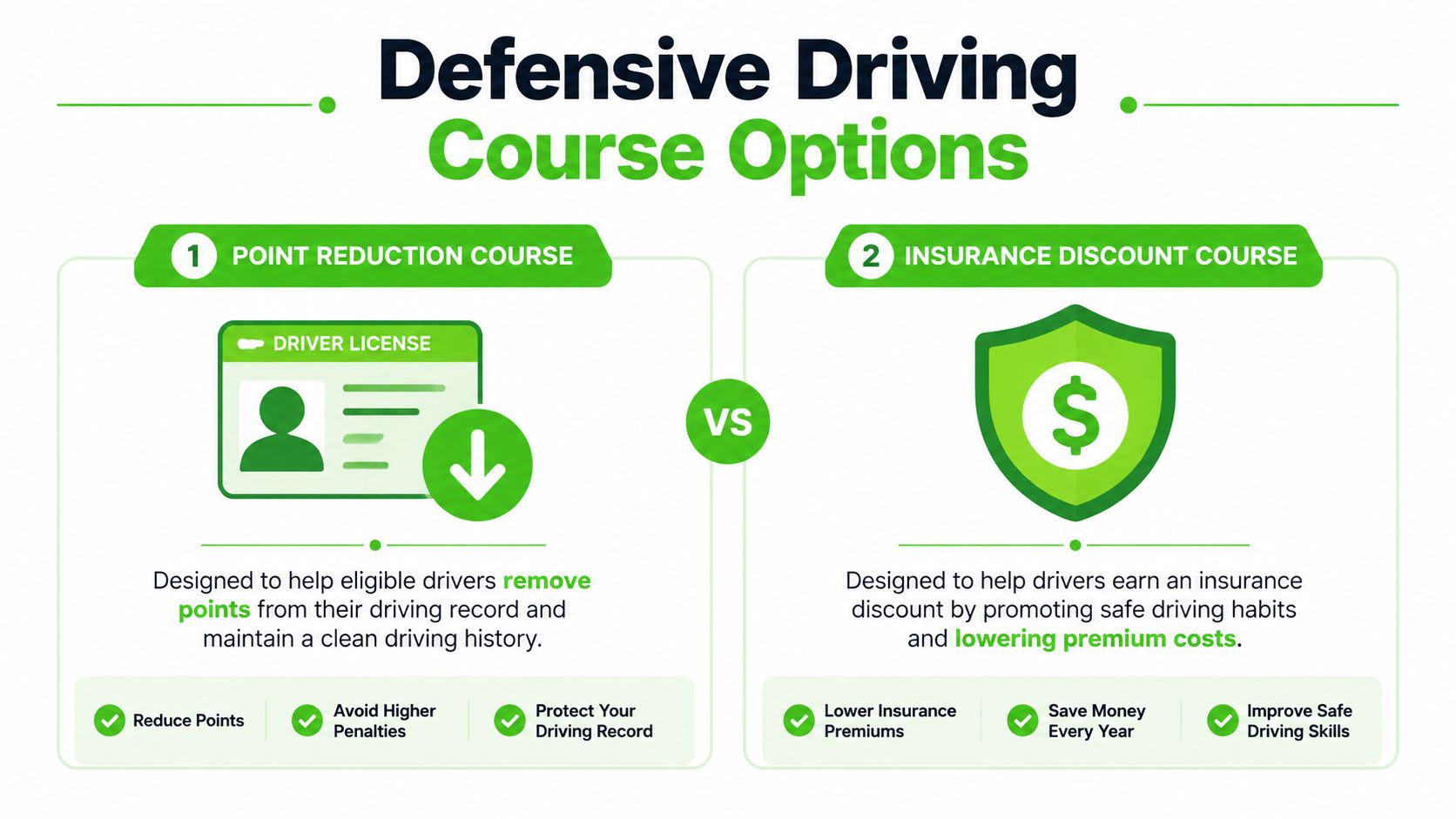
Georgia providers commonly price defensive driving around $95 for the state-set course fee, while private behind-the-wheel add-ons are often listed at $145 for 2 hours, $290 for 4 hours, and $435 for 6 hours, as shown on Atlanta Area Driving School's rates page. If your main goal is premium relief after a citation or reinstatement issue, it also helps to compare Georgia SR-22 insurance options so you can see the insurance side of the equation at the same time. For course details, this page on a defensive driving course to lower insurance gives the Georgia-specific context.
Why defensive driving costs less
The reason is simple. Defensive driving usually isn't part of the same multi-step DUI compliance path. It's often taken for a narrower purpose:
- Point reduction
- Insurance discount eligibility
- A reinstatement-related requirement in some situations
That narrower purpose keeps the pricing lower and more predictable than DUI-related services.
A simple side-by-side comparison
Here's the practical difference:
| Course type | Typical Georgia price point | Main purpose |
|---|---|---|
| DUI Risk Reduction Program | $360 in state-regulated fees, as covered earlier | Court or DDS compliance after DUI or related issue |
| Defensive Driving Course | Around $95 | Point reduction, insurance discount, some reinstatement needs |
The lower cost makes defensive driving one of the few situations where the answer to “how much is driving school” is fairly straightforward.
If you only need point reduction or an insurance-related certificate, defensive driving is usually the course people mean. If you have a DUI-related notice, it usually isn't enough.
Where people mix these up
A common mistake is assuming any “driving school” certificate will satisfy a DUI-related requirement. It won't. Defensive driving and Risk Reduction are not interchangeable.
Another confusion point is behind-the-wheel instruction. Some providers offer private driving sessions alongside defensive driving pricing, but that doesn't mean those extra hours are part of the state defensive driving requirement. They're separate services, and they raise the total cost if you add them.
Beyond the Classroom What Other Costs Are There
A Georgia driver may call to ask about the price of a required class and expect one clear number. Then the full extent of the paperwork emerges. The course fee is often only one part of what it takes to satisfy the court, the DDS, or both.

The simplest way to understand it is to view the process as a checklist, not a single purchase. A state-required class can solve one part of the problem, but your total cost may rise because the legal process can include several separate steps. One pricing review of driving school fees and hidden add-ons makes the same broader point. Course price alone does not always reflect the full amount a person ends up paying once scheduling problems, replacement documents, or extra services enter the picture.
Costs that can appear around a DUI-related requirement
If your case involves a DUI-related notice, the class may sit in the middle of a larger process.
That process can include:
- Risk Reduction course
- Clinical evaluation
- ASAM Level 1 treatment, if recommended after the evaluation
- Victim Impact Panel, if ordered by the court or required in your case
- DDS reinstatement fees or other reinstatement steps
This is why one person's answer is simple and another person's answer is expensive. The course may be fixed, but the rest of the compliance path depends on your paperwork.
Expenses people often miss at first
Some costs are easy to overlook because they are not listed as tuition.
A few common examples:
- Missed work time because the class schedule does not fit your shift
- Transportation costs such as gas, parking, or paying for a ride
- Childcare costs during class hours
- Rescheduling or repeat attendance issues if you miss part of a required session
- Replacement certificates or document handling costs if proof of completion is lost or needed again
These costs feel small one by one. Together, they can change the true answer to “how much is driving school” in Georgia.
Why timing affects cost
Deadlines matter. If your license status is tied to work, every delay can create another cost outside the classroom.
A class that fits your schedule often saves money in real life, even if the listed price is not the lowest available. That is because a workable schedule can reduce missed shifts, extra travel, and the risk of having to repeat part of the process.
Questions to ask before you pay
Before you enroll, get clear answers to these points:
- What exact requirement does this class satisfy?
- Do I need anything else after the class?
- What happens if I am late or miss a session?
- How will I receive proof of completion?
- Do my court papers or DDS notice also require an evaluation, treatment, or another program?
That five-minute check can prevent a costly mistake. In Georgia's court-mandated course system, the biggest surprise usually is not the class price. It is paying for the right course and still learning you had another required step waiting behind it.
Saving Money on Court-Ordered and Defensive Driving Courses
When people want to save money, they often focus on the listed tuition. For Georgia Risk Reduction, that won't help much because the state regulates the price. The smarter move is to reduce the extra costs around the class.
The broader market has shifted in that direction. People don't just ask what tuition costs. They also ask what the process costs in time, transportation, and failed scheduling attempts, a point reflected in this discussion of how scheduling and convenience affect total driving school cost.
The best savings strategy is avoiding repeat costs
If your class is court-ordered or tied to reinstatement, the most expensive mistake is delay. Missing a session can trigger new headaches, new trips, and more time away from work.
A few practical habits make a difference:
- Confirm the exact requirement first. Don't assume defensive driving and Risk Reduction are interchangeable.
- Choose a workable schedule. A class you can attend is often cheaper in real life than a class that causes missed work and rescheduling problems.
- Keep your documents together. Court paperwork, DDS notices, ID, and completion records should stay in one folder.
- Ask about completion proof early. Know how and when you'll get the document you need.
Use format to lower indirect costs
For defensive driving, online or live virtual options can reduce travel and make it easier to fit the course around work. For some people, that matters more than the class price itself.
If you need a Georgia provider that offers DUI-related education and defensive driving in different formats, Georgia DUI Schools provides DDS-approved programs, including online and classroom options, along with related clinical services.
Cheap tuition doesn't help if the schedule causes you to miss work twice.
Check the insurance side before you enroll
If you're taking defensive driving for insurance reasons, call your insurer first. Ask whether the course certificate will qualify, what documentation they need, and when the discount would apply.
That keeps you from paying for a class that doesn't produce the result you expected. It also helps you compare the course cost against the possible premium savings in your own policy, rather than relying on guesswork.
Your Next Steps After Choosing a Driving School
You have picked a school. Now the goal is simple. Finish the requirement without creating a new problem for yourself.
In Georgia, the class is only one part of the process. The legal requirement is the full chain: register for the correct course, attend it properly, get proof of completion, and deliver that proof to the person or agency that requires it. Missing one link in that chain can delay license reinstatement, court compliance, or an insurance discount.
Match the class to the order in your hand
Start with the exact wording on your paperwork. A court, DDS notice, probation instruction, or insurance requirement should tell you what course you need.
Risk Reduction and defensive driving serve different purposes. They work like two different keys. One will not open the other lock. If your document says Risk Reduction, sign up for a Georgia-approved Risk Reduction Program. If it says defensive driving, confirm that the course is approved for point reduction, court use, or insurance use, depending on your reason for taking it.
If anything is unclear, call before you register. One short phone call can prevent paying for the wrong class.
Get ready before class day
Stress makes small details easy to miss. Put everything in one folder the night before. Bring:
- A valid photo ID
- Court, probation, or DDS paperwork
- Your payment receipt or payment method
- Any written instructions from your attorney or supervising agency
- A place to store your completion certificate or paperwork
Write down any questions before class starts. That helps if your case involves more than one requirement, such as a course plus a clinical evaluation or another reinstatement step.
Confirm how completion proof will be handled
Do not assume the certificate automatically goes where it needs to go.
Ask the school two direct questions: How will I receive proof of completion, and who is responsible for submitting it? In some cases, you must deliver the document yourself to the court, DDS, probation, or your insurance company. In others, the provider may explain a different process. The point is to know before class ends, not after a deadline passes.
If insurance matters, ask one clear question
For defensive driving, keep the insurer call short and specific:
I am taking a Georgia-approved defensive driving course. Will it qualify for a discount, what proof do you need, and when will that change show on my policy?
That gives you three answers you need. You learn whether the course helps, what document to send, and how long it may take to appear on your bill.
Finish the requirement completely
Completion means more than sitting through the class. It means closing out every step tied to your case.
Before you leave, ask what happens next. Do you need to file proof with the court? Do you still have to complete a DDS reinstatement step? Were you also ordered to get an alcohol or drug evaluation? Clear answers matter here because Georgia's state-mandated course system is exact. A person can finish the class and still be incomplete on the legal side.
If you are using Georgia DUI Schools, confirm your schedule, attendance rules, and completion paperwork with the staff before your class date so there are no surprises.