You're sitting at a red light on Peachtree, your blinker is clicking, and both hands are gripping the wheel harder than they need to. Your instructor calmly says, “You've got this,” but you're still wondering how many driving lessons you'll need before Atlanta traffic feels manageable.
The honest answer depends on where you're starting, how often you practice, and whether you're learning to drive for the first time or completing a Georgia requirement after a DUI or license lapse. A useful estimate comes from your learner profile, not from one universal number.
The Honest Answer to How Many Driving Lessons You Will Need
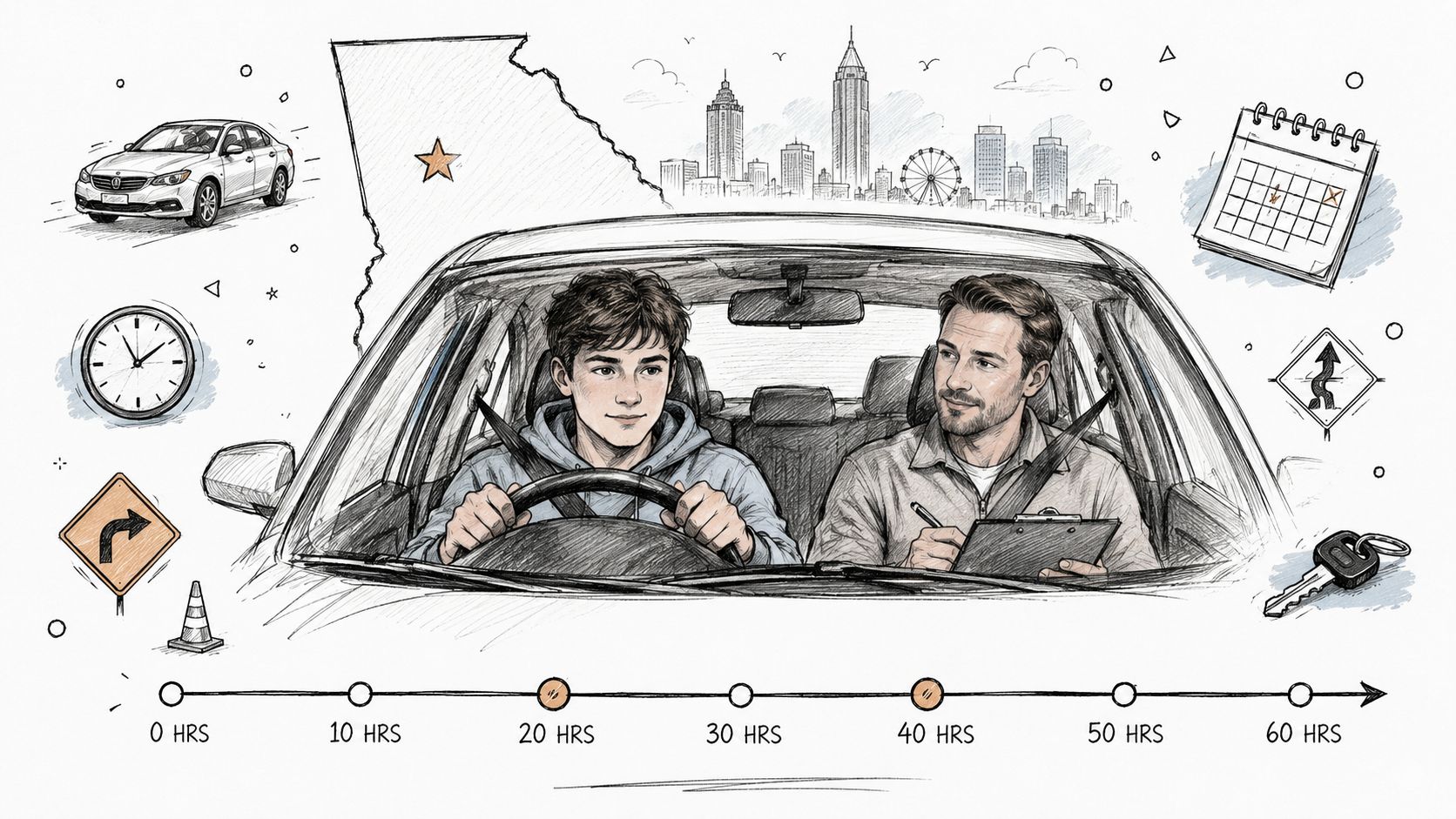
A brand-new driver usually needs a meaningful block of professional instruction before the DDS road test feels reasonable. In practical terms, a true beginner may need 20 to 40 hours of professional lessons, layered on top of 40 to 100 hours of supervised private practice. Those are planning ranges, not promises. A teen who practices calmly with a parent several times a week may progress differently from an adult who only drives during paid lessons.
The difference becomes obvious at a busy Atlanta intersection. A beginner may know how to move the car, yet still struggle to scan for pedestrians, judge an approaching vehicle, select the correct lane, and maintain a safe following distance. An instructor has to build those decisions until they become repeatable, not merely successful once.
Instructor's view: You're ready when your safe decisions stay consistent, including when traffic, weather, or nerves make the drive less comfortable.
A permit holder with regular supervised driving already has a foundation. Someone restoring a license has a different assignment altogether, particularly if the state or court requires a Risk Reduction course. A driver who spent years operating vehicles on a South Georgia farm may control a car well but still need focused work on lane changes, urban intersections, and Georgia road-test expectations.
For another explanation of why lesson totals vary by learner, the guide on how many driving lessons you'll need offers useful background. The key point is simple: there is no single correct answer to “how many driving lessons will I need?” Your first assessment drive narrows the range much more effectively than an online average.
Why the Lesson Count Is a Range, Not a Number
Driving preparation has two separate parts, and confusing them creates unrealistic expectations.
Professional instruction comes from a qualified driving-school instructor. These sessions should target vehicle control, observation, intersections, lane changes, parking, hazard awareness, and road-test weaknesses. Private practice happens with a parent, spouse, or another qualified supervising adult. It gives you more time to repeat skills between instructor visits.
UK government-backed guidance has commonly used a benchmark of about 45 hours of professional lessons plus 22 hours of private practice, or roughly 67 total hours before test readiness. A learner-driver study cited in UK government material found that people who passed had averaged 47 hours of professional instruction and 20 hours of private practice. See the UK government learner-driver study for the underlying historical reference.
That benchmark is useful as a framework, not as a Georgia rule. A driver learning around Atlanta may face stop-and-go surface streets, MARTA buses, multilane intersections, aggressive merges, and I-285 traffic. Those conditions demand more decisions per minute than a quiet residential route, so two lessons of the same length may produce very different learning value.
| Hour Category | Typical Range | What Counts | What Does Not Count |
|---|---|---|---|
| Professional instruction | 20 to 40 hours for many true beginners | In-car coaching with a qualified instructor | Sitting in a classroom or watching driving videos |
| Private practice | 40 to 100 hours for many true beginners | Supervised driving with deliberate skill practice | Riding as a passenger or driving without useful feedback |
| Georgia Risk Reduction course | 20 hours for the program | Required assessment and DDS-approved education components | Behind-the-wheel road-test practice |
Your age, previous exposure, confidence, practice frequency, and license objective all affect the estimate. A Class C learner, a Class D teen applicant, and a driver restoring privileges aren't starting from the same checklist.
A Queensland learner-driver review found an average lesson length of 59 minutes, while certain non-representative studies reported learners needing 4 to 9 lessons. The research also emphasizes variation in learner profile and practice quality, so short, frequent sessions may consolidate skills better than infrequent blocks. The Queensland learner-driver research supports the broader lesson: frequency and quality matter more than a tidy average.
Lesson Hours by Learner Profile
Start by choosing the description that sounds most like you. Your instructor can then adjust the estimate after observing how you handle steering, braking, scanning, and traffic decisions.
The true beginner teen
A teen who has only studied for a permit and has little or no driving exposure may need around 30 to 40 professional hours plus 50 to 60 hours of parent-supervised practice. The paid lessons establish correct habits, while family practice reinforces them in quieter settings.
This learner should progress from neighborhood roads to busier intersections, parking areas, nighttime conditions, and highways only after basic control is dependable. The parent's role isn't to rush the process. It's to provide calm repetition.
The nervous adult
An adult who has postponed licensing for years may need around 20 to 30 professional hours and about 30 hours of private practice. The mechanical skills may develop steadily, but confidence, scanning, and decision-making under pressure often need more attention.
Short sessions can help this learner avoid becoming overwhelmed. A calm instructor can repeat the same route until the driver begins making decisions without waiting for reassurance.
The experienced but unqualified driver
Someone who grew up driving on a farm in South Georgia or drove abroad may need around 6 to 12 professional hours focused on Georgia road-test maneuvers, lane-change etiquette, intersections, parking, and local traffic patterns. Familiarity with a vehicle helps, but informal experience doesn't automatically equal test-ready technique.
A driver may feel comfortable on dirt roads yet hesitate during a multilane merge. That's a coaching issue, not a character flaw.
The returning driver
Someone coming back after a long lapse often falls around 10 to 15 professional hours, although the first assessment matters more than the label. The instructor may spend early sessions rebuilding mirror use, braking judgment, lane position, and confidence before introducing heavier traffic.
The court-referred or post-DUI driver
A post-DUI restoration case follows a different track. Georgia's Risk Reduction requirement is commonly structured as a 20-hour course, but those hours are classroom and program-related education, not ordinary behind-the-wheel lessons. The driver may still need separate road practice, a clinical evaluation, a Victim Impact Panel, or other court-directed services depending on the case.
Georgia's DDS-approved driver education course can be relevant to people sorting out approved education options, but it shouldn't be confused with a private lesson package.
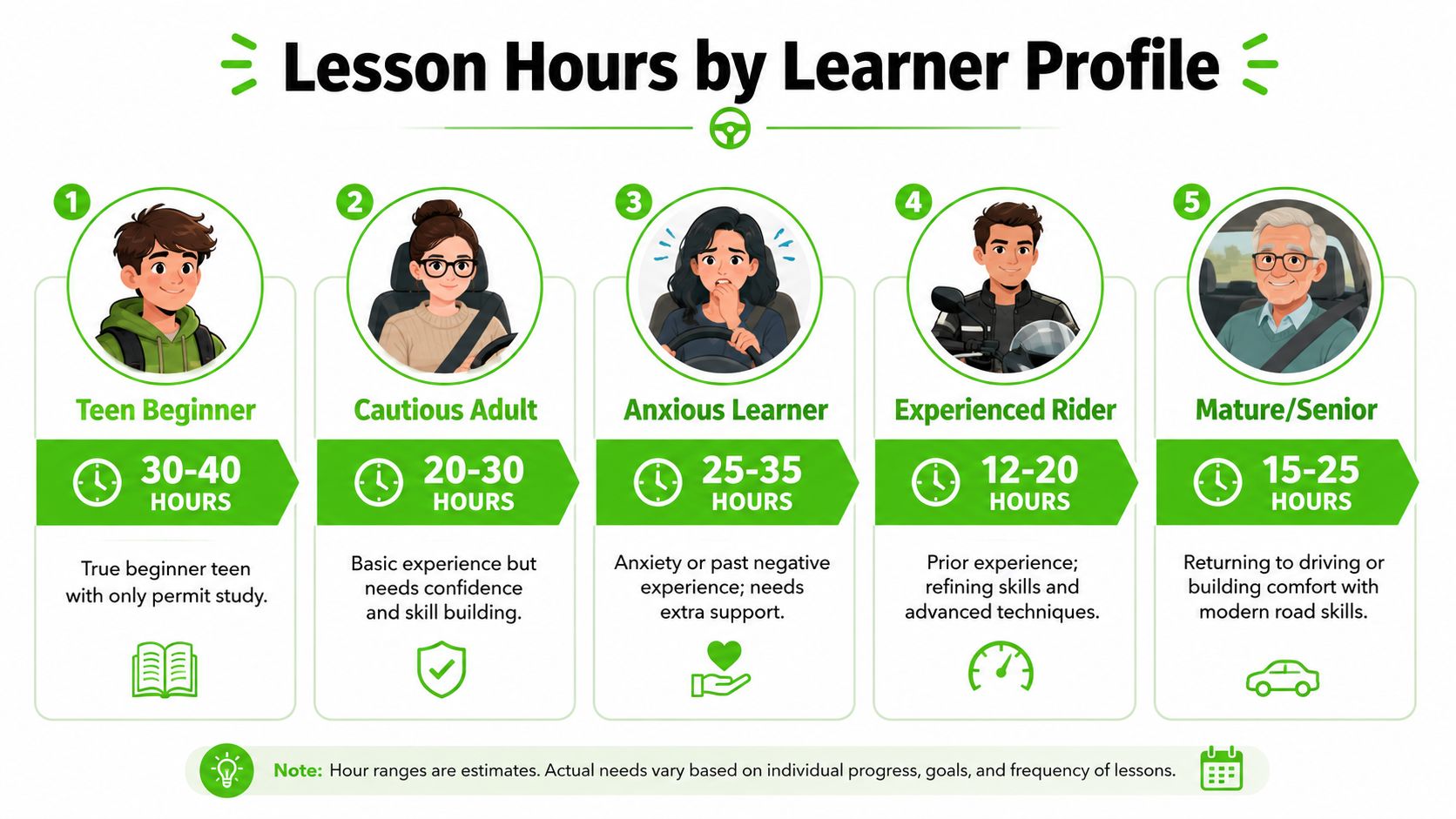
Pick the closest profile before you build a calendar. If two profiles fit, use the higher starting range until an instructor has watched you drive.
A Sample Lesson Schedule That Works
A nervous adult may leave work on Monday feeling steady, then lose that progress after waiting a full week to drive again. Short gaps let learners remember the sequence, notice what still feels awkward, and return with one clear correction to practise.
Consider two workable Georgia schedules:
| Day | Working Adult, 90-Minute Professional Lesson Plus 60-Minute Practice | High Schooler, 60-Minute Professional Lesson Plus Family Practice |
|---|---|---|
| Monday | 90-minute professional lesson after work | 60-minute professional lesson after school |
| Wednesday | 90-minute professional lesson after work | 45-minute parent session before dinner |
| Saturday | 60-minute private practice | No formal session |
| Sunday | Rest or weather backup | 2-hour freeway practice with family |
The working adult receives two coached lessons and one private practice period. The high schooler uses one instructor lesson, a shorter family drive, and a longer Sunday session. The weekly total is only part of the picture. Repeated exposure and useful feedback determine whether each hour builds on the last.
A packed summer schedule can look efficient, yet skills may fade during the long gap that follows. Evidence from learner studies supports spacing practice two to three times weekly rather than concentrating it into a single long session. Frequent driving also gives the learner a chance to correct a mistake while the instructor's guidance remains fresh.
Rain plan: Georgia weather can change quickly. Keep a quiet-road practice session available for safe, moderate rain, but postpone driving when visibility, standing water, or storm conditions create unnecessary risk.
Build the calendar from simple to demanding. Start with neighborhood steering, starts, stops, turns, and observation. After those habits settle, add freeway merging during a quieter period, then repeat it in heavier traffic. For focused preparation before the driving test, review Georgia road-test instruction with confidence.
Skills and Habits That Cut Your Required Hours
The fastest learners aren't always the ones with the most natural coordination. They're often the ones who turn every drive into focused practice.
Commentary driving is one example. Say what you see and what you intend to do: “Pedestrian near the crosswalk,” “vehicle entering from the right,” or “checking left mirror before moving over.” Speaking aloud encourages active scanning instead of passive staring.
Use a regular mirror routine, checking the rearview and side mirrors approximately every 5 to 7 seconds when conditions allow. The interval is a practice target, not a reason to take your eyes off a developing hazard. Your instructor should help you adapt mirror checks to intersections, lane changes, curves, and heavy traffic.
Empty parking lots are ideal for low-speed control. Practice smooth starts, controlled stops, reversing, parking alignment, and three-point turns before attempting them in crowded areas. On quiet residential streets, threshold-braking practice can teach you how firmly the vehicle responds without waiting for an emergency.
Research on learner practice supports shorter, more frequent sessions, often two to three times weekly, rather than one long weekly block. The Queensland evidence cited earlier also connects lesson frequency and consolidation with the number of sessions needed, although learner results vary widely.
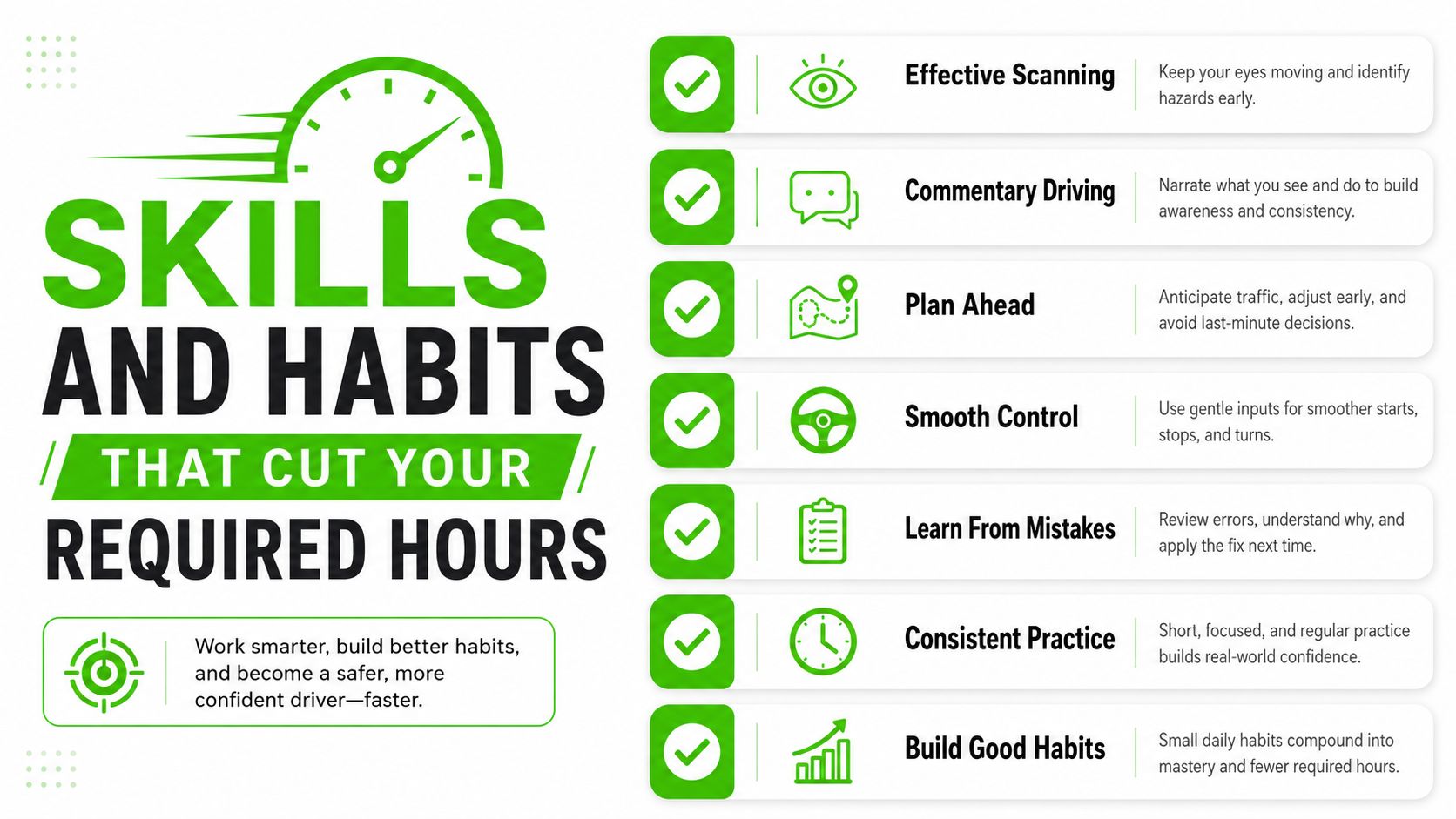
Use this five-point practice checklist outside formal lessons:
- Name hazards aloud: Identify pedestrians, cyclists, buses, parked cars, and changing traffic signals.
- Set a mirror rhythm: Scan mirrors regularly without losing attention to the road ahead.
- Repeat one maneuver: Spend a session on parking or reversing instead of doing everything vaguely.
- Review one correction: Ask your supervising driver to focus on one improvement at a time.
- End before fatigue: Stop while you can still make careful decisions, not after concentration has collapsed.
These habits compound. Better scanning improves lane changes, smoother braking improves intersections, and clearer commentary helps you make independent decisions sooner.
Georgia DDS Course Hours and What They Cover
A Georgia classroom course and a behind-the-wheel lesson serve different purposes. A course can teach risk awareness, driving behavior, perception, and decision-making, but classroom time doesn't replace actual vehicle control.
For a teen seeking a Class D license, Georgia's Joshua's Law pathway includes a 30-hour Parent/Teen Driving Guide and a 20-hour Joshua's Law course as classroom options, with a required six-hour on-road component involving a certified instructor and parent co-attendance. The instructional structure described for the course includes six hours of risk awareness, six hours of driving behavior, and eight hours of perception and skill-building classroom content, plus the on-road component. These course hours sit alongside supervised driving practice.
That distinction matters because a teen can complete every classroom requirement and still need additional practice with lane position, parking, traffic judgment, and highway merging. Course completion shows that required education has been addressed. It doesn't prove that every road skill is consistent.
Risk Reduction after a DUI
A driver restoring privileges after a DUI follows a separate path. Georgia's DUI Alcohol or Drug Use Risk Reduction Program combines a standardized screening assessment with a DDS-approved therapeutic education course focused on alcohol, drug use, and driving behavior, as described by the Georgia DUI Risk Reduction program information.
The program is commonly structured as a 20-hour course, often delivered over two and a half days. Listed fees include a $100 assessment, $235 class fee, and $25 workbook fee, totaling $360, according to Georgia program listings at 1st Atlanta DUI School. These are program costs, not payments for private driving lessons.
If you're comparing supervised-hours systems in another jurisdiction, a logbook hours program can illustrate how formal practice records differ from Georgia's Risk Reduction structure. For Georgia-specific content, review the Risk Management course information, then confirm your personal court and DDS paperwork before enrolling.
Build Your Personal Driving Lesson Estimate
You can create a useful starting estimate tonight with four inputs:
- Choose your profile range. Start with the teen, nervous adult, experienced driver, returning driver, or restoration category that fits best.
- Adjust for frequency. Regular sessions two or three times weekly generally support better consolidation than occasional marathon drives.
- Add private practice. Count only supervised driving with a clear objective, not time spent riding in the car.
- Add the Georgia overlay. Separate Joshua's Law, Risk Reduction, clinical evaluation, Victim Impact Panel, or court-directed requirements from ordinary road lessons.
For a Marietta teen who's a true beginner, a practical planning range might begin with 30 to 40 professional hours and 50 to 60 supervised practice hours. A 35-year-old Sandy Springs resident returning after a lapse might begin closer to 10 to 15 professional hours, then add targeted private practice as confidence returns.
| Input | Marietta Teen Example | Returning Adult Example |
|---|---|---|
| Base profile | True beginner | Returning driver |
| Professional instruction | 30 to 40 hours | 10 to 15 hours |
| Private practice | 50 to 60 supervised hours | Add practice based on observed weaknesses |
| Frequency | Spread across multiple weekly sessions | Use regular sessions instead of weekend-only blocks |
| Georgia overlay | Joshua's Law course and required on-road component | DDS or court requirements, if applicable |
Treat those totals as planning figures, not guarantees. After the first month, your instructor's reassessment should replace the original estimate when you're deciding whether to schedule the road test.
Book an assessment drive with a licensed instructor in your Georgia home county. Write down the instructor's estimate, match it against your Joshua's Law or Risk Reduction paperwork, and put both the lesson schedule and mandated course time on the same calendar.
Georgia DUI Schools offers DDS-approved Risk Reduction education, defensive driving courses, clinical services, and flexible online or classroom options for Georgia drivers managing license restoration or court requirements. Visit Georgia DUI Schools to review the appropriate course and take the next step with your paperwork in hand.