
You got the court paper, the inbox is full, and the balance is sitting there like a problem you can't solve in one swipe. That's the moment most Georgia drivers start asking about a driving lessons payment plan, not because they want financing, but because the deadline is real and the money isn't all there.
The smart move is to separate what the state fixes from what a school can split up. That distinction matters for DUI/Risk Reduction, defensive driving, and bundled lesson packages, because one sloppy payment agreement can leave you paying for a class that won't satisfy the requirement you have.
Why Georgia Drivers Are Asking About Payment Plans Right Now
A driver walks out of a clerk's office with a reinstatement requirement, opens their phone, and realizes the cost isn't just the class. There's the course itself, there may be a workbook, maybe a clinical add-on, maybe a victim impact panel, and the deadline doesn't care whether payday is next week or next month.
That same pressure shows up in different ways for different people. A DUI client needs a compliant path back to driving privileges, a defensive-driving student may be trying to protect a license or keep an insurance problem from getting worse, and a parent booking teen lessons is usually looking at a multi-session package, not one isolated lesson.
Who actually needs installments
Most learners don't search for payment plans because they're trying to be clever. They're trying to avoid turning a necessary class into a financial emergency. If you're the kind of person who gets buried under email receipts and appointment reminders, a tool like streamline customer email handling can help keep payment notices, class confirmations, and deadline messages from getting lost in the noise.
The right way to think about a payment plan is simple. It's a budgeting structure, not a discount trick. If the school is selling a required package, the plan should make the cash flow easier without blurring what the student must complete to stay compliant.
Practical rule: If the provider can't tell you what is required, what is optional, and what happens if you miss a date, don't sign.
That's especially true in Georgia, where some programs are regulated and some are just bundled services. The rest of the decision comes down to reading the structure, not chasing the monthly number.
What Georgia DDS Actually Requires You to Pay
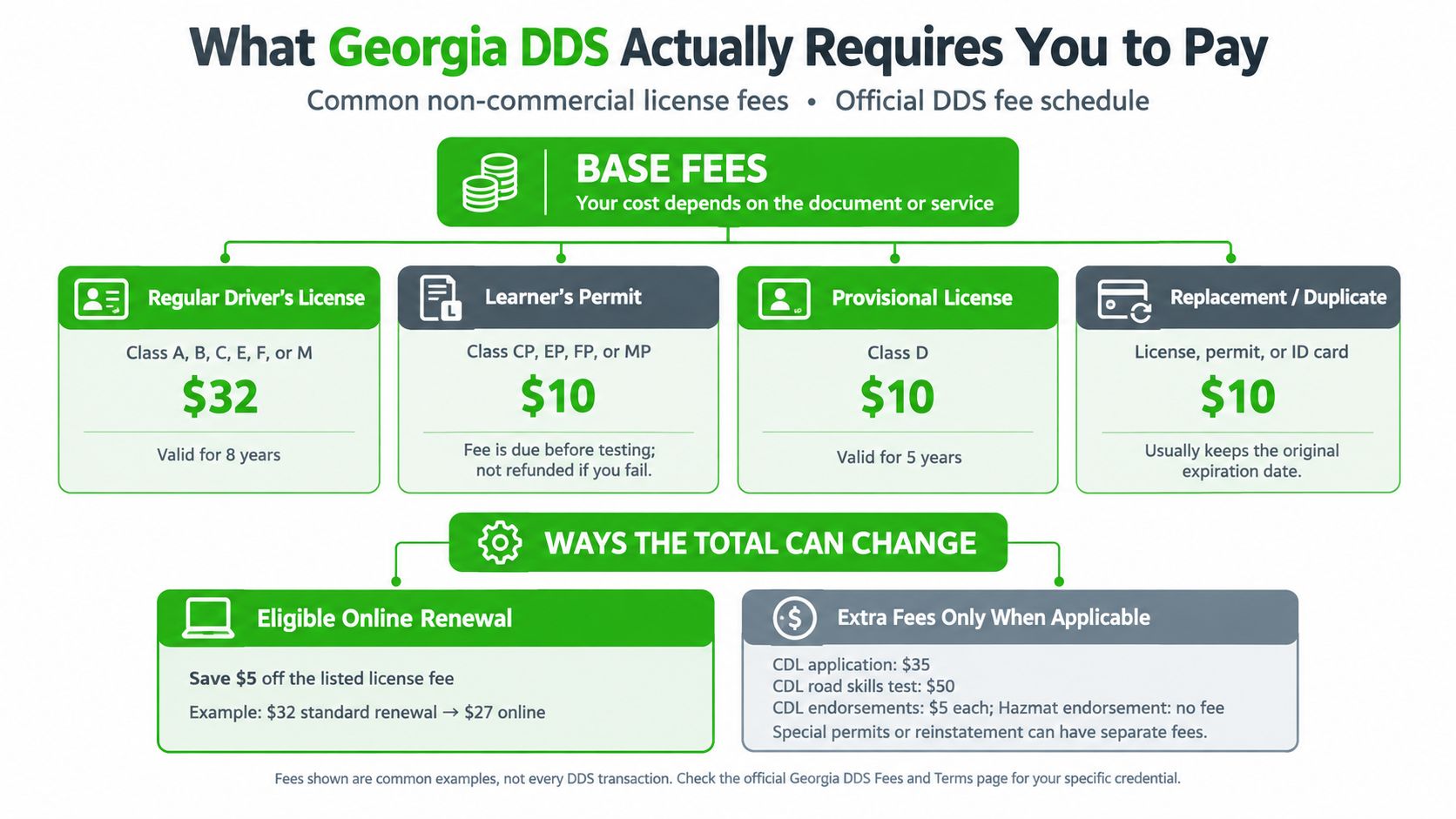
Georgia's Risk Reduction cost is not a vague estimate. DDS identifies the total as $360, broken into a $100 assessment, a $235 intervention component, and a $25 workbook. The important detail is timing, because the assessment and intervention fees are due when the student contract is executed, so a payment plan can't rewrite the state's fee structure or delay obligations that are already fixed by rule.
Fixed charges versus optional add-ons
People get tripped up here. A school may offer extras like administrative services, clinical evaluations, or treatment referrals, but those are separate from the DDS-mandated core. If the quote just says “course payment,” you're already in bad territory, because that wording hides what the student is buying and what still has to be paid.
A compliant provider should separate the items on paper, not in conversation. The student needs to know which line items are DDS-required, which ones are optional, and which ones can be financed over time. If you're comparing plans, this license reinstatement fee breakdown is the kind of reference that helps you see where the money goes before you agree to anything.
For defensive driving, DDS also publishes a $95 fee for reinstatement-related classes. That matters because the fee is tied to the purpose of the course, not just the classroom seat. And if someone tries to sell you an online DUI program from a non-certified source as a shortcut, Georgia DDS says certificates from uncertified online DUI, alcohol, or drug-use Risk Reduction programs can't be accepted for license-related purposes.
What that means in practice
- Ask for the exact course type. Risk Reduction, defensive driving, or something else.
- Ask what's mandated. That's the portion you can't bargain away.
- Ask what's optional. Those services may be useful, but they're not the same as the required course.
- Ask when payment is due. Fixed fees often have fixed timing.
- Ask whether the certificate can be withheld. In Georgia, a school shouldn't hold a completion certificate solely because fees are still owed after requirements are met.
If the provider can't answer those questions cleanly, the plan is not ready.
Four Common Driving Lessons Payment Plan Structures
Different plans solve different problems, and the right one depends on whether you're paying for a regulated class, a lesson bundle, or a larger package. I'd rather see a plain, boring structure that matches the deadline than a flashy offer that creates surprises later.
The four models you'll actually encounter
The cleanest way to compare them is by total cost, timeline, and deadline risk. A recurring payment guide is useful if you want the mechanics of split billing, but Georgia drivers need to evaluate the plan against the program requirement first, not the software behind the billing.
| Payment Plan Structures at a Glance | |||
|---|---|---|---|
| Plan type | How it works | Best for | Watch out for |
| Pay in full | One payment up front | Small classes, quick enrollment, people who want no billing surprises | Can be hard to afford when the course is bundled with other required costs |
| Deposit plus installments | Small start payment, then scheduled balances | Required programs and larger lesson packages | Late fees, missed dates, and unclear refund terms |
| Third-party financing | Outside lender pays the school, student repays the lender | Bigger packages with longer schedules | Credit checks, finance charges, and the risk of owing more than the course itself |
| Pay-in-four style schedule | One payment at enrollment, then three equal payments on a fixed cadence | Shorter bundled programs that need predictable timing | Declined payments, cure periods, and deadlines that still apply even if the schedule is flexible |
What matters most when you compare them
Pay in full is the simplest option, but it's not realistic for everyone. Deposit-plus-installments is usually the most sensible choice for regulated or bundled training because it keeps the student moving without pretending the course is free. Third-party financing can work, but it should only be used if the total repayment is still reasonable and the provider is crystal clear about fees.
A pay-in-four setup is attractive because it feels clean. The problem is that it only works if the school's deadlines and the state's rules fit the schedule. That's why a provider has to check court timing, DDS timing, and the course completion window before promising anything.
Bottom line: If the payment schedule is longer than the course deadline, the plan is wrong, no matter how good it looks on paper.
How to Set Up a Payment Agreement That Actually Protects You
Get the agreement in writing before any money changes hands. Once cash moves, vague promises turn into disputes, and families end up arguing over what was said instead of what was signed.

Start with a quote that breaks out the full price. Required DDS-related charges should be separated from optional add-ons, so you can see exactly what is fixed and what is being sold on top of it. If the provider cannot separate those pieces, do not sign.
The payment agreement itself should name the deposit, each installment date, the payment method, cancellation terms, and any late-charge policy. If those terms are not on paper, the school controls the story later and you do not.
The five checks I'd make before enrolling
- Written quote first. No itemized quote, no payment.
- Fixed versus optional split. Know what is required and what is extra.
- Signed payment terms. Deposit, dates, method, cancellation, and late fees should all be visible.
- Deadline verification. The schedule has to fit the court or DDS calendar.
- Receipt after every payment. Keep proof for every dollar you hand over.
Georgia also bars schools from withholding a completion certificate solely because fees are still unpaid. That gives you leverage if a provider tries to hold paperwork hostage after the required training is finished.
A proper agreement should also say what happens if a payment fails or a class is missed. If those rules are vague, ask for cleaner terms before you sign. If the provider refuses, walk away.
A Worked Example Using the $360 Georgia Risk Reduction Program
The math on a small schedule is easy enough to do on the back of an envelope. Take the $360 DDS program and split it into a deposit plus three equal payments, or into a four-payment schedule built around equal chunks. Either way, the point is to make the cash flow manageable without changing the regulated total.
A pure four-part structure would land at $90 per payment if the amount were divided evenly. That's useful as a math model, but the provider still has to make sure the timing rules fit the DDS requirements, because a neat spreadsheet doesn't override a legally fixed payment sequence.
The same logic scales up when you move from a regulated program to a larger bundled package. If a course set is sold as a multi-session block, a deposit and scheduled balances make more sense than one giant invoice, especially when the student's job, court date, or family budget is tight.
How to read the math honestly
An installment plan should be evaluated by what it does to your total out-of-pocket cost and by how safely it fits the deadline. If there are extra admin charges, clinical fees, or late penalties, they belong in the total, not hidden in the schedule.
For a larger lesson package, the main question is whether the plan gives you enough time to complete the required sessions without a deadline collision. That's why I prefer fixed installment dates tied to milestones, not open-ended “pay when you can” arrangements.
If the plan makes the first payment feel easy but hides the rest of the math, it's not protecting you.
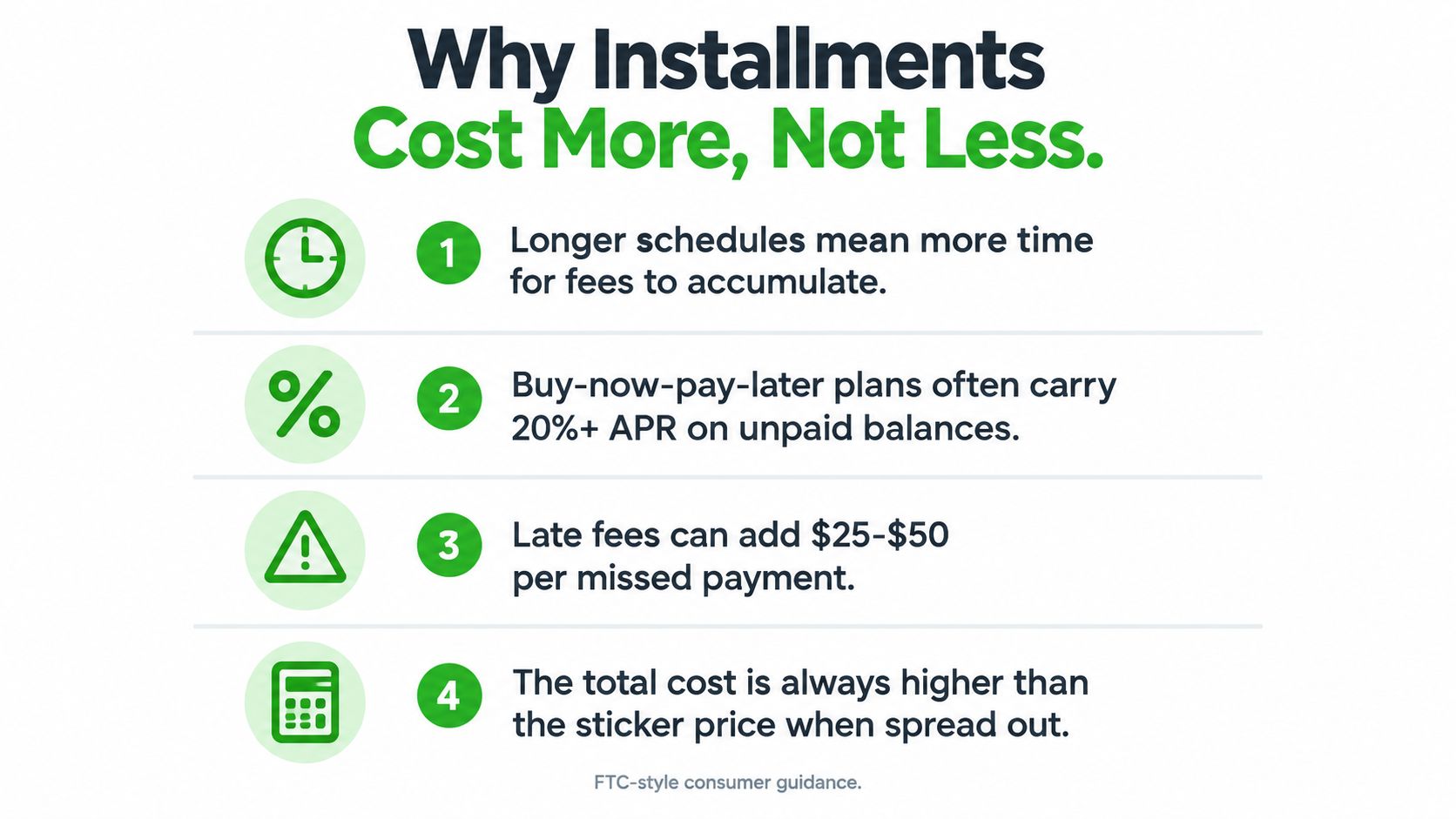
Why a Payment Plan Does Not Lower the Total Cost
Spreading a payment changes when you pay, not what you pay. Once fees or interest enter the agreement, the total can rise fast, so the key question is always the full amount due, not the monthly slice. Consumer guidance from the FTC makes the same point in plain language on financing or leasing a car, compare the full cost, not just the installment.
That rule fits driving lessons in Georgia. A school may quote a manageable installment and still leave out registration charges, retest costs, vehicle-use fees, or penalties for missed sessions. The monthly number looks better. The bill may not.
What to demand before signing
Ask for one total figure, one cancellation outcome, and a written answer on whether the deposit is refundable. If the provider will not put those terms in writing, do not sign.
The CFPB's BNPL market report found that 10.5% of buy-now-pay-later borrowers incurred at least one late fee in 2021, up from 7.9% in 2020. That is why a payment schedule needs reminders, clear consent, and a realistic cure period if a charge fails. A plan that depends on perfect timing is a bad plan.
If you want to compare a course price before you commit, use this driving school pricing guide and compare the full bill, not the teaser rate.
Choosing the Right Plan and Getting Started
Start with the course itself. If you need DUI, Risk Reduction, or defensive-driving credit in Georgia, the provider must be DDS-certified for that purpose. A payment plan cannot fix the wrong course.
Once the course is right, get the quote in writing and compare it against your deadline. Ask which charges are fixed, which parts can be split into installments, and what happens if a payment is late or fails. If you are trying to keep the budget under control, Toya AI's app roundup can help you set reminders and track due dates without guessing.
Questions to bring to the provider
- What payment methods do you accept?
- What happens if a payment fails?
- Can I get written cancellation terms before I pay?
- Will I receive a receipt for each payment?
- Does the schedule fit my court or DDS deadline?
- Is there any scholarship help? If affordability is the main issue, Georgia DUI Schools' scholarship information is a good place to start.
- Is the deposit refundable, and under what terms?
Ask these questions before you sign. The school should answer plainly and itemize the bill without hiding required fees inside the monthly number. If the schedule does not match your deadline, keep looking. A payment plan that misses the date is useless.
Whichever requirement you face, the next step is the same. Confirm the course type, get the itemized quote, and choose a schedule you can keep.