
You get arrested for DUI in Georgia, post bond, and assume the court date is the main event. It isn't. For many drivers, the primary damage starts earlier, when the Department of Driver Services moves on the administrative side and your ability to drive to work, school, probation appointments, or treatment suddenly disappears.
That's where bad decisions are often made. They wait. They assume the criminal case controls everything. They think a lawyer, a dismissal, or a paid fine automatically fixes the license problem. It doesn't. A suspended license for DUI in Georgia is often a two-track problem, and if you only pay attention to one track, you can stay suspended long after you thought the case was over.
A common local example is the Atlanta commuter who gets arrested in Fulton or DeKalb County, then finds out the next week that getting to Buckhead, Midtown, Marietta, or the airport job site is now a legal problem, not just a scheduling problem. In Athens, it might be a University of Georgia student trying to keep class, work, and court obligations together without understanding DDS deadlines. The panic is real, but the path forward is usually clearer than people think.
The key is timing. If you know what triggered the suspension, which agency controls it, and whether you qualify for the 120-day early reinstatement pathway, you can stop guessing and start fixing the problem the right way.
Introduction
A DUI arrest shakes up your life fast. One night out in Atlanta, Roswell, Athens, or Savannah can turn into towing fees, court dates, missed shifts, and a license issue that starts moving before you've even figured out what happened. Most drivers don't expect the state to separate the driving penalty from the criminal case, but that's exactly what happens.
That confusion causes expensive mistakes. A driver hears that the case might be reduced, so they keep driving. Another assumes the judge will handle everything, so they ignore DDS notices. A third waits until the suspension period ends, only to learn that the state still wants course completion, insurance filings, and paperwork before anything gets restored.
Practical rule: If your license was suspended after a DUI arrest or conviction in Georgia, assume nothing is automatic and verify every requirement with DDS and the court.
I've seen this play out with people who had perfectly manageable first-offense cases but made the license side worse by waiting too long. The stress usually isn't just legal. It's practical. You can't get to work in Gwinnett, probation in Clayton County, treatment in Cobb, or class in Athens if you're driving illegally or relying on favors.
The fix starts with understanding what kind of suspension you have.
Suspension Types and Durations
A Georgia DUI suspension can last months or years, and the timeline depends on which track hit you, your prior record, your age, and whether you refused testing. The mistake I see all the time is drivers hearing “12 months” and assuming that tells the whole story. It does not. A 12-month suspension with a 120-day reinstatement path is very different from a refusal case or a repeat-offense suspension that keeps you off the road much longer.
First second and third offense rules
For drivers 21 or older, a first DUI conviction usually means a 12-month suspension. The part many articles miss is the 120-day early reinstatement window. Georgia DDS allows many first offenders to apply for reinstatement after 120 days if they complete the required steps, including the DUI Risk Reduction Program and payment of fees, under the Georgia DDS first DUI suspension guidance. If you qualify, that 120-day mark should be on your calendar the day your suspension starts.
That timing matters in real life. A driver in Marietta with a manageable first offense may be able to get back to legal driving far sooner than expected, but only if class completion, paperwork, and fees are lined up early. Waiting until day 120 to start the process is how people lose extra weeks.
Repeat offenses are much harsher. Under Georgia Code Section 40-5-75, a second DUI conviction within five years brings a three-year suspension, and a third or subsequent DUI conviction within five years leads to habitual violator status with no reinstatement eligibility for at least five years.
Here is the practical breakdown:
| Offense | Mandatory Suspension | Early Reinstatement |
|---|---|---|
| First DUI, age 21 or older | 12 months | After 120 days if required conditions are met |
| Second DUI within five years | 3 years | May apply after 1 year if required conditions are met |
| Third or subsequent DUI within five years | Minimum 5 years before reinstatement eligibility | No standard early reinstatement path |
Under 21 and refusal cases
Under-21 drivers get less room for error. A first DUI can mean a six-month suspension, and a higher BAC can increase that to 12 months. Administrative consequences can also start at a lower alcohol threshold for younger drivers, as noted earlier.
Refusal cases are where people get blindsided. On a first offense, refusing the chemical test can wipe out the 120-day early reinstatement option that makes a standard first-offense suspension more manageable. Drivers hear “first offense” and assume they will be back on the road in four months. Refusal can destroy that assumption.
This is also where Georgia DUI Schools matter in a practical way. They do not change the suspension length, but they help drivers complete the Risk Reduction requirement on time, avoid paperwork delays, and stop treating the license problem like it will fix itself.
If you want a useful out-of-state comparison on how another state handles post-arrest suspension timelines, what to expect after a Michigan DUI gives a practical look at the same split between license action and court action. The laws are different, but the lesson is the same. Don't confuse the criminal case with your driving privileges.
Drivers who recover fastest usually map the full suspension timeline at the start, including any 120-day eligibility date, instead of waiting for the court or DDS to spell it out later.
Administrative vs Court Actions
You get arrested on a Friday night, your court date is weeks away, and you assume the judge will sort out your license. That mistake keeps Georgia drivers off the road longer than the DUI itself requires.
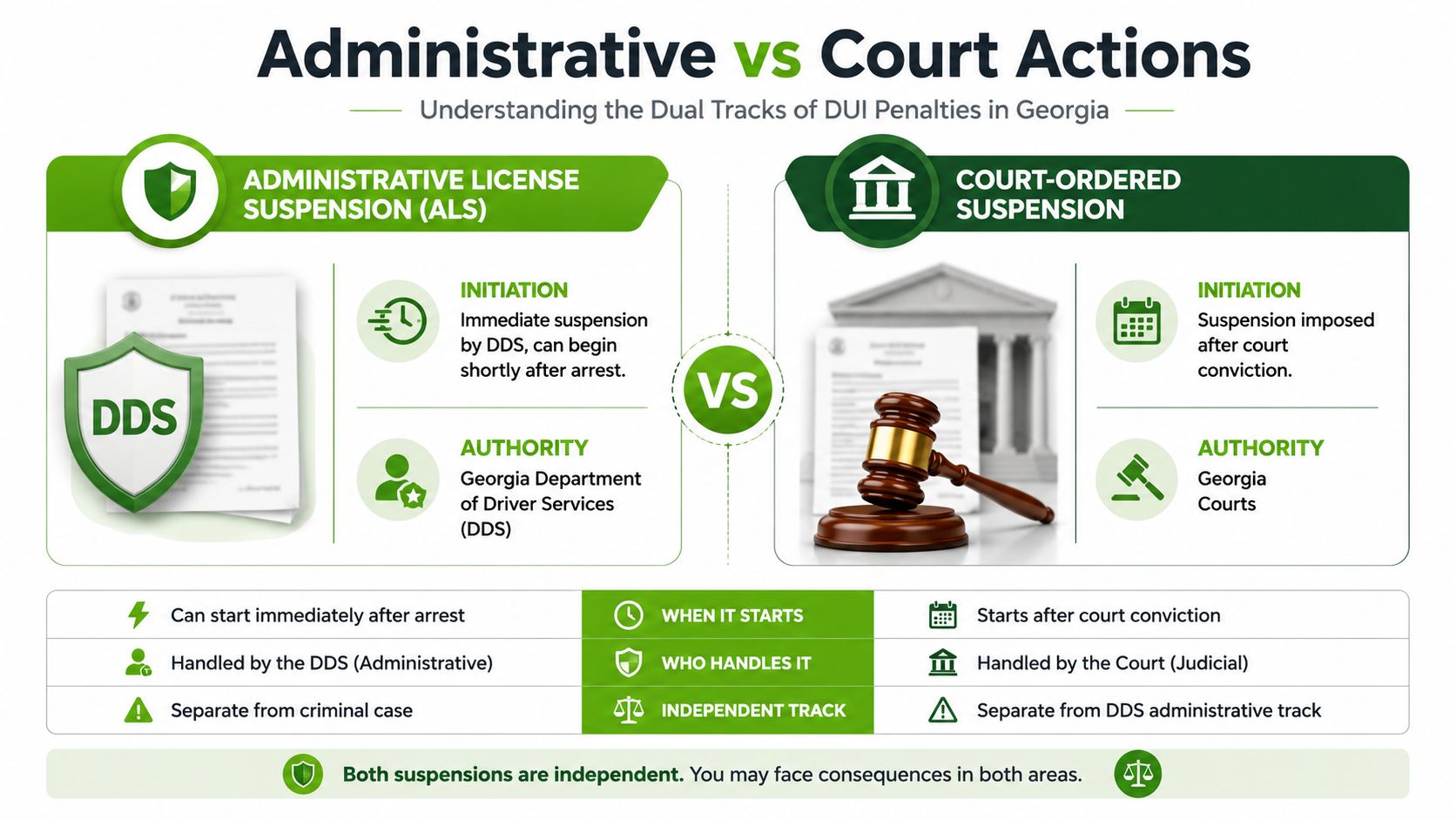
Georgia DUI suspensions run on two tracks. The administrative track starts with DDS after the arrest. The court track starts with the criminal case. They can overlap, but they do not cancel each other out. If you only pay attention to court, DDS can keep your license suspended. If you only focus on DDS, a conviction can create a second layer of consequences that delays full reinstatement.
What the administrative track does
The administrative side hits first and moves fast. If DDS acts on a failed test or refusal, your driving privileges can be affected long before the criminal case ends. As noted earlier, the hearing request deadline comes early. Miss it, and you lose your best chance to stop or limit the DDS action before it hardens into a suspension.
This is the part many drivers misunderstand. A prosecutor, judge, or defense lawyer may be talking about plea dates, motions, or trial strategy while DDS is running on its own clock. Those are separate problems. Handle them separately.
For a first-offense driver, the administrative track also controls one of the most overlooked opportunities in Georgia. The 120-day early reinstatement path usually lives or dies here. If your case qualifies and you complete the required steps on time, you may be eligible to get back on the road months before the full suspension period ends. Drivers who ignore the DDS side often miss that date completely.
Georgia DUI Schools help at this stage by keeping people focused on deadlines and required education instead of guesswork. If you are also trying to understand how assessment and education pieces fit together, this overview of the SAP program and related requirements gives useful context.
What the court track does
The court track deals with guilt, sentencing, and conditions tied to conviction. That can include fines, probation terms, treatment recommendations, classes, community service, and license consequences that attach after conviction. In repeat cases, the court side can get much harsher and much more expensive.
A court result does not automatically clean up the DDS file.
A favorable court outcome can still leave you suspended if the administrative side was never handled correctly.
That is why drivers need a two-calendar approach. Track every court date. Track every DDS deadline. Keep copies of every filing, notice, and completion certificate. Waiting for one agency to update the other is a bad plan.
Treatment issues can also show up on the court side, especially if alcohol use becomes part of sentencing or probation discussions. Some drivers benefit from added support beyond the required course work, including group therapy at Cedar Hill Behavioral Health when substance use is becoming a larger problem than the DUI case itself.
One more hard truth. A dismissed DUI does not guarantee a valid license. This discussion of license impact after a dismissed DUI case explains why drivers still have to clear the administrative side, finish required steps, and confirm reinstatement instead of assuming the case disappearing in court solves everything.
Required Programs and Paperwork
A lot of Georgia drivers make the same mistake after a DUI suspension. They finish one class, pay one fee, or show up to one court date and assume their license will fix itself. DDS does not work that way.
Start with the documents that control reinstatement
Treat this as a file-building exercise. Your goal is to prove completion, prove eligibility, and prove that both tracks of the case are clear enough for DDS to act.
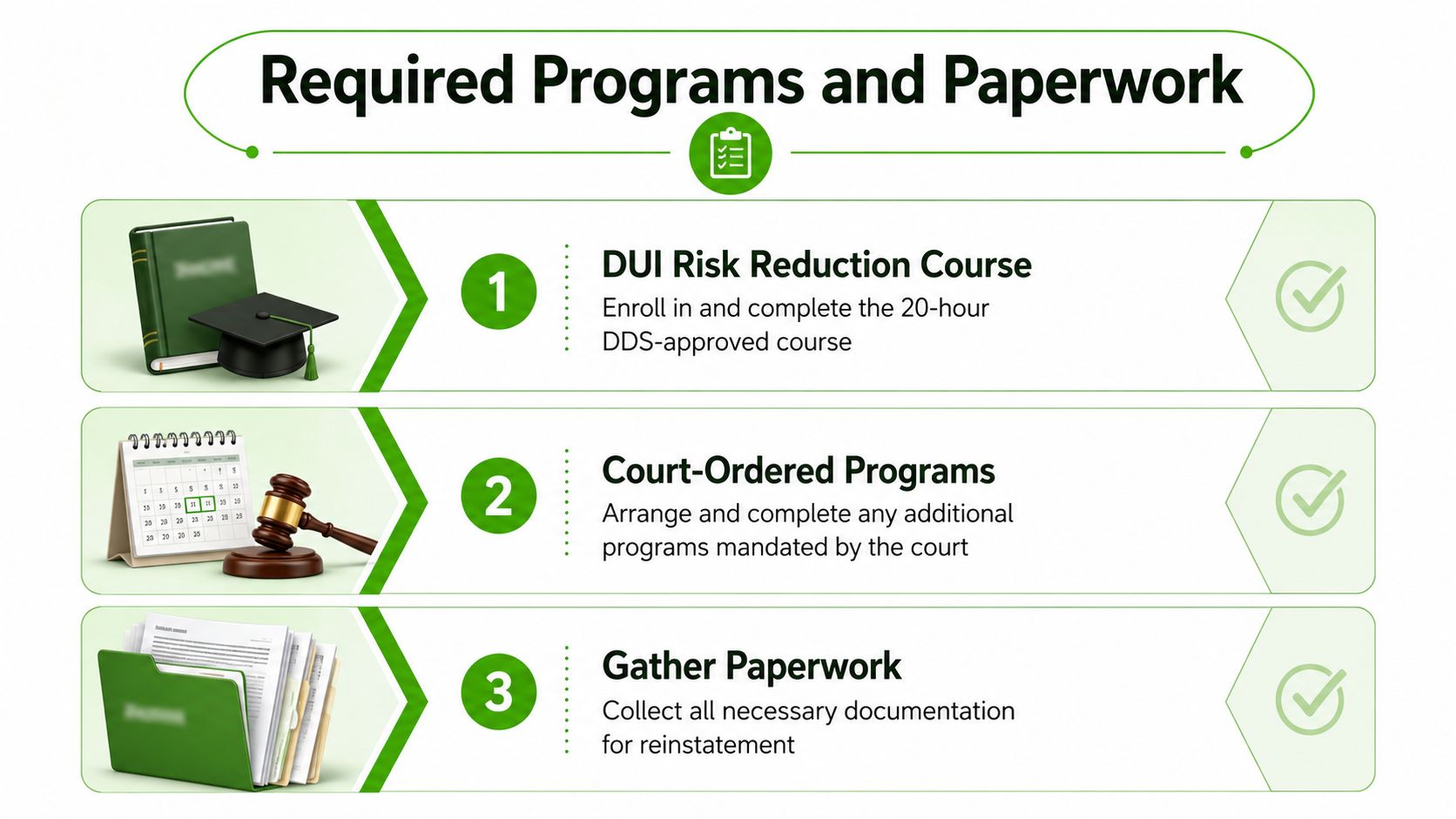
For many drivers, the first required item is the 20-hour DDS-approved DUI Risk Reduction Program. Finish it early and protect the certificate like it matters, because it does. If you are trying to qualify for the often-missed 120-day early reinstatement route, delays in getting enrolled can cost you weeks.
The practical rule is simple. Pick the approved class you can complete on time. A driver in Atlanta who keeps rescheduling around work loses more time than a driver who chooses the less convenient location and finishes the course the first time. Georgia DUI Schools is one factual option for DDS-approved Risk Reduction classes and related clinical services in Atlanta, Athens, and other Georgia communities.
Some cases also bring extra court requirements that do not appear on the DDS side until they block reinstatement in practice. If a judge ordered a clinical evaluation, treatment, a victim impact panel, or follow-up counseling, schedule it now. Waiting until the suspension period ends is lazy planning and usually backfires.
If your case starts crossing into treatment issues instead of basic education requirements, group therapy at Cedar Hill Behavioral Health can help you sort out what level of support fits the court conversation.
Build one packet, not a pile of loose papers
Keep every reinstatement item in one folder, digital and paper. Drivers get in trouble when they have completed everything but cannot prove it.
Your packet should usually include:
- Risk Reduction completion certificate: Keep the original and a clear copy.
- Reinstatement fee records: Save the payment confirmation once the fee is paid.
- Insurance filing proof: If your case requires SR-22, confirm it was filed correctly and stays active for the required period.
- Original Notice of Suspension: Keep it with the rest of your DDS paperwork.
- Court clearance documents: Get written proof that any hold, failure to appear, or unresolved court issue has been cleared.
- Treatment or evaluation records: If the court ordered an assessment or follow-up care, keep the completion paperwork with your main file.
That last item matters more than drivers think. The court side and the administrative side do not clean up each other's paperwork. You need records that satisfy both.
For drivers who are confused about school-related assessments or structured substance use requirements, this explanation of what the SAP program is is a useful starting point.
One last recommendation. Do not wait for DDS, the court clerk, your insurance company, and your class provider to line everything up for you. Build the packet yourself, check it twice, and keep copies of every certificate, filing, and receipt. That is how you avoid missing the 120-day opportunity and how you keep a court issue from blocking an otherwise valid reinstatement.
Reinstatement Process and Timeline
A lot of Georgia drivers lose extra weeks here for one simple reason. They treat reinstatement like one finish line, when it is really two separate tracks that have to clear at the same time.
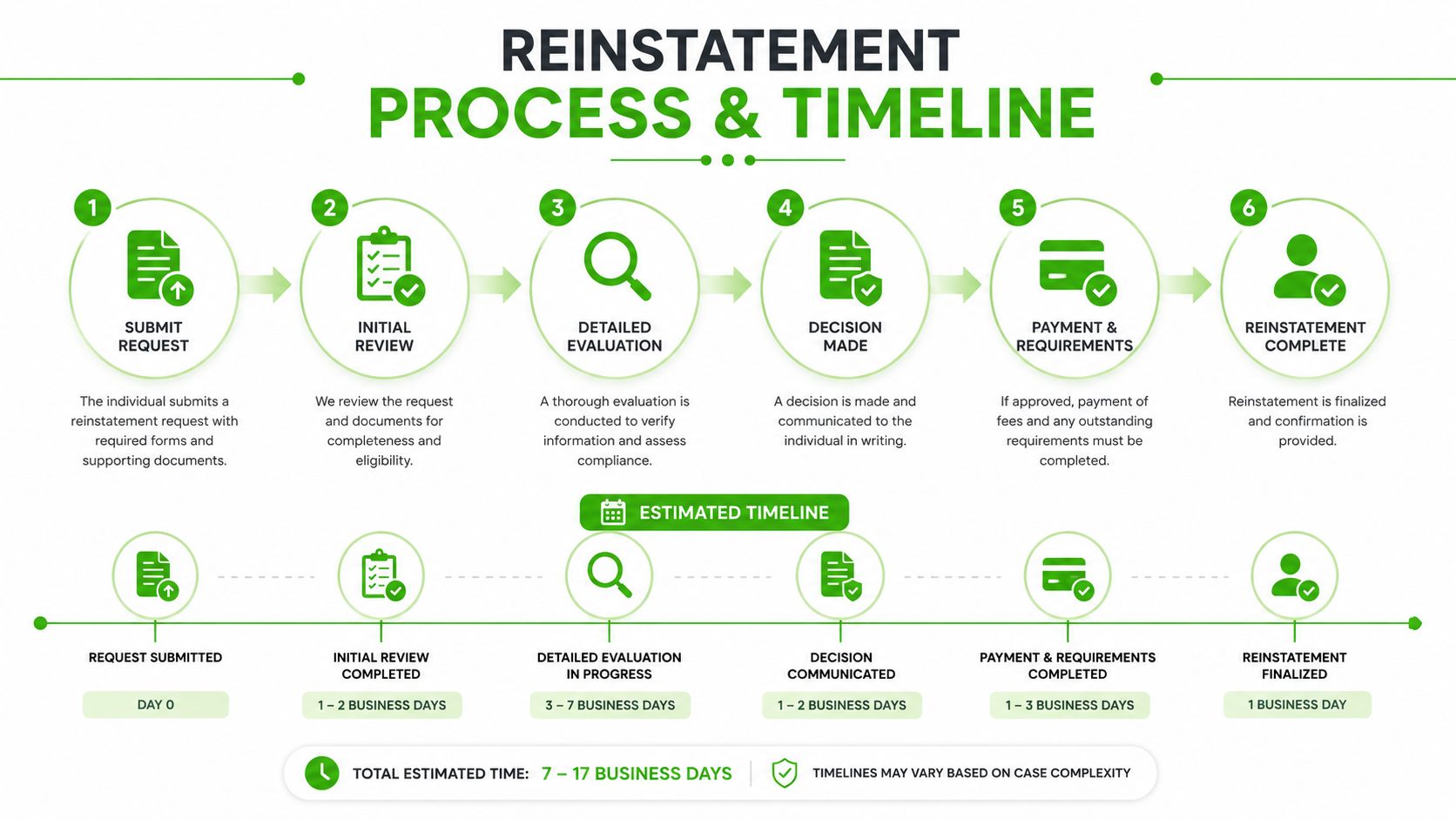
The DDS side can become eligible before the court side is fully cleaned up. The court side can also be resolved while DDS still shows an active suspension. If you miss that split, you will wait longer than necessary and blame the wrong office.
Use the right sequence
Start with eligibility, not payment. For many first offenders, the overlooked opportunity is the 120-day early reinstatement path. That window only helps if your class, insurance filing, and paperwork are ready before day 120 arrives. If you wait until then to start gathering documents, you just turned an early option into a late one.
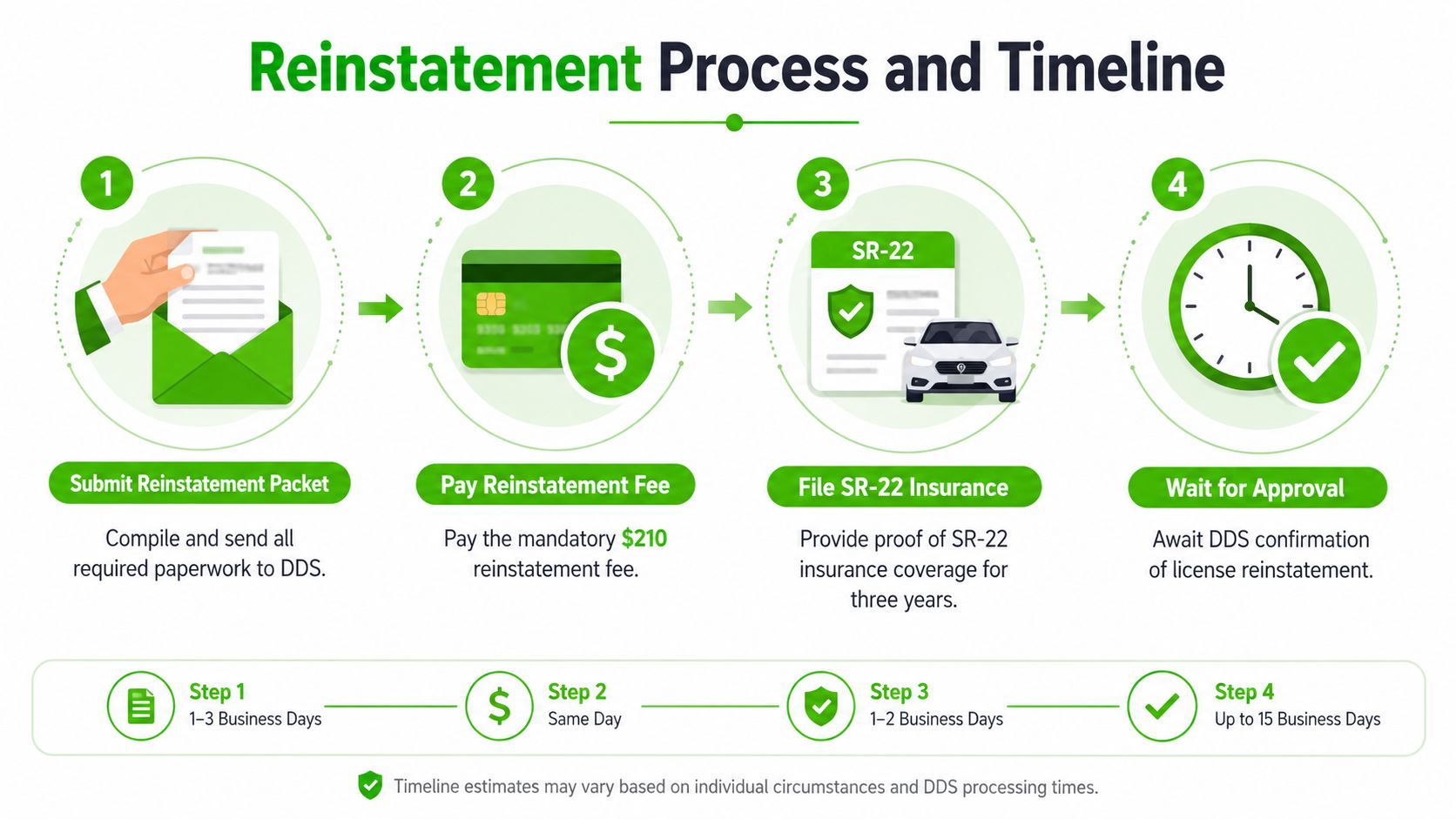
The practical order looks like this:
- Confirm which track is blocking you, DDS, court, or both
- Finish the DUI Risk Reduction Program early
- Get every required filing in place, including any insurance proof tied to your case
- Clear court conditions, holds, or unresolved appearances
- Pay the reinstatement fee only after the file is ready
- Verify DDS processed the restoration instead of assuming it happened automatically
That order saves time because it matches how reinstatement works in real life. DDS processes completed files. It does not sort out missing court paperwork for you, and the court does not notify DDS in the way drivers often expect.
Georgia DUI Schools can help at the point where many drivers stall. They can get you into the required course quickly, explain what completion paperwork you should receive, and help you avoid missing the 120-day mark because you started too late.
What the timeline usually looks like
For a first DUI case, the smart move is to work backward from your eligibility date. If early reinstatement may apply, have the course finished and your supporting documents organized well before that date. If your case includes limited driving or an interlock condition, review the Georgia rules for an ignition interlock restricted license before you make plans to drive to work, school, or treatment.
For repeat offenders, the wait is longer and the file is less forgiving. The fee can differ, the restrictions can tighten, and any missing requirement can stop restoration even after the waiting period ends. As noted earlier, your offense level controls the timeline. Do not guess.
Keep a dated checklist of every filing, receipt, class document, and call with DDS or the court. A simple tool like CasePulse client status tracking can help you keep deadlines and updates in one place while your reinstatement is pending.
One last recommendation. Do not measure progress by what you paid or what you completed. Measure progress by one thing only: whether DDS shows your privilege as restored.
Common Pitfalls and How to Avoid Them
The most common mistake is missing the hearing deadline after arrest. If you ignore the DDS side because you're focused on criminal court, you can lose driving privileges before the criminal case even starts to make sense. That mistake is preventable only if you act immediately.
The next big mistake is misunderstanding restricted permit rules. According to this overview of license suspension eligibility rules, second offenders within 10 years may wait one year before eligibility, and test refusers face a one-year hard suspension with no limited permit available unless they secure a non-DUI disposition. That's why casual advice from friends is dangerous. Their case may have been completely different from yours.
Here are the traps I see most often:
- Assuming dismissal fixes everything: It doesn't. Administrative and court actions are separate.
- Paying the fee too early: If DDS still sees a court hold or missing filing, your money won't solve the core issue.
- Forgetting SR-22 maintenance: Filing it once isn't the same as maintaining it for the required period.
- Driving because “the suspension should be over”: If DDS hasn't restored you, you're still at risk.
If you're trying to understand how long a DUI can keep affecting your life beyond just license status, how long a DUI stays on your Georgia record gives the bigger picture.
Conclusion and Call to Action
A suspended license for DUI in Georgia usually isn't one problem. It's two. DDS handles the administrative side. The court handles the criminal side. If you don't treat both seriously, you can finish the case and still stay suspended.
The drivers who get back on the road legally are the ones who stop waiting for someone else to explain it. They identify the suspension type, protect any hearing rights, complete the required education, gather every certificate and clearance, and make sure DDS gets exactly what it needs. That's the difference between a short disruption and a long, avoidable mess.
If your case is active right now, move today. Schedule the course. Confirm whether your file needs SR-22, court clearance, or additional treatment paperwork. If you refused testing or have a prior DUI, don't assume you qualify for a permit. Verify it before you drive.
The goal isn't to feel better about the process. The goal is to complete it correctly and get your legal driving privileges back.
If you need to satisfy Georgia's education requirement for reinstatement, enroll in the Georgia DUI Schools Risk Reduction course. It's the most relevant next step if your license issue is tied to a DUI suspension and you need a DDS-approved path toward compliance.