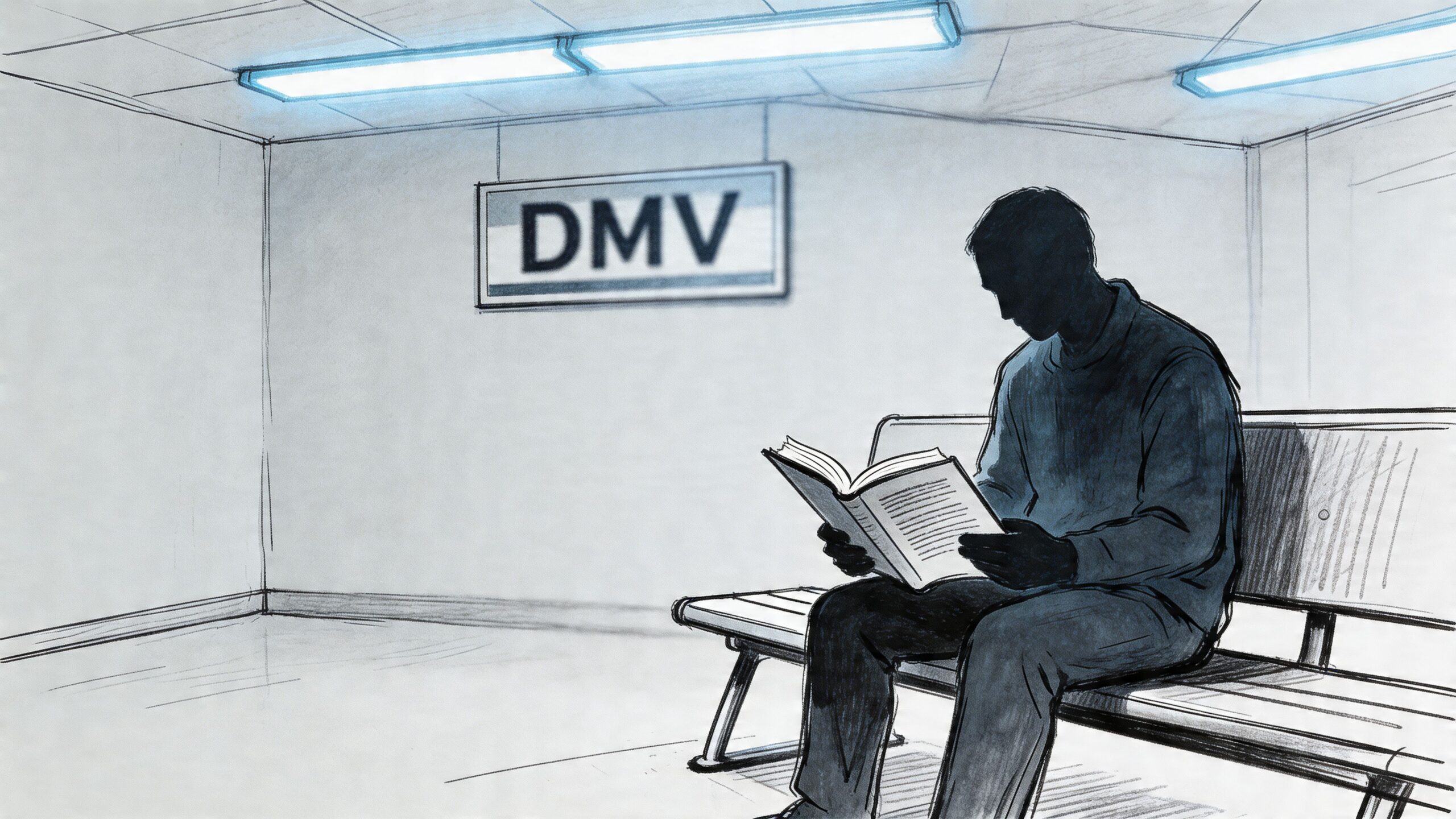
A lot of people walk into a Georgia DDS office already tense. Some are teenagers taking the next step toward driving on their own. Others are older, frustrated, and trying to clean up a suspension, satisfy a court requirement, or rebuild after a DUI-related setback. They sit under harsh lights, shuffle papers, reread the manual, and keep asking the same question: what does a permit test look like when it’s in front of you?
The short answer is that it’s more structured, more practical, and less mysterious than often assumed. The better answer is that knowing the format ahead of time lowers the pressure. When you understand how Georgia organizes the test, what kinds of questions show up, and what can derail you on test day, you stop guessing and start preparing with purpose.
Your Guide to the Georgia Permit Test
The permit test feels intimidating when you don’t know what’s coming. That’s especially true if you’re not walking in with a clean slate. Drivers dealing with reinstatement issues, court deadlines, or the stress that often follows a DUI charge usually aren’t just worried about one quiz. They’re worried about what failure delays.
That anxiety is understandable. Even in a large benchmark market like California, the permit test has 46 multiple-choice questions and a first-time pass rate around 70-75%, which shows that even standardized driver knowledge tests reward preparation, not guesswork, according to this California DMV practice test overview. The point isn’t that Georgia is the same test. The point is that permit testing is designed to screen for real readiness.
In Georgia, readiness matters for more than passing a screen. It matters because the knowledge behind a permit test overlaps with the judgment expected in defensive driving, risk reduction work, and license reinstatement. If you’re trying to get back on the road legally, learning the format isn’t a minor detail. It’s part of getting traction again.
One of the smartest things you can do before test day is review the practical restrictions that come after you pass. This guide to rules for driving with a permit in Georgia helps connect the test to the practical responsibilities that follow.
Practical rule: Most permit test stress comes from uncertainty, not difficulty. Once the format is clear, studying gets much easier.
Understanding Georgia's Two-Part Test Structure
Georgia does something many test-takers don’t expect. The permit exam is not one simple pool of questions where a strong score in one area rescues you from a weak score in another.
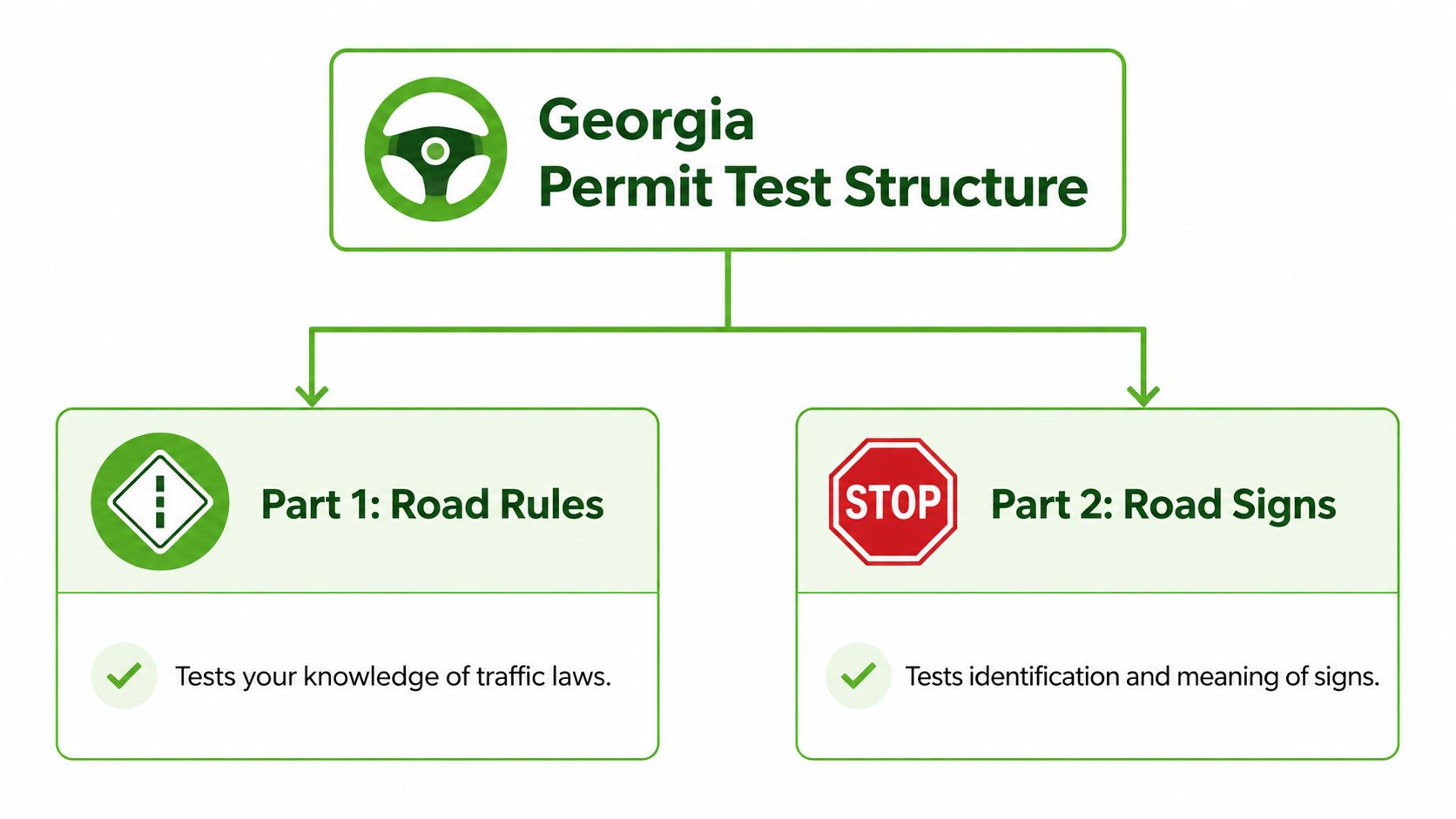
Instead, Georgia uses a bifurcated structure. You take two 20-question sections, one on Road Signs and one on Road Rules, and you must score at least 15 out of 20 on each section to pass, as described in this breakdown of what the Georgia permit test looks like. If you fail either section, you fail the test, even if your combined score would have looked fine on paper.
Why that matters
It is similar to two locked doors; you need a key for both. Being excellent at road rules doesn’t open access to the road signs section, and recognizing signs well doesn’t make up for weak judgment on traffic law.
That structure tells you what Georgia DDS cares about. They want balanced competence. A driver has to recognize visual information on the road and also know what the law requires in the moment.
For anxious test-takers, this changes how you study. Don’t put all your time into the part that feels easier. A lot of people over-study rules because they can read about them in paragraph form, then they neglect sign recognition until the last minute.
A better way to prepare
Use two separate study tracks:
- Road Signs practice: Work on shape, color, symbol recognition, and pavement marking meaning.
- Road Rules review: Study right-of-way, lane use, safe driving obligations, and legal consequences.
- Mixed question sets: After separate practice, switch to blended quizzes so your brain gets used to changing gears quickly.
A common mistake is thinking, “I only need to do well overall.” In Georgia, that mindset causes avoidable failures.
What doesn’t work
Some people try to memorize random practice answers. That approach falls apart because the Georgia structure punishes imbalance. If you skim sign questions and hope to “make it up” on rules, the scoring system won’t let you.
Others treat the signs section as the easy half. It isn’t. Similar-looking signs, pavement markings, and wording differences trip up people who assumed visual recognition would be automatic.
The best study strategy is simple. Divide your time with intent, and test yourself the same way Georgia does.
Topics and Questions You Will Face
The content of the Georgia permit test is more practical than many people expect. It’s not built to reward somebody who only memorized isolated facts the night before. It’s built to see whether you can make sound choices when traffic information comes at you quickly.
Georgia’s test is designed to evaluate applied decision-making, not just rote memorization. Questions reflect real traffic situations, with alcohol awareness topics embedded in Road Rules and pavement markings embedded in Road Signs, as noted in this Georgia permit practice test explanation.
What shows up in the Road Signs section
This part goes beyond naming a stop sign. You need to recognize what a sign or marking means and what action it requires.
Expect questions tied to signs such as:
- Regulatory signs: Signs that tell you what you must or must not do.
- Warning signs: Signs that alert you to changing road conditions or hazards ahead.
- Guide signs: Signs that help direct you to locations, routes, or services.
- Pavement markings: Lines and symbols on the roadway that control movement and position.
A driver who’s had prior violations often benefits from slowing down here. The signs section is really a judgment test in visual form. When a marking tells you not to pass, or a warning sign signals a hazard ahead, the issue isn’t whether you can label it. The issue is whether you understand the safe response.
If you need extra practice with visual recognition, this Georgia road sign test resource is a useful place to sharpen that part of your study.
What shows up in the Road Rules section
The rules half asks whether you know how to act in common and risky driving situations. That includes who goes first, what to do around emergency vehicles, how to respond to traffic controls, and how alcohol or drug use affects lawful driving decisions.
Questions often feel more like mini scenarios than textbook definitions. You may read a situation involving an intersection, a lane change, or an approaching hazard and then choose the safest legal action.
Judgment matters more than recall: If a question sounds like something that could happen on an actual Georgia road, you’re thinking about the test the right way.
Why this matters for reinstatement drivers
People returning to driving after a suspension sometimes make one of two mistakes. They either assume experience will carry them, or they assume the test is just about memorizing the manual. Neither is enough.
A permit test that measures decision-making lines up closely with what courts, evaluators, and risk reduction instructors care about. Safe driving depends on recognition, restraint, and lawful choices under pressure. That’s why permit prep works better when you practice scenarios, not just vocabulary.
Navigating the Test Day Experience
Applicants calm down once they understand the sequence of the day. The permit test isn’t a chaotic mystery. It’s a process, and knowing the process removes a lot of pressure.

What the visit usually feels like
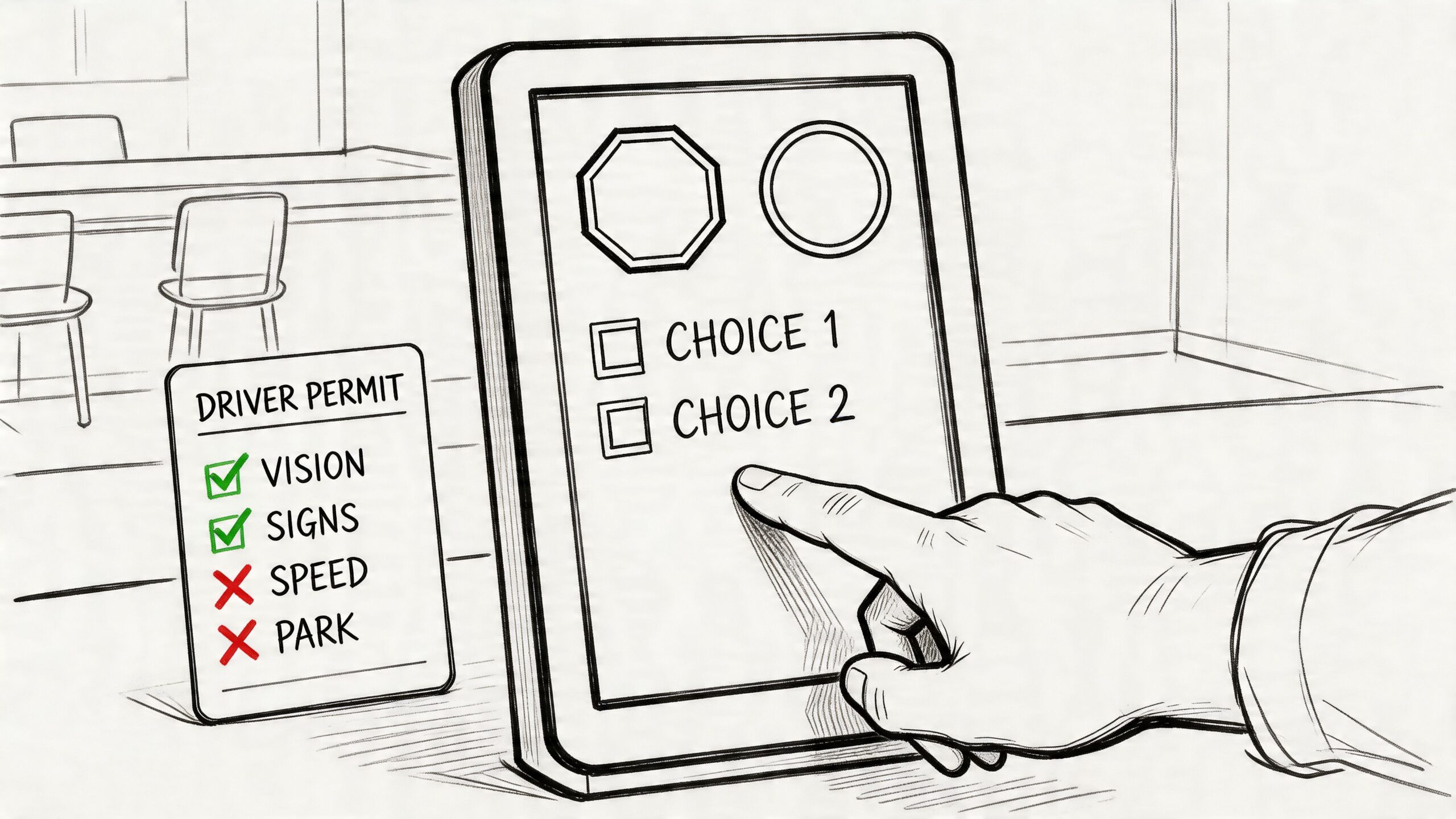
You check in, submit your documents, pay the required fee, and wait for your turn. Once called, you’ll be directed through the DDS process and seated at a computer terminal for the knowledge portion.
The test is typically delivered on a touchscreen system. You read each question on screen, select your answer, and move forward one question at a time. That format can help anxious test-takers because it narrows your focus to one decision in front of you.
How to handle the testing moment
Use a calm, mechanical routine:
- Read the full question first. Don’t jump at the first familiar phrase.
- Identify what the question is really asking. Is it asking what a sign means, or what action a driver should take?
- Eliminate obvious wrong answers. This slows panic and sharpens judgment.
- Answer and move on. Don’t let one hard question disrupt the rest of the session.
There may not be the kind of visible countdown clock that makes every second feel loud, but you still need to work steadily. Lingering too long on one question usually hurts more than it helps.
Go in expecting a computer-based test, a structured check-in process, and a result that depends on calm accuracy, not speed-reading.
If you pass, you move forward in the licensing process. If you don’t, the result is frustrating, but it’s also specific. You go back, tighten your preparation, and retake it with a better understanding of the format.
Your Checklist for Documents and Fees
A surprising number of permit test problems happen before the test even starts. Someone studies hard, drives to DDS, waits in line, and then gets turned away because a document is missing or a name doesn’t match. That kind of mistake is avoidable.
Georgia’s learner’s permit fee is $10, and if you fail, you have to pay the fee again for the next attempt, as noted in this summary of permit test fees and retest policies. That alone is a good reason to walk in organized.
Bring the documents DDS expects
For a practical outside reference on documentation, this guide to permit test requirements is useful because it helps people think through the common categories before they get to the counter.
Use this checklist before you leave home:
| Requirement | Accepted Documents (Examples) | Notes |
|---|---|---|
| Identity | Birth certificate, passport | Bring original or accepted official version |
| Social Security number | Social Security card, approved tax or wage document | Make sure the name matches your other records |
| Georgia residency | Utility bill, bank statement | You’ll typically want recent documents that show your current address |
| Name consistency | Marriage record or court order if applicable | Important if your documents show different names |
| Payment | Valid payment method for DDS fee | Confirm what payment methods your location accepts |
A few details that matter
If you’re trying to reinstate or clean up your driving status, don’t assume old paperwork is enough. Check that your address is current and that every document lines up cleanly.
For a broader step-by-step overview, this guide on how to get your learner's permit in Georgia can help you verify the process before your visit.
The smoothest DDS appointments usually come from simple preparation. Folder your papers. Double-check your name. Don’t rely on memory.
Common Permit Test Pitfalls to Avoid
A lot of smart people miss this test for reasons that have nothing to do with intelligence. They miss it because they study the wrong way, or because stress changes how they read.
One bad assumption is that nervousness only matters on heavily timed exams. In Maryland, the permit test is 20 minutes for 25 questions, and the pressure is obvious, according to this discussion of the Maryland permit practice test. Georgia may not create the same kind of visible countdown pressure, but the stakes can still make people rush, second-guess, or freeze.
Mistakes that show up again and again
- Underestimating road signs: People think signs are common sense until two similar answers sit side by side on a screen.
- Reading too fast: One overlooked word changes the whole question.
- Studying only for memory: Georgia rewards judgment, not just flash-card recall.
- Letting one hard item snowball: A difficult question can shake your confidence if you let it.
What works better under pressure
When someone is testing after a suspension or trying to satisfy reinstatement steps, the emotional load is heavier. That’s real. The answer isn’t to pretend you’re calm. The answer is to use a process that still works when you’re tense.
Try this:
- Pause before you tap: Give yourself one full breath before answering.
- Translate the question: Restate it in plain language in your own head.
- Choose the safest lawful answer: If two options seem close, the one that reflects caution is often the better path.
- Reset after every question: Treat each item as separate. Don’t carry frustration forward.
Anxiety doesn’t mean you’re unprepared. It means the outcome matters to you. The goal is to keep that stress from driving your choices.
Your Action Plan for Passing with Confidence
Good permit prep is usually less dramatic than people think. It’s a short list done consistently.
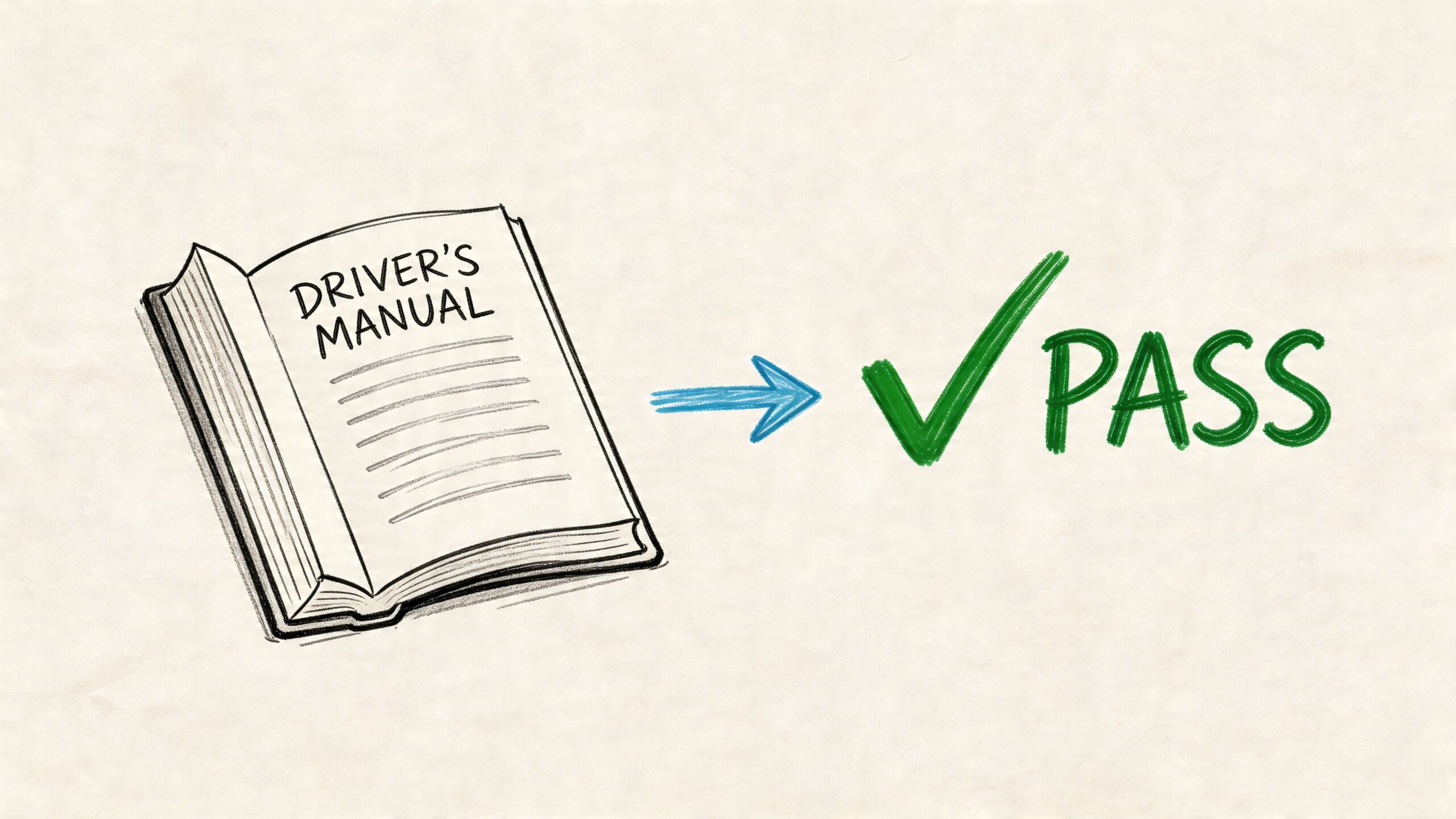
Start with the official Georgia Driver’s Manual. That’s the foundation. Then split your study into the same two categories Georgia uses on the test: signs and rules. Finally, practice answering questions in a way that mirrors real driving decisions, not just memorized lines.
A simple plan looks like this:
- Read the manual in sections: Don’t cram the whole book in one sitting.
- Study signs separately from rules: Georgia tests them separately for a reason.
- Use practice tests to build rhythm: The format gets easier when it stops feeling unfamiliar.
- Review mistakes instead of chasing volume: The lesson is in the missed question.
If you want a useful parallel on how adults prepare for high-stakes testing, these essential tips for passing certification exams apply well here too. The best habits are the same: focus on the source material, practice under realistic conditions, and avoid last-minute panic studying.
Passing the permit test gets you through the door. Safer driving after that comes from stronger judgment, especially if you’re trying to restore trust in your driving record.
If you're working through a DUI-related suspension, a court order, or the steps needed to drive legally again, Georgia DUI Schools offers DDS-approved support through Risk Reduction courses, Defensive Driving, clinical evaluations, and related services that help you move forward with clarity and confidence.