You're probably here for one of two reasons. You've been ordered to complete a Victim Impact Panel after a DUI case in Georgia, and now you're worried there's a quiz attached. Or you searched for victim impact panel quiz answers because you don't want to fail something tied to court compliance.
That reaction is normal. Individuals typically aren't trying to dodge the requirement. They're trying to avoid making a costly mistake, missing a deadline, or getting tripped up by a process they don't understand.
The good news is that the quiz usually isn't built like a trick exam. It's a comprehension check. If you understand how the panel works, pay attention, and prepare the right way, you can get through it without the panic that answer-key websites tend to create.
Your Guide to Navigating the Victim Impact Panel
Getting a court order for a Victim Impact Panel can make everything feel more urgent. You may already be juggling a Risk Reduction course, court dates, insurance issues, and questions about your license. Some people are also thinking ahead about the long-term digital side of a case, including removing arrest records online when public booking information keeps showing up in search results.
The immediate issue, though, is simpler. You need to complete the panel correctly, understand whether your provider uses a quiz, and avoid relying on bad information from random answer banks.
A practical first step is to confirm the exact provider and format assigned to you. In Georgia, that matters more than is commonly understood. An online panel can work very differently from an in-person courthouse panel. If you need a Georgia-approved option, review the Victim Impact Panel course details before you register so you know what kind of completion process applies.
What people usually get wrong
The biggest mistake is searching for victim impact panel quiz answers as if there's one universal answer sheet. There usually isn't. The questions often track the actual stories presented in your assigned panel.
The second mistake is treating the panel like background noise. That approach creates most of the stress people feel later.
Practical rule: If you listen actively and take short notes, the quiz usually becomes manageable.
What actually helps
A better approach is to prepare for the process, not a cheat sheet. That means knowing:
- Which provider assigned the panel
- Whether your panel is online or in person
- Whether a quiz is part of completion
- How proof of attendance or completion is issued
- What details you should pay attention to during each speaker's story
That mindset saves more time than hunting for copied answers that may not match your version.
Understanding the Victim Impact Panel and Its Purpose
You log in or walk into the room expecting another box to check. Then the first speaker starts describing what changed after one impaired-driving incident, and the requirement feels different. That shift is the point of a Victim Impact Panel.
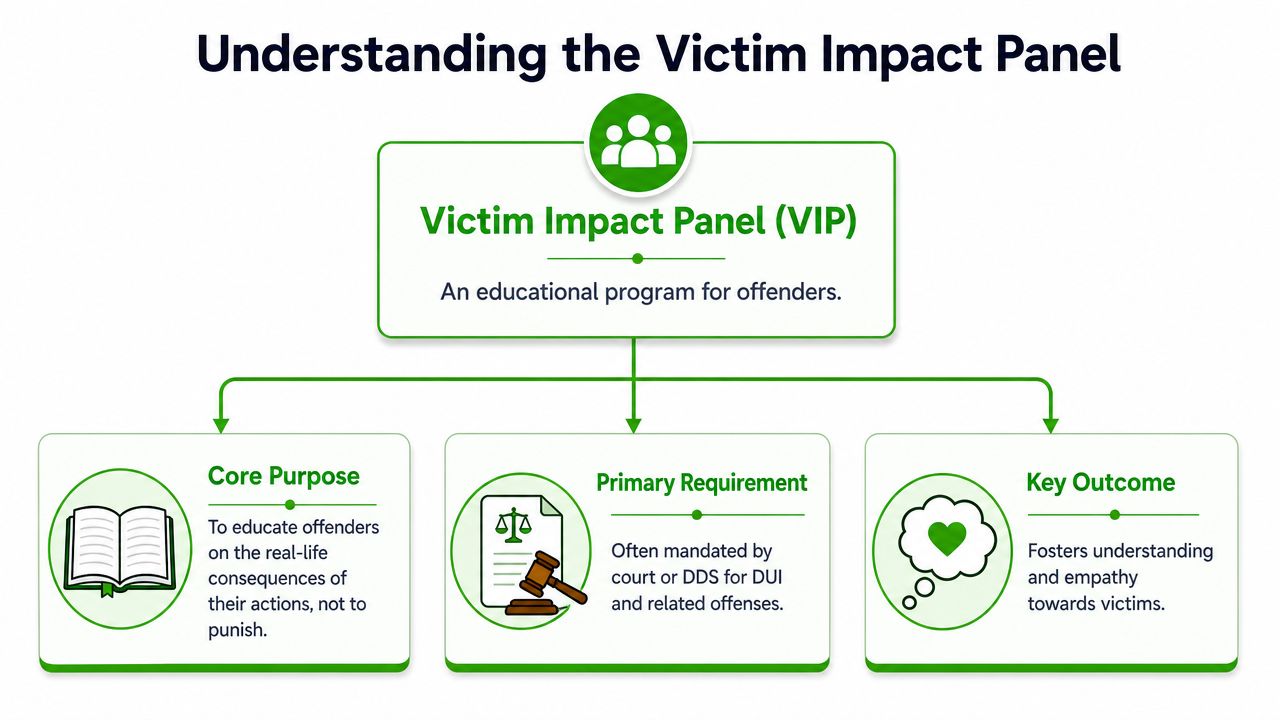
A Victim Impact Panel, or VIP, is a structured awareness program built around real victim testimony. A typical panel uses 3 or 4 victim speakers, and each speaker usually spends about 15 minutes describing the physical, emotional, and financial effects of crime on their lives and families, according to Klamath County's description of victim impact panels.
Courts and providers use this format because personal stories tend to hold attention better than abstract warnings. MADD's history page for victim impact panels explains that the goal is deterrence through victims sharing their experiences. For a participant, that means the panel is built around listening, reflection, and accountability.
That also explains the kind of details that matter during the session. Pay attention to the person speaking, the event they describe, the long-term effects on their family, and the losses that did not end after the case was over. Those are the details that often show up later if your provider includes a quiz.
A Victim Impact Panel quiz usually checks whether you followed the stories and understood their impact.
That is why answer-key websites are such a bad bet. They miss the true purpose of the panel, and they often miss the format of your assigned provider. In Georgia, that distinction matters. A court-approved panel may have its own attendance rules, completion steps, or follow-up questions, so respectful participation is not just the right approach. It is often the practical one too.
Participants who handle this requirement best usually stop treating it like trivia. They listen for cause and effect. Who was hurt, what changed, and what consequences still remain years later.
The same Klamath County resource also notes that victims who speak on panels often report the experience as positive. That matters because you are not watching generic course content. You are hearing people describe harm in public, often to help prevent someone else from repeating it.
Treat the panel seriously, take brief notes if allowed, and stay present for each speaker. That approach does more than help with a quiz. It puts you in step with what the panel was designed to do.
What to Expect from the Victim Impact Panel Quiz
If your provider uses an online format, the quiz is usually built into the course flow. It's not always one big test at the end.
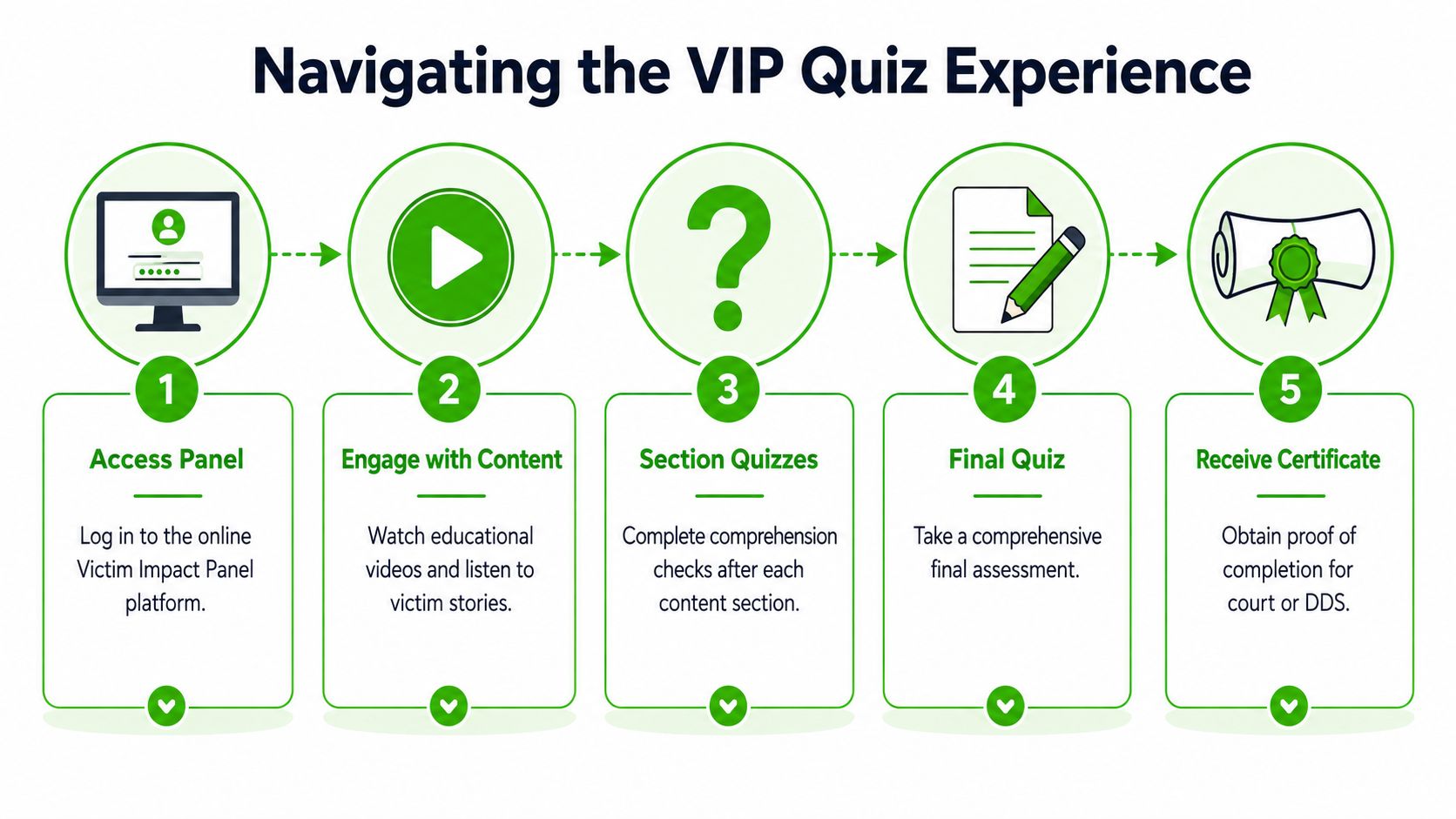
The clearest example is the MADD online format. Its course interface shows multiple teaching units with quizzes, including an introduction, three separate victim-story sections, and a conclusion. Named segments such as Dani's Video, BreeAnn's Video, and Donna & Tommy's Video each appear with their own quiz, which reflects a milestone-based structure where completion is tied to section-by-section knowledge checks, as shown in the MADD online VIP class interface.
How the quiz usually works
That setup tells you something important. The questions are commonly attached to the story you just watched, not to a generic pool of DUI facts.
A participant typically moves through the panel in this order:
- Log in and begin the assigned panel
- Watch a specific victim story
- Answer questions about that segment
- Complete the next story and its quiz
- Finish the full panel and receive proof of completion if all requirements are met
Because the quiz follows each section, memory matters. People get in trouble when they multitask, skip details, or assume they can figure it out from common sense alone.
What the questions usually focus on
Expect questions that check whether you followed the story. These often center on:
- Names of speakers or victims
- Relationships, such as parent, spouse, child, or sibling
- Key events, including what happened in the crash or aftermath
- Consequences, especially emotional, physical, or financial losses
- Specific details mentioned in the video segment
That's why “victim impact panel quiz answers” is a misleading search phrase. The answers usually live inside the panel itself.
If your panel is section-based, treat each video like its own open-book opportunity to pay attention in real time.
What not to assume
Don't assume every Georgia provider uses the exact MADD structure. Some panels are in person. Some are courthouse-based. Some online programs use quizzes, while others focus on attendance or completion confirmation. The important lesson from the MADD model is not that every program looks identical. It's that many online systems are designed around story-by-story comprehension, not a reusable answer sheet.
Sample Questions and How to Approach Them
At this point, people usually calm down. Once you understand the kind of question being asked, the quiz feels less mysterious.
The first thing to know is that copied answer keys are unreliable. At least one search result for MADD victim impact panel material is a third-party study-aid page advertising “expert verified questions with answers,” but the practical problem is that quiz items can be story-specific. A copied answer key may fail if your assigned course uses different victim stories, as reflected by the contrast noted on this Docsity MADD VIP exam page.
Example one with a simple logic check
A speaker says her brother was killed by an impaired driver, and she explains that her family still struggles at birthdays and holidays.
A likely question could be:
- True or False: The incident affected only the victim and did not continue to affect the family.
The right approach is not guessing. It's recalling the theme of the story. If the speaker described ongoing family pain, then the statement is false.
Example two with detail recall
A speaker explains that after the crash he couldn't return to his old work and faced long-term treatment.
A likely multiple-choice question might ask which consequence he described. You'd choose the answer that matches the actual story, not the answer that sounds generally serious.
That's why short notes help. Write down:
- Name
- Relationship
- Main loss
- One or two standout consequences
Example three with emotional content
Some questions aren't about dates or names. They ask whether you understood the impact. If a mother explains how impaired driving changed her family permanently, the question may focus on what emotion or life change she emphasized.
In that sense, this quiz has more in common with listening comprehension than with finding abstract answers to your moral dilemmas. You're being asked to track what a real person said, not solve a philosophical riddle.
A good note sheet for a VIP quiz is small and plain. Names, relationships, consequences. That's enough.
A practical way to think through each item
When you read a question, ask yourself:
| Question to ask yourself | Why it helps |
|---|---|
| Who is this question about | It anchors you to the right speaker |
| What happened in that story | It narrows the factual details |
| What changed after the incident | It points to the impact the panel wants you to understand |
If you can answer those three prompts from your notes, most questions become straightforward.
Practical Tips for Attendance and Passing the Quiz
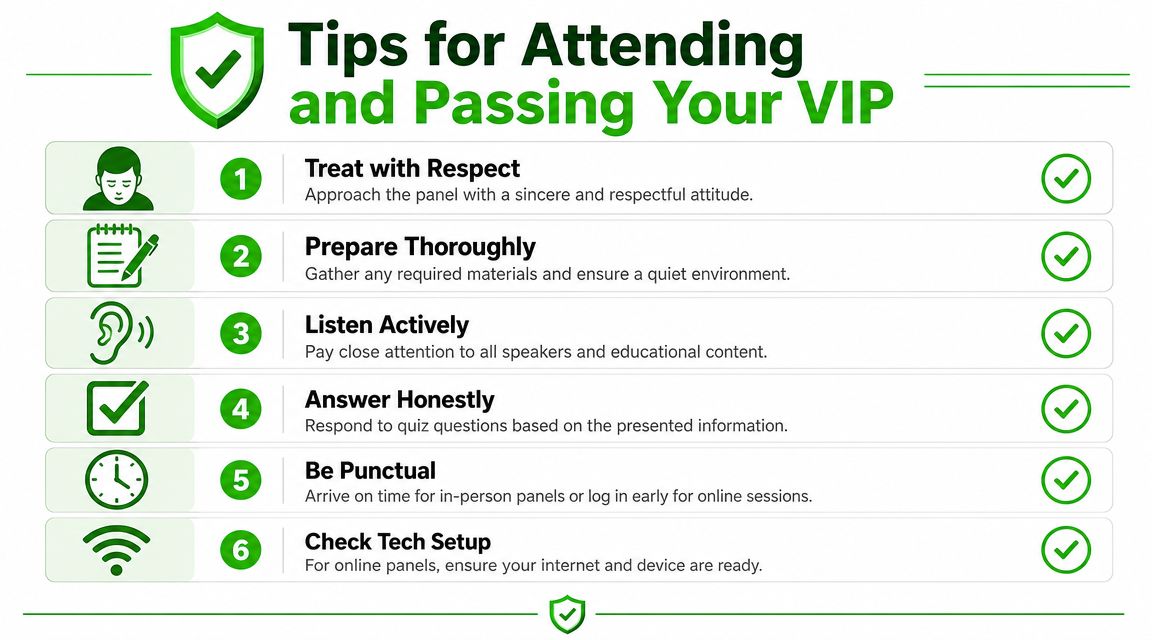
The best preparation is simple. Don't chase shortcuts. Set yourself up to complete the requirement correctly the first time.
One provider states that participants must answer all quiz questions and score at least 70% to pass, but it doesn't explain practical issues like retake limits in much detail, which is why so many people search for answers when what they really want is clarity about passing rules, as shown on AAIM's online panel information page.
Before the panel starts
Handle the logistics first. Stress usually starts before the panel even begins.
- Confirm the assigned format. Make sure you know whether your requirement is online, in person, or court-hosted.
- Check your connection. If you're doing an online panel, test your device, audio, internet, and login details ahead of time.
- Have a note page ready. A pen and paper or a simple notes app is enough.
- Verify proof requirements. If your court, probation officer, or program needs a certificate or confirmation, make sure you know how it will be issued. For a Georgia example of the documentation workflow, review the Victim Impact confirmation details.
While you're attending
Most quiz problems come from distraction, not difficulty.
- Listen like details matter. Because they often do.
- Put your phone away unless the platform requires it.
- Don't skip around in an online panel.
- Take brief notes only. Don't try to transcribe the entire story.
A useful note pattern looks like this:
| Speaker | What to note |
|---|---|
| Victim or family member name | Name and relationship |
| Event described | Crash, injury, death, aftermath |
| Main impact | Physical, emotional, financial, family change |
When the quiz appears
Slow down. Most wrong answers happen because people rush.
Best habit: Read the full question, then match it to your notes before clicking.
If you miss an item, don't spiral. Focus on the next question. The goal is completion with understanding, not finishing in record time.
Georgia-Specific Victim Impact Panel Requirements
A Georgia participant can do everything "right" and still run into trouble if the wrong panel is used for the wrong requirement. That is the practical risk here. Courts, probation offices, and providers do not always handle Victim Impact Panels the same way, and the quiz is only one part of that picture.
Official local guidance reflects that difference. Some panels are tied to a court schedule. Some are community-run. Some are online and end with a short quiz. Others focus more on attendance and proof of completion, which is the practical distinction reflected in the Henry County FAQ.
The question Georgia participants need to ask first is simple. What, exactly, will your court or provider accept?
Check these points before you register:
- Approval status. Confirm the panel satisfies your specific court, probation, or program requirement.
- Format. Verify whether you must attend in person, online, or through a courthouse-hosted session.
- Completion method. Ask whether completion is based on attendance, a certificate, a quiz, or a combination.
- Submission process. Find out who receives proof of completion and when it must be turned in.
That step saves people from the most common mistake I see. They search for "victim impact panel quiz answers," assume every panel works the same way, and miss the core issue, which is provider-specific compliance.
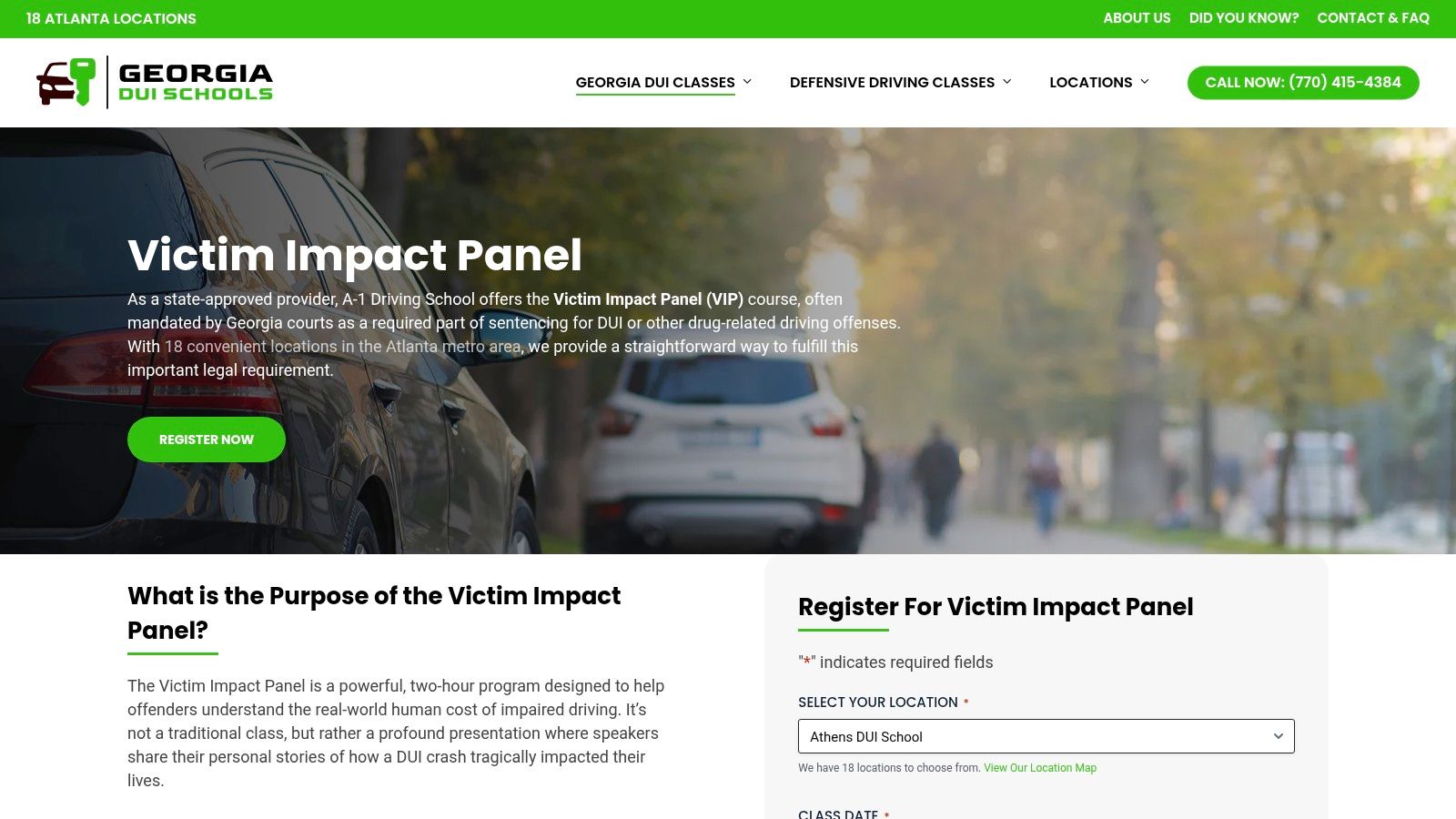
Georgia DUI Schools is one example of a Georgia-based provider offering a Victim Impact Panel as part of its DUI-related course services. The practical value is straightforward. Participants can verify the format, completion expectations, and documentation process before signing up.
Use that approach with any provider you choose. Confirm acceptance first. Attend carefully. Treat the quiz as a check on attention and understanding, not as something to outsmart.