
A traffic ticket in Georgia can turn an ordinary day into a hard one fast. You look at the citation, then you start doing the math in your head. How many points is this. Will DDS suspend my license. Is this one ticket, or is this the ticket that pushes everything over the edge.
Most drivers aren't worried about the fine first. They're worried about what follows them after court. Points. Insurance. Work transportation. Whether a judge, DDS, or their insurer will treat this as a pattern instead of a single mistake.
That worry is justified. Georgia's system is strict, and it doesn't leave much room for guessing. The biggest problem I see is confusion. Drivers hear about defensive driving, DUI school, risk reduction, point removal, reinstatement, and insurance discounts as if all of those are the same thing. They aren't.
If you're trying to figure out how to reduce points on license records in Georgia, the answer is specific. It depends on your age, your current point total, the type of conviction involved, and whether you're trying to act before a suspension or recover after one. The right move is often simple. The wrong move wastes time and sometimes leaves the points exactly where they were.
That Sinking Feeling a Traffic Ticket Brings
A common Georgia scenario goes like this. A driver in Atlanta gets pulled over on I-285 for speed. A week later, someone in Athens gets cited for running a red light. Another driver in a smaller county pays the ticket online without thinking much about it, then finds out later that paying it counted as resolving the case and allowed points to hit the record.
The emotional sequence is almost always the same. First comes the annoyance. Then the search. Then the panic once the driver starts reading about DDS suspensions, insurance consequences, and court records.
The first question is usually the right one
The question isn't just, "How much is this ticket?"
It's, "What does this conviction do to my license?"
That shift matters because Georgia handles moving violations through a points system, and the practical damage often comes from accumulation. One ticket may be manageable. Several tickets in a short period can create a much larger problem.
Practical rule: Treat every ticket as a license issue first, a fine issue second.
Drivers often make one of three mistakes in this stage:
- They pay too quickly: Paying before understanding the point consequence can close off better options.
- They take the wrong course: A driver who needs point reduction may sign up for a DUI or Risk Reduction program that does not serve the same purpose.
- They wait too long: If you're already close to a DDS threshold, delay is expensive.
What helps most
Clarity helps more than optimism. You need to know your point exposure, whether you're still eligible for voluntary point reduction, and whether you're dealing with a standard moving violation or a situation that triggers separate requirements.
For Georgia drivers, the path is not mysterious once you strip away the bad advice. Understand the point system. Use the correct course if you're eligible. Submit what DDS requires. Confirm that your record changes.
That's how you keep a stressful ticket from becoming a license suspension problem.
Understanding the Georgia Driver's License Points System
Georgia DDS assigns points after a traffic conviction, not when the officer hands you the citation. That distinction matters. A ticket is still a problem, but points attach after the case is resolved in a way that reports as a conviction.
The system is straightforward once you separate three different issues that drivers often mix together: ordinary license points, Super Speeder consequences, and post-suspension requirements. Under Georgia point system guidance, drivers 21 and older face suspension at 15 points within 24 months. Drivers under 21 face a much lower margin for error, and a single 4-point offense can trigger serious consequences.
What common violations add
Georgia does not treat every moving violation the same. The point value rises with the seriousness of the offense, which is why two speeding tickets can carry very different license risk.
| Violation Type | Points Assigned |
|---|---|
| Speeding 15 to 18 mph over | 2 |
| Speeding 19 to 23 mph over | 3 |
| Speeding 24 to 33 mph over | 4 |
| Speeding 34 mph or more | 6 |
| Running a red light | 3 |
| Failure to yield | 3 |
| Aggressive driving or serious speeding | 6 |
A practical example helps. A driver over 21 who picks up one 4-point speeding conviction is not near suspension yet. An under-21 driver may be in a very different position. That is why younger drivers cannot treat a higher-point ticket as routine.
Why Georgia drivers get confused about courses
At this stage, I see costly mistakes.
A Defensive Driving or Driver Improvement course can help an eligible driver reduce points voluntarily before suspension. It is a preventive tool. A DUI Alcohol or Drug Use Risk Reduction course serves a different purpose and often comes up after a DUI, drug offense, or certain suspension and reinstatement situations. Drivers who want point relief should make sure they are looking at the Georgia defensive driving course options that lower insurance and support eligible point reduction, not signing up for the wrong class and hoping DDS treats it the same way.
DDS does not treat them the same way.
Super Speeder is separate from points
Super Speeder is another source of confusion. It is not a substitute for the regular points system, and it does not erase points either. It is an added state penalty that can sit on top of the underlying conviction.
That means a driver can be dealing with two separate compliance problems at once:
- points from the moving violation
- a separate Super Speeder payment requirement
Miss either one and the situation gets worse fast.
How long points stay active
Georgia counts points for 24 months from the conviction date. For many drivers, timing changes the right strategy. If several convictions landed close together, the calendar matters almost as much as the latest ticket. In some cases, the smart move is immediate point reduction if the driver is eligible. In others, the focus should be keeping the record clean while older points age off.
Suspension changes the problem
Once DDS suspends the license for too many points, the issue is no longer simple point management. It becomes reinstatement. That usually means handling the suspension terms, paying what DDS requires, and in some cases completing a Risk Reduction course before driving privileges are restored. That is very different from taking a voluntary course to reduce points before a suspension happens.
Keep the distinction clear:
- Before suspension: eligible drivers may reduce points through the correct DDS-approved course
- After suspension: the driver must satisfy reinstatement requirements
- If alcohol or drugs are involved: separate DUI or Risk Reduction rules may apply, even if the driver is also worried about points
Georgia's rules are strict, but they are not mysterious. Check your current point total, identify the point value tied to the new conviction, and figure out whether you are still in the prevention stage or already dealing with reinstatement. That answer determines the right next step.
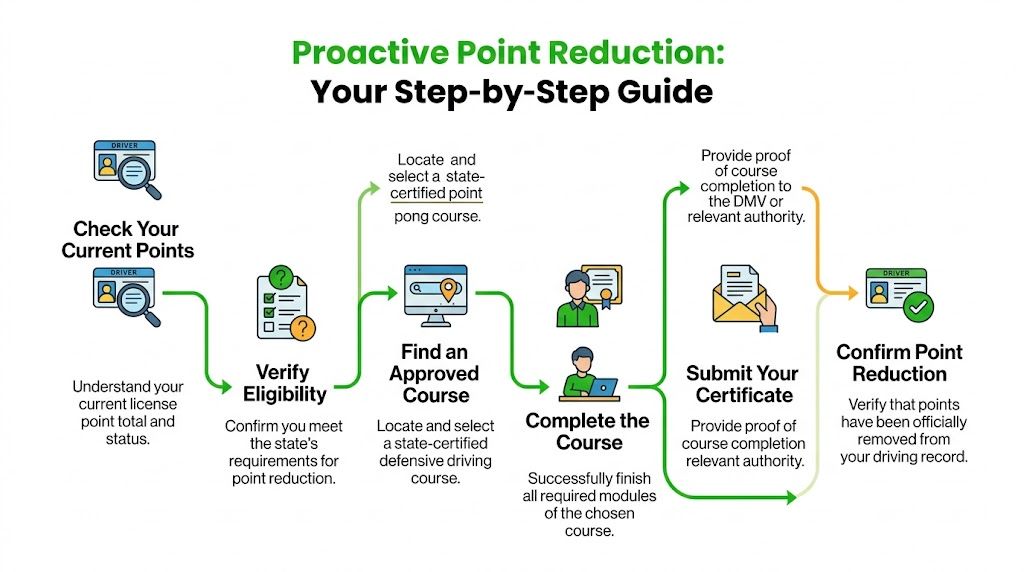
Your Step-by-Step Guide to Proactive Point Reduction
A common Georgia mistake looks like this. A driver gets another ticket, knows the point total is getting close, signs up for the first class they find, and assumes the problem is handled. Then DDS never posts a reduction because the driver was not eligible, chose the wrong course type, or failed to submit the certificate correctly.
For drivers who are still in the prevention stage, Georgia gives one narrow tool: a DDS-certified 6-hour Driver Improvement course. Eligible drivers can remove up to 7 points once every 5 years, and the state limits what providers can charge for that course, as explained in these Georgia point reduction rules and filing details.
That option works before suspension. It is a preventive step, not a reinstatement shortcut.
Step one, confirm that DDS will still give you the credit
Check your current Georgia driving record first. Then check whether you have already used the 5-year point reduction benefit.
I tell drivers to do this before they spend a dollar. Taking a class too early, too late, or for the wrong reason wastes time and course fees.
Step two, choose the correct DDS-approved course
This part causes more confusion than it should. For ordinary traffic-point reduction, the course must be a DDS-approved Defensive Driving or Driver Improvement program.
Format matters less than approval. Some drivers do better online because of work schedules. Others retain more in a live or classroom setting. If you want a practical overview of formats and what the course typically covers, review this Georgia defensive driving course to lower insurance.
Do not guess based on the course title alone. In Georgia, Defensive Driving and DUI Risk Reduction serve different legal purposes. Choosing the wrong one will not get your points reduced.
Step three, complete all required course hours
DDS expects the full course to be completed. Partial attendance does not qualify.
The practical value goes beyond the certificate. Drivers who pick up repeat violations usually have a pattern: following too closely, speed creep, rushed lane changes, or distracted decisions at familiar intersections. A good course forces that pattern into the open.
Finish the full DDS-approved course and keep proof that you completed it successfully.
Step four, secure your completion certificate and protect your copy
After you finish, get the original completion certificate. Make a copy for your records immediately.
That copy matters if the original is lost in transit or if DDS processing takes longer than expected. Drivers often focus on the class and get sloppy with the paperwork. In Georgia, the paperwork is what triggers the benefit.
Step five, submit the certificate the way DDS requires
For point reduction, Georgia DDS requires the original certificate. You can submit it in person or mail it to:
P.O. Box 80447, Conyers, GA 30013
Use a simple checklist before you send it:
- Confirm your name matches your DDS record.
- Keep a copy of the certificate.
- Submit the original certificate.
- Use the correct DDS mailing address, or deliver it in person.
- Check later to make sure DDS posted the reduction.
Step six, verify that your record actually changed
Do not assume the class fixed the problem just because you completed it.
I have seen drivers say, "I took defensive driving already," while their DDS record still showed the old total. Until the reduction appears on the record, treat the points as still active. That is especially important if another conviction could push you into suspension territory.
What proactive point reduction can and cannot do
This process can reduce eligible points on your Georgia record. It does not erase the underlying ticket, dismiss a court case, or satisfy post-suspension reinstatement terms.
That distinction matters. A voluntary Defensive Driving course is for drivers trying to stay out of suspension. Once a suspension is in place, the task changes from point reduction to compliance with DDS reinstatement requirements.
Choosing the Right Course Defensive Driving vs DUI Risk Reduction
A driver gets a speeding ticket, signs up for the first class that looks familiar, finishes it, and then learns the certificate does not solve the DDS problem. I see that mistake all the time in Georgia. The course name sounds close enough, but the legal purpose is different.
If you want to avoid more trouble on your Georgia record, choose the course based on the job it is supposed to do.
Defensive driving is for voluntary point reduction
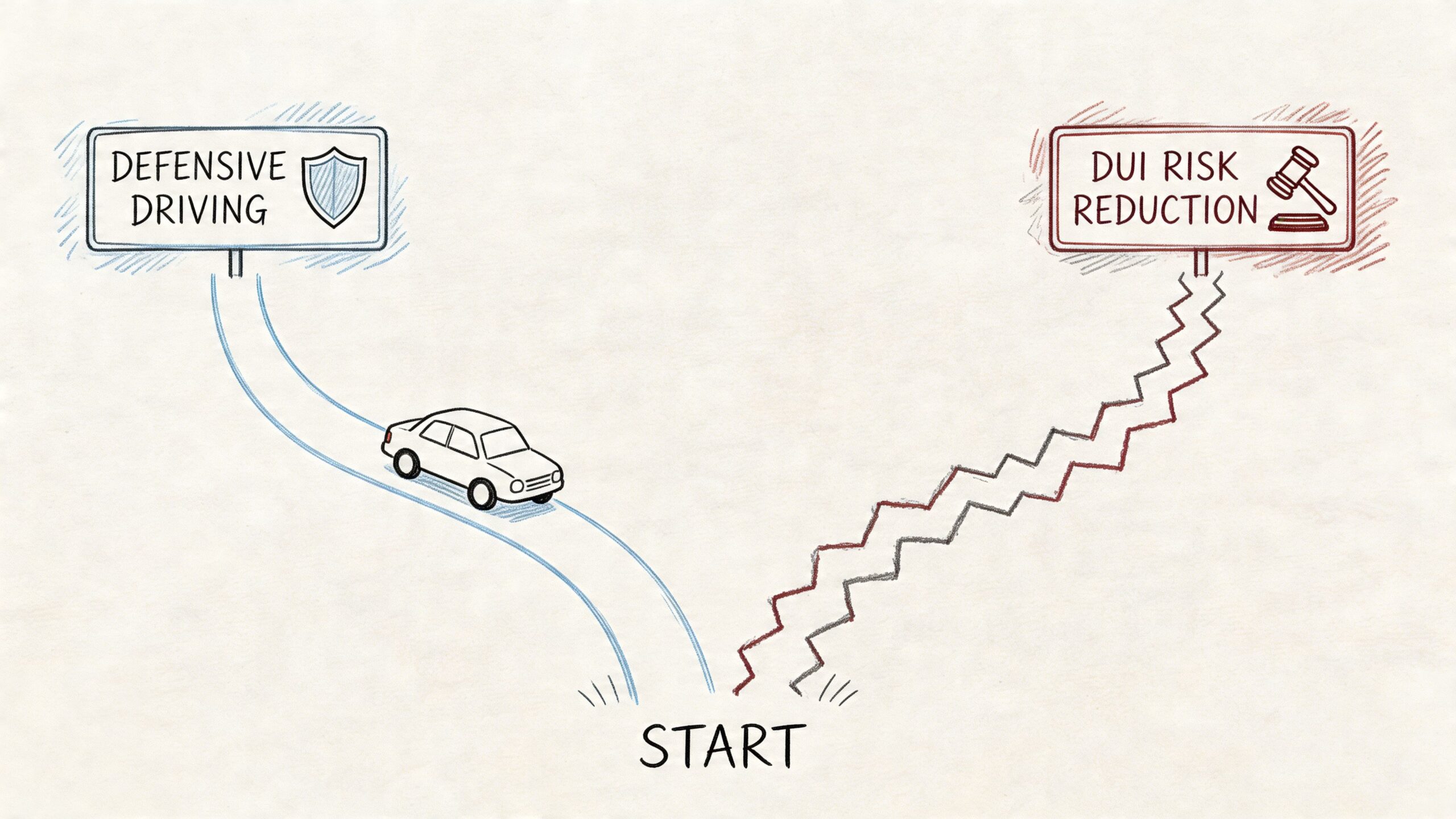
In Georgia, a Defensive Driving or Driver Improvement course is the class tied to proactive point reduction for eligible drivers. This is the course used in ordinary traffic cases when the goal is to lower the active point total on a Georgia driving record.
It can also matter for insurance discussions, but its main value here is simple. It helps an eligible driver reduce points before the record reaches suspension territory.
DUI Risk Reduction is for DUI-related compliance
A DUI Risk Reduction course serves a different function. It is used for DUI, drug-related, and reinstatement situations, not for ordinary voluntary point reduction after a standard moving violation.
That distinction causes a lot of confusion because drivers use the word "driving class" to describe both. DDS and the courts do not treat them as interchangeable. Earlier guidance on course eligibility and point reduction confusion makes that clear in this overview of how point reduction rules differ by situation.
Side-by-side comparison
| Course Type | Main Purpose | Common Use |
|---|---|---|
| Defensive Driving / Driver Improvement | Voluntary point reduction for eligible drivers | Traffic ticket point management, insurance-related use |
| DUI / Risk Reduction | Mandatory compliance tied to DUI or drug-related matters | Reinstatement and state or court requirements |
Evaluations are a separate requirement
Drivers also mix in clinical evaluations, and that creates another layer of error. An evaluation is not part of routine point reduction after a speeding ticket or similar traffic conviction.
It usually comes up because a court, probation officer, treatment provider, or DDS requirement is tied to alcohol or drugs. If that applies, follow the exact order or reinstatement instruction. A defensive driving certificate will not replace a required evaluation, and a DUI Risk Reduction class will not reduce points from an ordinary traffic case.
The wrong course can leave you with a completion certificate that means nothing for the problem you are trying to solve.
Match the course to the legal goal
The practical rule is straightforward:
- Need voluntary point reduction from ordinary traffic convictions: Defensive Driving
- Need to satisfy DUI-related or reinstatement requirements: DUI Risk Reduction
- Need an evaluation because the court or state requires it: Complete that requirement separately
That is the Georgia-specific split drivers need to understand. One course is a proactive tool for eligible point reduction. The other is a compliance requirement that usually shows up after a DUI or related licensing problem already exists.
If you need help sorting through course categories before enrolling, these Georgia drivers education classes give a clearer picture of which program fits each situation.
Beyond Points The Impact on Your Insurance and Court Case
Reducing points matters for DDS. But most drivers care about two additional problems just as much. Insurance cost and how the ticket gets handled in court.
Those two issues don't always move in lockstep with DDS points. A driver can resolve one side poorly and still feel the impact elsewhere.
Insurance usually reacts to the broader record
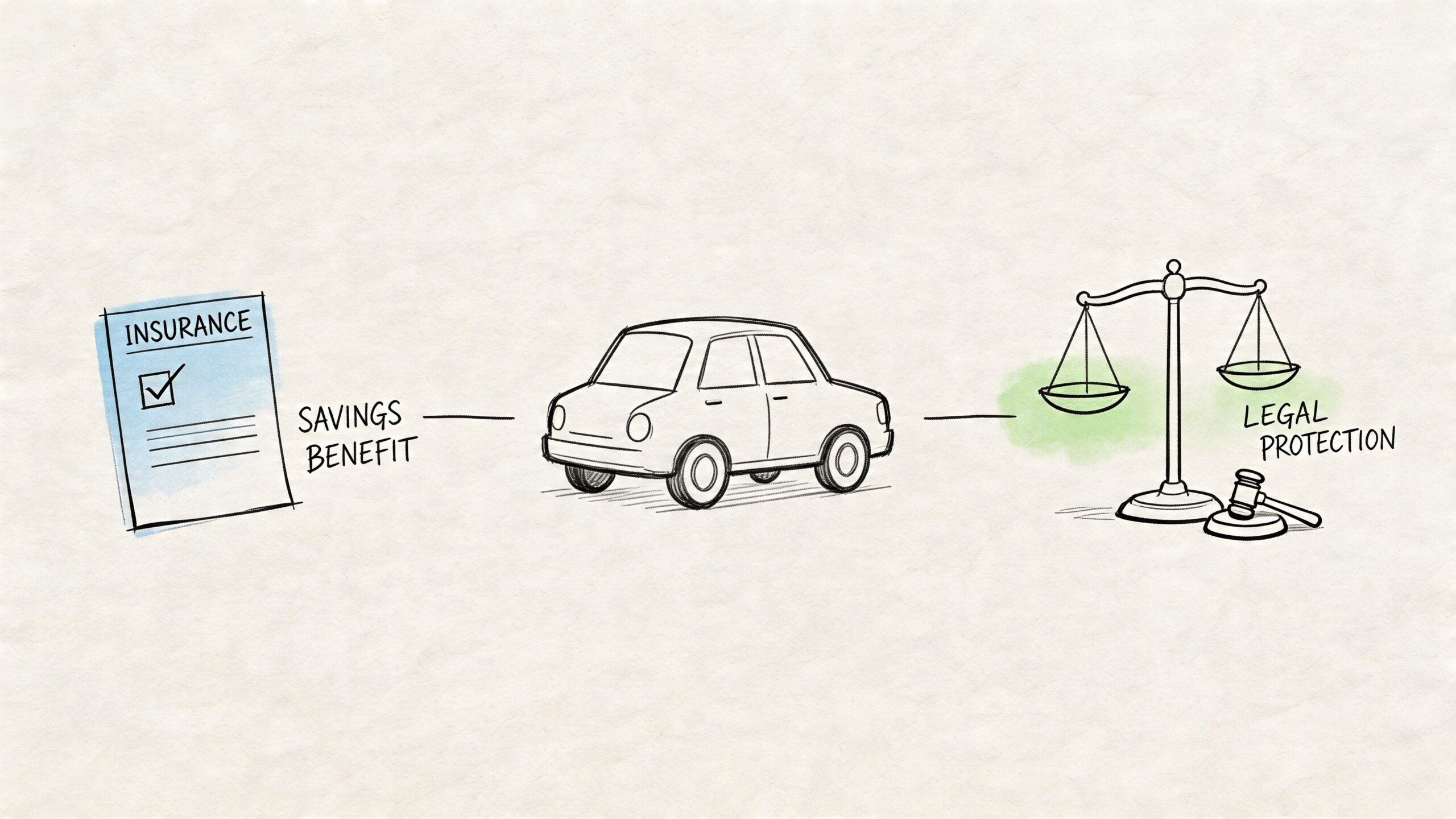
Insurers don't think the same way DDS does. DDS is tracking legal point totals and suspension thresholds. Insurance companies look at driving history as risk.
That means a driver can be relieved to see points age off later, while still feeling pressure from the underlying conviction history in the meantime. This is one reason drivers ask about defensive driving even when they are not yet close to suspension. They are trying to contain the bigger ripple effect.
If lowering the total cost of ownership is part of your goal, this guide on how to lower car insurance rates gives useful context on where a course fits into that broader picture.
A course can help your position, but it doesn't erase the case
In real traffic practice, course completion can sometimes help show a judge, prosecutor, or court officer that the driver took the citation seriously. That can matter when a driver is trying to pursue a better outcome.
But there is an important trade-off. A defensive driving certificate is not a magic wand. It doesn't force a court to rewrite a charge, and it doesn't automatically convert a reporting offense into a no-point result. Court strategy depends on the county, the charge, the driver's record, and the timing of the request.
A course is strongest when it supports a broader plan. It is weakest when a driver treats it like automatic immunity.
The cost question drivers should ask
The better question isn't, "Is the course inconvenient?"
It's, "What's the cost of doing nothing?"
Doing nothing can leave you with:
- A higher point total: Which narrows your margin for future mistakes.
- A weaker position in court: Because you haven't shown any proactive effort.
- Insurance consequences: Which often outlast the moment you pay the ticket.
The course is usually a one-time action. The effects of a bad driving record can linger in multiple places at once.
What actually works
What works is acting early and matching the action to the problem. If the issue is an ordinary traffic pattern and you're still eligible, proactive defensive driving makes sense. If the issue is already a suspension or a DUI-based requirement, you need a different compliance path.
Drivers get into trouble when they focus only on the fine amount. The main issue is the record. Protecting that record is what preserves options.
Georgia Point Reduction FAQ and Your Next Steps
Some questions don't fit neatly into a straight explanation because they depend on timing, age, or the kind of case involved. These are the questions drivers usually ask once they understand the basics.
Common questions
Can I reduce points after I am already suspended?
Not through the ordinary proactive point-reduction approach. Once you're in a suspension situation, the issue becomes reinstatement compliance rather than simple point management.
Do points disappear on their own?
Yes. As covered earlier, Georgia points fall off after the applicable record period tied to the conviction date. That natural drop-off can matter when you are close to a threshold.
Can I just take any driving class and have DDS remove points?
No. The course has to be the right kind of state-approved program for point reduction, and you must still be eligible to use that benefit.
If I had a DUI, can I use defensive driving for point reduction?
No. A DUI conviction disqualifies that use, which is why course selection matters so much in Georgia.
How do I know which problem I have?
Separate your issue into one of these buckets: ordinary moving violation, approaching DDS suspension, active suspension, or DUI-related reinstatement. Once you identify the bucket, the right path becomes clearer.
Mistakes that create bigger problems
A short list is often more useful than another long explanation:
- Paying first and researching later: That can lock in a conviction result.
- Assuming all classes are interchangeable: They aren't.
- Missing the DDS filing step: Completing a course without proper submission leaves the record unchanged.
- Waiting until the threshold is too close: Early action gives you more room.
If your record is getting crowded, every new ticket should be handled with your total history in mind, not as an isolated event.
A next-steps checklist you can use today
- Review your recent violations and identify which convictions are already on your record.
- Check whether you're eligible to use the voluntary defensive driving point-reduction benefit.
- Confirm the course type before enrolling. Defensive Driving and DUI Risk Reduction are not substitutes for each other.
- Complete the course fully and keep your paperwork.
- Submit the certificate correctly and follow up until DDS reflects the change.
- Address any court or reinstatement issue separately if your case involves more than ordinary traffic points.
When to slow down and get help
If your situation involves a DUI, a drug-related offense, a suspension notice, a reinstatement requirement, or a court order for added services such as a clinical evaluation, don't treat it like a routine point-reduction matter. That kind of case usually requires a more specific compliance plan.
For ordinary traffic point issues, speed matters. For DUI and reinstatement matters, precision matters even more.
Take Control of Your Driving Record Today
Georgia drivers usually don't have a license problem all at once. They get there one paid ticket, one ignored deadline, or one wrong course at a time. The good news is that point problems are often manageable when you deal with them early and use the correct process.
If your goal is to reduce points before DDS moves toward suspension, the path is practical. Know your record. Confirm you're eligible. Take the correct defensive driving course. Submit the certificate the right way. Then verify that DDS posted the reduction.
If your case involves DUI or reinstatement requirements, don't confuse those obligations with voluntary point reduction. They are different systems with different consequences. Treating them as interchangeable is where many drivers lose time.
The drivers who protect their licenses usually do one thing well. They stop guessing. They act before the record gets away from them.
If you're ready to handle the point-reduction side correctly, start with the course that matches that purpose and complete the process from enrollment through DDS confirmation.
If you need a Georgia-approved option for voluntary point reduction, insurance-related defensive driving purposes, or a safer way to get ahead of your record before it worsens, enroll through Georgia DUI Schools.