Your teenager has a learner's permit, the family car is available, and the road test suddenly feels close. Then comes the question every Georgia parent hears: How many hours of driving are really needed before the test? The legal answer matters, but it's only part of the decision. A young driver also needs enough varied, supervised practice to handle traffic, weather, nighttime conditions, and unexpected hazards without relying on luck.
Georgia's requirements under Joshua's Law create a starting framework for supervised driving and driver education. They also teach a broader lesson that applies long after a new driver earns a license. Safe driving depends on repeated practice, sound judgment, and responsible choices, including never driving under the influence.
The Big Question for New Georgia Drivers
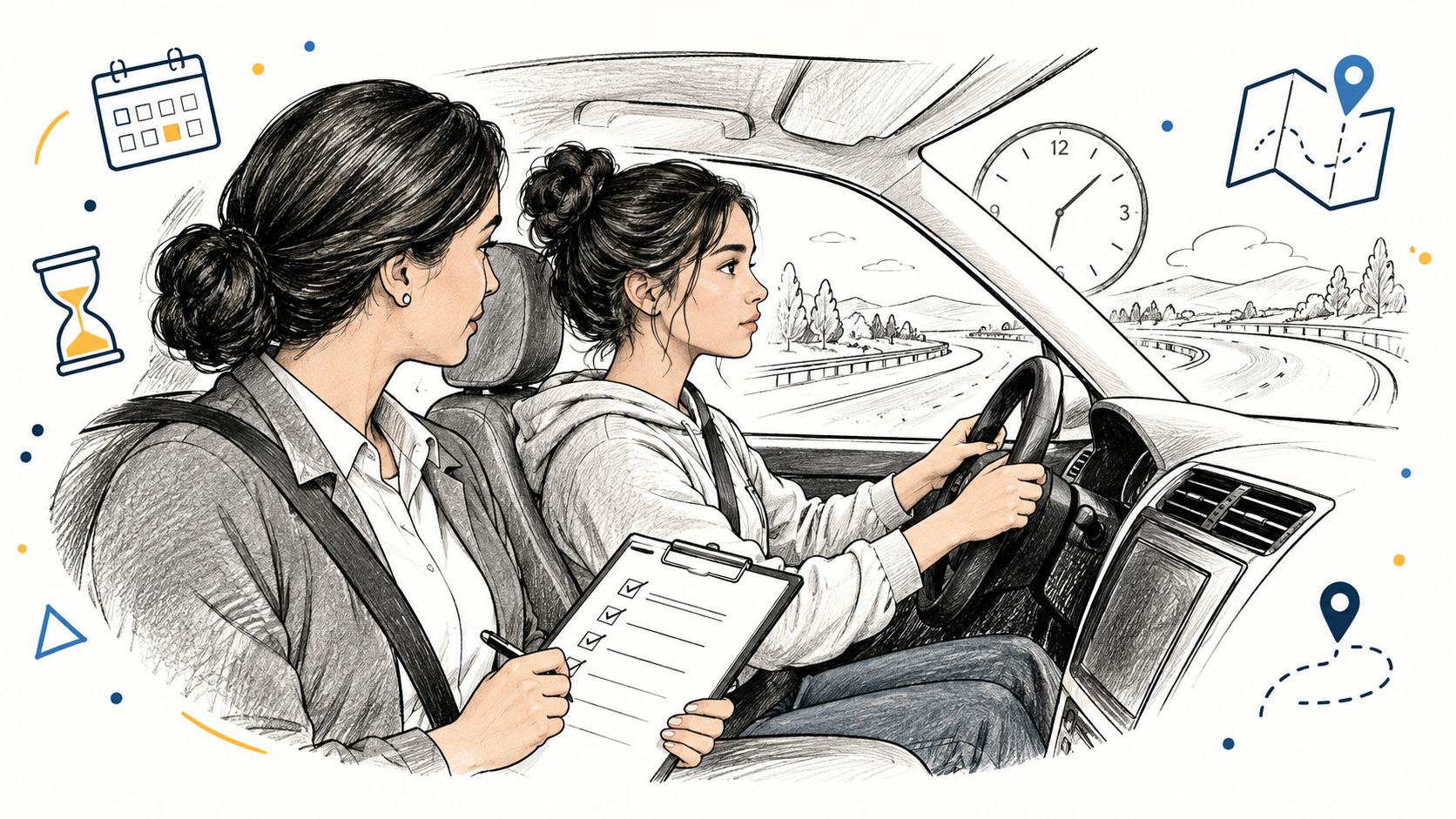
A new Georgia driver often sees the road test as the finish line. A parent may see it differently. The teen wants independence, while the parent is watching lane position, braking distance, mirror use, and whether the driver notices a pedestrian near a crosswalk.
That tension is normal. Learning to drive combines excitement with anxiety, especially when families must sort through permit rules, driver education, supervised practice, and test scheduling. The number of hours matters because inexperienced drivers need time to build automatic habits, but the clock alone can't tell you whether someone is ready.
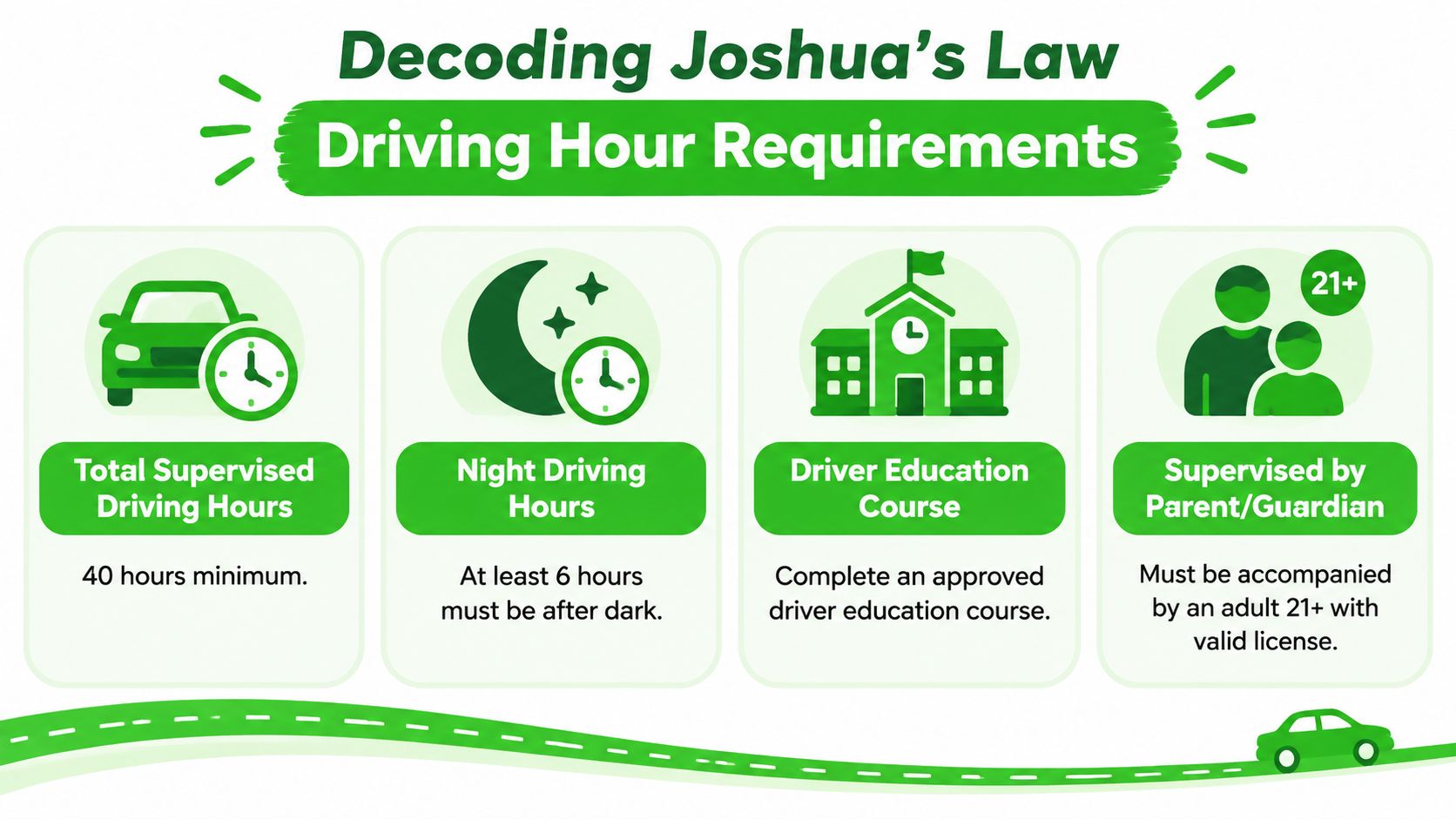
For Georgia teens covered by Joshua's Law, the practical preparation includes 40 hours of supervised driving, including at least 6 hours at night, along with an approved driver education course. Those requirements should be treated as a foundation, not as permission to stop practicing the moment the log is complete.
Parents and teens should also separate two ideas that often get mixed together. Legal eligibility answers whether the driver has completed the required steps. Road readiness answers whether the driver can make safe decisions consistently when conditions change.
A family beginning the permit process can review the documentation and eligibility steps in this guide to getting a learner's permit in Georgia. Keep the focus on habits, not merely on reaching a number. A driver who has practiced only quiet neighborhood routes may still feel overwhelmed by multilane roads, busy intersections, unfamiliar areas, or driving after dark.
The deeper purpose of supervised practice is responsibility. Learning traffic rules helps a driver pass an examination, while applying those rules helps protect passengers, pedestrians, and other motorists. That same responsibility continues into adulthood, when poor decisions can lead to crashes, license consequences, DUI charges, or court-ordered education.
Decoding Joshua's Law Driving Hour Requirements
Georgia's Joshua's Law requirements give teenage drivers a clear preparation target. For the supervised-driving portion, the central figure is 40 hours, with at least 6 hours completed at night. The teen must also complete a 30-hour approved driver education course as part of the applicable preparation process.
The required components
- Supervised practice: Record at least 40 hours of supervised driving. The practice should cover ordinary roads as well as more demanding conditions.
- Night driving: Include at least 6 hours after dark. Night practice develops awareness under reduced visibility and helps the learner manage headlights, glare, and changing visual cues.
- Driver education: Complete the required 30-hour driver education course approved for the relevant Georgia licensing pathway.
- Qualified supervision: Practice with a responsible, properly licensed adult who can observe the drive, give calm feedback, and intervene when safety requires it.
These requirements work together. A classroom course can explain right-of-way rules, signs, defensive-driving principles, and impaired-driving risks. Supervised practice gives the learner an opportunity to apply those principles behind the wheel. Night driving adds a condition that a learner may not experience during ordinary daytime lessons.
Georgia's threshold also fits into a wider pattern of licensing systems that require substantial supervised experience. In New York State, a learner permit holder must complete 50 hours of supervised practice, including at least 15 hours after sunset, according to the New York pre-licensing requirements. In New South Wales and Victoria, eligible young learners in Australia use a 120-hour benchmark, including 20 nighttime hours, as part of their licensing requirements.
The comparison doesn't make another jurisdiction's rule apply in Georgia. It shows why practice-hour policies commonly emphasize both total experience and nighttime exposure. You can find a focused preparation resource in this Joshua's Law test guide, then confirm current requirements with Georgia DDS before arranging a road test.
How to Properly Log and Verify Your Driving Hours
A completed log should tell a clear story. If a parent and teen wait until the last moment to reconstruct months of practice, they may forget dates, confuse daytime and nighttime sessions, or record estimates that don't accurately reflect the driving completed.
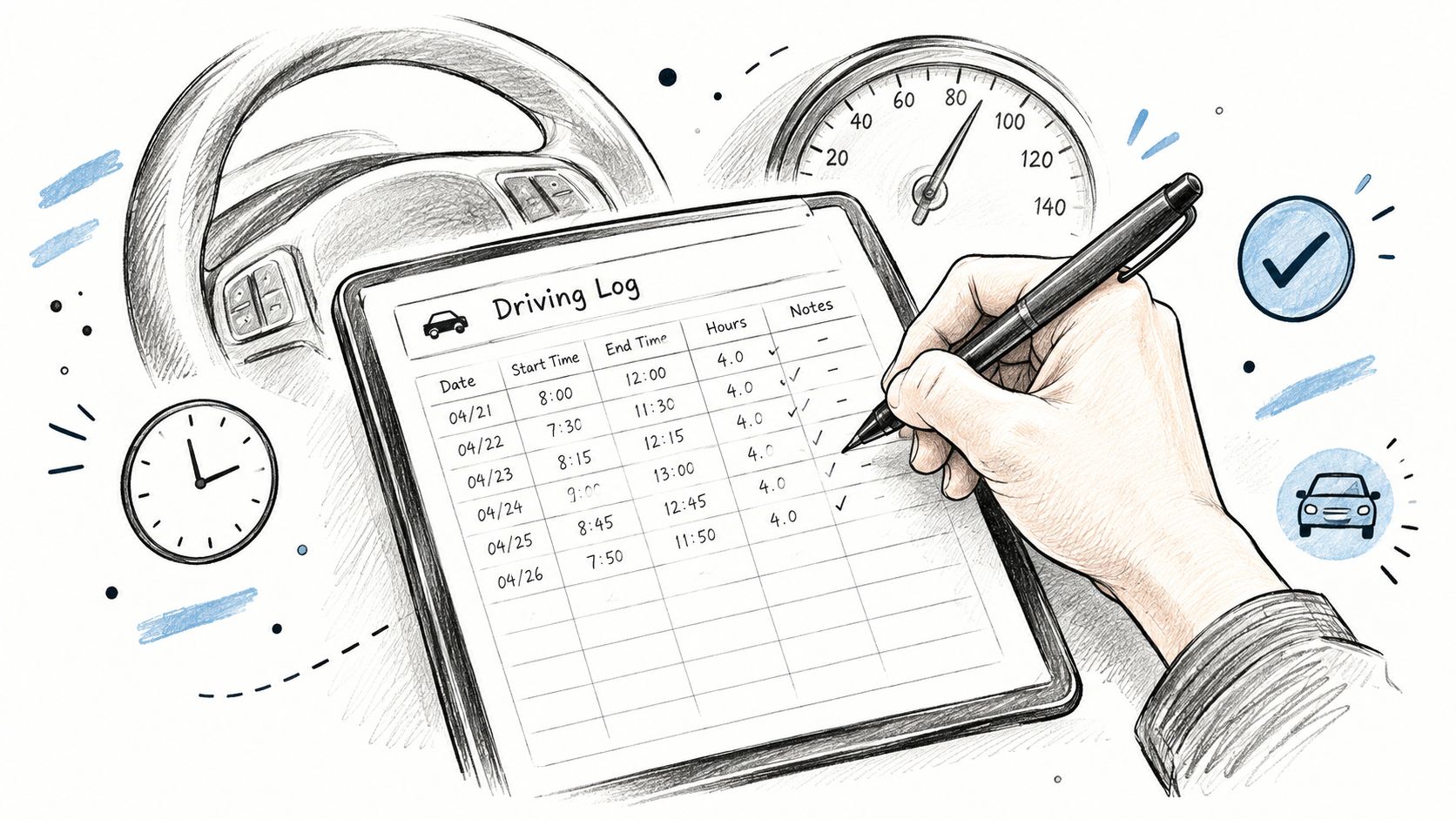
Use one consistent system from the first practice session. A paper log, a reliable tracking application, or another organized record can work as a personal management tool, but families should verify what Georgia DDS expects before test day.
Build each entry immediately
Write down the details after every session, while they're still fresh:
- Record the date and duration. Note when the session occurred and how long the teen drove.
- Mark the conditions. Identify whether the drive occurred during daylight or after dark, and note meaningful conditions such as rain, heavy traffic, or unfamiliar roads.
- Name the supervisor. Keep the supervising adult's information consistent and make sure the person meets the applicable licensing requirements.
- Add a brief skill note. “Practiced left turns at busy intersections” is more useful than a bare time entry because it shows how the family is developing ability.
- Review the total regularly. Check the overall total and the nighttime total separately so a missing category doesn't appear just before the appointment.
- Keep supporting records secure. Store the completed log with other permit and licensing documents, and retain a backup if the system allows it.
Avoid counting time when the teen was only a passenger. Don't inflate a short trip to create a round number, and don't classify a dusk drive as nighttime without applying the appropriate standard. Honest records protect the learner and make it easier for a parent to identify gaps.
The Georgia documents guide can help families organize the paperwork associated with lawful driving. Before the road test, compare the log against the latest DDS instructions rather than relying on an old family form or an informal checklist.
Why the Minimum Hours Are Just the Beginning
Forty hours can satisfy a requirement without producing a confident, capable driver. A learner may spend every session on the same quiet streets, repeat familiar turns, and avoid situations that demand planning. The log looks complete, but the driver hasn't developed enough flexibility for real traffic.
The strongest practice plan introduces difficulty gradually. Start with vehicle control and observation, then add busier intersections, multilane roads, higher-speed routes, unfamiliar destinations, and night driving. Rain should be approached cautiously and only when the supervising adult believes conditions are appropriate.
Practical rule: Count completed hours, but evaluate demonstrated skills.
Quality changes the value of practice
A useful session has a purpose. The supervising adult can choose one focus, such as maintaining a safe following distance, checking blind spots before a lane change, or scanning for hazards near parked cars. Afterward, discuss what happened without turning every correction into a criticism.
Spaced practice usually gives learners more opportunities to remember and apply skills than a last-minute rush. Frequent shorter drives can also reveal whether a habit is becoming consistent, while occasional longer drives expose the learner to changing traffic patterns and unfamiliar decisions.
Readiness depends on the individual. A source discussing the difference between legal minimums and actual proficiency notes that age, anxiety, and practice frequency can change how much experience a learner needs, with some learners requiring 100+ hours to become proficient. That observation is summarized in the driving-hours readiness analysis.
The road test should be scheduled when the driver can perform core tasks reliably, not solely when the log reaches its minimum. A parent should be able to sit without interjecting while the teen observes, plans, communicates, and responds safely without constant prompting.
What Happens When Driving Preparation Fails
Insufficient preparation often appears first as a small mistake. A driver misses a stop sign, changes lanes without a proper check, follows too closely, or misjudges a turn. Each mistake creates an opportunity for correction, but repeated uncorrected habits can make the road test harder and everyday driving more dangerous.
A failed test may delay licensing and increase stress. A driver who hasn't learned to scan ahead, manage speed, and anticipate other road users may be more likely to create a dangerous situation. Preparation can't eliminate every risk, but it gives the driver better tools for recognizing and managing it.
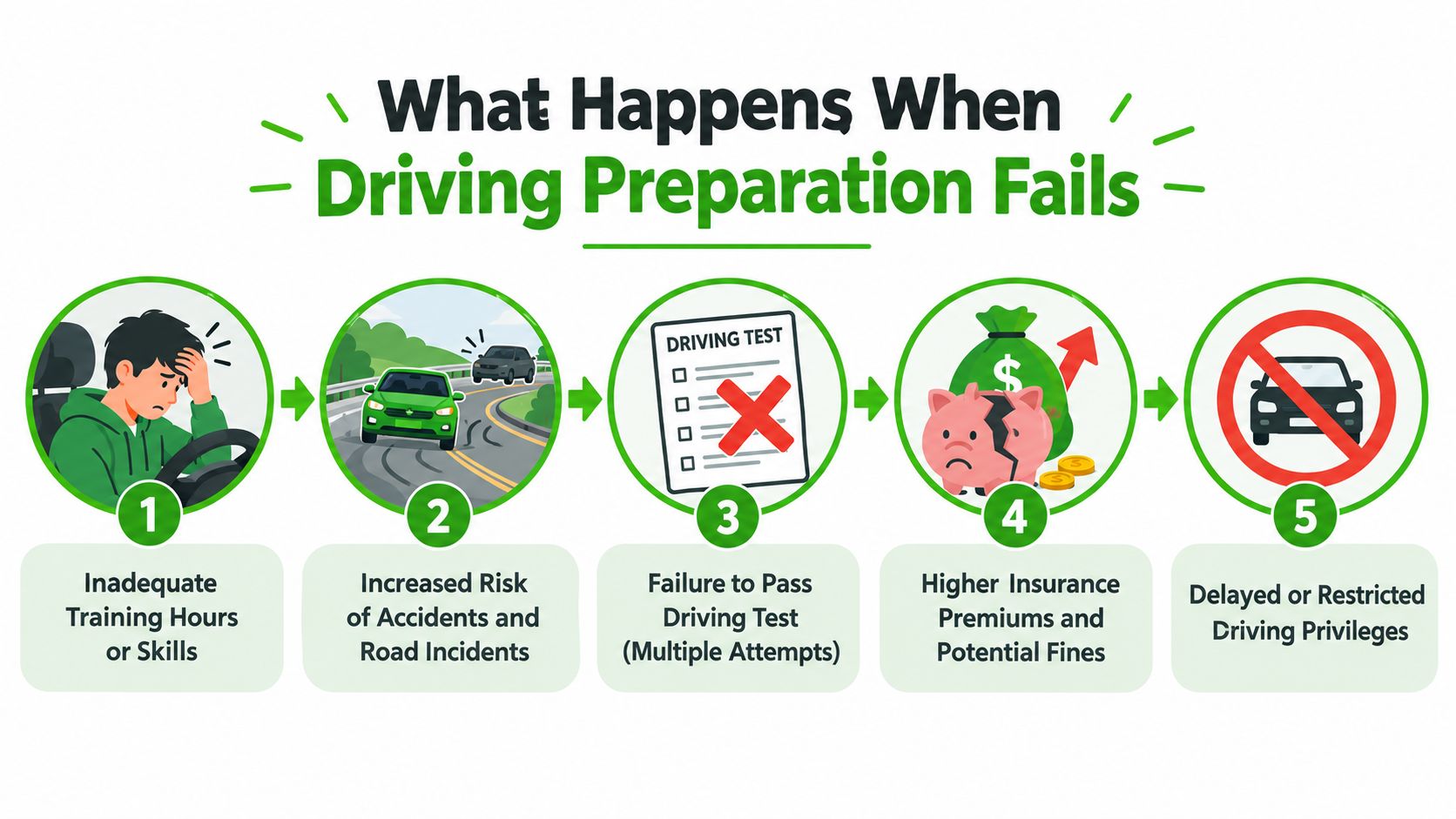
From weak habits to lasting consequences
The progression can look like this:
- Weak training creates weak decisions. A learner who rarely practices traffic scanning may react late to a developing hazard.
- Weak decisions create violations or incidents. Speeding, unsafe lane changes, and poor right-of-way choices can result in enforcement action or a collision.
- Violations can affect a driving record. Point accumulation may create additional legal and financial pressure, while defensive education can become necessary.
- Impaired driving raises the seriousness dramatically. Driving after consuming alcohol or using drugs can lead to a DUI conviction, court requirements, and restrictions on driving privileges.
- Court requirements can include personal and educational obligations. The process may involve a Risk Reduction course, clinical evaluation, treatment, or a Victim Impact Panel, depending on the case and jurisdiction.
In Georgia, a DUI conviction requires a state-mandated 20-hour Risk Reduction program, according to the Georgia Department of Driver Services regulated-program description. A Clarke County program profile also states that DUI offenders in that jurisdiction have been required to attend Victim Impact Panels since 1994, illustrating that victim-impact requirements can form part of a sentence and vary by jurisdiction. Details are documented in the Clarke County Victim Impact Panel program profile.
Defensive driving is not a substitute for responsible conduct, and a course can't erase the harm caused by impaired driving. It can, however, help address risky habits before they develop into a more serious pattern.
Building a Lifetime of Safe Driving Habits
The answer to how many hours driving before test has two parts. Georgia's Joshua's Law framework establishes the supervised-practice and education requirements for eligible teen drivers. The learner and parent then decide whether the driver has gained enough skill to operate safely in varied conditions.
Keep the log accurate, include nighttime experience, and practice beyond the easiest routes. A learner who can explain why they slowed down, where they checked for hazards, and how they chose a safe gap is developing judgment, not just accumulating time.
Safe driving also continues after the license arrives. Georgia law allows a licensed driver to complete a six-hour Driver Improvement Clinic once every five years to remove up to seven points from a driving record, as described by Georgia defensive-driving program guidance. That option illustrates the value of proactive education, whether a driver is addressing points, meeting a court requirement, or strengthening habits before a serious violation occurs.
Georgia DUI Schools offers Georgia DDS-approved DUI/Risk Reduction and defensive-driving education, with online, live virtual, and classroom formats, along with services such as clinical evaluations, ASAM Level 1 treatment, and Victim Impact Panels. For a new driver, the most important lesson is simple: meeting the minimum is a legal step, while responsible choices behind the wheel are a lifelong commitment.
Georgia DUI Schools can help drivers complete applicable Risk Reduction, defensive-driving, clinical, and Victim Impact Panel requirements through flexible online and in-person options. Visit Georgia DUI Schools to choose the course or service that fits your Georgia driving or court requirement.