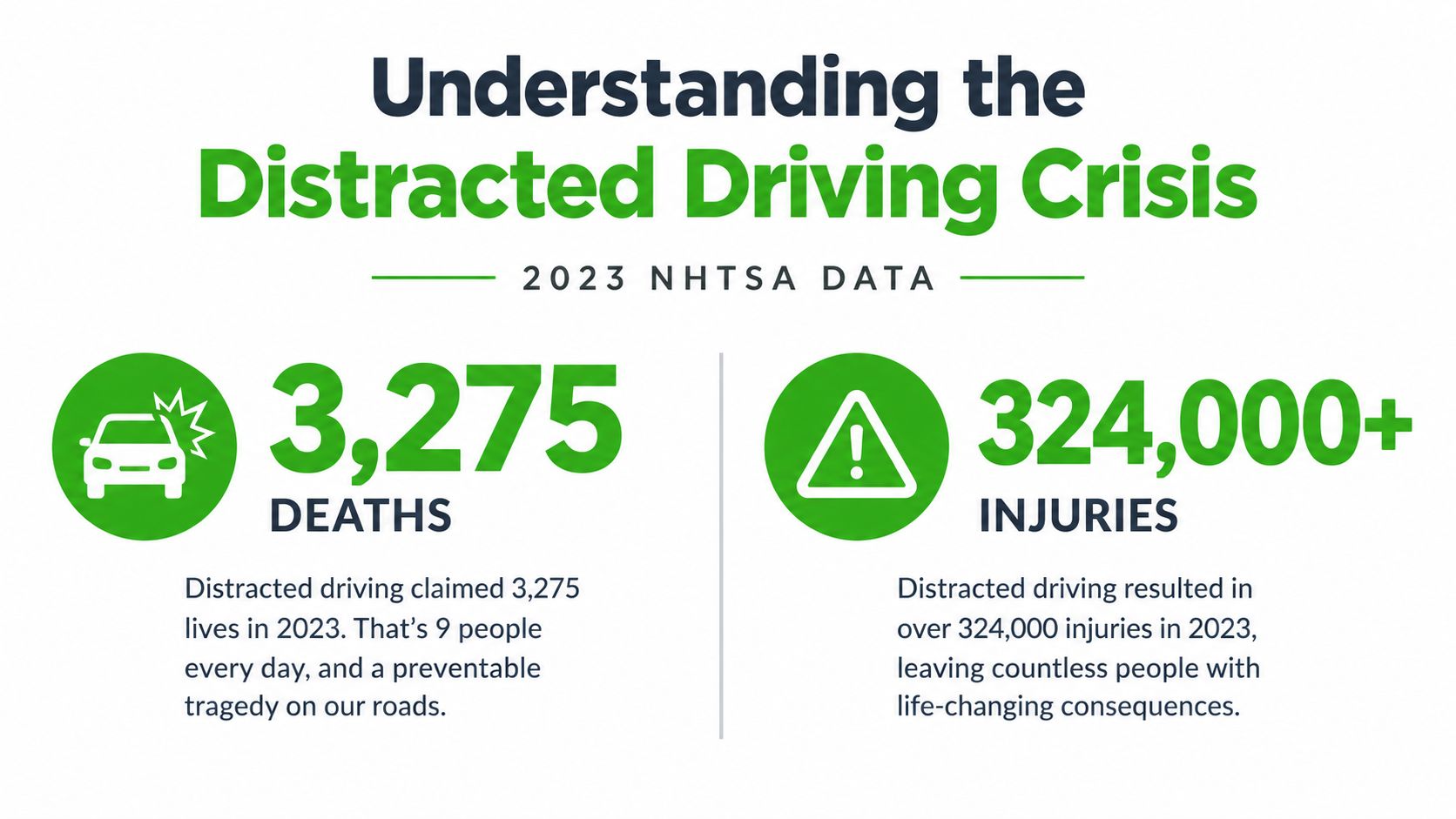
NHTSA reported 3,275 deaths and 324,819 injuries in crashes involving distracted drivers in 2023. That scale explains why a don't text and drive scholarship matters, it turns road-safety awareness into an opportunity for students to educate their communities and help prevent avoidable harm.
A strong application does more than repeat that texting behind the wheel is dangerous. It shows that you understand the problem, can communicate with a specific audience, and have thought seriously about what changes behavior after the essay is submitted. The strongest candidates connect personal responsibility with practical prevention, whether that means peer education, family agreements, safer phone settings, or community outreach.
A scholarship application can support your education, but its larger value lies in the conversation it creates. Treat the essay as both a competition entry and a public-safety message. That approach will help you avoid vague slogans and produce a submission that feels credible, personal, and useful.
Understanding the Distracted Driving Crisis
NHTSA's 2023 data gives applicants a clear starting point. Distracted driving crashes caused 3,275 deaths and an estimated 324,819 injuries in the United States, according to the agency's 2023 distracted-driving crash statistics. Those figures include consequences for drivers, passengers, pedestrians, and cyclists, so the issue extends far beyond a student making a poor decision with a phone.
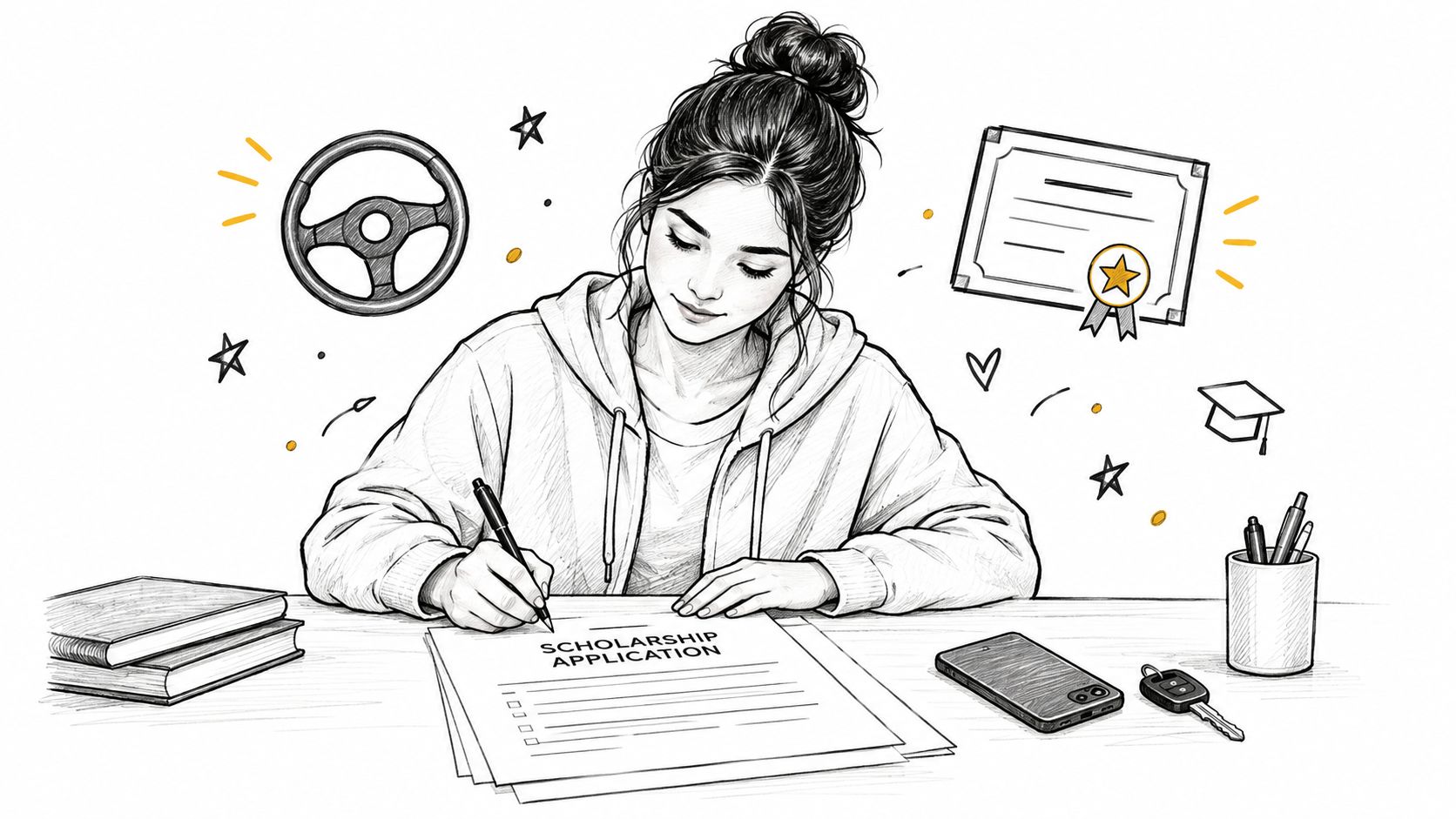
A don't text and drive scholarship is generally an award connected to an essay, video, public-service message, or awareness campaign about preventing phone-related distraction. Sponsors use these programs to encourage students to examine the risks of texting, explain safe choices in their own words, and influence peers who may dismiss standard warnings. The award can help with education costs, while the application itself asks students to become advocates.
Why the message needs evidence
Texting is one of the riskiest phone behaviors because it combines visual, manual, and cognitive distraction. NHTSA's cited analyses found that texting increased crash risk six times, while dialing a phone increased risk 12 times, compared with baseline driving behavior, as reported in the agency's research summarized by the Bureau of Transportation Statistics.
The policy response has also developed over time. Washington became the first U.S. state to pass a texting ban in 2007, and federal reporting now identifies bans on text messaging for all drivers in 49 states, the District of Columbia, Puerto Rico, Guam, and the U.S. Virgin Islands. These facts give an essay historical context, but applicants should explain what the rules mean in everyday life rather than just listing laws.
A practical prevention message might ask students to silence notifications before starting the car, place the phone out of reach, use a designated passenger for navigation, or agree not to answer messages until arriving. A personal safety app for students, such as this personal safety app for students, can also support broader safety planning, although no app replaces a driver's decision to keep the phone away.
For Georgia readers, local prevention ideas can include school presentations, campus pledges, family discussions, and practical guidance collected in distracted driving prevention tips. The scholarship becomes more persuasive when the applicant identifies a real audience and explains how the message will reach that audience.
Top Don't Text and Drive Scholarship Programs
A strong scholarship search starts with fit, not fame. Applicants often chase a name they have seen in search results and waste time on contests that do not match their grade level, location, or application style.
The Shaken Not Stirred Foundation and Tiffany's Scholarship contest are both names that appear in distracted-driving scholarship searches, but the sponsor's current rules should decide whether they belong on your list. Verify the award, deadline, eligibility, and submission rules on the official page before you write. Scholarship listings change, contests pause, and older search results can leave out the details that matter most.
| Scholarship Name | Award | Deadline | Eligibility |
|---|---|---|---|
| Shaken Not Stirred Foundation | Often offered in an essay or video format, depending on the sponsor's current rules | Check the official sponsor page before applying | Review the current student and geographic requirements |
| Tiffany's Scholarship contest | Format and award terms may vary by year or sponsor update | Confirm the live deadline on the sponsor page | Check the current education level and application rules |
| Other distracted-driving contests | Varies by sponsor | Varies by sponsor | Usually depends on the current prompt, format, and audience |
Verify current award, deadline, and eligibility on the official sponsor page before applying.
Compare fit before prestige
Start with eligibility. Some contests are limited to high school students, college students, residents of a specific state, or applicants in a particular academic program. If the rules do not clearly match your situation, contact the sponsor before spending hours on an essay that cannot be submitted.
Format matters just as much. An essay contest rewards structure, evidence, and a clear point of view. A video contest asks for a tight script, usable visuals, and safe-driving imagery that does not distract from the message. A public-service campaign may ask for an idea that can work in a school, workplace, or community setting.
The award amount should not be the only deciding factor. A smaller contest that fits your strengths can be a better use of time than a larger program that asks for a format you handle poorly. Selection committees also check compliance closely. A strong essay sent after the deadline, above the word limit, or missing a required document usually will not compete.
Practical rule: Treat every scholarship listing as a starting point, not proof that its current terms are unchanged.
Keep a research sheet with the sponsor name, official application page, eligibility, required materials, word limit, deadline, contact information, and submission confirmation. Do not reuse one essay for every contest without checking whether the prompt, audience, and ownership terms differ. A focused application portfolio is more effective than a large stack of generic submissions.
Step-by-Step Application Process
The application process becomes manageable when you separate compliance from persuasion. First make sure you can submit a valid application. Then make the essay memorable.
1. Build the document folder
Create one folder for the current application and save the official prompt, eligibility rules, transcript, résumé, activity list, recommendation details, and final essay there. Use clear file names and keep a backup in a separate location. If the sponsor requests proof of enrollment or a specific file type, prepare it before writing the final paragraph.
Ask the school office about transcript processing time rather than assuming an unofficial copy will be accepted. For recommendation letters, provide the recommender with the prompt, deadline, résumé, and a short explanation of why distracted-driving prevention matters to you. A generic letter rarely strengthens a focused safety application.
2. Translate experience into a central argument
Before drafting, answer three questions in plain language:
- What experience changed the way you think about distracted driving?
- Who needs to hear your message?
- What practical behavior do you want that audience to adopt?
The experience doesn't need to involve a crash. It could involve seeing a friend reach for a phone, helping younger students understand road safety, changing your own habits, or noticing how notification pressure affects people in a school or workplace. The important point is reflection. Explain what you learned and what you did with that lesson.
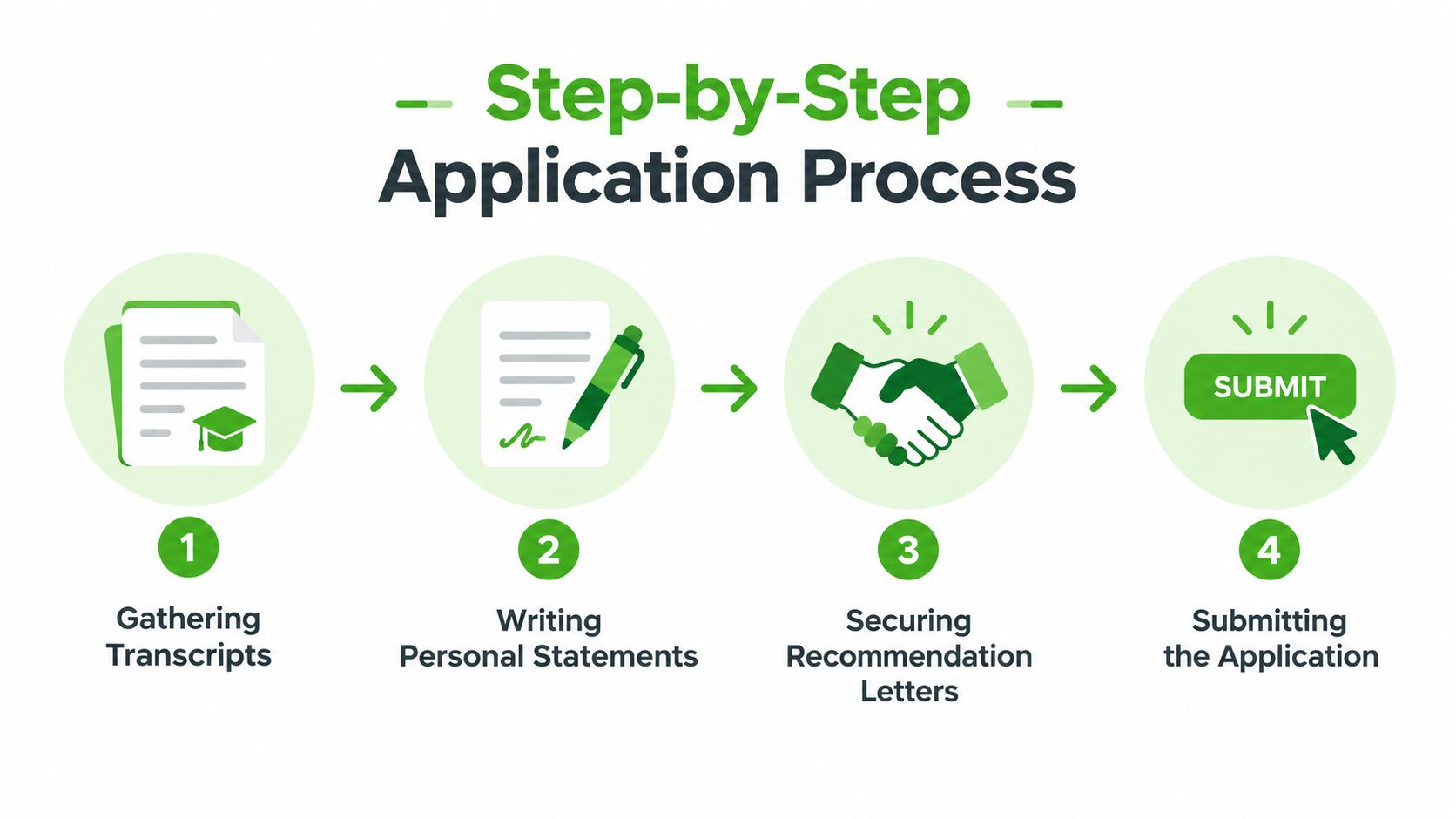
3. Draft for clarity, then edit for compliance
Open with a concrete moment, observation, or decision. Follow it with context, evidence, and a prevention plan. End by showing how the scholarship would help you continue the work, not merely by saying that you deserve financial support.
During revision, remove repeated warnings, inflated language, and claims you can't support. Check every statistic against the sponsor's requirements and a reliable source. Ask a teacher or counselor to read the essay for clarity, but keep the final voice yours.
4. Submit like an administrator
Read the upload instructions twice. Confirm the file opens, the name and contact information are correct, the recommendation letter has arrived, and the submission confirmation is saved. If the sponsor uses email, include the required subject line and attach only the requested materials.
A submission checklist protects strong work from avoidable mistakes. Set your own internal deadline before the official one so you have time to correct a broken upload or missing document.
Crafting a Winning Essay
A winning essay doesn't sound like a traffic-safety poster. It sounds like a thoughtful student who understands how people make decisions and has a credible reason for wanting to change those decisions.

Start with a narrow story. “Distracted driving is dangerous” is true, but it gives the reader no reason to remember your submission. A specific moment creates a route into the subject: a family rule about phones in the car, a conversation with a teammate, a school campaign that failed to reach its audience, or a personal decision to stop checking messages at intersections.
Use a simple argument
A useful structure is:
- Experience: Describe what happened without exaggeration.
- Interpretation: Explain what the experience taught you about attention, social pressure, or responsibility.
- Action: Show what you did, or what you would do, to reduce distraction.
- Purpose: Connect the scholarship to a realistic next step.
The action section separates a persuasive essay from a moral lecture. You might propose peer-led workshops, a family phone-storage agreement, a school campaign built around passenger responsibility, or a practical routine that starts before the vehicle moves. Keep the proposal proportionate. A student doesn't need to promise a national movement to demonstrate initiative.
Avoid turning tragedy into decoration. If your story involves a serious crash or loss, write with respect and focus on the lesson rather than using graphic details for emotional impact. Don't claim that one pledge will solve distracted driving. Explain what your approach can accomplish and how you would know whether people engaged with it.
Your essay can also acknowledge trade-offs. Convenience, navigation, urgent messages, and social expectations make phone separation difficult. A credible applicant doesn't pretend those pressures don't exist. Instead, the essay presents a specific response, such as setting navigation before departure, using do-not-disturb settings, or asking a passenger to manage communication.
For additional framing, review the practical discussion of the benefits of safe driving. Then rewrite the ideas in your own voice. Selection committees want evidence of judgment, not a collection of borrowed slogans.
Maximizing Your Chances of Success
The strongest applications show sustained alignment. Your grades and résumé matter, but they won't substitute for a clear connection between your actions, the scholarship's mission, and the audience you want to influence.
Build a small body of relevant work before the deadline. Volunteer at a school safety event, help organize a student presentation, create an evidence-based handout, or support a campus discussion about phone use. Keep records of what you contributed and what you learned. A committee can understand a modest project when the applicant describes it precisely.
Measure behavior, not applause
Awareness is easier to count than behavior change, but applause and attendance don't prove that drivers put down their phones. The NHTSA observational research found that 1.9% of drivers at intersections were talking on hand-held phones at a moment in time, 4.5% were observed manipulating hand-held devices, and estimated combined hand-held or hands-free cellphone use reached 5.8% during any moment of the day. The same research also notes that more than a fifth of surveyed U.S. drivers reported smartphone-based distractions on most or all trips.
Those figures support a practical evaluation plan. A student campaign could use a short knowledge check before and after an event, then pair it with an anonymous behavior commitment or observation method that respects privacy. The point isn't to manufacture impressive results. It's to ask whether the program changed a decision drivers make behind the wheel.
Young drivers deserve focused attention, but don't frame them as the only problem. Federal safety marketing guidance identifies drivers ages 15 to 20 as about 7% distracted in fatal crashes, while observational data shows the highest device-use prevalence among people ages 16 to 24, according to the National Highway Traffic Safety Administration campaign material. A strong essay can target students while recognizing that parents, coworkers, fleet operators, and older drivers also need practical solutions.
Final Checklist Before Submission
A final review should be mechanical. Don't rely on confidence or memory after spending hours on the essay.
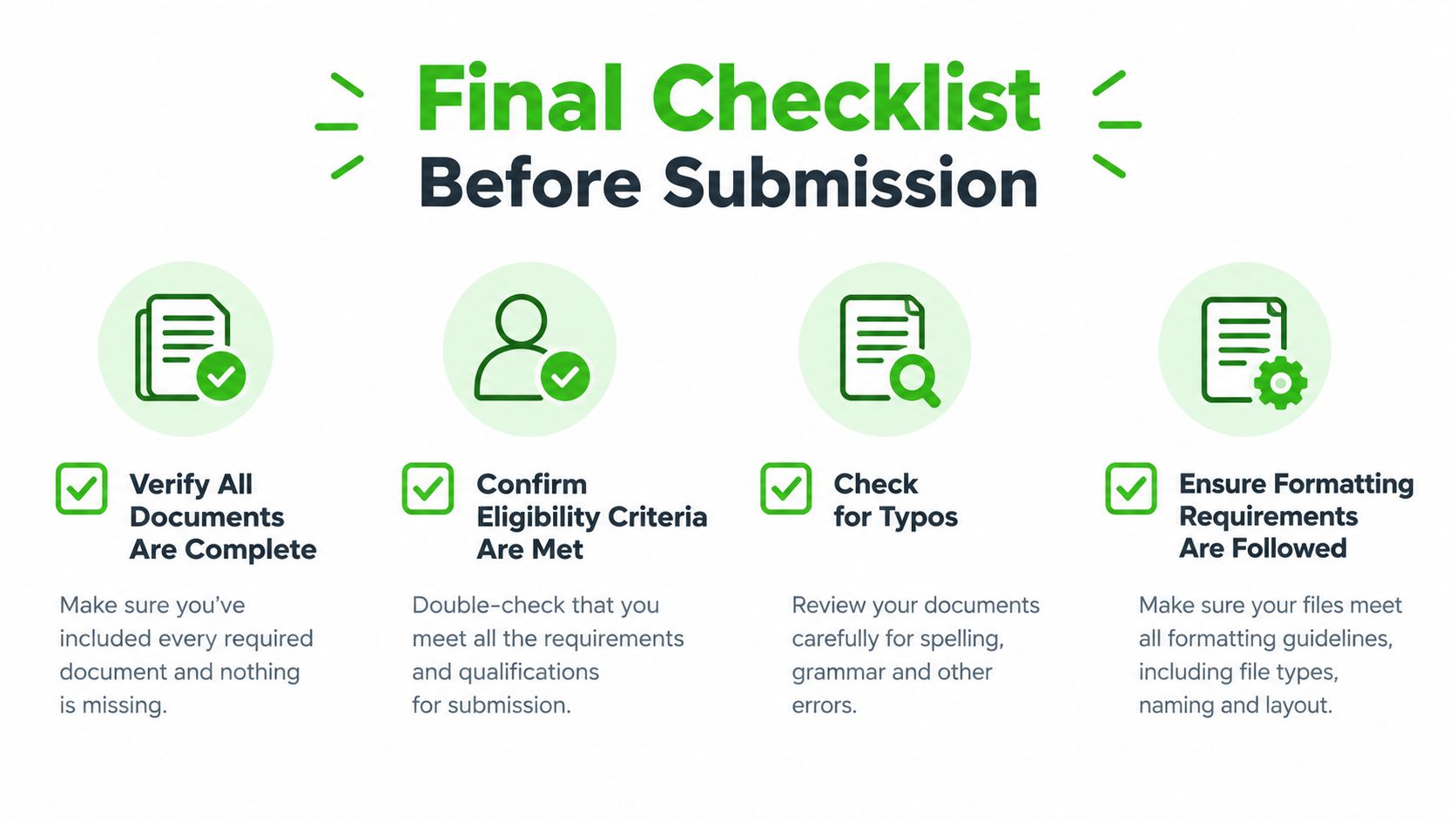
- Verify every document: Confirm that transcripts, recommendation letters, enrollment proof, résumé files, and consent forms are included when required.
- Confirm eligibility: Recheck education level, residency, enrollment status, and any sponsor-specific conditions against the current official rules.
- Check the writing: Read aloud for awkward sentences, unsupported claims, spelling errors, and unexplained acronyms. Ask someone unfamiliar with the story whether the main point is clear.
- Follow formatting rules: Stay within the word limit, use the requested file type, remove identifying details when required, and check that every attachment opens correctly.
Read the essay once as a skeptical reviewer. Does the opening establish a real perspective? Does the middle show practical action? Does the conclusion connect the scholarship to a credible next step? If the answer is yes, submit the version that sounds most like you, not the version filled with the most dramatic language.
Next Steps and Local Resources
Applying for a don't text and drive scholarship can be the beginning of a broader safety practice. Continue learning about distraction, impaired driving, defensive decisions, and the responsibilities that follow a citation or court order. A stronger understanding of road-safety systems will also help you write about prevention with more precision.
Georgia students and drivers should distinguish between general information and state-approved education. Under Georgia DDS rules, only DDS-certified driving schools may offer Driver Education, Defensive Driving, and DUI programs, and courses from uncertified schools won't be accepted for licensing, reinstatement, or court requirements, according to Georgia DDS program rules.
The state's Driver Improvement Program is a 6-hour defensive-driving course that may be used for court orders, points reduction, license reinstatement, insurance premium reduction, or personal education, as described by Georgia DDS. For applicants, the value isn't to add a credential without context. It's to understand the rules, reflect on safer choices, and connect course learning to a responsible prevention message.
DUI-related requirements involve different components. Georgia states that its DUI Alcohol or Drug Use Risk Reduction Program includes an assessment and intervention component, with a 130-question screening instrument and a 20-hour course. The listed total cost is $360, consisting of $100 for assessment, $235 for intervention, and $25 for the workbook, according to the Georgia DDS DUI FAQ. Georgia guidance also says DUI convictions require a DUI Drug or Alcohol Risk Reduction Program and a clinical evaluation, with treatment added when indicated, as explained by the Georgia impaired-driving laws guidance.
These details matter if your scholarship essay discusses consequences, rehabilitation, or education after an offense. Don't present a course as a substitute for legal advice or claim that enrollment alone satisfies every case. Verify the requirement attached to your situation and use an approved provider. Students looking for broader scholarship and driver-education context can also review driver's ed scholarships, then confirm current eligibility with the relevant program.
Georgia DUI Schools offers DDS-approved DUI and Risk Reduction education, defensive-driving options, clinical evaluations, ASAM Level 1 treatment, and Victim Impact Panels for Georgia requirements. If you want practical instruction that supports safer driving and gives your scholarship research a local foundation, visit Georgia DUI Schools to review the relevant course options and enrollment details.