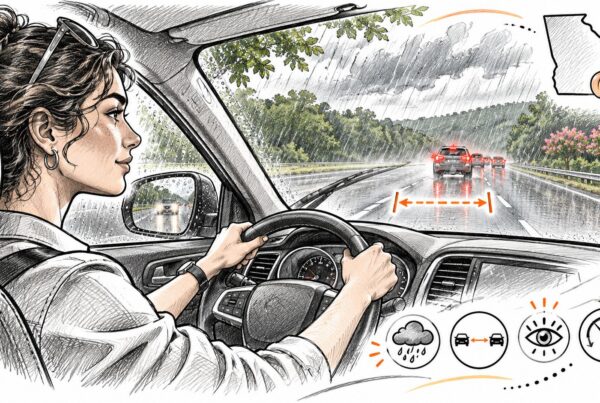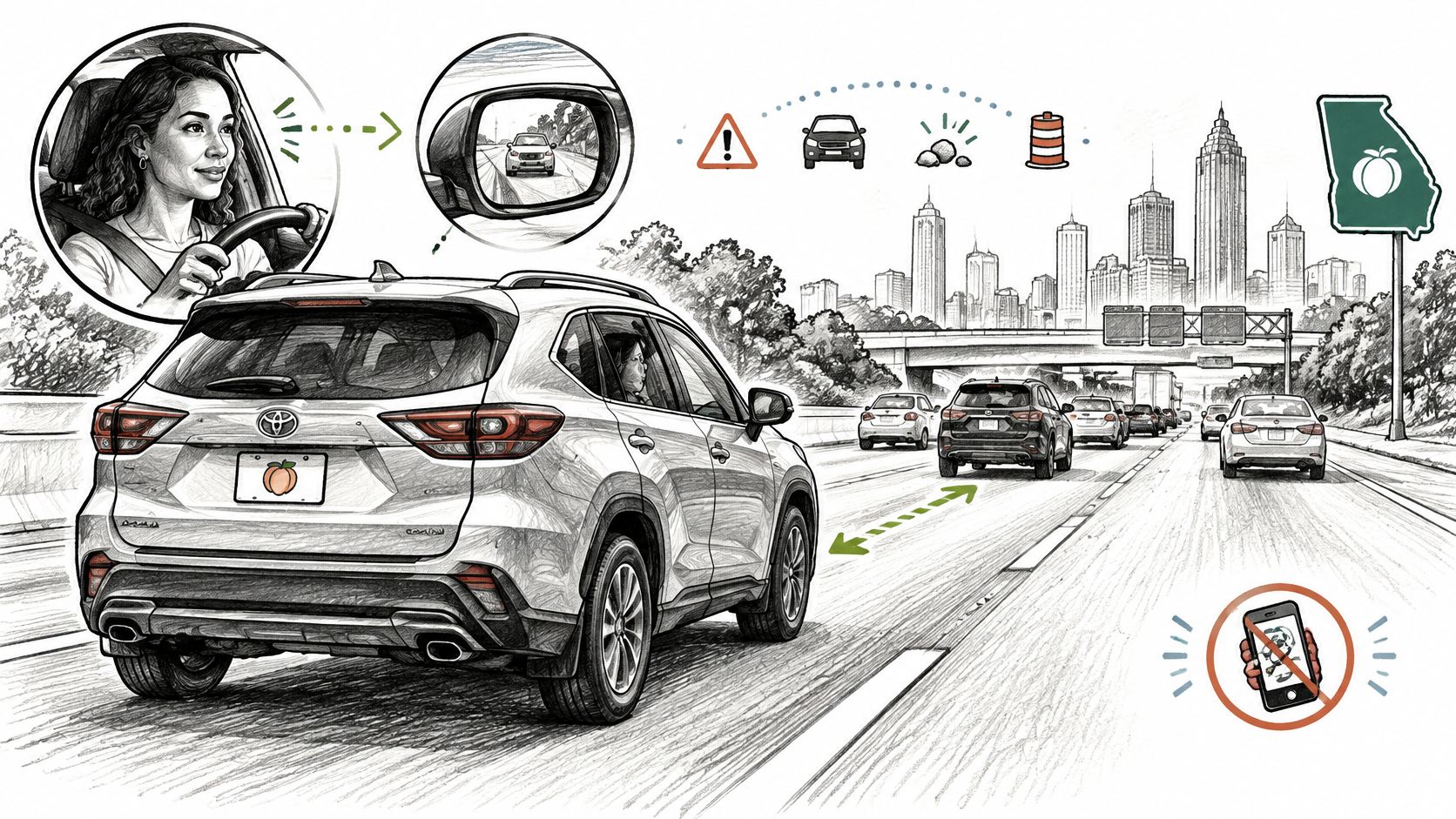
You're on I-285 on a Tuesday afternoon, traffic is moving at speed, and the brake lights ahead light up all at once. One driver surges toward the bumper in front. Another is already easing off, scanning two lanes over for space. That difference isn't luck. It's habit, built before anything goes wrong.
These eight Defensive Driving Tips are written for Georgia roads specifically. That means the Downtown Connector, rain-slick stretches of I-75 and I-85, crowded Athens intersections, and the rules that affect your license here. You'll see how following distance, hazard scanning, and hands-free compliance connect to Georgia's 15-point suspension threshold, point reduction, insurance, and DUI-related requirements.
The stakes stay high even as totals improve. The National Highway Traffic Safety Administration estimate for 2024 put U.S. traffic fatalities at 39,345, down about 3.8% from 40,901 in 2023. Fewer deaths is progress, but it doesn't make a sudden stop on the Perimeter any more forgiving. You still need time, space, and a plan.
I recommend treating each habit below as a driving routine, not a tip you remember after a close call. Set it up before you merge, before it rains, and before the first drink. That's when defensive driving works.
1. Maintain a Safe Following Distance
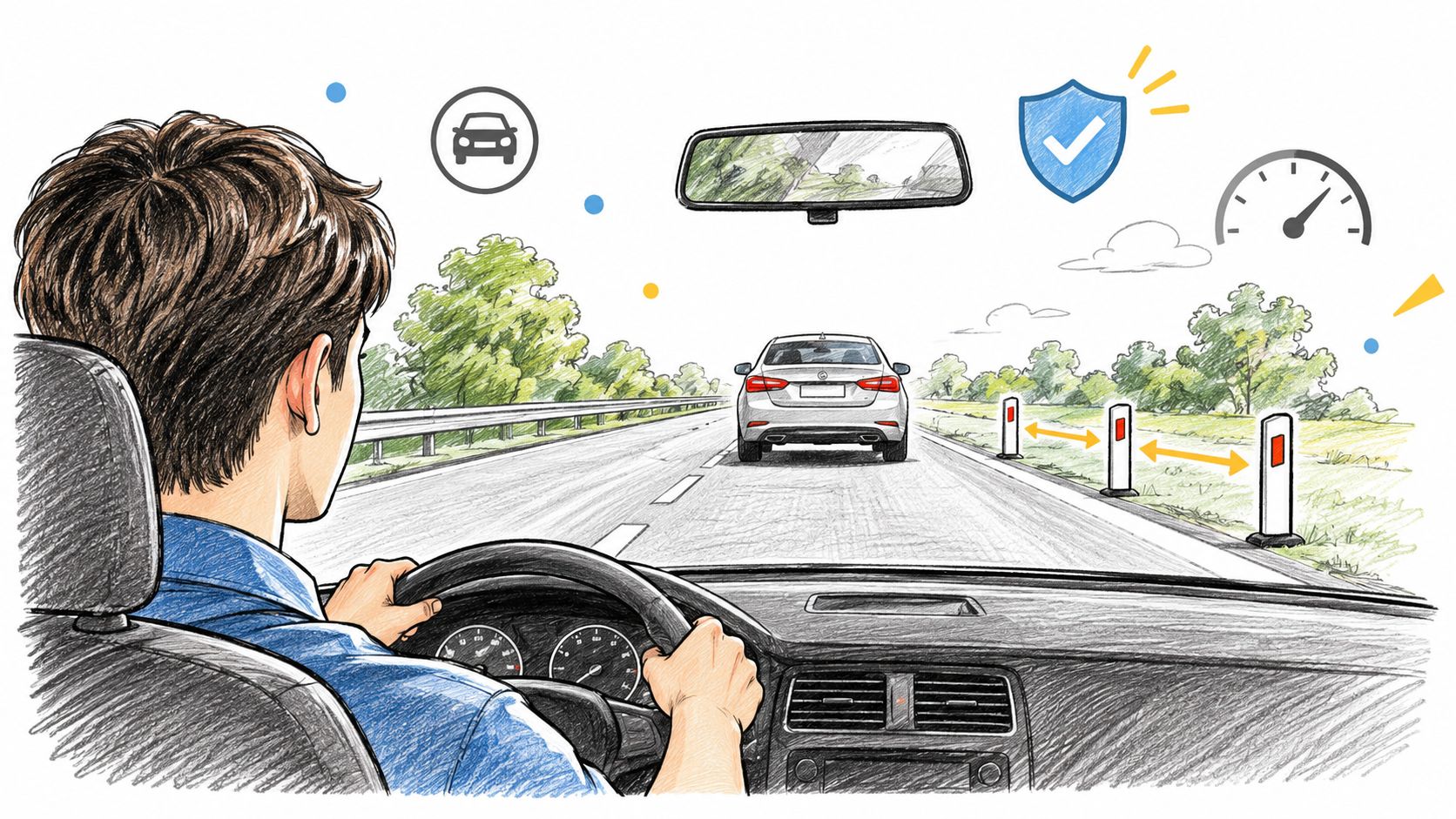
Space is time. When traffic on I-75 or I-85 through Midtown compresses in seconds, a three-second gap lets you brake in a controlled way instead of standing on the pedal. Pick a sign or overpass, watch the vehicle ahead pass it, then count until you pass it. If you arrive early, you're too close.
In rain, darkness, or heavy congestion, stretch that to four seconds or more. Wet pavement, worn tires, and a loaded trunk all lengthen stopping distance. Commercial drivers in Georgia hold longer gaps for the same reason. Their vehicles need more room to stop, and so does yours when conditions deteriorate.
Use Technology as Backup Only
Forward collision warning and automatic emergency braking help, but they don't replace your gap. A U.S. Department of Transportation analysis of police-reported crashes across 13 states found combining both systems was associated with a 49% reduction in all front-to-rear crashes. That's a strong backup. It still can't see every stopped queue around a curve or guarantee a stop in heavy rain.
- Pick a fixed marker: Use a sign, pole, or overpass so your count is honest, not guessed.
- Add time at night: Add one second in rain, fog, or darkness, and more if spray cuts visibility.
- Handle tailgaters calmly: Widen your gap ahead rather than braking hard, so you can slow gently for both vehicles.
Practical rule: If you can't count three full seconds, you don't have a following distance. You have a hope.
The trade-off is real. Other Atlanta drivers will fill the space you leave. Let them, then rebuild the gap. Losing one car length costs you seconds. A rear-end crash costs you points, repairs, and possibly a court date.
2. Scan Ahead and Keep Your Eyes Moving
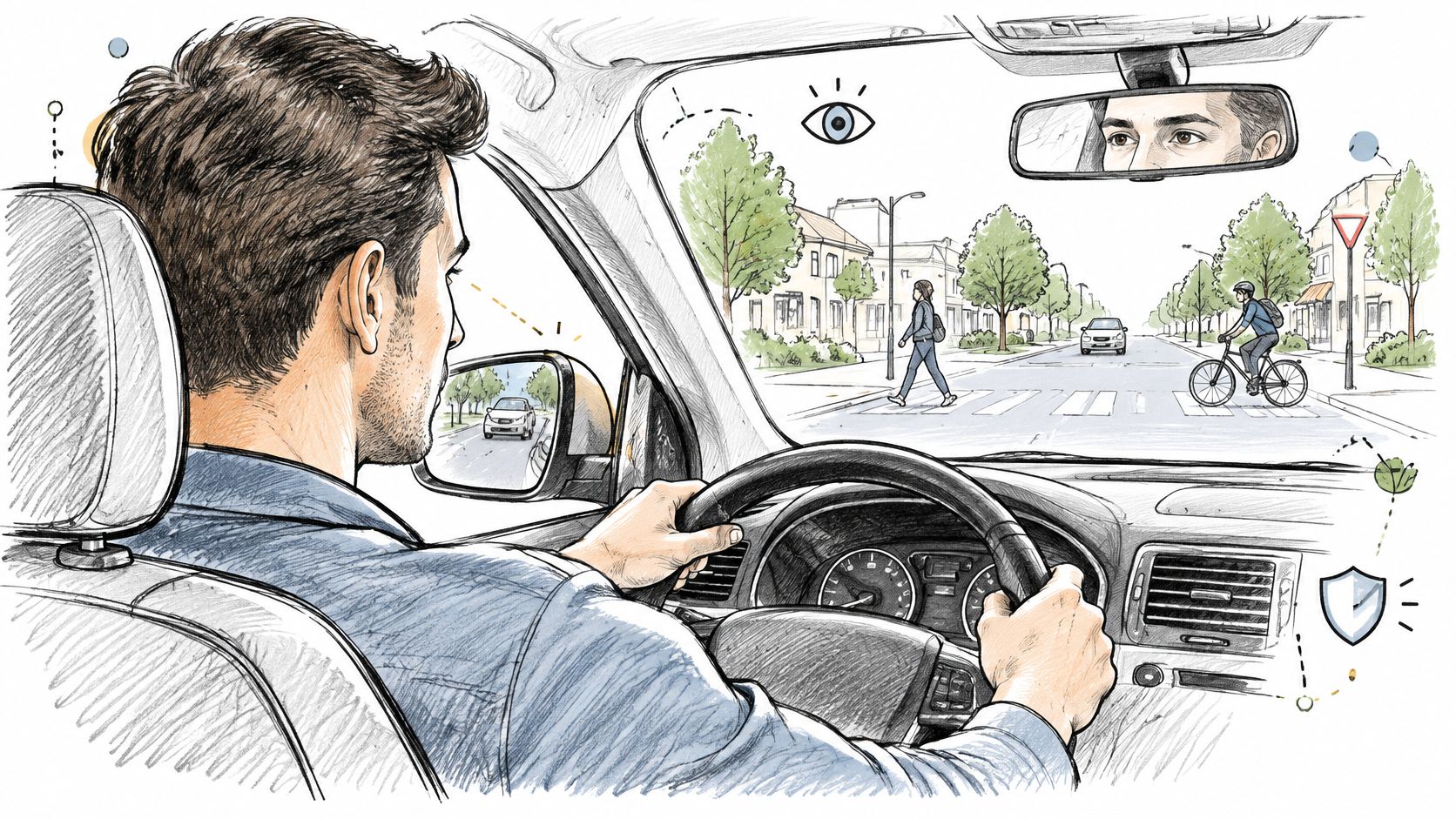
Look 12 to 15 seconds ahead in city traffic, not at the bumper directly in front of you. That far view shows brake lights stacking up, a pedestrian stepping off a curb, or a delivery truck blocking a lane while you still have options. Then bring your eyes back, check mirrors, and repeat.
The Smith System teaches this well with ideas like aim high in steering, get the big picture, and make sure others see you. In practice, it means your eyes never settle. You check mirrors every five to eight seconds, glance down side streets, and watch the front wheels of cars waiting to turn.
Where Scanning Pays Off in Georgia
On Broad Street in downtown Athens, students cross mid-block and drivers turn across crowded crosswalks. If you're only watching the light, you'll miss the person already in the street. On I-285, watching merge points early near major interchanges lets you create space instead of swerving when two lanes squeeze together.
- Name hazards out loud: Saying "brakes ahead, bus right, pedestrian left" keeps a new scanning habit active.
- Check before you brake: Glance in the mirror before braking, changing lanes, or slowing for a turn.
- Cover the brake: Rest your foot over the pedal at intersections with limited visibility, without pressing it.
Your physical vision matters too. Clean glass, working wipers, and current prescriptions all affect how early you spot trouble, and frequent screen users should think carefully about lens choices for frequent smartphone users when glare or eye strain makes night driving harder. Don't ignore it. If signs are blurry until you're close, your lookahead is gone.
3. Eliminate Distractions and Follow Georgia's Hands-Free Law
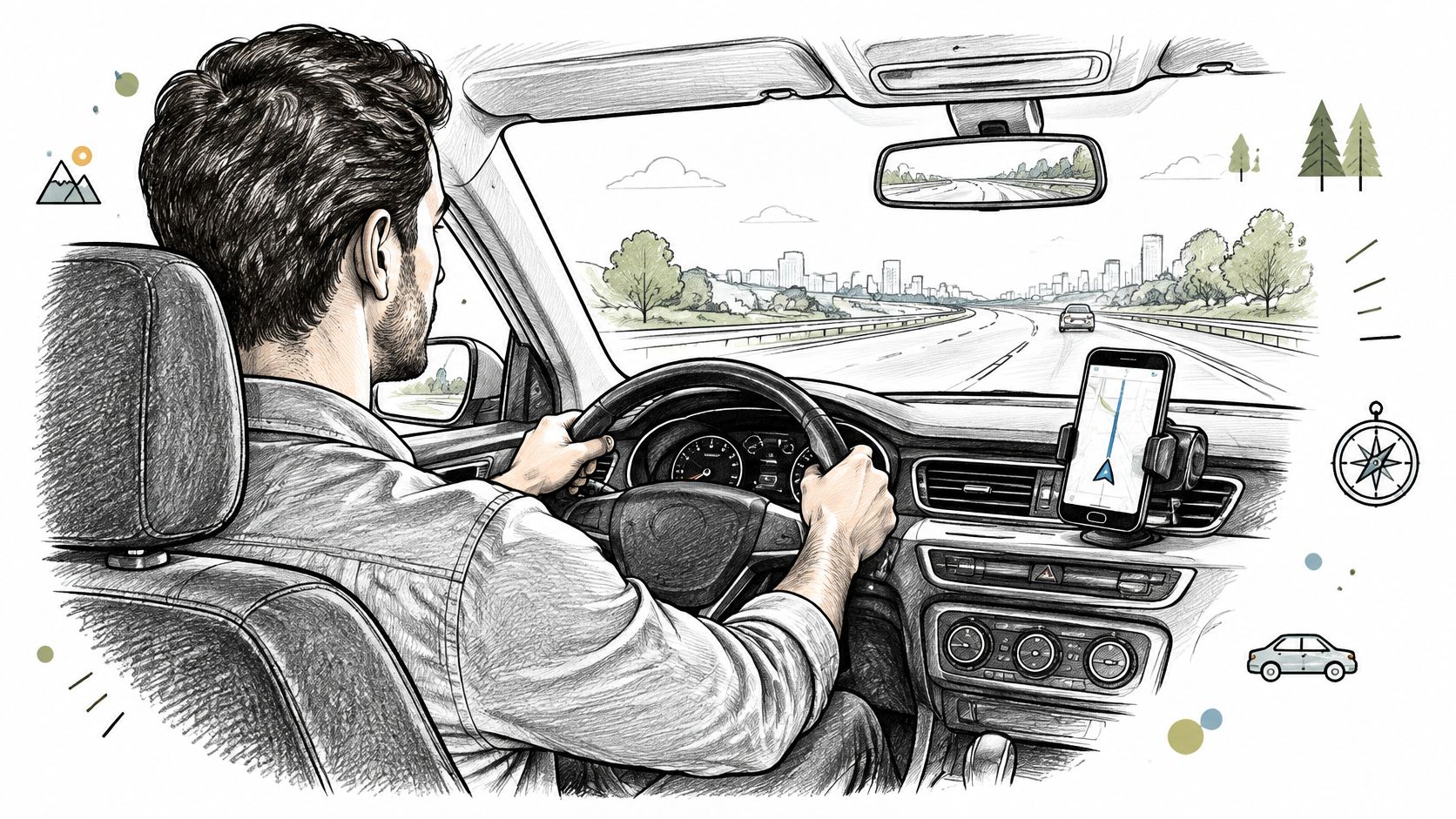
The light is red on Peachtree Street and the phone lights up on the passenger seat. Georgia law bans holding or supporting a phone or any other electronic device while driving, and that rule still applies when you are stopped in traffic. A mount and voice commands keep the phone out of your hands. They do not make a long back-and-forth with the screen safe. Set the route before you move.
Do the rest of the setup while the car is parked. Enter the destination, pick the playlist, secure loose items, and silence notifications before you put it in drive. Once you are rolling, every task you postponed is a visual, manual, or mental distraction competing with the road. On a slow metro Atlanta interstate crawl, that one glance is how a small gap closes.
Distraction Is Wider Than Texting
Eating, reaching into the back seat, arguing with a passenger, and staring at a navigation screen all pull attention off the road. The NHTSA summary on distracted driving reports distracted driving contributed to 3,208 U.S. traffic deaths in 2024. For teen drivers, the NHTSA teen driving research summary reports texting increased crash risk 23-fold. Those figures miss the dashboard glance and the bite of food. That is the habit that shows up in daily driving.
A hands-free citation still adds points to a Georgia license, and a crash tied to a phone can push insurance rates up. A DDS-approved 6-hour defensive driving course can remove up to 7 points, and that option is available only once every 5 years. It can also help with an insurance discount. Self-paced online courses are not accepted by Georgia DDS for point reduction, a court order, or license reinstatement.
Willpower loses to a buzzing phone on a long, familiar commute. I recommend putting the phone out of reach when a driving focus mode is not enough.
For a fuller Georgia routine, use these distracted driving prevention tips for Georgia drivers as a pre-drive checklist. Fleet policies that require a hands-free setup are easier to enforce than a promise to ignore the phone in traffic.
Assume the driver beside you is distracted too. Give a drifting car more space, do not linger next to it, and check the intersection even on a green light. You cannot control their attention. You can refuse to sit in their blind spot while they look down.
4. Never Drive Impaired and Plan Ahead for Safe Transportation
Decide how you're getting home before the first drink. Not after dinner in Buckhead, not after a Georgia game day tailgate in Athens, and not when you're already tired and rationalizing that you feel fine. A designated sober driver, rideshare, taxi, or MARTA only works if you choose it while you're sober.
Under Georgia law, O.C.G.A. § 40-6-391, drivers 21 and older are presumed impaired at a blood alcohol concentration of 0.08 or higher. Drivers under 21 face a 0.02 limit under zero-tolerance rules. Cannabis, illegal drugs, and prescription medication can also impair you, even when you took the medication exactly as directed.
What a DUI Requirement Actually Involves
If a DUI enters your record, the class requirement is specific and it isn't the same as a defensive driving course. The Georgia DDS DUI FAQ on the Risk Reduction program describes a 130-question NEEDS Assessment followed by a 20-hour Intervention Component. Both parts must be completed before DDS issues a certificate of completion.
- Choose the ride early: Name the sober driver or book the ride before drinking starts.
- Read medication labels: Check prescription and over-the-counter warnings for drowsiness or driving restrictions.
- Act quickly after arrest: Contact an attorney promptly and learn your implied consent deadlines.
These habits sit inside broader defensive driving practices that reduce preventable risk, but impairment deserves its own rule because it undermines every other skill. Scanning, following distance, and smooth braking all degrade when alcohol slows judgment. I don't recommend testing your personal limit. There's no reliable field test you can give yourself in a parking lot.
5. Manage Blind Spots and Anticipate Other Drivers' Mistakes
Drive as if the car beside you hasn't seen you. That mindset sounds pessimistic, but it keeps you out of side-swipes on the Downtown Connector when an on-ramp driver merges without a gap. You either speed up slightly, slow down, or change lanes early, instead of holding position and hoping.
Blind spots around tractor-trailers and buses, often called no-zones, are much larger than most car drivers expect. On I-285 near Cobb Parkway, lingering beside a truck puts you where its driver can't track you in the mirrors. If you can't see the truck driver's face in the side mirror, assume the driver can't see you either.
Position for Visibility
A quick shoulder check before every lane change still matters, even with blind-spot monitoring. Warning lights can miss a fast-approaching motorcycle or a car two lanes over moving into the same space. Signal early, check mirrors, glance over your shoulder, then move smoothly.
- Pass or fall back: Don't cruise beside a truck, bus, or any vehicle drifting within its lane.
- Watch front wheels: A turning front wheel often tells you a driver is moving before the car drifts.
- Create distance from erratic cars: Weaving, inconsistent speed, and late braking are reasons to back off, not pass aggressively.
Driver-assistance features add another layer to manage. The NHTSA guide to driver assistance technologies notes some features only warn while others actively brake or steer, and drivers remain responsible for monitoring the roadway. Know which type your car has. A warning beep expects you to act. It won't steer you clear.
Instructor advice: Never let your safety depend on another driver checking a blind spot correctly. Stay visible or get clear.
6. Adjust Speed and Driving for Weather, Traffic, and Road Conditions
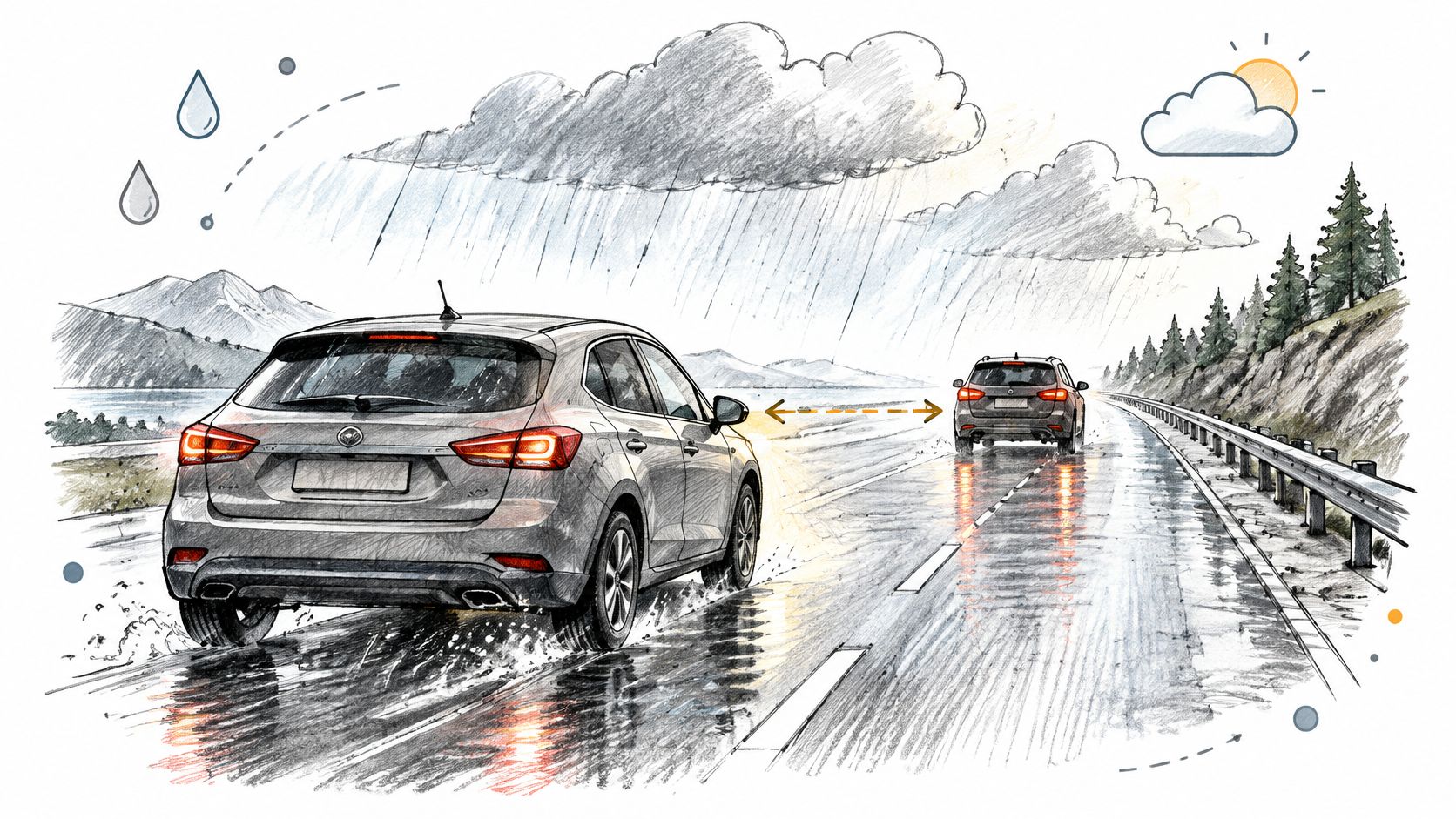
The posted limit is a maximum for good conditions, not a promise that speed is safe in a thunderstorm. After a long dry spell in Georgia, oil on the pavement makes the first rain especially slick. On I-75 near Macon or I-85 in the metro area, holding highway speed through standing water invites hydroplaning, where tires ride on water instead of gripping the road.
Slow down before you lose grip, not after the steering feels light. Increase following distance in fog in north Georgia, during sudden summer storms, and on icy patches during rare winter events. Turn headlights on in rain, fog, or dusk so other drivers can see you, as Georgia law requires.
Why Small Speed Changes Matter
The NHTSA speeding publication reporting 2023 crash data recorded 11,775 deaths in speeding-related crashes in 2023, which was 29% of all traffic fatalities. It also noted 87% of speeding-related fatalities occurred on roads other than interstates, so don't treat a familiar Athens-area highway or suburban arterial as low risk just because it isn't a freeway.
- Cut speed early: Reduce speed by 5 to 10 mph in rain and rebuild your following gap.
- Respect curves and work zones: Slow before the curve or cone shift, not in the middle of it.
- Follow the Move Over law: Change lanes or slow down for stopped emergency and roadside vehicles with flashing lights.
The trade-off is arriving a few minutes later. That's cheap. Speed raises both crash likelihood and crash energy, so the collision you might have walked away from at a lower speed becomes far more serious. Leave earlier on storm days and you'll feel less pressure to make up time.
7. Understand Georgia's Point System and License Consequences
Georgia assigns points for moving violations, and 15 points within 24 months typically leads to license suspension. That total arrives faster than drivers expect when speeding tickets stack up across Atlanta commutes. Check your record through Georgia DDS before you assume you know where you stand.
A certified course can help in the right situation, but you must use the right format for the purpose. The Georgia DDS Driver Improvement program page states the certified course is six hours and a licensed Georgia resident may request reduction of up to seven points once every five years after successful completion. Our DDS-approved course follows that structure, and the self-paced online version isn't accepted by DDS for point reduction, court orders, or license reinstatement.
Points, Insurance, and Course Choice
Our guide to the Georgia drivers license points system and suspension thresholds explains how violations accumulate and when reduction matters most. Read it before enrolling, especially if a court gave you a deadline. In some counties a judge may also dismiss a ticket or grant a 20% fine reduction, but that's a court decision, not something a school can promise.
- Confirm insurance treatment first: Ask your insurer whether a certificate qualifies for a discount before choosing an online option.
- Verify the required course: If you have a DUI or habitual violator issue, confirm whether DDS or the court requires Risk Reduction, not Driver Improvement.
- Keep the certificate: Point reduction requires submitting the original completion certificate to DDS in person or by mail.
Older drivers in the Athens area often ask about premium savings, and that's a reasonable question to take to the insurer directly. Don't pay for a format your insurer won't accept. A five-minute call before enrollment prevents that waste.
8. Manage Driver Readiness and Prepare for Emergencies
Fatigue, anger, stress, and prescription side effects all slow reaction time. If you're fighting to keep your eyes open on I-285 late at night, caffeine isn't a plan. Pull into a safe place, rest, or switch drivers. A 15-minute break every two hours on long drives keeps small lapses from becoming lane departures.
Readiness also includes emotional control. In Athens traffic or on a packed Connector, responding to a horn with tailgating creates the crash you're trying to avoid. Let the aggressive driver go. You'll likely see the same car at the next light, having gained nothing.
Be Ready When Something Goes Wrong
Georgia law requires drivers in certain crashes to stop, exchange information, and report incidents involving injuries or significant property damage. After a minor crash on I-75 or I-20, moving out of travel lanes when it's safe reduces secondary collisions. In rural north Georgia, where help may take longer, a basic kit matters more than drivers expect.
- Stock the trunk: Carry water, a flashlight, first aid supplies, reflective triangles, and a blanket.
- Use hazards early: Turn on hazard lights and move out of travel lanes when it's safe to do so.
- Stay protected: If traffic is moving fast beside you, stay in the vehicle with seatbelts fastened while you call for help.
Seatbelts remain the simplest readiness habit of all. The NHTSA seat belt safety page reports 48% of passenger-vehicle occupants killed in 2024 were unrestrained. Buckle before the car moves and require passengers to do the same. Defensive driving reduces your chance of a crash, but it can't remove every other driver's mistake.
For older motorists, readiness means honest checks on vision, glare, medication effects, and vehicle fit, plus route and daylight planning that preserves mobility. Age alone doesn't settle the question. Function does, and targeted adaptations often address the actual problem without giving up driving.
How the eight defensive driving habits compare
| Item | Primary Risk Addressed | Best For | Georgia Connection |
|---|---|---|---|
| Maintain a Safe Following Distance | Rear-end and chain-reaction crashes | Allowing more time to react in traffic | Helps prevent collisions on congested Atlanta interstates |
| Scan Ahead and Keep Your Eyes Moving | Missed hazards, intersection crashes, and lane-change collisions | Spotting hazards early and staying aware of road users | Useful at busy Athens intersections and I-285 interchanges |
| Eliminate Distractions and Follow Georgia's Hands-Free Law | Distracted-driving crashes and citations | Keeping attention on the road and using devices lawfully | Follows Georgia's Hands-Free Georgia Act |
| Never Drive Impaired: Plan Ahead for Safe Transportation | Impaired-driving crashes and DUI consequences | Arranging a sober ride before drinking or taking impairing medication | Reflects Georgia's BAC limits and drug-impaired driving laws |
| Manage Blind Spots and Anticipate Other Drivers' Mistakes | Side-swipe and lane-change collisions | Staying visible and avoiding other vehicles' blind spots | Especially relevant around trucks and merging traffic on I-285 and Atlanta's Downtown Connector |
| Adjust Speed and Driving for Weather, Traffic, and Road Conditions | Loss of control and weather-related crashes | Adapting speed and distance to changing conditions | Addresses Georgia rain, mountain fog, storms, and the Move Over law |
| Understand Georgia's Point System and License Consequences | License suspension and penalties for moving violations | Avoiding points and understanding eligible course options | Georgia drivers may face suspension after accumulating 15 points within 24 months |
| Manage Driver Readiness and Prepare for Emergencies | Crashes related to fatigue, anger, or roadside emergencies | Recognizing when not to drive and preparing for breakdowns or collisions | Covers Georgia crash reporting duties and common interstate risks |
Turn These Habits Into Fewer Points and Safer Miles
Defensive driving isn't a special maneuver you save for emergencies. It's the gap you leave on I-285, the scan you run on Broad Street, the phone you set up while parked, and the sober ride you arrange before a night in Midtown. Each habit buys the same thing. Time to see trouble and room to avoid it.
Those habits also protect your record. Fewer citations mean fewer points, lower suspension risk, and fewer difficult conversations with an insurer. When a violation has already happened, the next step is choosing the correct course for the correct purpose. That's where Georgia drivers make expensive mistakes, often by buying a convenient online class that DDS or a court won't accept.
Our DDS-approved 6-hour Defensive Driving course covers Georgia traffic laws and new legislation, crash avoidance, impaired driving, distractions, fatigue, road rage, and proper use of seatbelts and airbags. It ends with a final exam you must pass. We offer a self-paced online course, a live virtual Zoom class taught by a certified instructor, and traditional classroom sessions in Atlanta and Athens, and the state-set price is $95. Read the details on the benefits of our defensive driving course before you decide which format fits your deadline.
Know the limits. Self-paced online completion is generally only acceptable for an insurance discount after you confirm it with your provider. It isn't accepted by Georgia DDS for point reduction, court orders, or license reinstatement. For those purposes, choose the live virtual or in-person option, stay present and on camera for the full virtual session, and keep your certificate safe.
The certificate timing is straightforward. Students in an in-person class receive the official Certificate of Completion immediately at the end, and virtual students typically receive it within 24 hours. Classes run every weekend on Saturday and once a month during the week, which helps if a court or DDS deadline is close.
I recommend starting before you're desperate. If your points are climbing, check your record, call your insurer, and enroll while you still have schedule choices. If your issue involves DUI, confirm whether you need the separate Risk Reduction program instead, because completing the wrong course won't fix a reinstatement requirement.
Then take the classroom habits back to the road. Count your gap, scan farther ahead, keep the phone mounted and silent, move over for roadside vehicles, and don't drive impaired or exhausted. Do those things consistently and you'll need point reduction less often. That's the return on the six hours.
If you need point reduction, a court-ordered class, or an insurance discount in Georgia, we offer the DDS-approved 6-hour Defensive Driving course in live virtual and in-person formats, plus self-paced online options where they're accepted. Visit Georgia DUI Schools to check schedules in Atlanta and Athens and enroll in the course that fits your requirement.