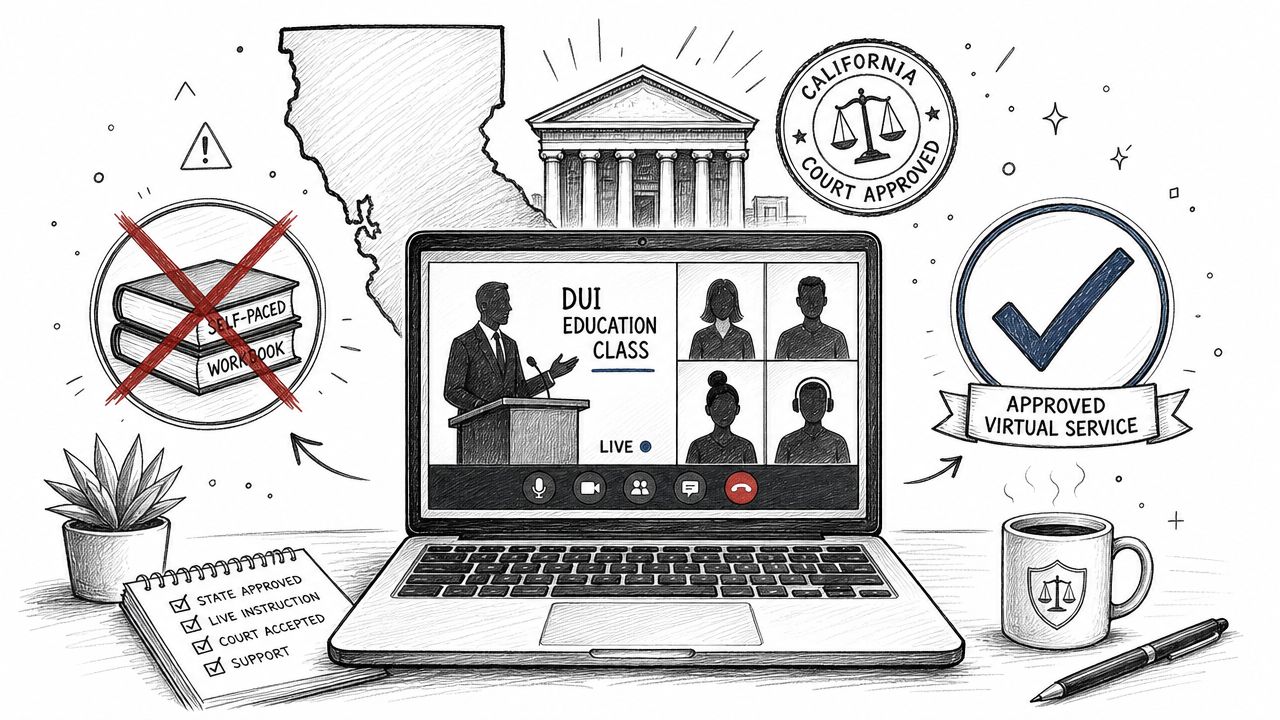
No, California does not approve fully online, self-paced DUI classes. What California does allow is a narrower option: some state-licensed DUI programs can deliver approved parts of the program through virtual or remote sessions, which is very different from a generic internet course.
If you're dealing with a California DUI right now, you're probably doing what many individuals do first. You're searching for the fastest legal option, and "online DUI classes" sounds like the obvious answer. The problem is that this phrase mixes together two very different things. One is not accepted. The other may be.
That distinction matters because courts, the DMV, and licensed providers don't treat DUI programs like ordinary traffic school. California treats them as structured, monitored programs tied to licensing rules, county administration, and specific program formats. If you enroll in the wrong thing, you can waste time, spend money on a certificate nobody accepts, and delay license or court compliance.
The Short Answer and The Important Exception
The fastest accurate answer to "can you take DUI classes online in California" is no for a fully internet-based class, but sometimes yes for virtual attendance inside a licensed program.
An online class is often pictured as a self-paced website. You log in whenever you want, watch videos, answer quiz questions, and print a completion certificate. That model is exactly where people get into trouble in California. If a website advertises a quick California DUI class that is entirely online and detached from a licensed local provider, that is the wrong category.
What California actually permits
California's system is built around licensed DUI programs, not stand-alone web courses. The practical question isn't "Can I find a DUI class on the internet?" It is, "Is this class part of a California-licensed program, and does that provider offer approved virtual services for my case?"
That difference sounds technical, but it changes everything:
- A legal option is tied to a licensed program in California.
- An illegal or unusable option is sold as a generic internet course.
- A workable real-world option may involve live remote sessions, scheduled attendance, and provider oversight.
Practical rule: If the seller's main pitch is "100% online, self-paced, instant certificate," assume it's not the California DUI program you're required to complete.
Why readers confuse this issue
The confusion is understandable. In many legal education settings, online delivery is normal now. But DUI compliance is state-specific. A person arrested in Georgia, for example, faces a different process entirely, and understanding those differences matters when comparing requirements across states. If you're trying to make sense of arrest-to-compliance steps more broadly, this guide to navigating the Georgia legal process is a useful contrast because it shows how quickly state rules diverge once a DUI case starts moving.
In California, the practical path is simpler than the internet makes it look. Start with a licensed provider. Ask whether your required program can include virtual sessions. Then verify that the provider's structure satisfies both the court and the DMV obligations tied to your case.
Why California Disapproves of Fully Online DUI Classes
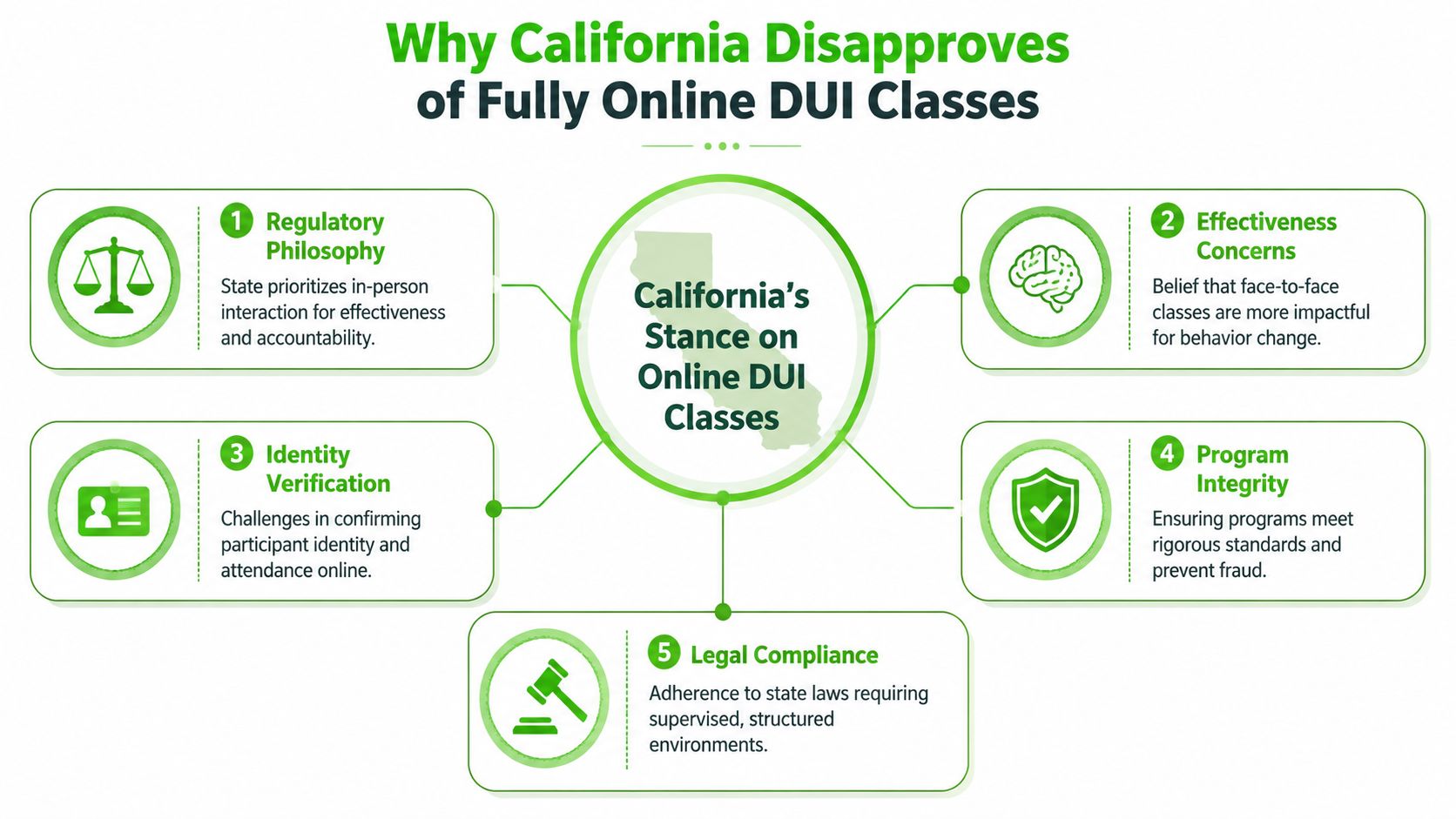
California's position isn't vague. The Department of Health Care Services states that it does not license internet DUI programs, and that DUI classes offered via the internet do not meet California DUI Program requirements. DHCS permits only virtual services within licensed programs under BHIN 24-012, which means the acceptable model is hybrid rather than fully online, as stated on the California DHCS DUI program page.
These aren't just education classes
California does not treat DUI programs like a standard online learning product. The structure is closer to a monitored intervention program. That means accountability, attendance tracking, counseling components, and ongoing contact matter just as much as the educational content.
A self-paced internet course conflicts with that model for obvious reasons:
- No live accountability: A passive web course can't recreate real-time participation in the same way a monitored session can.
- Weak attendance control: It is harder to confirm who participated and whether they completed the work as required.
- Less program oversight: California licenses providers and programs, not just lesson material.
- Poor fit for court-linked compliance: The state wants a program that can document participation in a reliable, regulated way.
Why the state's approach makes practical sense
If you've worked with DUI cases for any length of time, you see the difference quickly. A traffic school course is built to deliver information. A California DUI program is built to supervise a process. Those are not the same product.
California's rule makes more sense when you stop thinking of a DUI program as a class and start thinking of it as a regulated compliance and behavior-change program.
That is also why people get fooled by national websites. Many of them market "DUI classes" as if every state accepts the same kind of online certificate. California doesn't.
What works and what doesn't
Here's one way to frame it:
| Format | Likely California compliant |
|---|---|
| Self-paced internet DUI course sold nationally | No |
| Generic downloadable certificate program | No |
| Live virtual sessions through a licensed California provider | Potentially, depending on the program |
| In-person services through a licensed California provider | Yes, if it's the proper assigned program |
The state isn't banning technology. It is rejecting unlicensed internet delivery as the whole program. That is the key distinction.
Licensed Virtual Programs vs Illegal Internet Courses
When people ask me what the biggest mistake is, it usually comes down to this. They buy the word online before they verify the word licensed.
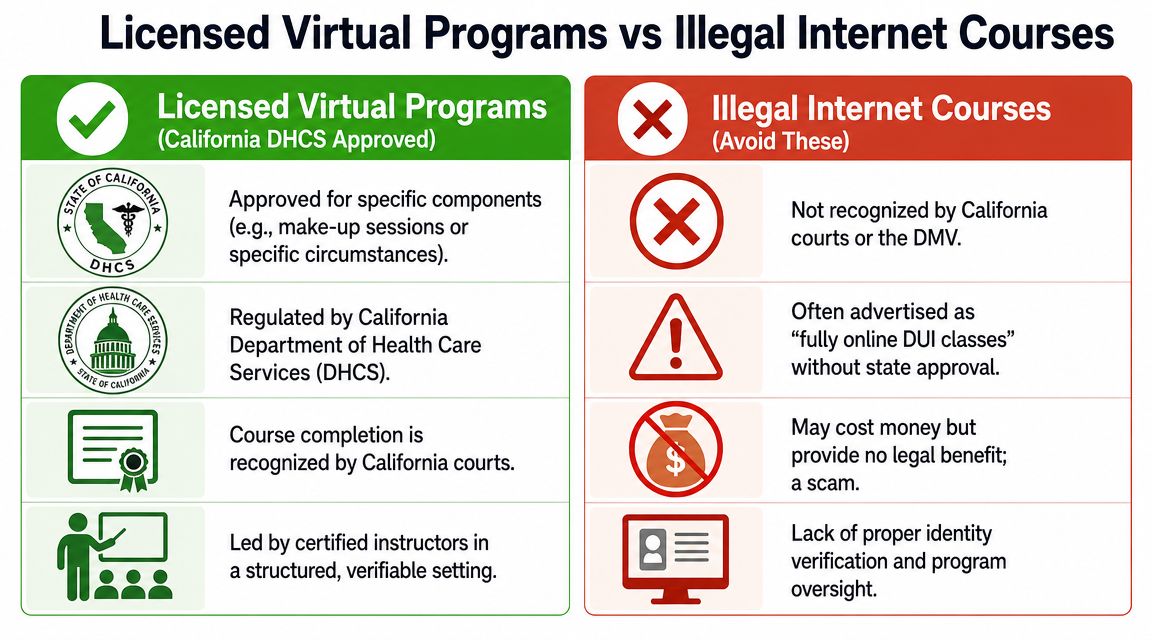
What a legal virtual program looks like
A California provider may offer remote client services or virtual sessions inside its approved DUI program structure. One approved provider explains that participants need a laptop, desktop, smartphone, reliable internet, and must come to an office to enroll before completing remote services, as described on the Safety Center remote DUI services page.
That example tells you what compliant virtual delivery usually looks like in practice. It is not anonymous and frictionless. It is supervised.
Look for signs like these:
- Enrollment tied to a physical provider: You are joining a licensed California program, not buying a certificate from a website.
- Scheduled participation: Sessions are usually live and organized, not purely on-demand.
- Intake requirements: You may need to appear for enrollment or complete formal intake steps.
- Technology standards: The provider expects you to have a working device and reliable connection because attendance is monitored.
What an illegal internet course usually looks like
The red flags are also easy to spot once you know them:
- "Finish anytime" language: This usually signals a self-paced product, not a California-accepted DUI program.
- No county or licensing detail: California DUI compliance is local and regulatory. Vague nationwide claims are a bad sign.
- Instant certificate marketing: Fast certificates are attractive, but speed isn't the same thing as acceptance.
- No intake, no screening, no program structure: That is not how licensed DUI programs typically operate.
If the site feels like a quick checkout page instead of an actual regulated enrollment process, slow down and verify it before paying.
Don't confuse DUI programs with traffic school
Some drivers also mix up DUI programs and traffic school because both may involve classes related to driving. They are different categories. If you need a separate reference point on how California handles a more typical online class format, this California traffic school guide shows the kind of course model that works in that context but should not be confused with a DUI program.
For readers in Georgia who are comparing state models, Georgia DUI Schools lists a live virtual and online DUI class option in Georgia. That works because Georgia has its own approval structure. California has a different one, and California's rules control California compliance.
Understanding California DUI Program Lengths
If you still wonder why California won't accept a simple internet course, the program lengths answer that question better than anything else. These are not quick consumer classes. They are layered programs with education, counseling, monitoring, and, in some cases, community service.
Orange County's public guide lists a 12-hour education track for certain lower-level cases, a 34-hour first-offender program, an 18-month multiple-offender program with 12 hours of education, 52 hours of group counseling, and 6 hours of community reentry monitoring, plus a 30-month program with 12 hours of education, 78 hours of group counseling, individual interviews, and up to 300 hours of community service, according to the Orange County DUI program information page.
Example of California DUI Program Requirements
| Program Type | Duration | Key Components |
|---|---|---|
| Education track for certain lower-level cases | 12 hours | Education |
| First-offender program | 34 hours | Structured first-offender program |
| Multiple-offender program | 18 months | 12 hours education, 52 hours group counseling, 6 hours community reentry monitoring |
| Higher-intensity program | 30 months | 12 hours education, 78 hours group counseling, individual interviews, up to 300 hours community service |
What those lengths mean in practice
A person in a short education track may still have a different experience from someone in a long multiple-offender program. That's why the answer to "can you take DUI classes online in California" isn't just yes or no in the abstract. It depends on the level of program ordered and what the licensed provider is permitted to deliver virtually.
The more complex the program, the less realistic the "just do it online" idea becomes. Multi-month and multi-component requirements need provider control, scheduling, documentation, and participant monitoring. That is a poor fit for a generic self-paced internet platform.
A website promising one-size-fits-all California DUI completion is ignoring the fact that California itself does not use a one-size-fits-all DUI program model.
For drivers in places like Orange County, Los Angeles County, or San Diego County, county practice and provider availability also affect how virtual attendance is handled. The safest move is always to verify the exact program assigned to you before you assume a remote option will satisfy it.
How to Find and Verify an Approved California DUI Program
California's licensing authority makes the baseline rule clear. DHCS does not license any internet DUI programs, and DUI classes offered via the internet do not meet California DUI Program requirements, which means a California resident ordered into a standard DUI program generally needs a licensed in-person or hybrid provider, as stated on the DHCS DUI program licensing page.
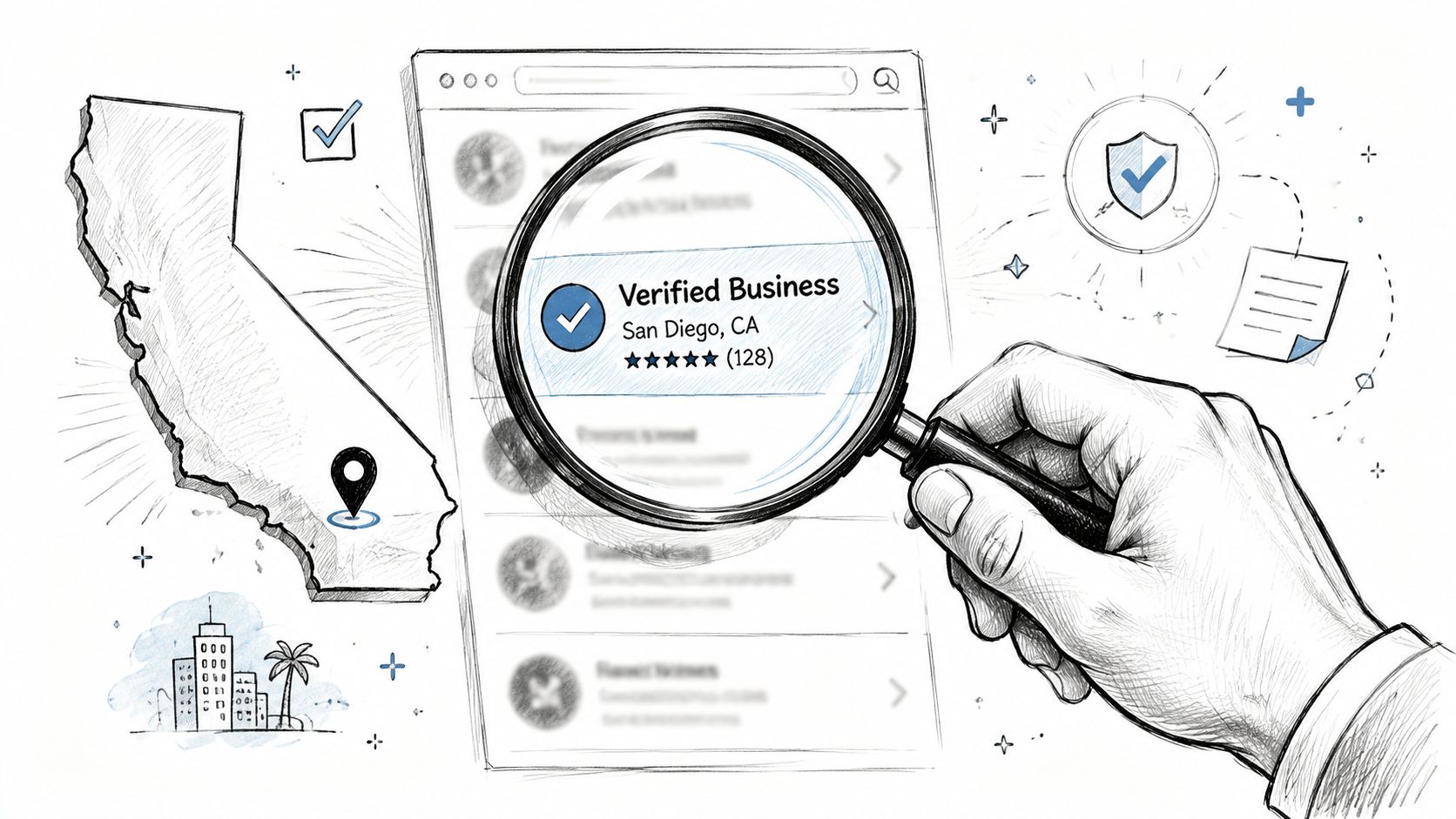
A practical verification checklist
Before you enroll, ask direct questions. Don't worry about sounding skeptical. Here, skepticism saves people money.
- Ask if the provider is licensed for your California county. County placement and program administration matter.
- Ask whether your required program includes approved virtual services. Don't ask only whether they are "online."
- Ask what parts, if any, require in-person attendance. Intake, enrollment, or certain program components may still be on-site.
- Ask how attendance is documented. You want a provider that can clearly explain participation tracking.
- Ask who receives completion reporting. The answer should match your court and DMV obligations.
Red flags that should stop you
Some websites are built to catch anxious buyers. The sales language is polished, but the compliance details are thin.
Watch for these warning signs:
- National claims with no California licensing detail
- Promises that every California court accepts the certificate
- No mention of DHCS-licensed program enrollment
- No phone support that can answer county-specific questions
- A certificate-first sales pitch instead of a program-first enrollment process
If a provider can't explain its California licensing status in plain language, move on.
One more point about state differences
Drivers often compare options across states and assume the rules should line up. They don't. For example, a Georgia driver looking for a state-approved online education format would be dealing with a different system entirely, and resources like Georgia DUI Schools' Georgia online driver education information reflect Georgia-specific approvals rather than California DUI program rules.
The core habit to adopt is simple: verify the provider first, the format second, and the marketing claims last.
Frequently Asked Questions About California DUI Programs
Can an out-of-state resident complete a California requirement from elsewhere
Sometimes people live outside California but still have a California DUI case or California DMV requirement. In that situation, the answer usually depends on what California authority is requiring and what substitute or transfer process is allowed in that case. The mistake is assuming an online certificate solves distance. Distance does not erase California approval rules.
If you're also dealing with the early post-arrest phase and need a practical reference on the custody side of a DUI matter, this overview of Bada Bing Bail Bonds DUI assistance gives a useful look at how those immediate steps differ from later program compliance requirements.
Can a judge approve a fully online class anyway
Usually, no. A judge may have discretion on some case-management issues, but a California DUI program still has to fit the state's licensing framework. A privately purchased internet course doesn't become acceptable just because it seems convenient.
Do the court and DMV look at the same thing
Not always in a simple way. Many drivers need to satisfy both court obligations and DMV-related requirements. A class or enrollment step that helps in one setting may still need to match the state's compliance structure for the other. That is why using a recognized provider matters so much.
Navigating DUI Requirements in Georgia
California is strict in a very California way. Georgia is different. If your issue is in Georgia, you should stop using California advice as a roadmap and switch to Georgia-specific guidance right away.
Georgia DUI and Risk Reduction matters run through Georgia's own approval system, course formats, and provider rules. The same is true for related services like clinical evaluations, treatment recommendations, victim impact panels, and defensive driving classes. A driver in Atlanta, Athens, or another Georgia community needs to verify Georgia compliance, not California compliance.
That also applies to education options. Someone comparing class formats in Georgia may need separate information on youth and adult training paths, and Georgia-specific resources such as these Georgia driver education classes are only useful for Georgia requirements.
The key lesson is simple. DUI education is never interchangeable across states just because the class names sound similar. California's hybrid-only approach for licensed DUI programming is one example. Georgia has its own system, and the right provider depends on the state, the agency ordering the requirement, and the exact service you need.
If you need to meet a Georgia DUI or Risk Reduction requirement, start with the course that matches that obligation instead of guessing from out-of-state rules. Georgia DUI Schools offers state-specific options for Georgia drivers, including the Georgia DUI and Risk Reduction course.