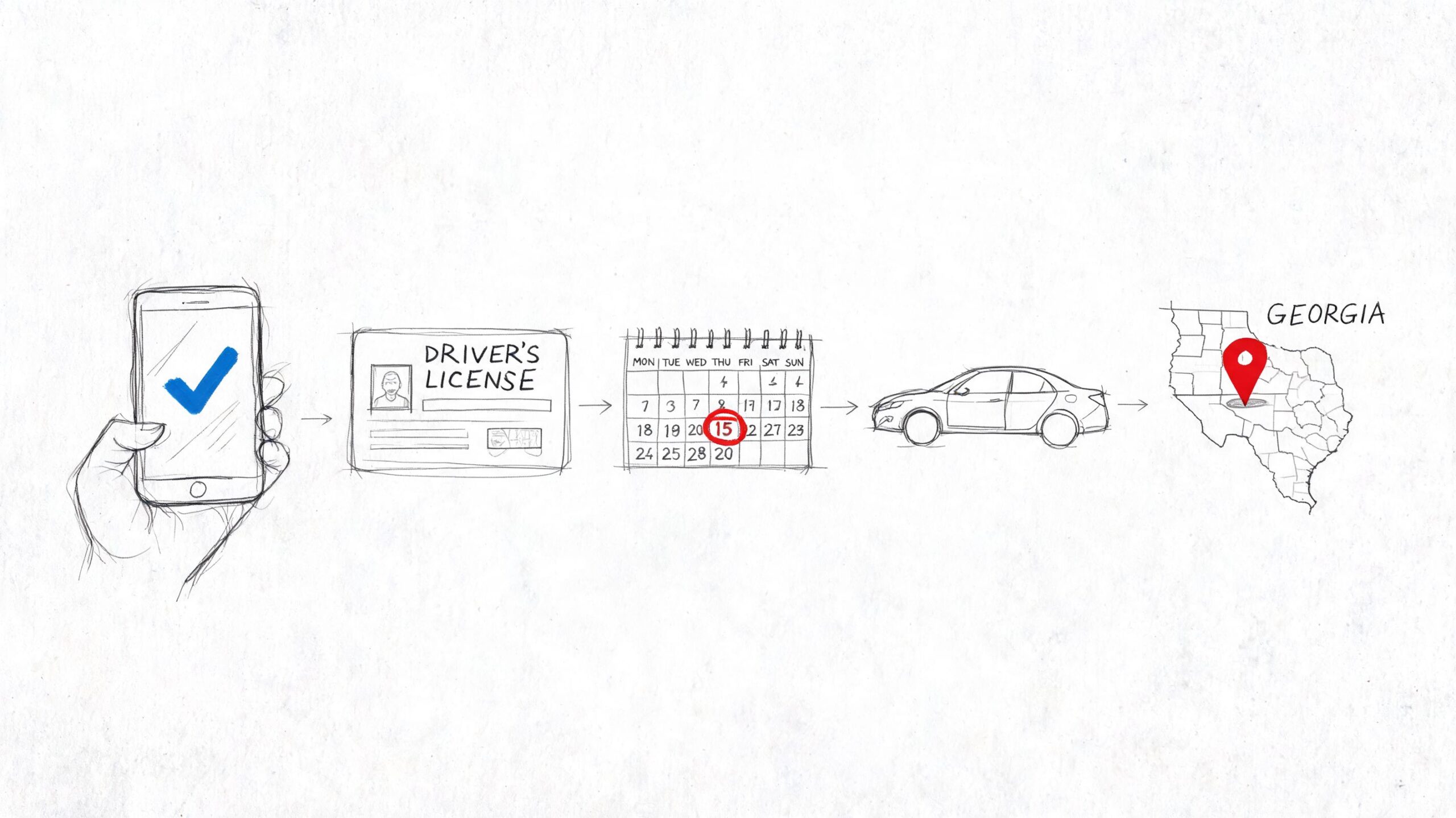
You finished the class. You handled court dates, deadlines, fees, and paperwork. Now you're at the part people assume should be simple: driving practical exam booking.
For many Georgia drivers, frustration often begins with the booking process. General road test guides usually explain the basic appointment process, but they leave out the reinstatement problems that matter after a DUI. That's the gap that causes delays. A person can be fully ready to drive again in every practical sense, then lose more time because one completion certificate is missing, one requirement hasn't posted yet, or the wrong vehicle shows up on test day.
Your Final Step to Getting Back on the Road in Georgia
A lot of people reach this stage feeling two things at once. Relief, because the end is finally in sight. Stress, because one more mistake can push everything back.
That stress is justified. Drivers dealing with reinstatement aren't starting from the same place as a first-time teen driver. Georgia often requires you to line up your Risk Reduction completion, any required clinical paperwork, and your license status before you even think about the road test. Standard booking articles rarely account for that, even though this is a common situation for real people trying to get back to work, pick up children, or stop depending on rides.
The broader need is real. One review of this gap notes that in Georgia, over 25,000 DUI Risk Reduction enrollments occur annually, yet booking guides still tend to ignore how people should coordinate course completion paperwork with road test scheduling during reinstatement (Virginia DMV road skills test reference discussing the underserved angle).
What matters most: the road test is not just a driving appointment when you're reinstating after a DUI. It's the final checkpoint in a longer compliance process.
I've seen the same pattern over and over. Someone completes a required class, assumes DDS can instantly see everything, books too early, and then gets stuck. Another person is fully eligible but arrives with an avoidable problem, such as missing paperwork or a car issue that should have been caught the night before.
Sometimes the obstacles aren't even legal. They're logistical. If you're rebuilding after a suspension and you're also dealing with practical problems like misplaced keys before a test or reinstatement appointment, a resource on how to replace lost car keys can save a day that would otherwise unravel.
The good news is that this stage becomes much more manageable when you treat it like a checklist, not a guessing game.
What You Need Before You Book Your Driving Test
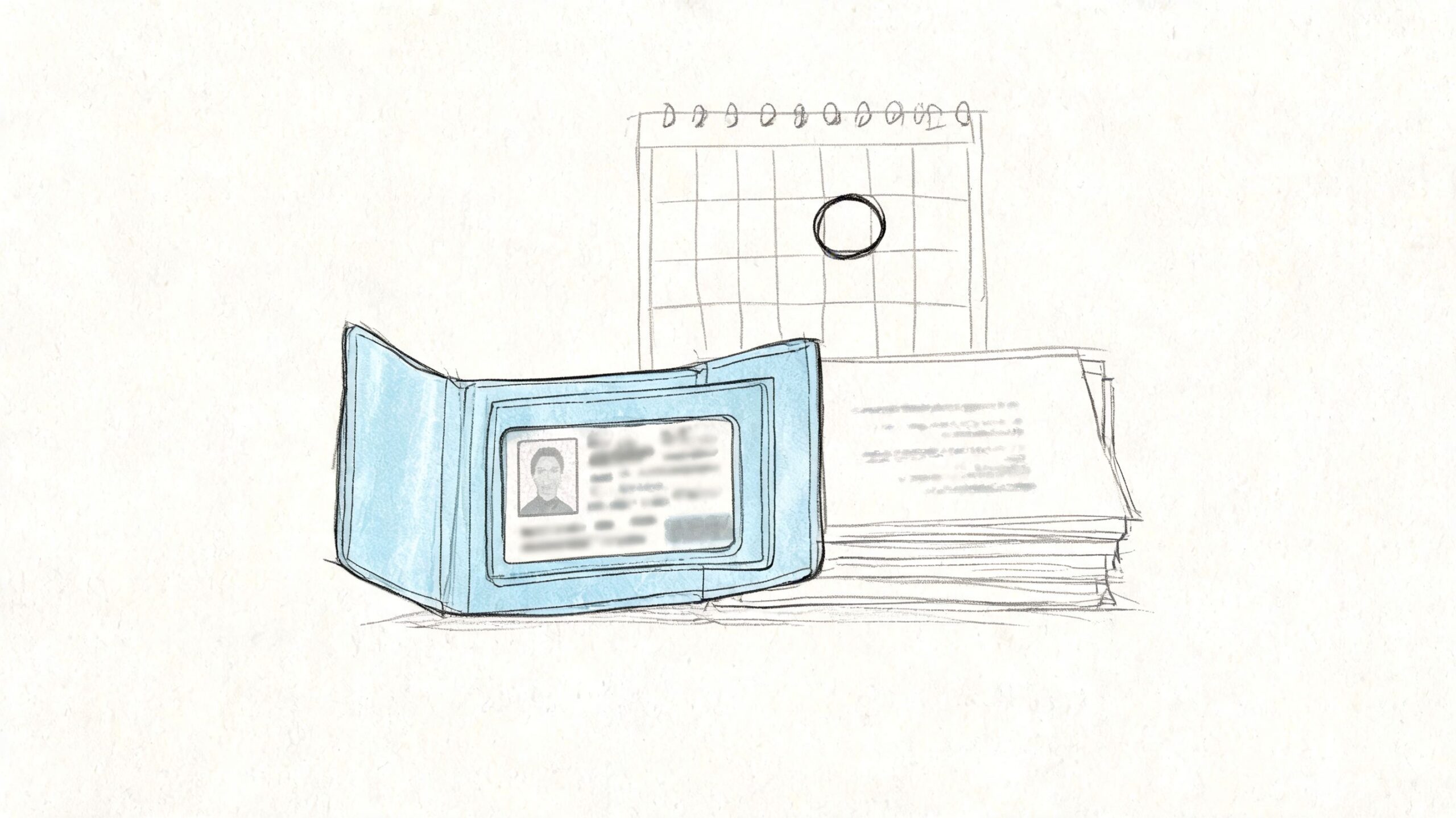
The biggest booking mistake is trying to schedule the test before your file is ready. Fix that first.
A practical test appointment only helps if you can keep it. One verified guide notes that to book a practical driving exam, you must first hold a valid instruction permit, which itself requires passing a knowledge test, and that minors need a licensed adult aged 25 or older to accompany them. The same guide also notes that many test-day cancellations come from vehicle non-compliance or basic prerequisite issues (booking requirements overview).
Your standard eligibility items
Before you open the Georgia DDS appointment system, confirm the basics:
- Valid permit status: Your permit or other required driving status must be current and usable for testing.
- Correct personal details: Your name, date of birth, and license or permit number should match your DDS record.
- Access to a test vehicle: The vehicle has to be roadworthy, legal, and appropriate for the exam.
- A qualified accompanying driver when required: If your situation requires one, don't treat this as a last-minute detail.
If you're not sure what you must carry to drive legally before the exam, review this Georgia-specific guide on documents needed to legally drive.
Your reinstatement documents after a DUI
Many individuals often stumble at this point.
For reinstatement cases, think in terms of proof of completion and proof of compliance. Depending on your case, that can include:
- Risk Reduction certificate
- Clinical evaluation paperwork
- ASAM Level 1 treatment completion records
- Any court-directed documents tied to reinstatement
- Any DDS-required reinstatement confirmation tied to your license status
Not every driver needs every item. That's the trade-off. If you assume less is required than your case demands, you risk losing the appointment. If you gather more than needed, you may spend extra time, but you'll usually protect yourself from a failed trip.
Bring the documents that prove the requirement is complete, not just the memory that you finished it.
What to verify before you click book
Use this short pre-booking check:
| Item | What to confirm |
|---|---|
| Identity record | Your DDS profile details are accurate |
| Permit or driving status | Active and valid for testing |
| Reinstatement steps | Completed and documented |
| Vehicle | Registered, insured, and road-test ready |
| Appointment contact info | Email and phone are current |
A road test slot is valuable. Don't spend it finding out your paperwork is still incomplete.
How to Schedule Your Exam with the Georgia DDS
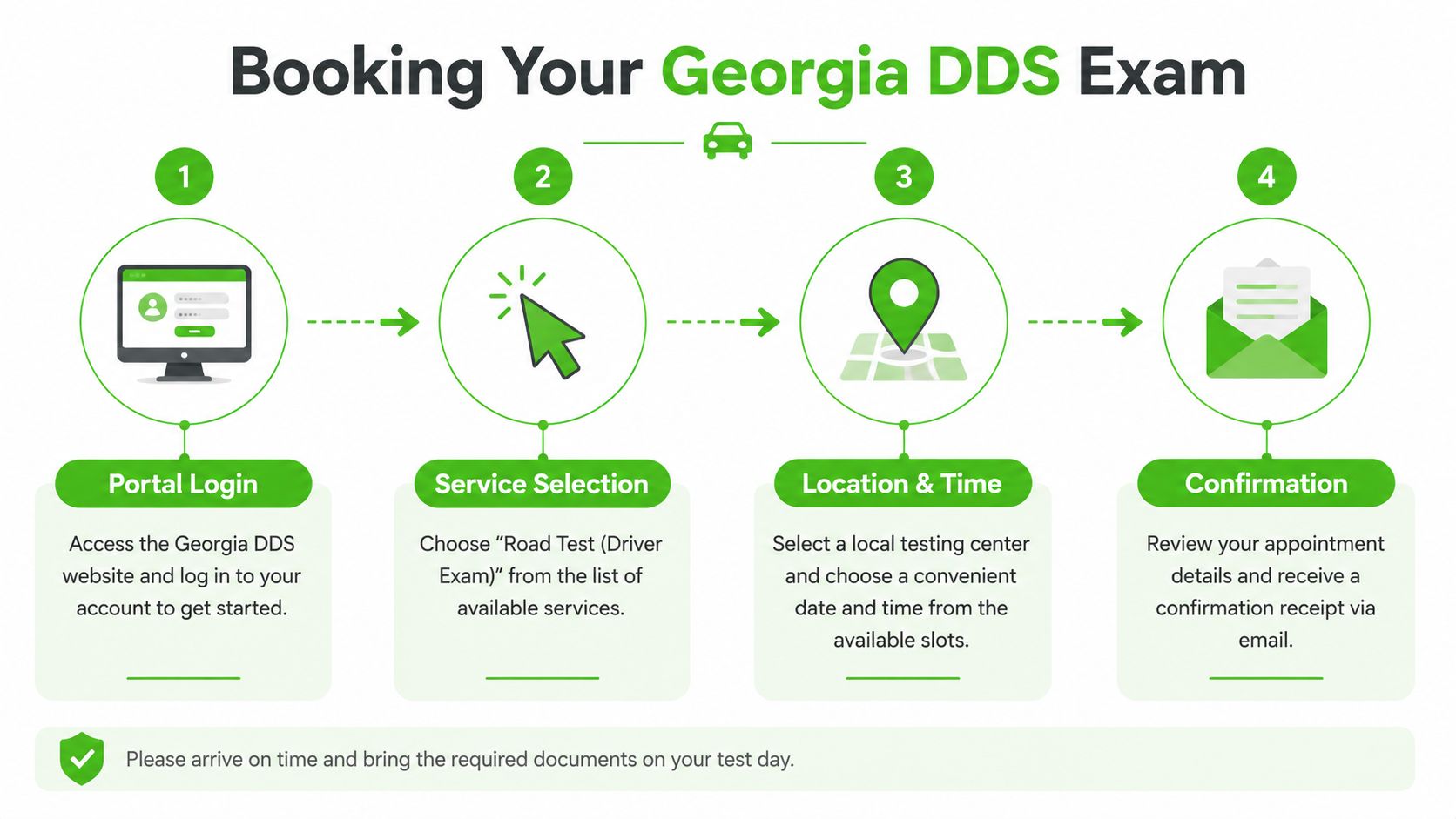
Often, the cleanest path is the Georgia DDS online appointment system. It's usually faster than waiting for in-person help, and it lets you see location options without driving around metro Atlanta trying to compare offices.
The online booking approach that works best
Have everything in front of you before you start. That means your permit or license number, your personal details, and the dates or completion records connected to reinstatement.
Then work through the process in order:
- Log into the DDS system using your identifying information.
- Choose the road test service that matches your situation.
- Select your testing location based on distance, availability, and how comfortable you are driving in that area.
- Pick the date and time that gives you enough room to prepare without waiting so long that documents or plans become messy.
- Save every confirmation detail immediately.
A lot of missed appointments happen for a simple reason. People think they'll remember the confirmation number, date, or address. They won't.
That's why I tell people to save the email, screenshot the confirmation page, and put the appointment into their phone calendar while they're still on the booking screen. If you want a better reminder setup, a practical text message appointment confirmation guide shows how text reminders reduce no-shows and forgotten details in appointment-based settings.
Choosing the right DDS location
Not every testing office is equal for every driver.
Some people do better closer to home because the route and traffic patterns feel familiar. Others benefit from avoiding the busiest areas of metro Atlanta if heavy traffic makes them tense. If you're comparing options, this list of places to take a road test near me helps you narrow down practical Georgia choices.
A shorter drive to the office can matter as much as the test itself. If you arrive rattled, you're already working uphill.
Here's a simple way to choose:
- Pick convenience if transportation is uncertain and you need the least complicated trip.
- Pick familiarity if your confidence depends on roads you already know.
- Pick availability if your reinstatement timeline is the bigger priority.
When phone or in-person booking makes more sense
Online is usually best, but not always.
Phone support can help when your record has a mismatch, you're unsure whether a reinstatement step has fully posted, or the portal isn't showing what you expect. In-person visits can also make sense if you have document questions that are easier to resolve face to face.
That said, don't use an office visit as a substitute for preparation. The staff can explain process issues, but they can't fix missing treatment paperwork or create compliance that hasn't happened yet.
The best booking session is the one you finish in one sitting, with no scrambling and no second-guessing.
Avoiding Common Pitfalls for a Smoother Booking

Smart applicants don't just book early. They remove the reasons an appointment falls apart.
Data from high-demand regions shows that 35% of test day rejections are due to not having a proper accompanying driver, and 20% are due to vehicle failures like bald tires. The same source notes that calling booking hotlines at off-hours, such as 6 AM, can reveal twice the availability compared with peak times (high-demand booking pitfalls and timing strategies).
What usually goes wrong
The common failures are rarely mysterious. They tend to fall into three buckets:
- Wrong person with you: If your case requires an accompanying driver, bring the right one. Not a friend who “should be fine.” The right one.
- Wrong car: Tires, lights, registration, insurance, and general roadworthiness need to be handled before test day.
- Wrong assumptions about reinstatement status: Finishing a class is not the same thing as having every required step reflected and accepted.
People often focus on the driving itself and ignore the gatekeeping details. That's backwards. You can be a safe driver and still lose the appointment before the test starts.
Timing matters more than people think
If scheduling is tight, stop checking only during lunch breaks or after work when everyone else is doing the same thing. Off-hour checks often give you a cleaner look at what's available.
That doesn't guarantee an ideal slot, but it improves your odds of catching cancellations and openings before they disappear. In Georgia, especially around busier population centers, that practical habit can make the difference between getting tested soon and waiting while your plans stall.
Practical rule: book with enough time to prepare your car and paperwork. A fast appointment you can't keep is worse than a later appointment you can actually use.
The trade-off most people miss
There's a temptation to grab the first opening anywhere. Sometimes that's correct. Sometimes it's not.
If the only available slot is far away, in an area you don't know, on a day when transportation is shaky, that “early” booking may be the riskier move. A slightly later appointment at a better location often produces a smoother result.
Use this decision filter:
| Option | Good choice when | Bad choice when |
|---|---|---|
| Earliest available slot | Your paperwork and vehicle are fully ready | You're still waiting on compliance proof |
| Closest location | You need predictable logistics | Availability is poor and delays are severe |
| Unfamiliar location with faster opening | You're calm in new traffic environments | You already struggle with test anxiety |
Booking isn't just about speed. It's about choosing an appointment you can show up for and complete.
Your Checklist for Driving Test Day Success
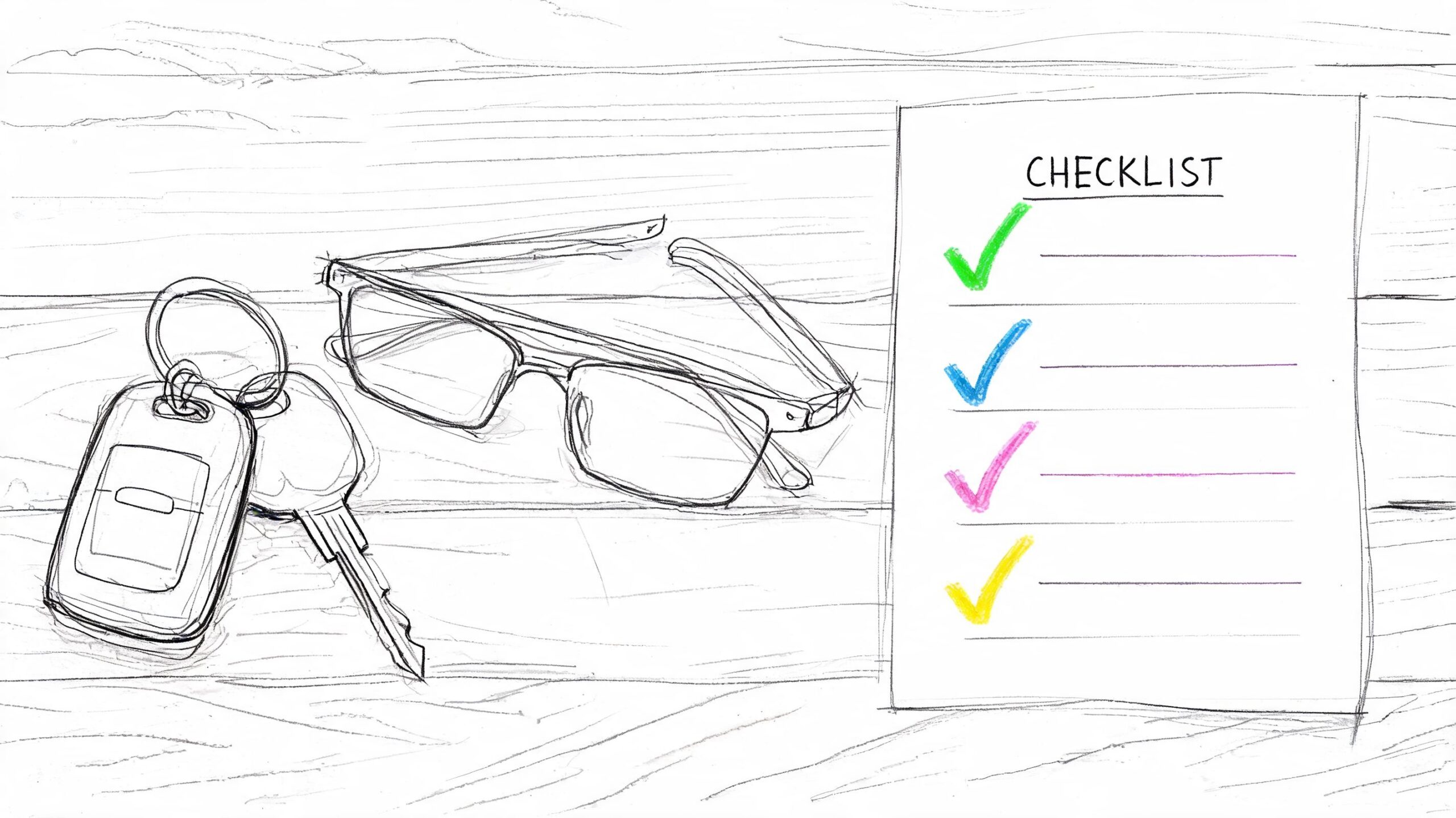
The day before the road test should feel boring. That's the goal.
One verified source notes that roughly 30% of driving test failures happen before the car even moves, during the pre-drive safety check. Examiners check turn signals, brake lights, the horn, and other basic safety features, and a single failure can lead to automatic cancellation. The same source was cited earlier, so the number belongs here and doesn't need repeating elsewhere.
What to bring
Lay everything out the night before. Don't rely on memory in the morning.
Bring your:
- Permit or required driving credential
- Appointment confirmation
- Vehicle registration
- Proof of insurance
- Any reinstatement paperwork relevant to your case
- Glasses or corrective lenses if required for driving
- Keys to the actual test vehicle
If you want a Georgia-focused overview of the road test itself, review Georgia drivers road test guidance.
What to check on the vehicle
Walk around the vehicle slowly. Then test each item with intention.
- Lights: Turn signals, brake lights, and headlights should all work.
- Horn: Press it. Don't assume.
- Tires: Look for obvious wear or damage.
- Windshield and mirrors: Clean enough to see clearly.
- Seat belts: Make sure they latch properly.
- Registration and insurance access: Know where those documents are before you leave.
If you discover a car issue on test morning, your best move is to solve it before you drive to DDS. Hoping the examiner won't notice is not a strategy.
How to handle the last 24 hours
The driving portion matters, but so does your state of mind.
The night before, avoid cramming. Review the habits that cause preventable errors: full stops, lane position, speed control, mirror checks, and calm turns. If you've had a long path back from a DUI case, test-day nerves are normal. The answer isn't to rush. It's to simplify the day.
A strong routine looks like this:
- Set out documents and keys
- Inspect the car
- Confirm your route to the DDS location
- Plan to arrive early
- Take a few calm practice minutes before the test if possible
The best test-day preparation is orderly, not dramatic.
Passing Your Test and Maintaining Your Freedom
If you pass, take care of the next DDS steps right away so your driving privileges are reflected correctly. Keep copies of your completion records and any reinstatement paperwork until everything is fully resolved.
If you don't pass, treat it as feedback, not failure. Look at what happened. Was it a driving mistake, a vehicle problem, or a paperwork issue? Fix the exact problem before you rebook.
The larger point matters more than the single appointment. Getting your license back after a DUI is about more than passing a test. It's about proving, to yourself as much as anyone else, that you can protect the privilege once it's restored.
That usually means staying far away from the habits that created the suspension in the first place. It also means building safer routines that hold up under stress, fatigue, traffic, and ordinary daily pressure.
Passing the road test gets you moving again. Safe choices keep you moving.
If you're finishing the reinstatement process or want extra protection for your driving record after getting back on the road, Georgia DUI Schools offers state-approved options that fit real schedules, including weekday, weekend, in-person, and online formats. A strong next step is their Georgia defensive driving course, which can help reinforce safer habits and support long-term license protection.