A daughter rides with her father to a doctor’s appointment in Marietta and notices two things that weren’t true a year ago. He brakes late at a familiar light. He also asks her to read a street sign that used to be easy for him to spot. Nothing dramatic happened, but the ride feels different.
That’s where many Georgia families begin. Not with a crash, not with an argument, and not with a sudden decision to stop driving. It starts with small changes that are hard to name and even harder to discuss.
An elderly driver evaluation can help turn that uncertainty into something clearer and kinder. Instead of asking, “Should they still be driving at all?” the better question is often, “What skills are still strong, what’s changed, and what support would make driving safer?”
An Introduction to Elderly Driver Evaluations

An elderly driver evaluation isn’t just another license renewal. It’s a broader review of the abilities that driving depends on every day, including vision, judgment, physical movement, reaction time, and attention. For families, that distinction matters because the concern usually isn’t paperwork. It’s safety, independence, and dignity.
Many people assume age by itself tells you whether someone is a safe driver. It doesn’t. In the United States, the number of licensed drivers age 65 and older reached over 51 million in 2022, and drivers in that age group accounted for 10.5% of all accidents, compared with 22.6% for drivers ages 25 to 34, according to senior driver statistics reviewed here. That same source notes that older adults face higher fatality risk per crash because their bodies are more physically vulnerable, which is different from causing more crashes overall.
Why families often misunderstand the process
A lot of readers hear the word “evaluation” and think “test you can fail.” That’s understandable, but it misses the practical value. A good evaluation looks for specific problems, not a label.
Sometimes the issue is vision correction. Sometimes it’s medication timing. Sometimes it’s neck stiffness that makes lane changes harder. Sometimes it confirms that the older driver is doing well and only needs a few driving habit adjustments.
Practical rule: An elderly driver evaluation should answer a practical question about safety, not punish someone for getting older.
What the evaluation is really trying to protect
Driving often represents much more than transportation. In Georgia, it can mean getting to church, a pharmacy, a family dinner in Decatur, or a weekly appointment across town without depending on others. That’s why this conversation gets emotional fast.
A thoughtful evaluation helps families move away from guessing. It creates a basis for decisions that are more fair, more individualized, and easier to explain to a loved one who fears losing control.
A useful way to frame it is this:
- For the older driver: It can protect independence by identifying what still works well.
- For family members: It replaces vague worry with concrete observations.
- For doctors and licensing agencies: It creates a more objective picture than a single office visit or a family disagreement.
When families approach an elderly driver evaluation as a safety check rather than a verdict, the conversation usually becomes more respectful and more productive.
Recognizing When an Evaluation Is Necessary
Some warning signs are obvious. A fender bender in a parking lot. A near miss during a left turn. Getting lost on a route the driver has used for years. Others are quieter and easier to dismiss.
A mother in Athens may start avoiding busy intersections. A grandfather in Gwinnett may stop driving after dark without announcing why. A retired driver in Atlanta may insist traffic has become impossible, when the deeper issue is slower processing speed or reduced neck mobility.
Changes that deserve attention
You don’t need to wait for a crisis. An elderly driver evaluation becomes worth considering when you notice patterns such as:
- Navigation problems: Missing familiar turns, confusion in known neighborhoods, or difficulty following simple route changes.
- Judging traffic gaps poorly: Turning too soon, hesitating too long, or struggling at multi-lane left turns.
- Sign reading trouble: Late braking, missed exits, or asking passengers to read road signs.
- Physical strain while driving: Trouble checking blind spots, gripping the wheel, moving a foot quickly between pedals, or backing out safely.
- Increased stress responses: The driver seems tense, angry, or overwhelmed in situations they once handled calmly.
- Passenger concern: Family members begin avoiding rides with that person because they no longer feel safe.
None of these signs alone proves someone must stop driving. They do suggest that a closer look would be wise.
Self-limiting can be a good sign
Families sometimes interpret reduced driving as proof that a loved one is no longer safe. It can mean that, but it can also show insight. Research on older drivers found that seniors with memory, vision, or mobility impairments are more likely to voluntarily limit driving by taking fewer trips, driving shorter distances, or avoiding night driving, as described in research supporting older drivers.
That matters because self-regulation is often part of responsible driving, not a failure.
If your loved one already says, “I don’t like driving at night anymore,” they may be telling you something useful about their own limits.
When to move from observation to action
Families often get stuck here. They see a change, but they aren’t sure whether to bring it up. A simple rule can help.
Consider arranging an evaluation when the change is doing one of these three things:
- Repeating itself
- Affecting real driving tasks
- Creating worry for the driver or the family
It also helps to compare “preference” with “function.” Preferring not to drive downtown at rush hour isn’t unusual. Struggling to stay in the lane on local roads is different. Avoiding interstate traffic can be a lifestyle choice. Not seeing pedestrians in a grocery store lot points to a safety issue.
The most productive conversations start with examples, not accusations. “I noticed you had trouble seeing that sign” works better than “You’re not safe anymore.” “Would you be open to a professional driving check?” works better than “We need to take your keys.”
The Four Pillars of a Comprehensive Assessment
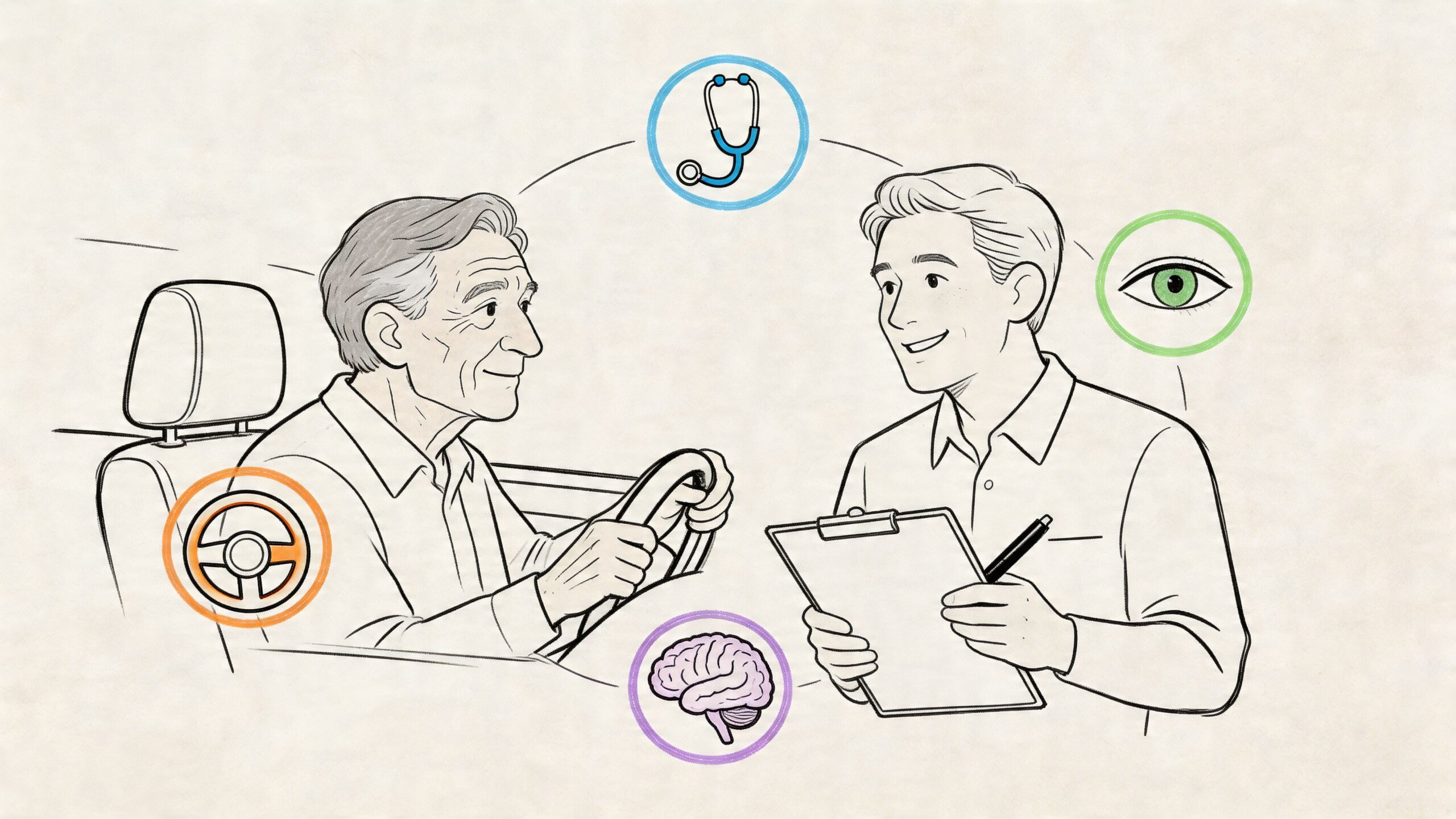
A strong elderly driver evaluation works like a four-part safety inspection. No single piece tells the whole story. Together, they give a much better view of whether the driver can manage real traffic demands.
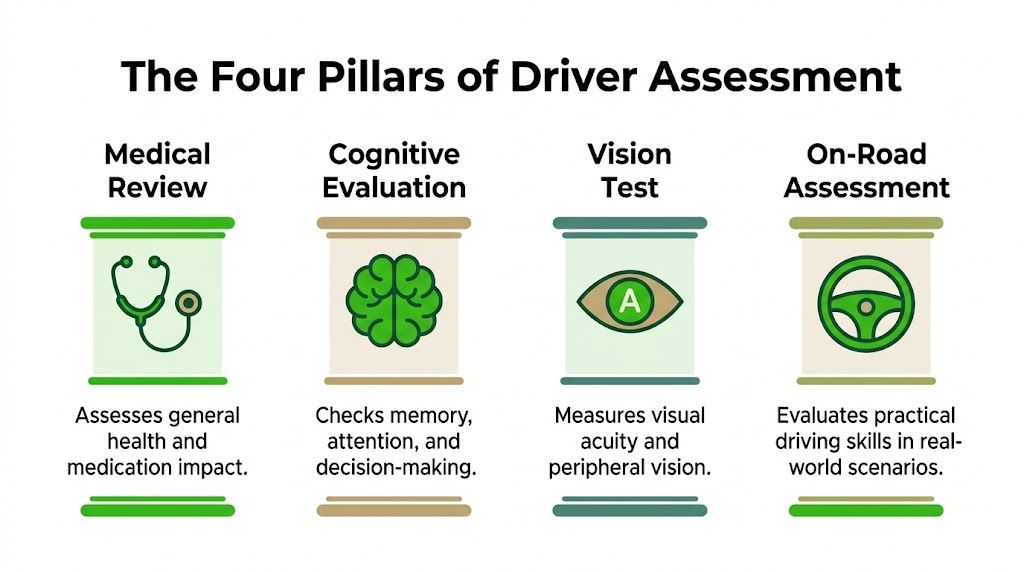
Medical review
This part asks a basic but important question. Is there anything in the person’s health history that could affect driving?
That can include stroke history, diabetes, arthritis, Parkinsonian symptoms, sleep problems, dizziness, medication side effects, or conditions that affect alertness. The evaluator isn’t looking for a diagnosis alone. They’re asking how that condition shows up behind the wheel.
A medication list matters here. A driver may be safe during the middle of the day but drowsy soon after taking a certain prescription. Another may have adequate strength most mornings but struggle later in the day. Those details shape recommendations.
Cognitive evaluation
Driving is a constant decision-making task. You scan mirrors, track traffic, judge speed, ignore distractions, and respond to surprise events in seconds. That’s why cognitive screening is such an important part of an elderly driver evaluation.
Two well-known tools help with this. The Clock Drawing Test can predict driving outcomes with 90% accuracy, and the Trail-Making Test Part B uses a cutoff of more than 180 seconds to flag drivers who may need a specialized on-road assessment, according to this transportation research report on driver screening tools.
These tests don’t measure intelligence. They look at functions that matter on the road:
- Attention: Can the driver focus while ignoring distractions?
- Executive function: Can they make quick decisions and shift between tasks?
- Visual processing: Can they interpret what they see fast enough?
- Spatial organization: Can they keep track of position, direction, and movement?
If your family member is also dealing with court or licensing requirements tied to substance use history, a separate online drug and alcohol evaluation may also become part of the larger compliance picture in Georgia. That isn’t the same thing as a driving rehabilitation evaluation, but families sometimes encounter both processes and confuse them.
A poor score on a screening test doesn’t automatically settle the issue. It usually signals that the person needs a more complete review.
Vision screening
Vision in driving is more than reading the eye chart. A person has to detect movement, notice hazards from the side, judge distance, and handle changing light.
An evaluator may look at:
- Visual acuity
- Peripheral awareness
- Contrast sensitivity
- Depth perception
- How the driver handles glare or low light
Families often miss this point because their loved one may say, “I can read fine with my glasses.” Reading a menu and spotting a cyclist approaching from the side are very different tasks.
On-road assessment
This is the part people often fear most, but it’s usually the most concrete and informative. A trained professional observes how the driver performs in real traffic situations such as turns, lane changes, speed control, braking, scanning, and route following.
It’s not just about mistakes. The evaluator also watches for safe habits, awareness, adaptability, and whether the driver can follow coaching. In some cases, the result may be a recommendation for restrictions, route changes, or adaptive equipment rather than complete driving retirement.
Why all four matter together
A person can do well in one area and struggle in another. Good eyesight doesn’t cancel out poor judgment at intersections. Strong memory doesn’t fix limited neck rotation during lane changes. A smooth road test doesn’t erase medication-related drowsiness if that issue appears at other times.
That’s why a complete elderly driver evaluation is more reliable than a quick opinion from a family member or a single office screening.
How to Arrange an Evaluation in Georgia
Georgia families often run into the same problem. They know something needs to happen, but they don’t know who starts the process. A doctor? The Department of Driver Services? A family member? Sometimes the answer is more than one.
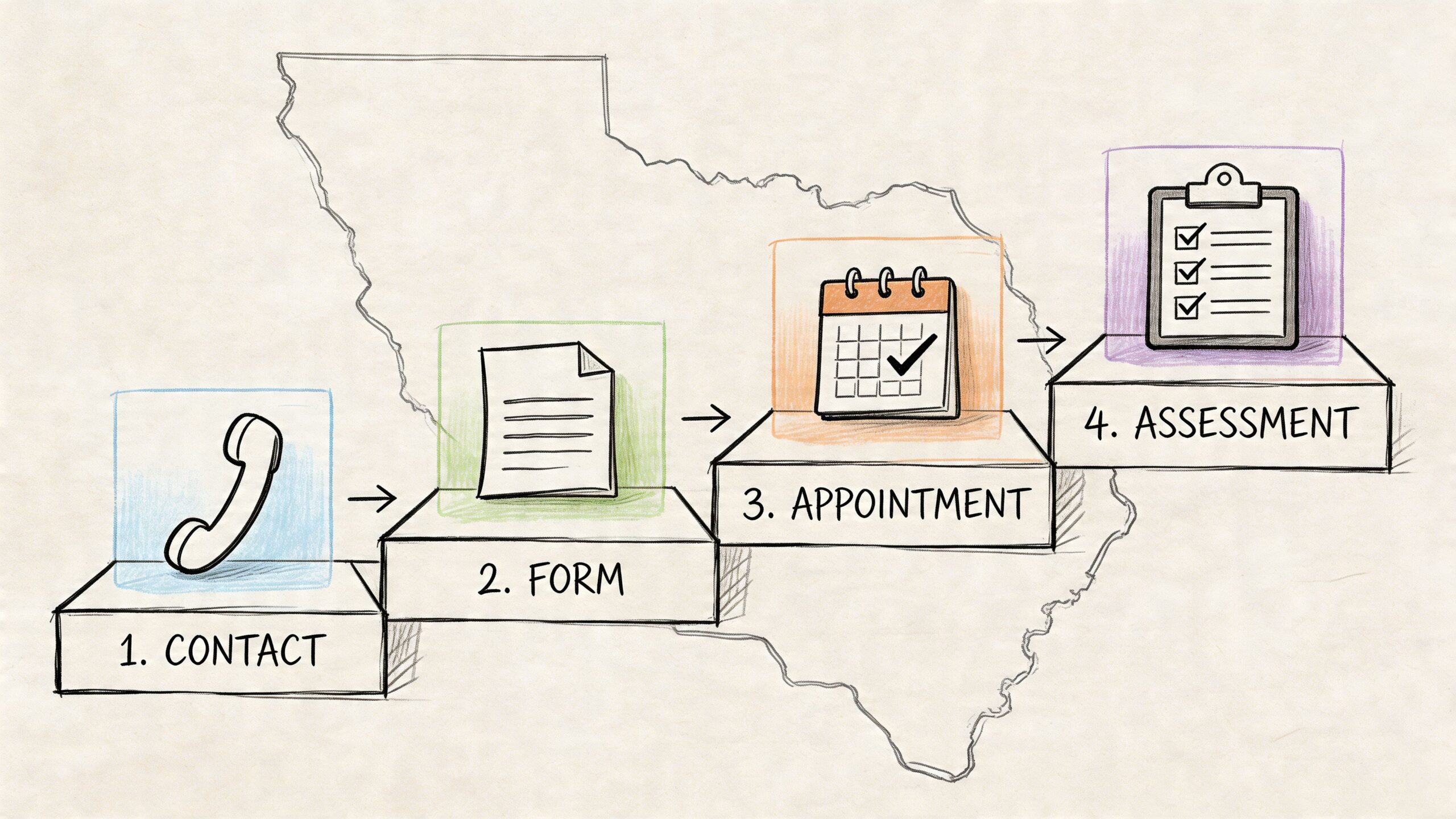
In Georgia, the practical path depends on why the concern has come up. Some families begin with a primary care doctor. Others act after a police report, a medication change, repeated driving mistakes, or a court or DDS matter that already put the driver under review.
A straightforward path families can follow
Here’s a workable sequence for many Georgia households:
Document specific concerns
Write down what you’ve seen. Use concrete examples such as missed signs, confusion at familiar intersections, or recent difficulty turning the head to check traffic.Talk with the driver first if possible
A calm conversation often works better before filing anything formal. Many older adults are more open to an evaluation when they feel included.Ask the physician for input
A doctor can review medications, recent diagnoses, and whether a vision, cognitive, or physical issue may be affecting driving.Contact Georgia DDS if formal review may be needed
In some cases, families may need to involve the Georgia Department of Driver Services and ask about medical review procedures, including forms and supporting documentation.Schedule the appropriate evaluation
Depending on the issue, that may mean a medical review, a driving rehabilitation assessment, a vision check, or a separate clinical evaluation tied to a court or reinstatement requirement.
Why timing matters
Georgia families shouldn’t assume “waiting to see” is harmless. The confusion gets worse when a loved one has both age-related concerns and a legal issue involving driving history. That overlap can make a simple question feel bureaucratic very quickly.
One Georgia-related concern is that older-driver crash involvement in Southeastern states has risen, with a 15% increase noted in the verified data tied to delayed evaluations. The same material notes that Georgia’s peripheral vision standard can be as high as 140°, while testing practices for older adults aren’t always applied consistently, which can leave families uncertain about what standard applies in a given case. That summary appears in this older driver safety resource from NHTSA.
Local reality: In Georgia, the hard part often isn’t deciding that help is needed. It’s figuring out which kind of evaluation fits the situation.
When driving fitness overlaps with Georgia legal requirements
Families can get blindsided. An older adult may not only need a driving ability review. They may also be dealing with license reinstatement, a prior DUI, point issues, or a court order that requires separate steps.
Those steps can include programs commonly recognized in Georgia such as:
- Risk Reduction course requirements
- Clinical evaluations
- Victim Impact Panel participation
- ASAM Level 1 treatment when ordered
- Defensive driving for point reduction or insurance purposes
None of those replaces a true elderly driver evaluation. But they can become part of the process in practice if the older driver is also trying to restore or protect driving privileges.
What families should ask before booking anything
Not every provider offers the same type of service. Before making an appointment, ask:
- What kind of evaluation is this exactly? Medical, cognitive, on-road, or court-related?
- Will the results be accepted for the Georgia purpose involved?
- Does the provider work with older drivers regularly?
- If restrictions are recommended, who sends that information where?
- What records or forms should we bring?
Those questions help prevent wasted time, duplicate appointments, and the frustration of completing the wrong assessment first.
Preparing for the Driving Assessment Day
The day of the evaluation tends to feel bigger than it is. Drivers may worry they’re walking into an ambush. Family members may overprepare and accidentally raise the stress level. A calmer approach usually leads to a fairer result.
The goal is simple. Show the evaluator what the driver is like on a normal day, under normal conditions.
What the driver should bring and do
Preparation doesn’t mean rehearsing answers. It means removing avoidable problems.
A helpful checklist includes:
- Corrective items: Glasses, hearing aids, and any other devices normally used for driving
- Medication list: Include prescription and over-the-counter medications
- License and requested paperwork: Bring all documents the evaluator asked for
- Rest and routine: Get a normal night’s sleep and eat as usual unless told otherwise
- Comfortable clothing: Wear shoes and clothes that make pedal use and turning easier
Families who aren’t sure what must be carried in the vehicle or on the person can review what documents you need to legally drive before the appointment.
What family members can do without taking over
Try not to coach the driver in the waiting room or relive every recent mistake on the drive there. That often creates defensiveness before the evaluation even begins.
Instead, focus on support:
- Be factual: Share observations with the evaluator clearly and briefly.
- Be calm: Treat the appointment like any other health-related check.
- Be honest: Don’t minimize concerns, but don’t dramatize them either.
- Be ready to listen: The outcome may not match what you expected.
Bring examples, not speeches. “He missed two stop signs in our neighborhood this month” is more useful than “He’s not himself.”
A few questions worth asking
Before the appointment ends, it helps to ask:
- What did you observe as strengths?
- Were there any patterns that need follow-up?
- Are restrictions being recommended?
- Should the driver get vision, medication, or physical issues reviewed again?
- If driving should change, what are the safest next steps?
Those questions keep the discussion practical and make it easier to decide what comes next.
Understanding Potential Outcomes and Next Steps
Most families think there are only two possible results. Keep driving or stop driving. In practice, the outcome is often more nuanced.
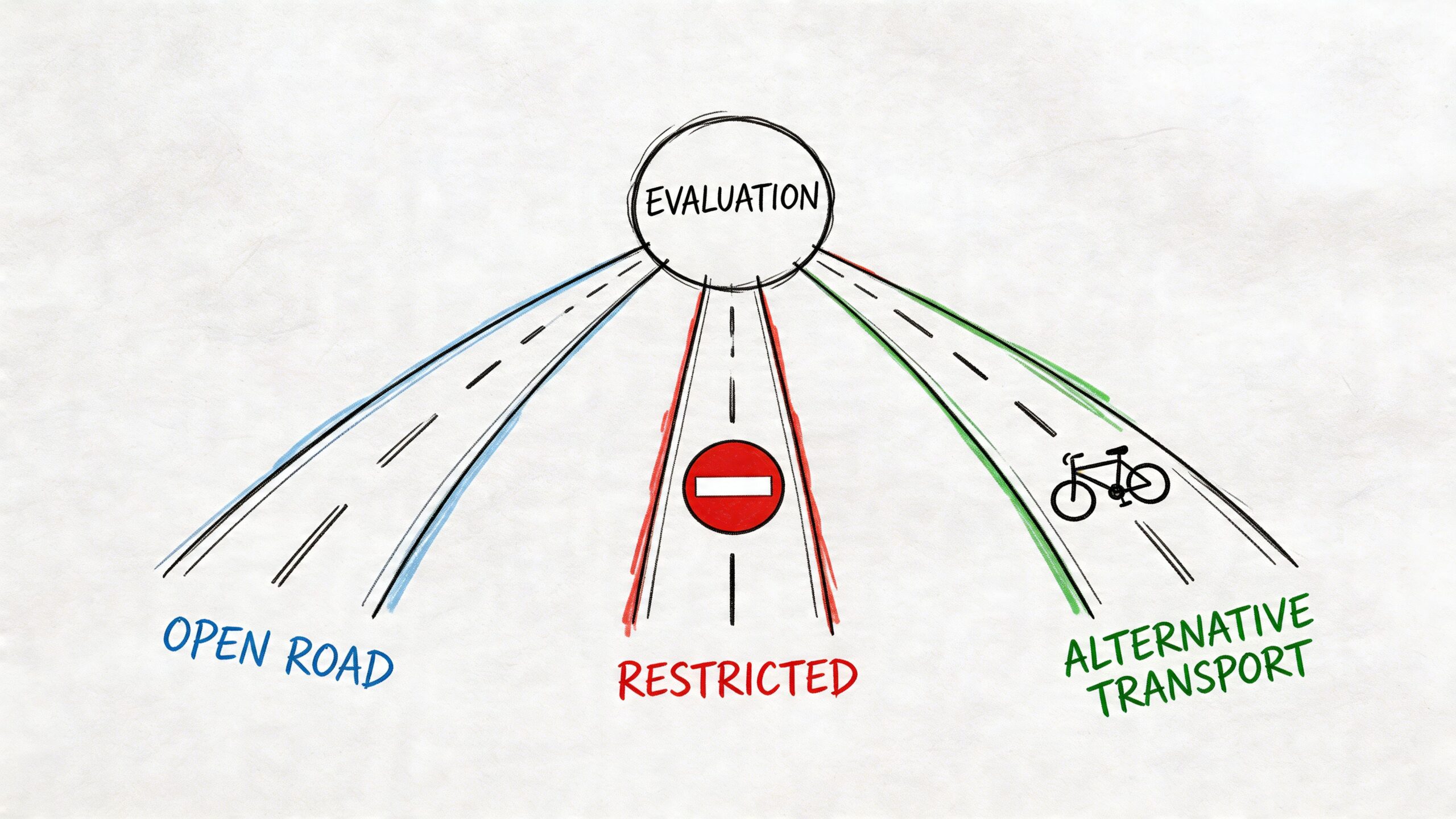
One driver may be cleared without major concern. Another may be advised to avoid night driving, interstate driving, or heavy traffic. Another may be told that the safest choice is to retire from driving and shift to other transportation.
Common results families may hear
A professional evaluator may conclude that the driver:
- Can continue driving as is
- Can continue with restrictions
- Needs treatment or correction first, such as vision care, medication review, or physical therapy
- Needs more specialized assessment
- Should stop driving
For families, the hard part is often hearing “restricted” or “retire from driving” without treating it as a moral judgment. It isn’t. It’s a safety recommendation based on function.
How this can affect Georgia licensing and compliance
In Georgia, recommendations can intersect with DDS decisions, especially if the driver is already under review or trying to restore privileges after a suspension or offense. That’s where a family may suddenly hear terms such as “reinstatement,” “clinical evaluation,” or “Risk Reduction.”
A few examples help:
| Outcome | What it may mean in real life | Possible Georgia follow-up |
|---|---|---|
| Continue driving | No major changes needed | Routine monitoring by family and doctor |
| Restricted driving | Daytime only, local roads, no highways, or similar limits | DDS or medical follow-up depending on case |
| Further treatment needed | Underlying issue might improve with care | Updated medical review or reassessment |
| Stop driving | Transition planning becomes urgent | Transportation planning and family support |
| Legal issue overlaps | Driving safety concern plus offense history | Court or DDS-required courses or evaluations |
For some drivers, a Defensive Driving course may be a practical next step when the concern is minor and the goal is skill refreshment, point reduction, or possible insurance benefits. For others, especially those tied to prior DUI matters, a Risk Reduction course may be mandatory for reinstatement rather than optional.
The right next step depends on why the driver came under review in the first place. A safety concern, a DDS action, and a court order are related problems, but they aren’t the same problem.
If the recommendation is to stop driving
This is often the most painful outcome, and it deserves careful handling. The loss isn’t only transportation. It can feel like loss of freedom, competence, and identity.
Families usually cope better when they move quickly from “you can’t drive” to “here’s how you’ll still get where you need to go.” That may include relatives, church networks, ride services, community transportation, or arranging regular help for medical appointments and errands.
What matters most is avoiding a power struggle. A clear, professional recommendation often helps the older adult accept the change more readily than repeated family arguments ever could.
Costs Insurance and Georgia Support Resources
A common Georgia family scenario goes like this. You have finally agreed that an evaluation would help, then the next question lands right away: who pays for it?
Cost is often the part no one prepared for. Guidance summarized in the Merck Manual discussion of functional assessment for older drivers explains that out-of-pocket expense and limited insurance reimbursement can make professional driving assessments harder to get. That can feel discouraging, especially when the family is already balancing medical appointments, DDS paperwork, or court deadlines.
It helps to sort services into categories before spending money. A medical visit answers health questions. A vision exam checks eyesight. A driving evaluation looks at real-world driving ability. Court or DDS requirements may call for something different again, such as a clinical evaluation or a state-approved class. These steps can overlap, but they do not replace one another.
That distinction matters in Georgia.
Some older drivers need a private driving assessment because the family is worried about safety. Others are also dealing with license reinstatement, a court order, or DDS compliance after an alcohol or drug related case. In those situations, paying for the wrong service first can waste both time and money. It is much like bringing the wrong form to the DDS office. You still have to go back and complete the right one.
Georgia DUI Schools services for older drivers
| Service | Primary Purpose | Best For |
|---|---|---|
| Clinical Evaluation | Meets court or DDS-related evaluation requirements | Older drivers dealing with reinstatement issues, DUI history, or related compliance questions |
| Risk Reduction Course | Satisfies Georgia DUI school requirements for many reinstatement cases | Drivers who must complete state-required DUI education |
| Defensive Driving Course | Refreshes safe driving skills and may support point reduction or insurance goals | Seniors who want added confidence or who need a safer-driving refresher |
| ASAM Level 1 Treatment | Fulfills ordered treatment requirements when applicable | Drivers with additional substance-related compliance obligations |
| Victim Impact Panel | Completes another common court-related requirement | Drivers whose case terms include panel attendance |
Families who are dealing with mild concerns about driving habits, confidence, or a skill refresher may want to look at a Defensive Driving course for seniors. That kind of course is different from a formal driving evaluation, but it can be a useful next step when the issue is maintenance rather than legal compliance.
If the older driver also has a DDS hold, a reinstatement problem, or a court instruction, ask one practical question before enrolling in anything: “Is this course optional, or is this a required step for Georgia?” That one question often clears up confusion and helps families choose the right service first.
Support also matters beyond the paperwork. Families often need help understanding which requirement applies, what order to complete things in, and whether the goal is safer driving, legal compliance, or both. Georgia DUI Schools can be useful in that narrow but important space where senior driving concerns meet state requirements.