A routine drive through Atlanta or Athens can change quickly after one risky decision. A moment of speeding, distraction, or driving after drinking may lead to a crash, citation, license problem, insurance consequences, or a DUI case that affects work and family responsibilities. The benefits of safe driving extend far beyond avoiding a collision. They include protecting passengers, pedestrians, cyclists, and motorcyclists, preserving driving eligibility, limiting repair and legal costs, maintaining work flexibility, and supporting safer Georgia communities. Defensive driving helps prevent risky habits before they cause harm. For drivers dealing with a DUI or court order, a Georgia DDS-approved Risk Reduction course, clinical evaluation, treatment when indicated, and a Victim Impact Panel address different parts of compliance and recovery. Insurance discounts, court requirements, license outcomes, and legal consequences depend on the applicable insurer, court, and Georgia Department of Driver Services rules.
1. Reduced Risk of Accident-Related Injuries and Fatalities
Safe driving protects people who aren't inside your vehicle. Active scanning, controlled speed, adequate following distance, restraint use, and attention to pedestrians can give you more time to respond when traffic changes on an Atlanta connector, an Athens intersection, or a neighborhood street near a school.
The public-health stakes are substantial. The World Health Organization road-safety data estimates that about 1.16 million people die each year in road traffic crashes, while 20–50 million more suffer non-fatal injuries. The WHO also reports that road crashes cost most countries about 3% of GDP, and that 90% of deaths occur in low- and middle-income countries. Road traffic injuries are the leading cause of death for people ages 5–29, and vulnerable road users account for more than half of road deaths.
A Georgia driver can turn those broad risks into practical habits:
- Scan beyond the vehicle ahead: Look for brake lights, merging traffic, cyclists, pedestrians, and changing signals.
- Manage speed early: Slow before an intersection, curve, school zone, or congested exit instead of braking abruptly.
- Leave recovery space: A larger gap gives you options if another driver stops, drifts, or enters your lane.
Practical rule: Defensive driving means preparing for another road user's mistake without creating a new hazard yourself.
Driver education can reinforce these behaviors. Georgia drivers can review distracted-driving prevention strategies and apply them immediately after a course while the material is fresh. A Victim Impact Panel can also make the human consequences of risky driving more concrete. If a crash has already occurred, prompt medical care and physical therapy after a crash may become part of recovery.
2. License Reinstatement and Driving Privilege Restoration
A suspended or revoked license affects far more than convenience. It can interfere with commuting, school, medical appointments, childcare, and the ability to accept work that requires reliable transportation. Safe driving helps prevent that disruption, while completing the correct program can help a driver address reinstatement requirements after a DUI.
Georgia's process has specific components. The Georgia Department of Driver Services guidance on the DUI Alcohol or Drug Use Risk Reduction Program states that the program includes a risk assessment component before the intervention component and must be completed through a certified provider. DDS also states that only certified driving schools are accepted for licensing, reinstatement, or court requirements.
That distinction matters. A general safety class isn't automatically the right course for every suspension or revocation. Before enrolling, confirm:
- The required program: Ask DDS, your court, probation officer, or attorney whether you need Risk Reduction, defensive driving, a clinical evaluation, treatment, or another document.
- Provider certification: Use a school accepted for the specific licensing or court purpose.
- Completion records: Keep certificates and submission confirmations until DDS reflects the required action.
The Georgia license reinstatement resource can help you identify the next administrative step, but it doesn't replace checking your individual DDS record. If clinical evaluation is required, Georgia guidance says DUI convictions require completion of a DUI Drug or Alcohol Risk Reduction Program and a clinical evaluation. Treatment is added when the evaluation indicates it's needed, and the evaluation may be mandatory at the offender's own expense, as described in Georgia DUI requirements guidance.
Don't resume regular driving until DDS confirms that your privilege has been restored.
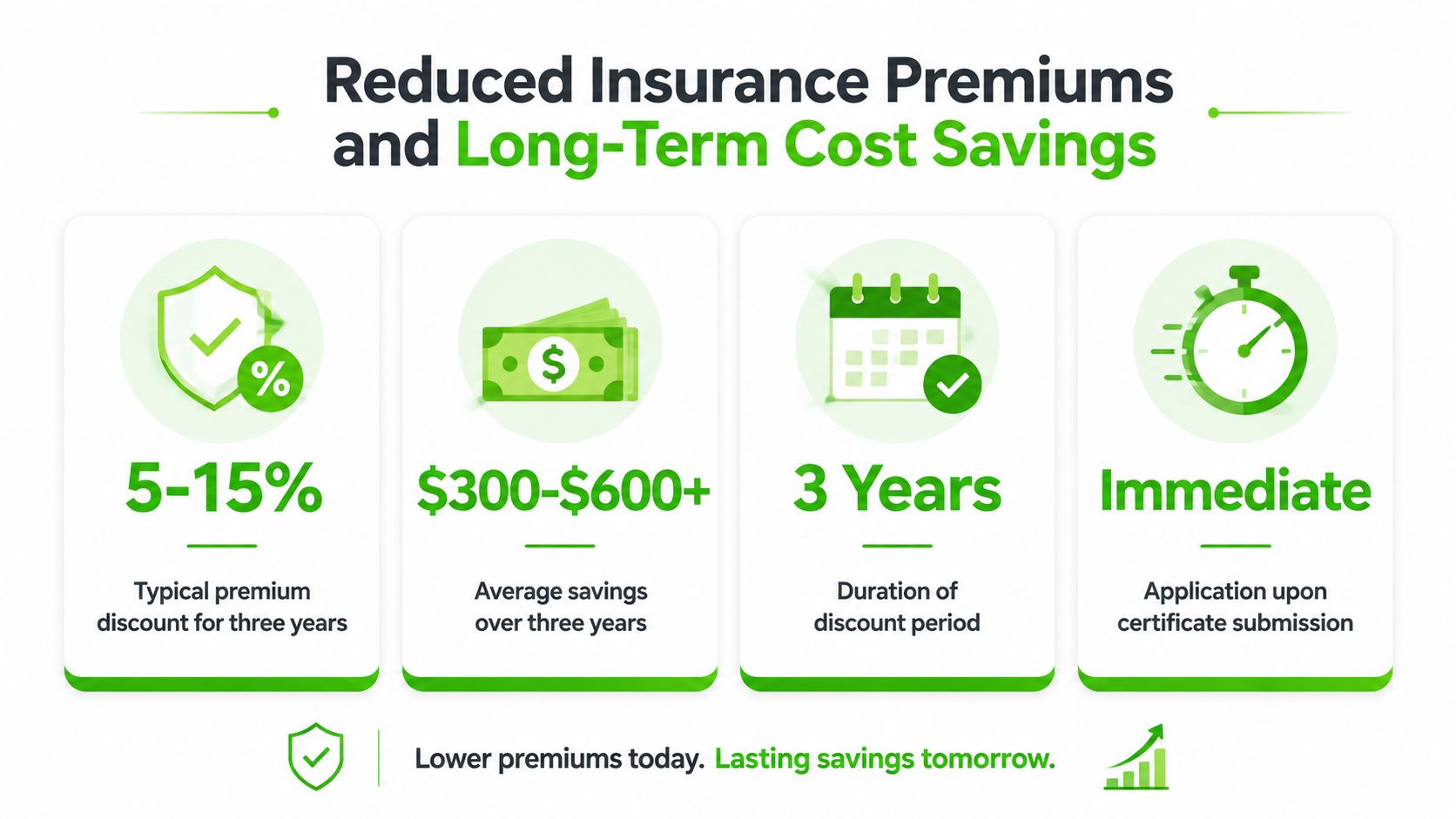
3. Reduced Insurance Premiums and Long-Term Cost Savings
Safe driving can reduce financial exposure in several ways. Avoiding a collision may prevent repair bills, medical complications, lost time, and claim-related stress. Avoiding speeding, impairment, and repeated violations can also help protect your driving record, although the effect on an insurance policy depends on the carrier and the driver's history.
A defensive driving course may be recognized by an insurer, but no provider can promise a specific discount for every Georgia motorist. Before enrolling, ask your insurance agent whether the carrier accepts the course certificate, whether a discount applies to your policy, and when the certificate should be submitted. The Georgia guidance on lowering car insurance rates can help you prepare those questions.
Use a simple verification process:
- Ask before paying: Confirm the insurer accepts the exact course and identify any eligibility conditions.
- Request the projected premium: Ask for the policy cost with and without any approved discount.
- Submit documentation promptly: Send the completion certificate through the insurer's preferred channel.
- Track the review date: Ask when the carrier will reassess or remove the benefit.
A Georgia driver in suburban Atlanta might finish a course and expect an automatic reduction, only to learn that the policy, driver history, or renewal timing controls the outcome. The safe approach is to treat any savings as conditional until the insurer confirms them in writing.
Technology can support the same behavior-change goal. McKinsey reports that voluntary telematics adoption reached about 20% in the United States, 17% in Italy, and 9% in Singapore, while global usage-based insurance adoption reached 14 million policies in the period discussed by Penn Medicine's telematics coverage. Those figures show that insurers are using driving data as one safety lever, but participation and pricing still depend on the program.
4. Court Compliance and Avoidance of Additional Legal Consequences
A court order creates a deadline, not a suggestion. Missing a required DUI Risk Reduction course, defensive driving class, clinical evaluation, or other condition can create additional problems, including potential probation issues or the need to explain noncompliance to the court. The exact consequence depends on the order, the court, and the facts of the case.
Start with the paperwork. Read the sentencing order and ask your probation officer or attorney to identify the exact course, provider standard, deadline, and documentation method. A course that seems relevant may not satisfy a particular court's requirement.
For an Atlanta driver with a Fulton County order, the practical sequence may look like this:
- Confirm the requirement: Identify whether the order calls for Risk Reduction, defensive driving, evaluation, treatment, a Victim Impact Panel, or several components.
- Check the deadline: Don't wait until the final days if classes have limited schedules.
- Verify acceptance: Confirm that the provider is certified and acceptable to the specific court.
- Submit proof: Deliver the certificate or evaluation record as directed.
- Keep copies: Store every document through the end of the probation period.
Online delivery can help a busy Athens-area driver manage work and family obligations, while an in-person class may better fit a court or personal preference. The format doesn't change the need to confirm approval.
A completion certificate helps only when it documents the requirement the court actually ordered.
Drivers sometimes confuse an accident ticket with responsibility for the underlying crash. Questions about traffic citations and liability can involve separate legal issues, including whether fault affects accident tickets. Treat the driving course, court compliance, and accident claim as separate matters, and obtain case-specific legal advice when necessary.
5. Improved Decision-Making, Emotional Resilience, and Psychological Recovery
A DUI case often brings shame, fear, anger, or uncertainty. Those emotions can make it harder to plan transportation, answer evaluation questions with complete candor, or understand what needs to happen next. Safe driving education helps replace a vague promise to “do better” with specific decisions for the next risky situation.
Risk Reduction education addresses impairment, choices, and consequences. A clinical evaluation looks at the individual's circumstances and may identify substance-use or mental-health concerns that require further support. Georgia's DUI guidance connects evaluation with treatment when treatment is indicated, so the process can address more than the driving incident itself.
A Victim Impact Panel adds a different perspective. It focuses attention on the people affected by impaired or dangerous driving, including victims, families, passengers, and community members. The experience may be emotionally difficult, but that discomfort can help a driver connect an abstract rule with the harm a poor decision can cause.
Build a personal prevention plan before the next social event:
- Choose transportation first: Arrange a designated driver, rideshare, taxi, or overnight stay before drinking or using impairing substances.
- Remove the decision point: Don't keep car keys within easy reach when you know you shouldn't drive.
- Name a support person: Select someone who can challenge you without debating whether you're “okay to drive.”
- Follow through with care: If an evaluation recommends treatment or counseling, schedule it rather than treating the recommendation as optional.
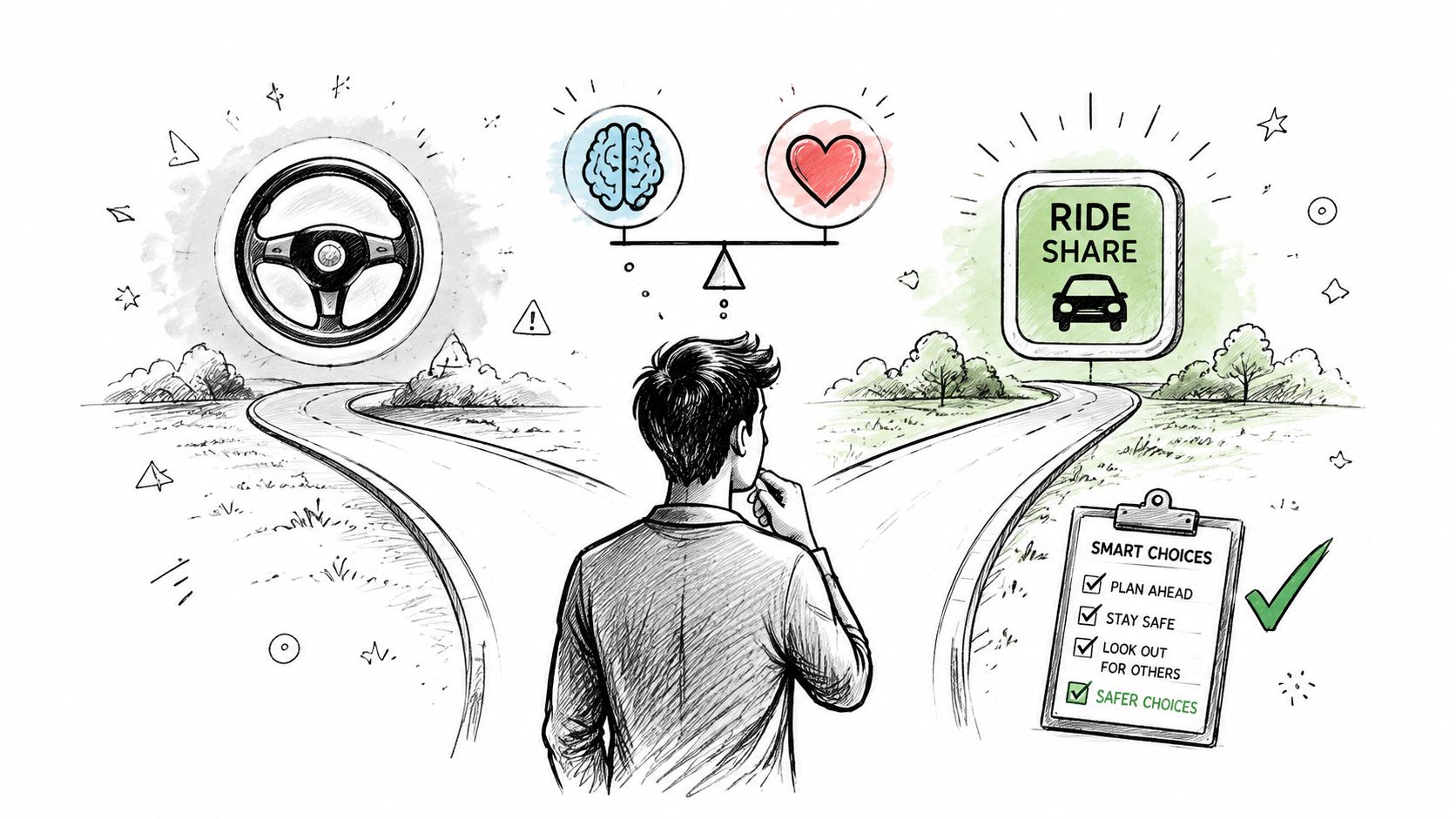
An online course may give a private setting for a professional or student who feels anxious about attending in person. In-person instruction, clinical services, and a Victim Impact Panel may be more appropriate for other requirements. The right choice depends on the order, the evaluation, and the driver's support needs.
6. Employment Protection and Professional Licensing Preservation
Driving consequences can reach the workplace even when the job doesn't involve driving. A suspended license can make commuting difficult, while a DUI charge or missed court deadline may require disclosures to an employer, licensing board, or professional supervisor. Safe driving reduces the chance of that disruption, and prompt compliance creates a clear record of responsible action.
The details vary by profession. A healthcare worker, commercial driver, attorney, or employee who operates a company vehicle may face different reporting and documentation rules. A Risk Reduction certificate might satisfy one requirement, while another situation may also require a clinical evaluation, treatment, a board-specific form, or proof of reinstatement.
Georgia professionals should take these steps:
- Review the governing policy: Check the licensing board, employer handbook, union agreement, or commercial-driving rules that apply to you.
- Ask what must be disclosed: Don't assume that enrollment alone satisfies a reporting obligation.
- Match the document to the recipient: Confirm whether the board or employer needs an official certificate, evaluation, treatment record, or DDS status.
- Plan around work: Compare self-paced online, live virtual, weekend, and traditional classroom options without assuming every format is accepted for every requirement.
A commercial driver in the Atlanta suburbs may need to coordinate with an employer before returning to a route. An Athens professional may need to protect work hours while attending a required program. In both situations, early communication is safer than waiting until a deadline or missed shift creates a second problem.
No course provider can guarantee employment or professional-license outcomes. Employers and licensing boards make their own decisions, and drivers should verify requirements directly with those organizations. Still, completing the correct approved program and preserving clear documentation can make compliance easier to demonstrate.
7. Community Safety, Reduction of Repeat Offenses, and Habitual Violator Prevention
The final benefit reaches beyond one driver's record. When motorists avoid impaired driving, manage speed, stay focused, and use restraints, they reduce risk for passengers and for people who have less protection in traffic. Pedestrians, cyclists, and motorcyclists are especially exposed, so cautious driving around crossings, schools, neighborhoods, and mixed-traffic corridors matters.
Speed compliance illustrates why routine behavior deserves attention. One analysis estimated that obeying posted speed limits could reduce serious injuries by 18–30% and fatalities by 27–43% across roadway types. The same analysis estimated 82 lives saved annually if drivers complied with posted limits, including 75 in the Phoenix metropolitan area and 7 in San Francisco, as reported in coverage of vehicle and driver data for road safety. Those locations aren't Georgia, but the lesson applies locally: everyday speeding can create measurable community risk.
Georgia also has a serious repeat-offense threshold. A person can be declared a habitual violator after being arrested and convicted three or more times within a five-year period for qualifying offenses, and the Georgia Department of Public Safety says the resulting revocation period is five years, according to its habitual violator guidance.
Protect your future driving privilege by:
- Addressing the first violation promptly: Ask what education, evaluation, or treatment applies.
- Tracking your record: Review violations and confirm how qualifying offenses affect your status.
- Using technology responsibly: Government and automaker research found automatic emergency braking cut front-to-rear crashes by about half, while bundled assistance features reduced property-damage and injury-claim rates by as much as 39% and 21%, respectively, in the research summarized by the Governors Highway Safety Association coverage. Don't treat these systems as a substitute for attention, and don't disable them without understanding the consequences.
Safe Driving Benefits, 7-Point Comparison
| Item | Implementation complexity | Resource requirements | Expected outcomes | Ideal use cases | Key advantages |
|---|---|---|---|---|---|
| Reduced Risk of Accident-Related Injuries and Fatalities | Moderate, structured defensive driving curriculum and practice | Course hours, practice time, periodic review, possible Victim Impact Panel | Improved hazard recognition; fewer collisions and injuries | Drivers seeking practical safety skills and crash prevention | Immediate, practical driving skills that protect occupants and other road users |
| License Reinstatement and Driving Privilege Restoration | Low–Moderate, state‑approved course meeting DDS rules | 20‑hour Risk Reduction course, official certificate, possible clinical eval, fees | Official documentation for DDS petition; faster reinstatement process | Drivers with suspended/revoked licenses after DUI convictions | Clear legal pathway with provider-submitted verification to DDS |
| Reduced Insurance Premiums and Long-Term Cost Savings | Low, complete approved defensive driving course and submit certificate | 4–8 hours online or classroom, certificate submission to insurer, carrier verification | Typical 5–15% premium discount for ~3 years; measurable dollar savings | Drivers seeking lower premiums before policy renewal or after minor violations | Direct financial savings with minimal effort and online options |
| Court Compliance and Avoidance of Additional Legal Consequences | Moderate, must satisfy specific court/judge conditions and deadlines | Mandatory course, documented attendance, automatic court submissions, possible clinical eval | Avoid contempt charges, suspension extensions, probation violations | Court‑ordered defendants required to meet sentencing conditions | Eliminates legal risk by providing court‑accepted documentation and timely filing |
| Improved Decision‑Making, Emotional Resilience, and Psychological Recovery | Moderate–High, includes clinical evaluation, panels, referrals | Course time, Victim Impact Panel participation, ASAM screening, potential treatment referrals | Lower recidivism; improved coping, decision frameworks, and emotional recovery | Offenders needing behavioral change, screening, or substance‑use intervention | Addresses root causes and links participants to treatment and support |
| Employment Protection and Professional Licensing Preservation | Low–Moderate, timely completion and tailored documentation | Flexible scheduling (online/weekend), official letters for employers/licensing boards | Maintain employment and professional licenses; fewer career disruptions | Professionals (CDL drivers, healthcare, attorneys) facing disciplinary action | Preserves income and licensure with rapid, employer‑friendly documentation |
| Community Safety, Reduction of Repeat Offense Rates, and Habitual Violator Prevention | Moderate, program plus probation and community coordination | Evidence‑based curriculum, Victim Impact Panels, referral pathways, probation integration | Reduced community recidivism and traffic fatalities; prevents habitual violator status | Probation departments, employers, community safety programs | Measurable public‑safety benefits and significant recidivism reduction |
Turn Safer Choices Into Your Next Step
The benefits of safe driving form a connected protection strategy. You protect your health and the people around you by avoiding impairment, distraction, dangerous speed, and aggressive maneuvers. You protect your finances by reducing crash exposure, repair risk, and possible insurance consequences. You protect your license by taking citations and DUI requirements seriously, checking your DDS status, and avoiding repeat qualifying offenses.
Georgia drivers also need to separate prevention from recovery. Defensive driving education supports safer habits before a serious incident. Risk Reduction addresses a state-approved DUI education requirement. A clinical evaluation determines whether additional treatment or support may be appropriate. A Victim Impact Panel helps drivers confront the human consequences of impaired driving. These services can overlap in a driver's situation, but they don't serve the same purpose.
The national and Georgia context makes the stakes clear. NHTSA's 2023 summary reported 40,901 deaths, 2,442,581 injuries, and a fatality rate of 1.26 deaths per 100 million vehicle miles traveled. It also reported 11,904 drunk-driving fatalities and 11,288 speeding-related deaths in 2024, as detailed in the NHTSA traffic-safety summary. NHTSA projects 36,640 traffic fatalities in 2025, a decrease of about 6.7% from 39,254 in 2024, with the projected fatality rate falling to 1.10 from 1.19. The 2025 figures are projections, not final results.
Use this practical plan:
- Avoid driving after drinking, using impairing drugs, or taking medication that affects alertness.
- Scan actively, check mirrors, manage speed, and leave enough following distance.
- Put your phone away and protect attention at every stage of the trip.
- Address citations and DUI paperwork promptly.
- Verify every court or DDS requirement before choosing a course.
- Select an online, live virtual, weekend, or classroom format that fits your schedule and is accepted for your purpose.
- Keep certificates, evaluation records, and reinstatement confirmations until the relevant matter is closed.
Georgia DUI Schools provides DDS-approved DUI/Risk Reduction and defensive driving education, along with clinical evaluations, ASAM Level 1 treatment, and Victim Impact Panels. Visit the Georgia DUI Schools Defensive Driving Course to review an available path and take the next compliant step toward safer driving.
Georgia DUI Schools offers DDS-approved Risk Reduction and defensive driving education for Georgia motorists, with online options and in-person locations serving Atlanta, Athens, and surrounding communities. Visit Georgia DUI Schools to find a course format that fits your schedule and learn which services may apply to your court, DDS, or driving-safety needs.