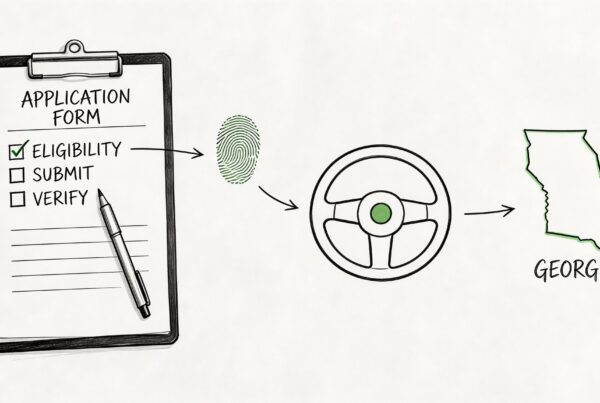

You searched for ga online drivers ed because you need an answer fast, not a lecture.
Maybe a court in Atlanta told you to complete a class. Maybe you got a ticket in Athens and want to protect your license. Maybe your insurer mentioned a discount, or DDS is holding up your reinstatement until you finish the right program. The problem is that “online drivers ed” in Georgia means different things to different people, and that confusion wastes time.
For adults, the primary issue usually isn’t teen licensing. It’s figuring out whether you need DUI Risk Reduction, Defensive Driving, a clinical evaluation, or another reinstatement-related step, then choosing a format that the court, DDS, or your probation officer will accept.
Understanding Georgia's Online Driver Education Options
Many individuals hear ga online drivers ed and think of teenagers getting their first license. That’s only part of the picture.
Georgia does have a teen licensing track under Joshua’s Law. For teens ages 16 and 17, the state requires 30 hours of theoretical instruction and 6 hours of in-person behind-the-wheel training under state rules at the Georgia Administrative Code. That is not the same thing as the adult classes most readers here need.
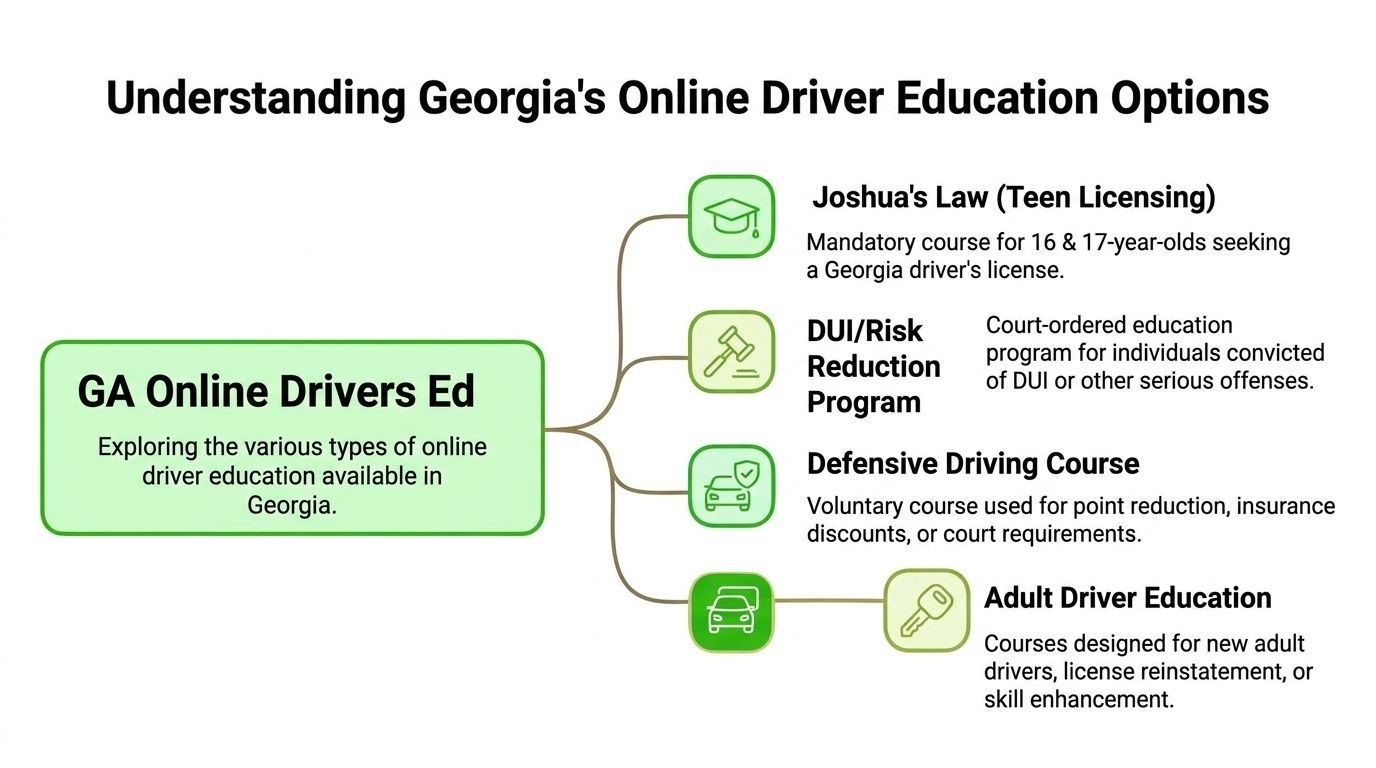
The four buckets that matter
If you're an adult in Georgia, online driver education usually falls into one of these categories:
- Joshua’s Law teen course: This is for teen licensing, not for DUI cases, point reduction, or reinstatement after an adult offense.
- DUI Risk Reduction Program: This is the serious one. Courts and DDS often require it after a DUI, drug-related driving offense, or certain license actions.
- Defensive Driving Course: This is commonly used for point reduction, insurance savings, or court orders tied to moving violations.
- Adult driver education or skills support: This is a broader category. It may help first-time adult drivers, nervous drivers, or people rebuilding confidence, but it usually does not replace a court-ordered DUI or Risk Reduction requirement.
How to identify the course you need
Don’t guess. Match the course to the document in your hand.
If your paperwork says DUI, Risk Reduction, RRP, reinstatement, or mentions a drug or alcohol offense, you’re probably looking at the DUI Risk Reduction track.
If your goal is to deal with a speeding ticket, reduce points, help with insurance, or satisfy a minor traffic court request, you’re usually looking at Defensive Driving.
If you’re in Fulton County, DeKalb, Gwinnett, or Athens-Clarke and the court order uses exact course language, follow that language exactly. Courts care less about what sounds similar and more about whether you completed the named program.
Practical rule: If the document says “Risk Reduction,” a defensive driving class won’t fix that problem.
The mistake that costs people time
Adults get into trouble when they enroll in a teen-style online course because the phrase “drivers ed” sounds close enough. It isn’t.
The state treats these programs differently. The reporting, the curriculum, and the legal purpose are different. If you're trying to clear a hold, satisfy probation, or regain driving privileges, the only smart move is to confirm the exact requirement before paying for anything.
Navigating the DUI Risk Reduction Program Online
You get off work, open your court paperwork, and realize the phrase you searched for, "ga online drivers ed," does not match what the state wants from you. That mistake costs people weeks.
If your case involves DUI, Georgia usually expects more than a generic online class. The Risk Reduction course is often only one requirement in a larger chain that can include a clinical evaluation, treatment follow-up, and sometimes a Victim Impact Panel. If you complete the class but ignore the rest, your case can sit there unresolved.
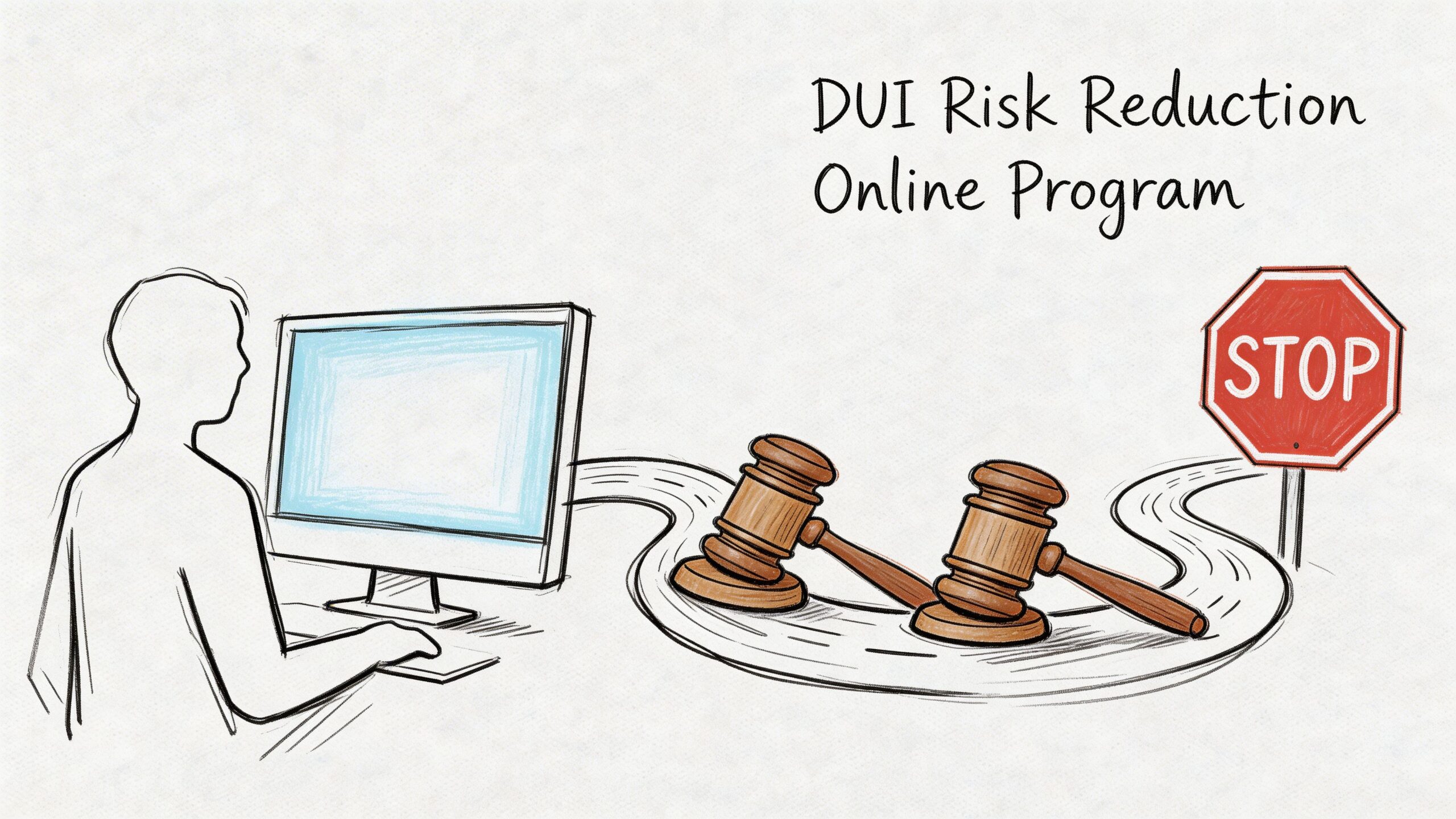
What the online part usually means
For adults trying to keep a job, manage probation terms, or get a license hold cleared, the appeal of online access is obvious. You want the required education handled without extra driving, missed shifts, or sitting in traffic for a class you are already required to take.
Georgia providers may offer a virtual option for the education portion, including online DUI school in Georgia. But do not confuse convenient format with full compliance. The course format matters less than whether your court, probation officer, or DDS paperwork accepts that format for your exact case.
The parts that usually trip adults up
The confusion is not about effort. It is about sequence.
A DUI case often has separate pieces handled by different offices. The school handles the class. A clinician may handle the evaluation. The court, probation office, or DDS decides what counts as complete. None of them are responsible for guessing what the other one needs, and they will not clean up an enrollment mistake for you.
Use this checklist:
- Read every line of your court order or DDS notice. Look for exact course names and any deadline.
- Confirm that Risk Reduction is the required program. Do not assume any driver improvement class will substitute.
- Ask whether a clinical evaluation is also required. In many cases, it is separate from the class.
- Complete any treatment that is recommended or ordered. An unfinished treatment recommendation can delay reinstatement or court compliance.
- Ask specifically about a Victim Impact Panel. Some courts require it, some do not.
- Keep your completion papers. Save digital copies and printed copies.
Why order matters
The problem is simple. Adults hear "take a class" and sign up for the fastest option they can find. Then they learn the class was only step one, or worse, it was the wrong class entirely.
The Georgia DDS driver education page does not spell out the practical order of DUI-related requirements for adults. That gap creates preventable delays. You need to follow the order in your paperwork, not the order that feels easiest on a busy week.
Complete the requirement named in your documents first, then confirm what office needs proof and when they need it.
The three questions to ask before you enroll
If you were cited in Atlanta, dealing with a metro-area court, or trying to fix a reinstatement problem while keeping your schedule intact, ask these questions before you pay:
- What exact course name do you require?
- Do you accept live virtual attendance for this requirement?
- Where do I send proof of completion, and do you need anything besides the certificate?
Ask those questions in plain language. Write down the answers. That five-minute call prevents the kind of mistake that keeps your case open longer than it should.
Using Defensive Driving for Points and Insurance Reduction
Defensive driving is the course many adults should take sooner, not later.
If you picked up a ticket on I-85, got cited in Athens-Clarke County, or you’re trying to keep your license from getting worse, a defensive driving class can be a smart legal and financial move. It’s not just a box to check. It’s damage control.
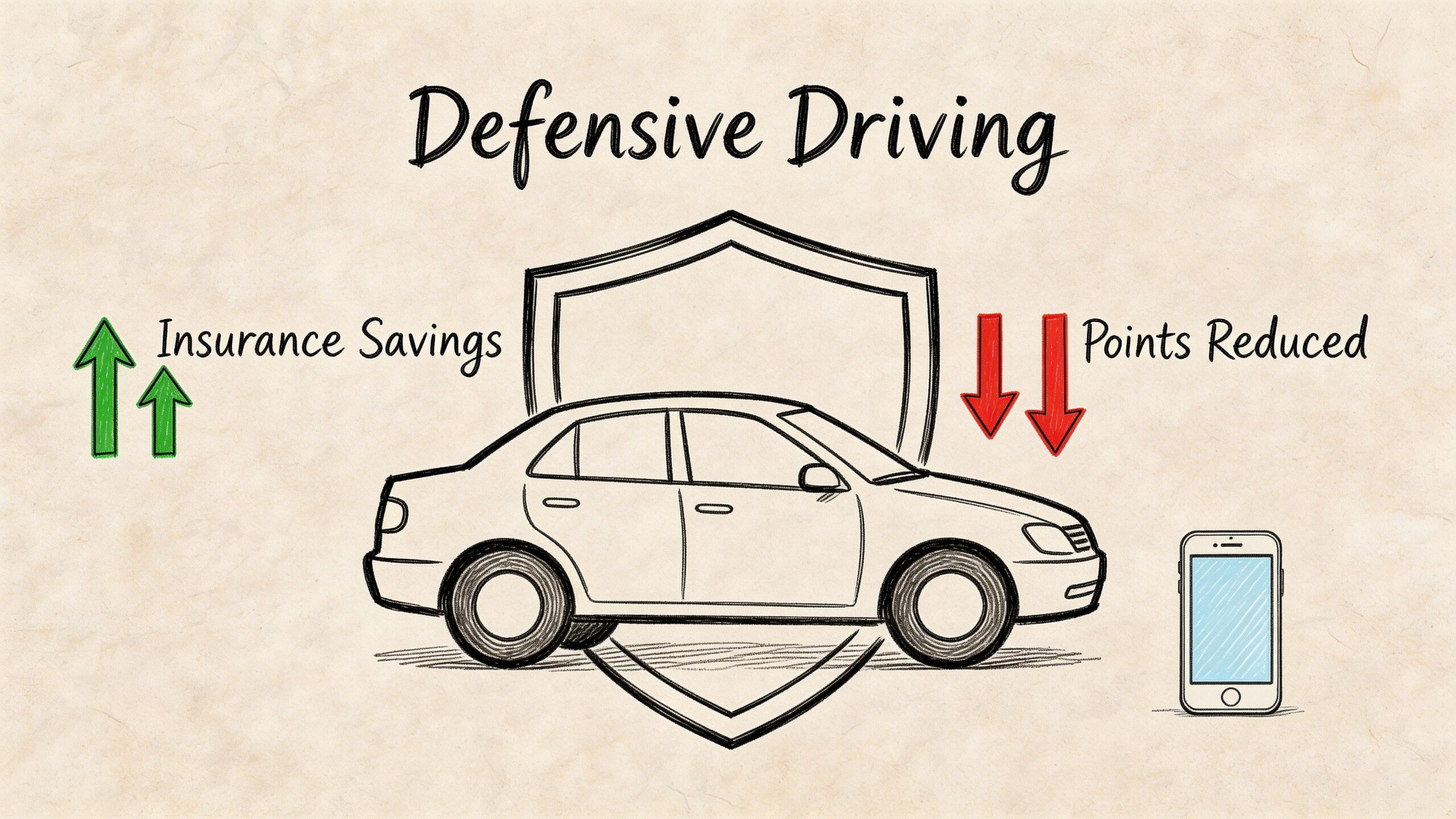
Why this course is worth taking seriously
Formal driver education in Georgia is associated with a 4.3% reduction in crashes and a nearly 40% reduction in convictions, according to Drive Smart Georgia’s summary of the safety benefits of driver education.
That matters if you’re deciding whether the course is worth your time. It is.
A defensive driving course can also help eligible drivers pursue insurance savings. If that’s your main goal, review a defensive driving course to lower insurance and make sure the provider’s certificate is accepted by your insurer.
When defensive driving makes the most sense
Take the class when you want to get ahead of the problem, not after the problem gets bigger.
- After a moving violation: If a ticket puts pressure on your record, defensive driving may help you manage the fallout.
- Before insurance renewal: If your premium is already climbing, this course may offer a useful advantage with your carrier.
- When a judge allows it: Some courts accept defensive driving as part of resolving a traffic matter.
- If you drive for work: Sales reps, tradespeople, caregivers, and delivery workers can’t afford a messy driving record.
My direct recommendation
If your issue is points, insurance, or a standard traffic court matter, don’t enroll in a DUI program “just to be safe.” That’s the wrong class.
Take the narrowest course that satisfies the requirement. It saves time, it’s simpler to complete, and it keeps you from overcomplicating a problem that already has a clear solution.
Self-Paced Online vs Live Virtual Classroom
Format matters more than people think.
Some adults do best with a self-paced online course because their schedule is chaotic. Others need a live virtual classroom because they learn better when an instructor can answer questions in real time. Neither format is automatically better. One is just better for your situation.
Many Georgia providers now offer live virtual classes across the week to meet demand, as reflected by Georgia Driving School’s live online course options. That’s useful if you need structure without physically going to a classroom.
Online course format comparison
| Feature | Self-Paced Online | Live Virtual (Zoom) |
|---|---|---|
| Schedule control | Best for people with changing work hours or family duties | Best for people who can commit to a set class time |
| Learning style | Good for independent learners | Better for people who want direct instruction |
| Questions during class | Usually limited to support channels or follow-up help | You can usually ask the instructor during the session |
| Pacing | You move through the material on your own timeline | The class moves at the instructor’s pace |
| Technology needs | Reliable internet and a device you can use consistently | Reliable internet, camera access if required, and a quiet space |
| Best fit | Busy professionals, shift workers, self-starters | People who want accountability or need help staying engaged |
How to choose without wasting time
Ask yourself these questions:
- Do you need maximum flexibility? Choose self-paced.
- Do you struggle to focus alone? Choose live virtual.
- Do you need fast clarification on legal or procedural terms? Live instruction is usually better.
- Is your internet unreliable where you live? A self-paced option may be easier to manage than attending a scheduled live session.
If you already know you procrastinate, don’t sign up for self-paced learning and hope discipline suddenly appears.
What I tell most clients
For defensive driving, self-paced often works well because the material is straightforward and the goal is usually narrow.
For DUI-related education, many adults do better in a live virtual setting. They can ask questions, stay on track, and avoid missing an instruction that affects compliance.
Your Enrollment and Completion Workflow
Bureaucracy gets easier once you stop trying to hold the whole process in your head. Handle it in order.
Step one: verify the exact requirement
Start with the document that triggered your search.
That might be a court order, probation instruction, DDS notice, attorney email, or insurer request. Don’t rely on what a friend took after their case. Georgia traffic and DUI requirements can look similar on the surface and still have different completion standards.
Step two: confirm the provider is state-approved
Before you register, verify that the school is authorized for the course you need.
If the provider can’t clearly identify its DDS approval status, move on. A cheap class that doesn’t count is expensive.
Step three: register using the same identity details on your paperwork
Use your legal name, date of birth, and contact information exactly as they appear in your official records.
That sounds minor, but it isn’t. Mismatched information creates delays when schools issue certificates and when agencies try to match your completion to your file.
Step four: complete the course without cutting corners
Give yourself uninterrupted time. Don’t try to complete a required class while answering work calls, driving, or multitasking through family errands.
A few practical habits help:
- Set a completion window: Pick specific hours on your calendar and protect them.
- Keep your documents nearby: Court notices, case numbers, and DDS correspondence should be within reach.
- Use a stable device: Don’t switch between phones, tablets, and laptops unless the provider says that’s fine.
Step five: confirm your completion record
Once you finish, don’t assume everyone who needs proof will automatically get it.
Ask these questions right away:
- Will I receive a certificate directly
- Is the completion reported electronically
- How long should I wait before checking with the court, DDS, or my probation officer
- Do I need to submit the certificate myself
Save a digital copy and a printed copy of every completion document. Bureaucratic systems lose things. You shouldn’t.
Step six: close the loop
Many people fail at this stage. They finish the class, feel relieved, and stop.
Instead, contact the office that required the course and confirm receipt. If you’re dealing with a reinstatement issue, keep checking until you know the hold, suspension issue, or court condition has been updated.
How to Choose a Compliant Provider
A provider can have a polished website and still create a mess for you. Compliance matters more than branding.
That matters even more as online education grows. In Georgia, asynchronous virtual courses rose from 56% of completions in fiscal year 2019 to 70% in fiscal year 2023, and the state audit also noted a 56% increase in fatal crashes involving drivers ages 15 to 17 over a ten-year period in its review of driver education quality concerns, summarized in this Georgia driver education audit coverage and report reference. Different audience, same lesson. More online options mean you need to choose carefully.
The checklist I’d use
- Clear state approval: The provider should plainly identify its authorization for the exact course you need.
- Real support staff: If nobody answers questions before enrollment, support probably won’t improve after payment.
- Transparent process: You should know what you’re buying, what completion looks like, and what records you’ll receive.
- Multiple formats: Schools that offer online, live virtual, and classroom options are usually better equipped to help if your schedule changes.
- Related services when needed: If your case also involves a clinical evaluation or treatment referral, it helps when the provider understands that bigger process.
A useful sign of professionalism
Schools that operate in the regulated education space tend to be more transparent about qualifications, approvals, and administrative standards. Even pages that deal with professional matters, such as a driving instructor application, can tell you whether an organization takes compliance seriously.
Red flags I wouldn’t ignore
If the provider is vague about approval, cagey about certificates, or unclear about whether the class is accepted by Georgia courts or DDS, don’t enroll.
Short version: if the school can’t explain its process in plain English, it’s the wrong school.
Frequently Asked Questions About GA Online Courses
Can I complete my whole DUI requirement online?
Sometimes you can complete the class portion virtually, but don’t assume your entire case is handled by one online course.
A DUI matter can include separate requirements such as the Risk Reduction course, a clinical evaluation, treatment recommendations, or a Victim Impact Panel. Check your paperwork and confirm with the court, DDS, or your attorney.
Is ga online drivers ed the same as Joshua’s Law?
No.
Joshua’s Law is the teen licensing route. Adult readers usually need Defensive Driving or DUI Risk Reduction, depending on why they were sent to a course in the first place.
Will my court accept an online defensive driving certificate?
Often yes, but acceptance depends on the court and the exact reason you were ordered to attend.
If you’re in Gwinnett, Fulton, Clarke, or another Georgia court system, ask the clerk or your attorney whether they want a particular provider, a completion deadline, or a copy filed in a specific way.
How fast does DDS get my completion?
That depends on the course type and the provider’s reporting process.
Don’t guess. Ask before you enroll, and ask again after you finish. Then verify with the agency or court that required the course.
Do I need special software for a live virtual course?
Usually you just need the platform the provider uses, a dependable internet connection, and a device that works properly for the full session.
If you live outside the core of Atlanta or in a metro-adjacent area where connectivity can be inconsistent, test your setup early. Don’t discover your tech problem after class starts.
What if I’m older and mainly want to save money on insurance?
Defensive driving is usually the right place to start.
It’s simpler than the DUI track, more practical for insurance-related goals, and easier to fit into a normal schedule.
What if I’m not sure which class I need?
Call the office that imposed the requirement and ask for the exact course name. Then repeat that course name when you contact a provider.
That one step prevents most mistakes.
If you need a Georgia-approved course and want a straightforward path through the process, Georgia DUI Schools offers statewide options for DUI/Risk Reduction, defensive driving, and related services. Start with the course that fits your actual requirement, not the one that merely sounds close. For many adult drivers looking for flexible online compliance, the best next step is the online DUI school course at Georgia DUI Schools.