A lot of people start looking for driving school columbus ga after a bad day that keeps getting worse.
You get stopped. Then comes a ticket, a court date, a probation requirement, or a letter about your license. Someone tells you to take a class, but nobody explains which class, where to take it, whether it has to be state-approved, or what happens if you choose the wrong one. If your case involves DUI, drugs, points, or a court order, the process can feel scrambled and urgent at the same time.
That stress is normal.
What helps is putting everything back in order. Most Columbus drivers don't need more legal language. They need a plain explanation of what happens first, what comes next, and what counts with the court and the Georgia Department of Driver Services, or DDS. Once you know the sequence, the problem usually feels more manageable.
Your Guide to Navigating Columbus GA Driving Schools
A Columbus resident might leave court with a sheet of paper that says they must complete a class. Another person might get a DDS notice and realize their license won't move forward until they finish a requirement tied to a DUI-related case. Someone else may only know that probation told them to enroll, but they aren't sure whether they need Risk Reduction, Defensive Driving, a clinical evaluation, or something else.
Those situations sound similar, but they aren't the same.
The first useful question isn't, “Which school should I choose?” It’s “What requirement was I given?” In Georgia, the name of the course matters. A Defensive Driving class doesn't replace a DUI Risk Reduction course. A general driver education class doesn't satisfy a DUI-related order. And an out-of-state option may not solve a Georgia problem if the requirement is tied to DDS rules.
Practical rule: Match the class to the exact wording on your court order, DDS notice, probation paperwork, or attorney instructions.
In Columbus, people often need help with one of these paths:
- DUI or drug-related requirement that leads to the Georgia Alcohol or Drug Use Risk Reduction Program
- Traffic violation or points issue that leads to a Defensive Driving course
- Additional DUI-related follow-up, such as a clinical evaluation, treatment recommendation, or a Victim Impact Panel if ordered
If you're overwhelmed, focus on sequence, not everything at once. Start with your paperwork. Identify the exact requirement. Then find a DDS-certified provider that offers the right class format for your schedule.
Understanding Your Driving School Requirement
The words people use often cause the first round of confusion. “Driving school” can mean several different things in Columbus. For court and DDS purposes, the important issue is the type of requirement attached to your case.
When the requirement is DUI related
If your case involves DUI, alcohol, drugs, or a related offense, you're usually dealing with the Georgia DUI Alcohol or Drug Use Risk Reduction Program. People often shorten this to “DUI school” or “Risk Reduction.”
This is not the same as a basic safe driving course. It's the course Georgia uses for specific alcohol- and drug-related situations. If DDS or the court requires it, you need that exact program from an approved provider.
When the requirement is traffic related
If your issue involves speeding, reckless driving, points, or a judge's order after a traffic offense, the class may be Defensive Driving, sometimes called Driver Improvement.
That course serves a different purpose. It focuses on safer decision-making behind the wheel and is often used for court compliance, point reduction, or insurance-related benefits. It does not replace a DUI course when the paperwork specifically says Risk Reduction.
When it may be voluntary
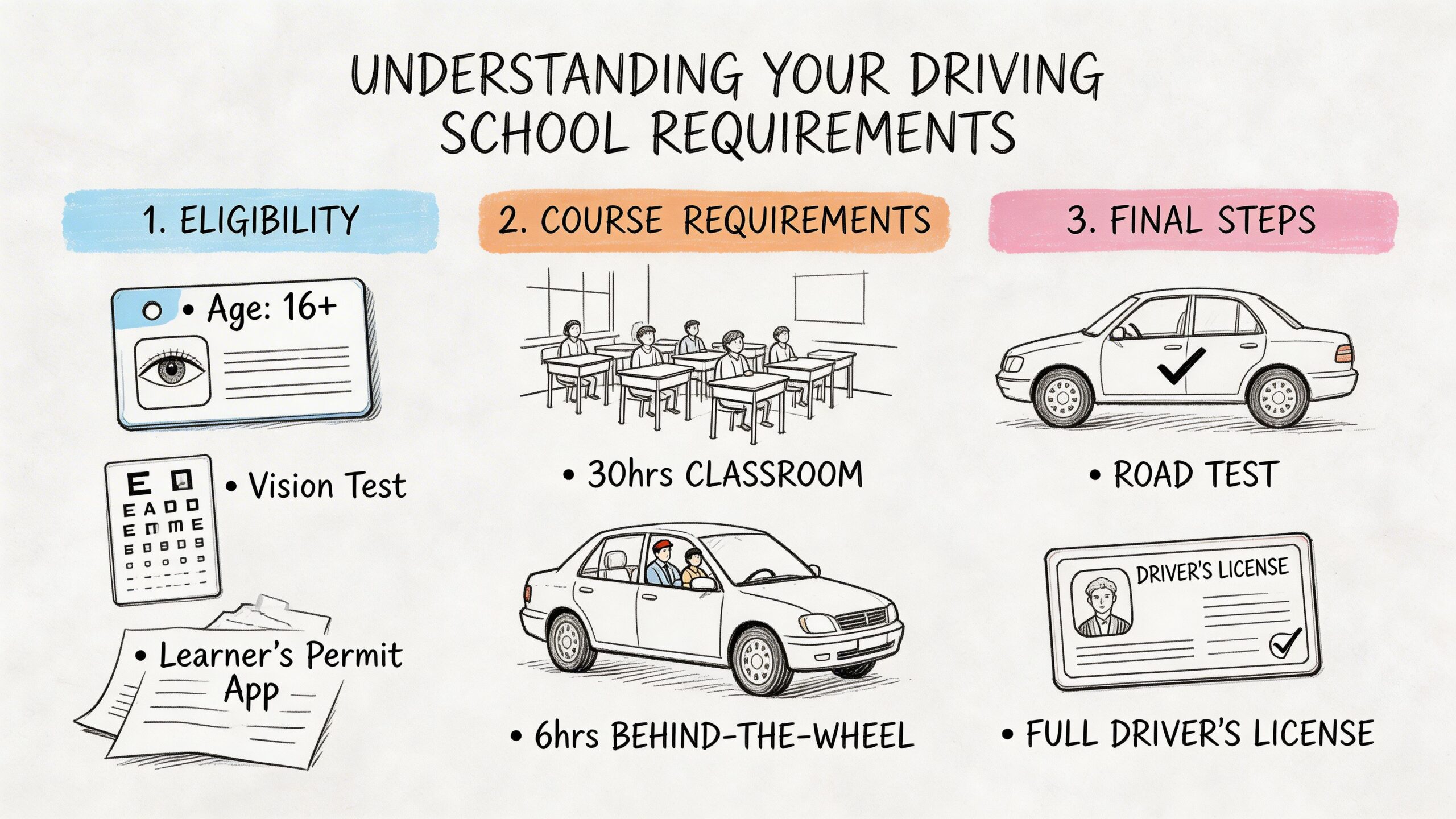
Some drivers take a course even without a court order. A teen driver may need state-approved education under Joshua's Law, which requires drivers ages 15 to 17 to complete a certified 30-hour classroom and 6-hour behind-the-wheel course before getting a provisional license, according to Columbus Technical College's Joshua's Law information. That same page states that certification can help lower insurance premiums by up to 10 to 15%.
That teen requirement is real, but it belongs to a different category than DUI and court-ordered adult classes. If you're an adult in Columbus dealing with a ticket, probation, or a license hold, Joshua's Law usually isn't the issue.
Who is requiring the course
Use this quick guide to sort out who is driving the requirement:
| Situation | Likely requirement | Who may require it |
|---|---|---|
| DUI or drug-related case | Risk Reduction | Court, DDS, probation |
| Speeding, reckless driving, points | Defensive Driving | Court, DDS, insurance-related choice |
| Teen licensing age 15 to 17 | Joshua's Law driver education | DDS licensing rules |
Bring the exact paperwork to enrollment. The course name on that document is what matters.
The Georgia DUI Risk Reduction Program Explained
For many stressed drivers in Columbus, this is the part that feels hardest because it often includes more than one moving piece. The best way to understand it is as a workflow, not a single class.
The two main parts of Risk Reduction
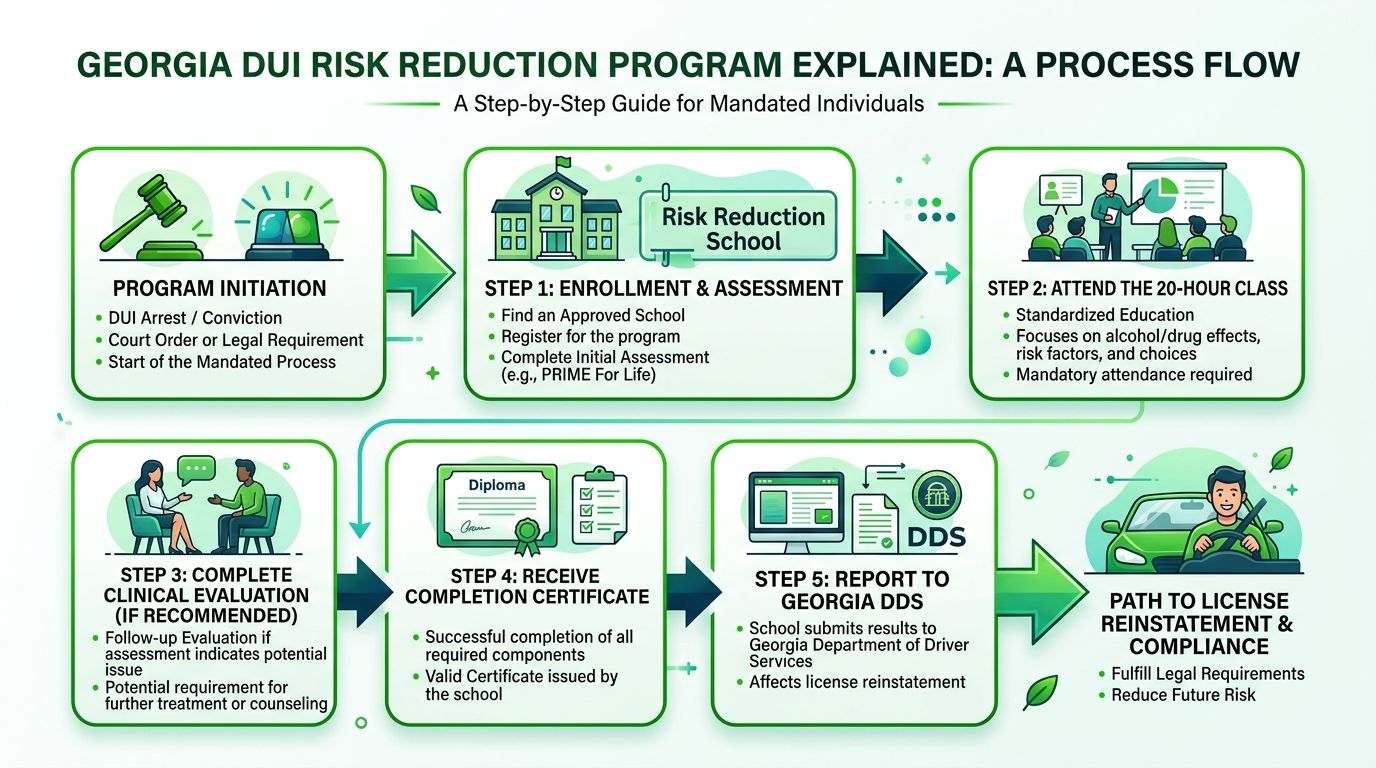
Georgia's Risk Reduction Program has a NEEDS Assessment and a 20-hour classroom component. If your paperwork says DUI school, Alcohol and Drug Use Risk Reduction, or something similar, this is usually the program people mean.
The assessment comes first. It gathers information used as part of the state process. After that, you complete the classroom portion with a certified provider.
A Columbus driver often gets tripped up here because they assume the class alone fixes everything. Sometimes it does not. Depending on the case, the court or DDS may also require a clinical evaluation.
Where the clinical evaluation fits
A clinical evaluation is separate from the classroom portion. It is not just “more class.” It is an evaluation used to determine whether further action is required, including treatment recommendations.
If your paperwork mentions an evaluation, don't ignore it and don't assume the school certificate substitutes for it. Those are different requirements.
Here’s the practical sequence many people need to follow:
Read the paperwork carefully
Look for words such as Risk Reduction, DUI school, clinical evaluation, treatment, probation terms, or reinstatement requirements.Schedule the required Risk Reduction components
Make sure the provider is authorized to offer the Georgia program.Ask whether a clinical evaluation is separately required
This usually comes from the court, probation, or DDS, not from guesswork.Complete any recommended follow-up
If an evaluation results in treatment recommendations, those become part of your path to compliance.
If your documents mention both a class and an evaluation, treat them as two separate tasks until someone with authority over your case tells you otherwise.
What the class is for
The Risk Reduction class is built around Georgia's concern with impaired driving and impaired decision-making. It is not a road test and not a behind-the-wheel lesson. It is a compliance course tied to public safety, legal responsibility, and the consequences of alcohol and drug use.
That’s why people who enroll in a regular driving course and hope it will “count somehow” often end up losing time.
If you need a broader explanation of driver education categories in Georgia, this overview of drivers education classes in Georgia can help clarify the difference between general education and court-related requirements.
What usually confuses people most
A few issues cause repeat problems:
- Assuming all driving schools offer the same programs
- Thinking a certificate from another kind of class will satisfy DUI paperwork
- Missing the evaluation piece because the court order mentions it briefly
- Waiting too long to enroll and creating reinstatement delays
The process is serious, but it isn't mysterious once you separate the class requirement from the evaluation and any treatment recommendation.
Defensive Driving for Point and Insurance Reduction
A Columbus driver can end up at a very different point in the process after a traffic ticket than after a DUI. If your paperwork mentions Defensive Driving, you are usually dealing with a moving violation, points on your record, a court instruction, or an insurance question, not the DUI Risk Reduction track.
That difference saves people time. Defensive Driving and Risk Reduction are separate courses for separate problems, much like bringing the right key to the right lock.
How it differs from Risk Reduction
The easiest way to sort this out is to match the course to the reason you need it.
| Course | Common reason | Focus |
|---|---|---|
| Risk Reduction | DUI or drug-related matter | Alcohol, drugs, legal responsibility, impaired driving decisions |
| Defensive Driving | Traffic offense, points, insurance | Safer habits, judgment, collision prevention |
If a judge ordered Defensive Driving, register for Defensive Driving. If DDS or the court requires Risk Reduction, Defensive Driving will not replace it.
That single mix-up causes a lot of delay.
Why some drivers choose it voluntarily
Some Columbus drivers take Defensive Driving even without a court order. They may be trying to reduce the impact of points, show a court they completed a safe-driving class, or ask their insurer whether a course certificate could help with rates.
The class itself is practical. It usually focuses on hazard awareness, decision-making, following distance, speed control, and the habits that lead to preventable crashes. In other words, it is built to improve how you drive day to day, not to address alcohol or drug use.
If you are trying to decide whether this course fits your situation, this guide to a defensive driving course to lower insurance explains how people commonly use it and what benefits to ask about before you enroll.
Defensive Driving helps when your issue is driving behavior, points, or an insurance-related question. It does not satisfy a DUI Risk Reduction requirement.
Finding a Certified School in the Columbus Area
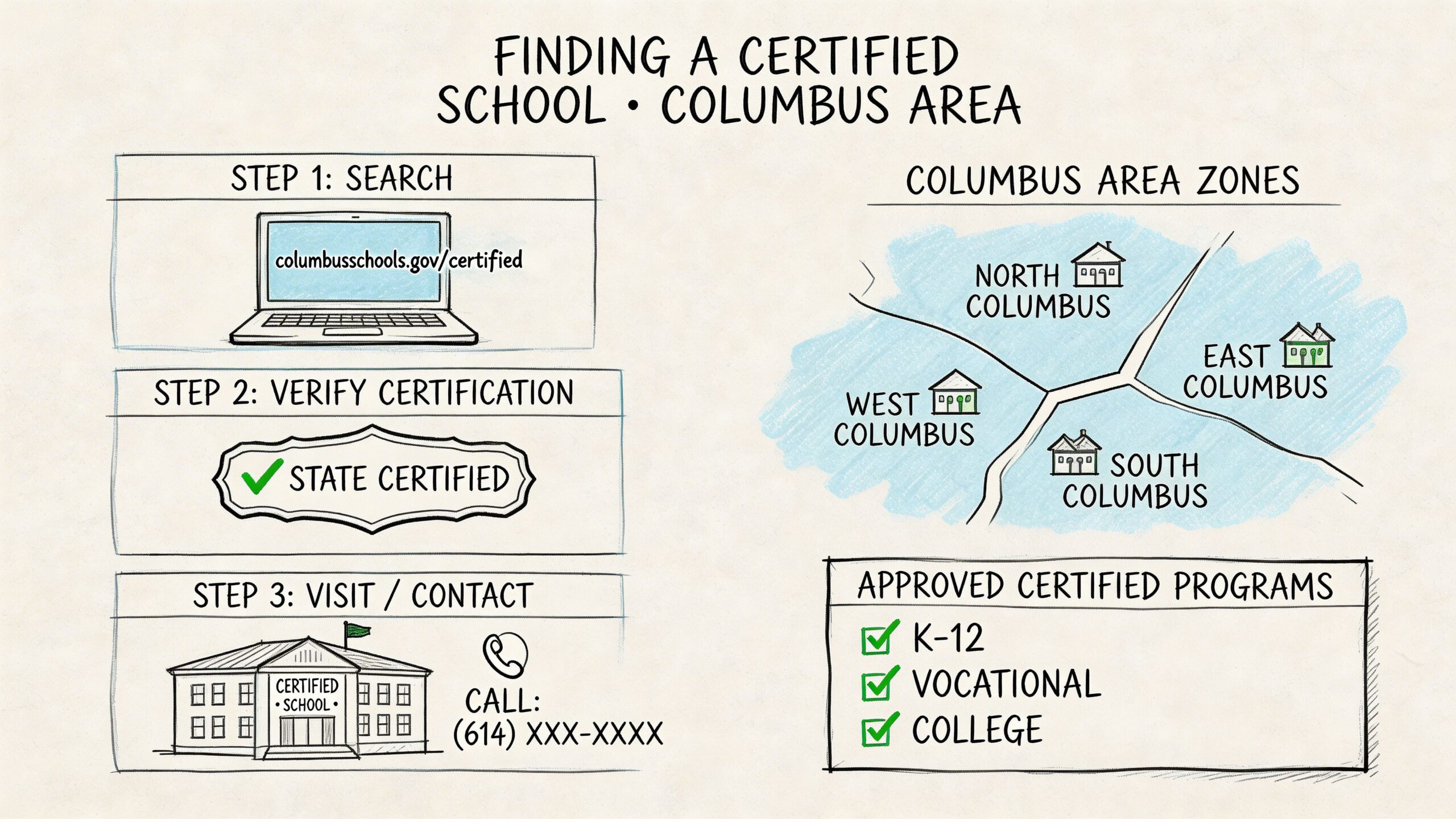
You may be at the point where everything starts to blur together. The court says one thing, DDS paperwork says another, and every school website seems to offer a different mix of classes. This step is simpler than it looks. Your job is to find a school that is approved for the exact requirement on your paperwork.
That one detail decides whether your certificate will count.
Start with the exact program name
A certified school is not just a school that teaches driving classes. It must be approved by Georgia for the specific program you need. If your paperwork says DUI Risk Reduction, you need a provider approved for that course. If it says Defensive Driving, you need a provider approved for that course. Some schools offer both. Some do not.
That is why this stage works like matching a key to a lock. Close is not good enough.
A local example in Columbus
Barber's Driving School is one example Columbus drivers may see while searching. As noted earlier in this guide, it is a long-running local provider that offers multiple services, including Defensive Driving and DUI Risk Reduction, along with other driver-related programs.
The useful lesson is not the brand name itself. It is what to look for when you compare any school in the area:
- Clear course names that match the wording on your court, probation, or DDS paperwork
- Visible certification details instead of general claims about being approved
- Published fees and class information so you can compare options before paying
- Experience with Columbus-area cases so staff understand common local deadlines and paperwork questions
What to verify before you pay
A short phone call can prevent a long delay. Ask direct questions and write down the answers.
- Approval for your exact course: Ask whether the provider is certified for the specific Georgia program named on your documents.
- Class format: Ask whether your course is offered in person, live virtual, or in another approved format for your situation.
- Related requirements: Ask whether they also handle steps that often come later, such as a clinical evaluation or Victim Impact Panel, or whether they can tell you where those fit in the process.
- Completion proof: Ask how you receive your certificate and who needs a copy after you finish.
A legitimate provider does not need to offer every service tied to your case. It does need to be approved for the service you are paying for.
Looking beyond one Columbus classroom
Some Columbus residents want a nearby location they can drive to after work. Others need a provider with more scheduling options across Georgia. If you want to compare locations and formats, the Georgia DUI Schools locations directory can help you narrow the search.
Choose the school that fits your requirement in the right order. First, match the course name. Next, confirm approval. Then check schedule, format, and any follow-up services your case may require.
How to Enroll and What to Expect in Class
Enrollment usually becomes easier once you stop treating it like a mystery and start treating it like paperwork plus scheduling.
Many schools will want to know what requirement you have, when you need the course completed, and how you plan to attend. If your case is active, speed matters. Delays can create new problems with court deadlines, probation terms, or reinstatement timing.
What to gather before you call
Have your documents in front of you. That saves time and helps avoid enrolling in the wrong class.
Bring or prepare:
- Court paperwork if a judge ordered the course
- DDS notice or letter if your license issue comes from the state
- Probation instructions if supervision terms mention a class, evaluation, or panel
- Photo ID or driver's license information for registration
- Any attorney notes that clarify whether you need Risk Reduction, Defensive Driving, or follow-up services
If something on the paperwork doesn't make sense, ask the school to identify the course name, but don't ask them to guess what the court “probably meant.” When possible, confirm with the court, probation office, attorney, or DDS.
Choosing a class format
In Columbus and across Georgia, class formats may include in-person sessions, live virtual classes, and for some course types, online options. The right format depends on the exact course and how the provider delivers approved instruction.
A practical approach looks like this:
| If your schedule looks like this | A format that may help |
|---|---|
| You work traditional hours | Evening or weekend class |
| You need face-to-face structure | In-person classroom |
| You need to reduce travel time | Live virtual option, if available for your course |
| You want the fastest path to a seat | First available approved session |
What class usually feels like
People often expect a hostile environment. That usually isn't the case.
Many classes are structured, direct, and practical. You'll be expected to show up on time, pay attention, follow attendance rules, and complete the session as assigned. Instructors are there to teach the approved material and help students finish the requirement correctly.
Bring the paperwork, arrive early, and ask questions before class starts. Small mistakes at check-in are easier to fix than mistakes after the course ends.
If you're worried about being judged, remember why many people in the room are there. They need to resolve a legal or license problem and move forward. That shared purpose tends to make the class feel more normal than people expect.
Common Questions About Columbus Driving Programs
A few questions come up again and again for people trying to fix a Columbus case quickly.
Will an out-of-state DUI class work for a Georgia requirement
Don't assume it will. For Georgia DUI-related requirements, what matters is whether the program is the one Georgia will accept for your case. If your issue is tied to Georgia DDS or a Georgia court, verify approval before enrolling.
Is a Victim Impact Panel the same as Risk Reduction
No. If ordered, a Victim Impact Panel is a separate requirement. It doesn't automatically replace a class, and a class doesn't automatically satisfy the panel requirement.
What if my paperwork mentions habitual offender rules
Take that language seriously. Habitual offender issues can affect license status in ways that go beyond attending a class. If your paperwork uses that term, match each requirement exactly and verify whether reinstatement also depends on other DDS steps.
What happens if I miss part of class
Ask before you enroll. Attendance rules matter, especially for court-related programs. If you miss time, you may need to reschedule, repeat part of the process, or wait for another approved session.
Does the completion certificate last forever
Don't assume that either. Courts, probation offices, and DDS timelines don't always move at the same speed. If you've completed a course but waited a long time to use the certificate, contact the provider and the authority handling your case before relying on it.
When people run into trouble, it's often not because they refused to comply. It's because they guessed instead of verifying.
What if I still don't know which course I need
Start with the exact wording from your documents. If the wording is unclear, contact the court clerk, probation officer, attorney, or DDS office connected to your case. A school can explain what it offers. It shouldn't be the only source for interpreting a legal order.
Take Control and Complete Your Requirement
If you're dealing with a DUI-related order, a court instruction, or a DDS hold, the path is usually more structured than it first appears. Identify the exact requirement. Confirm whether you need Risk Reduction, Defensive Driving, a clinical evaluation, or a panel. Then enroll with a provider that is approved for that specific task.
That sequence matters.
For Columbus drivers, the biggest mistake is trying to solve a state or court problem with the wrong class. The most helpful move is often the simplest one. Stop guessing, match the requirement to the program, and complete each step in order.
Once you do that, the process becomes less about panic and more about progress.
If your next step is a DUI-related requirement, start with the course page for Georgia DUI Schools and choose the Risk Reduction option that matches your schedule.