A lot of people who look into a driving instructor application in Georgia start from the same place. They sat through a Risk Reduction class, a Defensive Driving class, or a court-ordered program and noticed something important. The instructor was not just reading slides. They were changing how the room thought about driving, responsibility, and what happens after a bad decision.
That reaction matters. In Georgia, the best DUI and Defensive Driving instructors are often people who understand that students are not coming in for entertainment. They are coming in because a court, probation office, employer, attorney, or the DDS told them they need this class to move forward. If you want to teach in that environment, you need more than a clean application. You need steadiness, credibility, and the judgment to handle students who may be anxious, defensive, embarrassed, or determined to get their license back.
A Rewarding Career in Road Safety
This work has a practical side and a public safety side.
On the practical side, people will always need licensed instruction. The wider driving school market has kept growing because states require training and more instruction has shifted from public programs to private providers. IBISWorld reports the U.S. driving schools industry reached an estimated $1.9 billion in 2025 after expanding at a 5.3% compound annual growth rate over the past five years. That same report ties demand to mandatory training rules and the move from public to private instruction (IBISWorld driving schools industry data).
Why DUI and Defensive Driving instruction matters
Teaching court-mandated programs is different from teaching a first-time teen driver.
Your students may be trying to:
- Restore driving privileges after a suspension
- Satisfy a court order without creating another compliance problem
- Reduce points through a Defensive Driving course
- Complete related steps such as a clinical evaluation or Victim Impact Panel requirement
That changes the classroom. The instructor has to keep the class compliant, but also useful. Students listen when they believe you understand the stakes.
What the job feels like day to day
A strong instructor does three things well.
- Keeps control of the room: Court-ordered classes can drift fast if the instructor is hesitant.
- Teaches consequences clearly: Georgia students need plain language, not moral speeches.
- Stays fair with everyone: Some students are remorseful. Some are angry. You teach both.
Tip: If your main reason for applying is “I like cars” or “I want flexible work,” that is not enough for this niche. The better reason is that you can teach accountability without humiliating people.
There is real satisfaction in watching a student come in checked out and leave engaged. In DUI education especially, progress often looks small from the outside. Better questions. Less denial. More honest reflection. Those moments matter because safer driving habits do not usually start with a dramatic breakthrough. They start with a person finally paying attention.
Confirming Your Eligibility with Georgia DDS
Before you gather paperwork, confirm whether you are a viable applicant.
That sounds blunt, but it saves time. Many people get excited about the role and start filling out forms before they deal with the issue most likely to stall the process, their driving history and moral character review.
What to verify first
For Georgia instructor roles tied to DUI or Defensive Driving education, expect scrutiny in these areas:
- Your driver’s license status: It needs to be valid and current.
- Your record: Recent serious driving issues can stop an application before it really starts.
- Your background: Instructors work with the public, and often with vulnerable or court-involved populations.
- Your professional readiness: Schools want people who can follow state rules exactly.
Generic articles often skip the hard part and jump straight to “apply now.” That is not how this field works.
If you have a prior DUI or suspension
If you have a prior DUI or suspension, most applicants need straight answers.
There is a real information gap for people with prior DUI convictions. Guidance is often vague even though Georgia DDS applies strict moral character standards. Few resources explain how a Risk Reduction course can help show rehabilitation and readiness for a role built around traffic safety education (Florida Safety Council page discussing instructor training context and the guidance gap).
That does not mean every past offense is automatically erased because you completed a course. It does mean your application should show a pattern of correction, not just a claim that you have changed.
What usually helps your file
- Completion records: If you completed required courses cleanly and on time, keep that documentation.
- Stable license history after the incident: A long stretch of lawful driving helps more than a personal statement ever will.
- Honest disclosure: Schools and regulators are more concerned by omissions than by an old problem already visible on your record.
- Professional references: Good references matter when they can speak to reliability and judgment.
Key takeaway: A prior mistake is not always the end of the road. A messy, incomplete, defensive application is what usually gets people rejected fastest.
What does not work
I have seen applicants hurt themselves by doing one of these:
Minimizing the offense
Saying “it was no big deal” is the worst possible tone for a DUI-related instructor application.Blaming the system
You are applying to teach state-regulated material. Complaining about the court, DDS, or “technicalities” raises the wrong flag.Submitting before the record is settled
If your license status, suspension history, or restoration status is still muddy, wait until it is clear.
If you are unsure whether your record puts you in a gray area, get clarity before you start interviewing. That is better than impressing a hiring manager and then failing at the state review stage.
Assembling Your Driving Instructor Application Packet
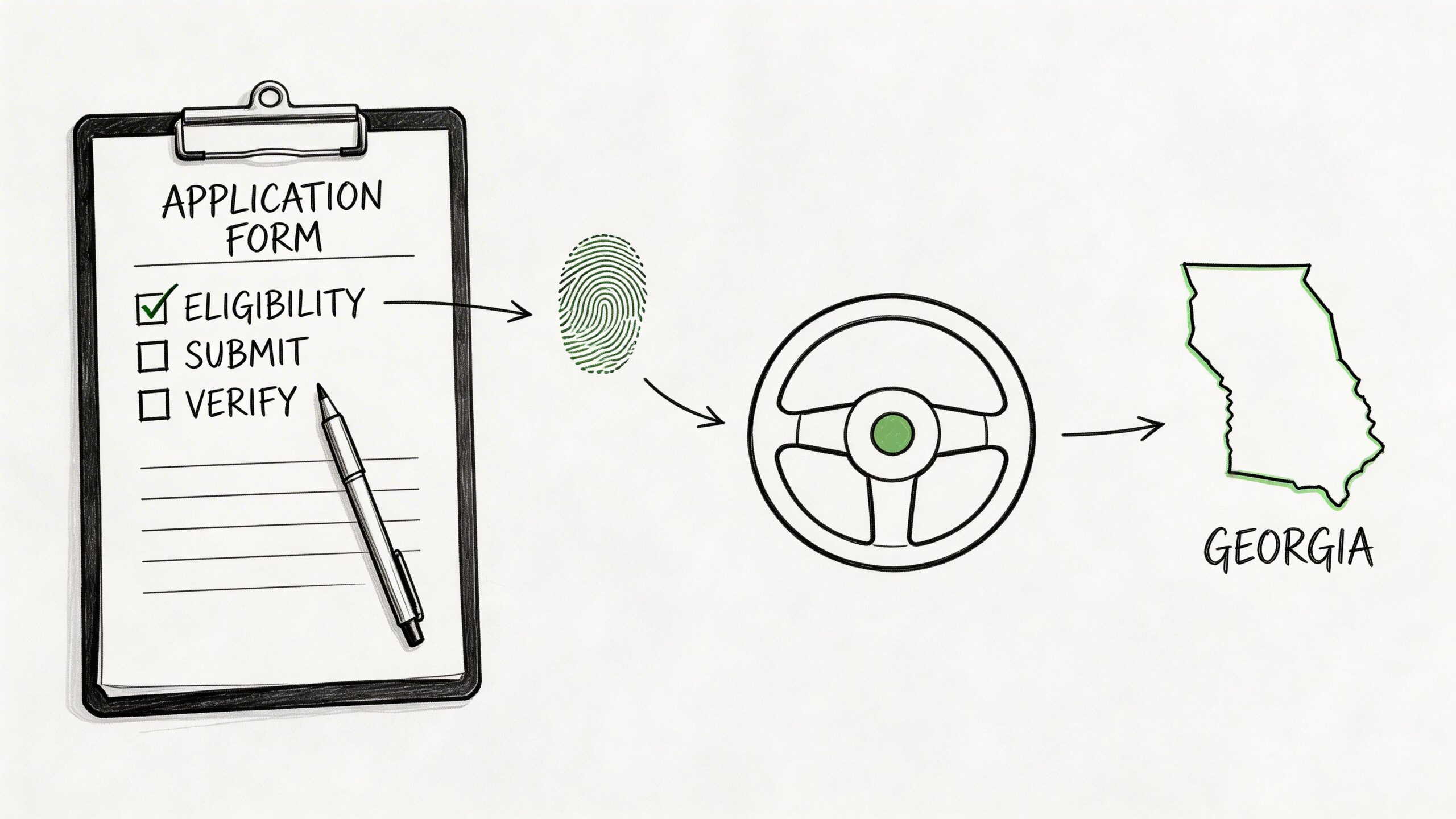
Once eligibility looks solid, treat the application packet like a compliance project. Do not wing it.
Most delays happen because an applicant sends in a packet that is technically complete but practically unusable. Wrong dates. Missing signatures. Old records. Inconsistent addresses. Those problems are avoidable.
Build the packet in a fixed order
Use a checklist and stack the documents in the same order every time. That makes it easier for you to review and easier for a school or regulator to spot anything missing.
A clean packet usually includes:
- Application forms required for the instructor role you are pursuing
- Proof of identity and current license information
- Driving history records that match your license details exactly
- Background check paperwork or proof of fingerprint submission
- Training completion records once available
- Any supporting explanations for prior issues, if needed
Do not assume “they can look it up.” In regulated education, missing paper still counts as missing.
Check your driving record before anyone else does
Your motor vehicle record tells the story your interview cannot hide.
Before submitting anything, review the same kind of information a school will review. If you have not looked over your status recently, it helps to understand the basics of what proves lawful driving in Georgia, including license status and key records. This overview on documents needed to legally drive in Georgia is useful as a starting point for making sure your identification and license-related paperwork are in order.
Common packet mistakes
Here is where good candidates lose momentum:
| Application problem | Why it causes trouble | Better approach |
|---|---|---|
| Old address on one form | Creates identity and record mismatch | Update every document before submission |
| Incomplete explanation of past offense | Looks evasive | Use a short, factual written statement |
| Missing training proof | Leaves the packet in limbo | Hold submission until the file is complete |
| Illegible copies | Slows review | Scan clearly and label files properly |
What I tell applicants to do
Prepare two versions of your packet.
Keep one submission copy and one master copy. The master copy should include everything, plus notes about where each document came from and when you requested it. If a school asks for a re-send, you can respond fast instead of starting over.
Tip: Name digital files in plain language. “MVR May 2026” is better than “scan003-final-final.” Organized applicants look easier to hire, because they usually are.
A strong packet does not guarantee approval. It does show that you can handle regulated work without constant hand-holding. In this field, that counts.
Navigating Background Checks and Instructor Training
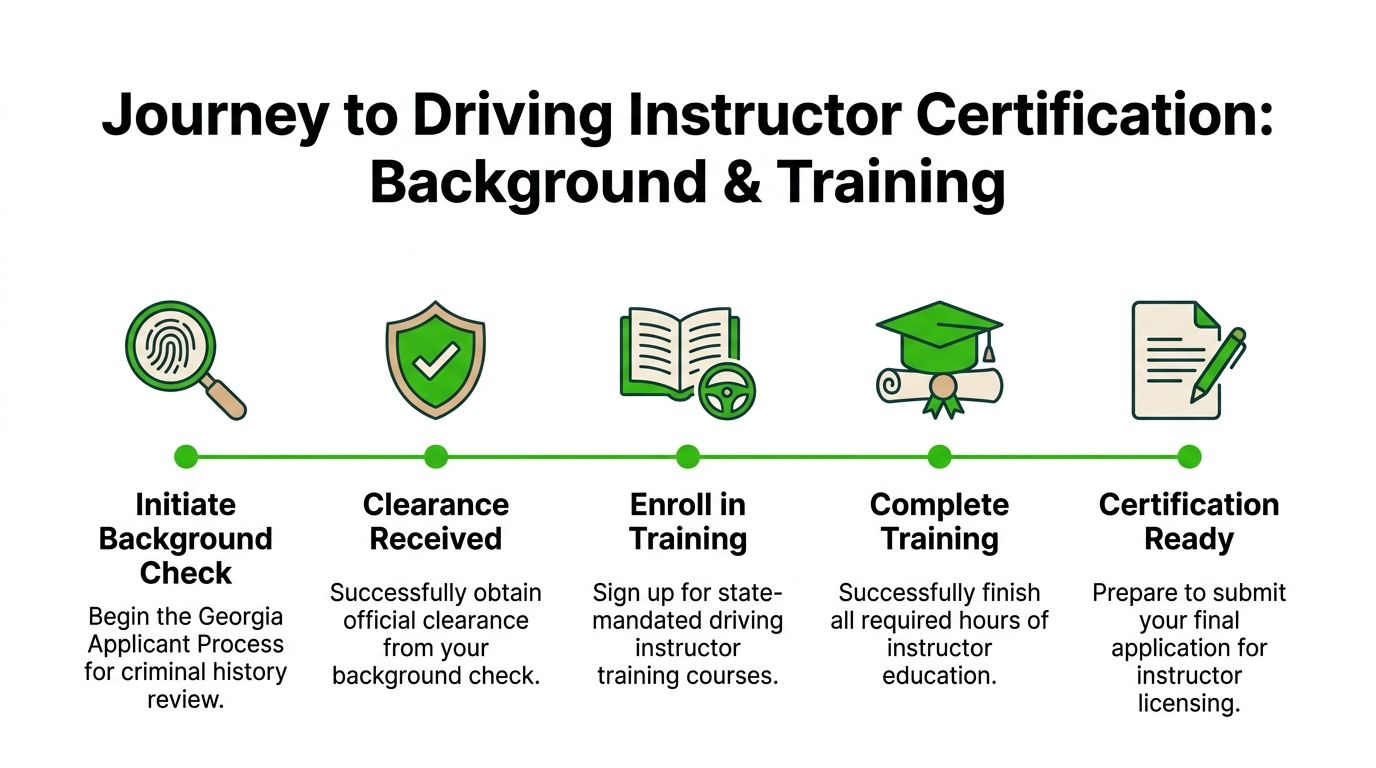
The two longest parts of the process are usually the background review and the required training. Most applicants think of them separately. In practice, you should plan them together because one delay can push the whole timeline.
Start with the background check
For DUI and Defensive Driving instruction, background review is not a formality. It is one of the main screening tools.
Most states require criminal background checks for instructor certification. A key rule for applicants with driving bans is especially important. Applicants with driving bans face a 4-year waiting period after the ban has ended before they become eligible for instructor certification (Zutobi guide on becoming a driving instructor).
If your history includes a ban, suspension, or DUI-related license problem, do not guess where you stand. Confirm the dates carefully.
Then line up training
Training is where many applicants finally see whether they are built for this work.
Verified guidance shows state-approved instructor training programs in the U.S. generally run 30 to 80 hours, can often be completed in 2 to 6 weeks, and the full path from training start to instructor license can span 1 to 3 months depending on state process and approvals (GetLicenseMap overview of driving instructor training timelines).
That timeline is useful for planning, but in real life your schedule depends on three things:
- How quickly your background clearance moves
- How often approved training is offered
- How fast you return paperwork after each step
Sample Instructor Application Timeline
| Phase | Key Actions | Estimated Time |
|---|---|---|
| Pre-check | Review driving history, confirm eligibility, gather ID documents | Varies |
| Background review | Submit fingerprints and wait for clearance | Several weeks in some cases |
| Training enrollment | Reserve a seat with an approved provider | Depends on course schedule |
| Training completion | Finish required coursework and any assessments | 2 to 6 weeks |
| Final submission | Turn in completion documents and remaining application items | Varies |
A lot of applicants waste time by waiting for one phase to end before preparing the next. Better approach: gather every non-time-sensitive document while the background review is moving.
What smart applicants do differently
One strong move is to sharpen your instructional foundation before formal teaching begins. If you plan to teach people who are still learning road rules and driver responsibility, reviewing Georgia-focused course expectations helps. This page on drivers education classes in Georgia is a useful refresher on the learning environment students come from before they enter more specialized programs.
Practical advice: Do not book life around the shortest possible timeline. Book around the most realistic one. Background checks, fingerprints, and course availability rarely move as cleanly as applicants hope.
Another point most official pages never mention. Hiring managers notice whether you treat training as a checkbox or as skill-building. The first group talks about “getting certified.” The second group talks about handling resistant students, presenting material clearly, and keeping a classroom compliant. The second group gets hired more often.
Acing Your Interview and Demo Lesson
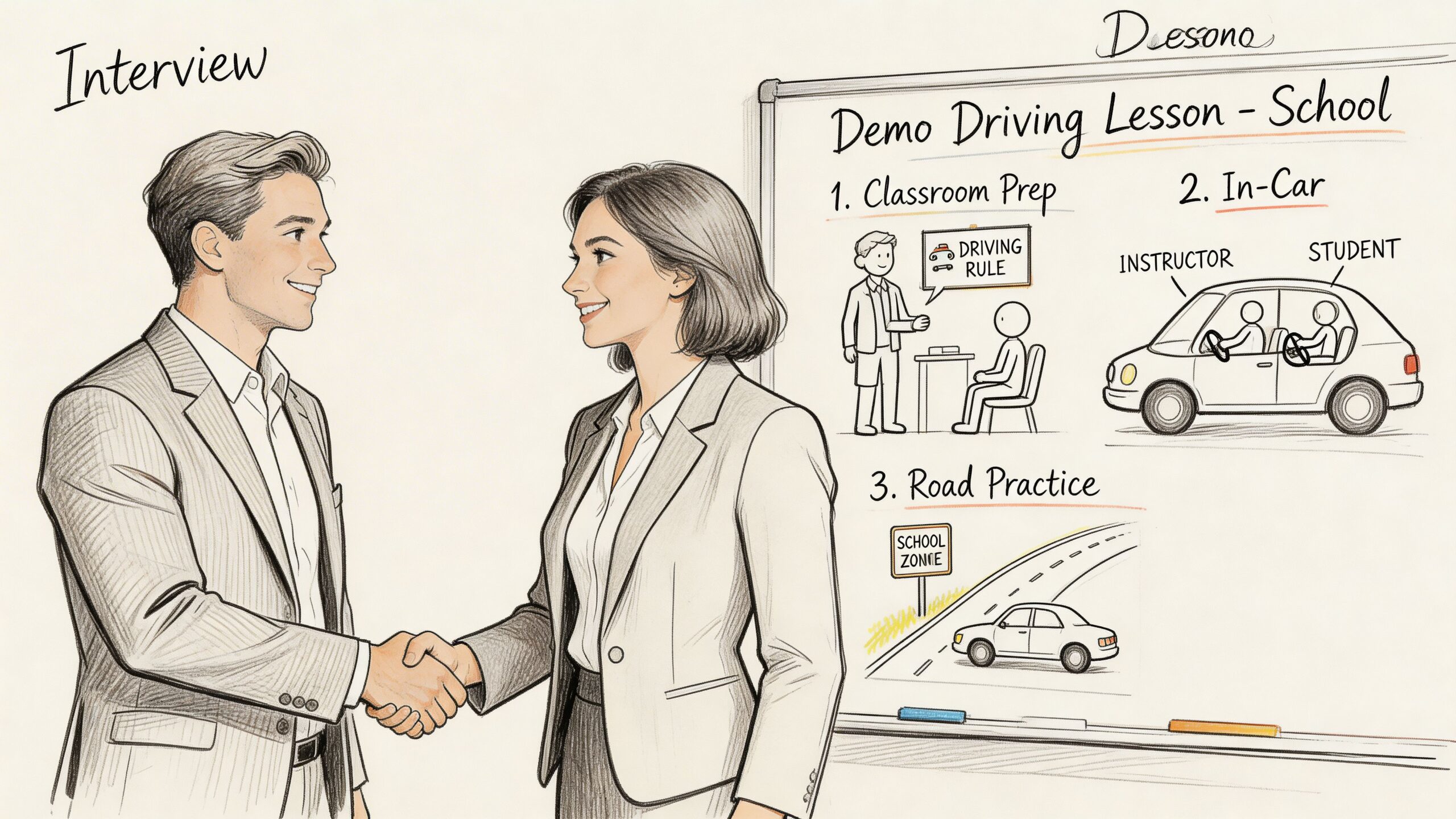
A school can teach policy. It is much harder to teach presence.
When I evaluate candidates for DUI or Defensive Driving instruction, I care less about polished interview language and more about whether the person can walk into a room of frustrated adults and hold authority without turning combative.
What hiring managers look for
The strongest candidates show three traits fast:
- Calm authority: They do not sound rattled by tough questions.
- Empathy with boundaries: They understand students are under pressure, but they do not excuse harmful choices.
- Respect for compliance: They take attendance rules, documentation, and course standards seriously.
That is what separates a teacher from a lecturer. In court-related education, the room tests you constantly.
How to handle the interview
Do not overstate your qualifications. Schools can spot that quickly.
A better approach is to speak concretely about:
- Times you handled conflict or emotional people
- Why DUI education requires accountability and respect
- How you would redirect a disruptive student without escalating the room
- Why documentation and punctuality matter in regulated classes
If you want a simple way to prepare, study the material the way a student would. Even a basic refresher on core Georgia driving knowledge can help you explain rules clearly under pressure. Reviewing something like the Georgia road sign test can help you practice turning technical material into plain classroom language.
The demo lesson matters more than the interview
Many schools care most about the demo.
They want to know whether you can:
- Open a topic clearly
- Keep the room with you
- Correct misinformation without sounding arrogant
- End with a point students will remember
Tip: In a demo lesson, do not try to impress with complexity. Pick one concept, teach it cleanly, and manage the room.
A weak demo usually has one of two problems. The candidate becomes stiff and reads like a manual, or they become so casual that the authority disappears.
The best demo lessons sound human. They use plain examples from Georgia roads, local courts, reinstatement stress, probation pressure, and the consequences of another violation. That tone tells a hiring manager you understand the students who walk through the door.
Understanding the Instructor Role Pay and Career Path
Most applicants ask about pay first. Fair question. But in this niche, the better question is how the role is structured.
Some schools use hourly classroom pay. Others pay by class, by teaching block, or through a mix of instruction time and admin duties. Part-time work is common, especially for evening and weekend courses. Full-time roles usually go to instructors who can teach, document carefully, and handle schedule changes without drama.
Why the role stays relevant
The broader profession has been notably stable. In the U.S., driving instructor unemployment fell from 6.57% in 2010 to 3.21% in 2019, then rose to 5.86% in 2021. That pattern still points to durable demand for qualified instructors (Zippia driving instructor demographics and employment data).
That stability matters if you want work tied to ongoing legal, licensing, and safety needs rather than a passing trend.
What advancement looks like
Career growth in this space is usually operational, not flashy.
You may start by teaching assigned classes. If you prove dependable, the next steps often include:
- Lead instructor duties
- Program scheduling or site oversight
- Compliance and record review
- Clinical side coordination, if you work near evaluation and treatment services
- Multi-location management
Key takeaway: Schools promote the instructor who shows up prepared, protects compliance, and keeps difficult classes under control. Seniority helps. Reliability matters more.
If you want a long-term lane, become the person management never has to worry about. That reputation builds faster than most applicants realize.
Frequently Asked Questions for Aspiring Instructors
A few questions come up almost every time someone starts a driving instructor application in Georgia.
FAQ
| Question | Answer |
|---|---|
| Can I apply if I had a DUI in the past? | Sometimes, but it depends on your record, license status, and whether disqualifying time periods have passed. The safest approach is to review your driving history carefully and disclose issues. |
| Is a recent suspension a problem? | It can be. If the suspension or related ban is recent, eligibility may be affected. Confirm dates before spending money on training or interviews. |
| Do I need classroom skills if I want to teach Defensive Driving? | Yes. Even when students mainly want point reduction or compliance, the school still needs someone who can run a structured class, manage discussion, and document attendance properly. |
| Is teaching DUI classes different from teaching a standard driver course? | Very different. DUI and Risk Reduction classes involve court-related stakes, resistance from some students, and more emotionally charged discussions about consequences, substance use, and public safety. |
| Should I mention my own past mistakes in an interview? | Only if they are relevant and you can discuss them with maturity. Never use your story to ask for sympathy. Use it only to show accountability and growth. |
| What makes an applicant stand out? | Clean paperwork, clear communication, respect for compliance, and the ability to teach adults without sounding preachy. |
| Do schools care about reliability that much? | Yes. In regulated programs, a late instructor or sloppy attendance record creates real problems for students and for the school. Reliability is part of the job, not a bonus trait. |
If you are serious about teaching in this space, prepare like a professional before you apply. Clean up your records, organize your documents, and practice teaching out loud. Those three steps put you ahead of most applicants.
If you are ready to complete the same kind of state-required education that often helps future instructors understand the system from the inside, start with the Georgia DUI Schools Risk Reduction course. It is the most relevant next step for anyone exploring DUI and Defensive Driving instruction in Georgia.